
REVIEW · BUCHAREST
Bucharest: City Highlights Guided Walking Tour
Bucharest makes the most sense when you see its layers together: medieval court ruins, grand royal buildings, quiet gardens, and the oversized remains of communist rule. This 2.5-hour walking tour links those pieces on foot, beginning at Manuc’s Inn and ending near the Palace of Parliament.
I like the route’s range. You get the old city, the former financial district, Calea Victoriei’s grand architecture, and a green break in Cismigiu Gardens. I also like the guides’ practical touch. Ed, Dan, Lucia, and Eduard are repeatedly praised for clear storytelling, humor, personal stories, and useful suggestions for restaurants and bars.
The main drawback is simple: this is a lot of Bucharest in a short time. You will see many major sights from outside rather than tour every interior, and weather can make the walk harder. Bring good shoes, dress for the forecast, and remember that the tour runs rain or shine.
Key points at a glance

- A full city introduction in 2.5 hours: The route covers medieval Bucharest, royal-era architecture, communist-era planning, and modern city life.
- Three surviving caravanserais: Manuc’s Inn helps explain how merchants once moved through Bucharest.
- Calea Victoriei’s architectural parade: See the National Military Circle, Telephone Palace, Royal Palace, Romanian Atheneum, and other major buildings.
- A welcome pause in the oldest city park: Cismigiu Gardens gives your feet and your eyes a break from busy streets.
- A powerful finish: Union Boulevard and the Palace of Parliament show the scale of Nicolae Ceausescu’s urban plans.
- English-speaking local guides: Ed, Dan, Lucia, and Eduard are praised for making difficult history easy to follow and for offering useful city advice.
Why this route works for a first day in Bucharest
Bucharest can feel confusing at first. Its old churches, nineteenth-century mansions, communist apartment blocks, broad boulevards, and modern cafés do not always seem to belong to the same city. That is exactly why a guided walk helps.
You begin in the old city center and gradually move through different periods of Bucharest’s past. The guide does the connecting work, explaining why a church is tucked beside a restaurant, why one boulevard is lined with grand buildings, and why the final section feels so oversized.
I would take this tour early in a Bucharest stay. It gives you a useful map of the center and points out places you may want to revisit later. Several guides also offer suggestions for food, coffee, bars, and further sightseeing after the walk.
The pace is designed for conversation, photos, and questions rather than a forced march. Still, you should expect steady walking over 2.5 hours. The tour has gone ahead in rain, snow, freezing fog, and temperatures as low as minus 14 degrees Celsius, so plan your clothing with care.
More City Highlights Walks in the world:
- Berlin City walk Government District and Places of Democracy
★ 4.7 · 8,467 reviews - Historic Charleston Guided Sightseeing Walking Tour
★ 5.0 · 6,216 reviews - Quebec City Walking Tour
★ 5.0 · 4,716 reviews
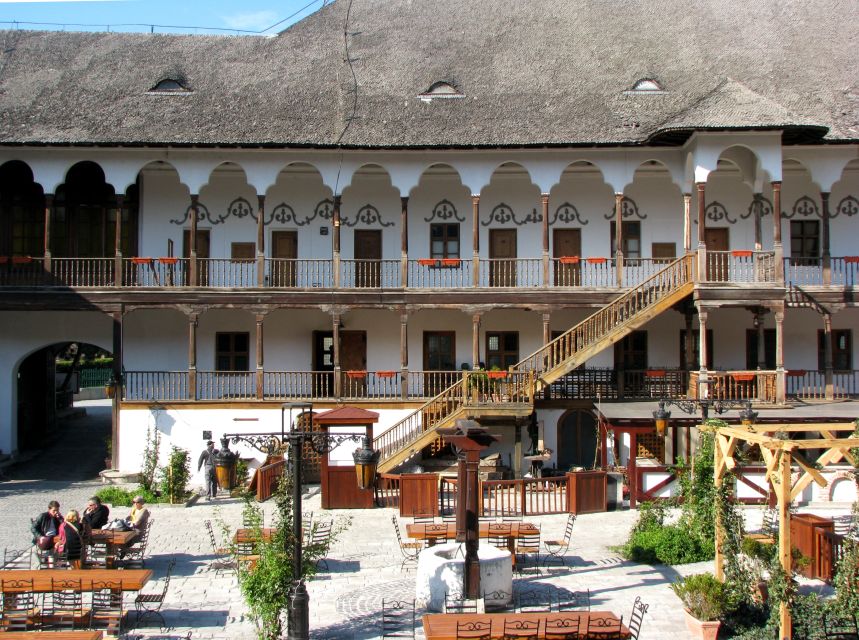
Starting at the Old Princely Court and Manuc’s Inn
The meeting point is in front of Hanu’ Lui Manuc restaurant. This is a handy start because Manuc’s Inn is not just a place to meet, it is one of the clearest links to Bucharest’s trading past.
The Old Princely Court introduces the city’s early political story. This is where you begin to see Bucharest as more than a nineteenth-century capital or a communist-era city. The court connects the modern center with the rulers and settlements that helped shape the city.
Next comes Manuc’s Inn, one of the three remaining caravanserais in Bucharest. Caravanserais were important stopping places for merchants, offering space to rest, trade, and store goods. You do not need a long lecture to grasp the value of the site: it shows Bucharest as a crossroads where people, goods, and ideas passed through.
The tour also includes Stavropoleos Church, one of the oldest and best-preserved monasteries in Bucharest. Its scale and setting provide a sharp contrast with the city’s broad avenues and heavy stone buildings later in the walk.
This opening section is especially useful if you want context before exploring the Old Town on your own. Rather than simply pointing out attractive façades, the guide explains how the area developed and what has survived.
Walking through Old Town’s layered streets
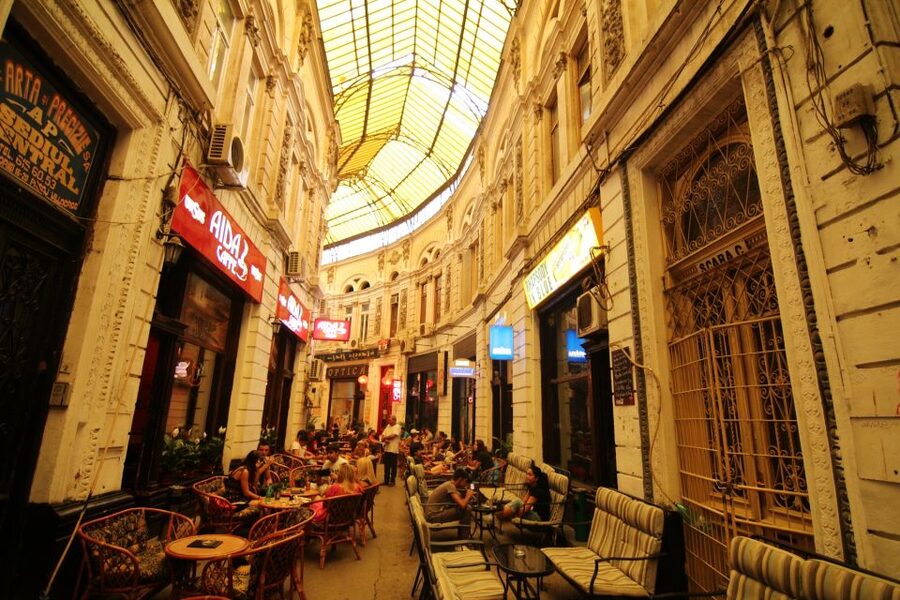
Bucharest’s Old Town is compact, lively, and easy to explore, but its history is not always obvious from street level. The guide helps you read the area instead of treating it as a collection of restaurants and old walls.
You will pass through streets where the older city survives beside newer businesses. That mix is part of Bucharest’s character. A church may appear beside a café, while traces of earlier trade and government remain under the modern city.
The guides are praised for using stories rather than a string of dates. Ed is often singled out for humor and clear explanations, while Dan is praised for adding photographs, videos, Romanian music, and personal connections to the past. Lucia is noted for discussing daily life, food, local customs, and even cars, which can make the city feel less like a museum.
That style suits Bucharest. The city’s past includes medieval rulers, royal ambition, war, dictatorship, and the fall of communism. A good guide must keep those subjects understandable without turning the walk into a classroom. This tour appears to do that by mixing major events with details about how people live in the city now.
Calea Victoriei and Bucharest’s grand public face
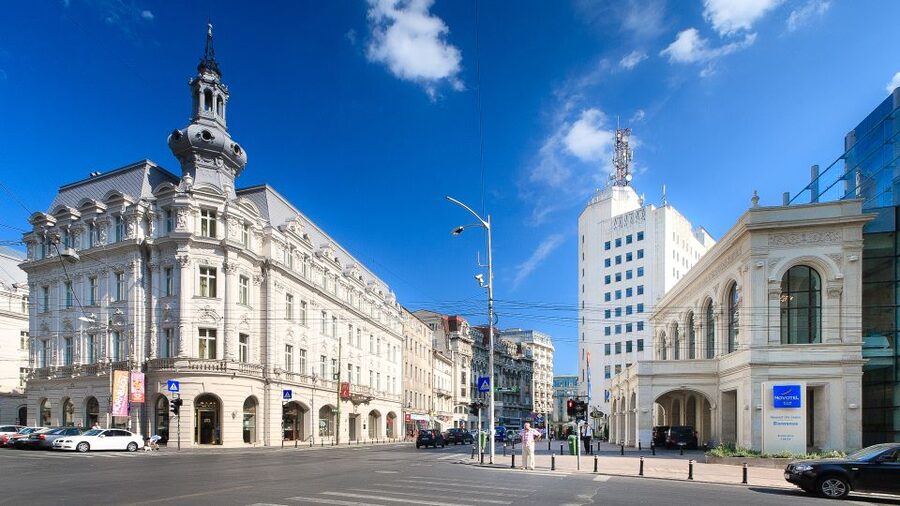
From the old center, the route reaches Calea Victoriei, Bucharest’s most famous boulevard. This is where the city’s royal and early modern ambitions come into view.
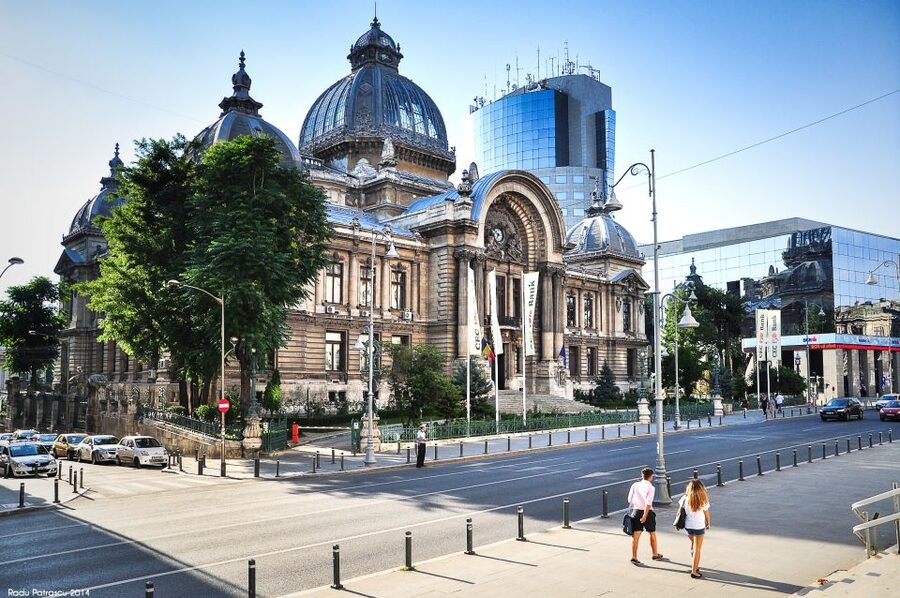
The National Military Circle, Telephone Palace, Royal Palace of Bucharest, and Romanian Atheneum are among the buildings included. Each gives you a different look at the city’s public architecture, from government and communications to monarchy and music.
Calea Victoriei is a strong part of the route because you see Bucharest’s formal side after the tighter streets of Old Town. The change in scale is immediate. Buildings become grander, views open up, and the city’s nineteenth- and twentieth-century ambitions are easier to read.
You should not expect a detailed interior tour of every building. The value here is the street-level explanation: how the buildings fit together, what they represented, and how Bucharest changed as it became a capital with European aspirations.
I particularly like this section for visitors who care about architecture but do not want a specialist tour. You get enough context to notice styles and contrasts without needing to remember a long list of technical terms.
More Guided Tours in the world:
- Magical London: Harry Potter Guided Walking Tour
★ 4.7 · 22,044 reviews - History and Hauntings of Salem Guided Walking Tour
★ 5.0 · 14,564 reviews - Amsterdam Anne Frank: Small-Group Walking Tour & Local Guide
★ 4.8 · 12,789 reviews - Edinburgh: Harry Potter Magical Guided Walking Tour
★ 4.8 · 11,944 reviews
Cismigiu Gardens gives the walk room to breathe
After the city’s stone, traffic, and formal buildings, the route enters Cismigiu Gardens. This is the oldest park in Bucharest and a welcome change of pace.
The gardens offer fresh air and a calm stroll. That matters on a walking tour packed with city sights. You can pause, cool down, take photographs, and listen without the constant visual pressure of a major boulevard.
Cismigiu Gardens also helps you understand Bucharest as a lived-in city rather than just a set of monuments. The park is part of ordinary urban life, and its presence breaks up the route in a sensible way.
The walk continues toward Bucharest City Hall at the end of the gardens. This transition from park to civic building gives the route a neat visual rhythm: older city, grand boulevard, green space, then the monumental communist-era section.
If you have limited mobility, the tour is advertised as wheelchair accessible. Even so, you should ask the provider about the exact route and current street conditions before booking, since the walk crosses several different parts of the city.
Union Boulevard and the communist-era city
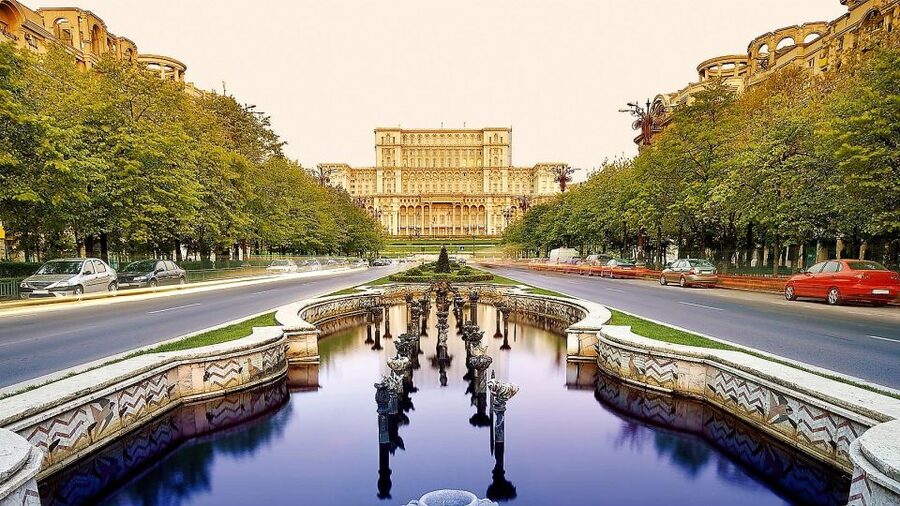
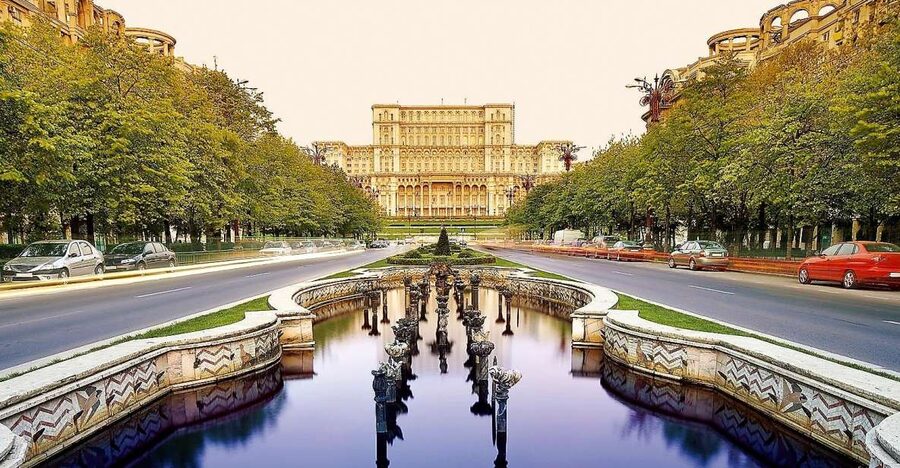
The final section moves into twentieth-century Bucharest, including the communist era and Ceausescu’s Palace. Union Boulevard was designed to be longer and wider than the Champs-Élysées, an example of the scale and symbolism behind the city’s communist redevelopment.
This is not subtle urban planning. The boulevard was meant to display power, order, and control. Walking along it after the narrower old streets makes that message clear without much explanation.
The guide’s role is important here. Romania’s communist period and the fall of Nicolae Ceausescu can be difficult subjects, especially if you know little about the country before arriving. Several guides are praised for explaining the period clearly, including the events surrounding the fall of communism.
Ed is described as especially good at making complex history accessible, while Dan has been praised for bringing the past to life with images and personal stories. Eduard is also noted for keeping people engaged in very cold weather and checking that everyone was comfortable.
The subject matter can feel heavy, but the tour balances it with humor and space for questions. That makes this section informative without becoming grim.
Finishing at the Palace of Parliament
The Palace of Parliament is the final major sight. It is described as the second-largest and heaviest building in the world, a claim that helps explain why the structure feels so overwhelming when seen in person.
The building is not a delicate architectural finish. It is massive, imposing, and closely tied to Ceausescu’s vision for Bucharest. Ending here gives the tour a strong visual and political conclusion.
You should understand that this is a walking tour, not an interior visit to the Palace of Parliament. The main experience is seeing the building and its setting while learning how it fits into the communist redevelopment of the capital.
For many visitors, this final stop is the point where the earlier parts of the route come together. The Old Princely Court showed the city’s beginnings, Calea Victoriei showed its royal and modern ambitions, and the boulevard and palace reveal the extreme scale of communist power.
The guides make the difference
The tour is led in English, with guides including Ed, Dan, Lucia, and Eduard. Their styles differ, but the repeated strengths are clear: strong local knowledge, warmth, humor, and an ability to explain history without losing the group.
Ed is frequently praised for his energy, clear English, and lively stories. He also provides recommendations for restaurants, bars, and other places to visit. Dan is described as friendly, funny, and well prepared, with useful material such as historical photographs and music. Lucia receives praise for personal stories, careful attention to the group, and advice about food and local places. Eduard is noted for keeping the tour engaging even in severe cold.
That personal approach is valuable in Bucharest. You are not only looking for monuments. You also want to know what to eat, where to go after the walk, and how the city’s past affects daily life.
Group size may vary. One New Year’s Eve walk had 30 people, which is larger than usual according to the account provided, but the guide still kept the group together in busy streets. A larger group can make questions and photographs less easy, so that is worth considering if you prefer a very intimate walk.
Price, weather, and practical value
At $21 per person, the tour offers good value if you want a broad introduction to Bucharest. You are paying for a local English-speaking guide and a route that covers several districts and major sights without adding transport costs.
The price does not include food or drinks. That is not a serious problem, since the route includes a natural chance to stop later in the city, but you should not expect refreshments as part of the booking.
Wear comfortable shoes. The tour runs rain or shine, and the experience can be very different in warm weather, rain, snow, or heavy cold. The guides may offer short breaks, but you should still bring suitable clothing and water if needed.
Free cancellation is available up to 24 hours before the start, and you can reserve now and pay later. The tour is also advertised as wheelchair accessible. Check the available start times when booking, since the duration is fixed at 2.5 hours but the departure schedule can vary.
Who should book this walking tour?
I would recommend it most strongly to first-time visitors, solo visitors, couples, and anyone who wants a clear orientation before exploring alone. It also suits families, since one guide kept a 10-year-old engaged with stories and questions.
You will get the most from it if you enjoy history, architecture, city planning, and local recommendations. It is less suitable if you want long interior visits, a slow photography walk, or a narrow focus on only one period of Bucharest’s past.
The tour also works well for solo visitors who want a social start to a trip. The walking format makes it easy to meet other people, while the guide provides enough structure to avoid wandering without a plan.
Should you book it?
Yes, if you want Bucharest’s major eras explained in one practical walk. The route covers the Old Princely Court, Manuc’s Inn, Stavropoleos Church, Calea Victoriei, Cismigiu Gardens, Union Boulevard, and the Palace of Parliament, giving you a strong first look at the city for $21.
Book it early in your stay, wear serious walking shoes, and accept that some sights will be viewed from outside. If rain, snow, or cold would spoil your day, check the forecast first. For most visitors, the mix of old streets, royal architecture, parkland, and communist scale makes this a smart and well-priced introduction.
FAQ
How long is the Bucharest City Highlights Guided Walking Tour?
The tour lasts 2.5 hours.
What language is the tour conducted in?
The live tour is conducted in English.
Where does the tour meet?
Meet your guide in front of Hanu’ Lui Manuc restaurant.
What sights are included?
The route includes the Old Princely Court, Manuc’s Inn, Stavropoleos Church, Old Town, Calea Victoriei, the National Military Circle, Telephone Palace, the Royal Palace of Bucharest, the Romanian Atheneum, Cismigiu Gardens, Bucharest City Hall, Union Boulevard, and the Palace of Parliament.
Is food or drink included?
No. Food and drinks are not included in the tour price.
What should I bring, and does the tour run in bad weather?
Bring comfortable shoes. The tour takes place rain or shine, so dress for the weather.
Just added around the world
- Fira: Guided Foodie Walking Tour with Tastings★ 4.9 · 474 reviews
- Fez: Guided Walking Tour of the Historic Medina★ 5.0 · 359 reviews
- Fez: Walking Tour in the Ancient City of Fez★ 4.8 · 73 reviews
- Faro: Old Town Guided Walking Food Tour★ 4.9 · 94 reviews
- Feel like a local – Walking Tour in Mykonos Town 2hours★ 4.4 · 77 reviews
- Fes: A Guided Walking Tour Through the Historic Medina★ 4.4 · 97 reviews
- Fez: Half-Day City Private Walking Tour with a Guide★ 4.6 · 114 reviews
- Fanal / Assobiadores – Levada Walk★ 4.6 · 93 reviews
City Highlights Walking Tours, compared.
Berlin City walk Government District and Places of Democracy
Read our review →
Historic Charleston Guided Sightseeing Walking Tour
Read our review →
Oxford: University and City Walking Tour with Alumni Guide
Read our review →
City Highlights Temple and Market Walking Tour
Read our review →
A History of Terror – Belfast City Centre Walking Tour
Read our review →Browse the lists this tour appears in