
REVIEW · UK
Bristol: Air Raid Shelter & St. Nicholas Market Walking Tour
Bristol’s most surprising attraction may be below your feet. This tour takes you from the Corn Exchange through the old city and into a preserved WW2 air raid shelter that many people pass without knowing it is there. Owen, Duncan, Theresa, and other guides bring the wartime story to life with clear commentary, period character, and plenty of local detail.
I like the mix of street history and underground access, and I like that the tour connects Bristol’s trading past with the Blitz and the city you see today. The main drawback is that the shelter is still a developing museum space, with limited room for exhibits and some areas that may feel rough around the edges.
- An unusual underground visit: Enter Bristol’s largest public air raid shelter beneath the Corn Exchange area.
- A thousand years of city history: Walk through the Old City and learn how trade shaped Bristol.
- Wartime stories on the streets: See areas affected by Blitz damage, including the Temple Church, Wine Street, and Corn Street area.
- A strong guide-led experience: Owen and Duncan are praised for passion, humor, clear delivery, and vivid storytelling.
- Market time at the finish: Browse St. Nicholas Market and buy sweet treats, savory food, or souvenirs.
- Practical limits: The tour is not suitable for people with mobility impairments, claustrophobia, or a body weight over 300 pounds, or for people over 95.
Why Bristol’s air raid shelter is the real surprise
Start at the main entrance of the Corn Exchange. From there, the tour heads into Bristol’s old streets before turning below ground. The shelter is the reason to book, but the walking portion gives it context. You do not simply enter a dark room and hear a wartime talk. You first see how the city around it was shaped by commerce, destruction, rebuilding, and daily life.
I like this approach because it keeps the shelter from becoming a detached historical curiosity. The Corn Exchange and St. Nicholas Market belong to Bristol’s trading story, and the shelter sits beneath that same city of shops, markets, workers, and visitors. The tour links those layers in a way that is easy to follow.
The experience lasts anywhere from about 75 minutes to two hours, depending on the departure and how the visit runs. The published itinerary gives 85 minutes for the Old City and 110 minutes for St. Nicholas Market, though the actual tour length may be shorter. Plan on roughly two hours if you want time for the full commentary and market visit.
From the Corn Exchange into the Old City
The meeting point is the main entrance of the Corn Exchange, a useful central location for a walking tour. Your guide may appear in WW2 costume, setting the tone before the first street story begins. Guides Owen and Duncan receive especially strong praise for their delivery, but Theresa and other named guides also lead the experience.
The opening walk covers Bristol’s ancient origins and trading past. You will hear how the old city developed around commerce and see notable architecture along the way. The tour also points out damage from the Blitz, helping you notice scars and changes that can be easy to miss when walking alone.
This section is not just a slow route to the shelter. It gives you a quick introduction to Bristol’s changing identity, from an old trading city to a wartime target and then to a modern urban center. Several local residents have found that the tour teaches them things they did not know about the city they already call home. That makes it a good choice even if you have visited Bristol before.
The streets around the Temple Church, Wine Street, and Corn Street are especially important to the wartime story. Duncan is praised for giving detailed information about the German air raids in this area. The result is more grounded than a general account of the Blitz because the guide connects events to actual streets and buildings.
Bring comfortable shoes. This is a walking tour, and the first part takes place outdoors. The tour information does not give a precise distance, so comfortable footwear is the sensible choice rather than dress shoes or thin sandals.
More Market Visits in the UK:
- London Bridge & Borough Market Food Tour with 7 Authentic Dishes
★ 5.0 · 1,972 reviews - Air Raid Shelter + St. Nicholas Market Walking Tour
★ 5.0 · 1,950 reviews - Bangkok: City Highlights Temple and Market Walking Tour
★ 4.5 · 3,990 reviews
Going below Bristol’s streets
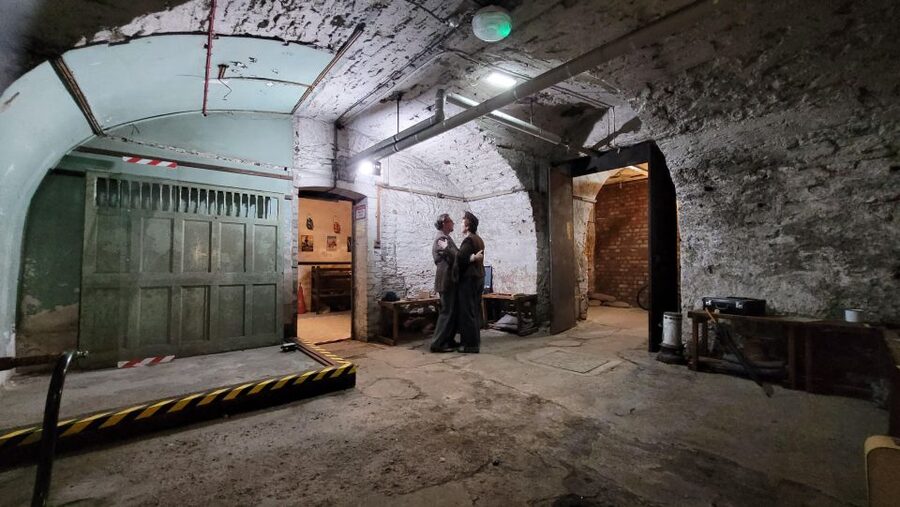
The change in atmosphere comes when the group enters the air raid shelter. This is Bristol’s only advertised subterranean tour, and access to the shelter is included in the ticket. The site remains largely untouched, giving it a more direct feel than a polished museum display.
That authenticity is one of the experience’s strongest points. You see the physical conditions people had to endure during air raids rather than only reading about them on a wall panel. Guides explain what happened in wartime Bristol and use stories to help you picture how the shelter functioned.
The setting is not a grand underground attraction with a large collection and elaborate lighting. It is an old shelter in the process of being developed into a museum. You may see wartime objects and articles, but there is not yet a large exhibition space. Some people would like more time to examine the displays, and some areas need further repair and funding.
I see that as both a limitation and part of the appeal. The shelter feels like a place being saved, not a finished attraction designed to look old. If you want a highly polished museum, this may seem modest. If you value access to a genuine historic site, the unfinished quality adds meaning.
The guide does much of the work here. Owen is praised for bringing the shelter to life, while Duncan is noted for his passion and plans to develop the project. The best guides use humor carefully, keep the pace moving, and explain the objects and spaces without turning the visit into a dry lecture.
There may even be a reference to Margaret, the shelter’s friendly ghost. Treat that as part of the local character rather than the main reason to come. The important point is the shelter itself and the chance to see a wartime space beneath a busy part of Bristol.
The 1960s music connection
The tour also includes access to areas of the Corn Exchange associated with the best bands of the 1960s, including the Rolling Stones. This detail adds a second historical layer to the visit.
Bristol’s story here is not only about medieval commerce or wartime survival. The same building has connections to the city’s entertainment past. That shift from market history to wartime shelter to live music gives the tour a pleasing range.
The music element is a supporting feature, not a separate concert-history tour. You should not book this expecting a long examination of 1960s music venues. Instead, it is an intriguing part of the Corn Exchange access and one more reason the building feels worth exploring.
St. Nicholas Market and the food stop
The tour finishes at St. Nicholas Market, described as the nation’s oldest covered market. The market is a practical place to end because you can continue the experience on your own after the guided portion.
Food and drink are not included, but you can buy them at the market. This is where the tour becomes flexible. You might pick up something sweet, choose a savory street-food lunch, or browse for a small souvenir. The market gives you a chance to slow down after the history walk instead of being sent straight back onto the street.
I like the timing because the tour can fit naturally into a morning or early afternoon. Several people have found that the experience leaves enough time to enjoy the market afterward. If you want to eat there, budget extra time beyond the advertised tour length.
The market is also the second drop-off option, alongside the Corn Exchange. That matters if you are building a day around central Bristol. You can finish at St. Nicholas Market and continue exploring on foot, or return toward the Corn Exchange depending on the route and your plans.
Food is purchased separately, so the $16 ticket covers the guided experience and shelter access rather than lunch. At that price, the tour offers good value if you care about local history. A standard walking tour may show you streets and buildings, but this one adds access to a space you cannot normally enter.
More Shopping Tours in the UK:
- Tokyo Tsukiji Fish Market Food and Culture Walking Tour
★ 5.0 · 3,184 reviews - Tokyo: Tsukiji Fish Market Food and Walking tour
★ 5.0 · 1,724 reviews - Tokyo: Tsukiji Fish Market Guided Walking Tour
★ 4.9 · 1,397 reviews - Nishiki Market Brunch Walking Tour (7 Tastings + Brunch)
★ 5.0 · 1,355 reviews
How the guiding affects the experience
This tour depends heavily on the person leading it. The strongest feedback centers on enthusiastic, clear, entertaining guides who know how to tell a story. Owen and Duncan are repeatedly praised for keeping groups engaged, while Theresa is noted for making the wartime stories feel immediate.
That matters because the shelter itself has limited display space. A guide fills in the gaps. Instead of relying on a long wall of text, you learn through spoken stories, explanations, and connections between places.
The guides also appear to adjust well to mixed groups. Families, local residents, and visitors from abroad can all find an entry point. The subject is serious, but the delivery includes humor and character without losing sight of the wartime suffering.
Do not expect unlimited question time. One person wished for more time for questions and for reading the articles and artifacts. If you have a specific research interest, ask your question when the opportunity comes, and do not assume there will be a long museum visit at the end.
Value at $16 per person
At $16 per person, this is a reasonably priced specialist tour. You receive a guided Old City walk, entry to the WW2 shelter, access to parts of the Corn Exchange that are not usually open to the public, and a market visit.
The value improves if you are interested in Bristol’s wartime story or enjoy places that are not part of the standard sightseeing circuit. You get both outdoor interpretation and a genuinely unusual indoor site.
The value is less clear if you mainly want a food tour. Market purchases cost extra, and the food portion is self-guided. It is also not the best choice for anyone who dislikes enclosed spaces or prefers a large, polished museum with extensive exhibits.
Free cancellation up to 24 hours before the start gives you some flexibility, and the reserve-now, pay-later option means you do not need to pay immediately. Check the available start times because the exact duration can vary.
Who should book this Bristol tour?
I would recommend it to first-time visitors who want more than the usual landmarks, and to locals who think they already know the city. The combination of old streets, wartime damage, underground access, market culture, and 1960s music history gives you a broad introduction in a short period.
It is especially suitable for:
- History fans interested in the Second World War and civilian life during the Blitz
- Visitors who enjoy unusual buildings and restricted-access places
- Families with older children who can manage a walking tour and underground setting
- Local residents looking for a fresh view of Bristol
- People who want a central activity followed by food at St. Nicholas Market
It is not suitable for people with mobility impairments or claustrophobia. The tour also excludes people over 300 pounds, people over 95, and anyone who may find a subterranean shelter uncomfortable. The supplied information does not describe step-free access, so contact the operator before booking if stairs or confined spaces could be a concern.
Small weaknesses worth knowing
The shelter needs more funding and renovation. That is not a reason to avoid it, but you should arrive with realistic expectations. You are visiting a historic site that is still being protected and developed, not a finished national museum.
The information available does not specify the group size, exact underground temperature, or the number of stairs. If any of those details matter to you, ask before booking. Comfortable shoes are required, and you should be prepared for both outdoor walking and an enclosed underground environment.
Some people may also want more time with the artifacts. The guide-led format keeps the tour lively, but it can leave little time to read every article or inspect each object. The best approach is to listen during the tour and treat the displays as an added bonus.
Should you book the Air Raid Shelter and St. Nicholas Market tour?
Book it if you want a small-scale, story-led look at Bristol with access to a place most independent visitors will miss. The shelter is the main draw, and the guide’s delivery is central to making it meaningful. Add the Old City walk and St. Nicholas Market, and you have a useful introduction to several sides of Bristol in one outing.
Skip it if you need a fully accessible route, dislike confined spaces, or want a large museum collection with plenty of quiet reading time. For most history-minded visitors, though, $16 is a fair price for a tour that combines street-level Bristol with a preserved wartime shelter below it.
FAQ
Where does the tour begin?
Meet at the main entrance of the Corn Exchange in Bristol.
Where does the tour finish?
The tour has drop-off options at St. Nicholas Market and the Corn Exchange.
How long does the tour last?
The stated duration is between 75 minutes and two hours. The itinerary includes guided sections in the Old City and St. Nicholas Market.
Is entry to the air raid shelter included?
Yes. Entry to the WW2 air raid shelter is included in the tour price.
Is food included?
No. Food and drinks are available to buy separately at St. Nicholas Market.
What language is the tour conducted in?
The live guided tour is conducted in English.
What should I bring?
Bring comfortable shoes for the outdoor walking portion.
Who should not take this tour?
The tour is not suitable for people with mobility impairments, claustrophobia, a body weight over 300 pounds or 136 kilograms, or people over 95 years old.
Just added around the UK
- Falmouth: Vibrant Historical Walking Tour (award-winning)★ 4.9 · 75 reviews
- The Must-Sees of Edinburgh: Small Group Walking Tour in French★ 4.9 · 88 reviews
- Edinburgh: Old Town History Walking Tour★ 4.9 · 528 reviews
- Edinburgh: Old Town Stories – Guided Walking Tour★ 4.9 · 86 reviews
- Ghosts, Ghouls & Gallows :The Original Bristol Ghost Walk★ 4.6 · 76 reviews
- Edinburgh: Private Walking Tour with a Local★ 4.4 · 78 reviews
- Edinburgh: Private Walking Tour in French with Clémentine★ 5.0 · 73 reviews
- Edinburgh: Multi-Sensory Old Town Historical Walking Tour★ 4.6 · 290 reviews
Markets, compared.

City Highlights Temple and Market Walking Tour
Read our review →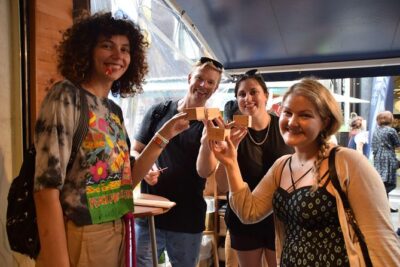
Tokyo Tsukiji Fish Market Food and Culture Walking Tour
Read our review →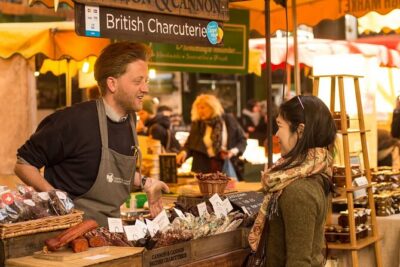
London Bridge & Borough Market Food Tour with 7 Authentic Dishes
Read our review →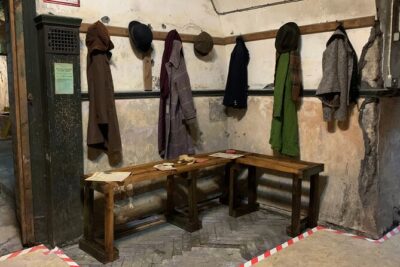
Air Raid Shelter + St. Nicholas Market Walking Tour
Read our review →


Nishiki Market Brunch Walking Tour (7 Tastings + Brunch)
Read our review →
Bologna Food & Market Tour with 6 Tastings, Pasta, Wines & More
Read our review →Browse the lists this tour appears in