
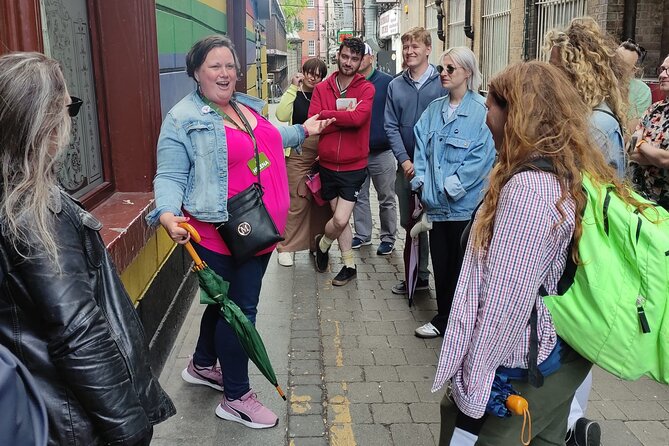
REVIEW · DUBLIN
Dublin LGBTQ Pride Historical and Cultural Walking Tour
Dublin’s LGBTQ past is written across its best-known streets, but you need the right guide to see it. This two-hour walk connects Temple Bar, the GPO, the Abbey Theatre, Trinity College, and Dublin Castle with stories of gay and trans people who helped shape Ireland.
I like the route for two reasons: it adds a queer lens to familiar sights, and it treats history as personal rather than merely political. The focus on people, forgotten voices, and the first Pride events gives the walk real purpose. Guides including Helena and Deidre bring an energetic, well-informed approach.
The main drawback is the pace. You cover a lot of central Dublin in about two hours, with roughly ten minutes at each listed stop. This is an outdoor walking tour, so moderate fitness, decent shoes, and weather-ready clothing matter. Trinity College admission is not included.
Key points at a glance
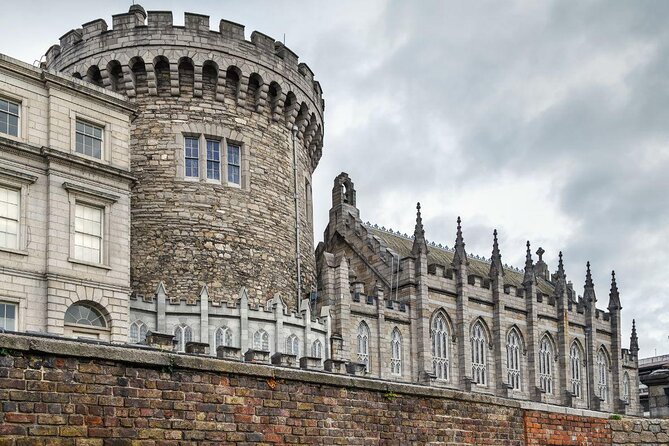
- A city-center route with a clear story: Start in Temple Bar and finish in Dublin Castle, passing major sights along the way.
- History beyond the usual tour script: Hear about LGBTQ figures linked to the 1916 Easter Rising, Irish theatre, activism, and social change.
- The first Irish Pride parade: Liberty Hall provides the setting for a difficult story about the beginning of Pride in Ireland.
- Queer Dublin in the 1980s: Meeting House Square and Temple Bar reveal how community spaces offered support, culture, and hope.
- A useful introduction to present-day Dublin: The walk includes the George Bar and points you toward other LGBTQ venues.
- Good value for a focused tour: At $29.02, you pay for two hours of guided context rather than entry tickets or transport.
Why this walk changes the way you see Dublin
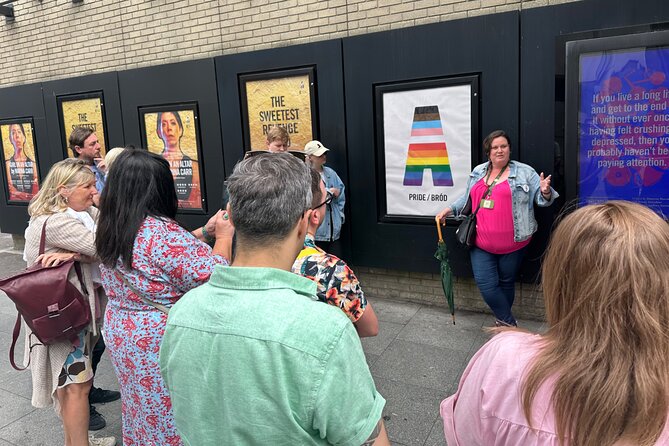
I like tours that use famous places as doors into less familiar stories. This one does exactly that. You will not spend two hours looking only at plaques or grand buildings. Instead, the guide uses central Dublin as a map of changing attitudes toward sexuality, gender, politics, art, and public life.
The route is especially useful if you already plan to see Temple Bar, the GPO, Trinity College, or Dublin Castle. A standard city walk might point out the architecture and dates. Here, those same sites become connected to gay figures, activists, writers, performers, and organizers who are often missing from the usual version of Irish history.
The tour has received a perfect five-star rating from 91 reviews, with all participants recommending it. The strongest praise centers on the guides’ energy, clear storytelling, and ability to connect LGBTQ history with women’s rights and wider Irish history. Helena is repeatedly singled out for her enthusiasm and passion, while Deidre is praised for an informative, lively approach.
That said, this is not a museum visit or a slow architectural tour. Most stops are planned for about ten minutes, and the group keeps moving through central Dublin. You should choose it for storytelling and context, not for long periods inside buildings.
More Cultural Walking Tours in Dublin:
- Savannah First Squares Culinary & Cultural Walking Food Tour
★ 5.0 · 3,229 reviews - Tokyo Tsukiji Fish Market Food and Culture Walking Tour
★ 5.0 · 3,184 reviews - New Orleans French Quarter, Voodoo and Culture Walking Tour
★ 4.5 · 2,961 reviews
Starting in Temple Bar, then crossing the Liffey
You meet at 3 Crown Alley in Temple Bar, Dublin 2. This is a convenient starting point in the middle of one of Dublin’s most famous districts, though the area can be busy and distracting. Give yourself enough time to find the exact meeting point rather than relying on a last-second arrival.
The first portion introduces the group and sets the theme. Temple Bar is more than a nightlife quarter here. It becomes the starting point for understanding how queer Dublin developed public places where people could meet, socialize, and build a community.
Soon after, the group crosses one of Dublin’s best-known bridges over the River Liffey. The walk uses both sides of the river, so you get a sense of the city’s layout as well as its history. This is a useful early orientation, especially if Dublin is new to you.
The bridge crossing is also a reminder that the tour is not confined to one neighborhood. You will walk through the city center rather than remain in a single LGBTQ venue district. Wear shoes that can handle pavement and expect a steady, city walking pace.
The GPO and queer figures of the 1916 Rising
The General Post Office is one of Dublin’s key historical buildings and the central stage of the 1916 Easter Rising. The tour uses this familiar landmark to ask a more specific question: which gay figures were involved in the events of that week, and how have they been remembered?
This is one of the tour’s most valuable sections. Ireland’s revolutionary story is often told through military leaders, speeches, and national politics. A queer history walk can show how personal identity and public action existed alongside those larger events.
You spend about ten minutes at the GPO, and no admission ticket is needed. That means the guide has to make the building work as a setting for storytelling rather than an extended indoor visit. If you want to visit the GPO Museum itself, that is a separate plan and cost.
I like this stop because it adds depth without pretending that every historical figure fits neatly into a modern identity label. The guide’s job is to explain who these people were, what role they played, and how later generations have treated their memory.
The Abbey Theatre and a modern Irish icon
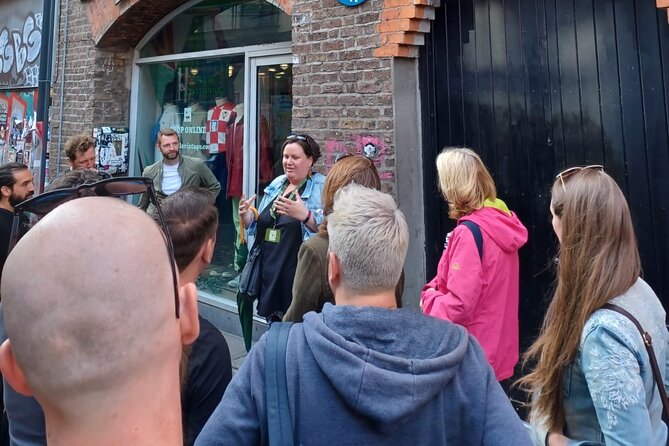
Next comes the Abbey Theatre, Ireland’s national stage. The focus shifts from revolution to culture, public identity, and the power of performance. You learn about a contemporary gay Irish icon and the part this person played in shaping modern Ireland.
The Abbey is a strong choice for this theme. Theatre has long offered a place for people to question social rules, express identities, and bring uncomfortable subjects into public view. Even if you know little about Irish theatre, this stop links art to wider change.
Expect another short talk of roughly ten minutes. You see the theatre from the outside rather than receiving a full backstage or performance visit. The value comes from the guide’s story and the connection between the building and the person being discussed.
The guides are praised for making these stories engaging rather than heavy. Helena, in particular, is described as passionate and fun, while Deidre brings a broad view that includes both LGBTQ and women’s rights history.
More LGBTQ-Friendly Tours in Dublin:
- San Francisco LGBTQ Walking Tour with Local Guide
★ 5.0 · 600 reviews - Berlin: Gay Berlin Out in Schöneberg Walking Tour
★ 4.8 · 281 reviews - San Francisco: Castro LGBTQ Walking Tour
★ 5.0 · 90 reviews - Florence: LGBTQ Renaissance Walking Tour with Mila
★ 4.9 · 85 reviews
Liberty Hall and the first Pride parade
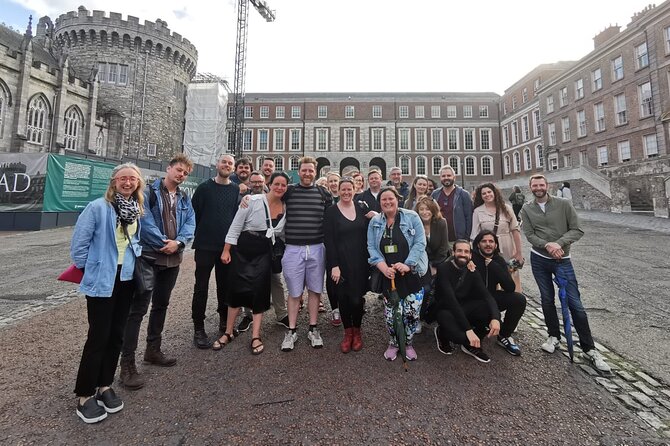
At Liberty Hall, the tour turns to a more painful chapter: the circumstances surrounding Ireland’s first gay Pride parade. The stop also introduces one of the country’s important trans activists.
This section gives the walk its clearest sense of struggle. Pride is now widely recognized as a public celebration, but its beginnings involved fear, hostility, organization, and courage. Hearing about the first parade at the place connected with that story helps you understand that legal and social change did not arrive easily.
The inclusion of a trans activist is important, too. The tour does not treat LGBTQ history as one narrow story centered only on gay men. It brings in different identities and movements, while still keeping the account tied to specific people and places.
Liberty Hall is another short stop, so the guide must explain a difficult history in a compact way. If you prefer long museum-style talks with extensive dates and documents, you may find the timing brisk. If you want a focused introduction, the format works well.
Trinity College and the wider College Green
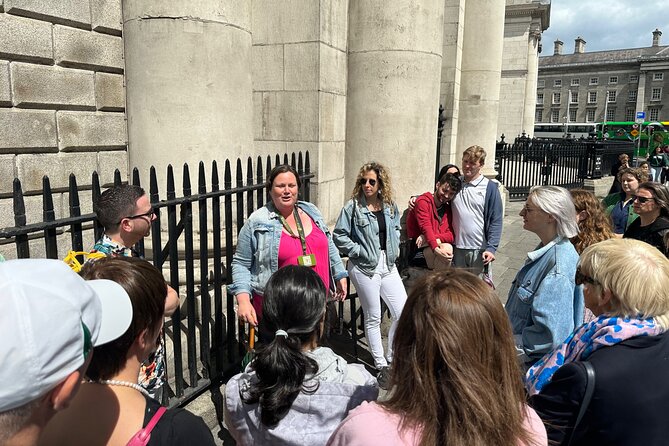
Trinity College Dublin offers a different setting. At Ireland’s oldest and most famous college, the guide talks about LGBTQI+ alumni who passed beneath its old arch and places them within the wider College Green area.
This is a good example of how the tour adds a new layer to a classic sightseeing stop. You get the atmosphere of Trinity and its historic surroundings, but the subject remains the people whose lives and work connect to queer Irish history.
Admission to Trinity College is not included. The planned stop lasts about ten minutes, so you should not book this tour expecting a full campus visit or entry to the Book of Kells. The college serves mainly as an outdoor setting for the talk.
For many visitors, this may be one of the more familiar sights on the route. That familiarity makes the LGBTQ focus especially effective. You are not being led to obscure sites only. You are learning to look differently at places already central to Dublin’s identity.
Meeting House Square and queer Dublin in the 1980s
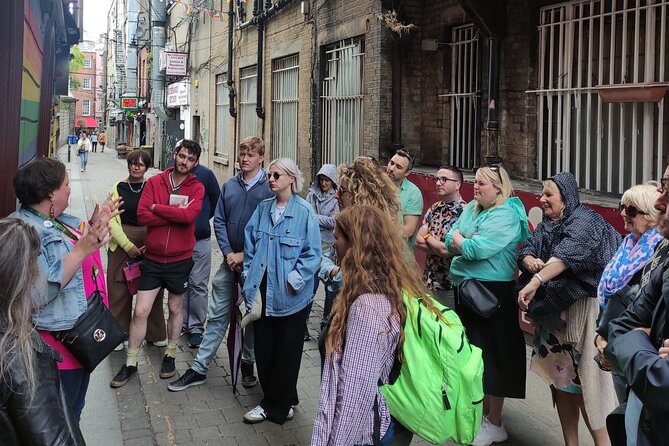
The route loops back through Temple Bar to Meeting House Square. Here, the subject is queer Dublin during the 1980s, including the people who gave a community hope and helped create space for new ideas.
This section sounds less like a single event and more like a portrait of a period. The guide discusses thinkers, organizers, and change-makers who helped people find one another when public acceptance was limited. The square’s changing use also allows the tour to consider how Dublin’s central districts have shifted over time.
You also cross the River Liffey on both sides during the tour, using the city’s waterway as a natural thread between these chapters. The route is easy to understand geographically, even though it covers several different parts of central Dublin.
A practical point: Temple Bar is famous, crowded, and full of distractions. You may see plenty of nightlife activity around you, but the tour’s subject reaches beyond the most visible modern venues. Listen closely, since the most meaningful details may be attached to places that look ordinary today.
The original LGBTQ headquarters in Temple Bar
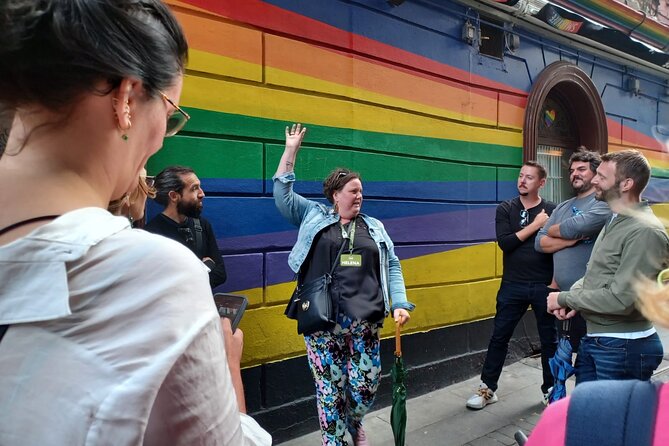
The tour returns to another part of Temple Bar to discuss Ireland’s first bona fide gay headquarters. This was more than a bar. It included a café, disco, cinema, and other services, making it a place where social life, culture, and community could meet under one roof.
That detail helps explain why physical spaces mattered so much. A headquarters with several functions could offer connection and information, not just a night out. It also shows how much community infrastructure had to be built by LGBTQ people themselves.
This stop is especially useful for anyone interested in the practical side of social change. Movements do not grow only through speeches and laws. They need rooms, meeting places, publications, events, and people willing to keep them going.
The tour does not present Temple Bar as a frozen historical quarter. Instead, it shows how the area’s queer significance has changed over time. You get a sense of both what has disappeared and what remains important.
The George Bar, Dublin’s long-running LGBTQ institution
The George Bar is the final major LGBTQ venue on the route. It is described as Dublin’s oldest operating gay bar and a cultural institution at the heart of the city’s LGBTQ community.
The guide discusses the bar’s continuing place in Dublin rather than simply treating it as a photo stop. This makes the venue feel connected to the earlier stories about headquarters, community spaces, and public visibility.
You should note that the tour does not say you receive entry, a drink, or time inside the bar. The stop is part of the outdoor walking route, with the guide explaining its importance. If you want to visit later, the guide can also point you toward other queer bars in Dublin, a useful extra for anyone hoping to explore the city after the tour.
This is one of the tour’s most practical moments. You finish with a better sense of where LGBTQ life fits into present-day Dublin, not only where it existed in the past.
Finishing in Dublin Castle
The walk ends in the upper courtyard of Dublin Castle, surrounded by centuries of Irish history and 18th-century buildings. This is a strong closing point because it brings the tour back to one of Dublin’s major public landmarks.
The end location is not the same as the starting point, but both are in central Dublin. You can continue sightseeing, find food, or head elsewhere without needing a return transfer. The tour provider does not include admission to the castle as part of the walk, and the route description presents the courtyard as the finishing setting rather than a full castle tour.
Ending here also gives the guide a chance to connect personal stories with national history. The tour begins in a social district and closes at a seat of power and government. That contrast makes the route feel carefully shaped rather than like a loose collection of stops.
Is $29.02 good value?
At $29.02 per person, this is fairly priced for a two-hour specialist walking tour in central Dublin. You are not paying for transport or attraction entry. You are paying for a guide who can connect well-known places with stories you are unlikely to hear on a standard city tour.
The value is strongest if LGBTQ history is a central interest for you, or if you enjoy seeing familiar sights through a focused theme. It also makes sense if you want a compact introduction early in your Dublin stay, since the guide can help you understand the city and suggest other queer venues.
The value is weaker if you want indoor access, long visits at major attractions, or a small private tour guaranteed for your party. The stated maximum is 100 people, although the experience has also been described as a small-group outing. Group size can therefore vary, and you should not assume an intimate setting every time.
The tour is offered in English and uses a mobile ticket. Confirmation arrives when you book. Service animals are allowed, and the route is near public transportation.
Who should book this Dublin walking tour?
I would choose this tour if you want Irish history told through LGBTQ lives, activism, theatre, and community spaces. It suits solo visitors, couples, friends, and anyone who wants a more focused alternative to a general Dublin city walk.
It is also a good fit for people who already plan to visit the GPO, Trinity College, Temple Bar, and Dublin Castle. You will see these places with a different set of questions in mind, and the route avoids spending extra money on entry tickets.
You may want a different experience if you dislike walking, need frequent indoor seating, or prefer a single attraction explored in depth. The tour covers a lot of ground quickly, and the main reward is the guide’s interpretation.
The route requires moderate physical fitness. Plan for outdoor conditions and allow time to find the meeting point at 3 Crown Alley. You can cancel for a full refund up to 24 hours before the start time, but cancellations or changes made later are not refunded or accepted.
Should you book it?
Book it if you want a thoughtful, people-centered look at Dublin’s LGBTQ past and present. Helena and Deidre are praised for bringing energy, warmth, and strong historical focus, and the route makes excellent use of famous city sights.
The best reason to go is the combination of range and purpose. In two hours, you move from the 1916 Rising and the Abbey Theatre to the first Pride parade, trans activism, 1980s community life, the George Bar, and Dublin Castle.
Just keep your expectations clear. This is a fast-moving outdoor history walk, not a ticketed museum tour. If that format suits you, $29.02 buys a useful new way to read Dublin.
FAQ
Where does the Dublin LGBTQ Pride Historical and Cultural Walking Tour start?
It starts at 3 Crown Alley in Temple Bar, Dublin, D02 CX67, Ireland.
Where does the tour finish?
The tour finishes in the upper courtyard of historic Dublin Castle.
How long does the tour last?
The tour lasts approximately two hours.
What language is the tour offered in?
The tour is offered in English.
Is admission to Trinity College included?
No. Admission to Trinity College is not included.
What sights are included on the route?
The route includes Temple Bar, a Dublin bridge, the GPO Museum area, the Abbey Theatre, Liberty Hall, Trinity College, Meeting House Square, the George Bar, and Dublin Castle.
How much does the tour cost?
The listed price is $29.02 per person.
Can I cancel for a refund?
Yes. You can cancel at least 24 hours before the start time for a full refund. Cancellations or changes made less than 24 hours before the start time are not accepted or refunded.
Just added around Dublin
- Dublin (Dun Laoghaire) Top-Rated Coastal Walking Tour★ 5.0 · 80 reviews
- Food on Foot: Dublin Street Food Tour with Local Guide★ 5.0 · 490 reviews
- Dublin to Wicklow, Glendalough Small Group Tour with Guided Walk★ 4.5 · 282 reviews
- Private Fantastic Tour of Dublin (Walking Tour)★ 5.0 · 141 reviews
- Walking Tour of Dublin’s Viking/Medieval Quarter with a Viking★ 5.0 · 171 reviews
- DayTripper Dublin: A Guided City Walking Tour★ 5.0 · 90 reviews
- A Silent Disco Walking Tour★ 5.0 · 118 reviews
- Trinity Trails: Guided Walking Tour of Trinity College★ 4.5 · 203 reviews
Cultural Walking Tours, compared.
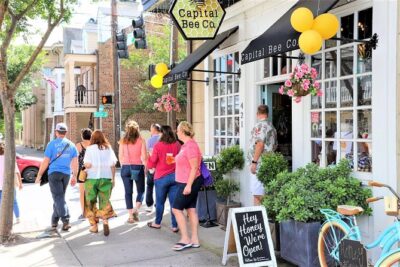
Savannah First Squares Culinary & Cultural Walking Food Tour
Read our review →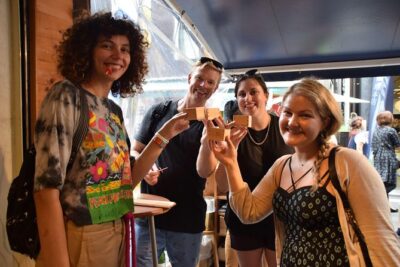
Tokyo Tsukiji Fish Market Food and Culture Walking Tour
Read our review →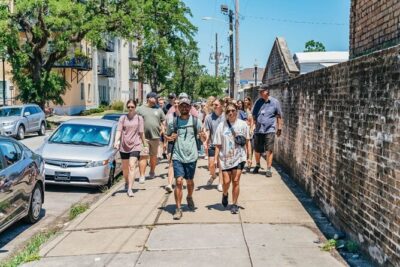
New Orleans French Quarter, Voodoo and Culture Walking Tour
Read our review →
Southernmost Food & Cultural Walking Tour by Key West Food Tours
Read our review →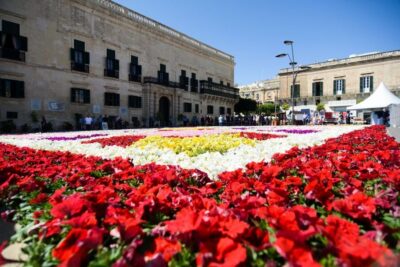
Valletta: Street Food and Culture Walking Tour
Read our review →
Lisbon Roots – Small group Food & Culture Walking Tour w/tastings
Read our review →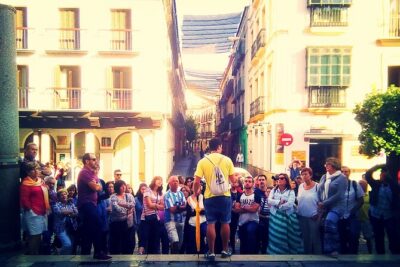
Browse the lists this tour appears in