
REVIEW · BELFAST
Belfast Walking Tour with a Local – History & Craic
Belfast’s story makes the most sense when you hear it from someone who grew up there. This relaxed city-centre walk with native guide Corey mixes old buildings, street art, the Troubles, Titanic history, local slang, and present-day Belfast without turning into a classroom lecture.
I like the broad approach. You get a useful first look at the city, and Corey’s personal stories give the tour a human edge. I also like the optional audio headset, especially if your group is larger or the streets are noisy. The main drawback is that this is an overview, not a specialist tour. If you want a detailed study of the Troubles or Titanic Belfast, you will need a separate visit.
Key points to know before you book
- A local-led introduction: Corey brings personal experience, humour, and everyday Belfast talk to the city’s history.
- A wide-ranging route: City Hall, the Cathedral Quarter, Albert Memorial Clock, Big Fish, Titanic Belfast, Joy’s Entry, and the Spirit of Belfast all feature.
- A good first-day activity: The route helps you get your bearings and comes with suggestions for food, drinks, shops, and further sights.
- History without a single fixed theme: The tour moves from Belfast’s early story to the Troubles, regeneration, architecture, and modern life.
- Small-group feel available: Private bookings and small groups offer a more conversational experience.
- Practical walking conditions: Wear comfortable shoes and dress for changing weather. The route covers different surfaces and involves a moderate amount of walking.
What this Belfast dander actually feels like
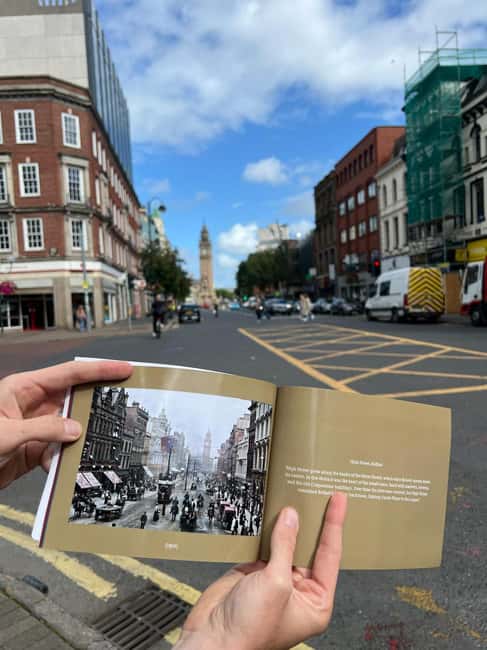
The name tells you a lot. A dander is a relaxed walk, and this experience aims for the feel of being shown around by a friendly local rather than being marched from plaque to plaque.
Corey covers a lot in roughly two hours, sometimes listed as up to 150 minutes. You will hear about Belfast’s origins, grand civic buildings, industrial past, cultural life, the Troubles, the Titanic connection, and the city’s current changes. The material is broad by design, with stories and jokes helping you move from one subject to the next.
That format suits you if you want to understand how the parts of Belfast fit together. It is less suitable if you arrive with one narrow goal, such as a detailed examination of political murals or a full architectural study of the city centre.
The tone is informal, but the subject matter is not always light. Belfast’s past includes conflict and loss, and the tour addresses the Troubles as part of the city’s story. Corey’s humour helps keep the walk warm and approachable, while his personal connection gives the discussion a more direct feel.
You can ask questions along the way. That matters here because Belfast’s history is not a neat timeline. Political events, local identity, religion, industry, migration, architecture, and modern redevelopment all overlap.
A few more walking tours around the UK worth a look
- Magical London: Harry Potter Guided Walking Tour
★ 4.7 · 22,044 reviews - Edinburgh: Harry Potter Magical Guided Walking Tour
★ 4.8 · 11,944 reviews - Edinburgh Castle: Guided Walking Tour with Entry Ticket
★ 4.7 · 11,699 reviews
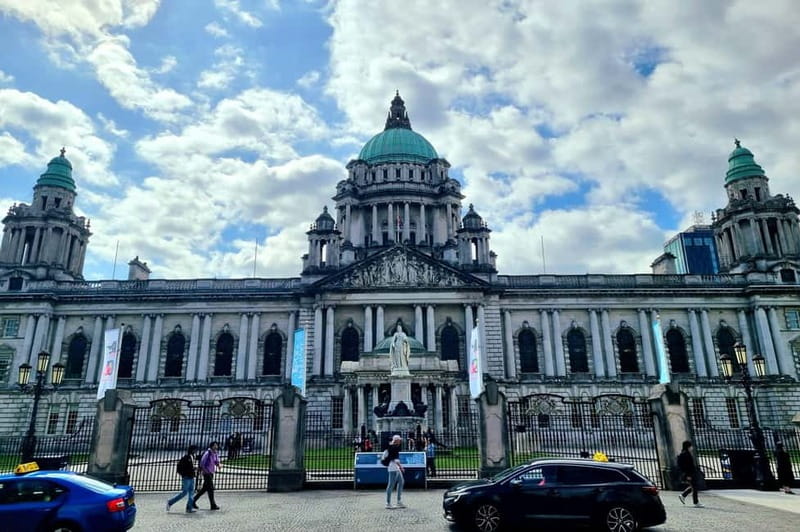
Starting beneath the domes of City Hall
The meeting point is inside Belfast City Hall’s courtyard, beside the statue of Queen Victoria and directly facing the main entrance. That detail is useful because the front gates can be crowded with other groups. Look for Corey and his bright blue school bag, which is his easy-to-spot marker.
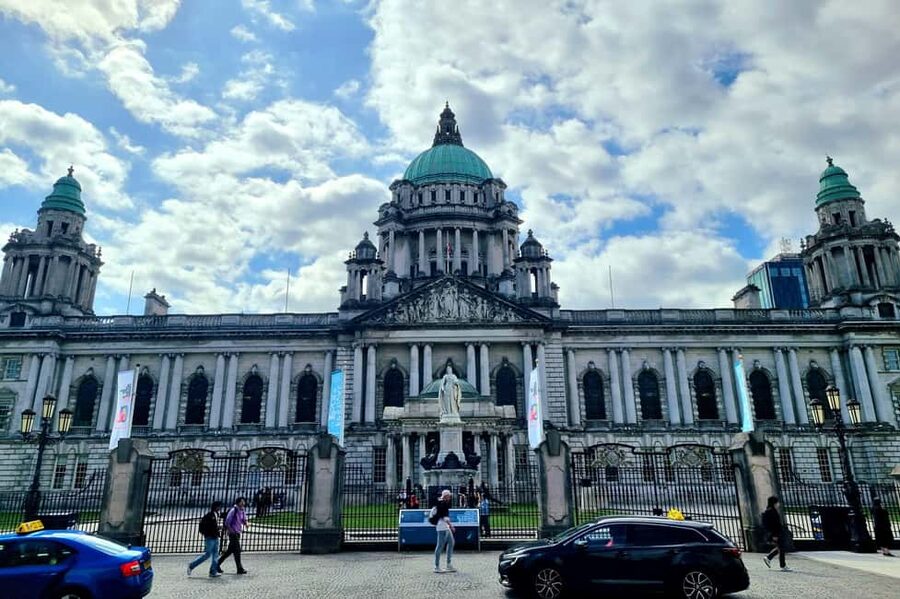
City Hall is an excellent place to begin. Its Baroque Revival design, green copper domes, statues, and gardens immediately give you a sense of Belfast’s civic confidence. The building also provides a natural opening for talking about the city’s growth, public life, and changing fortunes.
I like starting here because you are not thrown straight into a complicated political story. You first get a physical sense of the city centre, then begin adding layers as you walk. Corey also contacts participants by email or text beforehand, which should make the meeting point easier to find.
The courtyard is open-air, so arrive dressed for the weather. Belfast rain can change the mood of a walking tour quickly, and several people have praised Corey’s effort to keep the experience engaging even in wet conditions.
Cathedral Quarter: old streets, new energy
The route then moves toward the Cathedral Quarter, one of the city centre’s most characterful areas. Expect a guided walk, photo stops, and discussion of the streets, buildings, art, and changing uses of the area.
This is a good place to see Belfast’s mix of old and new. Historic lanes sit beside bars, restaurants, cultural spaces, and street art. The tour does not treat the quarter as a polished backdrop only. You get a sense of how parts of Belfast have changed and how local life continues to shape them.
The Cathedral Quarter is also where the tour’s conversational style makes sense. You can look up at old façades, notice artwork at street level, and hear how Belfast’s humour and slang fit into everyday conversation. Corey’s local explanations are likely to add more value here than a formal list of dates.
Do not expect long interior visits at every stop. This is a walking orientation, with sightseeing and commentary from the street. If you want to explore a pub, gallery, or restaurant in detail, save it for later and use Corey’s recommendations as a starting point.
Albert Memorial Clock and the problem of Belfast time
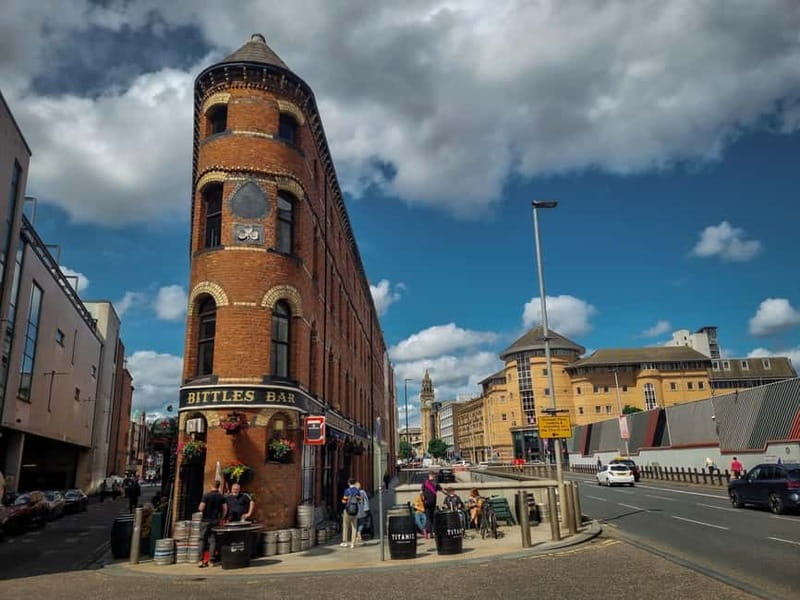
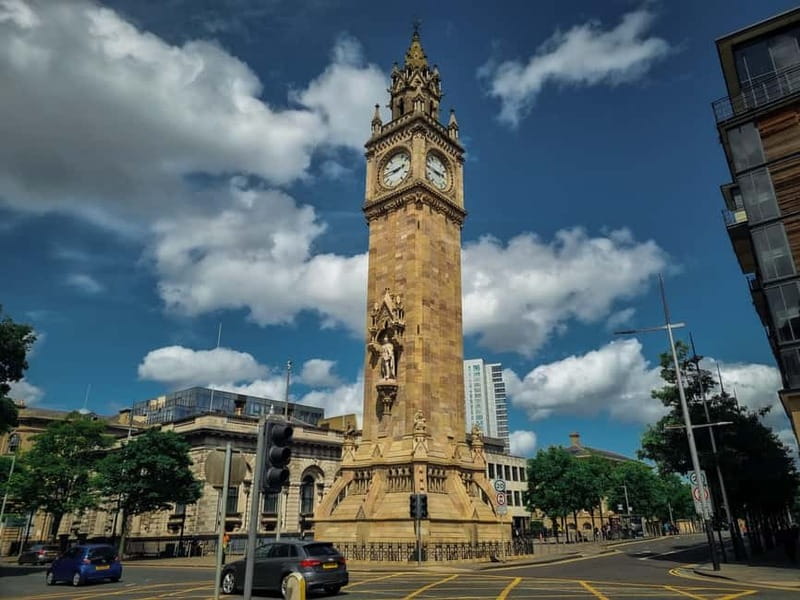
The Albert Memorial Clock is one of Belfast’s most recognisable landmarks. Its leaning structure gives the city a memorable visual marker and makes an easy photo stop during the walk.
The value here is not simply seeing another monument. Corey uses major sights to help you understand the city’s shape and public spaces. A landmark like this gives you a reference point for later exploring, especially if you are staying in central Belfast.
The stop is brief enough to keep the walk moving, but you will have time for photographs. Several participants appreciated that Corey allowed space for pictures and sometimes took photographs for the group. That is a small service, but it helps when you are travelling as a couple or in a group and want everyone included.
Same streets, a different route:
- Underground Vaults Walking Tour in Edinburgh Old Town
★ 4.5 · 8,506 reviews - London: The Original Jack the Ripper Walking Tour
★ 4.7 · 7,833 reviews - Oxford University Walking Tour With University Alumni Guide
★ 5.0 · 6,905 reviews - Edinburgh Castle: Guided Walking Tour with Entry Ticket
★ 5.0 · 5,540 reviews
The Big Fish and Belfast’s public artwork
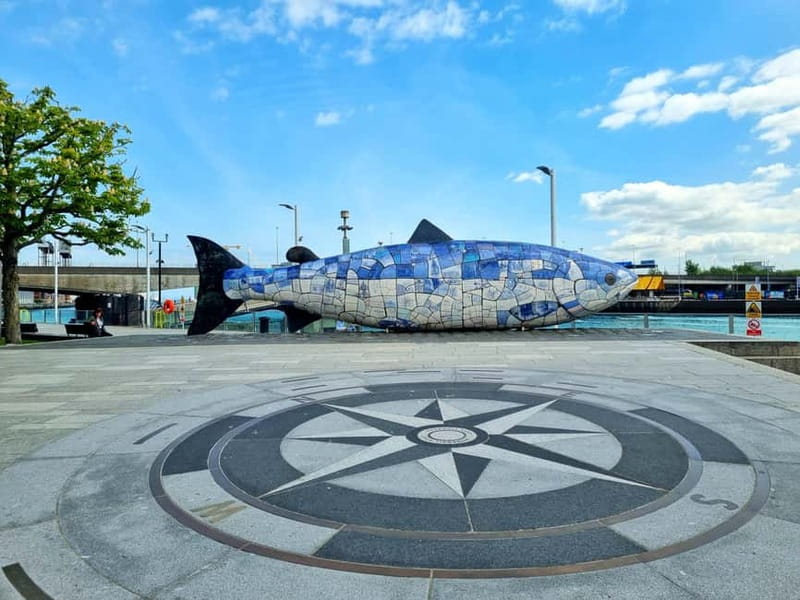
The Big Fish, the large mosaic-covered sculpture beside the River Lagan, is another quick but worthwhile stop. Its surface is covered with images and text connected to Belfast, giving you plenty to examine while Corey explains its place in the city.
This part of the walk helps break up the heavier historical material. Belfast is not presented only through conflict, industry, or famous ships. Public art and riverfront landmarks show a city trying to express itself in newer ways.
The route’s broad mix is one of its strengths. You might move from political history to a playful piece of public art, then back to architecture or local stories. If you prefer a tightly focused tour, this variety may feel a little scattered. If you want a first impression of Belfast as a living city, it works well.
Passing Titanic Belfast and the city’s industrial past
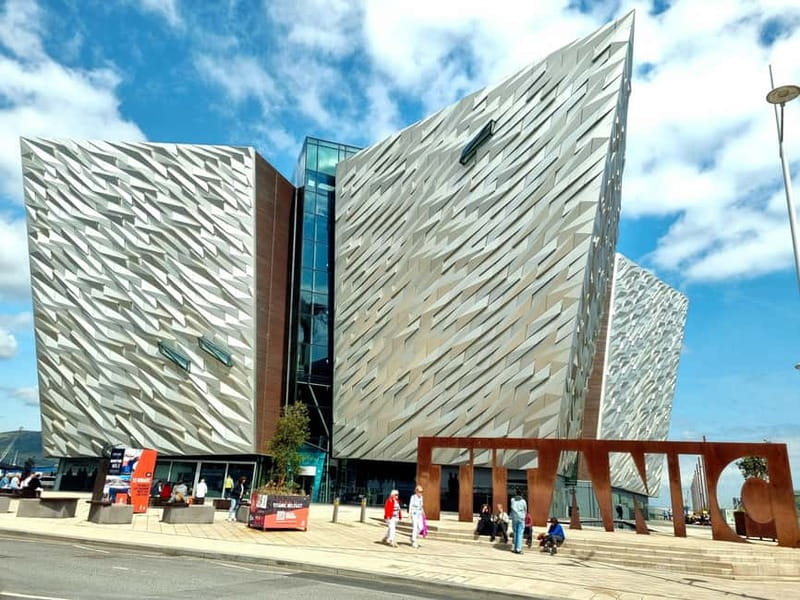
Titanic Belfast is included as a pass-by stop rather than an entry ticket. Corey gives context about Belfast’s shipbuilding legacy and the Titanic connection, while you see the landmark from outside.
This is an important distinction when planning your day. The walking tour does not replace a visit inside Titanic Belfast. That attraction needs separate time and admission if you want the full exhibition experience. What this walk provides is orientation and background, helping you understand why the Titanic story matters so much to Belfast.
I like the way this fits into the wider route. The city is not reduced to the Titanic, yet the subject is given its proper place. You hear about one famous chapter in Belfast’s industrial story, then continue through a city dealing with its past and building a new future.
If Titanic Belfast is high on your list, consider doing this walk early in your stay. You can then decide how much extra time to give the museum and shipyard area.
Beacon of Hope and the city’s forward-looking side
The Beacon of Hope offers another photo stop and a chance to discuss modern Belfast. Its location near the river makes it a useful point for considering the city’s changing public spaces and efforts to look forward.
The tour’s treatment of Belfast’s future is a welcome part of the experience. You hear about difficult periods, but you also get a sense of the city as a place of renewal, new public art, changing neighbourhoods, and ongoing conversation.
That balance matters. A first visit to Belfast can easily become focused only on the Troubles. Those events are essential to understand, but they are not the whole city. Corey’s approach places them beside daily life, humour, architecture, work, food, and hopes for the future.
Joy’s Entry and the pleasures of smaller details
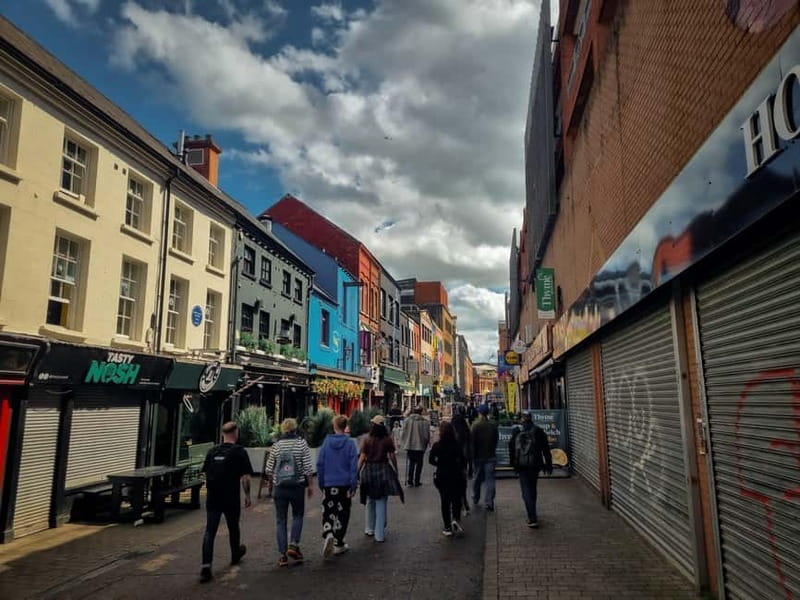
Joy’s Entry is one of the narrower historic lanes on the route. It gives the walk a change of scale after the larger public buildings and waterfront sights.
Small passages like this are useful because they make the city feel more personal. They invite stories about how people moved through Belfast, how old routes survived, and how the city centre has changed around them. This is also the sort of stop where local knowledge can add more than a standard guidebook description.
The route includes photo opportunities and a pass-by view here. You will not spend the entire tour at each location, so expect a steady pace rather than long pauses. That keeps the experience manageable within two hours, though you should still wear proper walking shoes.
Spirit of Belfast and the return to City Hall
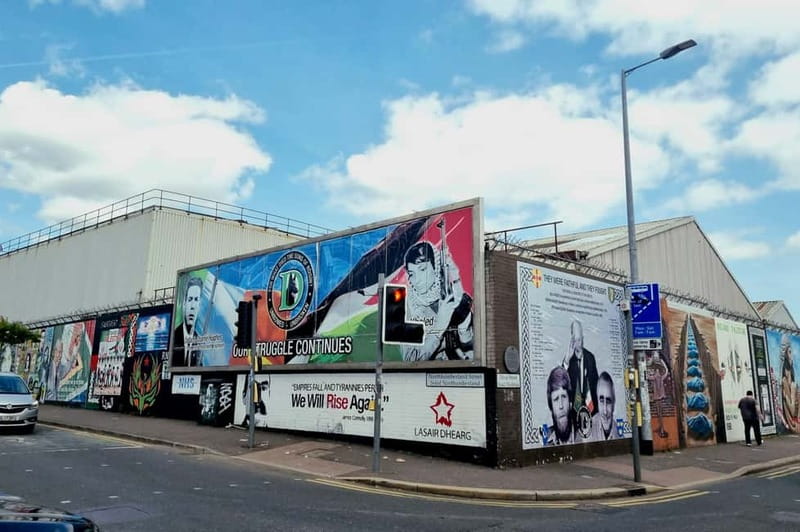
The Spirit of Belfast is the final listed stop before the group returns to City Hall. This sculpture provides another modern counterpoint to the older buildings and historical subjects discussed earlier.
By this stage, the route has taken you through civic Belfast, the Cathedral Quarter, the riverfront, Titanic connections, public art, and historic lanes. Returning to City Hall gives the tour a tidy finish and leaves you close to many central attractions.
This is also when Corey’s practical advice becomes especially useful. He recommends cafes, pubs, shops, and other places to visit, with suggestions for further sights such as the Peace Walls, the Victoria Dome, the Botanic Gardens, and the Library. Some recommendations are free, which can help stretch your sightseeing budget.
Why Corey’s style matters
The strongest part of this experience is the guide’s manner. Corey is described as prompt with messages, cheerful in poor weather, easy to talk with, and willing to answer questions. His approach feels more like a local showing you around than a formal speech delivered at fixed points.
That does not mean the tour lacks structure. The route covers the main sights in a sensible order and finishes on time. The difference is that the information is delivered through conversation, anecdotes, humour, and personal detail.
The optional audio headset is another practical advantage. On many city walks, people at the back miss half the explanation. Here, the headset can make it easier to hear, especially when the group is larger or the street is noisy.
Private and small-group options should suit couples, families with older children, work groups, or anyone who prefers to ask plenty of questions. The standard activity is in English, and children under 12 are not accepted.
Price, pace, and who gets the best value
At $26 per person, this is fairly priced for a guided walk lasting around two to two and a half hours. You are paying for a local guide, structured route, historical context, personal stories, recommendations, and the convenience of seeing several central landmarks without working out the geography yourself.
The value is strongest if you are new to Belfast and want to use the rest of your trip well. A good orientation can save time, point you toward free sights, and help you decide which paid attractions deserve your attention.
It is less good value if you already know the city centre well or want entry into major attractions. The price does not include tickets for Titanic Belfast or other venues because the experience stays outdoors and focuses on the city streets.
Bring comfortable shoes and weather-ready clothing. The walk covers different surfaces and a moderate amount of ground. The booking information describes it as wheelchair accessible, but it also says the route is not suitable for people with mobility impairments and includes varied terrain. If access is important to you, contact the provider before booking so the route can be discussed clearly.
Cancellation is free up to 24 hours before the start, and you can reserve now and pay later. Those terms are useful if your Belfast plans are still shifting.
Should you book A Belfast Dander?
Book it if you want a friendly first look at Belfast, especially early in your visit. You will get a broad grasp of the city, hear local expressions, see the main central landmarks, and leave with ideas for what to do next.
Choose another format if you want an in-depth Troubles tour, a dedicated Titanic experience, or long visits inside museums and historic buildings. For everyone else, the combination of history, humour, and local perspective makes this a strong-value introduction.
Corey’s real strength is making Belfast feel like a place of people, not just monuments. If you enjoy asking questions, hearing personal stories, and learning the city through conversation, this is a sensible way to begin.
FAQ
Where does the Belfast walking tour meet?
The meeting point is in the courtyard of Belfast City Hall, beside the statue of Queen Victoria and facing the main entrance. Look for Corey with a bright blue school bag.
How long does the tour last?
The tour lasts about two hours, with the activity information giving a possible duration of up to 150 minutes. Check the available start times when booking.
What language is the tour conducted in?
The live tour is conducted in English.
Is Titanic Belfast included?
Titanic Belfast is visited from outside as a pass-by stop. Entry to the attraction is not included in the walking tour.
Is the tour suitable for children?
Children under 12 are not suitable for this activity.
What should I wear and bring?
Wear comfortable shoes and comfortable clothing suitable for the weather. The route covers different surfaces and includes a moderate amount of walking.
Can I book a private tour?
Yes. A private option is available when booking, with flexible timing and route arrangements for private and larger groups.
Just added around the UK
- Falmouth: Vibrant Historical Walking Tour (award-winning)★ 4.9 · 75 reviews
- The Must-Sees of Edinburgh: Small Group Walking Tour in French★ 4.9 · 88 reviews
- Edinburgh: Old Town History Walking Tour★ 4.9 · 528 reviews
- Edinburgh: Old Town Stories – Guided Walking Tour★ 4.9 · 86 reviews
- Ghosts, Ghouls & Gallows :The Original Bristol Ghost Walk★ 4.6 · 76 reviews
- Edinburgh: Private Walking Tour with a Local★ 4.4 · 78 reviews
- Edinburgh: Private Walking Tour in French with Clémentine★ 5.0 · 73 reviews
- Edinburgh: Multi-Sensory Old Town Historical Walking Tour★ 4.6 · 290 reviews
Walking Tours, compared.

Magical London: Harry Potter Guided Walking Tour
Read our review →
Reykjavik Food Walk – Local Foodie Adventure in Iceland
Read our review →
History and Hauntings of Salem Guided Walking Tour
Read our review →
New Orleans Premier Ghost, Voodoo and Vampire Walking Tour
Read our review →
Amsterdam Anne Frank: Small-Group Walking Tour & Local Guide
Read our review →
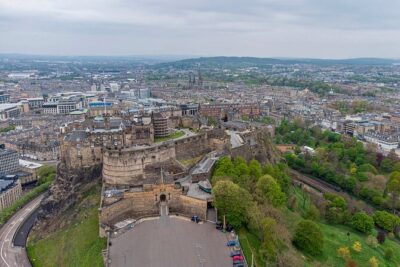
Edinburgh Castle: Guided Walking Tour with Entry Ticket
Read our review →
Anne Frank’s Story – Guided Walking Tour through Amsterdam
Read our review →Browse the lists this tour appears in