
REVIEW · BELFAST
Belfast: Political Conflict 3-Hour Walking Tour
Belfast’s political story comes alive when two former participants from opposing communities guide you through the streets where they grew up. One half takes you along Republican Falls Road, the other through Loyalist Shankill Road, so you hear more than a tidy version of The Troubles.
I like the direct contact with people who lived through the conflict, and I like that the murals are explained in place rather than treated as colorful photo stops. The main drawback is the subject matter: stories of shootings, loss, prison, and lasting mistrust can be upsetting, and the 4-kilometer walk offers no scheduled meal stop.
Key points
- Two guides, two political viewpoints: The tour is split between a Republican guide and a Loyalist guide or former security-force member.
- Falls Road and Shankill Road: You cross from a strongly Nationalist area into a strongly Unionist one, seeing how identity shapes each community.
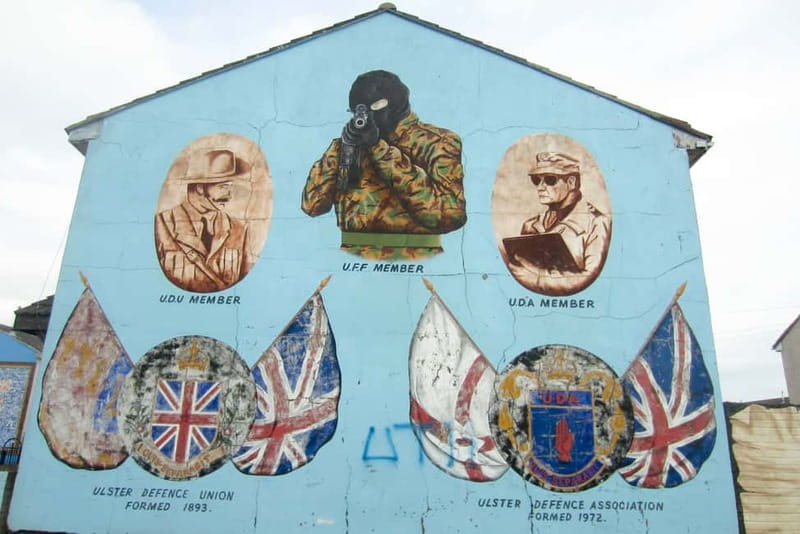
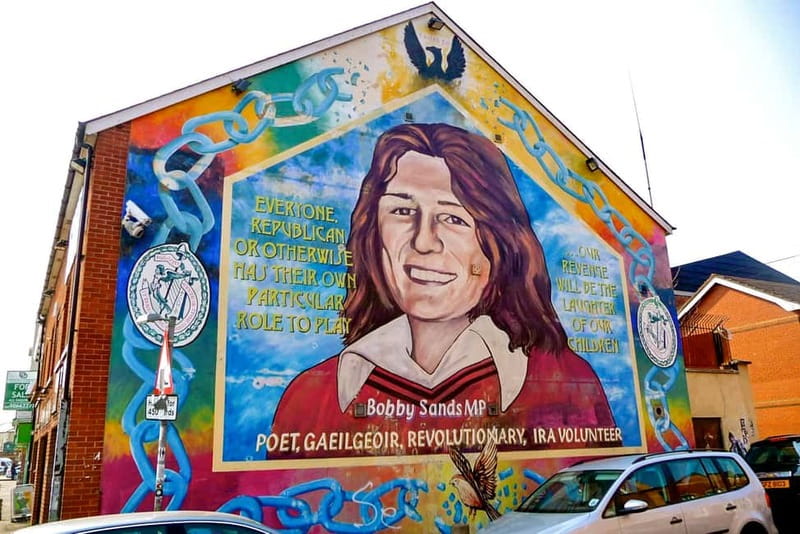
- Murals with meaning: Political paintings, memorials, flags, and symbols are explained as living parts of local culture.
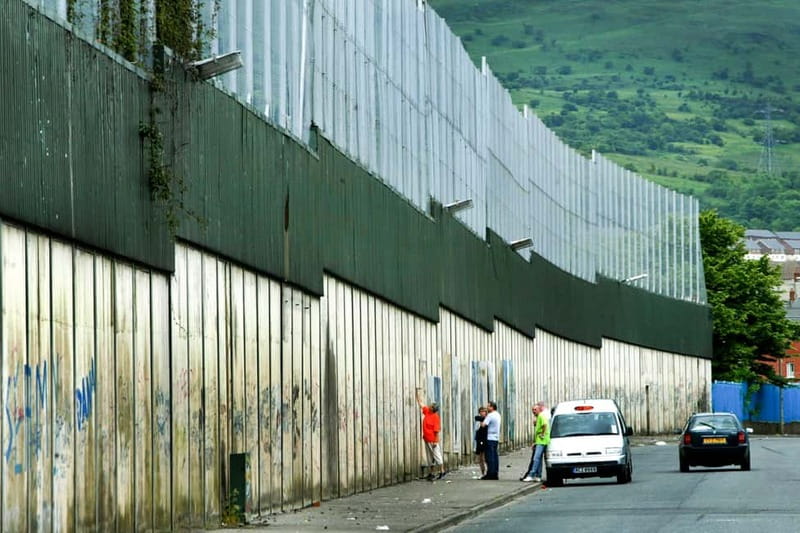
- Peace Walls up close: You pass through electronically controlled gates and can sign the wall beside messages from figures such as Bill Clinton and the Dalai Lama.
- A 4-kilometer walk: Wear solid, comfortable shoes and allow extra time at the end, since the tour finishes about 15 minutes from its starting point.
- Best for mature visitors: Discussion of extreme violence may make this unsuitable for children under 15.
Why two former combatants change the story
Many Belfast tours explain The Troubles through dates, political agreements, and famous murals. This one puts the human voice first. You begin with a Republican ex-political prisoner, then spend the second part with a Loyalist ex-political prisoner or former member of the security forces.
That structure matters. You are not given a single official version of events. You hear why one community wanted a united Ireland and why the other wanted to remain part of the United Kingdom. The guides speak from their own backgrounds, so the tone can be passionate and personal rather than neutral in the usual museum sense.
That also means you should not expect every point to be presented in a perfectly balanced, academic way. Personal testimony has force, but it also has limits. One guide may stress injustice suffered by Nationalists, while the other may focus on threats to Unionist families and the British connection. I see this as part of the value, as long as you listen carefully and keep in mind that two personal accounts do not cover every experience in Northern Ireland.
Names of guides vary by departure. Recent tours have included guides such as Robert, Jack, Mark, Jake, Gerard, Peter, Pod, Paul, and Fred. The central feature is not any one personality, but the pairing of guides from opposing traditions.
More Three-Hour Tours in the UK:
- Westminster 3 Hour Walking Tour and Visit of Churchill War Rooms
★ 5.0 · 967 reviews - Edinburgh: 3-Hour Guided Walking Tour
★ 4.8 · 773 reviews - Edinburgh: 3-Hour Historical Walking Tour in Italian
★ 4.7 · 734 reviews
Starting at Divis Tower and walking Falls Road
Meet in front of Divis Tower on Divis Street. This is a useful starting point because the tower sits beside the Falls area and gives you immediate context for West Belfast. From here, your Republican guide leads the first section of the walk through the Falls Road community.
You will see clear signs of support for an Irish republic. Murals, memorials, flags, plaques, and local landmarks tell stories that are easy to miss if you simply walk through the area on your own. Your guide explains who is remembered, what events shaped the neighborhood, and how political symbols continue to affect daily life.
The personal stories give these places weight. A guide who grew up during the conflict can explain what it meant to live with military checkpoints, violence, fear, and divided communities. The point is not to turn suffering into a spectacle. It is to help you understand why political identity here remains tied to family memory and local streets.
I would pay close attention during this section, even if you already know the broad outline of The Troubles. The tour can fill in the gap between history-book summaries and the experience of growing up inside the conflict.
The Falls Road section also shows why a walking tour is more useful than a passing bus tour for this subject. A bus can point out a mural, but it cannot easily pause beside a memorial while someone explains its meaning. You have time to look closely, ask questions, and notice how ordinary homes and shops sit beside reminders of violence.
Crossing into Shankill Road
The change from Falls Road to Shankill Road is one of the tour’s most striking moments. You pass through electronically controlled gates near the Peace Line and enter a mainly Protestant, Loyalist area.
The physical gate is a practical reminder that the division is not only historical. It is built into the city. Even after the worst violence ended, community boundaries, political loyalties, and memories remain close to the surface.
On the Shankill side, a second guide takes over. This guide may be a Loyalist former political prisoner or someone who served in the security forces and grew up locally. You hear why many residents remain committed to the Union and to Northern Ireland’s place within the United Kingdom.
The contrast between the two sections is the heart of the experience. One guide may speak warmly and openly about reconciliation, while the other may sound more guarded about present-day political changes. That difference can feel uncomfortable, but it is useful. You are hearing that peace does not mean both communities now share the same memory or political hopes.
The Shankill murals and memorials have their own symbols, names, and references. Your guide explains how they relate to Loyalist identity, local service, and the conflict. Do not expect the two neighborhoods to mirror each other exactly. Their stories overlap, but they remember the past in different ways.
Reading Belfast’s murals as public history
Belfast’s political murals are not simply outdoor decoration. They are public statements about identity, loyalty, loss, resistance, and international causes. The tour treats them as part of the city’s history rather than as a checklist of photo stops.
On Falls Road, murals may point toward Irish nationalism, Republican figures, or struggles beyond Northern Ireland. On Shankill Road, the imagery reflects Loyalist and Unionist traditions. Your guide provides the local references that make the paintings easier to read.
Some murals and memorials are tied to specific people or events. Others connect Belfast to causes elsewhere in the world. Without explanation, you may notice colors, flags, and faces but miss why they matter. The guide’s role is to supply that background and explain how public art helps each neighborhood tell its own story.
I would avoid treating the murals as a simple contest between good and bad sides. The tour is more useful when you ask what each image says about belonging, fear, pride, or grief. The paintings are evidence of how communities remember, and memory is rarely tidy.
The walk also gives you a better sense of how close these symbols are to ordinary life. They are not isolated exhibits behind glass. They appear on streets where people live, work, and raise families.
A few more walking tours around the UK worth a look
- Magical London: Harry Potter Guided Walking Tour
★ 4.7 · 22,044 reviews - Edinburgh: Harry Potter Magical Guided Walking Tour
★ 4.8 · 11,944 reviews - Edinburgh Castle: Guided Walking Tour with Entry Ticket
★ 4.7 · 11,699 reviews - Underground Vaults Walking Tour in Edinburgh Old Town
★ 4.5 · 8,506 reviews
At the Peace Walls and the end of the walk
The Peace Walls are the tour’s clearest physical symbol. They were built to separate communities and reduce contact during periods of violence. Today, they remain visible reminders that the conflict has ended in one sense but has not erased every division.
You get an opportunity to sign the wall and leave a message alongside names including Bill Clinton and the Dalai Lama. This is a small activity, but it gives you a moment to respond personally after hearing several hours of difficult history.
Do not expect the wall to provide a neat ending. The tour presents peace as something maintained by people and communities, not as a problem solved once and for all. Personal accounts may leave you more aware of how much work remains.
The walk ends on Lower Shankill Road, roughly a 15-minute walk from Divis Tower. That matters when planning the rest of your afternoon. You are not returned to the starting point, so check your map before booking another activity close to Divis Street.
What three hours really feels like on foot
The route covers about 4 kilometers, or 2.5 miles. That is manageable for most people who are comfortable walking, but the time comes from frequent stops and explanations rather than from distance alone.
Wear comfortable shoes. You may be standing on pavements while listening, and wet or windy Belfast weather can make the walk feel longer. Bring suitable outer clothing and be ready to spend much of the time outdoors.
There is no programmed food or toilet stop listed as part of the tour. Some departures have included chances to use facilities or buy a hot drink and snack, but you should not depend on that. Use the restroom before meeting the group, carry water, and tell your guide if you need a break.
A few practical points can improve the experience:
- Arrive early at Divis Tower, since guides may begin showing photographs or setting the scene before the official departure.
- Stay close enough to hear clearly, especially beside traffic. Street noise can make parts of the commentary harder to catch.
- Ask questions when there is a natural pause. The guides are there to explain their own experiences, but the subject can be emotionally charged.
- Keep an open mind without assuming every statement is the final word on Northern Ireland’s past.
The tour is offered in English with a live guide. It is wheelchair accessible, though you may want to confirm the route details for your own needs before booking.
How balanced is the political viewpoint?
The tour’s strongest feature is also the point that requires the most care. You hear from both Republican and Loyalist perspectives, but balance does not mean that each guide will give equal weight to every cause, grievance, or community.
One account may spend more time on discrimination, housing, voting rights, or job opportunities. Another may focus on attacks, security concerns, British identity, or the fear felt by Loyalist families. The conflict was not simply Catholics against Protestants, and it was not only a dispute about religion. National identity, civil rights, class, state power, armed groups, and family history all played parts.
Some people find that the guides’ personal opinions make the tour more honest. Others may prefer a more detached presentation. I would choose this walk if you want a direct encounter with memory and political feeling, not a neutral lecture.
Listen for what is left unsaid as well as what is explained. The best way to use the tour is to compare the accounts, notice where they clash, and continue learning afterward through museums, books, or other local sources.
Price, value, and the right kind of visitor
At $35 per person, this is fairly priced for a three-hour guided walk with two specialist voices. You are paying for local access, personal testimony, and a route that would be hard to interpret fully on your own. A self-guided walk costs less, but it cannot provide the same direct discussion or answer questions in the moment.
The value is strongest if you have a real interest in Belfast’s politics, modern Irish history, or the way communities remember violence. It is also a useful first activity in Belfast because it gives you context for the Peace Walls and murals before you encounter them elsewhere.
I would not pick it for someone seeking light sightseeing or a relaxed stroll. The subject is serious, and some stories may be distressing. Children under 15 may not be suitable because extreme violence can be discussed, with the final decision left to a guardian.
The overall rating is 4.6 from 2,215 reviews, which fits the tour’s main strengths: the two-guide format, emotional honesty, strong local knowledge, and good value. The main cautions are the walking, the lack of a guaranteed food or restroom stop, occasional street noise, and the possibility that one guide’s interpretation may feel stronger or less complete than the other’s.
Should you book this Belfast walking tour?
I would book it if you want to understand why Belfast’s divisions remain visible and personal. The combination of Falls Road, Shankill Road, murals, Peace Walls, and two guides gives you far more than a quick look at famous political sights.
Go prepared to listen rather than to confirm your own view. Wear good shoes, eat beforehand, bring rain protection, and allow time afterward to think about what you heard. If you prefer a detached historical presentation, choose a museum or a conventional city tour instead.
For most adults interested in Belfast’s recent past, this is one of the better uses of three hours in the city. It does not make The Troubles simple, and that is precisely why it is worth your time.
FAQ
How long is the Belfast Political Conflict walking tour?
The tour lasts approximately three hours.
How far do you walk?
The route covers about 4 kilometers, or 2.5 miles.
Where does the tour start?
You meet in front of Divis Tower on Divis Street in Belfast.
Where does the tour finish?
The walk ends on Lower Shankill Road, about a 15-minute walk from the starting point.
Which areas do you visit?
The route includes Falls Road, Shankill Road, and the Peace Walls.
Do I hear both Republican and Loyalist perspectives?
Yes. The tour includes two different perspectives, with one guide from the Republican side and another from the Loyalist side or the security forces.
Who leads the tour?
Guides vary by departure. Named guides on recent departures have included Robert, Jack, Mark, Jake, Gerard, Peter, Pod, Paul, and Fred.
What language is the tour in?
The live tour is conducted in English.
Is the tour suitable for children?
It may not be suitable for children under 15 because the discussion can include extreme violence. A guardian decides whether an older child is ready for the subject.
What should I bring?
Wear comfortable walking shoes and prepare for several hours outdoors. There is no scheduled food or toilet stop, so use the restroom beforehand and bring water.
Is the tour wheelchair accessible?
The activity is listed as wheelchair accessible.
Can I cancel the booking?
You can cancel up to 24 hours in advance for a full refund. A reserve-now, pay-later option is also available.
Just added around the UK
- Falmouth: Vibrant Historical Walking Tour (award-winning)★ 4.9 · 75 reviews
- The Must-Sees of Edinburgh: Small Group Walking Tour in French★ 4.9 · 88 reviews
- Edinburgh: Old Town History Walking Tour★ 4.9 · 528 reviews
- Edinburgh: Old Town Stories – Guided Walking Tour★ 4.9 · 86 reviews
- Ghosts, Ghouls & Gallows :The Original Bristol Ghost Walk★ 4.6 · 76 reviews
- Edinburgh: Private Walking Tour with a Local★ 4.4 · 78 reviews
- Edinburgh: Private Walking Tour in French with Clémentine★ 5.0 · 73 reviews
- Edinburgh: Multi-Sensory Old Town Historical Walking Tour★ 4.6 · 290 reviews
Walking Tours, compared.

Magical London: Harry Potter Guided Walking Tour
Read our review →
Reykjavik Food Walk – Local Foodie Adventure in Iceland
Read our review →
History and Hauntings of Salem Guided Walking Tour
Read our review →
New Orleans Premier Ghost, Voodoo and Vampire Walking Tour
Read our review →
Amsterdam Anne Frank: Small-Group Walking Tour & Local Guide
Read our review →

Edinburgh Castle: Guided Walking Tour with Entry Ticket
Read our review →
Anne Frank’s Story – Guided Walking Tour through Amsterdam
Read our review →Browse the lists this tour appears in