
REVIEW · TOKYO
Tokyo: Shinjuku Nightlife & Secret Backstreets Walking Tour
Shinjuku after dark is more than neon signs and giant screens. This 90-minute walk threads through Omoide Yokocho, Kabukicho, Golden Gai, and Hanazono Shrine, showing you both the famous nightlife streets and the narrow lanes you could easily miss alone. I like the mix of food, local history, shrine atmosphere, and practical advice on where to eat. I also like that guides such as Sota, Rinna, Akira, Ai, and Mao adjust their explanations to the group.
The main drawback is time. Ninety minutes goes quickly in an area packed with signs, alleys, restaurants, and stories. You will get a useful introduction, not a slow evening of eating and drinking. The promised vending-machine drink is included, though one booking reported that it was not provided, so I would treat it as a pleasant extra rather than the reason to book.
Key points at a glance
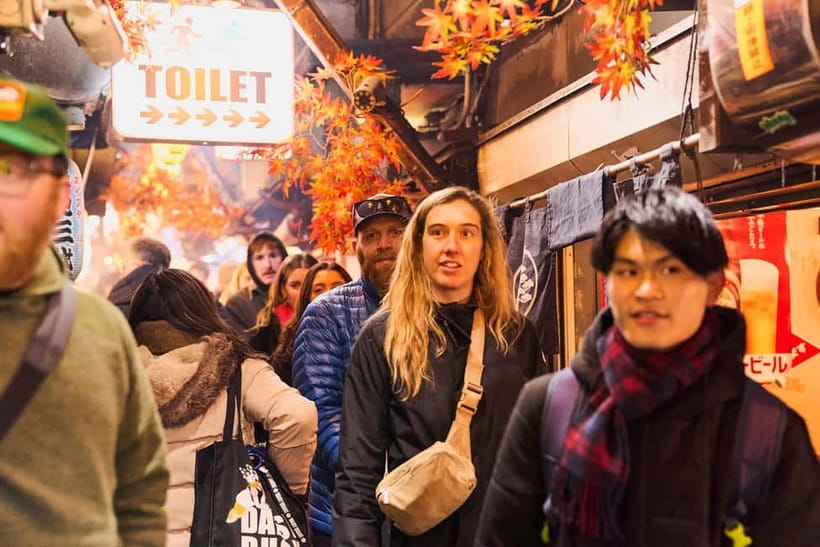
- Omoide Yokocho in ten minutes: See one of Shinjuku’s best-known food lanes and hear how the area fits into the district’s past.
- Kabukicho beyond the neon: Learn how a former red-light district became one of Tokyo’s main nightlife centers.
- Tokyu Kabukicho Tower for thirty minutes: This is the longest stop and may include a visit to an observation area with broad city views.
- Golden Gai’s tiny bar lanes: Get guidance on a compact maze of small drinking spots that can feel confusing on your own.
- Hanazono Shrine at night: End with a quieter, more atmospheric side of Shinjuku.
- Useful local advice: Guides point out restaurants, bars, customs, and places you may want to return to later.
Why this walk helps you understand Shinjuku
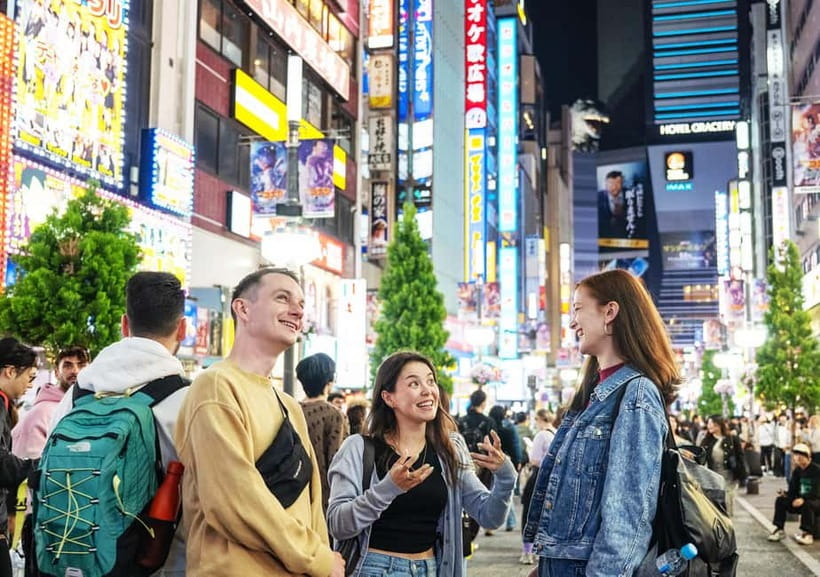
Shinjuku can be hard to read on a first visit. The station is huge, the East Exit area is crowded, and the entertainment streets change mood from one block to the next. A guide gives you a map in your head before you set off on your own.
The tour focuses on the East Exit side of the district. You meet outside the Shinjuku Station East Exit Police Box at 3-38-1 Shinjuku, where a guide holds a Local Guide Stars sign. This is a sensible meeting place, but allow extra time to find the correct station exit. Shinjuku Station is famously large, and at least one person had trouble getting through it to the meeting point.
I like the way the walk joins several very different parts of Shinjuku. You move from food stalls and tiny restaurants to bright entertainment streets, then into narrow bar lanes and finally a shrine. That change of mood is the real point of the experience.
The guide also adds context that a sign or quick internet search will not provide. The area’s shift from a former red-light district into a major nightlife center is central to the walk. You will hear how the district developed and get a better sense of why its old lanes still sit beside large new buildings.
More Nights Out in Tokyo:
- Shibuya Meltdown Nightlife Tour: All-You-Can-Drink Bar Hopping
★ 5.0 · 1,058 reviews - Tokyo: Shinjuku Bar Hopping & Night Walking Tour
★ 4.6 · 137 reviews - Madrid Tapas & Wine Tasting Walking Tour – Small Group Local Bars
★ 5.0 · 3,644 reviews
Omoide Yokocho, ten minutes among compact food stalls
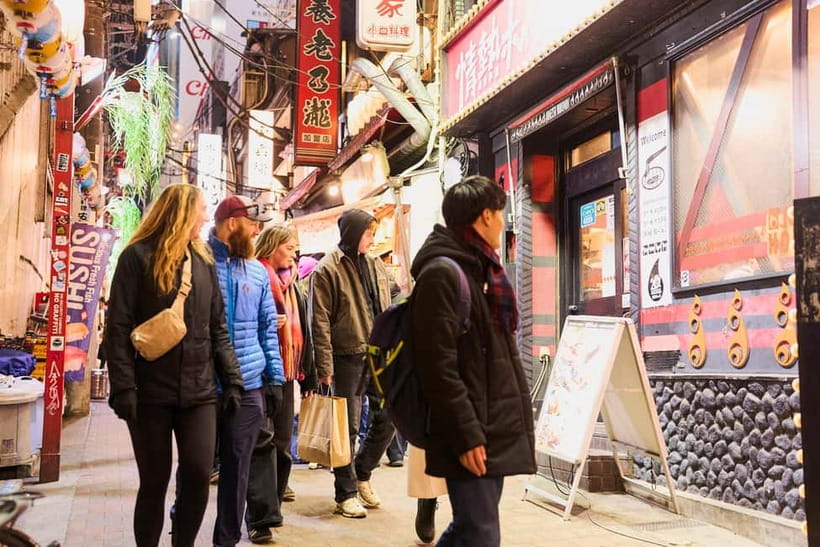
The first major stop is Omoide Yokocho, a narrow dining area with around 300 restaurants and bars. It is one of the quickest stops, so do not expect a full meal here. Instead, you get an introduction to the lane, its food options, and the small-scale dining style that makes this corner of Shinjuku feel so different from the broad avenues nearby.
The guide can point out places worth remembering for later. That is useful because tiny restaurants may have limited seating, simple menus, or signs that are hard to understand if you do not read Japanese. You can then return with a clearer idea of what you are looking at.
I would not plan to eat a full dinner during the tour. The group needs to keep moving, and the stop lasts about ten minutes. Think of Omoide Yokocho as a preview and orientation, not a restaurant crawl.
Kabukicho, where nightlife and history meet
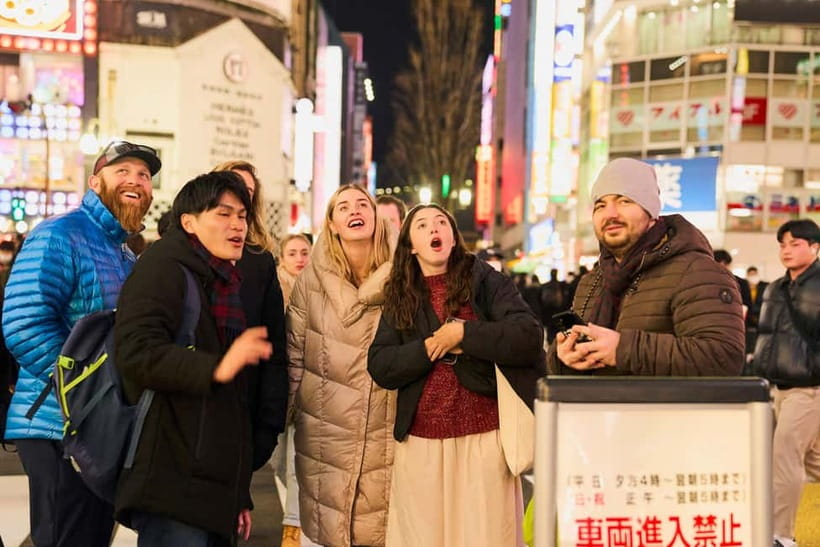
The walk then moves into Kabukicho, the district most associated with Shinjuku’s late-night entertainment. The guide explains its cultural change from a former red-light district to a crowded nightlife hub. This is where local interpretation matters most, since the area can look like a wall of advertisements when you first see it.
You will learn how to read the district with more care. The guide can separate ordinary restaurants and bars from the more adult-oriented parts of Kabukicho and explain local customs and points of etiquette. That advice is especially useful if you are deciding where to eat later or trying to avoid walking into a place that does not suit your group.
The area is not presented as a single type of nightlife. Guides have pointed out food spots, bars, entertainment venues, and newer developments, while also explaining which older places have disappeared or been rebuilt. You get a sense of an area that keeps changing rather than a frozen postcard version of Tokyo.
Families can join, and the information can be adjusted for different ages. Still, Kabukicho is an adult entertainment district, so parents should decide if its signs and atmosphere fit their children. The tour does not require you to enter any bar or venue.
Tokyu Kabukicho Tower, the longest stop
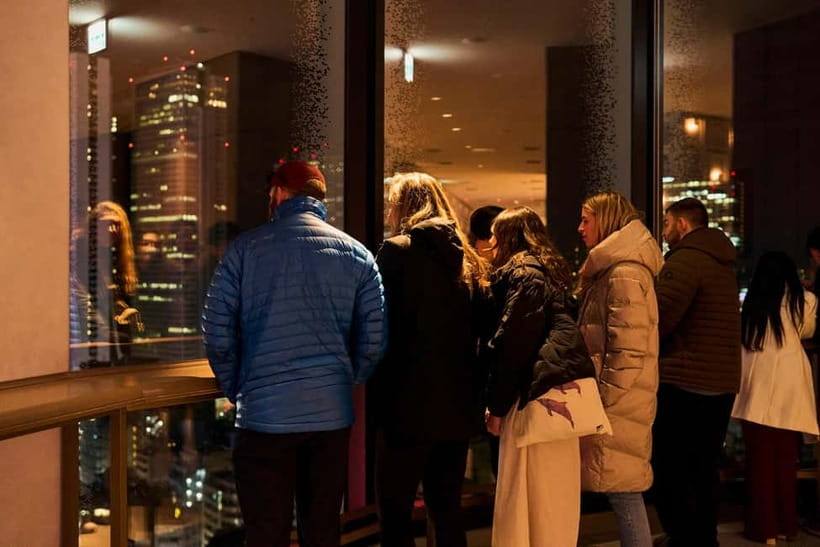
The visit to Tokyu Kabukicho Tower lasts about thirty minutes, making it the central pause in the walk. This large modern complex gives you a useful contrast to the older lanes. Instead of only looking backward at Shinjuku’s past, you see how the district is being rebuilt and repackaged for a new generation of nightlife and entertainment.
An observation deck has been a highlight of this stop for some groups, with the chance of looking over the city from above. Since the exact access can depend on the day and the tour’s timing, I would not book this walk solely for a guaranteed view. The tower visit is still worthwhile as a change of pace and a way to understand the newer face of Kabukicho.
Thirty minutes is enough to look around without turning the walk into a long indoor visit. It also gives your feet a short break, though you should still wear comfortable shoes. The full experience remains a walking tour, and the route continues through busy streets and narrow lanes afterward.
A few more walking tours around Tokyo worth a look
- Tokyo Tsukiji Fish Market Food and Culture Walking Tour
★ 5.0 · 3,184 reviews - Tokyo: Imperial Palace and Shogun Historical Walking Tour
★ 5.0 · 2,251 reviews - Tokyo: Shinjuku Local Bar and Izakaya Guided Walking Tour
★ 4.9 · 1,794 reviews - Tokyo: Tsukiji Fish Market Food and Walking tour
★ 5.0 · 1,724 reviews
Golden Gai, small bars and useful warnings
Golden Gai is one of the most distinctive parts of the walk. Its lanes are tightly packed with tiny bars, each with its own character and often only a handful of seats. From the outside, the area can seem like a maze. A local guide helps you understand how to approach it and what to look for.
The value here is practical. Your guide can recommend places to consider later and explain customs that may not be obvious, such as how small a bar might be or how important it is to check the atmosphere before entering. You receive ideas rather than a forced bar visit, which keeps the walk suitable for people who are curious but not ready to drink.
Golden Gai is also a place where the pace can feel rushed. Ten minutes is enough for an overview and a few photographs, but not enough to inspect every lane. If you want to spend a full evening there, take notes and return after the tour. The guide’s suggestions can save you from wandering without a plan.
Hanazono Shrine, a quieter end to the evening
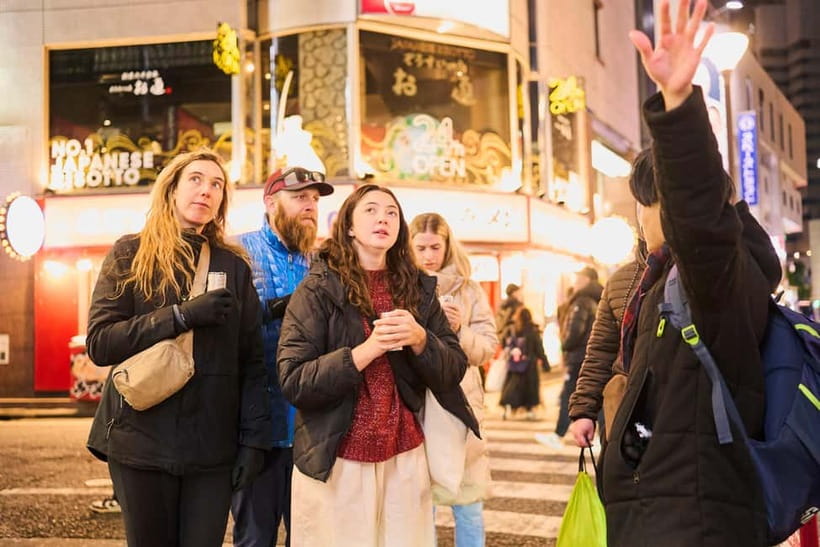
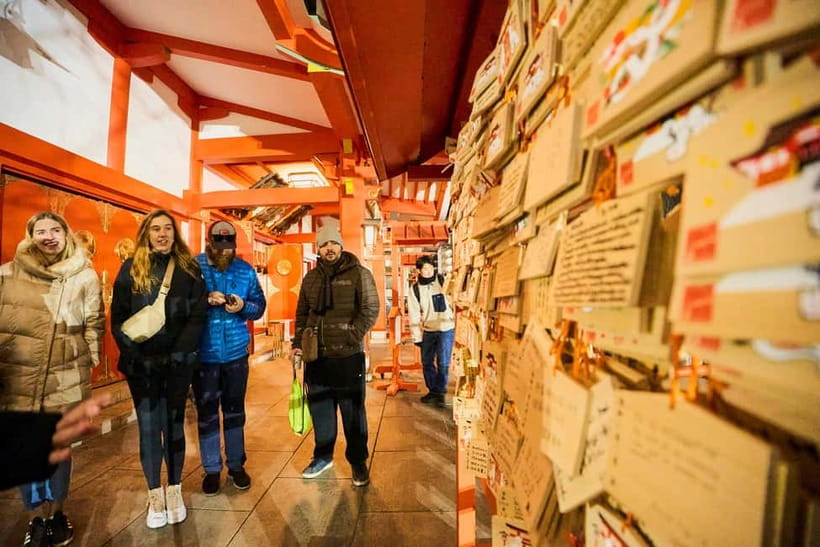
Hanazono Shrine changes the mood again. After the signs and narrow entertainment lanes, a nighttime shrine offers a calmer setting and a chance to consider another side of Tokyo. The stop lasts about fifteen minutes, so you have time to look around and hear about its place in the neighborhood without turning the visit into a formal religious tour.
I especially like this part because it prevents the experience from becoming only a nightlife walk. Shinjuku is not just restaurants, bars, and giant advertisements. The shrine shows how older local traditions remain part of the modern district.
The atmosphere will depend on the weather, the season, and how busy the shrine is that evening. At night, the setting can feel quiet and striking, but the tour does not promise a special ceremony or private access. You are there to see the shrine, understand its context, and finish the route on a more reflective note.
What your guide adds to the evening
The strongest part of this experience is the guide. English and Japanese tours are available, and the guides named in past bookings include Sota, Rinna, Akira, Ai, Mao, Noa, Han, Chihiro, Kawa, and others. Your guide may differ, but the format favors conversation and questions rather than a memorized speech alone.
Several guides have been praised for answering questions about customs, food, history, and places to avoid. Kawa, for example, tailored the explanations to a group’s interests. Akihiro helped a small group find food ideas for later, including taiyaki and a nearby dinner spot. Those details show how the walk can become more useful when you tell the guide what you want to do after it ends.
The groups can sometimes be small, which makes the experience feel more personal. At other times, you may walk with a larger group in a very busy area. One guide, Hannah, was particularly good at keeping everyone together, a practical skill in Shinjuku’s crowds.
English ability is generally strong, but individual speaking styles will vary. If you have a specific question, ask it early. Guides are there to help, and the walk becomes more valuable when you use that access to local advice.
The vending-machine drink and the small details
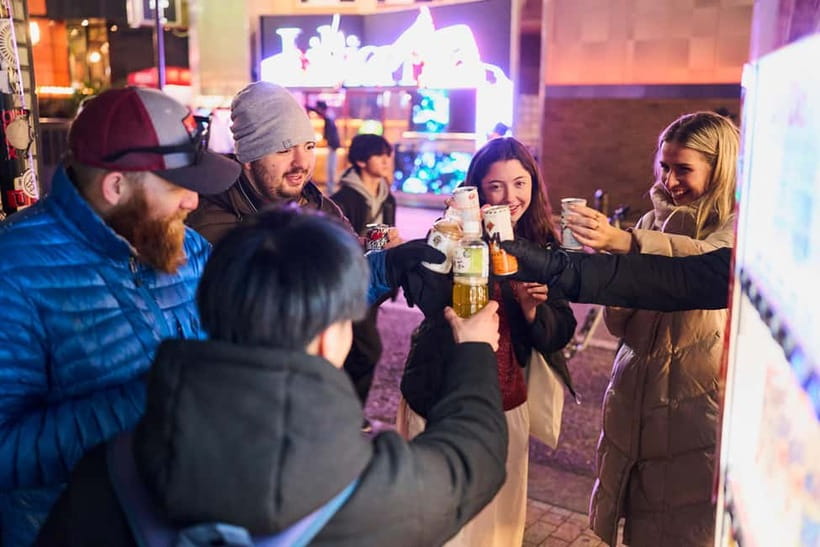
The price includes one vending-machine drink recommended by the guide. That sounds simple, but it fits the walk’s focus on ordinary details of Japanese city life. Tokyo’s vending machines are part of the everyday street scene, and a local recommendation gives you a small taste of how residents use them.
One booking reported that the drink was not provided. I would ask the guide about it at the start if it matters to you. At $22 per person, the drink is not the core value of the tour. The real value is the guide’s route, explanations, restaurant suggestions, and help making sense of Shinjuku.
The price is fair for a 90-minute guided walk in one of Tokyo’s most confusing districts. You are not paying for a meal, entry to a major attraction, or a long sightseeing day. You are paying for a short introduction that can help you spend the rest of your evening more wisely.
Timing, clothing, and walking demands
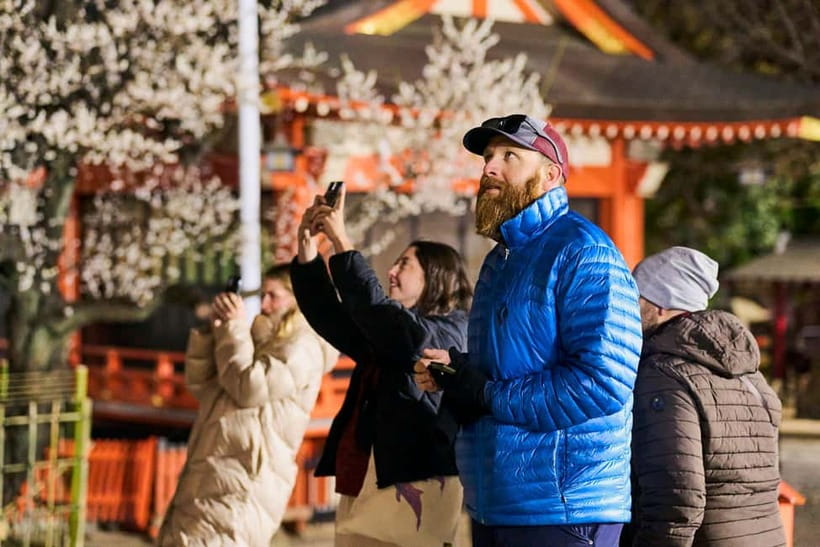
The tour operates rain or shine, so bring an umbrella or raincoat when rain is expected. Warm clothing is also advised. Night temperatures can make the walk feel cooler, especially if you stop outdoors to listen to explanations.
Wear comfortable shoes. The route covers station streets, crowded sidewalks, restaurant lanes, and shrine paths, with some time on foot between the main stops. The walking distance is not presented as extreme, but the combination of crowds and uneven, narrow areas makes good footwear worthwhile.
The tour is listed as wheelchair accessible. If you use a wheelchair, it is still sensible to confirm current route conditions and the day’s access arrangements when booking, since narrow lanes and busy streets can affect how easily the group moves.
The meeting point is also the return point, which is convenient. You finish back at the Shinjuku Station East Exit Police Box after about five minutes of final walking from Hanazono Shrine. The tour does not include transportation, meals, or a bar visit.
Who will get the most from this tour
I would choose this walk early in a Tokyo stay. It gives you a useful map of Shinjuku and leaves you with several places to revisit. It is especially helpful if you want nightlife but do not want to wander into unfamiliar streets without context.
It also suits repeat visitors. Even if you have already walked through Shinjuku, the guide may take you down different streets and explain what you passed before. The district has enough layers that a second look can be worthwhile.
Solo visitors can benefit from the friendly structure, while families can join if they are comfortable with Kabukicho’s adult-oriented signs and atmosphere. The tour is also a good fit for anyone who wants food recommendations without committing to a restaurant booking during the walk.
I would skip it if you want a long, slow photo session or a full evening of bar hopping. The schedule is tight, and the guide needs to keep the group moving. You may also find the tour less satisfying if you prefer to explore completely alone and do not enjoy group pacing.
My verdict on the Shinjuku night walk
Book this tour if you want a clear introduction to Shinjuku before exploring on your own. The route covers the district’s major contrasts: Omoide Yokocho’s compact dining lanes, Kabukicho’s nightlife, Tokyu Kabukicho Tower’s newer scale, Golden Gai’s tiny bars, and Hanazono Shrine’s quieter atmosphere.
At $22, it is good value for the local guidance alone. The strongest benefits are the practical restaurant tips, the explanation of how Kabukicho changed, and the chance to see lanes you might pass without noticing. Just keep your expectations realistic: this is a fast orientation walk, not a full food tour or a night of drinking.
FAQ
Where does the Shinjuku nightlife tour meet?
You meet at the Shinjuku Station East Exit Police Box, located at 3-38-1 Shinjuku, Shinjuku-ku, Tokyo. Look for a guide holding a Local Guide Stars sign.
How long does the walking tour last?
The tour lasts 90 minutes and returns to the Shinjuku Station East Exit Police Box.
Which languages are available?
The tour is available with a live guide in English or Japanese.
Is the tour available in bad weather?
Yes. The walk operates rain or shine. Bring an umbrella or raincoat when it rains, and wear warm clothing when needed.
Is the tour wheelchair accessible?
Yes, the activity is listed as wheelchair accessible.
What is included in the price?
The price includes the guided walking tour and one vending-machine drink recommended by the guide. Food, restaurant meals, transportation, and bar visits are not listed as included.
Just added around Tokyo
- Tokyo: Tsukiji Market Walking Tour & Sushi Cooking Class★ 4.6 · 122 reviews
- Tokyo:Stroll in Old traditional culture towns~Yanaka & Nezu★ 4.9 · 186 reviews
- Tokyo: Shibuya Crossing & Hidden Streets Walking Tour★ 4.8 · 128 reviews
- Tokyo: Shinjuku Bar Hopping & Night Walking Tour★ 4.6 · 137 reviews
- Tokyo: Meiji Shrine Walking Tour — Shinto & Imperial System★ 4.9 · 266 reviews
- Tokyo: Private Custom Walking Tour with Local Guide★ 4.9 · 350 reviews
- Tokyo: Shibuya Highlights Walking Tour & Secret View Spot★ 4.9 · 196 reviews
- Tokyo: Kimono Dressing, Walking, and Photography Session★ 4.9 · 427 reviews
Walking Tours, compared.
Magical London: Harry Potter Guided Walking Tour
Read our review →
Reykjavik Food Walk – Local Foodie Adventure in Iceland
Read our review →
History and Hauntings of Salem Guided Walking Tour
Read our review →
New Orleans Premier Ghost, Voodoo and Vampire Walking Tour
Read our review →
Amsterdam Anne Frank: Small-Group Walking Tour & Local Guide
Read our review →

Edinburgh Castle: Guided Walking Tour with Entry Ticket
Read our review →
Anne Frank’s Story – Guided Walking Tour through Amsterdam
Read our review →Browse the lists this tour appears in