
REVIEW · TOKYO
Tokyo: Meiji Shrine Walking Tour — Shinto & Imperial System
Meiji Shrine’s great surprise is how quickly Tokyo disappears. From Harajuku Station, you enter a forest of roughly 100,000 trees, and city noise gives way to birdsong, gravel, and the quiet rhythm of a Shinto approach. The walk leads to a towering wooden torii made from 1,500-year-old Taiwanese cypress.
I like the small group, capped at 10 people, because shrine customs are easier to understand when you can ask questions. I also like the practical guidance: your guide shows you how to approach the shrine, where to walk, how to pray, and what the charms and poetry fortunes mean.
The main consideration is that this is an English-only walking tour. The pace is gentle but includes a substantial walk, and the experience works best if you want cultural context rather than a quick photo stop.
Key points at a glance
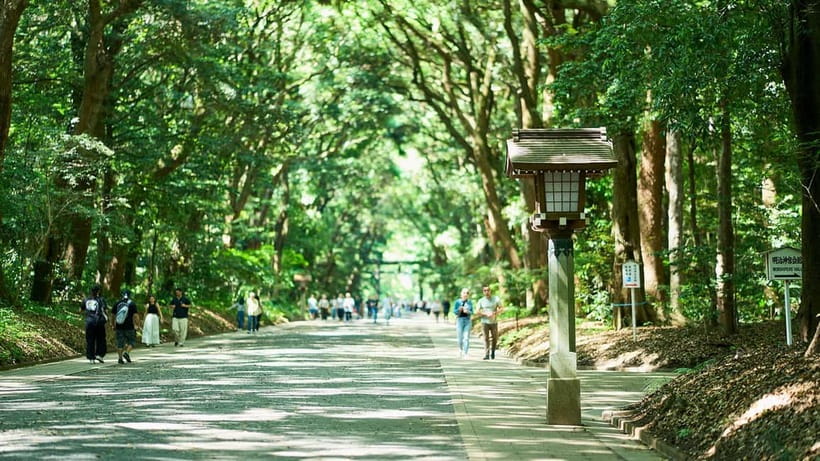
- A silent forest in central Tokyo: Roughly 100,000 trees create a peaceful approach from Harajuku.
- A 12-meter wooden torii: The gate is made from a 1,500-year-old Taiwanese cypress.
- Shinto customs made clear: Your guide explains respectful behavior before you reach the main shrine.
- History from samurai to modern Japan: The tour connects Emperor Meiji, the imperial system, and Japan’s rapid modernization.
- A small English-speaking group: No more than 10 people, with guides such as Keiko, Yuuka, Yuki, Ayaka, and Nonoka.
- A calm finish: The route ends near Café Mori no Terrace, where you can pause for Japanese tea and light snacks.
Why Meiji Shrine feels far from Tokyo
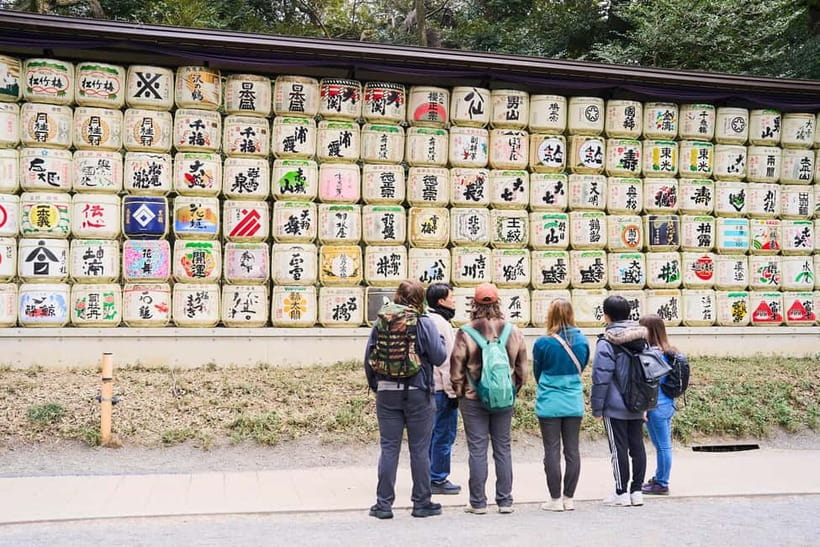
Meiji Shrine sits beside one of Tokyo’s busiest districts, yet the approach feels cut off from it. Harajuku Station is the starting point, but once you pass through the first shrine gate, the urban edges begin to fade.
The forest contains approximately 100,000 trees. That number matters less as a statistic than as an experience: the path is shaded, the air feels cooler, and the steady sound of the city is replaced by birdsong and footsteps.
Your guide uses this walk to explain how Shinto treats nature, place, and the presence of the divine. You are not simply walking toward an attractive building. You are following a carefully arranged route that prepares you to enter a sacred area.
That context helps explain why the approach is so wide and deliberate. It also explains a small but important custom: when you pass through a torii or walk along the main route, keep toward the side. The center, known as seichu, is traditionally reserved for deities.
A few more walking tours around Tokyo worth a look
- Tokyo Tsukiji Fish Market Food and Culture Walking Tour
★ 5.0 · 3,184 reviews - Tokyo: Imperial Palace and Shogun Historical Walking Tour
★ 5.0 · 2,251 reviews - Tokyo: Shinjuku Local Bar and Izakaya Guided Walking Tour
★ 4.9 · 1,794 reviews
The first torii and the forest approach
The tour begins at Harajuku Station, although the precise meeting point can vary by the option you book. The listed meeting coordinates are 35.6700901, 139.7024662, so check the booking details closely and allow time to find your guide near the station.
The first stop is Meiji Jingu Ichino Torii. This is a short photo and explanation stop, but it sets up the rest of the visit. You learn how to enter a shrine area and why the path itself is part of the religious experience.
The walking is not difficult in the sense of a hike, but you will be on your feet for most of the 90 to 135 minutes. Comfortable shoes are a sensible choice. Since the forest is shaded, the walk can also feel different from the bright, crowded streets around Harajuku.
One strength of this tour is its scale. With up to 10 people, the guide can usually keep the group together without turning every stop into a lecture from a distance. Several guides, including Yuuka, Keiko, Yuki, and Ayaka, are praised for answering questions, adjusting explanations to the group, and helping with photos.
Sake barrels and the meaning of offerings
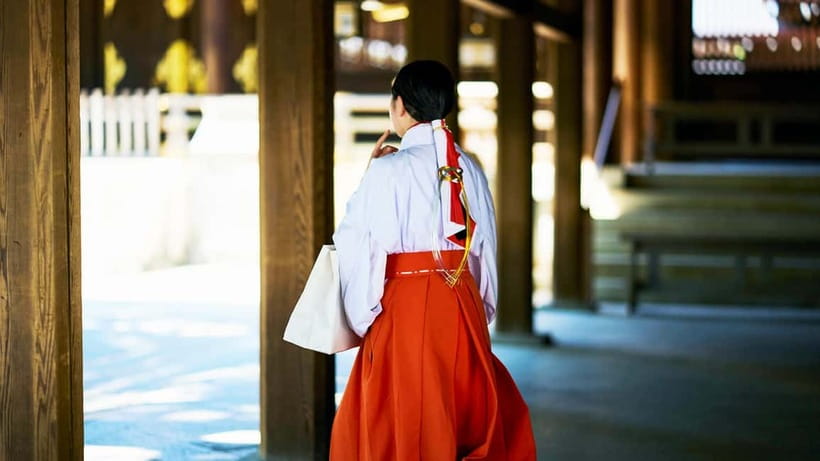
Along the approach, you stop at the consecrated wine and sake barrels. They are among the most photographed features at Meiji Shrine, but a guide gives them more meaning than a quick picture can provide.
The barrels represent offerings connected with the shrine. You will see the visual contrast between the traditional wooden sake barrels and the French wine barrels displayed nearby. The stop is brief, so do not expect a long tasting or a food experience. This is a cultural explanation and photo opportunity.
It is also a useful moment to ask questions about the difference between a Shinto shrine and a Buddhist temple. One guide, Nonoka, is specifically praised for explaining that distinction, along with the difference between waka and haiku. Those comparisons help if Japanese religious sites are new to you.
The short stop at the barrels also breaks up the forest walk. You get a striking photo, hear about the role of offerings, and then continue toward the larger torii.
The enormous cypress torii
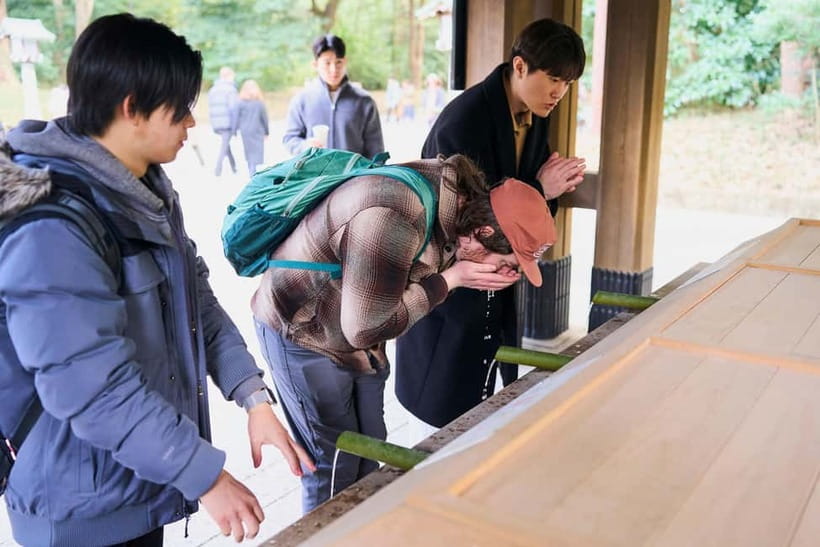
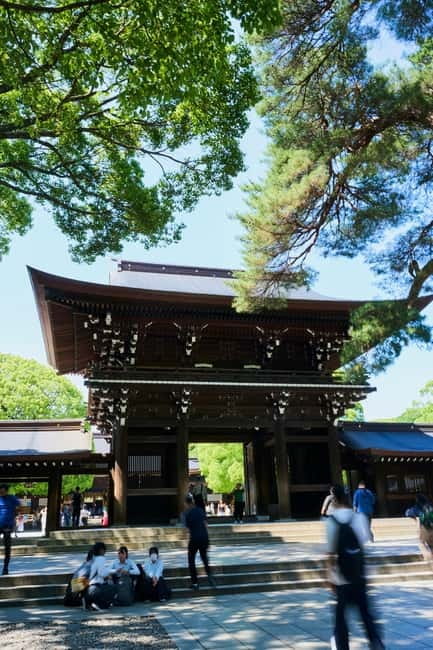
The Big Torii is one of the tour’s most memorable sights. At 12 meters high, it has a heavy, almost primeval presence. It was made from a 1,500-year-old Taiwanese cypress, a detail that makes the structure feel less like an ordinary gate and more like a bridge between natural history and religious practice.
Your guide explains the correct way to pass through. The central line is associated with the deities, so you walk along one side rather than directly through the middle. This is a small courtesy, but it changes the way you view the site. You are no longer treating the shrine as a backdrop for photographs.
The torii is also a good place to appreciate the sheer scale of Meiji Shrine. The entrance is large enough to handle the shrine’s popularity, yet the surrounding trees keep it from feeling like a city monument.
Expect a photo stop of about 10 minutes. The guide may explain the structure, answer questions, and give you time to take pictures. If you want a quiet image without other people in it, listen for the guide’s timing, but remember that this is a popular shrine and the entrance can be active.
Same streets, a different route:
- Tokyo: Tsukiji Fish Market Food and Walking tour
★ 5.0 · 1,724 reviews - Tokyo: Asakusa Walking Tour with Sensoji Temple Visit
★ 4.8 · 1,583 reviews - Tokyo: Tsukiji Fish Market Guided Walking Tour
★ 4.9 · 1,397 reviews - Tokyo Castle & Imperial PalaceーShogun Walking Tour
★ 4.7 · 1,068 reviews
Emperor Meiji, Empress Shoken, and modern Japan

The tour is not only about ritual. It also uses Meiji Shrine to explain Japan’s shift from the samurai era to the modern state.
The shrine honors Emperor Meiji and Empress Shoken. The tour connects their period with the development of modern Japan and with the country’s roughly 2,600-year imperial system. That is a large subject to cover in a short walk, so think of the history as a clear introduction rather than a full political study.
This is where the guide’s personality matters most. Yuki is praised for explaining the transition from samurai society to modern Japan in clear terms. Yuuki is noted for making the history and spirit of the shrine easier to grasp. Ayaka has been singled out for combining historical information with personal examples and practical explanations.
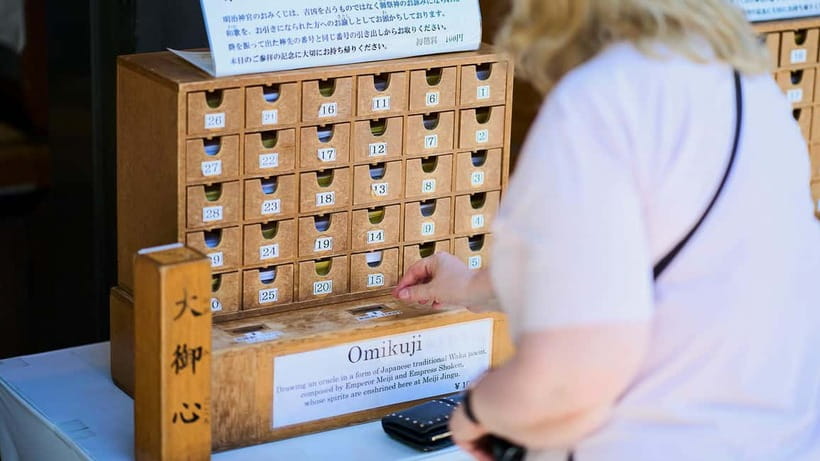
You will also encounter the imperial poetry of Emperor Meiji and Empress Shoken. The shrine offers an omikuji called Omigokoro, built around poems written by the imperial couple. English translations make the poems accessible, so you can understand the message instead of taking home a slip of Japanese text with no context.
This is a thoughtful part of the experience, but it may not appeal to someone looking only for architecture. The tour spends time on ideas, customs, and national history. I see that as its main value, but it does mean less time for simply wandering alone.
Learning how to behave at the main shrine
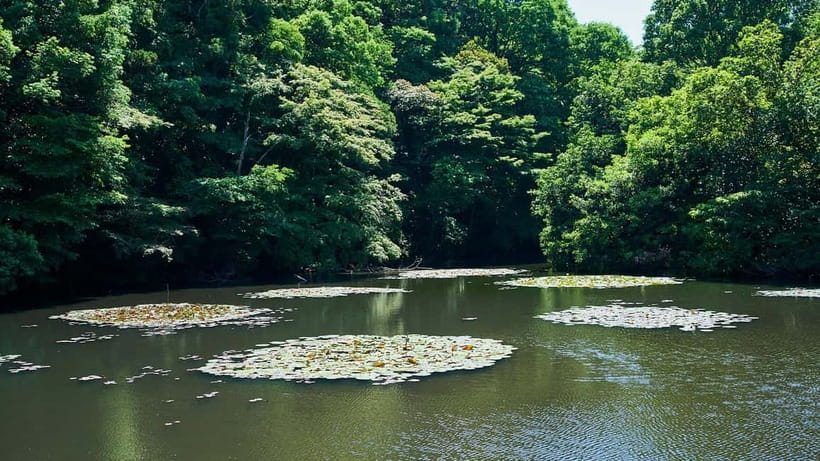
The central shrine area is where the tour’s practical side becomes most useful. Shinto customs can look simple from the outside, but the order of actions and the meaning behind them are not always obvious.
Your guide explains how to approach the shrine respectfully and how to make an offering. One guide even provided coins when people in the group did not have any, according to the experience details. That sort of small help can remove awkwardness, especially on a first visit.
You may have time for free exploration, shopping, and shrine activities during the approximately 45-minute main visit. Depending on the day, you might see a wedding or observe people making personal prayers. The shrine is a living place of worship, not a museum arranged only for sightseeing.
You can purchase omamori, or protective charms, and the Omigokoro poetry fortune. The gift items are meaningful because they connect to the site’s religious traditions rather than being generic Tokyo souvenirs.
A useful approach is to let the guide explain first, then take your own time. The group format gives you a framework, but the free period lets you pray, shop, take photographs, or simply sit with the atmosphere.
Forest Terrace and Café Mori no Terrace
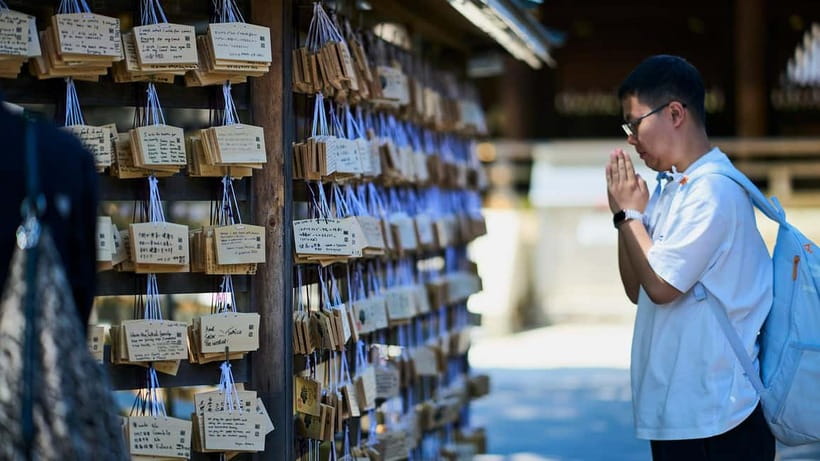
After the main shrine, the route moves toward Forest Terrace Meiji Jingu and Café Mori no Terrace. The planned break lasts about 15 minutes, so keep your expectations modest. This is a pause for Japanese tea and light snacks, not a full meal.
The café gives you a chance to rest after the walking and talk with the guide or other members of the group. It also softens the transition back to Harajuku. You have moved from city streets into the forest, through the shrine, and then back toward a more relaxed public space.
The gift shop sells small souvenirs with a stronger connection to the shrine than standard Tokyo merchandise. Examples include eco-blocks made from fragrant Japanese camphor and miniature barrels of sacred sake.
If you are buying a keepsake, these items are more distinctive than a common city souvenir. If you are on a tight budget, the shrine itself is the main experience, and you do not need to buy anything to make the visit worthwhile.
The tour ends with drop-off options at Harajuku Station, making it easy to continue into Harajuku afterward. The tour itself does not promise a visit to Takeshita Street, though one guide has combined a Meiji Shrine visit with that area for a particular group. Treat that as guide-dependent, not as part of the standard route.
What the guides add
The clearest pattern in the guide feedback is strong English and a warm teaching style. Names that appear often include Keiko, Yuuka, Yuki, Yuuki, Ayaka, Nonoka, Nono, and Mia.
That matters because Meiji Shrine is easy to visit badly. You can walk through the gates, photograph the sake barrels, and leave without understanding why people bow, where to stand, or how the site relates to Japan’s past.
The strongest guides make the information usable. Keiko has helped people with fortunes, photos, and shrine customs. Yuuka has carried historical photographs showing what the area looked like before the shrine was built. Ayaka has been praised for making first-time shrine visits feel comfortable.
The small group also allows some flexibility. If you are the only person booked, the experience may become close to a private tour. If the group reaches 10 people, you still get a focused walk, but you should not expect every question to receive a long personal discussion.
The English-only format is clear. Japanese-language support is not available, so book this if you are comfortable following an English explanation.
Is $23 a fair price?
At $23 per person, this is a reasonable price for a 90 to 135-minute guided visit in central Tokyo. The shrine itself is not presented as an expensive attraction, so you are paying mainly for interpretation, etiquette help, and a structured route.
I think the price works best for a first visit to Japan. A guide can explain the difference between Shinto and Buddhism, connect the shrine to the imperial system, and show you how to take part without worrying about an unintentional mistake.
The value is less clear if you have already studied Shinto, know shrine etiquette, and prefer to explore at your own speed. You can still enjoy the forest and architecture without a guide, but the historical links and poetry would require your own research.
The 4.9 rating from 266 reviews supports the idea that the guide quality is the main selling point. Still, guide assignments can change. Book for the route and the structure, not on the assumption that one particular person will lead your group.
You can cancel up to 24 hours before the start for a full refund, and the reserve-now, pay-later option keeps the booking flexible. Check the available start times when booking, since the duration and meeting point can vary by option.
Who should book this walk?
I would choose this tour for a first-time Tokyo visit, especially if you want to understand what you are seeing instead of collecting quick snapshots. It is also a good first-morning activity, and a 9 a.m. start worked well for one group visiting on a Monday.
Families and mixed-age groups may appreciate the short explanations and help with customs. Couples can enjoy the quieter forest approach and the poetry fortunes. Solo visitors may benefit from the company and the chance to ask direct questions.
I would hesitate if you want a fast, purely photographic stop, a Japanese-language tour, or a long food break. The route has several short stops, but the heart of the experience is history, Shinto practice, and respectful observation.
My verdict: book it for context, not just scenery
Book this Meiji Shrine walk if you want the forest, the torii, and the shrine to make sense as parts of Japanese culture. At $23, the small group and practical instruction offer good value, particularly on a first trip.
Skip it if you already know the customs and prefer unstructured time. For everyone else, the tour gives you a useful cultural foundation, a peaceful break from Tokyo’s streets, and enough free time to pray, browse the shrine shop, or enjoy tea afterward.
FAQ
How much does the Meiji Shrine walking tour cost?
The price is $23 per person.
How long does the tour last?
The tour lasts between 90 and 135 minutes, depending on the option and available start time.
Where does the tour begin?
The listed starting point is Harajuku Station, also written as 原宿駅. The exact meeting point may vary by the option booked.
Where does the tour finish?
The tour has drop-off options at Harajuku Station.
Is the tour conducted in English?
Yes. The live guide speaks English, and Japanese-language support is not available.
How many people can join the group?
The group is limited to 10 participants.
What will I see at Meiji Shrine?
You will see the first torii, consecrated wine and sake barrels, the large wooden torii, imperial poetry connected with Emperor Meiji and Empress Shoken, and the main shrine.
Will the guide explain shrine etiquette?
Yes. The guide explains how to walk through the torii area, how to approach the shrine, and how to take part respectfully in shrine customs.
Can I buy charms or fortunes?
Yes. You can purchase omamori protective charms and the Omigokoro poetry fortune, which includes English translations of poems by Emperor Meiji and Empress Shoken.
Is food included?
Food is not listed as included. The route includes a break at Café Mori no Terrace, where you can enjoy Japanese tea and light snacks.
Just added around Tokyo
- Tokyo: Tsukiji Market Walking Tour & Sushi Cooking Class★ 4.6 · 122 reviews
- Tokyo:Stroll in Old traditional culture towns~Yanaka & Nezu★ 4.9 · 186 reviews
- Tokyo: Shinjuku Nightlife & Secret Backstreets Walking Tour★ 4.8 · 229 reviews
- Tokyo: Shibuya Crossing & Hidden Streets Walking Tour★ 4.8 · 128 reviews
- Tokyo: Shinjuku Bar Hopping & Night Walking Tour★ 4.6 · 137 reviews
- Tokyo: Private Custom Walking Tour with Local Guide★ 4.9 · 350 reviews
- Tokyo: Shibuya Highlights Walking Tour & Secret View Spot★ 4.9 · 196 reviews
- Tokyo: Kimono Dressing, Walking, and Photography Session★ 4.9 · 427 reviews
Walking Tours, compared.

Magical London: Harry Potter Guided Walking Tour
Read our review →
Reykjavik Food Walk – Local Foodie Adventure in Iceland
Read our review →
History and Hauntings of Salem Guided Walking Tour
Read our review →
New Orleans Premier Ghost, Voodoo and Vampire Walking Tour
Read our review →
Amsterdam Anne Frank: Small-Group Walking Tour & Local Guide
Read our review →

Edinburgh Castle: Guided Walking Tour with Entry Ticket
Read our review →
Anne Frank’s Story – Guided Walking Tour through Amsterdam
Read our review →Browse the lists this tour appears in