
REVIEW · TOKYO
Tokyo: Meiji Jingu Shrine and Shinto Culture Walking Tour
Tokyo’s loud Harajuku district gives way to a forest of 100,000 trees at Meiji Jingu, and that change is the real pleasure of this walk. Your guide explains how to approach a shrine, purify yourself, pray, and read the symbols around you, turning a pretty stroll into a useful introduction to Shinto.
I like the small-group format, which gives you room to ask questions, and I like the practical help: guides such as Maya, Minori, Yota, Ryota, and Andres have been praised for clear English, local suggestions, and taking photos. The main limitation is time. Two hours is enough for the core grounds, but not for a slow, wandering visit.
- Sacred forest setting: Walk from Harajuku into Meiji Shrine’s calm wooded grounds.
- Shinto made practical: Learn purification, prayer, etiquette, ema, and the meaning of shrine features.
- Seven focused stops: Visit Meiji Jingu Gyoen, the Big Torii, sake barrels, wine barrels, and the shrine itself.
- Small groups: The usual group can be as large as 12, but some departures are much smaller or even private.
- Good first-day activity: Guides can explain Japanese customs, Tokyo districts, food, and other places to visit.
- Strong value at $19: Admission, an English-speaking guide, photos, and two hours of context are included.
From Harajuku Coffee to a Sacred Forest
The meeting point is in front of the Starbucks closest to Meiji Shrine, at coordinates 35.6705208, 139.7031067. That detail matters because Harajuku has several Starbucks locations, and using the map pin is wiser than simply typing Starbucks into your phone.
From here, the tour leaves the bright shopfronts of Harajuku and heads toward Meiji Jingu. The contrast is immediate and useful. You are not being dropped into an isolated historic site with no context. You begin in one of Tokyo’s famous shopping districts, then see how quickly the city gives way to a place set apart for worship.
The guide handles the orientation, introduces the route, and explains the basic difference between Shinto and Buddhism. That is especially helpful if this is your first visit to Japan. Many visitors see torii gates, incense, statues, and temple buildings without knowing which customs belong to which tradition.
The group size can vary. The usual maximum is stated as 12 people, though some departures have only a few participants. One departure became a private walk when the other booked person did not appear. You should not count on that happening, but a small group makes it much easier to ask about history, religion, food, or Tokyo life.
Meiji Jingu Gyoen and the Meaning of the Trees
The first substantial stop is Meiji Jingu Gyoen, covered in about 30 minutes. This is where the tour’s title makes sense. The trees are not just a pleasant screen around the shrine. They create a quiet approach and help you understand the connection between nature and Shinto practice.
The grounds contain roughly 100,000 trees, giving this part of Tokyo a calm that feels far removed from nearby Takeshita Street. Your guide points out features that are easy to pass without noticing and explains how the setting supports the shrine’s spiritual purpose.
I particularly like this opening because it slows you down before the main building. You get time to adjust from city traffic to a more careful pace. The forest walk also gives the guide room to explain the Meiji era and the establishment of the shrine, rather than beginning with a rapid list of dates at the entrance.
This is still a walking tour, not a vehicle-based sightseeing trip. Wear comfortable shoes, and expect to spend much of the two hours on foot. The tour is wheelchair accessible, but the grounds are extensive, so anyone concerned about walking distance should confirm the current route and conditions when booking.
More Cultural Walking Tours in Tokyo:
- Tokyo Tsukiji Fish Market Food and Culture Walking Tour
★ 5.0 · 3,184 reviews - Savannah First Squares Culinary & Cultural Walking Food Tour
★ 5.0 · 3,229 reviews - New Orleans French Quarter, Voodoo and Culture Walking Tour
★ 4.5 · 2,961 reviews
The Big Torii: Crossing Into Shrine Space
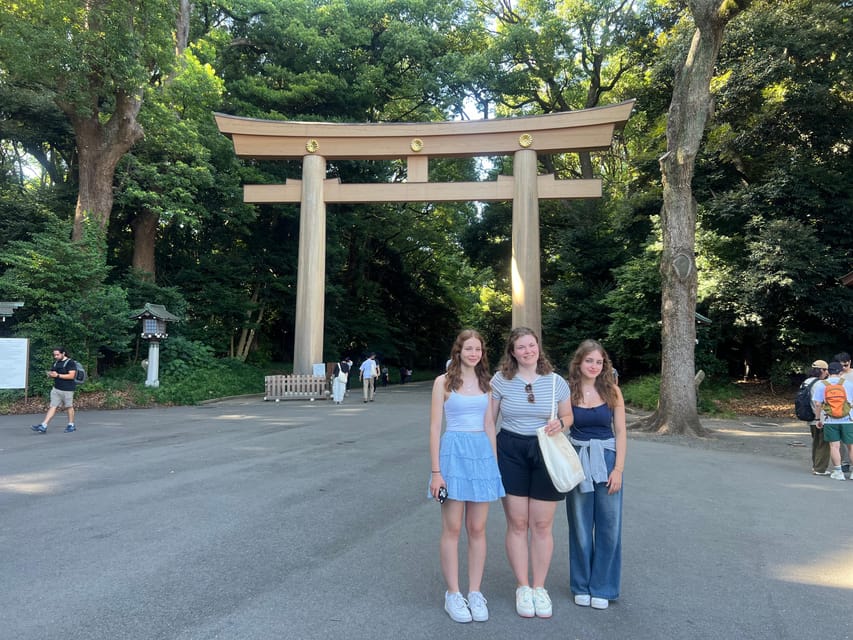
The Big Torii receives about 10 minutes of guided attention. It is a striking entrance, but the useful part is learning how to treat it. Your guide can show you where to walk and explain the respectful customs associated with crossing into shrine grounds.
This is one of the moments when a guide adds real value. You can photograph a torii by yourself, but you may not know why people bow, why the center path is treated differently, or how the entrance marks a shift from ordinary city space to sacred space.
The stop is brief, so do not expect a long lecture. That is a good thing here. The torii is a transition point, and the tour keeps moving into the forest rather than letting one gateway consume the morning.
If you want photos, the guide can take them during the walk. Several guides, including Ryota and Yota, have been especially attentive about helping with pictures. That can be useful when you are traveling alone or want a group shot without handing your phone to a stranger.
Sake Barrels and the Shrine’s Living Traditions
Next come the consecrated sake barrels, explained over about 10 minutes. They offer a clear example of how Japanese customs, business, tradition, and worship can meet at a shrine.
Your guide explains what the barrels represent and why they are displayed here. This is not simply a colorful photo stop. It gives you a way to think about offerings and the continuing relationship between companies, communities, and religious sites.
The tour then reaches the consecrated wine barrels, another 10-minute stop. Their presence surprises many first-time visitors and provides a good reminder that Meiji Shrine reflects the Meiji period’s links with the wider world as well as older Japanese customs.
The paired stops work well because the guide can compare them instead of treating each as a disconnected object. You see familiar labels, then learn why they belong within a sacred setting. These details are easy to miss when you explore alone, especially if you are focused on reaching the main shrine building.
Meiji Shrine: Ritual, Etiquette, and Quiet Attention
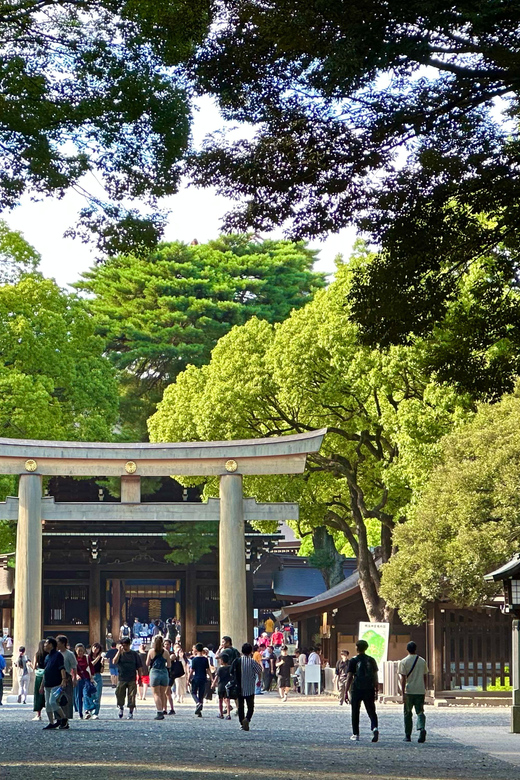
The main visit to Meiji Shrine takes about an hour. This is the heart of the experience, and it is where the earlier explanations come together.
You learn the basic steps for shrine worship, including purification and the proper way to pray. The exact ritual is simple to watch but easier to remember after someone explains what you are doing and why. You also learn how to behave respectfully around worshippers, ceremonies, and sacred objects.
The guide explains the shrine’s connection to the Meiji period and the cultural setting in which it was created. You will also hear more about Shinto beliefs and how they differ from Buddhist teachings. That comparison is valuable because Japanese religious life often includes both traditions, while the visual signs can confuse newcomers.
There are personal details to notice as well. One family used the visit to write on an ema, a wooden prayer plaque, and had books stamped at the shrine. Those activities may be available during your visit, but they are not listed as included tour services, so bring a little cash if you hope to buy a plaque or souvenir.
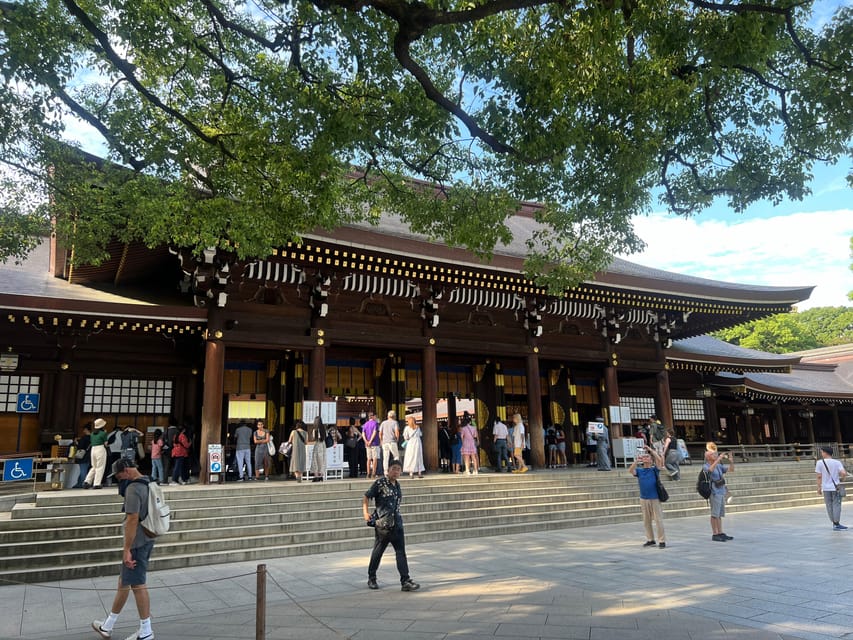
The shrine itself is beautiful, but the point of the hour is not only architecture. It is learning how to look. A guide can explain why the approach is arranged as it is, how visitors use the grounds, and which small customs make the place feel different from a museum or palace.
The site can become busy, particularly later in the day. One practical tip from the tour experience is to choose an early starting time when available if you want more stillness. Starting times vary, so check the schedule before booking. The tour cannot remove the crowds entirely, but a guide can help you focus on the parts that matter.
A few more walking tours around Tokyo worth a look
- Tokyo: Imperial Palace and Shogun Historical Walking Tour
★ 5.0 · 2,251 reviews - Tokyo: Shinjuku Local Bar and Izakaya Guided Walking Tour
★ 4.9 · 1,794 reviews - Tokyo: Tsukiji Fish Market Food and Walking tour
★ 5.0 · 1,724 reviews - Tokyo: Asakusa Walking Tour with Sensoji Temple Visit
★ 4.8 · 1,583 reviews
What the Guides Add to the Walk
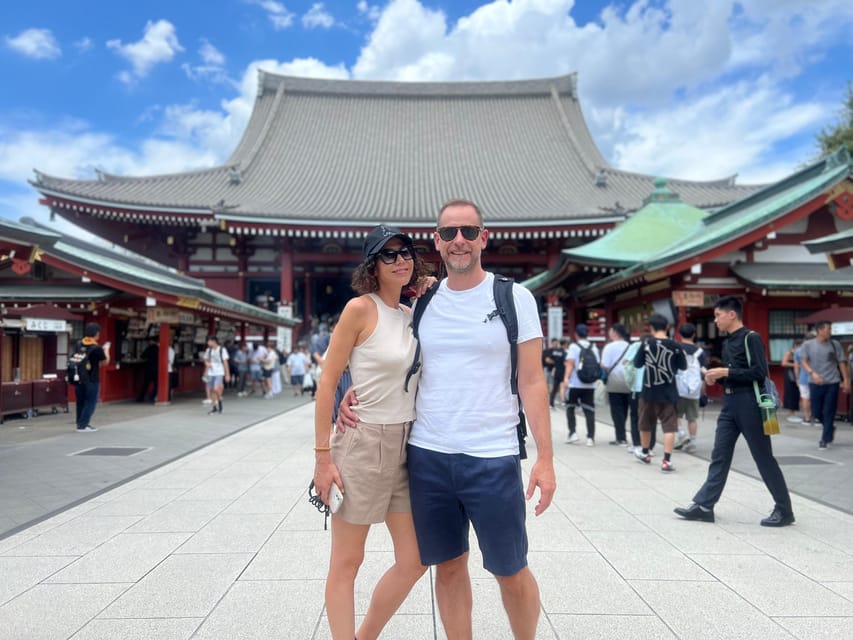
The guides are not fixed to one named person, so you should not book with the assumption that you will receive a particular guide. The experience has been led by people including Maya, Minori, Nicholas, Hoshi, Haydn, Andres, Yota, Ryota, Sara, and Matt.
What matters more than the name is the style of the walk. The strongest pattern is a friendly guide who explains history and religion in plain English, welcomes questions, and adjusts the pace to the group. Minori and Nicholas, for example, have been praised for explaining the Meiji Shrine, Shinto, and Buddhist teachings while keeping the walk social.
Guides also offer a useful local layer. Andres has helped first-time visitors understand shrine etiquette and Tokyo’s metro system. Yota and Ryota have shared food and sightseeing suggestions, and several guides have recommended restaurants and places to visit after the tour.
I would treat those suggestions as a bonus, not the main reason to book. The tour is about Meiji Shrine. Still, getting a short list of local ideas at the start of your trip can help you plan the rest of your days.
A small group makes this part better. If you have questions about Japanese customs, ask them. This is the kind of tour where a thoughtful question about prayer, offerings, or the Meiji era can lead to a more useful explanation than a standard speech.
Is Two Hours Enough?
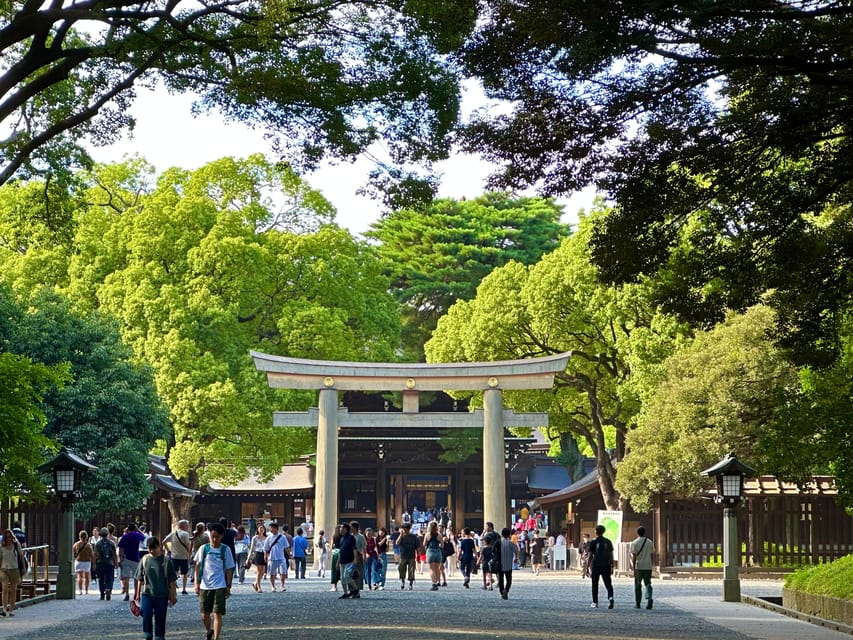
Two hours is enough for the planned route, but it is not enough for every corner of Meiji Shrine. You will cover Meiji Jingu Gyoen, the Big Torii, the sake barrels, the wine barrels, and the main shrine with guided commentary.
The schedule gives the main shrine one hour, which is the right balance for a first visit. You receive structure without spending an entire day on one complex. The tradeoff is that the walk may feel brisk if you want long photo stops, shopping, prayer plaques, or quiet personal time.
I recommend placing this activity early in your Tokyo visit. The guide can give you a working introduction to shrine behavior, Shinto, Japanese history, and parts of the city. You can then use that knowledge at other shrines and temples instead of repeating the same first-day confusion.
It also works well as a morning or early afternoon activity before spending more time in Harajuku. The meeting point puts you near one of Tokyo’s most popular shopping areas, so you can continue exploring after the walk without crossing the city.
The $19 Question
At $19 per person, this is a strong value if you want explanation rather than a self-guided photo stop. Admission to Meiji Shrine and the Imperial Garden is included, as are an English-speaking guide and photos taken during the tour.
You could enter the shrine grounds on your own for much less than the cost of many guided Tokyo activities, but that comparison misses the main benefit. The fee pays for context, route planning, language help, ritual instruction, and the chance to ask questions in real time.
The price is particularly fair for first-time visitors who might otherwise spend an hour taking pictures without understanding what they are seeing. It is less essential for someone who has already studied Shinto, knows shrine etiquette, and prefers to walk alone at a slow pace.
There is also flexibility in the booking terms. You can cancel up to 24 hours in advance for a full refund, and you can reserve now and pay later. The tour is offered in English, with a live guide, and is listed as wheelchair accessible.
Who Will Enjoy This Most?
I would choose this for a first visit to Tokyo, a family wanting a clear cultural introduction, or anyone who prefers conversation to a large scripted group. Children can follow the forest walk, and the chance to see ema and shrine customs gives them something concrete to notice.
It is also a good fit for solo visitors. A guide can take photos, help with etiquette, and make the experience feel less awkward when you are unsure how to approach a shrine.
You may want a different plan if your main goal is silent meditation, extensive photography, or a very slow visit. The group follows a set two-hour route, and the guide’s explanations are central to the experience.
The tour suits curious beginners especially well. It also has enough room for repeat visitors who want a closer look at Shinto practice, the Meiji period, or the relationship between Japanese religion and daily life.
Practical Tips Before You Go
Use the exact meeting coordinates and look for the Starbucks closest to Meiji Shrine. Harajuku is easy to reach but crowded, and choosing the wrong coffee shop can waste the short time before departure.
Check the starting time carefully. If you value quiet, an early departure may be the better choice, since the shrine is a major Tokyo sight and later hours can feel busier.
Wear shoes suited to walking and allow time for the forest paths. The tour is wheelchair accessible, but the grounds are large, so confirm any mobility concerns in advance.
Bring questions. Ask about Shinto and Buddhism, the Meiji era, shrine etiquette, offerings, or places to eat afterward. The guides are most useful when the walk becomes a conversation rather than a one-way speech.
Should You Book the Meiji Shrine Walking Tour?
Book it if you want meaning behind the rituals, not just a visit to a famous gate and a photogenic forest. For $19, the combination of admission, a live English-speaking guide, practical etiquette, photos, and a small-group setting is hard to fault.
I would place it near the beginning of a Tokyo trip, especially if Japan’s religious customs are unfamiliar. Choose another option only if you already know the shrine basics or want complete freedom to wander without a schedule.
FAQ
Where does the Meiji Shrine walking tour meet?
The meeting point is in front of the Starbucks closest to Meiji Shrine. The listed coordinates are 35.6705208, 139.7031067.
How long does the tour last?
The tour lasts two hours and returns to the same Starbucks meeting point.
What language is the tour offered in?
The tour is conducted in English by a live English-speaking guide.
What places are included?
The route includes Meiji Jingu Gyoen, the Big Torii, the consecrated sake barrels, the consecrated wine barrels, and Meiji Shrine.
Is admission to Meiji Shrine included?
Yes. Entry to Meiji Shrine and the Meiji Shrine Imperial Garden is included.
How large is the tour group?
The group can have as many as 12 people. Some departures are smaller, and availability may occasionally result in a private tour.
Is the tour wheelchair accessible?
Yes, the activity is listed as wheelchair accessible.
Can I cancel for a refund?
You can cancel up to 24 hours in advance for a full refund.
Can I reserve now and pay later?
Yes. You can reserve your place and pay later, which keeps your plans more flexible.
Just added around Tokyo
- Tokyo: Tsukiji Market Walking Tour & Sushi Cooking Class★ 4.6 · 122 reviews
- Tokyo:Stroll in Old traditional culture towns~Yanaka & Nezu★ 4.9 · 186 reviews
- Tokyo: Shibuya Crossing & Hidden Streets Walking Tour★ 4.8 · 128 reviews
- Tokyo: Shinjuku Bar Hopping & Night Walking Tour★ 4.6 · 137 reviews
- Tokyo: Shinjuku Nightlife & Secret Backstreets Walking Tour★ 4.8 · 229 reviews
- Tokyo: Meiji Shrine Walking Tour — Shinto & Imperial System★ 4.9 · 266 reviews
- Tokyo: Private Custom Walking Tour with Local Guide★ 4.9 · 350 reviews
- Tokyo: Shibuya Highlights Walking Tour & Secret View Spot★ 4.9 · 196 reviews
Cultural Walking Tours, compared.

Savannah First Squares Culinary & Cultural Walking Food Tour
Read our review →
Tokyo Tsukiji Fish Market Food and Culture Walking Tour
Read our review →
New Orleans French Quarter, Voodoo and Culture Walking Tour
Read our review →
Southernmost Food & Cultural Walking Tour by Key West Food Tours
Read our review →
Valletta: Street Food and Culture Walking Tour
Read our review →
Lisbon Roots – Small group Food & Culture Walking Tour w/tastings
Read our review →

Browse the lists this tour appears in