
REVIEW · TOKYO
Tokyo: Asakusa Temple & Shrine Walking Tour with Local Guide
Asakusa makes a fine first lesson in Tokyo. This two-hour walk moves from riverside views and the golden sculpture locals call the golden poop to Sensoji, Asakusa Shrine, and smaller religious sites that many people pass without understanding. The rituals are hands-on, so you do more than take pictures: you learn how to wash your hands, use incense, read a fortune slip, and pray.
I like the small groups of eight or fewer, which give you room to ask questions and keep the pace human. I also like the mix of famous sights and quieter corners. Guides such as Nicolas, Erik, Lino, Nana, and Ayaka have been praised for explaining Buddhism and Shinto in clear English and for helping families, solo visitors, and even people caught in heavy rain.
The main drawback is practical: this is a walking tour through crowded temple grounds, with no wheelchair access and no accommodation for people with limited mobility or low fitness. Summer heat, rain, and packed festival days can make the two hours feel more demanding.
Key points to know before you book
- Start with two useful views: See Tokyo Skytree from Azuma Bridge, then look over the Sensoji grounds from the Asakusa Culture Tourist Information Center.
- Learn the difference between faiths: Your guide explains how Buddhist Sensoji and Shinto Asakusa Shrine sit side by side.
- Take part in local customs: Try temizu hand washing, incense rituals, omikuji fortune telling, and Buddhist prayer.
- Keep the group personal: The tour is limited to eight people, and some departures may feel almost private if bookings are light.
- Ask for practical help: Guides can suggest snacks, souvenirs, photo spots, nearby restaurants, and, when useful, help with translations.
- Wear walking shoes: You will be outside in all weather, and the route is not suitable for wheelchair users or people with mobility impairments.
Why Asakusa is a smart place to start in Tokyo
Tokyo can feel like several cities at once. Modern towers, neon streets, quiet gardens, neighborhood shops, and old religious sites all share the same train map. Asakusa gives you a manageable introduction to the older side of the city, with a route that connects history, daily customs, shopping, and good city views.
The price is $30 per person for two hours. That is fair value if you want more than a quick look at Sensoji’s famous gate. You are paying for interpretation, practical cultural guidance, and a small group rather than admission to a single attraction. The tour also helps you avoid a common Tokyo problem: seeing a major place without understanding what you are looking at.
You start near Burger King Asakusa Azumabashi, though the exact meeting point depends on the option booked. Check the booking details carefully before setting out. The tour ends in the same general area, with the listed drop-off also at Burger King Asakusa Azumabashi.
More Guided Tours in Tokyo:
- Tokyo: Shinjuku Local Bar and Izakaya Guided Walking Tour
★ 4.9 · 1,794 reviews - Tokyo: Tsukiji Fish Market Guided Walking Tour
★ 4.9 · 1,397 reviews - Tokyo: Private Custom Walking Tour with Local Guide
★ 4.8 · 533 reviews
Azuma Bridge and the golden sculpture
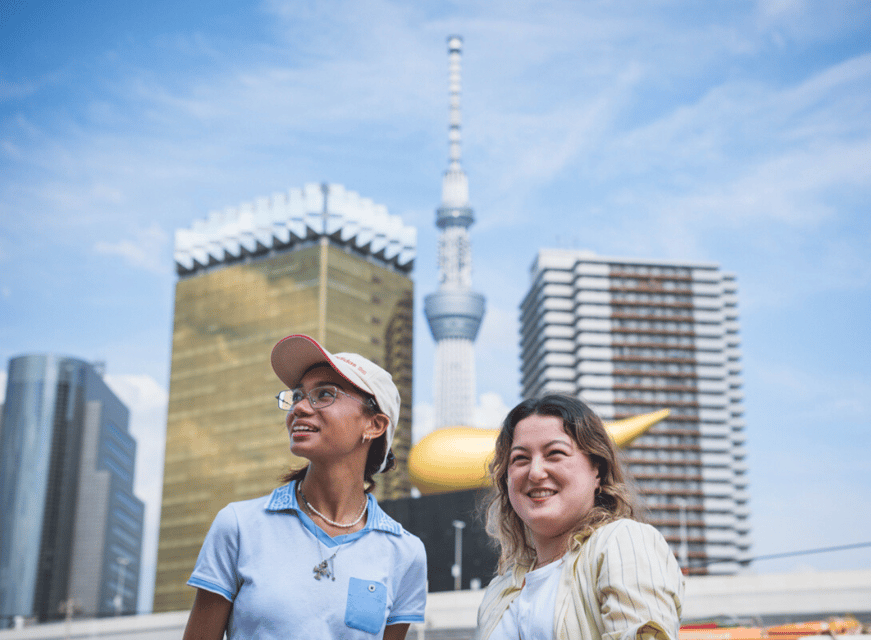
The walk opens at Azuma Bridge, beside the Sumida River. You get about ten minutes for a guided look and photographs, with Tokyo Skytree rising across the city view. Nearby is the Asahi Beer Hall complex, including the gold-colored object locals call the golden poop.
It is a funny start, but it also gives you a quick lesson in Tokyo’s habit of mixing serious design, corporate branding, and local humor. Your guide can point out what you are seeing and help frame a photograph with the river and Skytree.
This first stop is short, so do not expect a long riverside walk. Its real value is orientation. You begin with a broad view of modern Tokyo before heading toward Asakusa’s gates, streets, and temple grounds.
The rooftop view from the tourist information center
Next comes the Asakusa Culture Tourist Information Center, where the group goes to an upper-level viewpoint. From here, you can look down across the temple approach, Nakamise shopping street, and the Sensoji complex.
I consider this one of the tour’s most useful stops. At street level, Sensoji can feel like a crush of people, signs, lanterns, and souvenir stalls. From above, the layout makes sense. You can see how Kaminarimon, Nakamise, Hozomon, and the main temple connect.
It is also an excellent place to ask your guide about photo angles. The tour includes help with photographs, but you should ask directly if you want a group picture or a particular view. The stop lasts about 15 minutes, so the guide has time to explain rather than simply point toward the temple.
Kaminarimon, the Thunder Gate
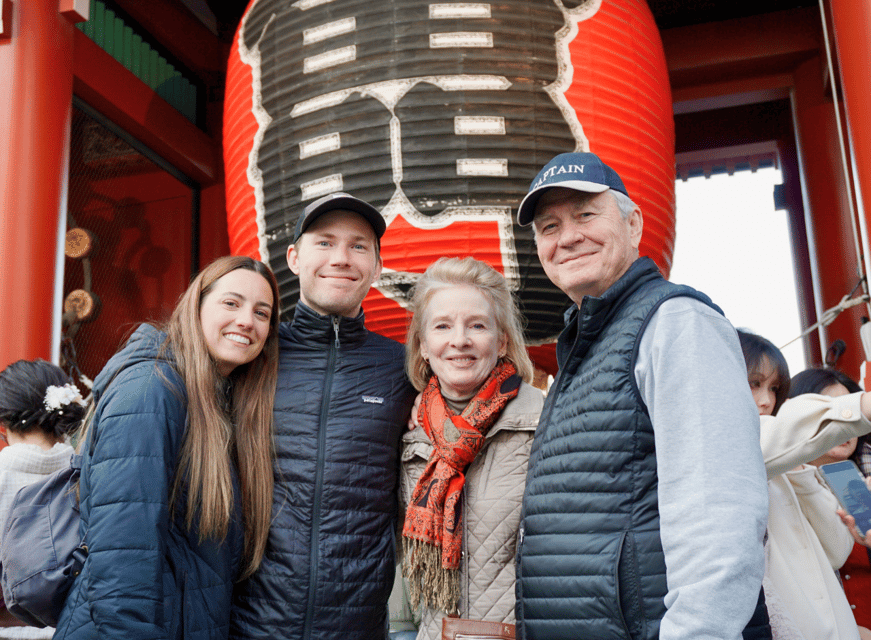
The huge red lantern at Kaminarimon is one of Tokyo’s familiar images. The guide explains the gate’s name, which means Thunder Gate, and the story connected with its roughly 700-kilogram lantern.
This is where a short guided walk earns its keep. You can photograph the lantern on your own, but the explanation gives the object a place in Asakusa’s religious and civic life. The gate marks the formal approach to Sensoji, and it also signals that you are entering a busy public route with a long connection to worship and commerce.
The stop is scheduled for about ten minutes. Expect crowds, especially around the lantern and the gate’s large guardian figures. Stay close to the guide and keep your belongings secure while taking pictures.
A few more walking tours around Tokyo worth a look
- Tokyo Tsukiji Fish Market Food and Culture Walking Tour
★ 5.0 · 3,184 reviews - Tokyo: Imperial Palace and Shogun Historical Walking Tour
★ 5.0 · 2,251 reviews - Tokyo: Tsukiji Fish Market Food and Walking tour
★ 5.0 · 1,724 reviews - Tokyo: Asakusa Walking Tour with Sensoji Temple Visit
★ 4.8 · 1,583 reviews
Nakamise Shopping Street and useful buying advice
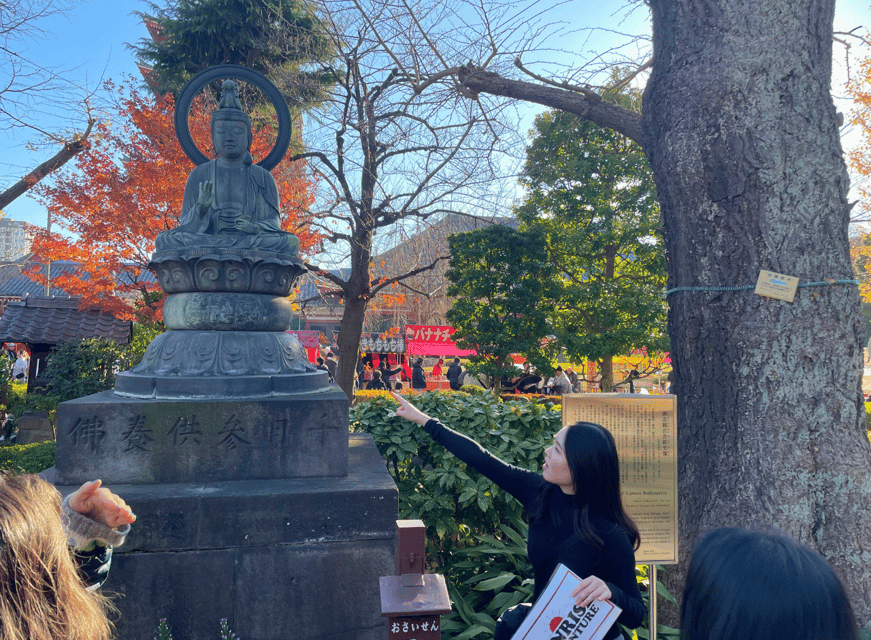
From Kaminarimon, the group follows Nakamise Shopping Street toward the temple. This is the most commercial part of the route, lined with stalls selling snacks, small gifts, traditional-style goods, and souvenirs.
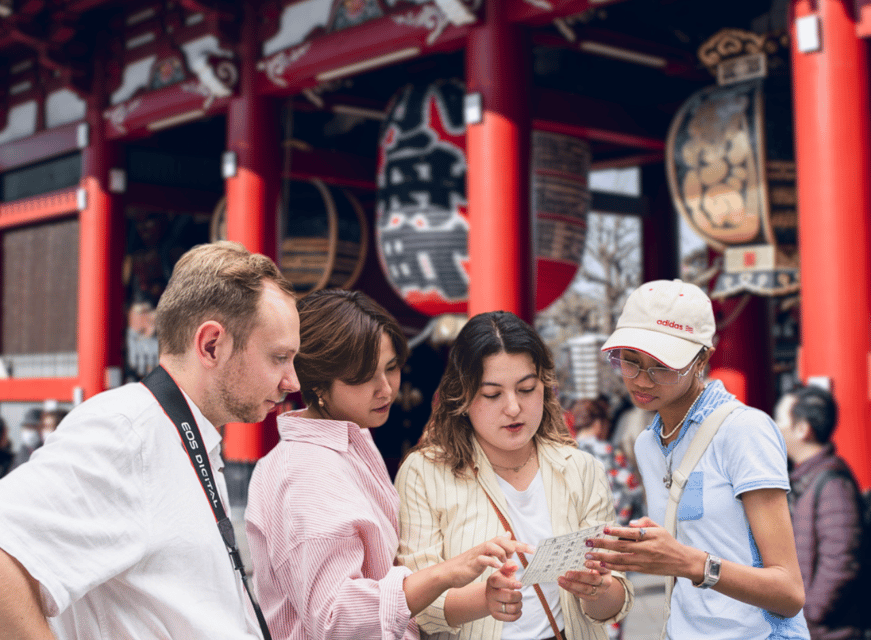
The guide explains the cultural background of the treats and objects, then points out where to look for worthwhile purchases. That advice can save you from buying the first item you see. You can also ask for help with translations, which is useful when labels or shop signs are not clear.
The planned visit lasts about 15 minutes, so this is not a dedicated shopping trip. You will have time to look and perhaps buy a snack, but the main purpose is to understand how the shopping street works as part of the temple approach.
Keep personal spending separate from the tour price. Snacks, souvenirs, and other purchases are not included. If you want to shop seriously, return later with more time and space in your bag.
Hozomon Gate and the temple approach
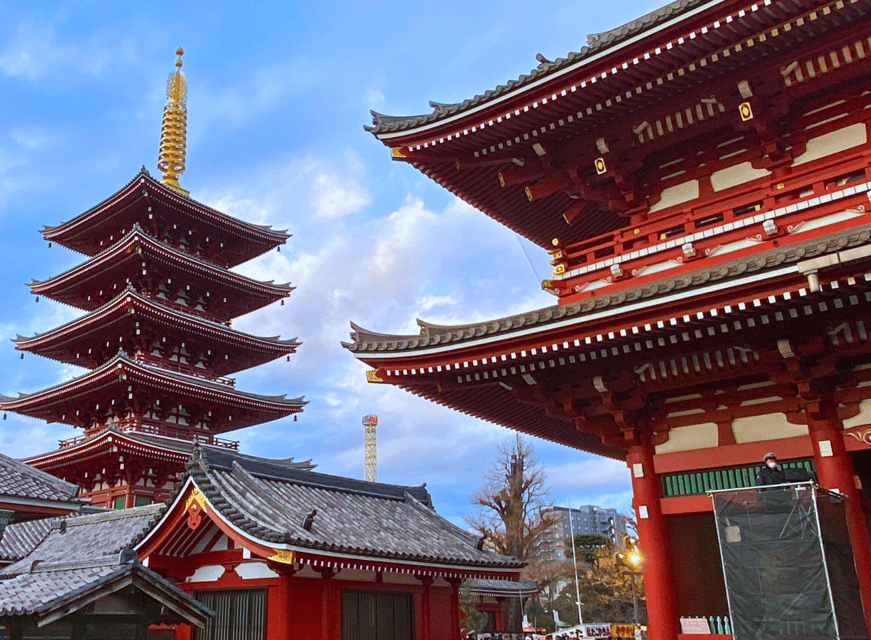
Hozomon Gate sits farther along the approach and forms another major entrance to Sensoji. The route allows about ten minutes here for photographs and explanation.
You will notice how the scale changes as you move from the narrow shopping street toward the broad temple area. The gate is a useful point for understanding the sequence of the complex, and your guide can explain the religious imagery and the role of the buildings around it.
The exact route also includes two additional photo and sightseeing stops at smaller local temples or shrine sites. Their names are not specified in the tour details, and the precise order may vary. That is part of the appeal: these stops focus on the less obvious religious places around Sensoji rather than only the postcard views.
Temizu, incense, and omikuji
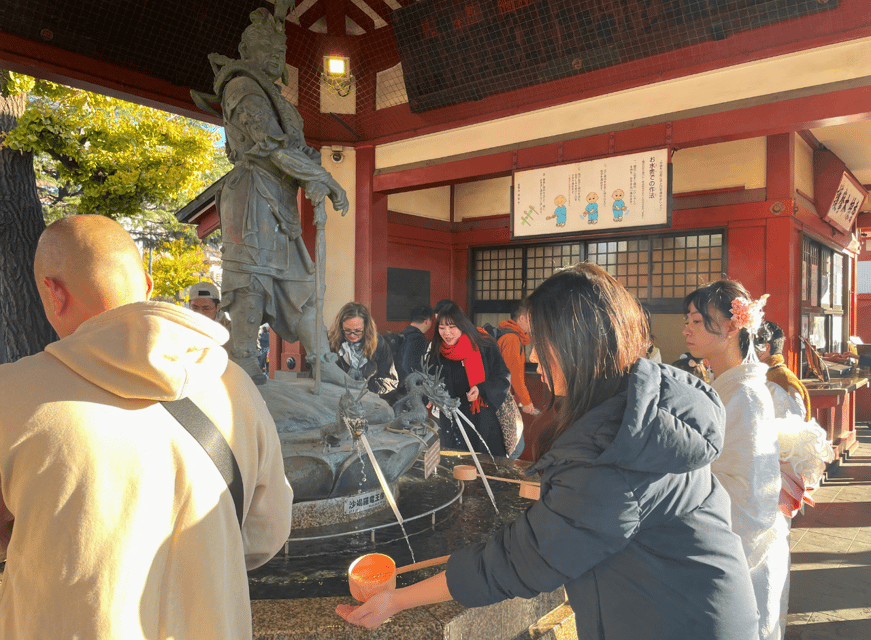
The tour becomes more participatory once you reach the religious sites. Your guide shows you how temizu works, the hand-washing ritual performed before prayer. You learn the basic order and purpose instead of copying strangers without knowing what you are doing.
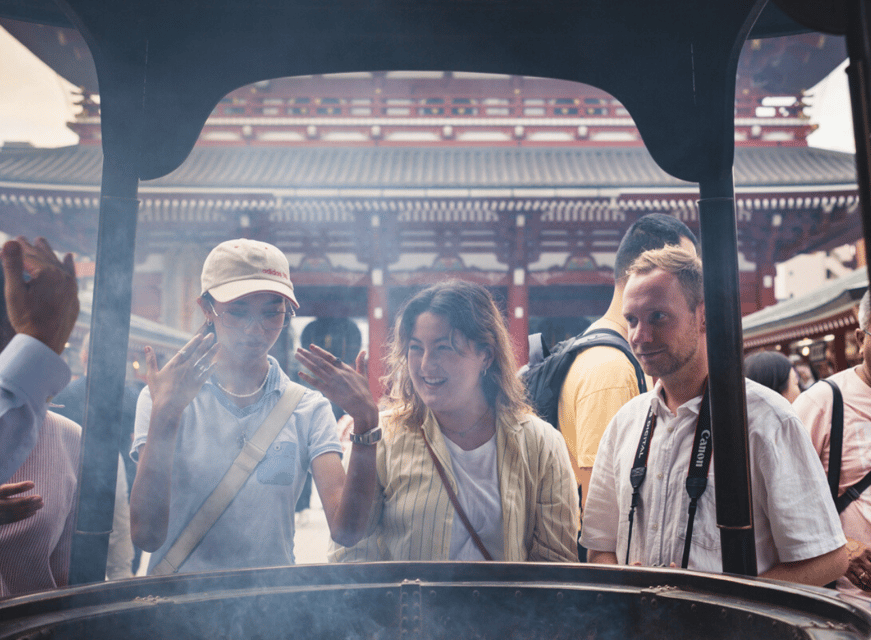
You also get to use incense smoke, a familiar practice connected with physical and mental healing. The guide explains how to approach it and why people gather around the incense burner. Treat this as a cultural activity, not a promise of medical benefit.
Omikuji, or fortune telling by paper slips, is another part of the visit. You learn how the process works and what to do with the result. If the fortune is poor, the custom gives you a way to leave it behind at the temple rather than carry it with you. The practical details are small, but they make your later temple visits in Japan less awkward.
Bring a few small coins if you can. One person was supplied with coins by a guide, but you should not count on that. Having change makes it easier to take part in offerings without needing help.
Sensoji Temple and Buddhist prayer
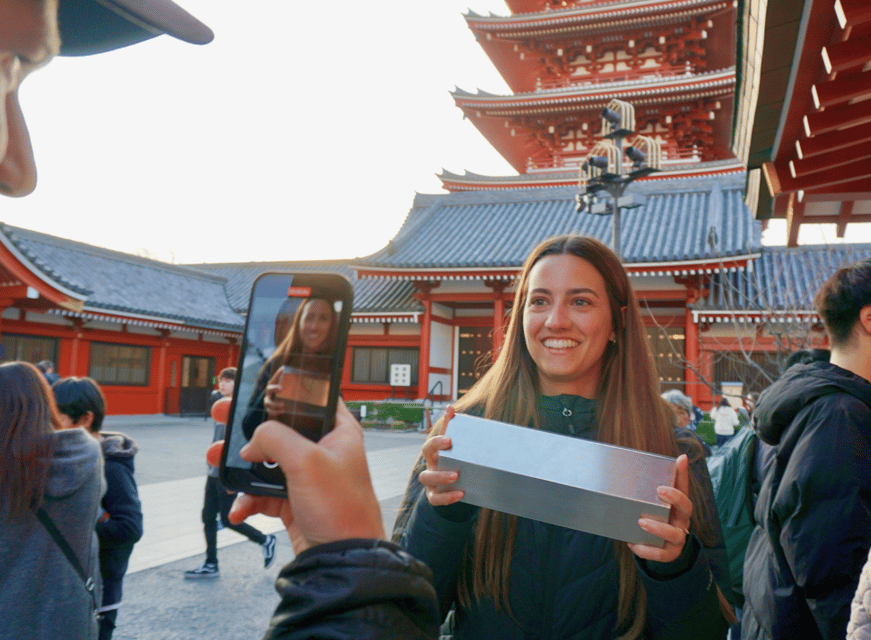
Sensoji is the central sight, and the tour gives it about 30 minutes. That is enough time for the guide to explain the temple’s importance, architecture, and prayer method while allowing you to look around.
The key lesson is that Buddhist prayer is not the same as Shinto prayer. Your guide demonstrates the appropriate way to approach the temple and bow. You also learn where to stand and how to move through the grounds respectfully.
This is especially useful if Sensoji is your first Japanese temple. Many people know the broad rule of bowing, clapping, or offering coins, but the details vary by religious setting. A guide can explain the difference without making the ritual feel stiff or intimidating.
Sensoji is often crowded, and the famous buildings can be difficult to study in peace. The guide may adjust the pace or choose less congested spots when possible. Still, you should expect noise, groups, photographs, and movement around you. The tour gives meaning to the place, but it cannot remove the crowds.
Asakusa Shrine and the meeting of Buddhism and Shinto
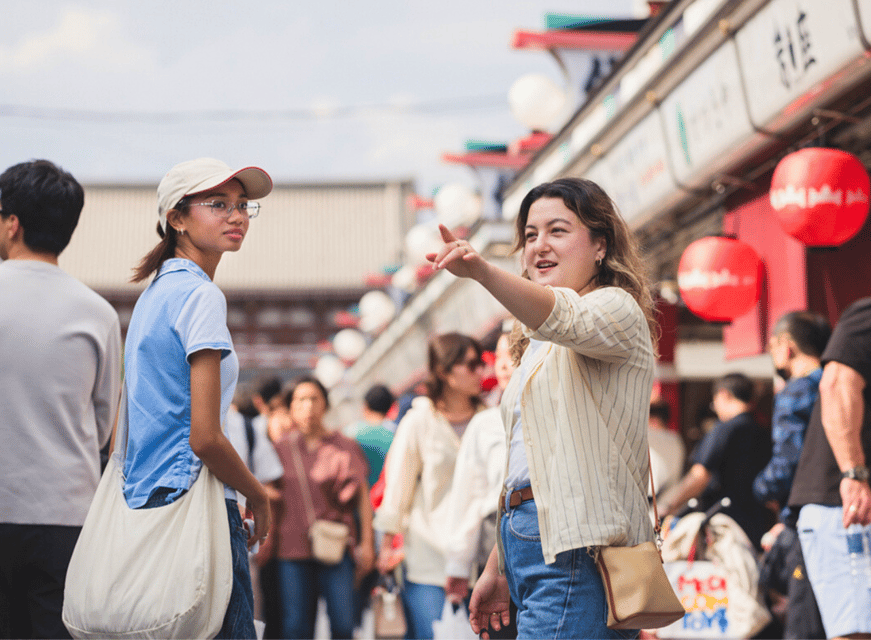
The final major stop is Asakusa Shrine, with about 15 minutes for a visit and explanation. It sits near Sensoji, making the pair a clear lesson in Japan’s blended religious life.
Your guide explains the Shinto prayer process and contrasts it with the Buddhist method you have just learned. You also hear about bowing, the proper side to walk through torii gates, and the role of shrine boundaries. These details help you behave with confidence at other shrines during your trip.
The close relationship between Sensoji and Asakusa Shrine is one of the best reasons to take this walk. You do not have to study religion in depth to appreciate the difference. You simply learn to recognize whether you are at a Buddhist temple or a Shinto shrine, what the structures suggest, and how local customs change from one place to the other.
What the guides add to the walk
The strongest part of this experience is the guide-led conversation. The guide roster can vary, but several names appear in the experience’s feedback, including Nicolas, Erik, Lino, Nana, Ayaka, Diane, Joe, Arief, Ariel, Somi, and others.
Nicolas receives particular praise for clear explanations of Shinto and Buddhism, while Erik is noted for helping with temple etiquette and family questions. Lino has been described as friendly and easy to understand, and Nana worked patiently with children aged five and eight. These details suggest a relaxed teaching style rather than a formal lecture.
You should use the small group to your advantage. Ask about anything connected to Tokyo, not only the scheduled sights. Guides have helped with restaurant suggestions, showed one person toward Kappabashi Street, and offered advice on nearby shopping and kimono rental. Kimono rental is available through a local shop about two minutes from the meeting point, but it is an extra arrangement, not part of the tour price.
Pace, weather, and who should book
Two hours is a sensible length for this route. It is long enough to cover the main religious sites without turning into an exhausting half-day walk. The pace can feel relaxed, but you will still spend the full time on your feet.
Wear comfortable shoes and bring water, especially in hot weather. Vending machines are available during the walk, but carrying your own bottle is simpler. Dress for the forecast because the tour runs in rain or shine. A rainy day may produce fewer comfortable photo moments, yet guides have continued the route at a slower pace in poor weather.
Families can do well here, especially if children enjoy stories, rituals, and shopping. Solo visitors benefit from the easy conversation and the chance to ask many questions. Couples can combine the walk with a meal or further exploring in Asakusa.
This is not a good fit if you use a wheelchair, have a mobility impairment, or have a low level of fitness. The route includes crowded streets, temple grounds, and sustained walking. Tattoos are welcome, and there is no dress code, so you do not need special clothing for the visit.
Is $30 a fair price for two hours?
At $30, this is a reasonable buy for a first visit to Asakusa. You could walk through Kaminarimon, Nakamise, and Sensoji for free, but you would miss much of the context and may not feel sure about the rituals. The small group also gives you a better chance to stop, ask questions, and get help with photos.
The value is highest when you are new to Japan or want a cultural introduction before visiting more temples and shrines on your own. It is lower if you already know Buddhist and Shinto customs, have explored Asakusa before, or mainly want unstructured shopping time.
Free cancellation up to 24 hours before the tour and reserve-now, pay-later booking make it easier to fit into a changing Tokyo plan. Since groups are limited to eight, booking ahead is sensible during busy periods.
Should you book the Asakusa walking tour?
Book it if you want Sensoji to mean more than a large gate and a famous red lantern. The combination of Azuma Bridge, the rooftop view, Nakamise, Sensoji, Asakusa Shrine, and smaller religious sites gives you a useful two-hour introduction to old Tokyo.
I would especially choose it for a first Tokyo morning, a family visit, or a solo day when you want friendly company without joining a large crowd. Skip it if you dislike walking, want extended shopping time, or already feel comfortable with Japanese temple and shrine customs.
FAQ
How long does the Asakusa walking tour last?
The tour lasts two hours, including the guided visits, photo stops, temple and shrine explanations, and interactive rituals.
How large is the tour group?
The small group is limited to eight participants. If bookings are light, your group may be much smaller.
Which languages are available?
Live guiding is available in English and French.
What places does the tour visit?
The route includes Azuma Bridge, the Asakusa Culture Tourist Information Center viewpoint, Kaminarimon, Nakamise Shopping Street, Hozomon Gate, Sensoji Temple, Asakusa Shrine, and smaller local temple or shrine sites.
Are temple rituals part of the experience?
Yes. You learn and take part in temizu hand washing, omikuji fortune telling, incense use, Buddhist prayer, and Shinto prayer customs.
Is there a dress code or a policy on tattoos?
There is no dress code, and tattoos are welcome.
Is the tour suitable for wheelchair users?
No. The experience is not suitable for wheelchair users, people with mobility impairments, or people with a low level of fitness. Comfortable walking shoes are recommended.
Just added around Tokyo
- Tokyo: Tsukiji Market Walking Tour & Sushi Cooking Class★ 4.6 · 122 reviews
- Tokyo:Stroll in Old traditional culture towns~Yanaka & Nezu★ 4.9 · 186 reviews
- Tokyo: Shibuya Crossing & Hidden Streets Walking Tour★ 4.8 · 128 reviews
- Tokyo: Shinjuku Bar Hopping & Night Walking Tour★ 4.6 · 137 reviews
- Tokyo: Shinjuku Nightlife & Secret Backstreets Walking Tour★ 4.8 · 229 reviews
- Tokyo: Meiji Shrine Walking Tour — Shinto & Imperial System★ 4.9 · 266 reviews
- Tokyo: Private Custom Walking Tour with Local Guide★ 4.9 · 350 reviews
- Tokyo: Shibuya Highlights Walking Tour & Secret View Spot★ 4.9 · 196 reviews
Walking Tours, compared.

Magical London: Harry Potter Guided Walking Tour
Read our review →
Reykjavik Food Walk – Local Foodie Adventure in Iceland
Read our review →
History and Hauntings of Salem Guided Walking Tour
Read our review →
New Orleans Premier Ghost, Voodoo and Vampire Walking Tour
Read our review →
Amsterdam Anne Frank: Small-Group Walking Tour & Local Guide
Read our review →

Edinburgh Castle: Guided Walking Tour with Entry Ticket
Read our review →
Anne Frank’s Story – Guided Walking Tour through Amsterdam
Read our review →Browse the lists this tour appears in