
REVIEW · BARCELONA
Barcelona Walk Like a Local: El Born & Gothic 15+ Sights
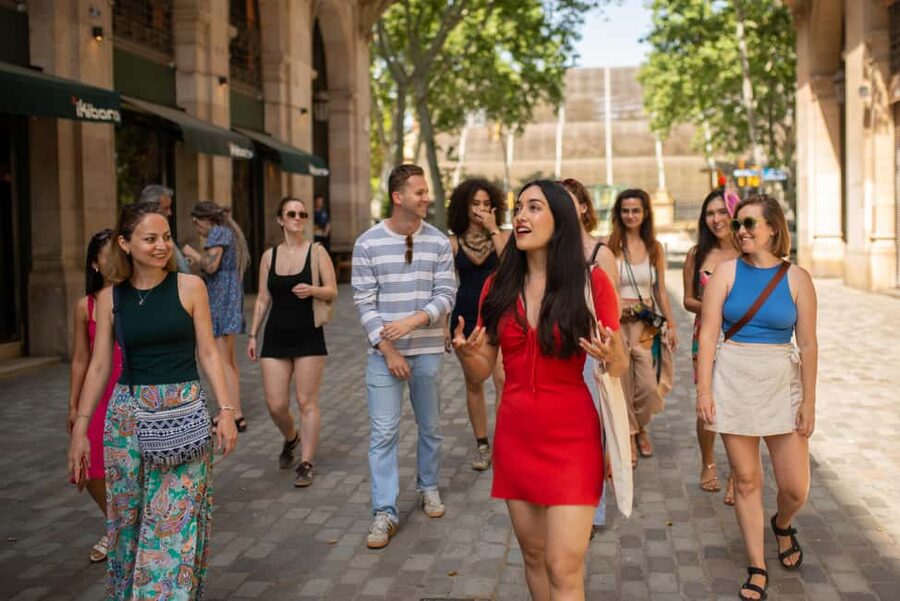
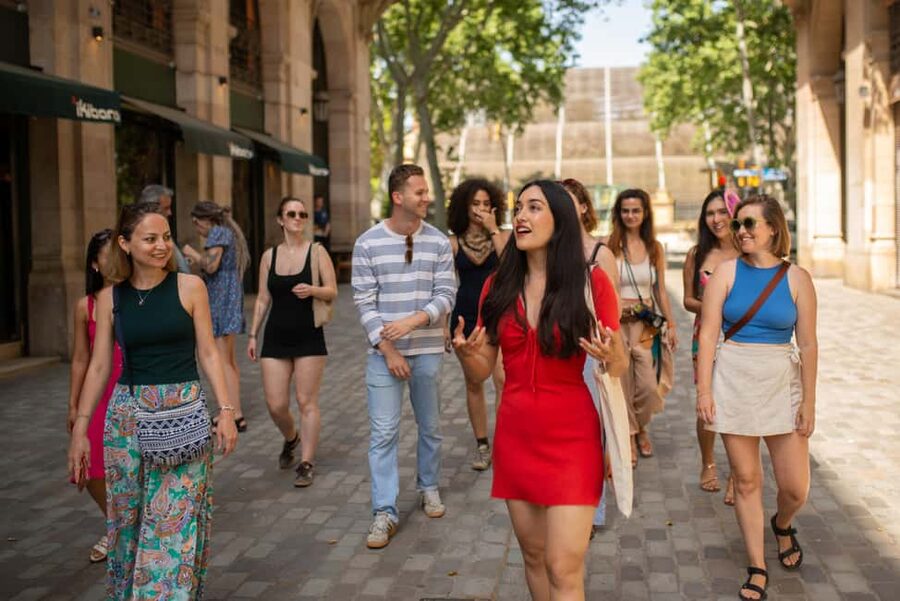
Barcelona’s old center is best understood on foot, one narrow lane and small square at a time. This El Born and Gothic Quarter walk mixes major churches with tucked-away corners, Roman traces, old businesses, local legends, and art tied to Picasso and Barcelona’s rebellious spirit.
I like the route’s contrast: Santa Maria del Mar and Barcelona Cathedral give you grand architecture, while places such as Plaça Sant Felip Neri and the Bishop’s Bridge add darker, stranger stories. I also like the practical local touch, with guides such as Petra, Adriana, Jen, and Santiago offering restaurant ideas and tips for planning the rest of your stay.
The main drawback is that 2 to 2.5 hours is tight for this many stops. You should expect exterior explanations and quick visits rather than time inside every church or museum. The tour runs rain or shine, so comfortable shoes and a weather-ready layer matter.
Key things to know before you book
- See two old Barcelona districts in one walk: The route links El Born’s artistic character with the medieval lanes of the Gothic Quarter.
- Hear stories, not just dates: Expect legends about the cursed Bishop’s Bridge, local characters, artists, revolutionaries, and Roman Barcelona.
- Visit major religious landmarks: Santa Maria del Mar and Barcelona Cathedral anchor the walk.
- Find photo-worthy details: The route includes the World Comes to Life With Each Kiss mural, old façades, narrow lanes, and atmospheric squares.
- Get useful local advice: Guides have offered restaurant suggestions, New Year’s Eve ideas, and tips for planning later days in the city.
- Budget-friendly pricing: At $17 per person, the tour is a low-cost way to get oriented, especially early in a Barcelona visit.
Why this route works for a first look at old Barcelona

I see this walk as an introduction rather than a full study of Barcelona’s monuments. It gives you a useful map in your head, then adds enough stories to make the streets easier to recognize when you return on your own.
The two districts also make a good pair. El Born feels closely tied to craft, food, art, and the city’s older commercial life. The Gothic Quarter brings Roman foundations, medieval churches, grand civic buildings, and lanes that can feel almost maze-like. Moving between them lets you see how Barcelona changed over many centuries without spending the whole day in one neighborhood.
The advertised route covers more than 15 sights and story points, though the listed schedule names 13 main stops. That is not necessarily a problem. Several places are close together, and guides can point out extra details between the formal stops. Still, I would keep your expectations realistic: this is a brisk overview, not a series of long indoor visits.
More Hidden Gems Walks in Barcelona:
- Barcelona: Hidden Gems Walking Tour Including 10+ Sights
★ 4.9 · 121 reviews - Dublin Highlights and Hidden Gems Guided Walking Tour
★ 5.0 · 6,020 reviews - Explore Berlin: See All The Iconic Sights & Some Hidden Gems
★ 5.0 · 4,429 reviews
Starting beside the glass cube on Passeig de Picasso
The meeting point is at Passeig de Picasso, 13. You are told not to go inside the park. Instead, look for a large glass cube monument, where the guide will wait with a Side Routes sign.
That instruction is useful because parks and broad public spaces can create confusion, especially when several paths lead toward the same area. Arrive with enough time to locate the monument rather than wandering into the park searching for the group.
The guide leads in English. Named guides associated with this experience include Petra, Adriana, Adrianna, Jen, Jennifer, Santiago, Mariah, Jan, and others. The repeated praise for Petra, Adriana, and Jen points to a warm, animated style, while Santiago is noted for welcoming questions and enthusiasm for Barcelona’s past. The exact guide depends on your date and booking.
El Born: Barcelona’s artistic and local side
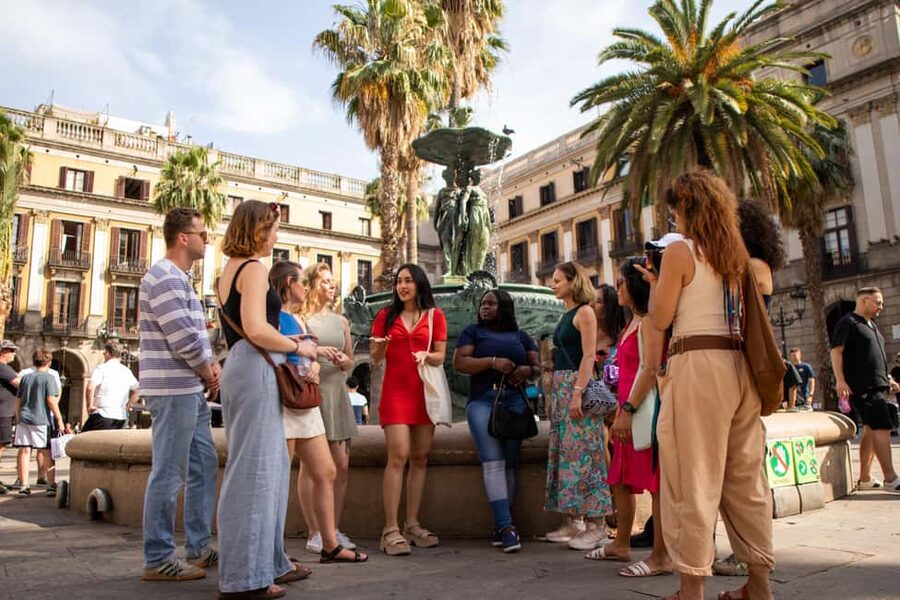
The first major section is El Born, scheduled for about 30 minutes. This district is a smart opening because it eases you into old Barcelona through atmosphere and stories rather than a long lecture.
You can expect narrow streets, older façades, small lanes, and references to the area’s artistic and commercial life. The guide brings in figures such as Picasso and the city’s revolutionaries, helping you connect the buildings around you with Barcelona’s creative and political energy.
This is also where the walk’s local angle matters most. Instead of simply pointing at a famous building, the guide can show you why a lane, wall, business, or square matters. The experience promises more than 100-year-old businesses and lesser-known corners, though the precise businesses you visit may depend on the route and what is open.
Casa Gispert and the feel of old Barcelona commerce
Casa Gispert receives about 10 minutes. The stop adds a taste of Barcelona’s long-running business culture to the churches and monuments.
The useful point here is scale. You are not only looking at grand landmarks built for kings, bishops, or civic leaders. You are also seeing the smaller places that helped ordinary city life continue through generations. A short explanation at a long-established business can make the old quarter feel lived in rather than preserved only for sightseeing.
Because the stop is brief, you should not expect a shopping session or a meal. Think of it as a quick introduction to a business with a long connection to the neighborhood.
A few more walking tours around Barcelona worth a look
- Barcelona Tapas and Wine Experience Small-Group Walking Tour
★ 5.0 · 5,804 reviews - Barcelona: Tapas Walking Tour with Food, Wine, and History
★ 4.8 · 4,261 reviews - Barcelona: Food Walking Tour with Tapas and Wine
★ 4.9 · 2,180 reviews - Barcelona Tapas Walking Tour: Food, Wine & History
★ 4.5 · 1,928 reviews
Santa Maria del Mar, the Cathedral of the People
Santa Maria del Mar receives about 15 minutes and is one of the walk’s strongest anchors. Known as the Cathedral of the People, it gives the route a major architectural stop without requiring you to spend the entire afternoon in one church.
The guide explains the church’s place in Barcelona’s story and points out why it matters to El Born. Even from outside, the building provides a clear sense of the district’s scale and importance. If the route includes interior access, the short timing means you should still expect a focused look rather than a slow architectural study.
This is one of the places where I would pay close attention to the guide’s explanation. A large church can seem impressive but distant when you see it alone. The surrounding streets and El Born context help connect the building to the people and neighborhood that shaped it.
Picasso Museum and the city’s artistic thread
The Picasso Museum stop lasts about 10 minutes. The tour does not list museum admission as an inclusion, so plan on an exterior discussion rather than assuming you will enter. That distinction matters if you want to see the collection itself.
The value is in the connection between Picasso and the old city. The walk uses art as a way to explain Barcelona’s modern identity, not just as a list of famous names. Guides also bring in Gaudí, murals, and other artistic influences during the broader route.
One booking description refers to a mural called The World Comes to Life With Each Kiss, which offers a strong photo stop and a different view of city art. Instead of treating Barcelona’s art as something confined to museums, the tour shows how it appears on walls, in old streets, and in the stories attached to local figures.
Forty-five minutes through the old city
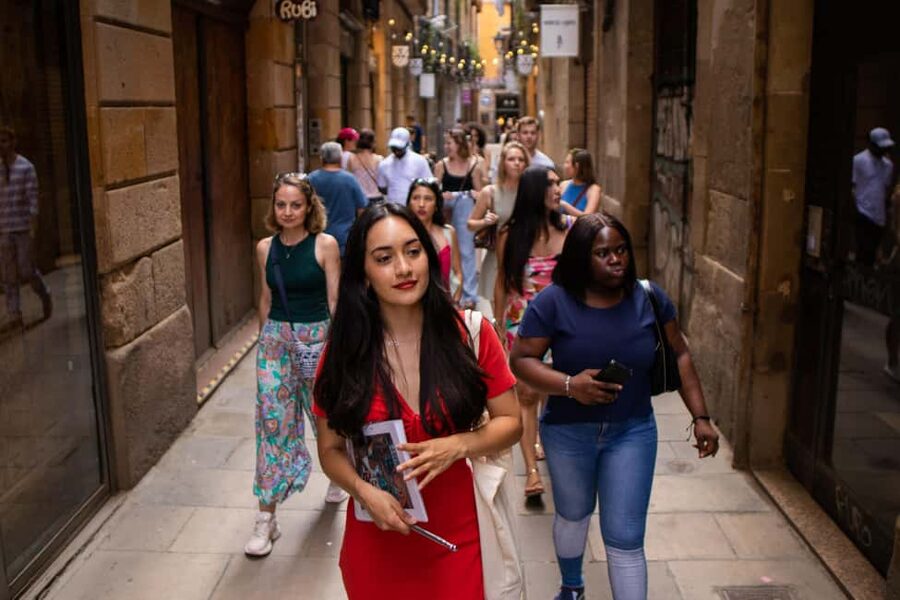
The old-city portion is listed at about 45 minutes, making it the longest single section. This is where you get the most walking between formal landmarks and the best chance to notice the details that are easy to miss alone.
The guide brings in Roman influence, medieval Barcelona, local legends, and more recent political and artistic life. You may pass through lanes that look plain at first, then learn why a doorway, wall, or square matters. That storytelling is important here because the old center is visually dense. Without context, you can walk past layers of history without noticing them.
The route can also help you plan the rest of your visit. You will get a first look at where you may want to return for food, photographs, museums, or a slower walk. Several guides have been singled out for useful restaurant recommendations, so keep your phone ready for notes.
Gothic Quarter: Roman traces and medieval lanes
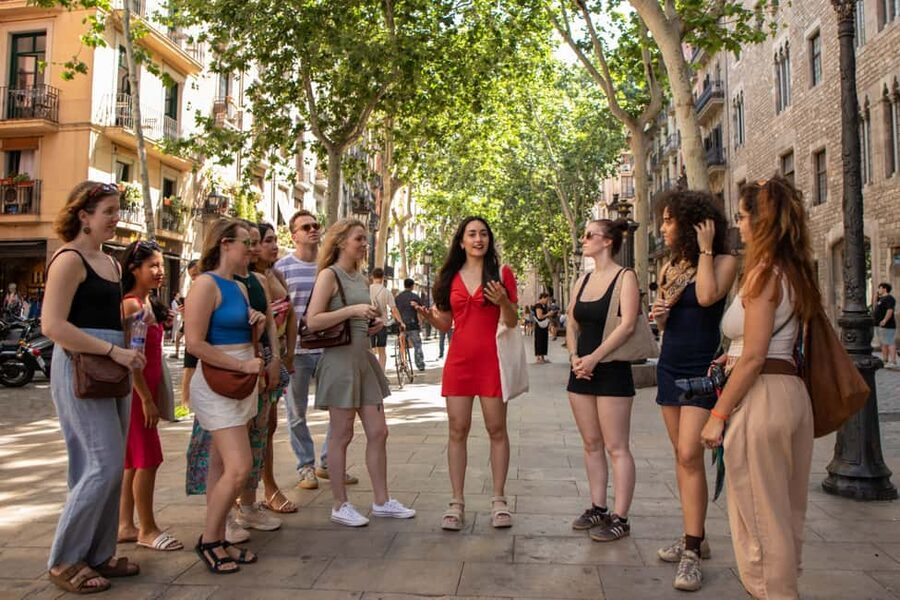
The Gothic Quarter section takes about 30 minutes. This is the part most people picture when they imagine old Barcelona: tight lanes, stone buildings, small squares, churches, and a city plan shaped by centuries of change.
The Roman connection is a key feature. You will hear about the Roman presence beneath and around the modern quarter, giving you a sense of how Barcelona grew from an ancient settlement into the city you see today. The experience does not promise archaeological entry, so expect explanation and street-level viewing rather than a formal excavation visit.
I like this part for travelers who enjoy orientation. The Gothic Quarter can be confusing on your first day, and a guide helps you understand how the streets fit together. The tradeoff is that the narrow lanes may feel crowded at busy times, and the group must keep moving to cover the planned stops.
Barcelona Cathedral and the Bishop’s Bridge
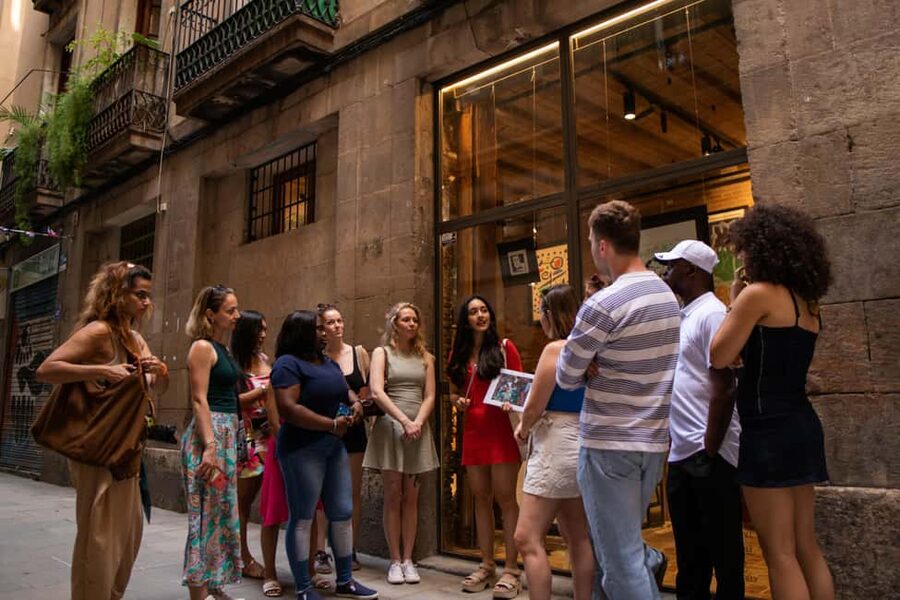
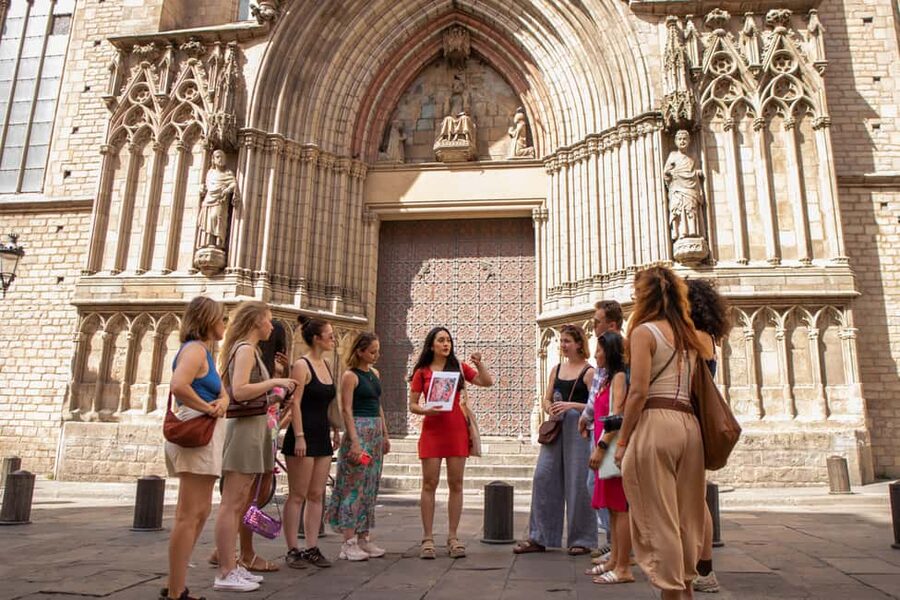
Barcelona Cathedral receives about 15 minutes. Like Santa Maria del Mar, it is one of the route’s major religious landmarks, but the two stops help show different sides of Barcelona’s old center.
The cathedral gives you a chance to focus on the city’s religious and civic importance. The guide sets the building within the surrounding quarter, so you are not simply taking a photograph and moving on without context. Again, do not assume that a short guided stop includes extended interior time.
The Bishop’s Bridge follows with about 10 minutes. This is one of the route’s more memorable story stops because the guide shares the tale of the cursed Bridge of Sighs. It is a good example of the tour’s balance: grand buildings on one hand, odd local legends on the other.
The bridge is also a strong photo point. Listen closely here, since the story is likely to be more memorable than a list of construction dates.
La Casa de l’Ardiaca and Plaça Sant Felip Neri
La Casa de l’Ardiaca receives about 10 minutes. This stop adds another layer to the Gothic Quarter, with the guide drawing your attention to a historic building that many people might pass without understanding its role.
Plaça Sant Felip Neri also receives about 10 minutes. The square is known on this route for its darker atmosphere and difficult stories. It offers a sharp change from the more cheerful art and shopping references in El Born.
I appreciate having a quiet, serious stop in the middle of a lively city walk. It reminds you that Barcelona’s past is not only churches, artists, and picturesque lanes. The guide’s job here is to give context without turning the walk into a grim history lesson.
Els Quatre Gats: a fitting finish for an art-focused walk
The route ends at Els Quatre Gats, with about 15 minutes listed for sightseeing. This is a fitting final stop because the tour has already connected Picasso, artistic life, old Barcelona, and the city’s café culture.
Finishing here also gives you a natural point to continue exploring. You can ask the guide for nearby restaurant ideas or suggestions for your next stop. The tour does not include food or drinks, so any meal or café visit is your own expense.
A final stop at Els Quatre Gats works best if you treat it as a conclusion to the stories rather than another major monument requiring a long visit. It ties the art thread together and gives the walk a clear ending.
What $17 buys you
At $17 per person, this is good value if you want a guided introduction to Barcelona’s oldest districts. You are paying for an English-speaking local guide, route planning, interpretation, and practical advice, not transportation, meals, museum tickets, or guaranteed interior access.
The price is especially sensible for a first day in the city. A good guide can save you time by showing you where the Gothic Quarter and El Born connect, then pointing out places worth revisiting. Solo visitors may also find the format useful, since the guides have been praised for making people feel included and comfortable.
The private-group option may suit families or friends who want a more personal pace, but the supplied information does not give a separate private price or exact group limits. Check those details before booking if they matter to you.
Timing, walking effort, and practical advice
The tour lasts 2 to 2.5 hours and stays on foot. With churches, lanes, squares, bridges, and several districts packed into that time, expect continuous walking with short pauses for explanations and photos.
Wear shoes you can walk in comfortably. The old center includes uneven streets and frequent stops, so flimsy footwear can make the experience less pleasant. The tour runs in rain or shine, and you should bring a camera if you want to capture the mural, churches, bridges, and old streets.
I would book an early slot if possible. That lets you use the guide’s restaurant and sightseeing tips for the rest of your day. If you care strongly about entering the Picasso Museum or either cathedral, check admission details separately rather than assuming this walk covers them.
Who will enjoy this Barcelona walk most
I recommend it for first-time visitors who want a broad sense of old Barcelona without spending half a day in a museum. It also suits solo visitors, couples, families, and friends who prefer stories and conversation to a silent audio guide.
It is a good match if you like:
- Local legends mixed with major landmarks
- Art, architecture, and city history in one route
- Photo stops and lesser-known streets
- A guide who welcomes questions
- Practical food and neighborhood suggestions
- A moderate introduction before exploring independently
You may want something else if you want long indoor visits, a slow photography walk, or detailed specialist coverage of Roman archaeology. The route covers a lot, so its strength is variety rather than depth at one site.
Should you book it?
Book this walk if you want to see El Born and the Gothic Quarter as connected parts of Barcelona, not as a checklist of isolated sights. The combination of Santa Maria del Mar, Barcelona Cathedral, Roman stories, Picasso connections, the Bishop’s Bridge, Plaça Sant Felip Neri, and Els Quatre Gats gives you plenty of range for $17.
I would be especially happy to take it near the start of a Barcelona stay, when the guide’s orientation and restaurant tips can shape your next few days. Skip it if your priority is entering museums and churches for extended visits. For most curious visitors, this is an efficient, friendly way to get under the surface of the old city.
FAQ
How long does the Barcelona walk last?
The tour lasts about 2 to 2.5 hours.
What neighborhoods does the tour visit?
The route visits El Born and the Gothic Quarter, along with Barcelona’s wider old city.
What language is the tour conducted in?
The live tour guide speaks English.
Where does the tour start?
It starts at Passeig de Picasso, 13, beside a large glass cube monument. Do not go inside the park. Look for the guide holding a Side Routes sign.
Where does the tour finish?
The walk finishes at Els Quatre Gats.
Does the price include food or drinks?
No. Meals and drinks are not included.
Is transportation included?
No. You are responsible for getting to the starting point and for any transportation during or after the experience.
Can I cancel for a full refund?
Yes. You can cancel up to 24 hours in advance for a full refund.
Can I reserve now and pay later?
Yes. The activity offers reserve now and pay later, so you can hold your place without paying at the time of booking.
Just added around Barcelona
- Barcelona: Gothic Quarter Walking Tour w/ Montjuïc Cable Car★ 4.4 · 90 reviews
- Barcelona: Ramblas, Old Town & Gaudí Houses Walking Tour★ 4.9 · 239 reviews
- Barcelona: Old Town Private Walking Tour of Past and Present★ 5.0 · 160 reviews
- Barcelona: Private Walking Tour with a Local★ 4.5 · 202 reviews
- Barcelona: Jewish Quarter 2-Hour Walking Tour★ 4.8 · 333 reviews
- Barcelona: Picasso Walking Tour with Picasso Museum Tickets★ 3.5 · 93 reviews
- Barcelona: Gothic Quarter Walking Tour with 10+ Attractions★ 5.0 · 369 reviews
- Barcelona: Hidden Gems Walking Tour Including 10+ Sights★ 4.9 · 121 reviews
Hidden Gems Walking Tours, compared.
Dublin Highlights and Hidden Gems Guided Walking Tour
Read our review →
Explore Berlin: See All The Iconic Sights & Some Hidden Gems
Read our review →
San Marco to Rialto Walk & Spritz Like a Local
Read our review →
Kyoto Geisha Walking Tour: Gion District & Hidden Gems
Read our review →
Eat Like a Local: Venice 3-Hour Small-Group Food Tasting Tour
Read our review →
Montmartre Hidden Gems and Scenic Highlights Walking Tour
Read our review →
Guided Walking Tour of City Highlights & Hidden Gems
Read our review →
Browse the lists this tour appears in