
REVIEW · STRASBOURG
Strasbourg on Foot: Historic Center and Petite France with a Local Guide
Strasbourg’s best introduction comes on foot, moving from the grand sweep of Place Kléber to the canals and half-timbered houses of Petite France. This two-hour walk gives you the city’s big sights, but its real value is the way a guide connects them: cathedral, palace, medieval defenses, river trade, and everyday Alsatian life.
I like the logical route and the lively guiding style reported from names such as Stefania, Leila, Stef, Maya, and Javier. I also like the practical extras: a city map, restaurant tips, and a small taste of Alsace along the way. The main limitation is time. Two hours is enough for an overview, not a full visit to the cathedral, palace museums, or every corner of the old town.
Key points at a glance
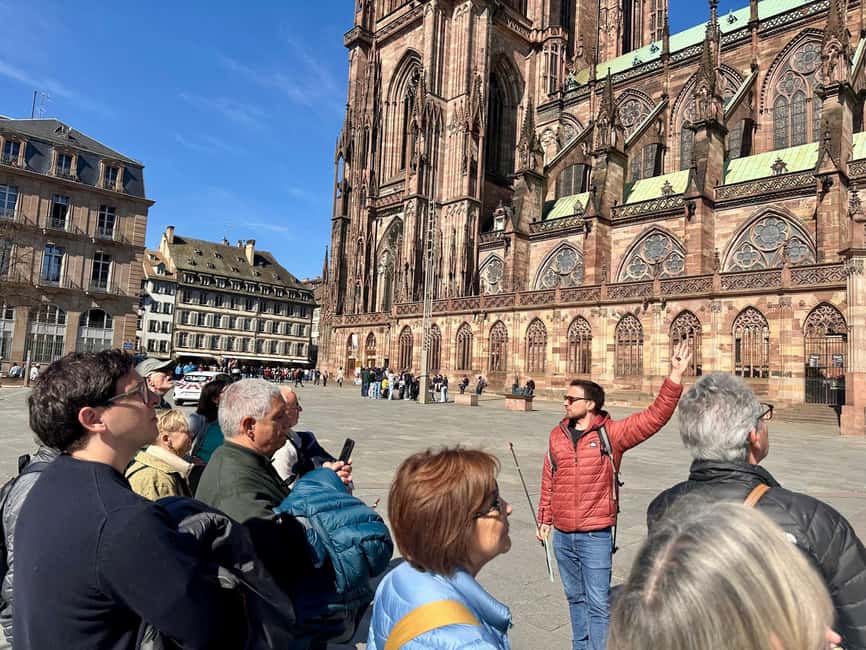
- The walk links Strasbourg’s major sights: Place Kléber, Notre Dame Cathedral, Rohan Palace, Gutenberg Square, Saint-Thomas, the Covered Bridges, and Petite France.
- Petite France is the scenic finish: Expect canals, narrow lanes, half-timbered houses, and the old Tanners’ Quarter.
- The cathedral visit is exterior-focused: The tour explains the building and its astronomical clock, but cathedral entry is not included.
- Guides add useful local advice: Restaurant suggestions, places to visit, and tips for the rest of your stay are part of the experience.
- The pace is manageable: The walk lasts two hours, and guides have been praised for keeping the group moving without rushing.
- The $34 price is fair for a first look: You pay for a guided orientation, not admissions to Strasbourg’s major museums or monuments.
Starting at Place Kléber, Strasbourg’s central stage
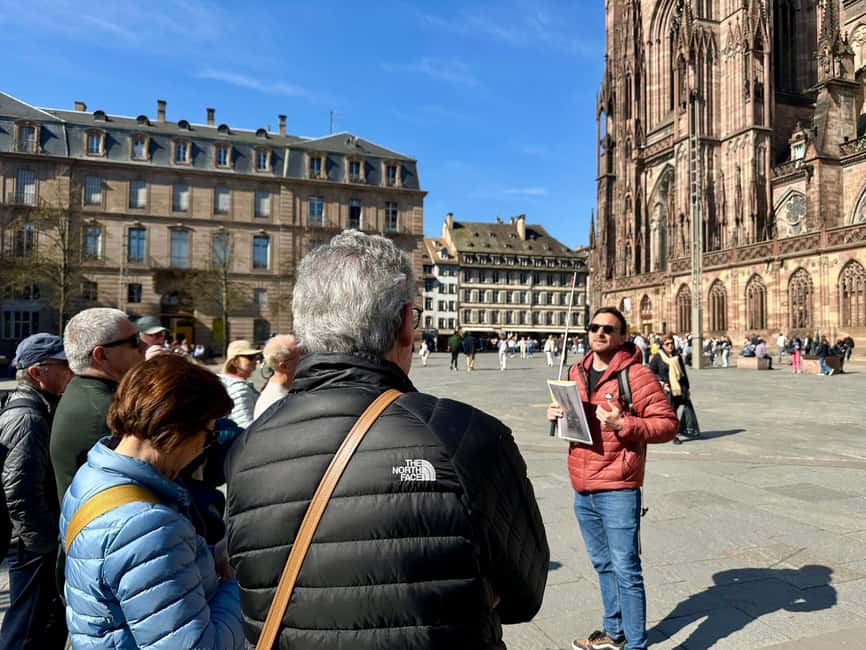
Place Kléber is the natural place to begin a first look at Strasbourg. It is the city’s main central square, and during the Christmas season its large decorated tree becomes a major focal point. The setting helps you understand Strasbourg’s festive identity before the walk turns toward older streets and religious landmarks.
The listed meeting point may vary by booking option, with 14 Rue Mercière given as one starting location. Check your confirmation carefully, since the description also presents Place Kléber as the opening point. This is a small but important detail in a compact city where a few minutes spent searching for a guide can cut into a two-hour tour.
Your guide sets the broad story here. Strasbourg has long sat at a crossroads between French and German cultural worlds, and its architecture, food, names, and public buildings reflect that position. You will not get a university lecture, but you should come away with a clear sense of how the central district fits together.
More History Walking Tours in France:
- Vieux Lyon Cultural & Historical Walking Guided Tour (English)
★ 5.0 · 942 reviews - Berlin: Third Reich & Cold War Guided Walking Tour
★ 4.9 · 8,378 reviews - Munich: Third Reich & WWII Walking Tour
★ 4.6 · 6,181 reviews
Notre Dame Cathedral and the 142-meter tower
Strasbourg Cathedral is the visual high point of the walk, even before you reach it. Its single 142-meter tower rises above the old center and makes a useful reference point as you move through the city.
The guide explains the cathedral’s Gothic design, its place in Strasbourg’s story, and details such as the medieval stained glass and astronomical clock. The clock is a Renaissance engineering achievement, with moving displays and a mechanical performance at certain times of day. The timing of that performance is not built into this walking tour, so do not book the walk expecting a full clock presentation.
Pay attention to the wording around the cathedral. The included visit is outside Notre Dame, not a guaranteed interior tour. The tour description discusses the colored light through the windows and the clock, but the itinerary allocates only about 15 minutes here. That makes this a good introduction and photo stop, not a substitute for returning later to explore inside at your own pace.
I like this arrangement for a first morning or afternoon. You get the context before deciding how much time to spend on the cathedral later. If entering the church is high on your list, set aside separate time after the tour and check opening conditions on the day.
Rohan Palace and the city’s grander side
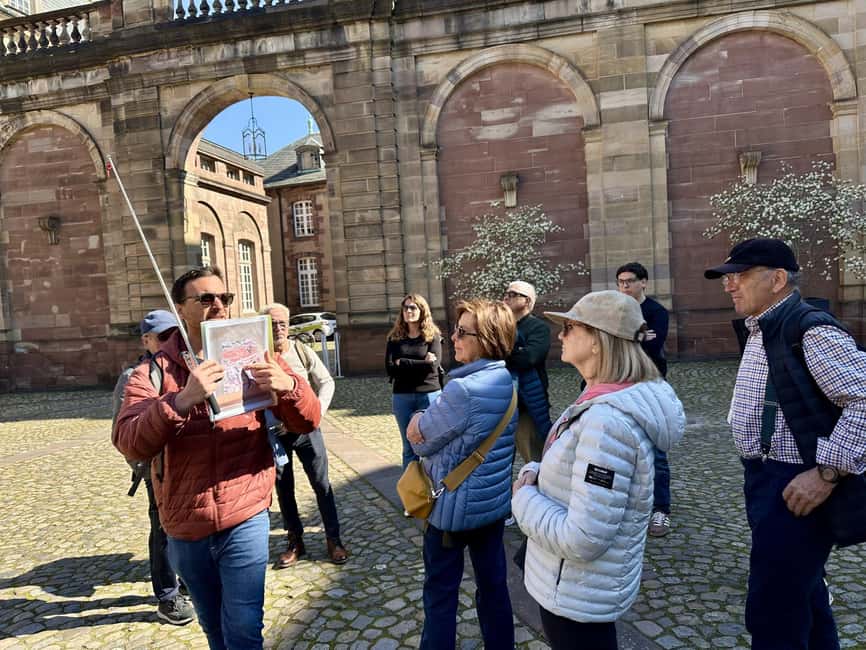
From the cathedral, the walk continues to Rohan Palace, a large 18th-century residence built for princes and cardinals. Its scale changes the mood. You move from medieval religious power to the polished world of aristocratic Strasbourg.
The guide uses figures such as Marie Antoinette and Napoleon to explain the palace’s connections with European politics. Those stories help turn a formal façade into a place with human drama. You will also hear about the museums housed in the palace, including Fine Arts and Decorative Arts.
Do not read the palace stop as a full museum visit. The two-hour route includes guided commentary, but museum admission is not listed. If you want the paintings, period rooms, or decorative collections, plan a separate visit. The walking tour gives you the reason to return and helps you choose what deserves your time.
This is one of the stronger parts of the route for visitors who want more than pretty streets. The palace shows how Strasbourg’s importance reached beyond its lanes and canals. It also gives the guide a chance to explain the city through people and events rather than dates alone.
L’Ancienne Douane, Tripiers, and the commercial old town
The stops at L’Ancienne Douane and Place des Tripiers shift the focus from rulers and cathedrals to trade and daily work. These places help explain how the old city functioned, especially around the waterways that made movement of goods possible.
Place des Tripiers points to the working side of medieval Strasbourg. The old center was not simply a postcard village. Craftspeople, traders, fishers, millers, and tanners shaped the streets, smells, sounds, and wealth of the city.
This part of the tour is valuable because it gives Petite France some context before you arrive there. You begin to see the half-timbered houses as practical buildings tied to trades and water, not just as attractive façades for photographs.
The route includes short guided stops of roughly 10 minutes at several locations. That format keeps the walk moving, but it also means you should expect concise explanations rather than long talks at each place. Ask questions as you go. Guides such as Leila, Stefania, and Stef have been praised for welcoming questions and adding personal recommendations.
More Guided Tours in France:
- Paris Top Sights Half Day Walking Tour with a Fun Guide
★ 5.0 · 2,893 reviews - Paris: Montmartre Highlights Walking Tour with a Local Guide
★ 4.9 · 2,318 reviews - Paris: Montmartre Cheese, Wine & Pastry Guided Walking Tour
★ 4.8 · 2,255 reviews - Vieux Lille 2-Hour Guided Walking Tour
★ 4.5 · 1,220 reviews
Gutenberg Square and Saint-Thomas Church
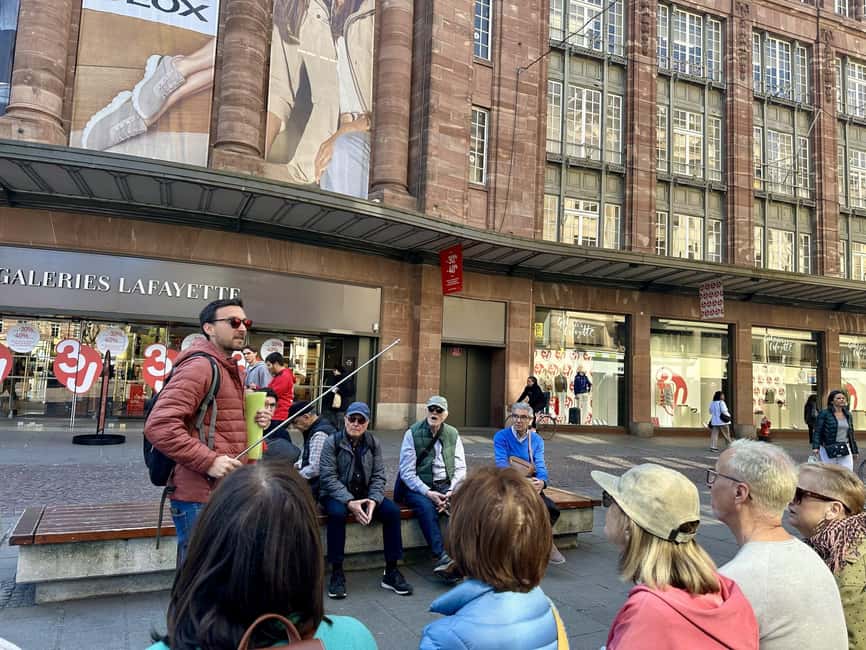
Place Gutenberg is described as the cultural and historical center of Strasbourg. It is named for Johannes Gutenberg, who lived in Strasbourg before developing the printing press in Mainz. The square provides another useful lesson in the city’s place within European communication and commerce.
The stop is brief, but it helps tie together the different periods you have seen. Strasbourg is not only a medieval town preserved for visitors. It was also a place where ideas, goods, religion, and political power crossed paths.
The walk then reaches Église Saint-Thomas. This church adds another layer to Strasbourg’s religious story and gives the route a quieter counterpoint to the cathedral. The guide’s explanation is likely to focus on the church’s role and the surrounding quarter rather than an extended interior visit, since the itinerary gives it about 10 minutes.
I appreciate this middle stretch because it prevents the tour from becoming a parade of famous façades. You get a sense of how the old center worked, and you can mark places to revisit once the guided walk ends.
The Covered Bridges and medieval defenses
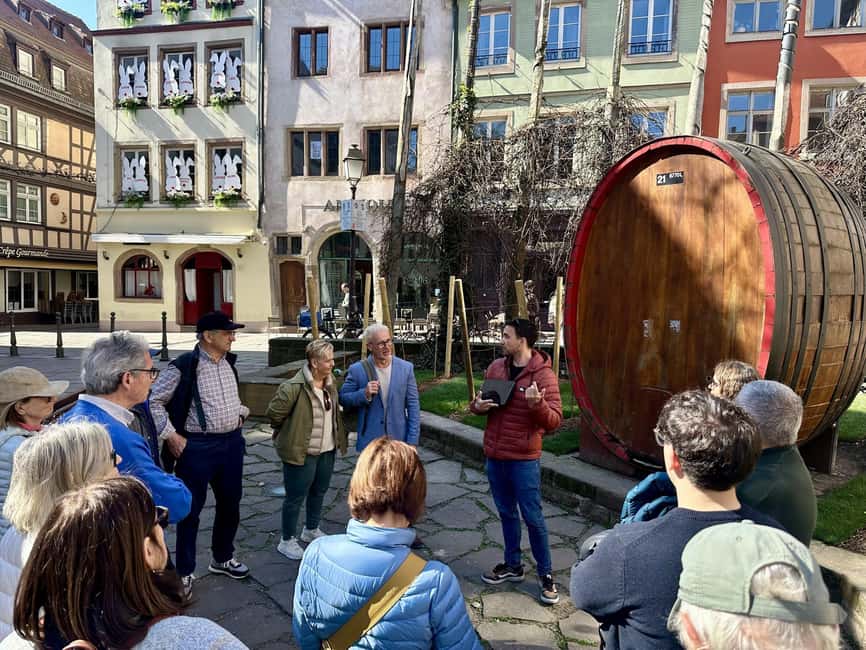
The Covered Bridges are among Strasbourg’s most recognizable historic structures. Their roofs are gone today, but the name recalls the wooden coverings that once protected the crossing and the people defending the city.
The defensive towers and canals here make the city’s military past easy to picture. This was a working defensive zone, not just a scenic waterfront. Your guide explains how the bridges and towers helped protect Strasbourg and how the area changed as the city grew.
This is also one of the best places to understand the relationship between water and urban design. Canals divide and frame the old quarter, while the towers show how those same waterways could support defense. The result is a stop that works for both photographers and history fans.
The route does not include a boat ride, and there is no long pause for independent exploration. If you want detailed canal views or time inside the towers, plan to return after the walk. The tour gives you the map in your head first, which makes a later wander much easier.
Petite France and the old Tanners’ Quarter
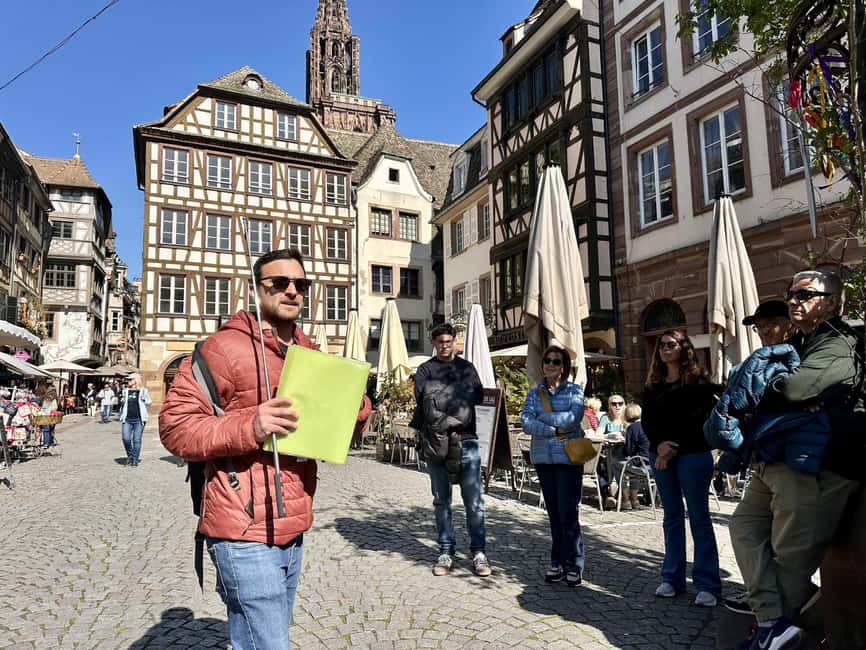
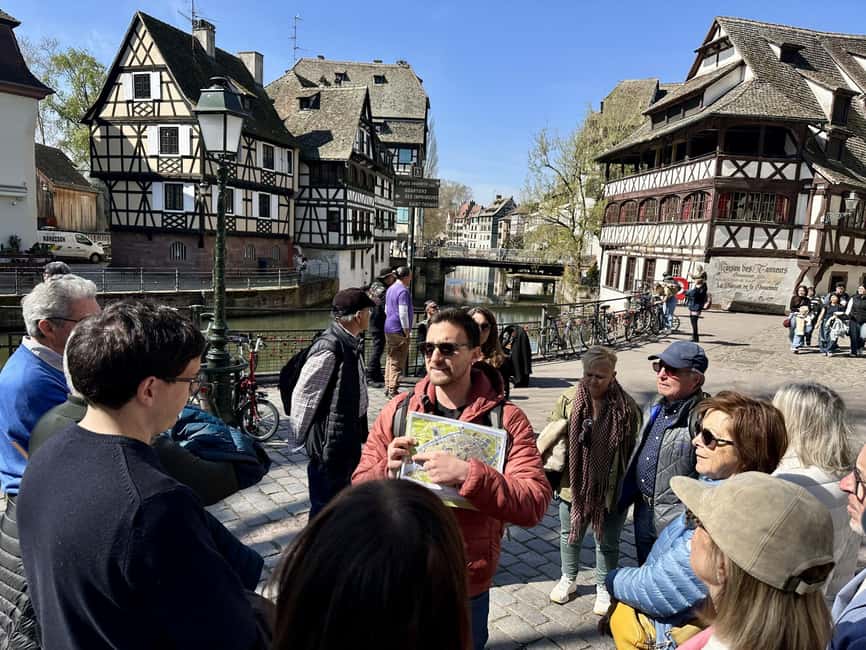
The finish in Petite France is the reward for the steady walk through the center. Here, canals pass under bridges and narrow streets run between traditional half-timbered houses. The neighborhood once belonged to fishermen, tanners, and millers, and that working past is central to its character.
The Tanners’ Quarter is especially useful for understanding why the buildings look the way they do. Water was essential to the trades, and the canals were part of the local economy. Houses were shaped around work, storage, access to the water, and the needs of families.
Today, Petite France is one of Strasbourg’s most attractive areas, but the guide keeps it from becoming a simple photo stop. You hear about the people who worked here and the industries that made the old city function. That context makes the canals and timbered façades more memorable.
The tour finishes in the heart of Petite France, where you can stay for photographs, a meal, or your own walk. This is a smart ending. You finish in one of Strasbourg’s most pleasant areas rather than being dropped back at a generic meeting point.
What the guide adds to the walk
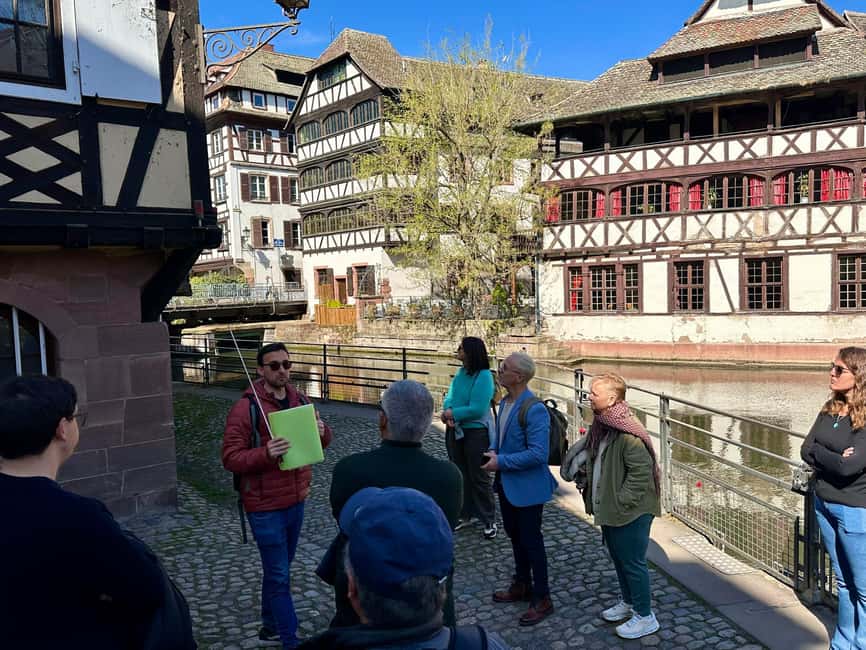
The strongest feature of this experience is the guide. The names Stefania, Leila, Stef, Maya, and Javier appear among the guides who have led recent tours, so the exact personality will depend on your departure.
The best guiding style for this route is energetic but not rushed. Stefania has been praised for remembering names and responding closely to questions. Leila has been described as engaging and good at building a story across several periods. Stef has received praise for clear explanations, local tips, and a comfortable pace.
That matters because Strasbourg’s old center can look easy to understand at first. Without context, you see a cathedral, a palace, a square, and a canal neighborhood. With a good guide, you see how religion, trade, defense, printing, and aristocratic power fit together.
The tour is offered in English or Spanish. Some material may be presented in its original language, so ask the guide to clarify anything you miss. Clear audio equipment has also been used on some departures, which can help if the group is spread along a narrow street.
Pace, walking conditions, and group expectations
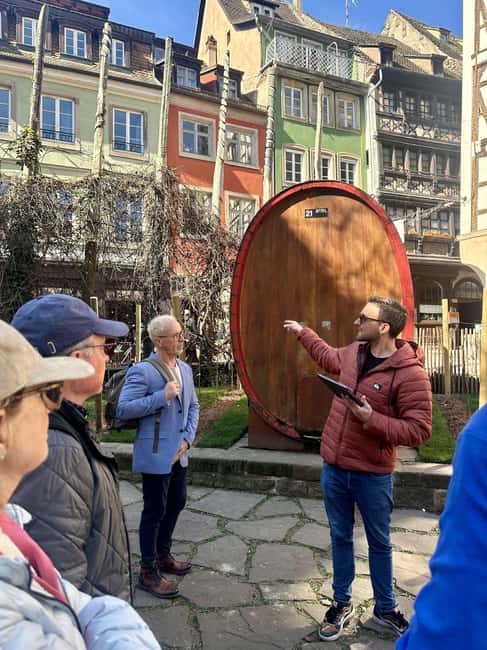
The tour lasts two hours and moves through the historic center on foot. You should expect cobbled streets, bridges, and regular stops rather than a flat, uninterrupted stroll. Comfortable shoes will make the experience easier.
The pace has been praised as steady enough for people who prefer not to hurry. Guides have also been described as keeping the walk moving without making it feel like a race. Still, this is an urban walking tour with several stops, so it suits you best if you are comfortable being on your feet for the full two hours.
The experience works well for a first day in Strasbourg. You learn the layout, note restaurants and places to return to, and get a practical map for the rest of your stay. It also suits a short visit, when you need to see the main historic center without spending half a day indoors.
Families and mixed-age groups can enjoy it, especially if children like stories about towers, palaces, canals, and medieval work. The amount of detail will suit adults who want a useful introduction, but anyone seeking a slow architectural study should choose a longer specialist tour.
What the $34 price gives you
At $34 per person, this is a reasonable price for a live two-hour orientation with a local guide. You are paying for explanation and route planning, not for admission to Strasbourg’s paid attractions.
The package includes the guided walk, exterior coverage of Notre Dame Cathedral, Petite France, Rohan Palace, historical and cultural commentary, a typical Alsatian sweet, a city map, and recommendations for places to visit. Some food tastings have included gingerbread and cheese, though the exact treat may vary.
The value improves if you use the advice. A restaurant list or a clear suggestion about what to see next can save time, especially on a short stay. The tasting is a pleasant extra, but it should not be the reason you book.
The main cost consideration is what you will not receive. Cathedral entry, museum admission, and extended time at individual sights are not included. If you want to examine Rohan Palace’s collections or spend time inside Notre Dame, budget separate visits.
Free cancellation up to 24 hours before the start and the option to reserve now and pay later make the booking fairly flexible. Check the selected meeting point and start time before you leave, since availability and meeting details depend on the option chosen.
Who should book this Strasbourg walk?
I would choose this tour if you are visiting Strasbourg for the first time, especially at the beginning of your stay. It gives you a usable mental map and points out places you can return to with more time.
It is also a good fit if you prefer history explained through buildings and streets rather than a long indoor lecture. The route covers the cathedral, palace, trade quarter, defensive bridges, and Petite France in a clear sequence.
You may want something else if you have already explored the old center in detail. The tour repeats the city’s major landmarks and offers an overview rather than rare access or specialist research. It is also not the right choice if your main goal is a cathedral interior visit or museum tour.
The current rating is 4.7 from 223 reviews, and the most consistent praise centers on engaging guides, clear storytelling, useful recommendations, and a comfortable pace. Those qualities matter more here than elaborate extras. Strasbourg is easy to admire, but a good guide helps you understand what you are seeing.
Should you book it?
Yes, if you want a friendly, efficient introduction to Strasbourg at a fair price. The route covers the essential old center and ends in Petite France, where you can continue exploring on your own.
Book it early in your stay, confirm the meeting point, and treat the cathedral and Rohan Palace stops as guided introductions rather than full admissions. If you do that, the walk gives you exactly what a two-hour city tour should: a clear route, useful context, a few local tastes, and good ideas for the rest of your visit.
FAQ
How long does the Strasbourg walking tour last?
The tour lasts two hours.
What languages are available?
The live guide is available in English or Spanish. Some content may be shown in its original language.
Does the tour go inside Notre Dame Cathedral?
The included cathedral portion is outside Notre Dame Cathedral in Strasbourg. The tour explains the building and its astronomical clock, but cathedral entry is not included.
Where does the tour start?
The meeting point can vary by booking option. One listed starting location is 14 Rue Mercière, while the route description begins at Place Kléber. Check your booking details before setting out.
What does the tour include?
It includes a two-hour guided walk, exterior coverage of Notre Dame Cathedral, a tour of Petite France, a visit to Rohan Palace, historical and cultural explanations, a typical Alsatian sweet, a city map, and recommendations for places to visit.
Can I cancel or pay later?
You can cancel up to 24 hours in advance for a full refund. The reserve-now, pay-later option lets you hold a place without paying immediately.
Just added around France
- Exclusive! Bordeaux: Nighttime Highlights Walking Tour★ 4.9 · 85 reviews
- Discovery Walking Tour of La Rochelle★ 4.9 · 72 reviews
- Colmar: Unusual Walking Tour with a local guide★ 4.9 · 194 reviews
- Colmar: Highlights Walking Tour and Wine Tasting★ 4.9 · 209 reviews
- Bordeaux: Private Walking Tour with a Local★ 4.3 · 117 reviews
- Bordeaux: Mystery and Myths Walking Tour★ 4.8 · 187 reviews
- Paris: Early Access Notre Dame Cathedral Walking Tour★ 4.2 · 80 reviews
- Boat walk in Sete on the singular island 1 hour★ 4.8 · 212 reviews
History Walking Tours, compared.

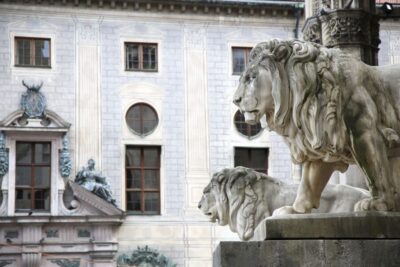

Berlin’s Best: 2 Hour Walking Tour Third Reich and the Cold War
Read our review →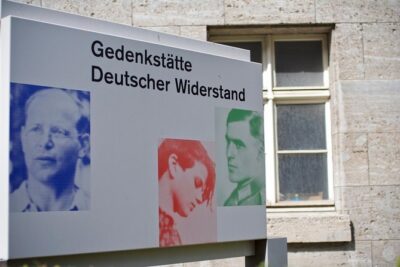
Third Reich Berlin: Hitler and WWII Walking Tour
Read our review →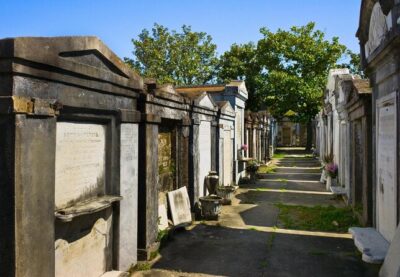
New Orleans Garden District History Walking Tour
Read our review →
Cartagena: Historic Center and Getsemaní Shared Walking Tour
Read our review →
Imperial Palace and Shogun Historical Walking Tour
Read our review →Browse the lists this tour appears in