
REVIEW · FRANCE
Giverny Monet House and Gardens Skip the line Walking tour
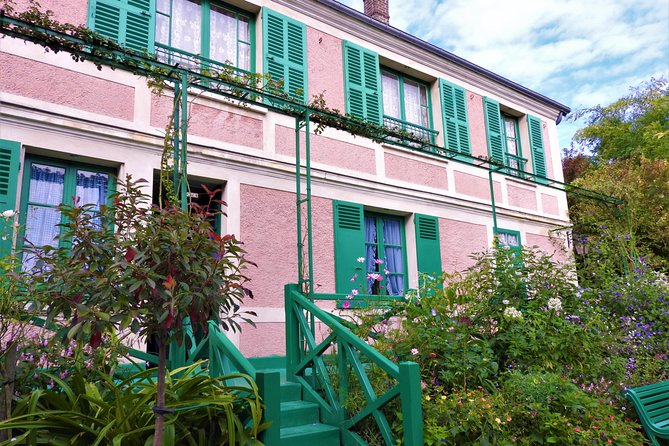
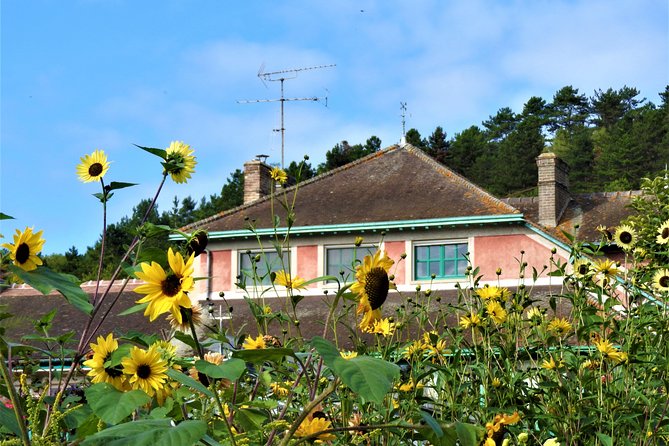
Giverny lets you step into Monet’s working world, from the pink-fronted house to the Japanese bridge and lily ponds that became Impressionist icons. The best part is seeing how ordinary garden features became the raw material for paintings you already know.
I like the skip-the-line entry, especially during spring holidays when the grounds can fill quickly. I also like the village walk and small-group format, which give you context before the crowds and color take over.
The main caution is that the experience depends heavily on your guide and the day’s crowd levels. Some guides, including Bertrand, Bernard, Marine, and Mwamiri, have been praised for warmth and clear storytelling, but one poor guide or a mixed-language group can make the two hours feel rushed.
Key points to know before booking
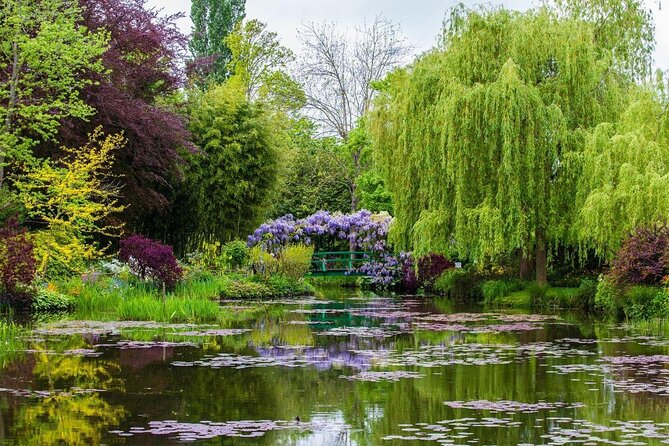
- Monet’s house and gardens are the main event: See the cheerful kitchen, Japanese print collection, flower beds, lily ponds, willows, and bridge.
- The tour starts with Giverny village: You get a short walking introduction before entering the foundation grounds.
- Skip-the-line access saves time: Your guide provides the entrance tickets and leads you through a special entry point.
- The advertised group limit is 15 people: That is small enough for personal guidance, though crowd conditions can still make listening difficult.
- Spring brings the strongest flower display: April through October can offer roses, poppies, hollyhocks, and honeysuckle, while October is more dependent on weather and timing.
- There is no hotel pickup: Meet at La Capucine, 80 Rue Claude Monet, and arrive 15 minutes early.
Why Giverny feels different from a standard museum visit
A museum gives you the finished painting. Giverny gives you the place that fed it.
You are not looking at a wall label and imagining the scene. You can stand beside the water gardens, look toward the Japanese bridge, and see the willows reflected in the ponds. The setting does not reproduce every brushstroke, of course, but it makes Monet’s attention to light, plants, water, and changing color easier to understand.
That is why this outing works for more than serious art students. If you simply enjoy gardens, photography, old houses, or pretty French villages, you will find plenty to hold your attention. Art lovers get the added pleasure of matching familiar images with the real places that inspired them.
The visit also puts Monet’s life in a useful setting. He lived and worked in Giverny from 1883 until his death in 1926, and other artists followed him there. John Singer Sargent, Paul Cézanne, and Mary Cassatt were among the artists connected with the village, which developed into an artists’ colony by the late nineteenth century.
More Skip-the-Line Tickets in France:
- Giverny Village Walking Tour & Skip-the-Line to Monet Garden
★ 4.0 · 595 reviews - Madrid: Royal Palace Skip-the-Line Guided Tour
★ 4.5 · 2,140 reviews - Madrid Old Town & Royal Palace Walking Tour Skip the Line Ticket
★ 4.5 · 1,829 reviews
Starting at La Capucine and walking through the village
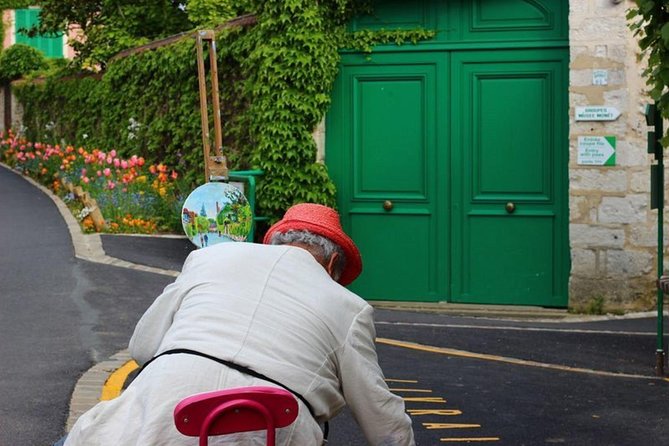
The meeting point is La Capucine Giverny at 80 Rue Claude Monet. You should arrive at least 15 minutes early because the guide leaves promptly, and late arrivals risk missing the group.
The first part is a guided walk through Giverny. This is not just filler before the main attraction. The village gives you a sense of the quiet rural setting Monet chose for his home, and it helps connect the house and gardens with the wider community around them.
You may also have time to visit the church cemetery, where Monet is buried. The supplied schedule specifically notes the cemetery as a place where visitors can pay their respects, though the exact amount of time spent there depends on the guide and pace of the group.
I like beginning here because the village walk slows the visit down for a few minutes. You are not simply dropped at a famous gate, shown a house, and sent through. You first get a bit of place and context.
That said, the village portion is fairly short within a two-hour tour. If you want a long independent walk through Giverny, time afterward matters. The activity ends back at the meeting point, and one positive feature is that you can continue exploring the village once the guided portion is over.
Entering Monet’s house through the special entrance
After the village walk, the guide takes you to Claude Monet’s house and gardens, maintained by the Fondation Claude Monet. Entrance fees are included, and the guide provides the tickets rather than directing you to buy them at the foundation.
The skip-the-line feature has real value here. Giverny is a popular stop, especially during school holidays and flower season. Long waits can eat into a short visit, so a special entrance may be worth part of the $63.86 price even before you count the guiding.
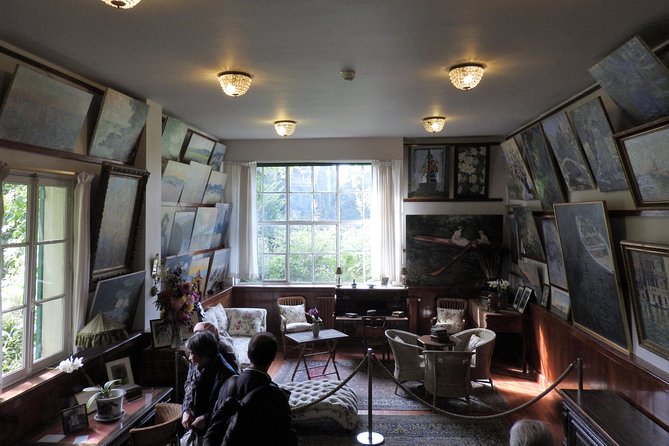
Do not expect to see Monet’s original paintings hanging in the house. The house contains quality replicas of important works, while the original paintings are in museums. That distinction matters if you are booking this mainly to see original art.
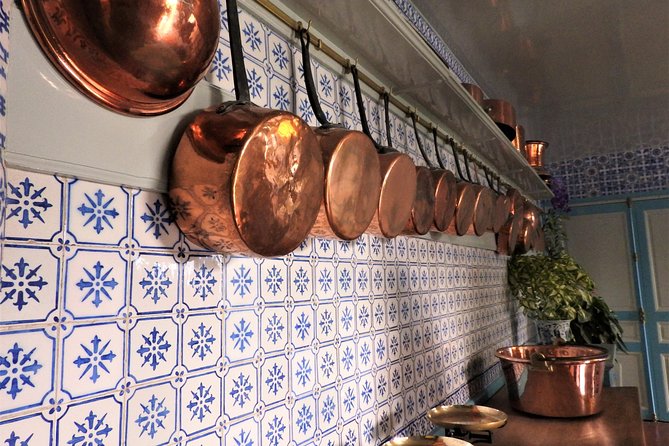
What you do see is the home itself, with original furnishings and a cheerful kitchen. You also see Monet’s collection of Japanese prints, a useful clue to the artistic influences behind his fascination with Japanese-style garden design, bridges, water, and carefully framed views.
The house is not huge, and crowds can make the interior feel tight. Your guide may explain the rooms as you move through, but you should be ready for other tour groups and independent visitors sharing the same spaces.
The flower gardens from April through October
The gardens are the reason many people make the trip from Paris. From April to October, the grounds can show roses, hollyhocks, poppies, honeysuckle, and other seasonal flowers. The exact look changes from month to month, so timing is important.
Spring is the safest choice if you want strong color and full flower beds. A visit in early May can bring impressive blooms and many good photo opportunities. The gardens may still be crowded, but the flowers can make the congestion feel worthwhile.
October is more variable. The garden can still be beautiful, and some autumn visits have produced excellent photographs despite rain. Still, you should not assume that every flower bed will be at its best. One October visit found many flowers past their prime, while another saw plenty still blooming.
The practical lesson is simple: choose your date based on what matters most to you. Go in spring for the fullest flower display. Go in autumn for a quieter seasonal mood and the chance of soft light, but accept that the garden may look less lush.
The flower beds are also where the tour can become difficult to follow. During busy periods, hundreds or thousands of people may be moving through the same paths. A strong guide keeps the group together and adds useful details without making you feel hurried. Mwamiri was praised for doing exactly that, while Marine was appreciated for telling stories and watching the group carefully.
A few more walking tours around France worth a look
- Paris Top Sights Half Day Walking Tour with a Fun Guide
★ 5.0 · 2,893 reviews - Montmartre Hidden Gems and Scenic Highlights Walking Tour
★ 5.0 · 2,684 reviews - Montmartre Hill French Gourmet Food and Wine Tasting Walking Tour
★ 5.0 · 2,588 reviews - Paris: Montmartre Highlights Walking Tour with a Local Guide
★ 4.9 · 2,318 reviews
The Japanese bridge, ponds, and Monet’s painted views
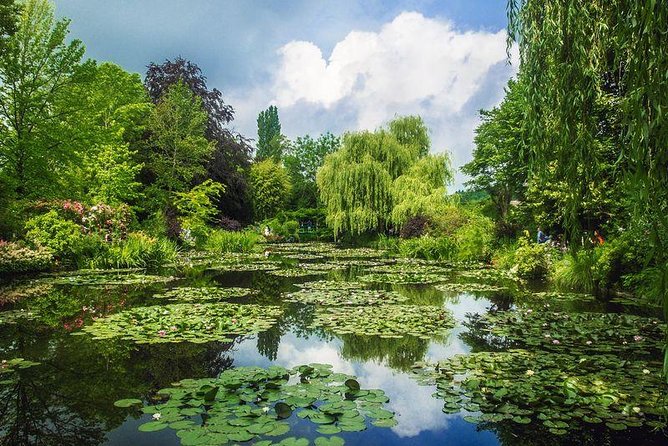
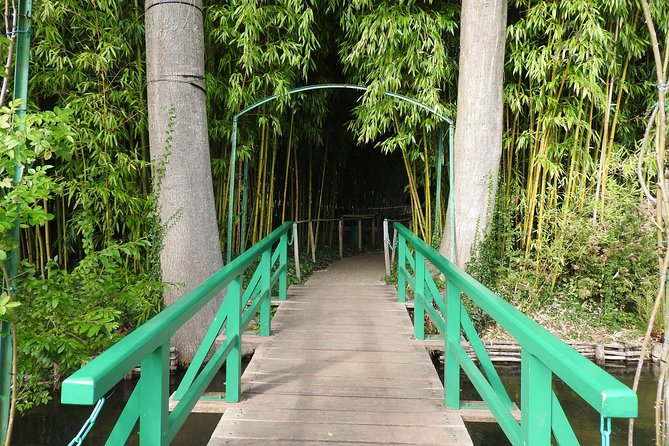
The Oriental Water Gardens contain the features most closely tied to Monet’s best-known garden paintings. You will see water lilies, weeping willows, and the Japanese bridge, all arranged around ponds and pathways.
This is the section where photographs can take over. Children enjoy the flowers and water, and adults often spend several minutes trying to frame the bridge or reflect the willows in the pond. You can understand the appeal even if you are not an Impressionist specialist.
The setting is peaceful in places, but do not expect solitude. Giverny is a major attraction, and the gardens can be crowded enough that a serene view requires patience. The skip-the-line entry gets you inside faster, but it does not give you a private garden.
Your guide’s commentary can also change the experience. A good explanation of Monet’s work, friends, and daily life makes the garden feel like more than a collection of pretty plants. Bernard was singled out for filling in gaps for someone who already knew a lot about Monet, while another guide from Virginia used photographs to make the story easier to follow.
There is a useful balance here. You get an introduction from the guide, but the tour is not designed as a full-day art seminar. If you want to linger over every pond and flower bed, use the guided section to get oriented, then take any available free time to look again at your own speed.
How the two-hour schedule works in practice
The advertised duration is about two hours. That includes the village walk, entry to the house, and time in the gardens. It is enough for a strong first visit, but not enough to examine every detail at a leisurely pace if the site is crowded.
The small group is supposed to be capped at 15 people. That number is sensible for a garden tour because the guide can keep the group together without forming a long procession. One poor account described a larger group and trouble hearing translated commentary, so it is worth confirming the group size and language at booking if those details are especially important to you.
The tour is offered as a walking experience. You will be outside for much of it, moving across garden paths and village streets, so comfortable shoes and weather-appropriate clothing are practical choices. The provided information says most people can participate, and service animals are allowed.
A guide may use a headset or another method to speak to the group, but this should not be assumed as a guaranteed feature. One experience with a French-speaking mix led to translation problems and audio cutting out for people at the back. Staying close to the guide is wise, especially when the group enters busy areas.
Is $63.86 a fair price?
At $63.86 per person, this is not the cheapest way to see Giverny. You are paying for three things: the entrance fees, a local guide, and the time saved by special entry.
The price makes better sense if you are visiting during a busy period, want the history explained as you go, or do not want to manage the arrival process on your own. Several strong guide experiences, including those with Bertrand, Bernard, and Mwamiri, added real value through clear stories and crowd management.
The value is weaker if you prefer to move slowly and independently. The house and gardens can be visited without a guided narrative, and an independent visit may suit you better if you want to stop for long stretches to photograph flowers or sit beside the ponds.
There is also no food, drink, pickup, or drop-off included. You must arrange your own way to Giverny and meet at the stated location. If you come from Paris by public transport, the practical route described for one visit was a train to Vernon followed by a shuttle to Giverny. Check the day’s transport details before setting out, and do not build in a tight connection because the tour begins on time.
Who will enjoy this tour most
I would recommend it most strongly to first-time visitors who want a clear introduction to Monet’s home and the main garden views without planning every detail themselves.
It also suits:
- Monet and Impressionist fans: The guide links the house, garden design, and artists around Giverny.
- Photographers: The bridge, lilies, willows, and flower beds offer many natural subjects.
- Families: Children can enjoy the color and water gardens even if they are not interested in art history.
- Visitors on a tight schedule: Skip-the-line entry and a two-hour format keep the visit focused.
- People who like small groups: The stated maximum of 15 is more manageable than a large coach excursion.
I would be more cautious if you dislike crowds, need a slow and quiet garden visit, or prefer original paintings over historic interiors and replicas. This is a place experience, not a museum visit centered on original canvases.
Small details that can make the visit better
Arrive early. The meeting point is specific, the tour starts promptly, and latecomers may miss the guide.
Stay close during the garden walk. Even with a small group, paths can fill quickly, and audio may become hard to hear at the back.
Check the season before paying. April through October gives you the best chance of seeing the gardens in flower, but May is a stronger bet for peak color than late October.
Plan extra time if you want to browse Giverny after the tour. The guided activity ends at the starting point, and the free time afterward was one of the more useful features for people who wanted to explore at their own pace.
The experience includes free cancellation up to 24 hours before the start time. Cancellations inside that window are not refunded, and a minimum number of participants is required for the tour to operate.
Should you book the Giverny Monet House and Gardens tour?
Book it if you want the setting explained, need to save time at the entrance, and prefer a compact introduction to Monet’s life and garden. The strongest guides turn a pretty visit into a more meaningful one, and the special entry can matter greatly on a crowded spring day.
Skip it if you are comfortable arranging your own transport, enjoy exploring without a schedule, and would rather spend several hours at your own pace. You will not see Monet’s original paintings here, and the garden’s beauty cannot prevent crowds or uneven guiding.
For most first-time visitors, I think the tour is a sensible choice, especially in May or during a busy holiday period. Just arrive early, confirm the meeting details, and remember that Giverny is best appreciated as a living garden, not as a substitute for a museum.
FAQ
Where does the tour meet?
The meeting point is La Capucine Giverny, 80 Rue Claude Monet, 27620 Giverny, France.
Where does the tour end?
The activity ends back at the meeting point.
How long does the tour last?
The tour lasts about two hours.
Is entrance to Monet’s house and gardens included?
Yes. Entrance fees to Monet’s house and gardens are included.
Does the tour include skip-the-line access?
Yes. The group enters through a special entrance intended to bypass the long lines.
How many people can join the tour?
The activity has a stated maximum of 15 travelers.
Is transportation or hotel pickup included?
No. Pickup, drop-off, food, and drinks are not included. You must make your own way to the meeting point.
What happens if I need to cancel?
You can receive a full refund if you cancel at least 24 hours before the experience starts. Cancellations or changes made less than 24 hours before the start time are not refunded or accepted.
Just added around France
- [Walking Tour] Discover the Best of Brest in 2 hours★ 5.0 · 102 reviews
- Bordeaux Historic and Gourmet Food Walking Tour★ 4.5 · 82 reviews
- 2-Hour Walking Tour of the City’s Iconic Sights and History★ 4.0 · 207 reviews
- Bordeaux Walking Tour with a Local Private Guide★ 5.0 · 97 reviews
- Traditional Gourmet Food & Wine Tour in Bordeaux★ 5.0 · 81 reviews
- Free Walking Bordeaux Tour ENG + 1 glass of wine (Tip based)★ 5.0 · 90 reviews
- Bordeaux City – Private Guided Walking Tour with Local Sophia★ 5.0 · 164 reviews
- Avignon Walking Tour including Pope’s Palace★ 4.5 · 158 reviews
Walking Tours, compared.

Magical London: Harry Potter Guided Walking Tour
Read our review →
Reykjavik Food Walk – Local Foodie Adventure in Iceland
Read our review →
History and Hauntings of Salem Guided Walking Tour
Read our review →
New Orleans Premier Ghost, Voodoo and Vampire Walking Tour
Read our review →
Amsterdam Anne Frank: Small-Group Walking Tour & Local Guide
Read our review →

Edinburgh Castle: Guided Walking Tour with Entry Ticket
Read our review →
Anne Frank’s Story – Guided Walking Tour through Amsterdam
Read our review →Browse the lists this tour appears in