
REVIEW · SOUTH AFRICA
Stellenbosch: Guided Historical Walking Tour
Stellenbosch’s old center is best understood on foot, where oak-lined streets and water furrows lead past Cape Dutch buildings, churchyards, and a village green shaped by four centuries of change. The tour also explains how devastating fires nearly erased the early town, which gives the handsome architecture a more fragile story.
I like the way the walk connects famous sights with small details, from Simon van der Stel’s first camp by the Eerste River to the stories linked with the Angel Factory and the Moederkerk graveyard. I also like the guides’ easy, personal style. Johan, Marlene, Juliana, and Julietta are all praised for making history clear, lively, and open to questions.
The main consideration is that this is a 90-minute walking tour, not a full wine-country outing or a visit inside every historic building. Bring comfortable shoes, arrive 15 minutes early, and remember that transport, food, and personal costs are not included.
Key points at a glance
- The Braak: Walk the historic village green, framed by old buildings on three sides.
- Dorp Street: See South Africa’s oldest residential street and the buildings that give Stellenbosch its character.
- Local storytelling: Guides explain colonial beginnings, devastating fires, university life, and modern Stellenbosch.
- Oak avenues and water furrows: The town’s shady streets and old irrigation channels help explain its layout.
- Folklore included: Look out for tales of angels, ghosts, colorful residents, and the Moederkerk graveyard.
- Good value: At $18 for 90 minutes, the tour is an affordable introduction to central Stellenbosch.
Why a walking tour fits Stellenbosch
Stellenbosch is the kind of town that can seem easy to understand at first glance. You see whitewashed buildings, old oak trees, cafés, student life, and mountains beyond the town. Then a guide points out how the streets were planned, where the first settlement took shape, and why some buildings survived while others vanished in fire.
That is the real value of this experience. You are not simply taking photographs of pretty façades. You are learning how the town developed around the Eerste River and its water channels, how colonial settlement shaped the streets, and how Stellenbosch remains tied to its university and Afrikaans identity.
The walk stays in the central historic area, so you do not spend time sitting in a vehicle or moving between distant sights. I like that format for a first morning in town. After 90 minutes, you should have a better sense of where you are, which streets deserve a slower look, and which buildings need a second visit.
The tour is conducted in English with a live local guide. It has earned a 4.7 rating from 283 reviews, and the strongest pattern is clear: people value the guides’ warmth, local knowledge, humor, and willingness to answer questions. That matters here, because much of Stellenbosch’s appeal lies in the stories behind ordinary-looking streets.
More History Walking Tours in South Africa:
- Cape Town: Art, Culture & History Walking Tour
★ 4.9 · 392 reviews - Berlin: Third Reich & Cold War Guided Walking Tour
★ 4.9 · 8,378 reviews - Munich: Third Reich & WWII Walking Tour
★ 4.6 · 6,181 reviews
Starting at 47 Church Street
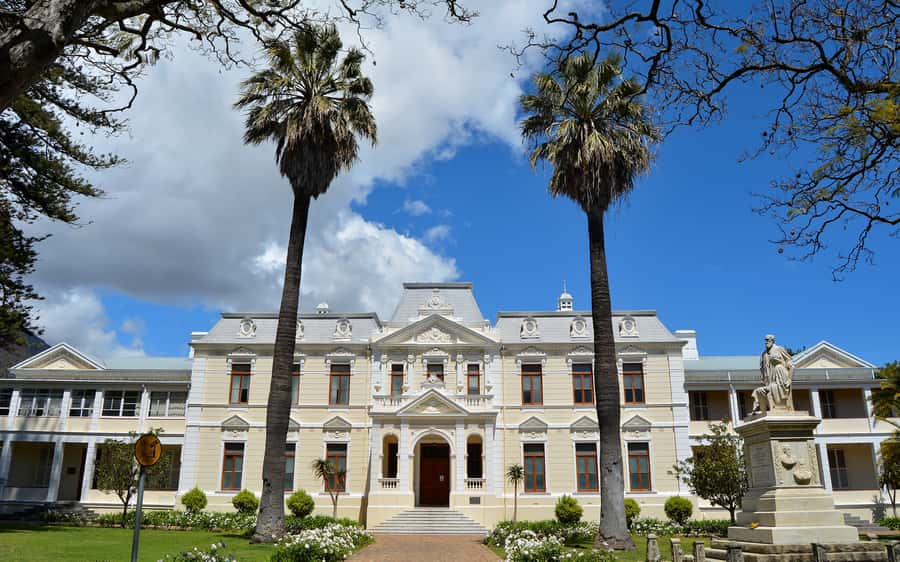
The meeting point is at 47 Church Street in Stellenbosch Central. You should arrive 15 minutes before the start, especially if you are unfamiliar with the town center or need time to find the guide.
Church Street is a sensible place to begin because it puts you close to the old central quarter. From here, the walk can quickly reach historic buildings, shady avenues, and the streets where Stellenbosch’s early story is easiest to read.
Starting in the center also makes the tour simple to fit into a day. You can take it early, then continue on foot to cafés, shops, university areas, or other sights. The experience does not include transport to or from the meeting point, so plan your route before setting out.
The tour is wheelchair accessible, but it remains an outdoor walking experience. Streets, pavement surfaces, crowds, and the condition of older areas can affect comfort on the day. Comfortable shoes are the one item specifically recommended, and they are good advice for everyone.
Simon van der Stel and the Eerste River
One of the most useful parts of the walk is the explanation of Stellenbosch’s beginning. You learn where Simon van der Stel, the town’s colonial founder, set up camp beside the Eerste River and how the river received its name.
This story gives the town a clear starting point. Instead of seeing Stellenbosch as a collection of old buildings, you begin to understand its relationship with water, settlement, farming, and movement through the region.
The guide also links the river to the town’s water furrows. These channels, associated with the Mill Stream, run beside some of the shaded avenues. They are easy to overlook if you are walking alone, but they help explain why the streets feel distinctive and why water has long mattered to the town’s design.
I find this sort of detail especially useful because it turns a visual feature into part of the story. The oaks are not just attractive shade trees, and the furrows are not just decorative channels. Together they show how the town’s practical needs helped shape its appearance.
Cape Dutch buildings and the town’s fires
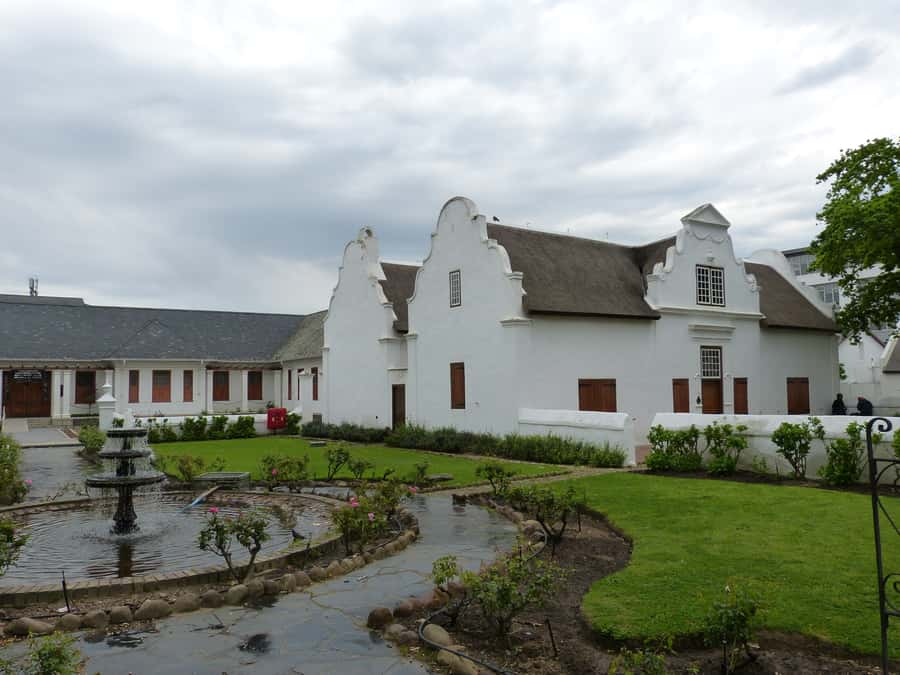
Stellenbosch is famous for its Cape Dutch architecture, with its white walls, curved gables, and carefully balanced proportions. The tour gives you time to look closely at these buildings while explaining the people and events connected with them.
Yet the town’s architectural story is not simply one of preservation. Fires in the 18th century destroyed large parts of the early settlement. That fact adds a useful note of caution to the elegant streets. Some of what you see reflects early building traditions, while other parts belong to later rebuilding and change.
A guide can point out these layers more effectively than a quick self-guided stroll. You learn why Stellenbosch looks harmonious today, despite having faced repeated loss and reconstruction.
This is one of the tour’s strongest subjects for anyone interested in architecture, town planning, or South African history. It also keeps the walk from becoming a parade of dates. Buildings become evidence of survival, adaptation, and changing fortunes.
The information is historical, but the presentation is intended to stay light. Guides such as Johan and Marlene are praised for mixing facts with humor and anecdotes, which helps keep the subject approachable during a short walk.
More Guided Tours in South Africa:
- Soweto: Walking Tour with a Local Guide and Lunch
★ 4.9 · 648 reviews - Durban: Local Markets and Culture Guided Walking Tour
★ 4.9 · 89 reviews - Magical London: Harry Potter Guided Walking Tour
★ 4.7 · 22,044 reviews - History and Hauntings of Salem Guided Walking Tour
★ 5.0 · 14,564 reviews
The Braak and three sides of history
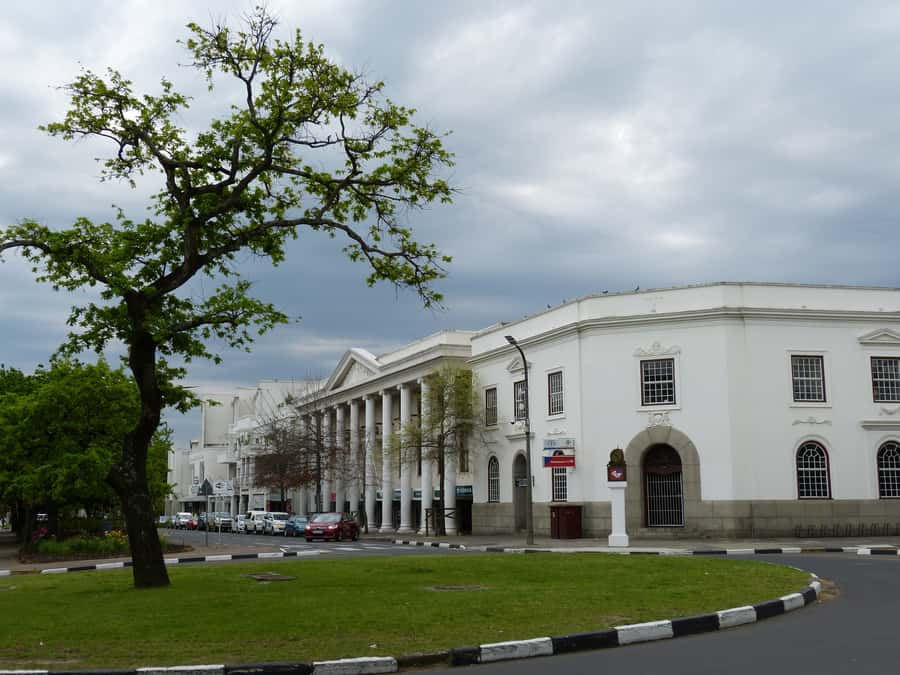
The Braak is the village green, and it is one of the clearest places to see Stellenbosch’s old town plan. Historic buildings border it on three sides, creating an open space where several parts of the town’s story meet.
This is a good pause in the walk because you can take in the buildings as a group rather than one at a time. The setting shows how civic, religious, and residential life once gathered around a shared central area.
Your guide can help separate the visual impressions. Look for differences in façades, scale, age, and use. The point is not only to admire the buildings, but to understand how the green functioned within the town.
I would pay close attention here if you are interested in photography. The open space gives you room to frame several historic structures together, while the surrounding streets provide more intimate views of walls, doorways, and details.
The Braak is also a reminder that Stellenbosch is still a lived-in town. The walk is not through an isolated museum district. Present-day life continues around these old places, and the guide brings that connection into the story.
Dorp Street, the oldest residential street
Dorp Street is one of the tour’s important stops. It is described as the oldest residential street in South Africa, and it offers a direct look at the kind of domestic architecture that gives central Stellenbosch its special character.
A street like this rewards a slower pace. Rather than rushing past individual buildings, you can compare their forms and notice how homes relate to the road. The guide’s job is to show you what a casual walk might miss, including the background of the people who lived there and the changes the street has seen.
This is also where the walking format makes the most sense. From a vehicle, you might register Dorp Street as an attractive old road. On foot, you have time to notice its shade, façades, walls, and proportions.
The tour does not promise entry into every building, and you should not expect a long indoor museum visit. Its strength is the street itself, paired with explanation. If you want extensive interior access, you may need to add separate visits to your day.
Angels, ghosts, and colorful residents
The serious history is balanced with local tales. The route may include the Angel Factory and stories connected with the graveyard of the Moederkerk. You might hear about an angel, a ghost, or one of the colorful inhabitants who helped shape the town’s character.
These stories are useful because they make the past feel occupied by real people rather than only founders and officials. They also give the walk a lighter rhythm after discussions of colonial settlement, fires, and architecture.
The ghost material may not appeal to everyone, but it is presented as part of local folklore rather than as the main purpose of the tour. If you prefer a strictly architectural walk, you can still treat these stories as a brief window into how a community remembers its past.
Johan has been praised for explaining subjects ranging from town history to the local morgue in a clear and humorous way. That gives you a fair idea of the tone: informative, but not stiff or overly academic.
Stellenbosch University and the town today
The tour also looks beyond the early settlement. Stellenbosch University has produced prominent graduates, including prime ministers and sportsmen, and the guide places the university within the town’s modern identity.
This part helps prevent the walk from becoming a study of old buildings only. Stellenbosch is also a university town, and student life, politics, language, and public memory remain part of its character.
The guides bring different strengths to this section. Juliana is praised for responding fully to questions rather than giving brief answers. Johan is often singled out for connecting local events with the broader history and political situation of South Africa. Marlene is described as warm, clear, and good at linking the past with present-day Stellenbosch.
The exact guide depends on the date and availability. Names associated with this experience include Johan, Marlene, Juliana, Julietta, and Maureen. You should not book expecting one specific person unless the operator confirms it, but the repeated praise for several guides suggests that the experience is not dependent on a single personality.
Pace, group feel, and accessibility
The advertised length is 90 minutes, and that is a useful amount of time for this route. It is long enough to cover the central story without taking over your day, but short enough to fit before lunch, a winery visit, or other sightseeing.
The walk is described as easy, and many people appreciate that it is not too far to walk. Still, this is not a seated activity. Wear supportive shoes and prepare for outdoor conditions. Shade from the oak avenues helps, but you should dress for the weather.
Group size can vary. Some people have received what felt like a private walk when only one or a few participants were booked, while other departures may include a larger group. A smaller group gives you more room for questions and may allow the guide to adjust the talk to your interests.
The experience is wheelchair accessible. If you have specific mobility needs, it is sensible to confirm current route conditions when booking, since accessibility on historic streets can depend on the exact path and surface.
Pets are not allowed, and alcohol and drugs are prohibited. Personal expenses are also separate, so budget for anything you buy before or after the walk.
Is $18 good value?
At $18 per person, this is a strong-value introduction to Stellenbosch. You receive a professional guide and a 90-minute walking tour, with no transport costs built into the price.
The value is greatest if you are new to the town or have limited time. A self-guided walk can show you the façades, but it will not necessarily explain the river, the fires, the town plan, the university connection, or the stories associated with the churchyard.
It is also useful for repeat visitors. One person who had visited Stellenbosch many times still learned new details from the walk, which suggests that the experience can add something beyond a first look at the center.
The price does not cover transportation, meals, entry fees, or personal spending. That is not a serious drawback for this particular activity, since the main attraction is the public historic center. Just understand that you are paying for interpretation and local context, not a package of admissions and transfers.
Free cancellation is available up to 24 hours before the start for a full refund, and you can reserve now and pay later. Those terms help if your Western Cape plans may shift.
Who should book this walk?
I would recommend it to first-time visitors who want a clear introduction before exploring the town on their own. It is also a good choice for history fans, architecture lovers, photographers, and anyone who prefers a local explanation to reading plaques.
Families and mixed-age groups may appreciate the changing tone, since the route combines buildings, founders, fires, university stories, and folklore. The easy pace also makes it a reasonable choice for people who want a gentle outdoor activity rather than a strenuous excursion.
Repeat visitors should consider it if they have previously seen Stellenbosch without understanding its background. The guides often adapt to questions, so you can ask about language, politics, architecture, university life, or modern town systems.
I would look elsewhere if your priority is wine tasting, countryside views, private transport, or long visits inside museums and historic homes. This tour stays focused on central Stellenbosch and its story.
Final verdict: a smart first 90 minutes
Book this tour if you want to understand why Stellenbosch looks the way it does. For $18, you get an easy walk through oak-shaded streets, The Braak, Dorp Street, and the old central quarter, backed by stories of rivers, fires, architecture, founders, students, and ghosts.
Choose an early departure if you want to use the rest of the day for independent sightseeing. Arrive 15 minutes early, wear comfortable shoes, and come ready to ask questions. Guides such as Johan, Marlene, and Juliana are particularly well suited to visitors who want history explained in a friendly, conversational way.
It is not a grand day trip, and it does not try to be one. It is a focused, affordable way to get your bearings and see the town with more understanding.
FAQ
Where does the Stellenbosch walking tour start?
The meeting point is 47 Church Street, Stellenbosch Central, Stellenbosch, 7599.
How early should I arrive?
You should arrive at the meeting point 15 minutes before the activity begins.
How long does the tour last?
The guided walking tour lasts 90 minutes.
What language is the tour conducted in?
The live tour guide conducts the experience in English.
How much does the tour cost?
The listed price is $18 per person.
Is transportation included?
No. Transportation to and from the starting location is not included.
What should I bring?
Bring comfortable shoes for the 90-minute walking route.
Is the tour wheelchair accessible?
Yes, the activity is listed as wheelchair accessible.
Are pets allowed?
No. Pets are not allowed on the tour.
Can I cancel for a refund?
Yes. You can cancel up to 24 hours in advance for a full refund. You can also reserve now and pay later.
Just added around South Africa
- Whale Watching Walking Tours (Land-Based) – from JUNE 2025★ 5.0 · 88 reviews
- Culture Walking Tour of Durban★ 5.0 · 110 reviews
- The 10 Tastings of Cape Town With Locals: Private Food Walking Tour★ 4.5 · 169 reviews
- Bo-Kaap: Walk with a local★ 5.0 · 131 reviews
- Cape Town Woodstock Street Art Walking Tour★ 4.5 · 77 reviews
- Constantia Wine Walk Storytelling Vineyard Tour with Lunch★ 5.0 · 77 reviews
- Cape Town: Street Art Walking Tour in Woodstock★ 4.8 · 293 reviews
- Johannesburg: City Centre Walking Tour★ 4.8 · 152 reviews
History Walking Tours, compared.


Berlin’s Best: 2 Hour Walking Tour Third Reich and the Cold War
Read our review →
Third Reich Berlin: Hitler and WWII Walking Tour
Read our review →
New Orleans Garden District History Walking Tour
Read our review →
Cartagena: Historic Center and Getsemaní Shared Walking Tour
Read our review →
Imperial Palace and Shogun Historical Walking Tour
Read our review →Browse the lists this tour appears in