
REVIEW · SPLIT
Split: Food Tasting Walking Tour
Split’s best food lesson starts at a city gate and quickly turns into a moving feast. This two-hour walk links Diocletian’s Palace with the Green Market, Fish Market, bakeries, cafés, and small food shops, so you learn what Split eats while seeing where daily life happens.
I like the tour’s strong local focus, especially the chance to taste soparnik, a traditional flatbread protected by UNESCO, and salted anchovies in the city’s old fish market. I also like the guides’ personal touch. Marta, Antonia, Jakov, Slavko, and others are praised for explaining recipes, customs, and Split’s past in a warm, easygoing way.
The main consideration is timing. Two hours moves quickly, and the advertised glass of local wine does not always appear to be included now. The route is also not suitable for wheelchair users, and optional purchases at the markets cost extra.
Key points to know before you book
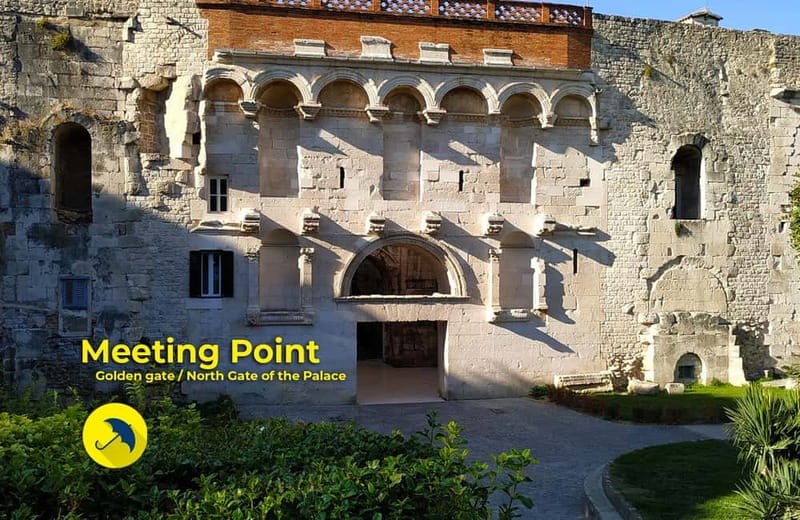
- Start at the Golden Gate: Meet near the statue of Gregory of Nin and look for the blue umbrella.
- Taste more than ten local foods: Depending on the day, samples can include sugared almonds, candied citrus peel, soparnik, prosciutto, rafiol, and anchovies.
- See two working markets: The Green Market shows Split’s produce culture, while the Fish Market offers a look at local seafood traditions.
- Learn food and city history together: Your guide connects dishes with Dalmatian customs and the streets of Diocletian’s Palace.
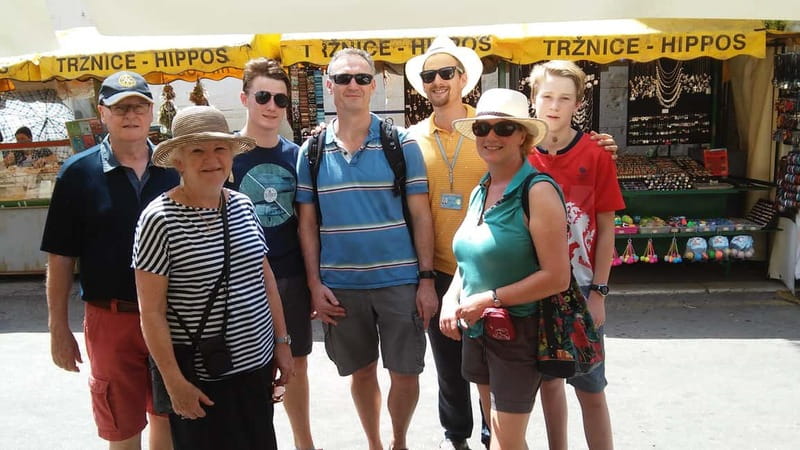
- Expect a small-group feel: Private and small-group options are available, with English-speaking guides including Marta, Antonia, Jakov, and Slavko.
- Book early in your visit: The food stops and local recommendations can help you choose restaurants and shops for the rest of your stay.
Why this Split food walk works so well
Split is not a city you understand from monuments alone. The old palace is still part of everyday life, with cafés, bakeries, food stalls, and market counters tucked into Roman and medieval streets. This tour uses food to explain that living city.
You spend about two hours walking between tasting stops, with short food sessions of roughly 15 minutes and longer visits at the markets. That pace gives you variety without turning the outing into a long sit-down meal. You are sampling rather than having lunch, so plan another meal afterward if you have a large appetite.
The experience is priced at $64 per person. That is not the cheapest way to buy snacks in Split, but the value comes from the guide, the range of stops, and the explanations attached to each bite. You are paying for a route through places you might otherwise pass without understanding, plus the chance to taste traditional foods without guessing what to order.
The tour has a 4.9 rating from 102 bookings, and the strongest pattern is clear: people value the guides. Marta is often singled out for her warmth, local food knowledge, and ability to explain cooking methods. Antonia is praised for her stories and relaxed pace, while Jakov is noted for adapting to questions and different group needs. Slavko is described as funny and personable.
Guide assignments can change, so you should not book solely for one named guide. Still, the repeated praise for several guides suggests that the experience depends on people who know how to connect food with place, not just recite dates.
More Food Walking Tours in Split:
- Reykjavik Food Walk – Local Foodie Adventure in Iceland
★ 5.0 · 18,952 reviews - Ho Chi Minh City Street Food Tour & Sightseeing By Motorbike
★ 5.0 · 9,413 reviews - New Orleans Food Walking Tour of the French Quarter with Small-Group Option
★ 5.0 · 6,118 reviews
Meeting the guide at Split’s Golden Gate
The tour begins at the Golden Gate, also called the North Gate, near the statue of Gregory of Nin. Look for the blue umbrella. This is a useful meeting point because you are starting directly beside Diocletian’s Palace rather than wasting time on transportation.
Wear comfortable shoes. The route passes through old streets and market areas, and the tour is a walking experience from start to finish. Sunglasses and a sun hat are sensible choices, especially during warmer months.
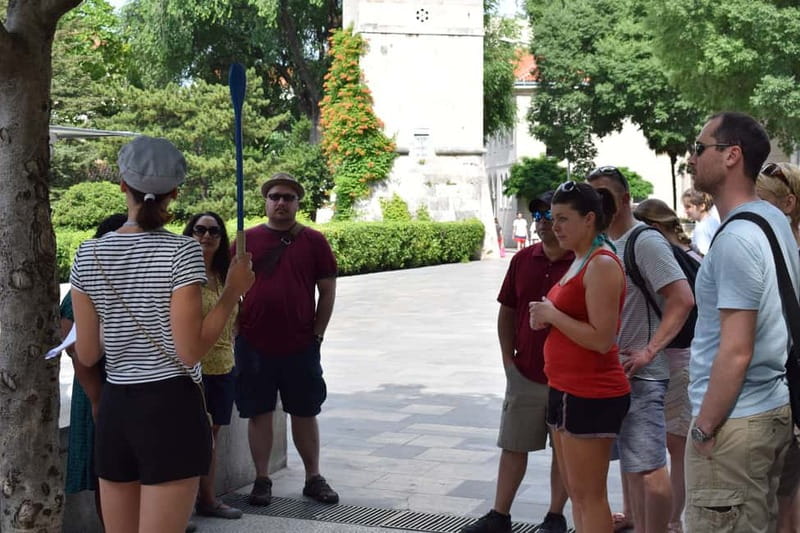
Your guide begins with an introduction to Split and the palace. The point is not a long formal lecture. Instead, you get enough context to understand why food, trade, Roman walls, medieval lanes, and modern city life sit so close together.
I like this opening because it gives the tastings a setting. Sugared almonds mean more when you know they are part of a wider Dalmatian food tradition. A bakery stop becomes more interesting when you are walking through the streets where local food habits have continued for generations.
Sugared almonds and the Green Market
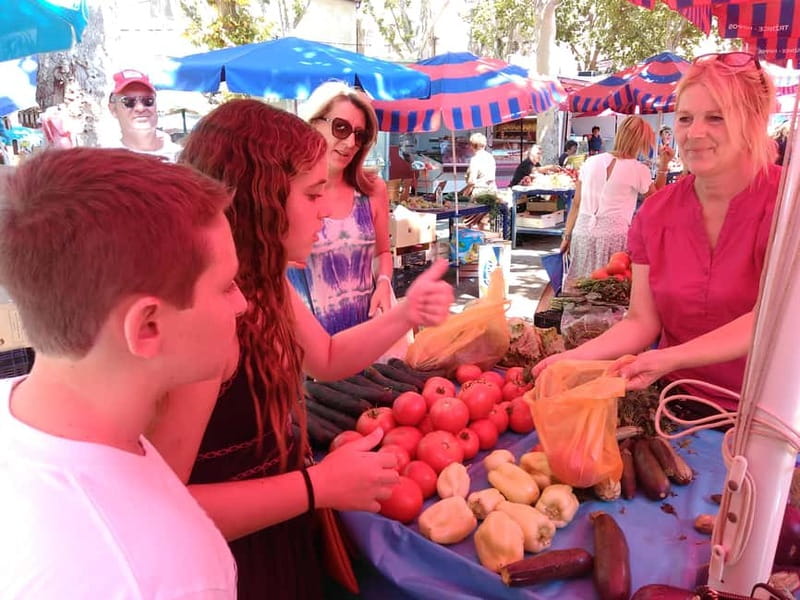
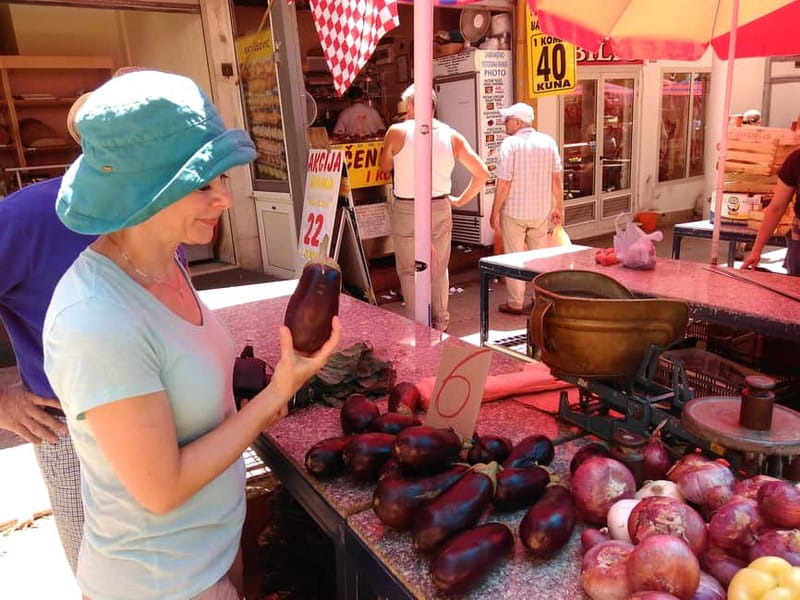
One of the first tasting stops is a local café, followed by the Pazar, Split’s Green Market. The initial bite is arancini, almonds covered in sugar. It is a simple sweet, but it offers a quick introduction to the region’s fondness for nuts, citrus, and preserved foods.
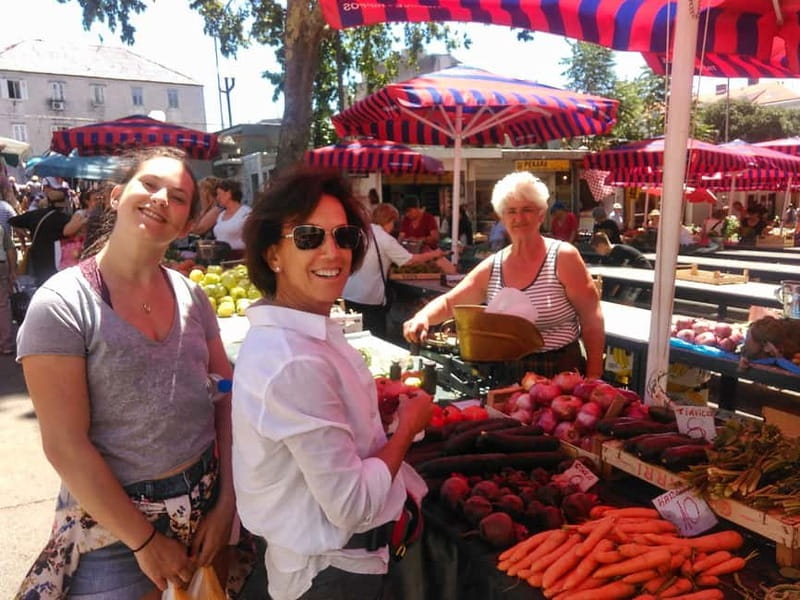
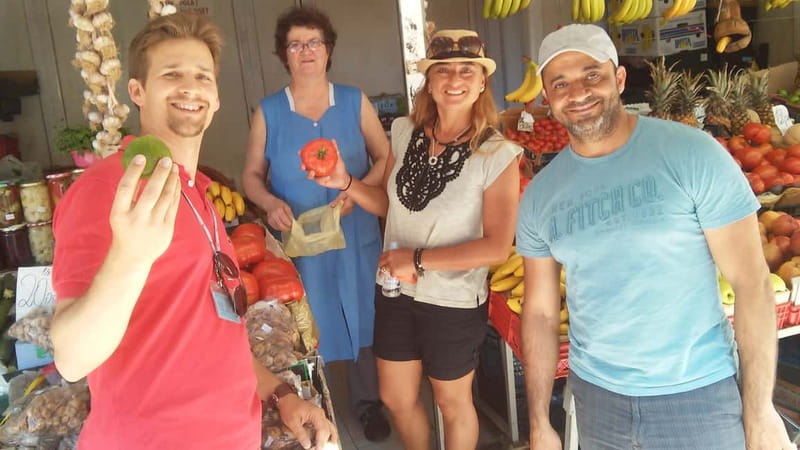
The Green Market is not just a scenic stop. It is where you see the ingredients behind Dalmatian cooking. The guide helps you identify local produce and explains how the market fits into ordinary life in Split. You may also have the chance to buy something for yourself, but those purchases are not included in the tour price.
The market visit lasts around 30 minutes, which is enough time to look around without making the tour feel like a shopping trip. If you want to buy produce, sweets, or other items, bring money and remember that anything extra is your responsibility.
Several tasting details make this part especially useful. Some people have enjoyed candied orange and lemon peel, and the mix of sweet and savory foods keeps the walk from becoming repetitive. You get a better sense of Dalmatian flavor than you would from a single restaurant dish.
Soparnik, prosciutto, and the taste of Dalmatia
After the market, the tour moves through the old streets and introduces you to soparnik. This thin savory flatbread is associated with the Dalmatian hinterland and is protected by UNESCO as a traditional food. You may taste it with a glass of local wine, though the wine is not consistently part of the current experience, so do not count on it.
Soparnik is one of the most valuable tastings on the route because it is not an obvious choice for a first-time visitor. It gives you something tied to local tradition rather than a generic Mediterranean snack. Your guide explains the dish and its preparation, turning a small sample into a lesson about regional cooking.
The walk also includes traditionally made prosciutto. This is where the tour’s pacing works well. You are not eating the same type of food at every stop, and the guide can compare sweet, baked, cured, and fish-based flavors as you move through the city.
Past participants have appreciated tasting more than ten different foods, including two types of traditional flatbread, nuts, citrus peel, and cured meat. Exact samples can vary, but the overall pattern is a broad introduction rather than one large signature dish.
More Wine and Tapas Walks in Split:
- Barcelona Tapas and Wine Experience Small-Group Walking Tour
★ 5.0 · 5,804 reviews - Barcelona: Tapas Walking Tour with Food, Wine, and History
★ 4.8 · 4,261 reviews - Madrid Tapas & Wine Tasting Walking Tour – Small Group Local Bars
★ 5.0 · 3,644 reviews - Athens: Guided Greek Food Walking Tour with Tastings
★ 4.9 · 2,859 reviews
A chocolate shop with a record-sized story
The chocolate stop adds a change of pace. The shop is known for holding a Guinness record for the largest chocolate bar in the world, and you get a tasting there as part of the route.
This is not the most traditionally Dalmatian stop, so it is worth viewing it as a contrast rather than the main reason to book. After market produce, soparnik, and prosciutto, chocolate gives the tour a sweeter, more playful break.
For families, it may be one of the easiest stops to enjoy. Children must be accompanied by an adult, and unaccompanied minors are not allowed. The tour is not designed as a children-only activity, but the mix of sweets and short stops can work well for families who want food and sightseeing in one outing.
Rafiol at one of Split’s oldest bakeries
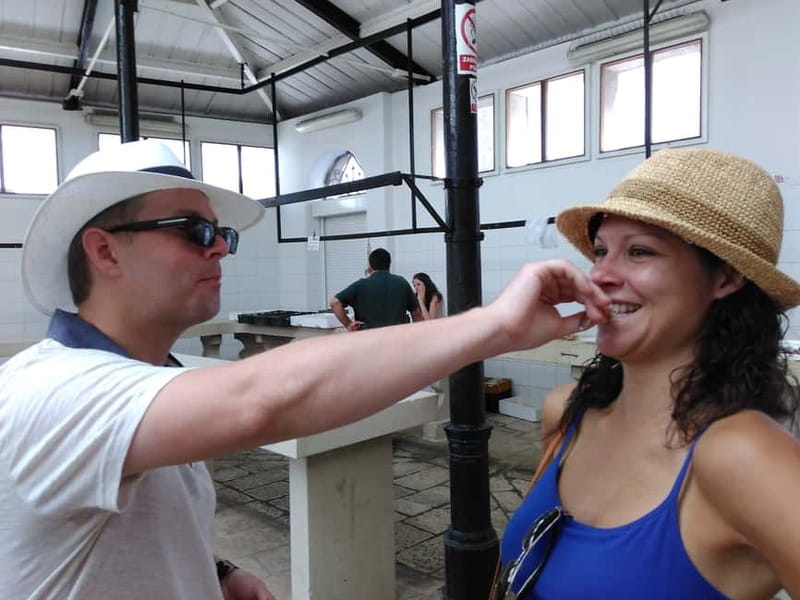
The route continues to a local bakery for rafiol, a traditional Croatian cake. This stop is valuable because bakeries show a different side of local food culture from open-air markets. You get to taste something associated with home-style sweets and hear how it fits into Croatian traditions.
The bakery visit is planned for about 15 minutes. That short stop keeps the group moving, but it also means you should not expect a long sit-down pastry session. You taste, listen, and continue through the old city.
If you find a favorite item, note the name and location. Several guides offer recommendations for places to return to later, and taking the tour near the start of your stay gives you time to revisit the shops and markets.
The Fish Market and Dalmatian marenda
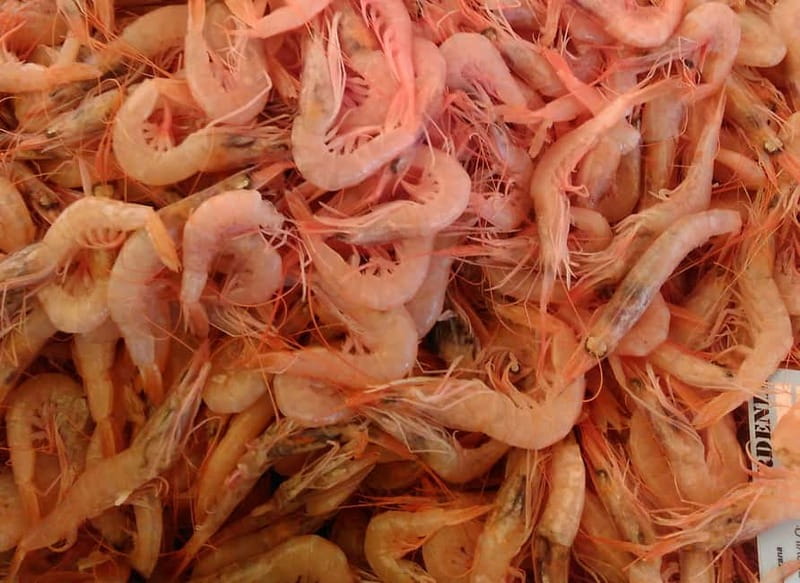
The Fish Market, or Peškarija, is one of the most distinctive parts of the tour. It is described as the second-oldest fish market in Europe, with original benches more than 120 years old. The space gives you a direct look at Split’s connection to the Adriatic and its seafood-based cooking.
The guide shows you how to eat salted anchovies, a traditional part of marenda, the Dalmatian midmorning meal or brunch. Anchovies can be salty and intense, so this is not a neutral tasting. That is part of its value. You are trying a food with a clear place in local habits, not a toned-down sample designed for every palate.
The market visit lasts about 30 minutes. You can look at the stalls, learn how seafood is sold, and connect the food on your plate with the market around you. The tour does not promise a full seafood meal, and optional market purchases are not included.
This stop may be especially interesting if you want to understand everyday coastal life rather than only see palace architecture. It also gives the tour a savory finish after the bakery and chocolate stops.
Local cafés, bars, and restaurant tastings
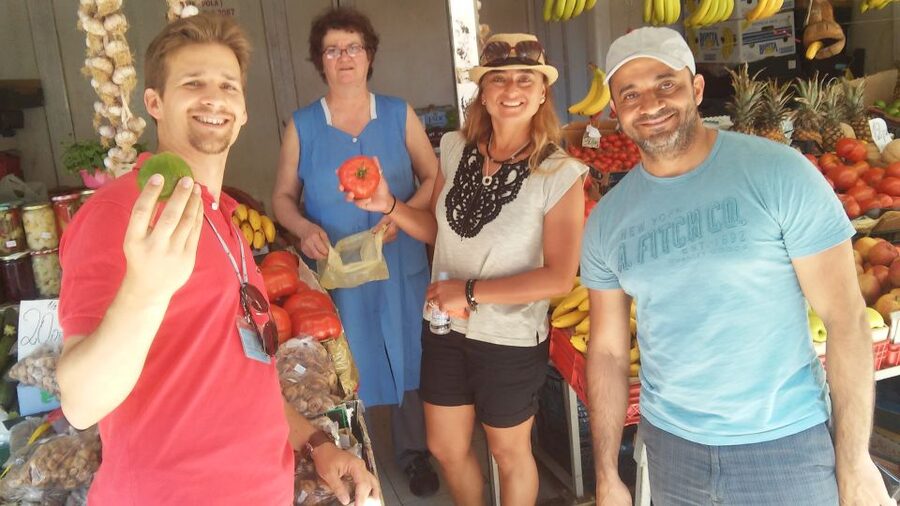
The schedule includes a local café, a local bar, and a local restaurant, each with a tasting of roughly 15 minutes. These stops spread the food experience across different types of places rather than keeping you inside one restaurant for the whole tour.
That format has advantages. You can see how different foods fit into daily routines, and the guide can explain customs while you stand or walk between locations. It also lets you cover more ground in a short time.
The tradeoff is that the experience is not a full meal with table service. If you want a leisurely lunch, several courses, or a guaranteed wine pairing, book a restaurant meal separately. One participant specifically wished the local wine had been included, while another described the tastings as a good mix of different regional flavors.
The restaurant stop can also help with later planning. Guides have offered restaurant suggestions and practical tips, though you should treat recommendations as a bonus rather than a formal dining itinerary.
How the guides shape the experience
The guide is the key ingredient here. Food markets can be confusing, and traditional dishes can seem ordinary if nobody explains why they matter. A good guide gives you the names, customs, ingredients, and stories that turn snacks into useful local knowledge.
Marta is frequently praised for her friendly manner, explanations of cooking techniques, and personal connection to Split. Antonia is known for a relaxed approach, good stories, and the ability to spend extra time when a group needs it. Jakov is praised for adapting to questions and helping people understand local groceries, fish, and greens.
Slavko is described as funny and personable, with a strong command of Split’s food culture. Other guides, including Ina, have been praised for making sure everyone in a small group feels included.
The tour is offered as a private or small-group experience. That matters because questions are easier in a compact group, especially at the Fish Market or Green Market. A small group also makes it easier for the guide to adjust the pace, explain unfamiliar foods, or suggest places to visit later.
Price, timing, and practical limits
At $64 per person, this is best value for someone who wants guided context, not just free samples. You get food tastings, an English-speaking guide, traditional recipes, market visits, and sightseeing in and around Diocletian’s Palace.
The two-hour length suits a first day in Split. You get an orientation to the old city, learn what foods to seek out, and gather ideas for later meals. Several guides have given restaurant or shop suggestions, so booking early can make the tour more useful than booking on your final afternoon.
The tour is not wheelchair accessible. Children must be with an adult, and unaccompanied minors are not allowed. Comfortable shoes are important, while sunglasses and a hat help in sunny weather.
Cancellation is flexible: you can cancel up to 24 hours in advance for a full refund. You can also reserve now and pay later, which helps if your Split plans may change.
Who should book this food tour
I would choose this experience if you want a compact introduction to Split that combines food, markets, and history. It suits first-time visitors, couples, small groups, and anyone who likes learning what locals eat rather than simply checking off monuments.
It is also a good choice for curious eaters who want to try anchovies, soparnik, cured meat, rafiol, sugared citrus, and other regional foods in small portions. You do not need to commit to a large unfamiliar meal.
I would hesitate if you need a fully accessible route, want a long lunch, or expect alcohol to be included at every tasting. The wine detail is inconsistent, and the tour is a sequence of samples rather than a sit-down feast.
Should you book the Split food tasting walk?
Book it if you want your first taste of Split to include markets, old streets, local sweets, cured meat, seafood, and practical food advice. The strongest reason to go is the guide-led connection between what you taste and how people in Dalmatia eat.
Book it near the start of your stay, not at the end. That way you can return to the Green Market, revisit a bakery, follow a restaurant suggestion, or buy something you discovered during the walk. For $64, it is a fair choice for a small group that values explanation and variety over a large meal.
FAQ
Where does the Split food tour begin?
It begins at the Golden Gate, also called the North Gate, near the statue of Gregory of Nin. Look for the blue umbrella.
How long does the tour last?
The tour lasts two hours. The schedule includes several 15-minute tasting stops and longer visits to the Green Market and Fish Market.
What foods can I expect to taste?
Possible tastings include sugared almonds, candied orange and lemon peel, soparnik, prosciutto, chocolate, rafiol, and salted anchovies. The exact selection may vary.
Is wine included?
The tour description mentions tasting soparnik with a glass of local wine, but some recent information indicates that wine may no longer be included. Do not rely on it as a guaranteed part of the tour.
Is the tour suitable for wheelchair users?
No. The tour is not accessible for wheelchair users.
Can I cancel or pay later?
Yes. You can cancel up to 24 hours before the tour for a full refund, and you can reserve your place and pay later.
Just added around Split
- Split: 1.5-Hour Walking Tour and Diocletian’s Palace★ 4.7 · 256 reviews
- Split: Walking tour of Split with a ‘Magister’ of History★ 5.0 · 110 reviews
- Split: Local History and Culture 90-Minute Walking Tour★ 5.0 · 194 reviews
- Diocletian’s Palace and Old Town SMALL GROUP Walking Tour★ 5.0 · 502 reviews
- Split: City Walking Tour w/ Game of Thrones Locations★ 4.9 · 318 reviews
- Discover The Old Town Split 1.5h walking Small group tour★ 4.8 · 93 reviews
- SPLIT-PRIVATE Walking Tour of Diocletian’s Palace & Old Town★ 5.0 · 467 reviews
- Split: History and Heritage Walking Tour★ 4.9 · 650 reviews
Food Walking Tours, compared.

Reykjavik Food Walk – Local Foodie Adventure in Iceland
Read our review →
Ho Chi Minh City Street Food Tour & Sightseeing By Motorbike
Read our review →
New Orleans Food Walking Tour of the French Quarter with Small-Group Option
Read our review →
Authentic Parisian Gourmet Food Tour with 10 Local Dishes & Wines
Read our review →
Savannah First Squares Culinary & Cultural Walking Food Tour
Read our review →Browse the lists this tour appears in