
REVIEW · SPLIT
SPLIT-PRIVATE Walking Tour of Diocletian’s Palace & Old Town
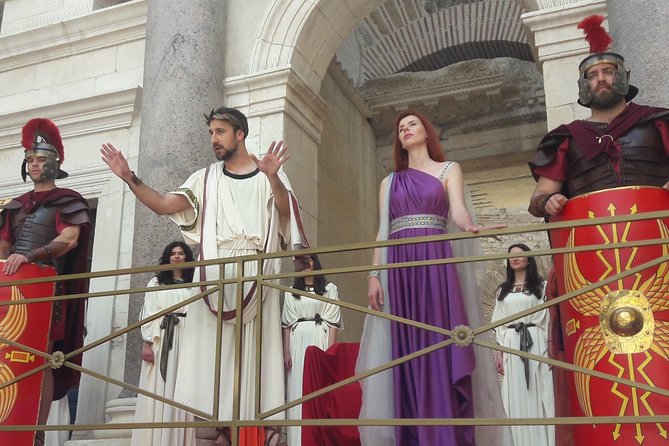
Diocletian’s Palace is not a fenced-off ruin. It is the core of modern Split, with homes, cafés, shops, lanes, and daily life built into the remains of a Roman emperor’s retirement residence. This private walk helps you read those layers, especially in the palace substructures, the best-preserved section of the complex.
I like the personal format, with only your group taking part, and the way guides such as Josko mix Roman history with local stories, humor, and practical advice. I also like the route’s range: you move from the Riva and medieval squares to the Peristyle, Golden Gate, Cathedral of Saint Domnius, and former Temple of Jupiter.
The main consideration is time. Two hours is enough for a strong introduction, but not for a slow visit to every corner or a long indoor exploration. Entrance fees are also extra, including €10 for the Diocletian’s Cellars museum and optional admission to the cathedral and Temple of Jupiter.
Key points at a glance
- A private group walk for up to 12 people: You get the guide’s attention rather than joining a large crowd.
- Roman, medieval, and modern Split in one route: The palace remains are woven through the Old Town, so the walk explains how the city grew around them.
- The cellars are a major highlight: They preserve the original palace plan and require a separate €10 admission.
- Josko is praised for clear storytelling: His style combines historical detail, humor, questions, and local perspective.
- The advertised duration is about two hours: Plan extra time if you want to enter the Cathedral of Saint Domnius or Temple of Jupiter.
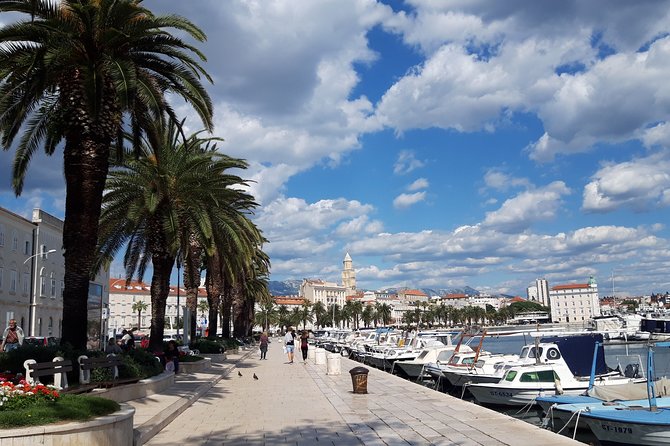
- The tour begins and ends on the Riva: The meeting point is Obala Hrvatskog narodnog preporoda 22, close to Split’s main waterfront promenade.
Why Diocletian’s Palace is best understood on foot
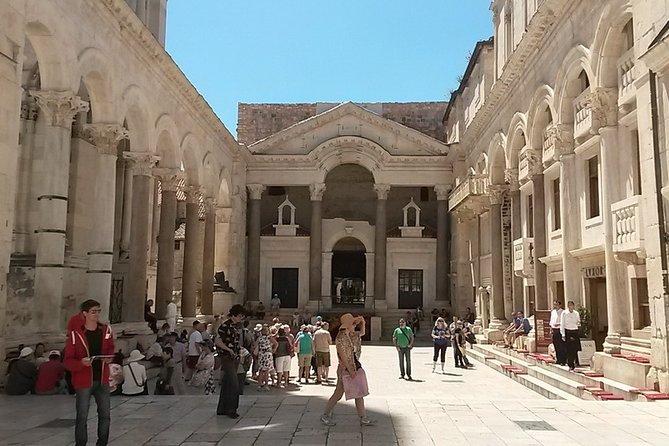
The palace dates to AD 305, when the Roman emperor Diocletian retired from public life and built a fortified residence beside the sea. The important thing for you is that Split did not simply preserve the palace as an archaeological site. Later residents adapted it, built over parts of it, and turned its passages into a living town.
That can be confusing if you walk through alone. A column may sit beside a café, a Roman wall may form part of a house, and a narrow lane may follow a palace corridor. A guide gives those fragments a timeline, showing how the imperial residence changed into the medieval and modern center of Split.
This is why the tour is more than a checklist of monuments. You are learning to spot the palace’s original structure beneath the town around you. The guide also explains Diocletian, his rule, the Roman period, and the rulers and conflicts that shaped Split over more than 1,700 years.
More Old Town Walking Tours in Croatia
- Split: Old Town and Diocletian Palace Walking Tour
★ 4.9 · 4,727 reviews - Split: Diocletian Palace & Old Town Guided Walking Tour
★ 4.7 · 882 reviews - Diocletian’s Palace and Old Town SMALL GROUP Walking Tour
★ 5.0 · 502 reviews
Starting on the Riva and entering the palace
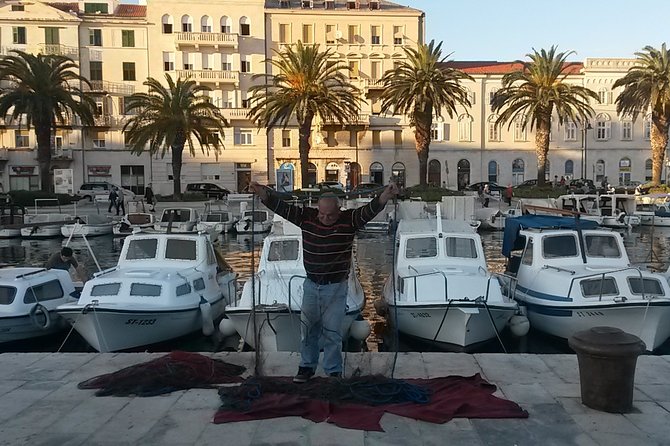
The walk starts and finishes at the main Riva promenade, at Obala Hrvatskog narodnog preporoda 22. The waterfront gives you a useful first view of Split’s setting, and it is a practical place to begin if you are staying in the Old Town or arriving near the harbor.
From there, the route moves toward Diocletian’s Palace. The palace is often described as a grand residence, but it also had strong defensive walls and a formal internal plan. Your guide uses the entrances, courtyards, and surviving walls to explain the difference between the emperor’s private quarters and the more public parts of the complex.
Because this is a private walk, your group can ask questions as you go. That matters here. The history comes in large quantities, and the best guides break it into short, memorable pieces instead of delivering a long lecture.
Josko is particularly praised for this approach. He is described as funny, clear, and able to keep children and teenagers interested. Families also value the chance to pause, ask questions, and adjust the pace rather than follow a fixed group schedule.
The Peristyle, Vestibule, and the emperor’s private world
The Peristyle is the ceremonial heart of Diocletian’s Palace. This square once formed a formal approach to the emperor’s apartments and remains one of the most impressive open spaces in Split.
You will hear how the space worked as a stage for imperial power. Its columns, stonework, and surrounding buildings make more sense once you understand the procession that would have led toward Diocletian’s private residence.
Nearby, the Vestibule marks the main entrance to that private section. Its simple circular form is easy to miss if you are moving quickly, but it carries a clear architectural purpose. The guide helps connect this space with the palace plan, so you can understand how the emperor moved from public ceremony into private quarters.
The itinerary gives only a few minutes to the Peristyle and Vestibule as named stops, but the palace explanation continues across several parts of the walk. If you want extensive time for photography or close inspection, tell your guide early and accept that another stop may receive less attention.
The palace substructures and the €10 decision
The palace substructures are one of the strongest reasons to choose this experience. They are described as the best-preserved part of Diocletian’s Palace, and they show the original arrangement of the rooms above them.
This underground section also explains why some visitors leave with the wrong idea about the tour. The route is centered on history and interpretation, not simply outdoor sightseeing. A large part of the palace experience takes place below street level, where the layout is easier to read.
Admission to the Museum of Diocletian’s Cellars costs €10 per person and is not included. That extra charge is worth considering when you compare the total price with other walking tours. If your main goal is to understand how the palace was built and preserved, I would budget for it.
The cellars are also a good reason to wear sensible shoes. The tour involves walking through old stone spaces and city lanes, though the supplied information says most people can participate. The listing does not provide a detailed accessibility description, so anyone with specific mobility needs should confirm the conditions before booking.
More Private Walking Tours in Croatia
- Tour The Game of Thrones – Private Walking Tour
★ 5.0 · 464 reviews - Dubrovnik: Old Town & City Walls Private Walking Tour
★ 5.0 · 206 reviews - Zagreb Unveiled: Private walking tour with a local guide
★ 5.0 · 185 reviews
Old Split, Fruit’s Square, and People’s Square
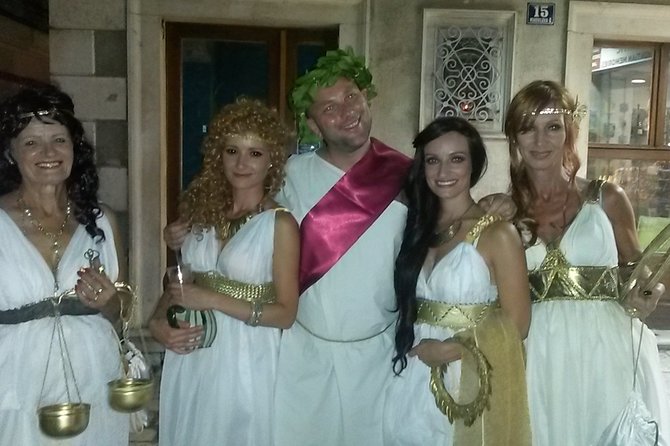
The Old Town section shifts the focus from imperial architecture to the city that grew around it. Medieval Split is not separate from the Roman palace. It occupies and reshapes it.
Fruit’s Square, officially Trg Brace Radic, was once the Green Market. The square includes a statue of Marko Marulic, often called the father of Croatian literature. This is a short stop, but it adds a useful local and cultural note to the Roman story.
Narodni Trg, or People’s Square, is the largest and liveliest piazza in the Old Town. Here the route opens out into the civic side of Split, away from the palace’s most formal spaces. The guide explains how the square fits into the city’s later development.
Some people will want more time in the Old Town than the basic schedule allows. One especially useful point is that the tour gives you an introduction and orientation rather than a full afternoon wandering session. If you enjoy stopping for coffee, browsing shops, or studying architecture at length, plan to explore again after the guide finishes.
Cathedral of Saint Domnius and Jupiter’s Temple
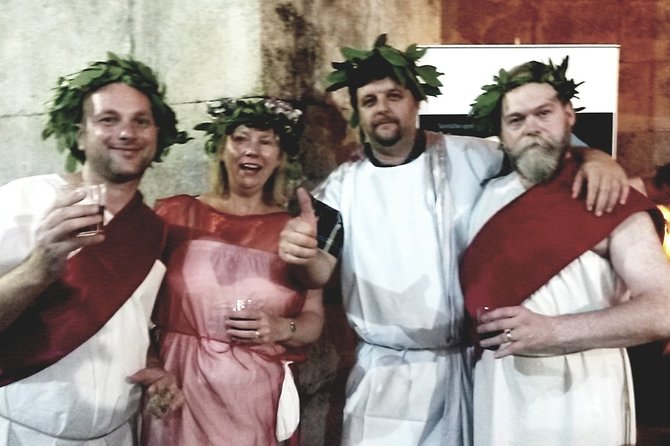
The Cathedral of Saint Domnius is seen from the outside, with an optional visit inside. Entry costs €3.50 per person and is not included.
The cathedral is an important example of Split’s layers. It occupies the former mausoleum of Diocletian, so the site connects the emperor’s Roman world with the city’s later Christian identity. Even if you do not pay to enter, the outside explanation helps show how one era was adapted for another.
The former Temple of Jupiter is also viewed from outside, with optional admission at €1.50 per person. This small extra visit may appeal to you if you want more Roman detail and have room in your schedule.
Since both admissions are optional, you can keep the tour focused on the walk itself or add a little indoor time. Ask your guide how the timing will work before paying, especially if your group has a firm end time.
The Golden Gate and Grgur Ninski
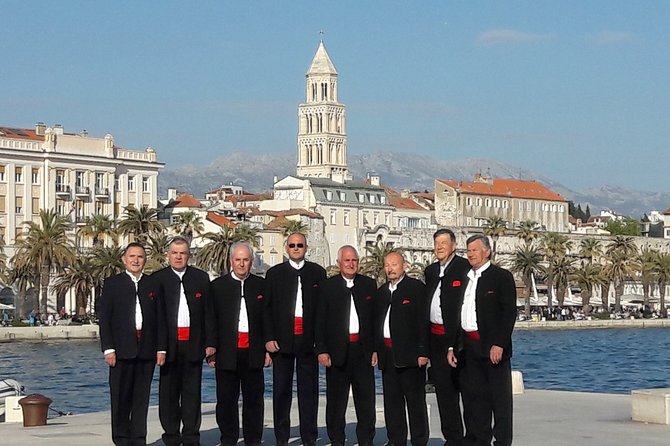
The Golden Gate was the principal and most impressive entrance into Diocletian’s Palace. Its scale and position make it an easy place to understand the palace as a fortified imperial complex rather than a loose collection of ruins.
The route also stops at the statue of Grgur Ninski, one of Croatia’s important historical figures. The guide uses the monument to move beyond Roman history and explain a figure from Croatia’s later past.
These short stops work well as connectors. You are not spending long periods at each monument, but you are building a chronological picture as you move through the city. The tour jumps from AD 305 to medieval Split, Venetian-era traces, local culture, and the city you see today.
The 500-year-old clock and the city’s everyday character
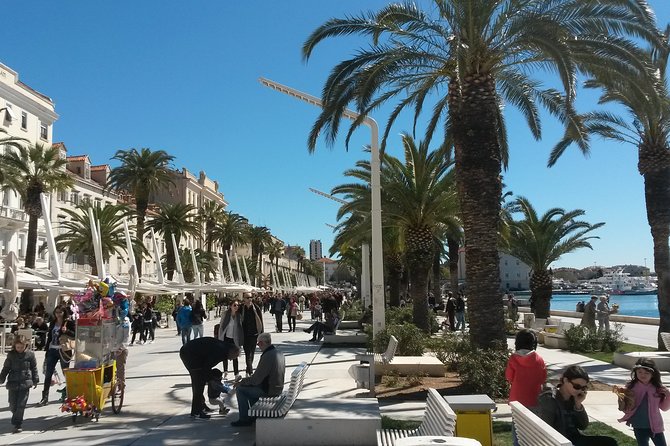
The City Clock is a 500-year-old 24-hour clock in the Old Town. It is a small detail, yet this is the kind of feature that gives a walking tour character. You might pass it without knowing its age or unusual 24-hour design.
The guide’s local perspective is valuable here. The experience is not only about emperors and monuments. It also helps you notice ordinary details that show how Split has continued to function as a town through many periods.
That local connection is one of the strongest themes in the guide’s presentation. Josko is described as proud of his hometown and willing to point out extra places beyond the formal route. One account also notes an impromptu stop at a chocolate shop, a reminder that a private walk can include small personal touches when time allows.
How the private format affects the experience
The price is $240 per group of up to 12 people, not $240 per person. With a full group, that works out to $20 per person before optional admissions and gratuity. For a couple, the per-person cost is much higher, but you are paying for a private licensed resident guide and a custom-designed route.
I see the value most clearly for families, groups of friends, and people who want to ask many questions. A history teacher and a family with children both found the style rewarding, and the guide has been praised for keeping young people interested.
The format also gives you room to adjust. If your group wants more palace history, you can focus there. If you want help finding your way around the Old Town, the guide can make the walk serve as an orientation for the rest of your stay.
A shared tour may cost less if you are alone or traveling as a couple. This private option makes better financial sense when several people split the group price.
Timing, weather, and practical planning
The stated duration is approximately two hours. That is a useful length for your first morning or afternoon in Split, but the many stops are tightly arranged. Some named locations receive only about five minutes, while the main palace and Old Town sections receive longer explanations.
The tour is offered in English and includes a mobile ticket. It begins and ends at the Riva meeting point, which makes it easy to continue with lunch, shopping, or independent sightseeing afterward.
The experience requires good weather. If poor weather causes cancellation, you are offered another date or a full refund. You can cancel for a full refund up to 24 hours before the start time, while changes or cancellations inside that window are not accepted.
Gratuity is not included. You should also allow for the €10 cellars admission if you want the full palace experience, plus the optional cathedral and Temple of Jupiter fees.
Who should book this Split walking tour
I would choose this walk if you want history explained in plain language rather than simply pointed out. It suits first-time visitors who need a map of the Old Town, families who benefit from a flexible pace, and curious adults who want to understand how Roman, medieval, and modern Split fit together.
It is also a good match if you enjoy guides with personality. Josko is repeatedly described as entertaining, warm, and highly informed, with a knack for making long timelines easier to remember.
I would hesitate if your priority is a long, unhurried photo walk or a broad tour of every corner of Split. The route is packed, and the two-hour format favors explanation over lingering. You may also prefer another option if the extra cellars fee makes the total cost uncomfortable.
Should you book it?
Book this private Split walking tour if you want a strong introduction to Diocletian’s Palace and the Old Town, especially when several people can share the $240 group price. The best features are the private setting, the local English-speaking guide, the palace substructures, and the clear storytelling associated with Josko.
Before booking, decide if you are willing to add the €10 cellars ticket. Without it, you will still see the major outdoor sights, but the underground palace remains one of the most useful parts of the experience. For a first visit, this is a practical way to understand Split before exploring the city on your own.
FAQ
How much does the private Split walking tour cost?
The tour costs $240 per group of up to 12 people. Optional admissions and gratuity cost extra.
How long does the tour last?
The advertised duration is approximately two hours. The route includes several short stops along with longer explanations at Diocletian’s Palace and Old Split.
Where does the tour begin and end?
The tour starts at Obala Hrvatskog narodnog preporoda 22, 21000 Split, Croatia, on the Riva promenade. It ends back at the meeting point.
Is this a private tour?
Yes. Only your group participates, with a maximum group size of 12 people.
Is the tour offered in English?
Yes. The experience is offered in English and includes a mobile ticket.
Is admission to Diocletian’s Cellars included?
No. Entry to the Museum of Diocletian’s Cellars costs €10 per person and is not included in the tour price.
Are the cathedral and Temple of Jupiter included?
The Cathedral of Saint Domnius is viewed from outside, with optional interior admission costing €3.50 per person. The former Temple of Jupiter is also viewed from outside, with optional admission costing €1.50 per person.
What happens if the weather is bad or I need to cancel?
You can cancel up to 24 hours before the start time for a full refund. If bad weather causes cancellation, you are offered another date or a full refund. If the minimum number of participants is not reached, you are offered another date or experience, or a full refund.
More Old Town Walking Tours in Split
- Discover The Old Town Split 1.5h walking Small group tour
★ 4.8 · 93 reviews - Underground Vaults Walking Tour in Edinburgh Old Town
★ 4.5 · 8,506 reviews - Prague: 3-Hour Walking Tour of Old Town & Prague Castle
★ 4.7 · 5,696 reviews - Dubrovnik: Old Town Walking Tour
★ 4.8 · 5,174 reviews
More Castle and Palace Walks in Split
- Walking Tour of Split and Diocletian’s Palace
★ 5.0 · 2,588 reviews - Split & Diocletian’s Palace Walking Tour
★ 5.0 · 1,125 reviews - Edinburgh Castle: Guided Walking Tour with Entry Ticket
★ 4.7 · 11,699 reviews - Venice: Doge’s Palace and St Mark’s Basilica Walking Tour
★ 4.4 · 6,291 reviews
Just added around Split
- Diocletian’s Palace and Old Town SMALL GROUP Walking Tour★ 5.0 · 502 reviews
- Split: City Walking Tour w/ Game of Thrones Locations★ 4.9 · 318 reviews
- Discover The Old Town Split 1.5h walking Small group tour★ 4.8 · 93 reviews
- Split: History and Heritage Walking Tour★ 4.9 · 650 reviews
- From Split: Krka Waterfalls Cruise & Trogir Walking Tour★ 4.7 · 681 reviews
- Split: Diocletian Palace & Old Town Guided Walking Tour★ 4.7 · 882 reviews
- Split Walking Tour with Professor of History★ 5.0 · 926 reviews
- Split & Diocletian’s Palace Walking Tour★ 5.0 · 1,125 reviews
Castle and Palace Walking Tours, compared.

Edinburgh Castle: Guided Walking Tour with Entry Ticket
Read our review →
Doge’s Palace and St Mark’s Basilica Walking Tour
Read our review →
3-Hour Walking Tour of Old Town & Prague Castle
Read our review →Edinburgh Castle: Guided Walking Tour with Entry Ticket
Read our review →
Edinburgh Castle Guided Walking Tour in English
Read our review →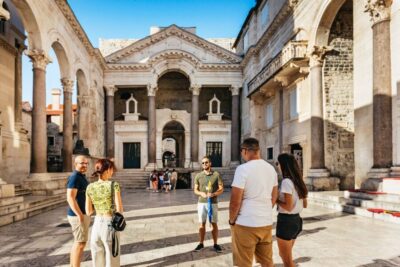


Walking Tour of Split and Diocletian’s Palace
Read our review →Browse the lists this tour appears in