
REVIEW · SPLIT
Split: Walking tour of Split with a ‘Magister’ of History
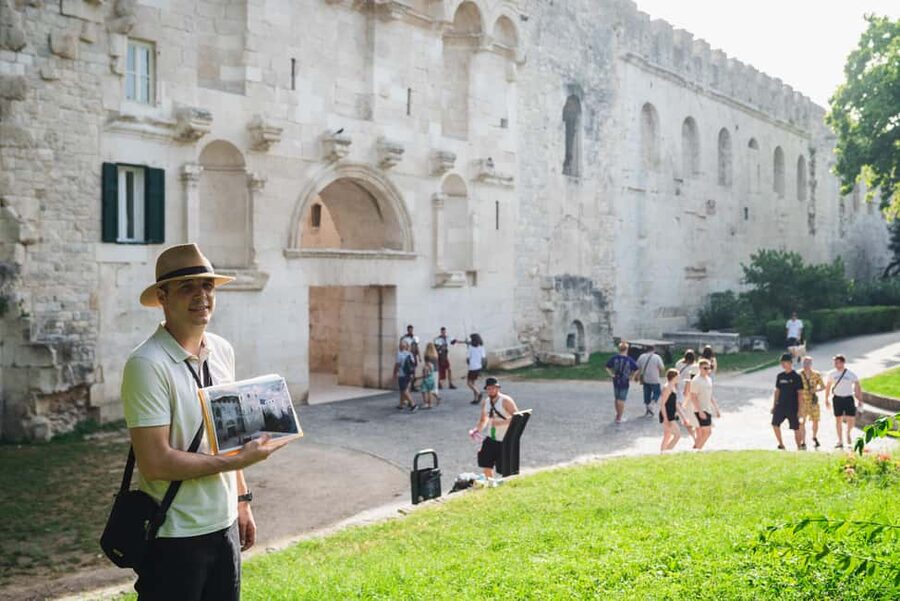
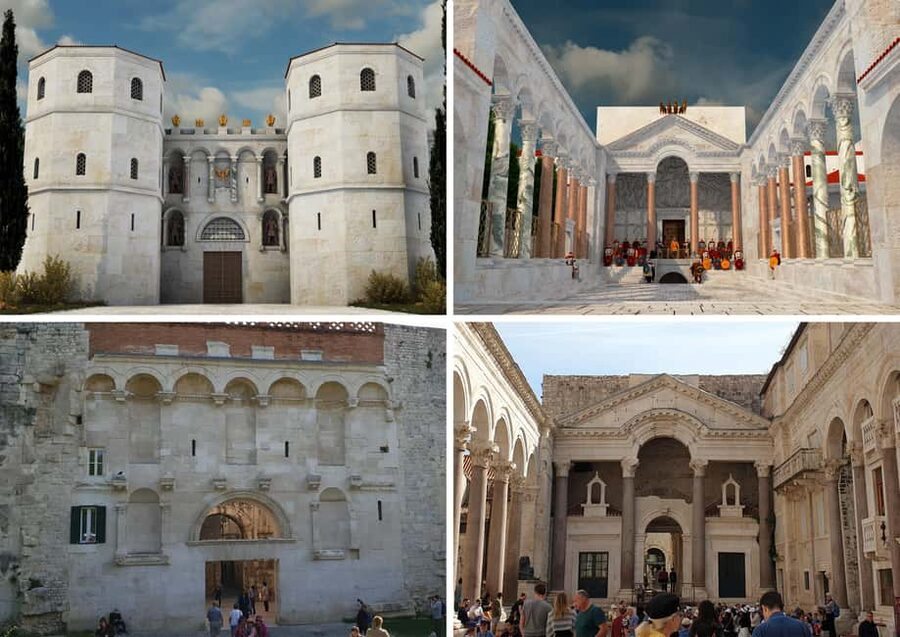
Diocletian’s Palace is not a museum sealed behind doors. It is the working heart of Split, with homes, cafés, lanes, and daily life built into Roman walls. This 110-minute walk with Toni, a Split-born historian and former teacher, helps you read those layers instead of simply admiring old stones. His 3D reconstructions show how the palace once looked, which makes the ruins far easier to picture.
I like the open question-and-answer style, and I like that Toni connects Roman, medieval, Venetian, and modern Split rather than stopping with Emperor Diocletian. The one drawback is that this is an outdoor walking tour with no paid-site admissions, so you will not get an extended indoor visit to the cathedral, museums, or other ticketed sights.
Key points to know before booking
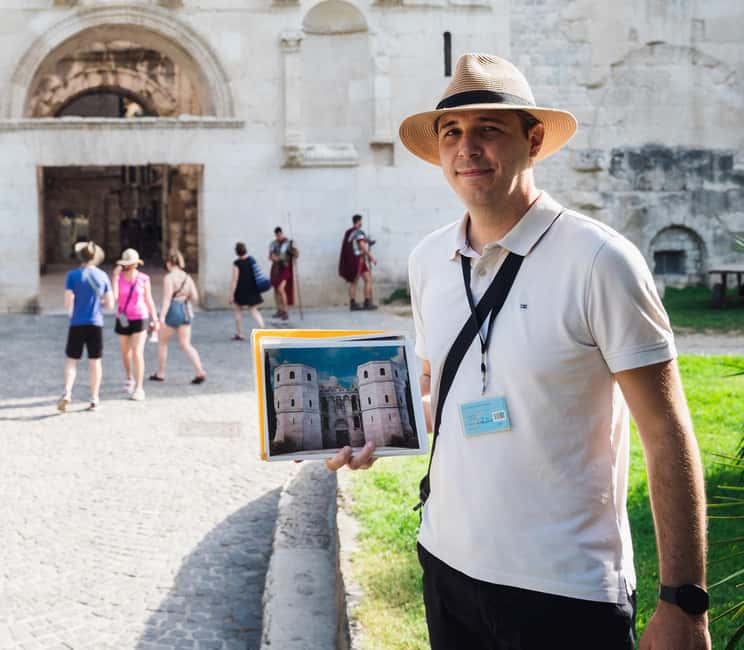
- Toni brings a teacher’s approach: He explains, asks questions, and adjusts the conversation instead of reciting a fixed list of dates.
- The 3D images do real work: Printed reconstructions help you picture the palace before later buildings filled its rooms.
- You walk through Split’s full timeline: Roman beginnings lead into medieval, Venetian, and present-day life.
- The route starts by the sea: Meet at the Bronze Gate on the Riva, then finish at the Golden Gate.
- The price is $33 per person: That is fair for a focused private-history style walk, especially if you value context more than admissions.
- Plan for sun and uneven streets: The tour runs rain or shine and is not suitable for wheelchair users.
Why this Split walk feels different from a basic palace tour
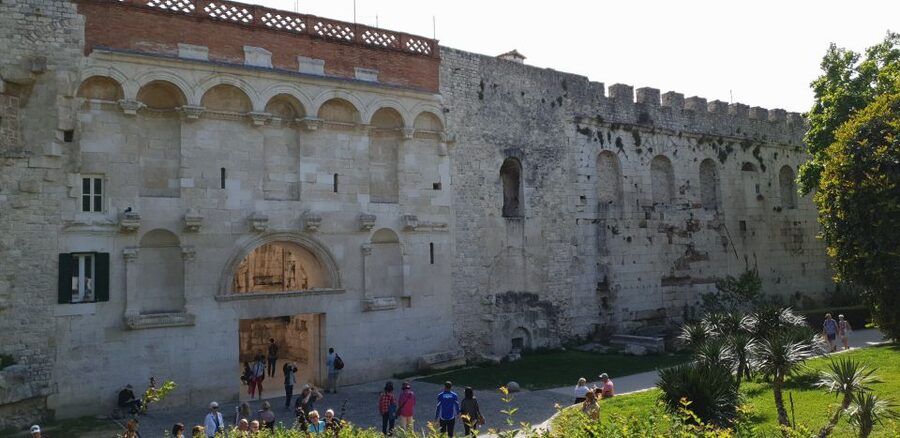
Many Old Town walks point out a column, a gate, and a famous statue, then move on. This one is built around the idea that Split is a city made from layers. Roman walls became medieval homes. Palace rooms became streets. Ancient spaces gained new uses rather than disappearing.
That approach matters because Diocletian’s Palace can be confusing at first. You are looking at a huge Roman complex, but the modern city has grown inside it for centuries. It is not always clear where the emperor’s residence ends and the later town begins. Toni’s historical training gives the walk a clear thread.
His master’s degree in history helps with detail, but the former teacher background may matter even more. The activity is designed around dialogue. You can ask about a building, a period, or a later event in Croatian history, and the tour is meant to make room for that curiosity.
Several people who took the tour found Toni funny, patient, and easy to follow. That is useful in a place where the subject can become dense. He also takes care with the pace, shade, and crowds when possible. Still, this is history-forward sightseeing. If you want a quick photo walk with only a few facts, the $33 price may feel high.
A few more walking tours around Split worth a look
- Split: Old Town and Diocletian Palace Walking Tour
★ 4.9 · 4,727 reviews - Walking Tour of Split and Diocletian’s Palace
★ 5.0 · 2,588 reviews - Krka Waterfalls tour with Trogir Walking tour and Krka panoramic boat cruise
★ 5.0 · 1,659 reviews
Meeting Toni at the Bronze Gate
The meeting point is Obala Hrvatskog narodnog preporoda 22, at the Bronze Gate of Diocletian’s Palace. This is the southern entrance, directly off the Riva promenade by the sea.
The easiest plan is to find the Riva first, then walk along the waterfront toward the palace entrance. The gate is also called the Brass Gate, so knowing both names can prevent a last-minute mix-up.
Starting here makes sense. The Riva gives you a clear view of the palace’s seaside position, while the Bronze Gate leads into the lower part of the complex. Toni begins by setting up the basic story: who Diocletian was, why he built this enormous retirement residence, and how the palace later became the center of Split.
Bring water. You will be outside for the full walk, and the tour operates rain or shine. Comfortable shoes are sensible because the route moves through old lanes and historic surfaces rather than a smooth, modern promenade.
From the Riva through the Bronze Gate
The first few minutes provide orientation rather than a rush to monuments. You move from the waterfront into the palace, crossing the Bronze Gate and entering a part of Split that once served as an access point from the sea.
This transition is one of the tour’s useful features. From the Riva, the palace can look like a grand wall facing the harbor. Through the gate, you begin to see that it is a full urban plan with entrances, passageways, ceremonial areas, and private quarters.
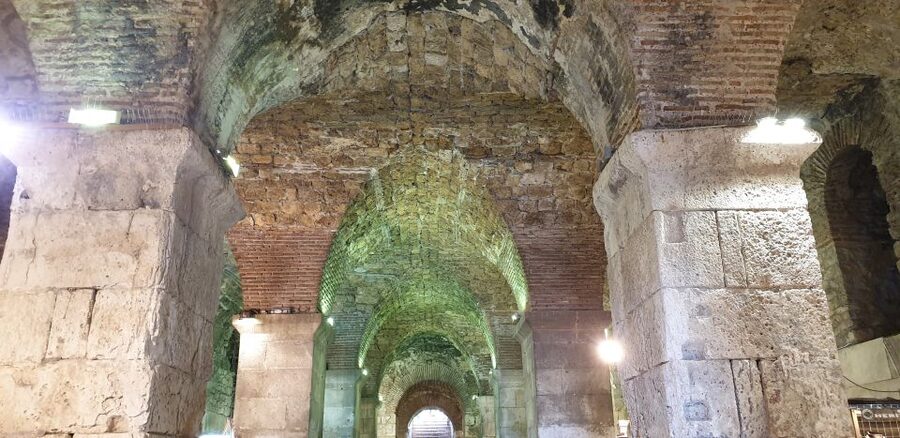
Toni pauses briefly in the palace’s basement halls to answer questions. The cellars are not treated as a long museum visit, but they help explain the relationship between the palace above and the foundations below. The preserved Roman work gives you a sense of the scale and construction of the original complex.
The short stop is best understood as an introduction. If you want to study every basement passage at length, you will need to return on your own. The tour’s goal is to give you a useful map of the whole site.
The palace interior and its many later lives

The main portion of the walk takes place inside Diocletian’s Palace and lasts about an hour. This is where the tour earns its keep.
You will see remnants of Diocletian’s private residence, but you will also see old medieval houses that were built into and around the Roman structure. Toni explains how the palace changed as Split grew. Rather than presenting Roman architecture as an isolated relic, he shows how later residents adapted it.
The 3D reconstructions are particularly helpful here. A ruin gives you shape, but not always purpose. A printed image of the original palace can show the missing walls, the decorative finish, and the relationship between buildings. Several participants singled out these images as one of the most distinctive parts of the walk, since Toni created them to support his explanations.
You should not expect a digital show or a formal museum presentation. The images are visual aids carried by the guide, used at the right places during the walk. Their value comes from timing. You see a fragment, then compare it with an image of the structure as it may have appeared in Roman times.
Toni is also willing to separate fact from guesswork. That matters in ancient places, where a neat story can be more appealing than an accurate one. His approach includes saying what is known and what remains uncertain, rather than forcing every mystery into a tidy answer.
Same streets, a different route:
- Split & Diocletian’s Palace Walking Tour
★ 5.0 · 1,125 reviews - Walking Tour of Split with a ‘Magister’ of History
★ 5.0 · 1,122 reviews - Split Walking Tour with Professor of History
★ 5.0 · 926 reviews - Split: Diocletian Palace & Old Town Guided Walking Tour
★ 4.7 · 882 reviews
Peristyle, Vestibule, and Triklinij
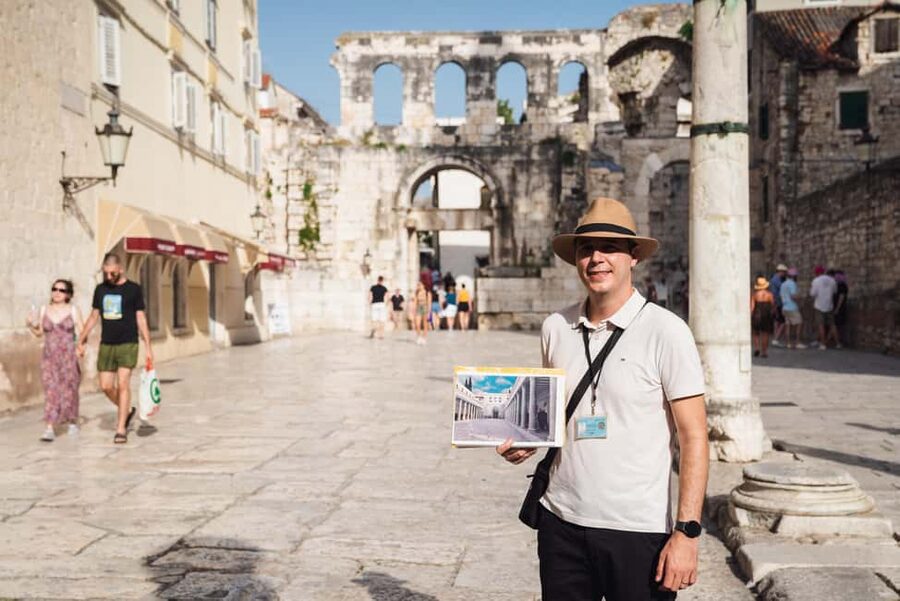
The Peristyle is the main visual moment of the tour. This Roman square remains one of the clearest places to understand the palace’s ceremonial design. Here you can look toward the Mausoleum of Diocletian, the Temple of Jupiter, and the Vestibule.
The space is impressive, but it can also be crowded. An early starting time is a smart choice if your schedule allows it. One participant noted that the crowds had grown considerably by the end of the walk, and another appreciated Toni’s effort to use quieter areas and shade when possible.
The Peristyle stop lasts about ten minutes, enough for an explanation and questions without turning into a long static lecture. Toni’s use of the reconstructions gives the square a stronger sense of its former appearance.
The Vestibule follows with a shorter stop. This circular entrance space helps explain how visitors once moved toward the emperor’s private quarters. You will also see Triklinij, associated with the palace’s dining and ceremonial functions. These stops are brief, but they add purpose to the plan. You are not only seeing what survives. You are learning how the spaces worked.
The cathedral and Jupiter’s Temple
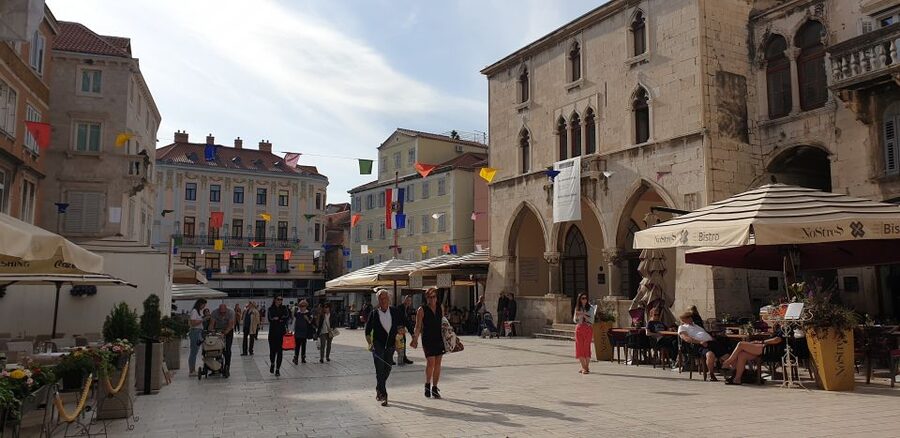
The tour passes by the Cathedral of Saint Domnius and Jupiter’s Temple. These two sites show how the palace’s religious spaces changed over time.
The cathedral occupies what was originally Diocletian’s mausoleum, a striking example of a later Christian building using an imperial Roman structure. The tour does not include entry to paid sites, so you should think of this portion as an exterior explanation rather than a cathedral visit.
Jupiter’s Temple is also passed by rather than entered. Its importance comes from the way it helps complete the original palace plan. The building was part of the emperor’s religious world, and its survival adds another piece to the Roman design.
This is one area where expectations matter. If you want to climb, enter, or spend quiet time inside each monument, budget another visit and separate admission. If you want to understand how the sites relate to one another, the exterior stops work well.
Silver Gate, Bishop Gregory, and the Golden Gate
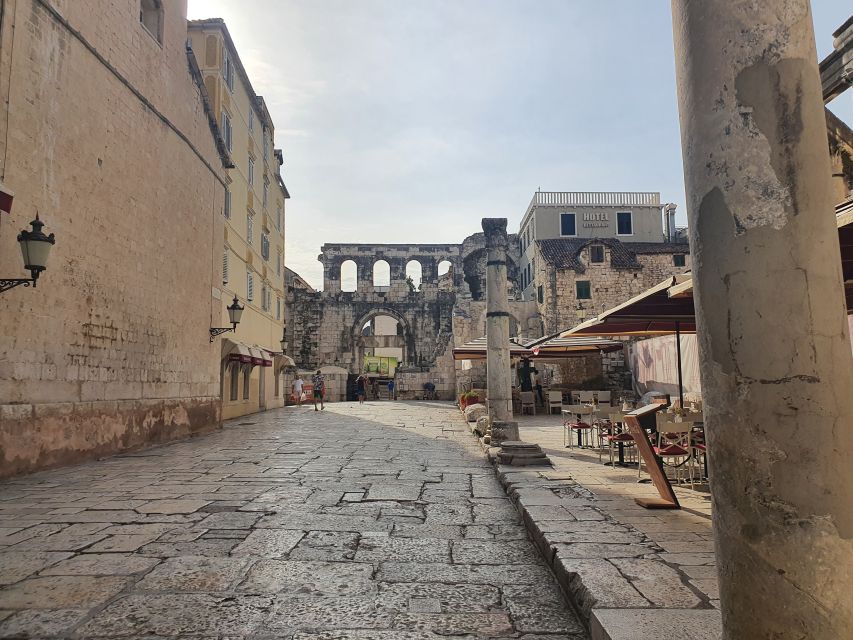
The route continues toward the Silver Gate and then the Golden Gate. The Silver Gate receives a short guided stop, while the Golden Gate is the final destination.
Along the north wall, you can see the famous statue of Bishop Gregory of Nin. The statue is tied to Split’s cultural memory and gives the Roman walls a distinctly Croatian setting. This is also where the tour moves more clearly from ancient history into medieval and later Split.
The Golden Gate is a fitting finish. It is one of the most recognizable entrances to the palace, and it brings the walk back to the city beyond the Roman core. You end here rather than returning to the Riva, so plan your next stop from the northern side of the Old Town.
The final section reinforces the central idea of the experience: Split did not simply preserve a palace. It built a living city inside and around it. The route makes that change visible, from imperial residence to medieval settlement to modern urban center.
What the $33 price buys you
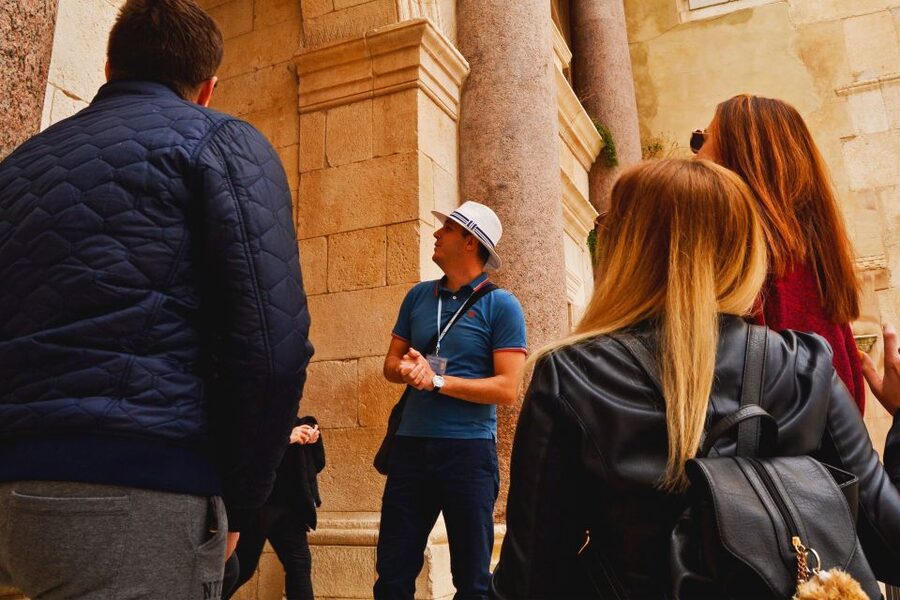
At $33 per person, this is more expensive than a quick orientation walk, but the comparison is not quite fair. You are paying for a guide with advanced historical training, a teaching background, local roots, and custom visual material.
The 3D reconstructions are the clearest added value. They help answer the question you may have while looking at the palace: what am I actually seeing? A standard walk may identify a ruin. Toni works to show its original form and later changes.
The price is also easier to justify if you like asking questions. This is not a silent procession from one photo stop to the next. The tour encourages conversation, and the guide can discuss both ancient subjects and more recent Croatian history.
You are not paying for admission to the cathedral, museums, or other ticketed sites. Diocletian’s Palace itself does not require admission, but any paid interior visit is outside the tour. For a visitor who wants a full day of museum entries, this is only one part of the budget. For someone who wants a strong historical foundation before exploring alone, it is a reasonable use of two hours.
Free cancellation up to 24 hours ahead and the option to reserve now and pay later add flexibility, especially when your Split schedule depends on ferry, cruise, or weather plans.
Who will get the most from this experience
I would choose this tour if you want to understand Split before wandering on your own. The explanation of the palace’s layout can make the rest of your time in the Old Town far more rewarding.
It also suits families and older children who can follow a two-hour history walk. A 12-year-old was reported to enjoy the experience, and the visual material gives younger listeners something concrete to look at. The question-based format may work better for curious children than a long, formal lecture.
History students, architecture fans, and visitors interested in how cities change over time will find plenty to consider. The tour also suits repeat visitors who already recognize the main locations but want more context.
I would be more cautious if you have limited mobility. The activity is not suitable for wheelchair users, and the old core has narrow historic surfaces. It is also not a good fit for anyone who wants only indoor attractions or guaranteed shelter. The tour runs in all weather, and summer heat can make a 110-minute walk tiring.
English is the stated tour language. If you need another language, this is not the right booking.
Practical advice for a better walk
Choose an early time if you can. The Peristyle and palace lanes become harder to follow when crowds thicken, and the first time slot may offer more shade and room to listen.
Bring water and wear shoes suited to old streets. The tour includes several brief stops, but much of the experience involves standing and walking outside.
Ask questions. That is central to the way Toni teaches. You can ask about the Roman period, later medieval changes, Venetian influence, or more recent events in Croatia.
Give yourself extra time afterward. The tour finishes at the Golden Gate, not back at the Bronze Gate. You may want to revisit a site, enter a paid attraction, or simply walk through the lanes with a better sense of what you are seeing.
Should you book the Split historian walk?
Book it if you want more than a list of monuments. Toni’s strongest qualities are his local connection, his former-teacher style, his willingness to answer questions, and his use of 3D images to make vanished buildings easier to picture.
Skip it if you want paid interiors, a short photo-focused route, or a fully accessible walk. For everyone else, $33 is a sound price for a focused introduction to Split, especially early in your stay. It gives you the Roman foundations, the medieval changes, the Venetian layer, and enough modern context to make the Old Town feel like a city rather than a collection of ruins.
FAQ
Where does the walking tour meet?
Meet at the Bronze Gate, also called the Brass Gate, on the southern seafront entrance to Diocletian’s Palace. The address is Obala Hrvatskog narodnog preporoda 22, near the Riva promenade.
How long does the Split tour last?
The tour lasts 110 minutes, or about one hour and 50 minutes.
What language is the tour conducted in?
The live tour guide speaks English.
Does the tour enter paid museums or monuments?
No. The tour does not include entry to paid sites or museums. Entering Diocletian’s Palace itself does not require admission, but paid interiors are not part of the experience.
What should I bring?
Bring drinks, particularly water. The walk takes place outdoors and operates rain or shine.
Is the tour suitable for wheelchair users?
No. The activity is listed as unsuitable for wheelchair users. It is also not suitable for people over 95 years old.
Just added around Split
- Split: Food Tasting Walking Tour★ 4.9 · 102 reviews
- Split: 1.5-Hour Walking Tour and Diocletian’s Palace★ 4.7 · 256 reviews
- Split: Local History and Culture 90-Minute Walking Tour★ 5.0 · 194 reviews
- Diocletian’s Palace and Old Town SMALL GROUP Walking Tour★ 5.0 · 502 reviews
- Split: City Walking Tour w/ Game of Thrones Locations★ 4.9 · 318 reviews
- Discover The Old Town Split 1.5h walking Small group tour★ 4.8 · 93 reviews
- SPLIT-PRIVATE Walking Tour of Diocletian’s Palace & Old Town★ 5.0 · 467 reviews
- Split: History and Heritage Walking Tour★ 4.9 · 650 reviews
Walking Tours, compared.

Magical London: Harry Potter Guided Walking Tour
Read our review →
Reykjavik Food Walk – Local Foodie Adventure in Iceland
Read our review →
History and Hauntings of Salem Guided Walking Tour
Read our review →
New Orleans Premier Ghost, Voodoo and Vampire Walking Tour
Read our review →
Amsterdam Anne Frank: Small-Group Walking Tour & Local Guide
Read our review →

Edinburgh Castle: Guided Walking Tour with Entry Ticket
Read our review →
Anne Frank’s Story – Guided Walking Tour through Amsterdam
Read our review →Browse the lists this tour appears in