
REVIEW · BERLIN
Small Group Walking Tour: “Wild Kreuzberg”
Kreuzberg is best understood at street level, where Turkish markets, Arabic eateries, old tenements, punk-era clubs, art spaces, and elevated U-Bahn tracks all share the same few blocks. This 2.5-hour walk begins at Kottbusser Tor and follows a lively route through the old SO36 district to Görlitzer Bahnhof.
I like the way this tour connects everyday Kreuzberg with its past, especially at Mariannenplatz and Bethanien, where former hospital buildings became part of Berlin’s squat and art scene. I also like the mix of famous sights and odd corners, from the Fontane-Apotheke to the Museum of Objects and a former railway station turned park.
The main thing to consider is language: the tour is conducted in German. The route also runs in all weather, and its minimum of two participants means a last-minute cancellation is possible if too few people book.
Key points at a glance
- Start beneath the U1 tracks: Meet at Skalitzer Straße 137, beside REWE and the Gold Exchange, near Kottbusser Tor.
- See Kreuzberg beyond the postcard sights: The route covers SO36, Oranienstraße, Mariannenplatz, Görlitzer Park, Wrangelkiez, and Oberbaumbrücke.
- Expect history told through streets and buildings: Old photographs and current context help connect Kreuzberg’s recent past with daily life today.
- Unusual stops add character: Look for the Home for the Blind, Museum of Objects, Fontane-Apotheke, Feuerwehrbrunnen, and Bethanien.
- The tour ends near major sights: Finish at Görlitzer Bahnhof, close to the East Side Gallery and the Oberbaumbrücke area.
- Good value at $24: For a small-group walk lasting two and a half hours, the price is modest, though food and drinks cost extra.
Starting under the rails at Kottbusser Tor
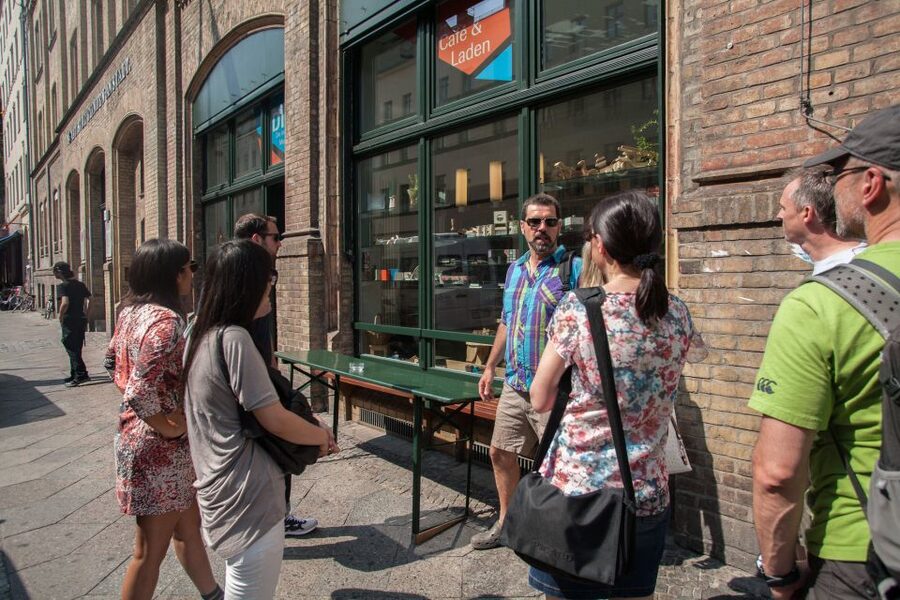
Your meeting point is Skalitzer Straße 137, in front of the Gold Exchange and next to REWE. Kottbusser Tor U-Bahn station is only a short distance away, served by the U1 and U8. Use the Skalitzer Straße exit and look for a guide holding the tour operator’s logo.
Kottbusser Tor is an excellent place to begin because Kreuzberg’s many sides appear here at once. The square is cut by the elevated U1 tracks, with traffic and trains moving overhead while shops, restaurants, markets, bars, and cafes fill the ground level.
You’ll see Turkish market culture, Arabic restaurants and bistros, newer cafes, and the nightlife linked with Kreuzberg after dark. This is not a polished opening square, and that is part of its appeal. You get a working neighborhood first, not a carefully staged introduction.
The Adalbertstraße skyscrapers and large blocks of housing show another side of the district. Your guide can help you read the buildings and explain how Kreuzberg changed over time. The route also passes the Sozialpalast, an imposing residential complex that adds a large-scale architectural note before the walk turns toward Oranienstraße.
More Small-Group Walking Tours in Berlin:
- Small Group Walking Tour of East Berlin with a French Guide
★ 5.0 · 176 reviews - Amsterdam Anne Frank: Small-Group Walking Tour & Local Guide
★ 4.8 · 12,789 reviews - Boston: Freedom Trail History Small Group Walking Tour
★ 5.0 · 6,450 reviews
Oranienstraße and the old SO36 district
Oranienstraße is the social heart of the walk. It runs through the former SO36 postal district, a name still closely tied to Berlin’s punk years. Today, you’ll find restaurants, bars, shops, comic stores, boutiques, and cafes, but the area’s reputation comes from its alternative culture and long-running mix of communities.
I like this part of the route because it gives you time to watch ordinary street life. You are not simply stopping at a monument, taking a picture, and moving on. The guide places the stores, buildings, and public spaces into the story of Kreuzberg.
The Berlin Home for the Blind is one of the more unexpected stops. You’ll also have the chance to pause for coffee in the Oranienhöfen, which gives the walk a useful breathing space. Food and drinks are not included, so plan to pay for your own coffee if you choose to stop.
The exact rhythm may depend on the group and the guide. The route is advertised as a small-group walk, but no fixed maximum group size is given. That makes it sensible to expect a personal feel without assuming a private tour.
From unusual museums to Mariannenplatz
The Museum of Objects adds a different angle. It focuses on the history of mass production, so the stop is less about grand art and more about the objects and systems that shape daily life. It fits Kreuzberg well: this is a district where design, industry, household life, and social change often meet in unexpected ways.
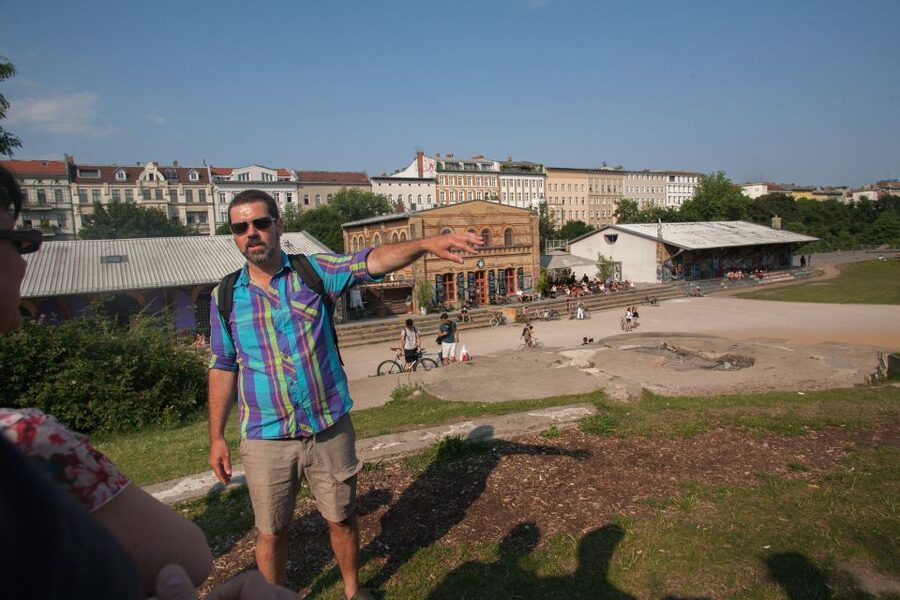
From Oranienstraße, the walk continues toward Heinrich-Platz and Mariannenplatz. Mariannenplatz gives the tour more room to breathe after the tight streets and busy storefronts. Its central feature here is Bethanien, a former hospital that became an art squat and cultural site.
Bethanien is one of the most useful stops for understanding Kreuzberg’s recent identity. The building’s change from hospital to art space reflects the district’s long pattern of reuse. Instead of treating an old building as a frozen relic, Kreuzberg gave it another purpose.
Next door, the Rauchhaus offers more traces of the squatters’ era. This portion of the walk is valuable because it shows the physical setting behind Berlin’s alternative culture. You are looking at buildings and public spaces where political protest, housing struggles, and art shared the same ground.
The route also includes the Feuerwehrbrunnen, St. Thomas Church, and other street-level sights. Not every stop will have the same weight as Bethanien or Oberbaumbrücke, but together they make the walk feel like a neighborhood tour rather than a checklist of major monuments.
Görlitzer Park, Fontane-Apotheke, and the former railway line
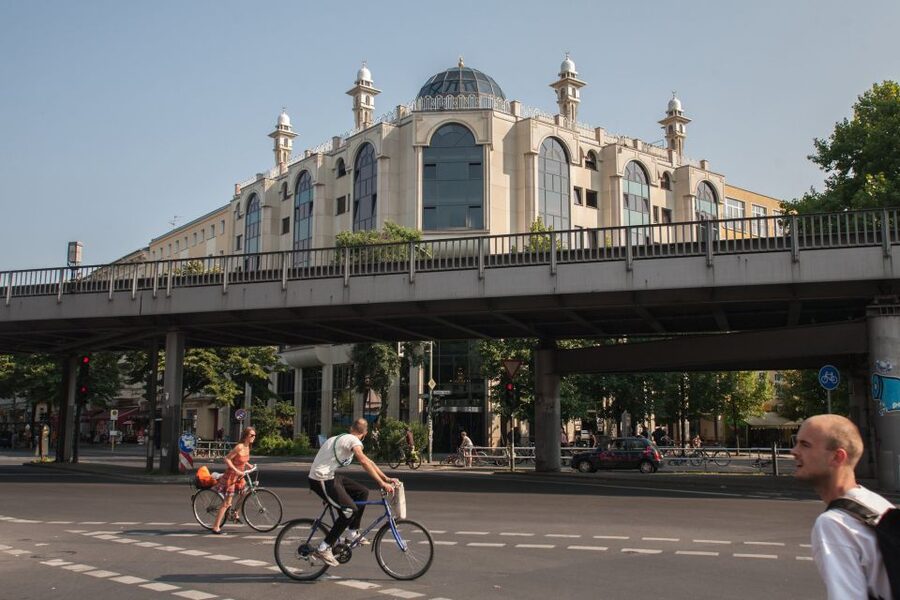
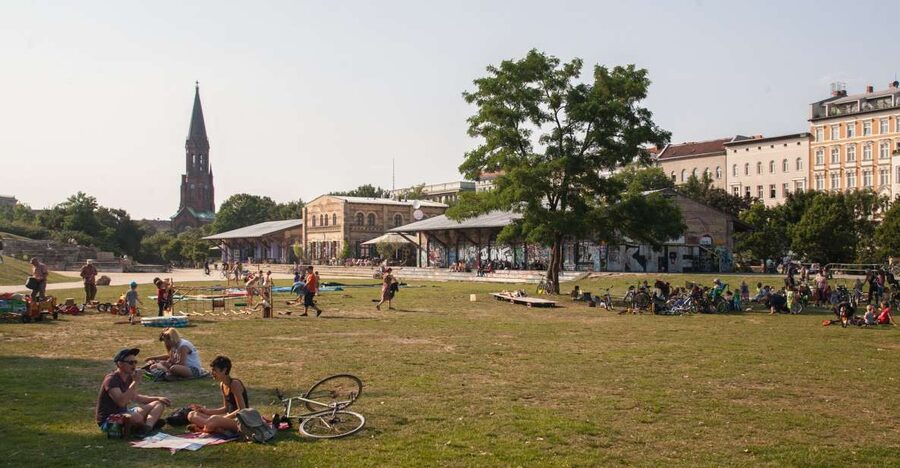
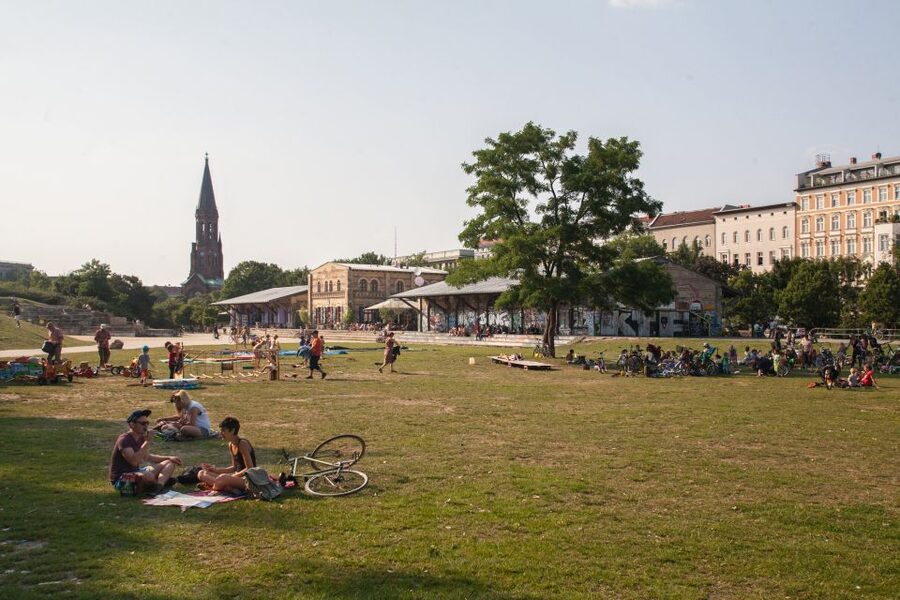
The walk then moves toward Görlitzer Park. The park occupies the former Görlitzer Bahnhof site, so its open paths sit on ground that once served rail traffic. That change is a useful reminder of how Berlin repeatedly reuses old infrastructure.
You’ll also pass the well-known Fontane-Apotheke. It is a small stop, but these are often the details that make a walking tour memorable. A pharmacy is part of daily life, and its place on the route keeps the experience tied to the neighborhood rather than only to grand political history.
Görlitzer Park can feel very different from the formal parks near Berlin’s central museums. You’ll want comfortable shoes, since the tour covers several neighborhoods on foot and continues through the park before heading toward Wrangelkiez.
A practical note: the walk takes place in all weather. On rainy days, the operator provides a poncho. In cold or wet conditions, wear shoes with good grip and dress for two and a half hours outdoors. One winter tour was conducted in snowfall and below-freezing temperatures, so this is not a fair-weather-only activity.
A few more walking tours around Berlin worth a look
- Discover Berlin Half-Day Walking Tour
★ 5.0 · 9,624 reviews - Berlin City walk Government District and Places of Democracy
★ 4.7 · 8,467 reviews - Berlin: Third Reich & Cold War Guided Walking Tour
★ 4.9 · 8,378 reviews - Berlin: Discover Berlin Walking Tour
★ 4.9 · 5,998 reviews
Wrangelkiez and the route toward East Berlin
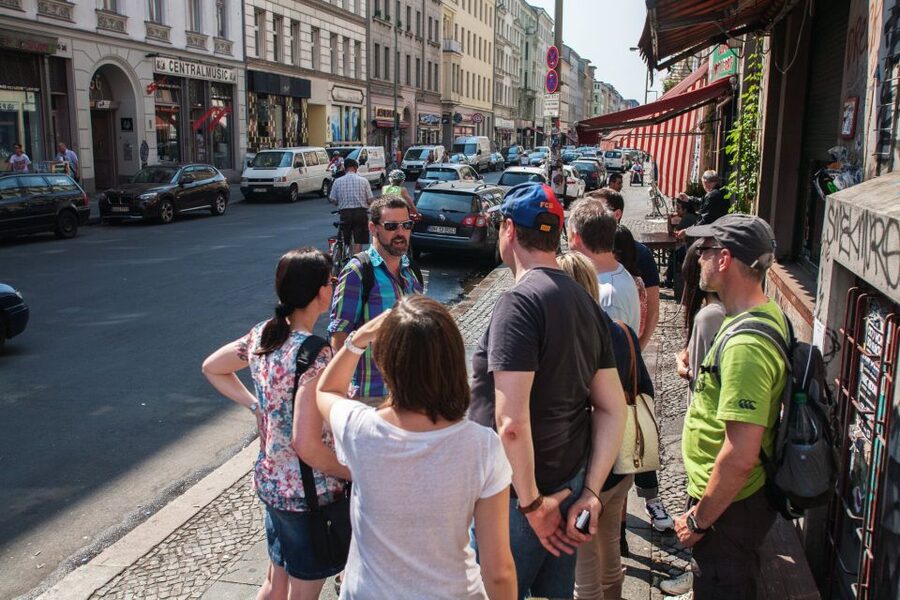
From Görlitzer Park, the route continues into Wrangelkiez, another Kreuzberg neighborhood with its own street rhythm. The walk then heads toward the Oberbaumbrücke, the striking bridge that links Kreuzberg with Friedrichshain.
The bridge carries more than traffic. It also works as a symbol of the former division between East and West Berlin. Your guide can connect that political story with the local streets you have just walked, showing how a district once near the edge of divided Berlin became one of the city’s best-known cultural centers.
The route includes the Oberbaumbrücke and East Side Gallery, giving you a strong finish in one of Berlin’s most recognizable areas. The bridge is visually striking, while the East Side Gallery brings the Berlin Wall story into view through its large painted sections.
The tour finishes at Görlitzer Bahnhof. That endpoint is useful if you want to continue exploring the area on your own. The walk does not end back at Kottbusser Tor, so plan your onward route rather than assuming a return to the starting point.
What the guide adds
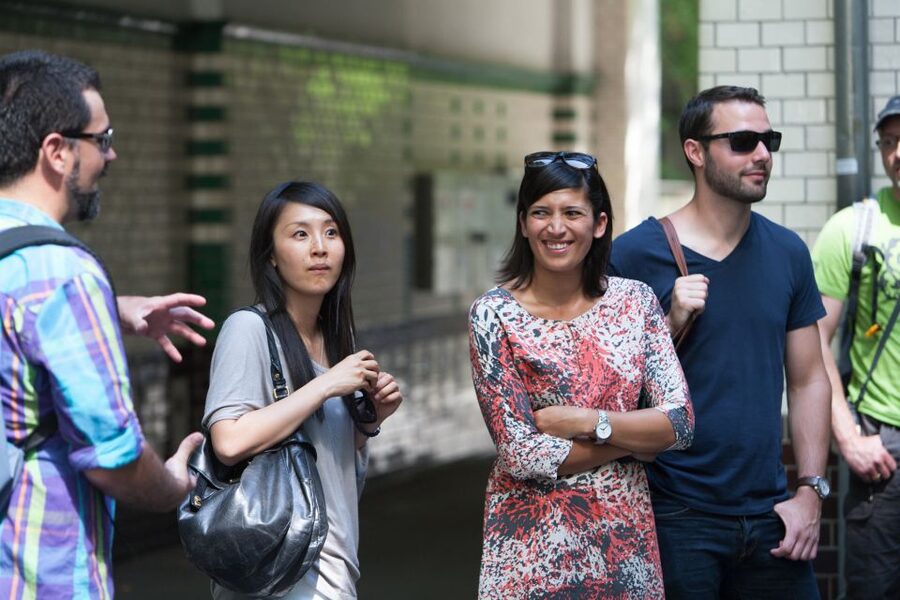
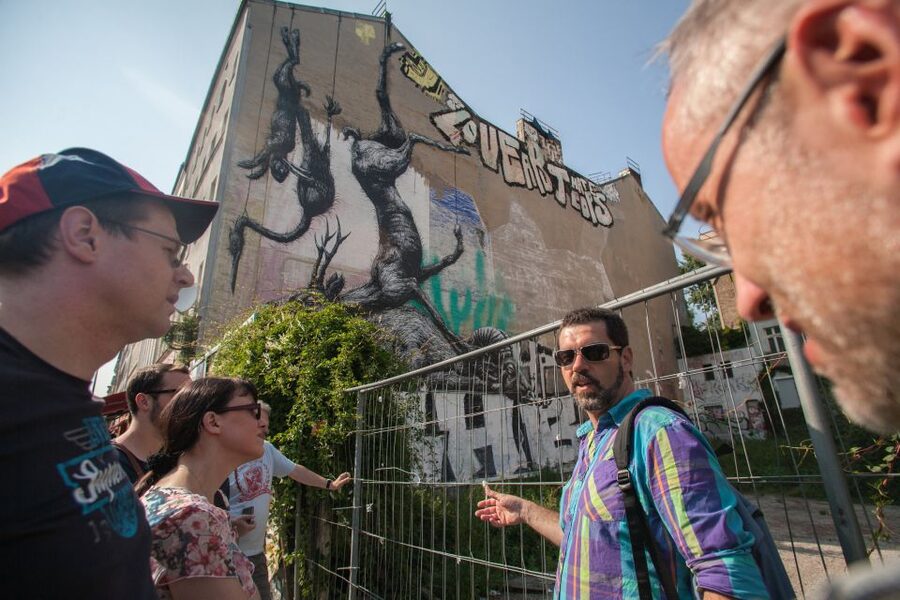
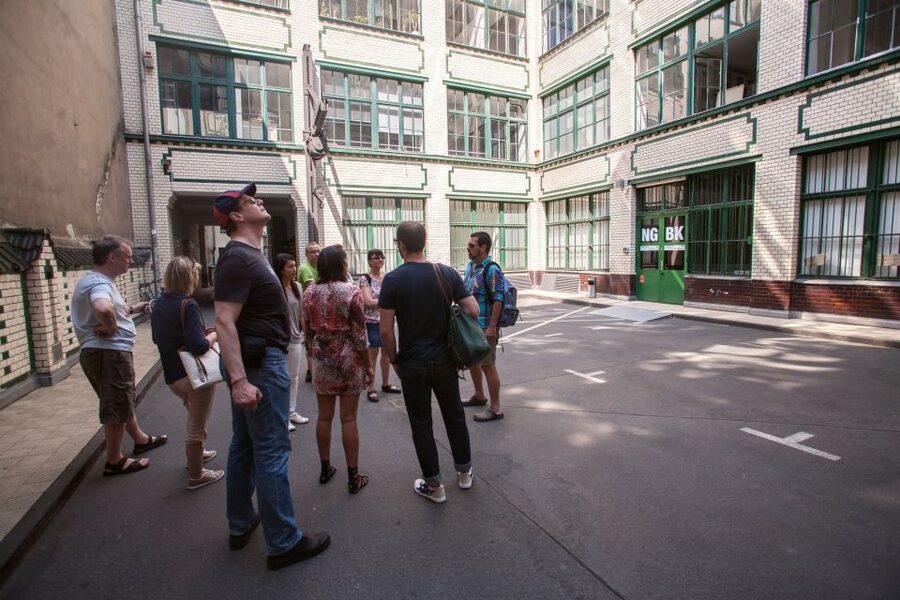
This experience depends heavily on the guide. The strongest feedback points to Ferenz, who is described as an engaging storyteller with a good grasp of both current context and recent history. His approach includes older photographs, which can help you compare the present streets with earlier versions of Kreuzberg.
That matters here because many of the tour’s subjects are not self-explanatory. A former hospital, an old railway site, a pharmacy, and a housing complex may look ordinary without context. Good guiding turns them into connected pieces of the district’s story.
The tour is in German, and that should be your first booking check. If you understand German well enough to follow a spoken history walk, the language can make the experience feel direct and local. If you do not, the tour will not be a good fit simply because the sights are interesting.
The walk is also praised for its length. Two and a half hours is enough time to cover a wide section of Kreuzberg without taking up an entire day. You get a solid introduction, then still have time for lunch, a museum, or more independent exploring.
Is $24 a fair price?
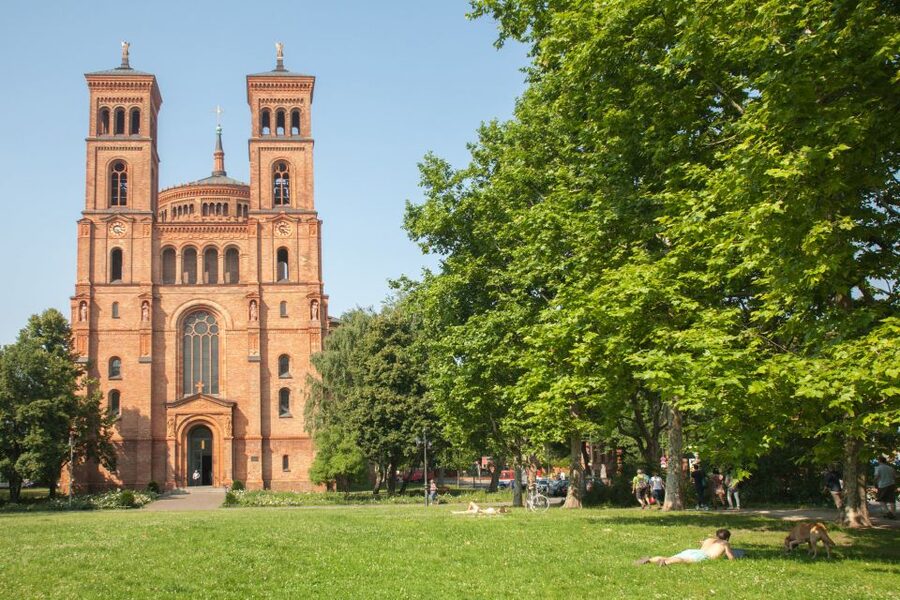
At $24 per person, this is a good-value introduction to Kreuzberg. You are paying for a live city guide, a 2.5-hour route, and a broad selection of places that would be hard to connect on your own during a first visit.
The value is strongest if you want interpretation rather than a simple orientation walk. Kottbusser Tor, Oranienstraße, Bethanien, Görlitzer Park, and Oberbaumbrücke are all accessible independently, but the guide supplies the links between them.
The price does not include food or drinks. That is easy to manage, since the route includes a coffee opportunity in the Oranienhöfen, but you should carry money or a card for any purchase.
A tour of this length cannot provide a deep visit inside every place named along the route. Some stops are viewed from the outside or treated briefly. That is not a flaw, but it helps to set the right expectation: this is a neighborhood walk with many points of interest, not a museum tour with long indoor visits.
Who should book this walk?
I would recommend it to you if you want to understand Kreuzberg’s social and cultural character rather than only see Berlin’s major landmarks. It suits first-time visitors who want a strong neighborhood orientation, as well as repeat visitors who have already seen Museum Island and the Brandenburg Gate.
It is especially useful for people interested in urban change, punk culture, migration, postwar Berlin, former squats, public housing, street art, and the reuse of old buildings. The route gives these subjects a physical setting.
You should be comfortable walking for two and a half hours. Comfortable shoes are required, and the all-weather policy means you should not book it expecting a sheltered activity. Rain ponchos are supplied when needed, but proper clothing is still your responsibility.
This tour may not suit you if you need English guiding, prefer a short list of famous sights, or want extensive time inside museums. The German language and neighborhood focus are central to the experience.
Booking details worth knowing
You can cancel up to 24 hours before the start for a full refund, while groups of three or more have a cancellation deadline of three days before the scheduled tour. You can also reserve now and pay later, which helps if your Berlin schedule is still shifting.
A minimum of two participants is required. If that number is not reached, the operator can cancel at short notice and notify you.
Starting times vary, so check availability for your date. Give the operator accurate contact details, particularly if your plans might change. One useful practical lesson from the tour’s communication notes is that direct contact by email, text, or phone is preferable when a schedule changes, rather than relying only on an app message.
Final verdict: a street-level look at Kreuzberg
Book this walk if you want Berlin explained through its neighborhoods, not just its monuments. For $24, you get a well-paced route through Kottbusser Tor, SO36, Oranienstraße, Mariannenplatz, Görlitzer Park, Wrangelkiez, and the East-West Berlin landmarks near Oberbaumbrücke.
The best reasons to choose it are the unusual stops, the connection between present-day street life and recent history, and the guide-led storytelling associated with Ferenz. The main reasons to hesitate are the German-only format, the outdoor route in all weather, and the possibility of cancellation if fewer than two people book.
If those conditions work for you, this is a practical and fairly priced way to get your bearings in Kreuzberg while seeing parts of Berlin that a standard central-city tour often skips.
FAQ
Where does the Wild Kreuzberg tour start?
It starts at 137 Skalitzer Straße, in front of the Gold Exchange and next to REWE.
How do I reach the meeting point?
The nearest U-Bahn station is Kottbusser Tor, served by the U1 and U8. Use the Skalitzer Straße exit.
How long does the tour last?
The walking tour lasts 2.5 hours.
What language is the tour conducted in?
The live tour guide speaks German.
Where does the tour finish?
The tour finishes at Görlitzer Bahnhof.
Does the tour include food or drinks?
No. Food and drinks are not included, though there is an opportunity to relax over coffee in the Oranienhöfen.
What should I bring?
Bring comfortable shoes. The walk takes place outdoors and runs in all weather.
What happens if it rains?
The tour operates in rainy weather, and a rain poncho is provided when necessary.
Is there a minimum number of participants?
Yes. At least two people are required for the tour to operate.
Can I cancel for a refund?
You can cancel up to 24 hours in advance for a full refund. For groups of three or more, the cancellation deadline is three days before the scheduled tour.
Just added around Berlin
- Berlin Walking Tour★ 4.5 · 378 reviews
- East Meets West: Berlin Food Culture & Street Art★ 5.0 · 157 reviews
- Small Group Walking Tour of East Berlin with a French Guide★ 5.0 · 176 reviews
- Berlin Street Art Walking Tour – Off The Grid★ 5.0 · 270 reviews
- Berlin Highlights Private Guided Walking Tour★ 4.5 · 89 reviews
- Gruseltour Berlin Haunted Ghost Walk 90-minute at Berlin Mitte city center★ 5.0 · 75 reviews
- Berlin Private Complete History All Day Walking Tour★ 5.0 · 474 reviews
- Private Berlin: Iconic Sights and Hidden Gems Walking Tour★ 5.0 · 292 reviews
Small-Group Walking Tours, compared.

Amsterdam Anne Frank: Small-Group Walking Tour & Local Guide
Read our review →
Freedom Trail History Small Group Walking Tour
Read our review →
Barcelona Tapas and Wine Experience Small-Group Walking Tour
Read our review →
Reykjavík Small group Walking Tour – by CityWalk
Read our review →

Hidden Alleyways and Historic Sites Small-Group Walking Tour
Read our review →
Old Montreal Small-Group Walking Tour | Max 10 | by MTL Detours
Read our review →Browse the lists this tour appears in