
REVIEW · ROME
Rome: Small-Group City Highlights Moonlight Walking Tour
Rome is at its most atmospheric after sunset, when the fountains glow, the ancient stones soften in the evening light, and the day’s tour groups begin to thin out. This two-hour night walk links Piazza Navona, the Pantheon, Trevi Fountain, Piazza Venezia, and the Colosseum without asking you to spend time inside any monument.
I like the route for two clear reasons: Trevi Fountain is far more pleasant at night, and the walk gives you a useful first look at central Rome without the cost of a museum ticket. Guides such as Sharon, Dan, Mary, Kasia, and Pablo have been especially praised for turning dates and emperors into stories you can follow.
The tradeoff is simple: you cover a lot of ground on foot, and the tour is about Rome from the street, not entry into the Pantheon, Colosseum, or any other attraction. Bring good shoes, expect the route to change if streets close, and remember that evening crowds can still gather at the most famous stops.
Key points to know before you book
- Rome after dark: See the city’s famous squares and monuments in a cooler, more relaxed setting.
- A strong first-night route: The walk connects Piazza Navona, the Pantheon, Trevi Fountain, Piazza Venezia, Trajan’s Column, the imperial forums, and the Colosseum.
- History with personality: Guides including Sharon, Dan, Kasia, Mary, Pablo, and Sila are praised for clear storytelling, local advice, and easy conversation.
- No attraction admission: You view the monuments from outside, so this tour works best alongside daytime visits inside Rome’s major sights.
- Good value at $29: You get a live guide, a small-group or private format, and a broad introduction to central Rome for a modest price.
- Plan for walking: Comfortable clothing and shoes matter, and the route may finish at the Colosseum or return closer to Piazza Navona, depending on the option booked.
Why Rome works better after sunset
Rome can feel like several cities in one day. In the afternoon, the streets around Trevi Fountain and the Pantheon may be packed with people, selfie sticks, and tour groups. At night, the same places take on a calmer mood, even though you should not expect them to be empty.
The moonlight theme is not a promise of silence or a special light show. It means you see Rome’s public spaces under evening illumination, with a guide explaining what you are looking at instead of simply passing by for a photograph. That change in timing is the main reason to choose this walk.
I also like the route as a way to get your bearings. It moves across central Rome rather than staying in one piazza, so you begin to understand how the historic center connects. You can then return to the places that caught your attention during the rest of your stay.
The tour costs $29 per person. For that price, you receive a live guide and a broad introduction to Rome’s history, architecture, and street layout. It is good value if you want context and company, especially on your first evening.
The price does not include food, drinks, or entrance to attractions. That keeps the cost down, but it also means you should not book this as a substitute for visiting the Colosseum or Pantheon interiors. Think of it as a guided orientation walk with strong evening views.
More City Highlights Walking Tours in Italy
- Rome: Guided City Center Evening Sightseeing Walking Tour
★ 4.4 · 953 reviews - Rome: Guided Small Group Walking Tour of City Highlights
★ 5.0 · 682 reviews - Florence: Highlights Walking Tour with Expert Guide
★ 4.6 · 4,662 reviews
Piazza Navona begins the story
The usual meeting area is Piazza Navona, though the exact starting point depends on the option you book. The possible meeting locations include Piazza d’Aracoeli and Piazza di Pasquino, with Piazza Navona forming the first major stop.
Piazza Navona occupies the site of an ancient Roman stadium where athletic contests were held. That gives your guide a useful opening: you are not just looking at a pretty Baroque square, but walking across a place whose purpose reaches back to ancient Rome.
The square’s main visual focus is Bernini’s Fountain of the Four Rivers. Your guide explains the figures and the design while you take in the fountain with the surrounding cafés, churches, and evening foot traffic. This is a good place to settle into the pace of the tour because the group can pause without blocking a narrow street.
The atmosphere here can still be lively at night. That is part of the appeal, but it also means you need to stay close to your guide. One particularly useful feature of a small group is the chance to ask questions without waiting for a large crowd to move.
The Pantheon is a short walk away
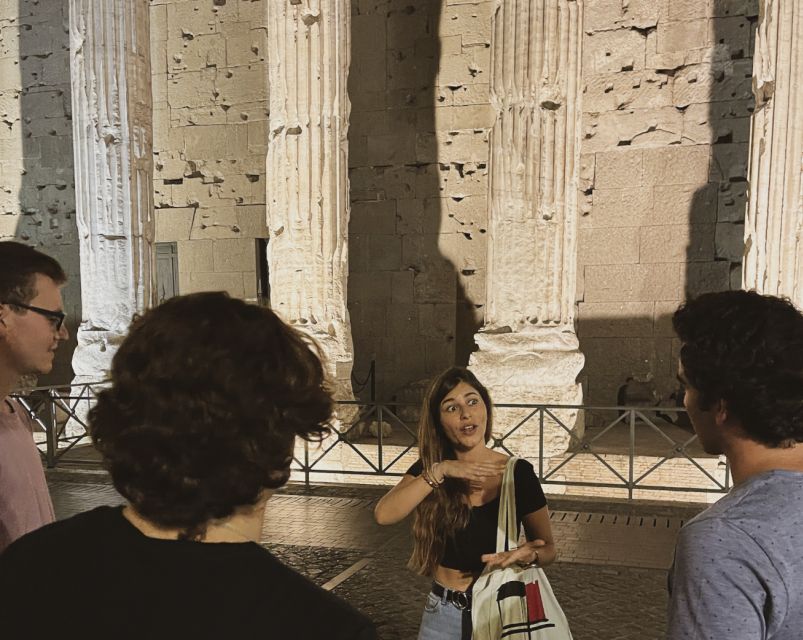
From Piazza Navona, the route continues toward the Pantheon. The walk takes about five minutes, but the stop itself gives the guide time to explain one of Rome’s most remarkable surviving buildings.
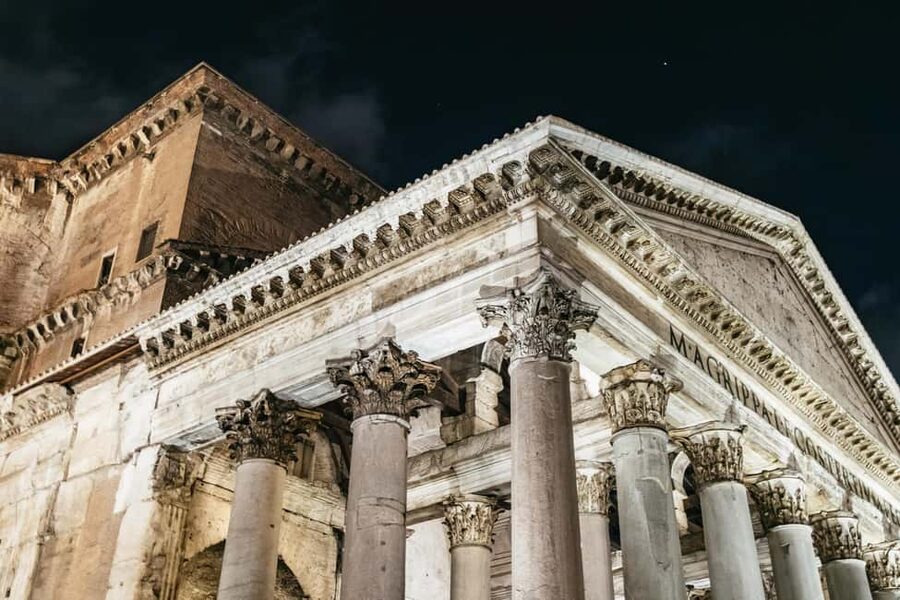
You will pass by the Pantheon rather than enter it. From outside, you can still appreciate the scale of the portico and the building’s long life as a Roman monument. The famous unreinforced concrete dome remains a talking point because its construction still raises questions for modern architects.
This is one of the tour’s limitations for some people. If the Pantheon is high on your list, set aside another time to visit inside. The evening walk gives you historical context and an exterior view, but no admission is included.
The short distance between stops helps keep the tour moving. You get a series of compact explanations rather than one long lecture in a single location. Guides praised for warmth and humor, including Sharon and Dan, appear particularly well suited to this format, where facts need to stay clear and lively.
Sant’Ignazio and Galleria Sciarra add texture
The route includes a guided stop at the Church of Sant’Ignazio di Loyola. The supplied tour details do not promise entry into every stop, so check the exact arrangement when booking, but the church is included as a place where the guide can add more context to the city’s religious and artistic past.
This is useful because Rome is not only ancient ruins and grand fountains. Churches, courtyards, façades, and side streets often reveal how later periods built over the older city. A guide can point out details you might otherwise walk past while heading toward Trevi Fountain.
You also visit Galleria Sciarra. This is one of the route’s less obvious points, and it helps break up the better-known landmarks. The walk uses back streets and shorter routes, which gives you a taste of central Rome away from the main postcard stops.
Do not expect a long independent visit at either place. The tour lasts only two hours and includes many locations. These shorter pauses work best as carefully chosen samples rather than full sightseeing sessions.
More City Highlights Walks in Rome:
- Berlin City walk Government District and Places of Democracy
★ 4.7 · 8,467 reviews - Historic Charleston Guided Sightseeing Walking Tour
★ 5.0 · 6,216 reviews - Quebec City Walking Tour
★ 5.0 · 4,716 reviews - Oxford: University and City Walking Tour with Alumni Guide
★ 4.7 · 4,429 reviews
Trevi Fountain is the evening centerpiece
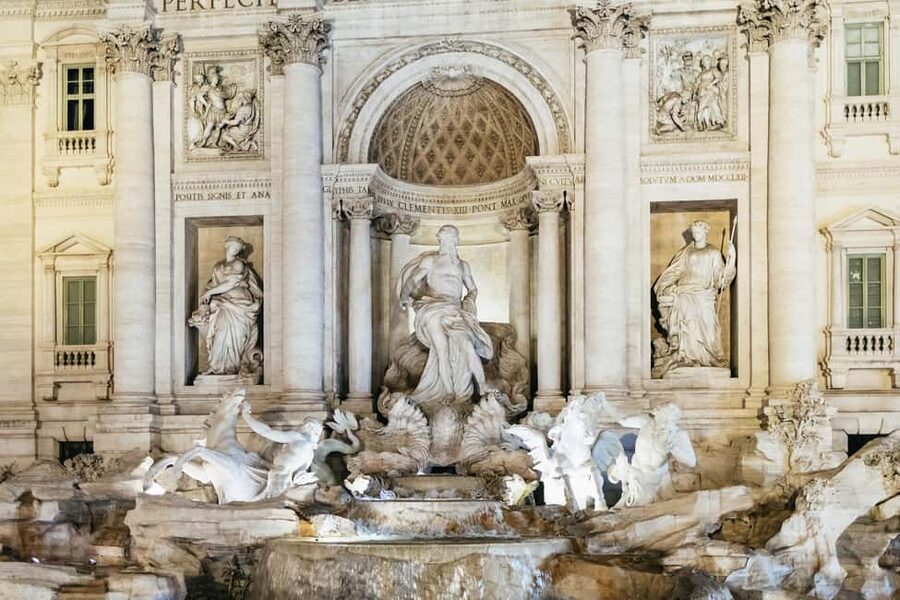
Trevi Fountain is the emotional high point for many people on this route. By visiting at night, you have a better chance of seeing the fountain without the full daytime crush. It can still be crowded, especially in a city as popular as Rome, but the evening setting makes the experience more comfortable.
Your guide explains the fountain’s symbols and helps you read the monument rather than treating it as a quick photo stop. You also get the familiar chance to toss a coin over your shoulder, a custom linked with returning to Rome.
This is where the timing matters most. In daylight, the fountain can feel like a traffic jam with water in the middle. After dark, the illuminated sculpture and moving water create a more theatrical scene. You have a better chance to pause, listen, and take photographs without feeling rushed by the midday flow.
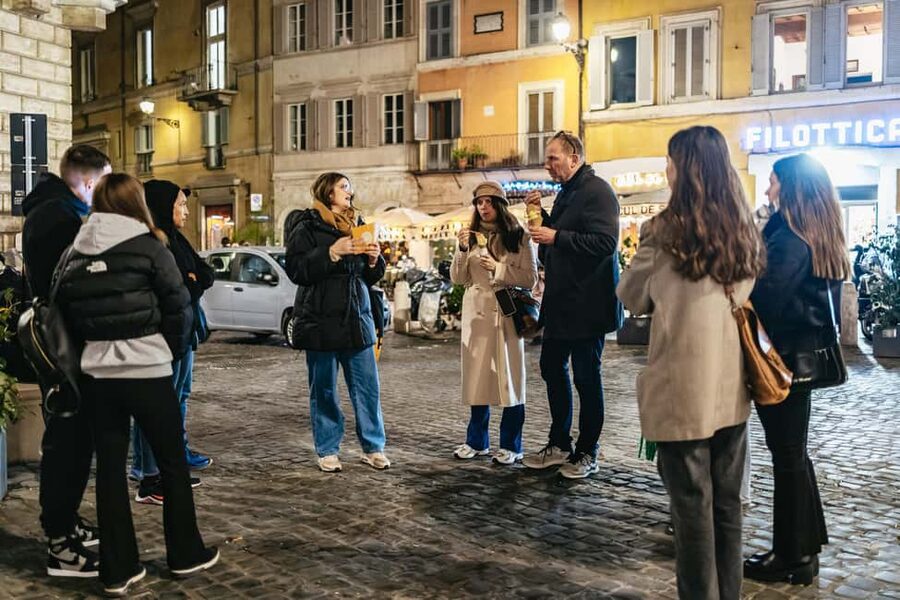
One practical point: the tour does not include food or drinks, but the route passes through an area where you may want to stop for gelato or dinner afterward. One guide, Dan, has been praised for offering restaurant advice, including suggestions on where to eat and where to avoid. Treat that sort of local guidance as a useful extra, not a formal part of the tour.
Piazza Venezia shows Rome’s layers
From Trevi Fountain, the group winds through central streets toward Piazza Venezia. This part of the walk is valuable because you see how Rome’s grand public spaces connect through ordinary-looking lanes and busy crossings.
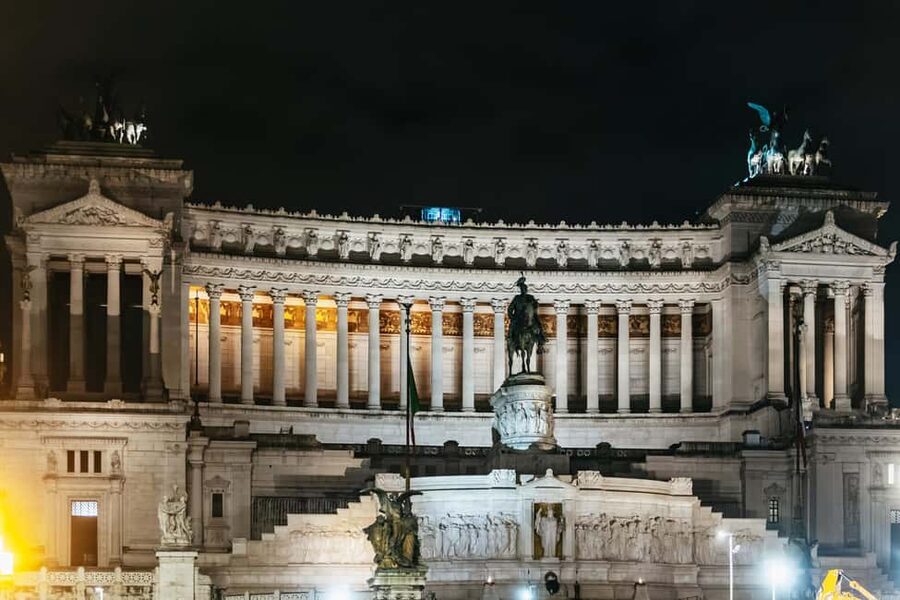
At Piazza Venezia, the guide discusses the area from the foot of Capitoline Hill to the Altar of the Fatherland. The square can feel imposing, with large monuments and heavy traffic nearby. A guide helps you sort out the political and historical meaning of the buildings instead of reducing the stop to a quick photograph.
This section also gives you a sense of Rome’s changing identity. Ancient foundations, Renaissance planning, and modern national symbolism all meet in a relatively small area. The city’s story is not tidy, and that is exactly why an explanation helps.
The square may be busy, and urban noise can compete with the guide’s voice. Stay close and listen carefully. The small-group format is helpful here, but no walking tour can remove traffic or crowds from such a central location.
Trajan’s Column and the imperial forums
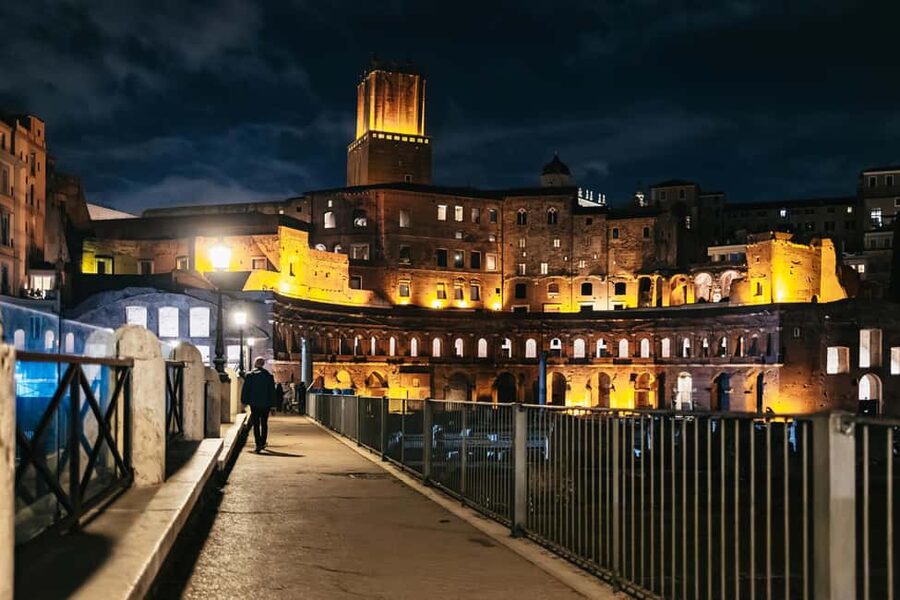
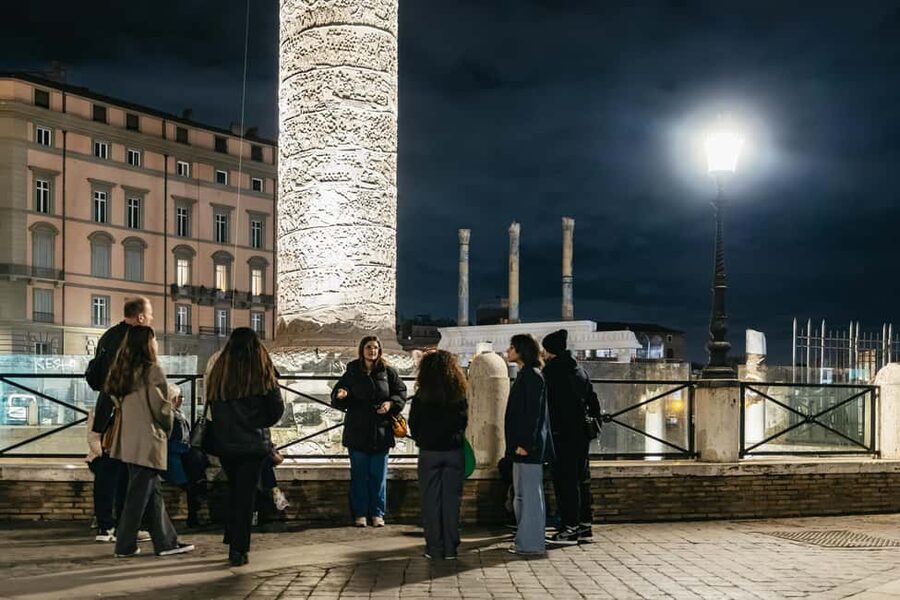
The route then heads along Via dei Fori Imperiali, the broad boulevard cutting through the ancient center. You pass Trajan’s Column and continue alongside the forums of Trajan, Augustus, and Nerva.
You do not enter the archaeological sites. Instead, you see the ruins from the street while your guide explains the role of the forums in ancient Rome and the reach of the Roman Empire. This is a smart use of a night walk because the ruins are illuminated and easier to appreciate as part of the city rather than as a list of broken stones.
Trajan’s Column is especially suited to guided viewing. Its carved spiral tells a military story, but you need help from the pavement to understand what you are seeing high above you. A guide can give you the basic context, point out the major features, and explain why the column still matters.
This is also the section where walking fatigue may show. By now, you have crossed several piazzas and streets. The route is leisurely in pace, but not short in distance. If you have mobility concerns or simply dislike long walks, ask for the exact route details before booking.
The Colosseum makes a strong finish
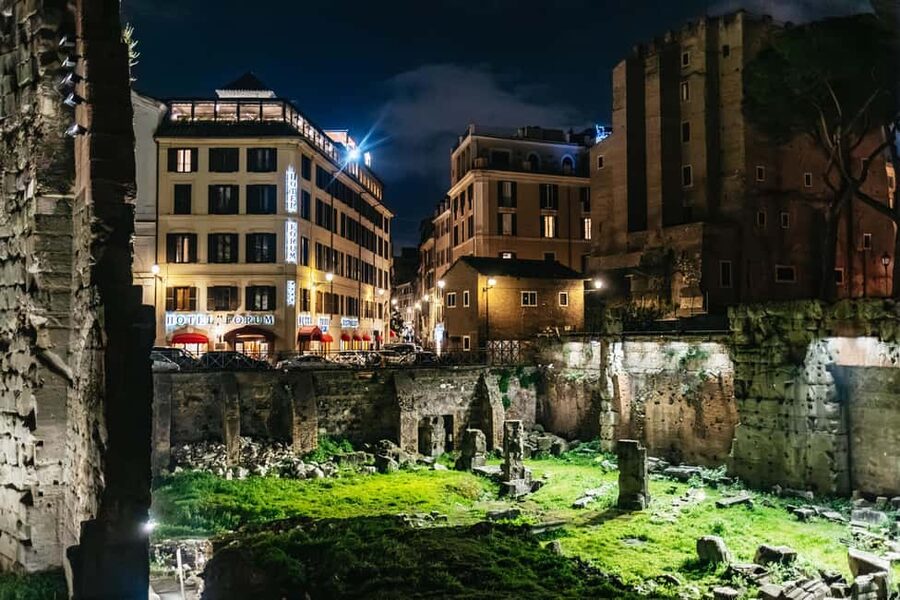
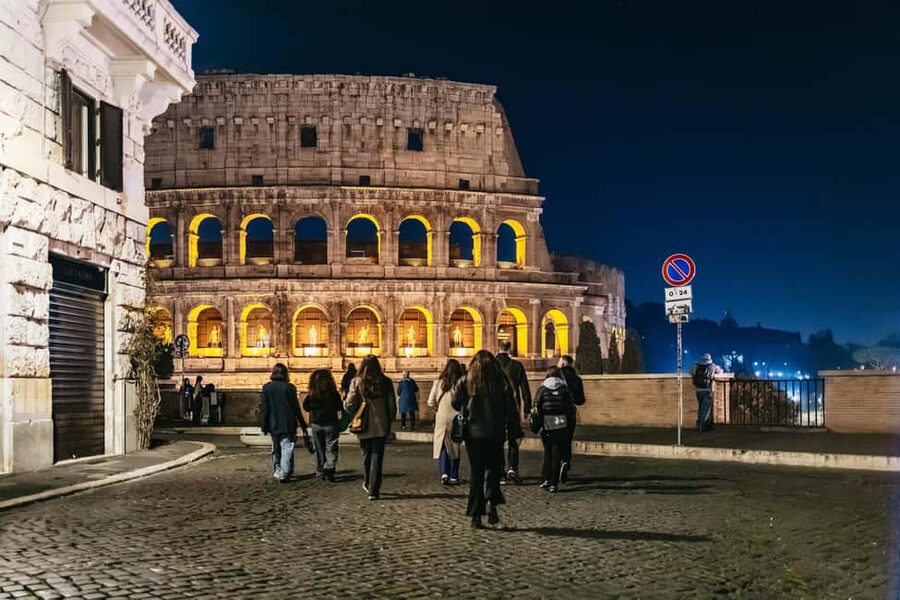
The walk concludes near the Colosseum, usually around Piazza del Colosseo or the Colosseum itself. Seeing the amphitheater illuminated at night gives the tour a memorable final image.
The ending works because it brings together the themes introduced earlier: imperial power, engineering, public entertainment, and the many layers of Rome. You finish outside the monument, not inside it, so you will need a separate daytime visit if you want to explore the arena and archaeological areas.
The final location can vary. Some options list Piazza Navona as a drop-off point, while others finish at Piazza del Colosseo or the Colosseum. Confirm your chosen option so you know where you will be after the walk and can plan dinner or transport accordingly.
There is also a practical warning here. One tour had to stop before the intended Colosseum ending because the route was closed. That is not a reason to avoid the experience, but it is a reminder that Rome’s streets can change without warning. A flexible guide may adjust the route, yet the advertised finish is not an absolute guarantee.
What the guides add
The strongest part of this experience is the human element. Guides named in the tour feedback include Sharon, Dan, Mary, Kasia, Pablo, Sila, Tsion, Elena, Alina, Victoria, Paulina, Csenge, Michaela, Zee, and Domenica.
The repeated praise focuses on clear explanations, enthusiasm, humor, and the ability to answer questions. Sharon is often singled out for combining personal experience of Rome with a lively account of its history. Dan is praised for enthusiasm and practical restaurant advice, while Kasia is described as easy to follow and good at keeping the group together in crowded places.
Pablo’s relaxed approach suits people who dislike formal lectures. Sila is described as passionate and thorough, and Mary receives praise for making local history easy to understand. These comments point to a consistent strength: the guides aim to tell stories rather than simply recite dates.
Your exact guide will depend on the departure and availability. That means the tone can vary from one evening to another. Still, the overall format clearly depends on guides who can make a large subject manageable in a short time.
Group size, language, and walking comfort
The experience is offered for private groups or small groups. A small group generally makes it easier to hear the guide, ask questions, and keep moving through narrow streets. A private option may suit families or friends who want the pace and conversation to feel more personal.
English and Spanish are available. Choose carefully when booking because the language affects how much you can take from the explanations.
Wear comfortable shoes and clothes. This is not a bus tour with frequent seats, and the route includes several squares, streets, and archaeological views. The pace is described as leisurely, but leisurely does not mean effortless.
Nighttime also brings practical variables. Temperatures can drop, and stone streets can be tiring after a full day of sightseeing. A light layer and shoes with good support will make the experience much more pleasant.
Free cancellation is available up to 24 hours before the start for a full refund, and you can reserve now while paying later. Those policies are useful if your Rome plans are still shifting, but the key decision remains whether you want a walking introduction rather than interior sightseeing.
Who will get the most from this tour
I would choose this tour for a first evening in Rome, particularly if you want a broad sense of the center before planning the rest of your visit. It also suits anyone who has already seen Rome by day and wants to view the same monuments under evening lights.
Families can benefit from the short stops and changing scenery, provided everyone is comfortable walking for two hours. History lovers will enjoy the explanations of Roman emperors, forums, monuments, and later rulers, but they should pair the walk with museum or monument visits.
The tour is less suitable if you want deep time inside one attraction. You will not enter the Colosseum or Pantheon, and the stops at several sites are necessarily brief. It is also not ideal for anyone who wants a completely quiet evening, since Rome remains active after dark.
Should you book the Rome Moonlight Walking Tour?
Book it if you want a low-cost, guided introduction to Rome’s center with the added appeal of evening light and fewer daytime crowds. At $29, the route covers a lot, and the best guides turn familiar sights into a connected story rather than a string of photographs.
Skip it if you prefer to explore at your own pace, need frequent rests, or mainly want interior access to the Pantheon and Colosseum. For most first-time visitors who can walk comfortably, I think the combination of Trevi Fountain at night, the imperial forums, and the illuminated Colosseum makes this a sensible addition to a Rome trip.
FAQ
How long does the Rome Moonlight Walking Tour last?
The tour lasts two hours.
How much does the tour cost?
The listed price is $29 per person.
Which languages are available?
The tour is available in English and Spanish.
Is this a private tour or a group tour?
Private and small-group options are available.
Does the tour include entry to the Colosseum?
No. Entry to the Colosseum and other attractions is not included.
Does the tour include entry to the Pantheon?
No attraction entry is included. The Pantheon is a pass-by stop on the route.
Where does the tour start?
The meeting point may vary by booking option. Listed starting points include Piazza d’Aracoeli and Piazza di Pasquino, with Piazza Navona as the first main stop.
Where does the tour finish?
Listed drop-off locations include Piazza del Colosseo, the Colosseum, and Piazza Navona. The exact ending depends on the option booked.
What should I bring?
Bring comfortable shoes and comfortable clothing.
Can I cancel for a refund?
Yes. You can cancel up to 24 hours in advance for a full refund.
Just added around Rome
- Dark Heart of Rome – Facts, Legend & Mystery Walking Tour★ 4.5 · 329 reviews
- Alternative Walking Tour of Rome’s City Center & Hidden Gems★ 4.8 · 244 reviews
- Rome: Colosseum, Palatine Hill, & Roman Forum Walking Tour★ 4.7 · 423 reviews
- Rome: Haunted City Night Walking Tour★ 4.9 · 616 reviews
- Rome Walking Tour with Piazza Navona, Trevi Fountain and Pantheon★ 4.5 · 676 reviews
- Rome: Guided Small Group Walking Tour of City Highlights★ 5.0 · 682 reviews
- Rome: Forbidden History Walking Tour & Pub Crawl with Drinks★ 4.9 · 688 reviews
- Best of Rome Walking Tour including Trevi Fountain★ 4.5 · 923 reviews
City Highlights Walking Tours, compared.

Berlin City walk Government District and Places of Democracy
Read our review →
Historic Charleston Guided Sightseeing Walking Tour
Read our review →

Oxford: University and City Walking Tour with Alumni Guide
Read our review →
City Highlights Temple and Market Walking Tour
Read our review →
A History of Terror – Belfast City Centre Walking Tour
Read our review →Browse the lists this tour appears in