
REVIEW · QUEBEC CITY
Quebec City: Old Quebec Historical Walking Tour
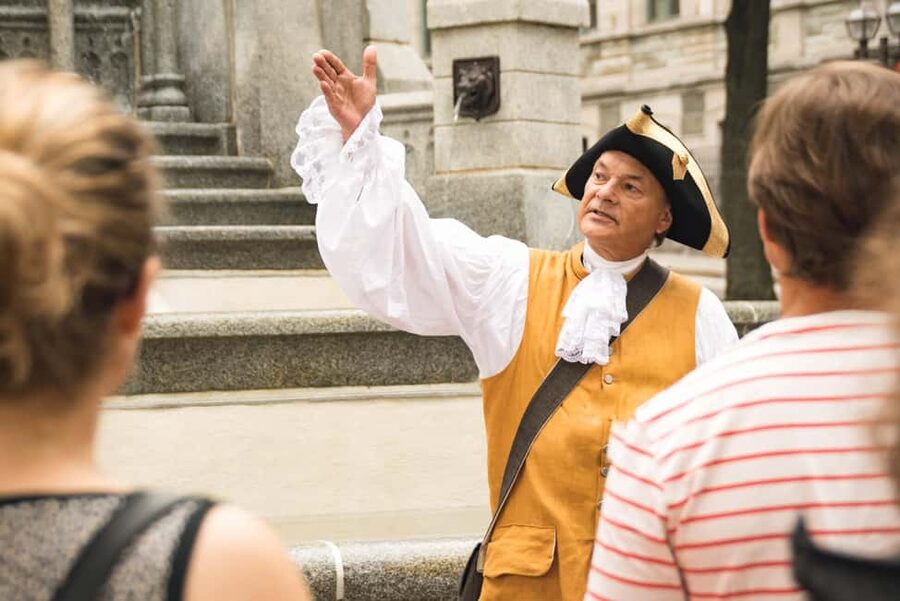
Old Quebec comes alive when a costumed guide turns its streets into a moving history lesson. Instead of simply pointing at stone buildings, guides such as Pierre, Sylvain, Bernard, Alex, and Marie-Anne Barbel connect the city’s French beginnings, religious past, Indigenous context, and modern identity.
I like the in-character storytelling and the way the route reaches beyond the obvious postcard stops. I also like the sensible pace and the guide’s willingness to adapt, though two hours can feel short, and the hills and stairs may challenge some walkers.
Key points to know
- Costumed storytelling: Your guide adopts a historical character, such as Champlain, Louis Hébert, or Marie-Anne Barbel, and uses that role to make events easier to follow.
- Major Old Quebec sights: The route takes in Place Royale, Château Frontenac, Dufferin Terrace, and the Basilica of Notre-Dame de Québec.
- More than dates and battles: Expect political, religious, Indigenous, settlement, and everyday-life context.
- Moderate walking with slopes: The pace is generally manageable, but Old Quebec has hills, stairs, and uneven streets.
- Good value at $24: For two hours with a licensed guide, this is a useful first look at the city, especially if you are new to Quebec.
- English or French: Small-group availability can make it easier to ask questions and hear the guide.
Why a costumed guide changes Old Quebec
Old Quebec is easy to admire and surprisingly easy to misunderstand. The stone walls, narrow streets, and grand monuments look self-explanatory, but the city’s story is layered. French settlement, religious power, military conflict, British rule, Indigenous presence, and modern Canadian life all meet within a compact area.
This tour gives those layers a human voice. Your guide may appear as a settler, soldier, founder, or other figure from the colonial period. Alex, for instance, portrayed Louis Hébert and used the story of early farming to explain how the colony took root. Another guide appeared as Champlain, while Marie-Anne Barbel was praised for combining facts with stories and anecdotes.
That approach works best when you want more than a list of dates. A guide in period clothing can make the past easier to picture, but the stronger part is the narrative. Good guides explain not only what happened, but also how one decision led to another.
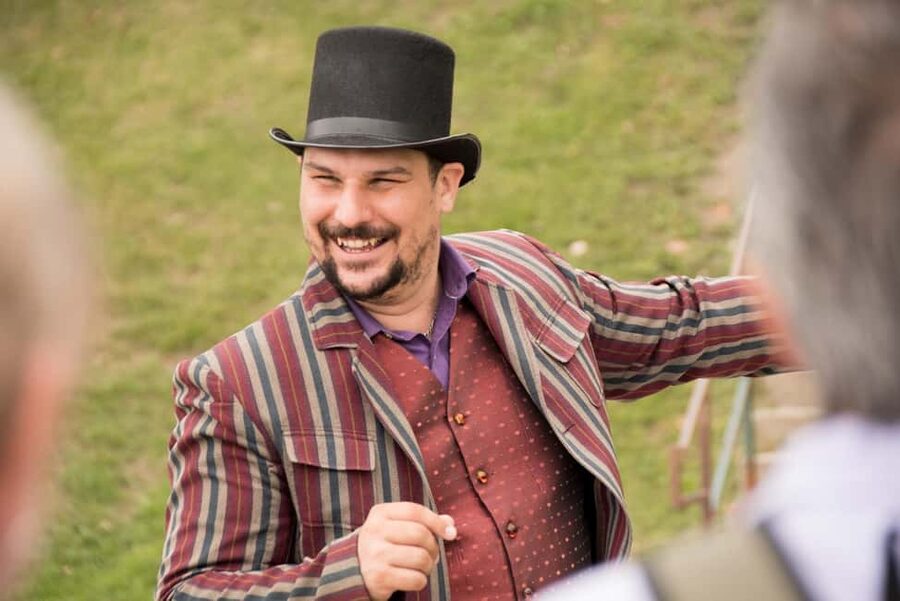
The style is theatrical without needing to become a full stage show. Several guides, including Jean-Claude, Gary, Charles, and Guillemette, were described as animated, funny, and easy to follow without going over the top. That balance matters. Too little energy would make two hours feel like a lecture. Too much would turn serious history into a costume routine.
More History Walking Tours in Canada
- Gastown Historic Walking Food Tour
★ 5.0 · 1,863 reviews - Vancouver: Gastown Historical Walking Food Tour
★ 4.8 · 539 reviews - Pete’s Historic Walking Tour
★ 5.0 · 321 reviews
Starting at Sainte-Anne Street
Check in at the Cicerone Information Centre at 12 Sainte-Anne Street, postal code G1R 3X2. The exact meeting point can vary by booking option, so check your confirmation carefully before setting out. One past booking had an incorrect address, which caused a frustrating extra walk, so this is one detail worth verifying.
Sainte-Anne Street puts you right in the heart of Old Quebec. From here, the guide can move quickly into the city’s architectural and political story. You are not spending the first part of the tour on transportation or a long transfer.
Expect the guide to establish the main phases of Quebec City’s past early in the walk. One guide divided the story into three broad periods, which helped the group keep track of changing powers and priorities. This kind of framework is useful because 400 years of history can otherwise blur into a parade of names.
The tour is conducted in English or French. If you have a question, ask it early. Guides are encouraged to respond to the group, and past tours have included answers to both planned questions and side interests.
Place Royale and the beginnings of French Quebec
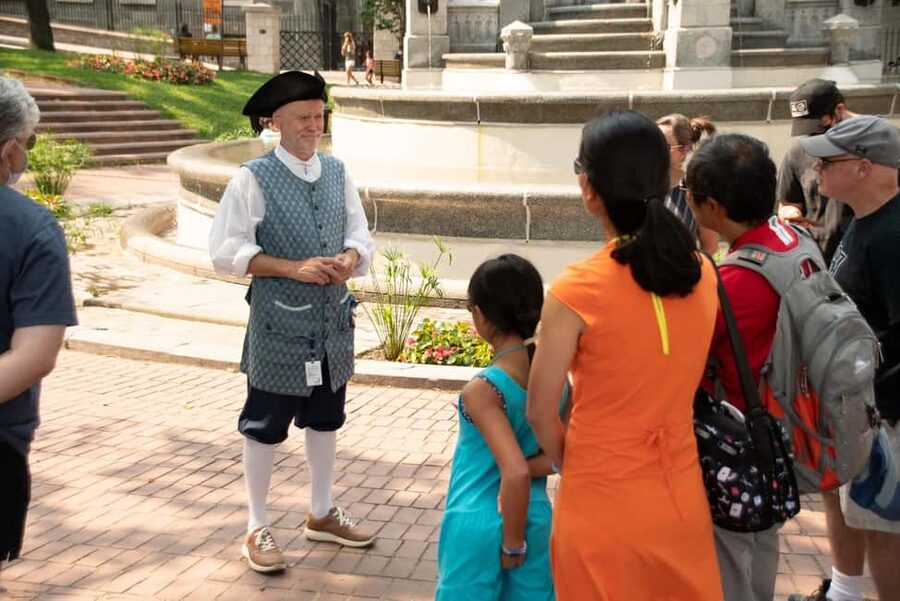
Place Royale is one of the most important stops because it is treated as the cradle of French civilization in North America. It gives the tour a clear starting point for discussing French settlement and the growth of the city.
Here, the value of a guide is easy to see. You can look at an attractive square and admire the old façades, but the guide explains why this place matters. Stories about farmers, settlers, commerce, and daily life give the square a human scale.
The tour also places Quebec’s French identity in a wider setting. Guides have discussed the city through political, religious, Indigenous, and current Canadian perspectives. That broader approach is better than a simple celebration of colonial founders because it acknowledges that Quebec’s story includes more than one point of view.
Do not expect a long museum stop or a detailed examination of every building. This is a moving overview. The goal is to help you understand the city’s shape and significance, then return later to the places that catch your interest.
Notre-Dame de Québec and the role of religion
The Basilica of Notre-Dame de Québec adds the religious chapter to the walk. Its exterior architecture and setting help explain how important the Catholic Church was to Quebec’s development.
The guide’s job here is not simply to identify the basilica. You get context about the institutions that shaped education, community life, and public power. One guide was praised for presenting Quebec through religious, Indigenous, and modern viewpoints, which is exactly the kind of framing that makes a short city tour worthwhile.
The information remains outside-focused in the route as described. If you are hoping for a detailed interior visit, confirm what your chosen option includes before booking. The tour’s strength is the street-level story, not an extended church tour.
This stop also gives you a change of pace. After walking through streets and squares, the basilica provides a strong visual marker and a chance to connect architecture with social history.
Same streets, a different route:
- Quebec City Walking Tour
★ 5.0 · 4,716 reviews - Old Quebec City: Grand Walking Tour with Private Option
★ 4.8 · 2,609 reviews - Montreal Mile End Authentic Food Tour with 7 Delicacies Tastings
★ 5.0 · 2,598 reviews - The Original Old Montréal Walking Tour by Guidatour
★ 4.5 · 2,217 reviews
Château Frontenac and Dufferin Terrace
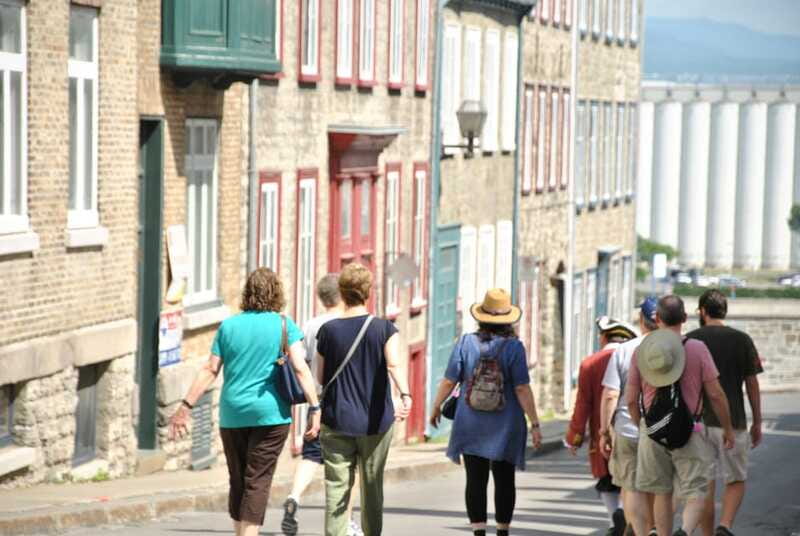
Château Frontenac is the city’s most recognizable building, and the route includes the hotel’s impressive exterior architecture. Its position above the city makes it an ideal place to discuss Quebec’s public image and the grand buildings that came to define it.
The information provided for this experience also refers to access to exclusive areas of the Château Frontenac. Since the precise areas and access conditions can depend on the option booked, check the details before you assume this means a full hotel tour. At minimum, you should expect a close look at this landmark and its role in the city’s visual identity.
Dufferin Terrace offers another important part of the setting. It is a broad viewpoint beside the château, and it helps you understand how upper and lower Quebec relate to one another. The boardwalk and views are a natural highlight, although some people may wish the tour spent more time there.
That is a fair limitation. Two hours must cover several major sites, and a guide who pauses for every view will have less time for the city’s side streets. If you want photographs or a leisurely look at the terrace, return after the tour.
Going beyond the postcard route
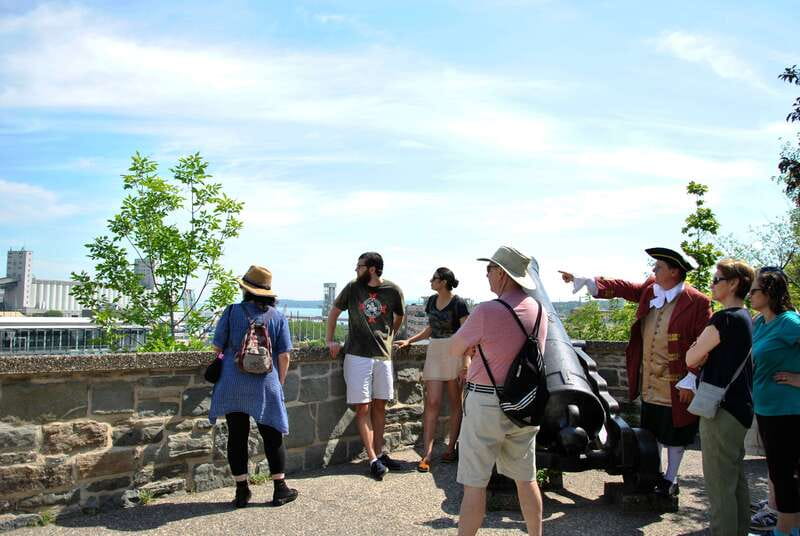
The best reason to book this walk is the promise of seeing corners you might miss on your own. The guide may lead you away from the busiest streets and show you places that do not appear on a standard sightseeing checklist.
That does not mean the tour ignores the famous landmarks. It combines the major sights with smaller streets and less obvious details. One guide showed the group places they would not have found alone, while another adapted the route to avoid unnecessary stairs.
This balance suits a first visit. You get your bearings, learn why the old city matters, and collect ideas for a second walk later. You may also notice details you had already passed without understanding.
The phrase off the beaten path should be taken in a modest sense. Old Quebec is compact and heavily visited, so this is not a wilderness-style discovery. The benefit is having someone direct your attention to overlooked history within the old city.
Pace, hills, and physical effort
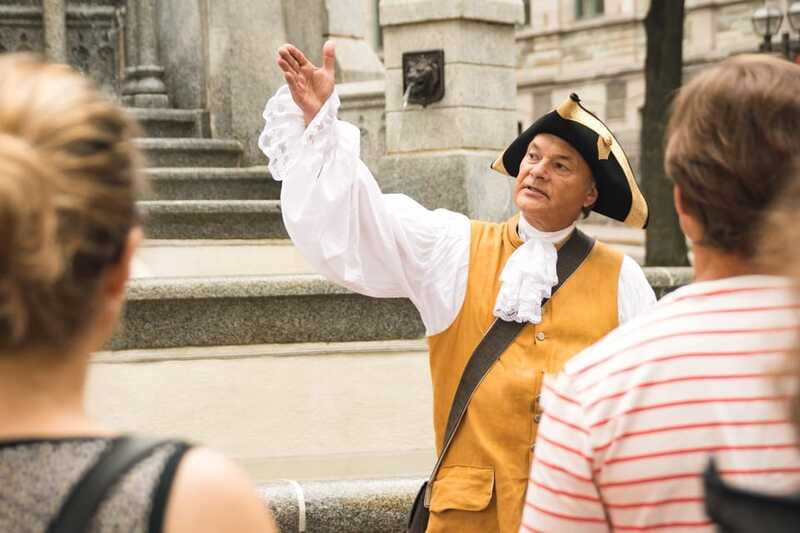
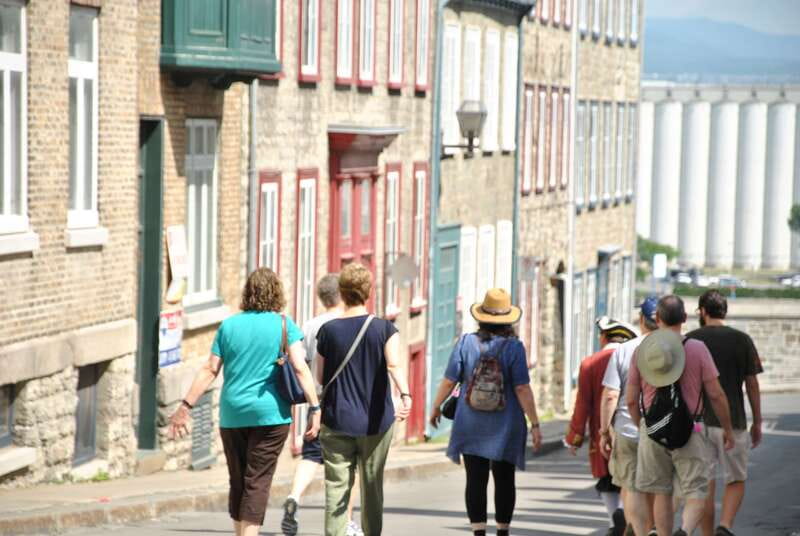
The walk covers a fair amount of ground, but the pace is generally described as comfortable rather than hurried. A guide may adjust the route to suit the people in the group, including choosing sloping roads instead of flights of stairs.
Still, you are walking through an old city built on uneven ground. There are hills, slopes, and stairs, and the final part may feel harder than the opening section. Comfortable shoes are essential. Wear clothing suited to the weather, since this is an outdoor walking tour.
The experience is not suitable for wheelchair users. If you have limited mobility, ask the operator for current route details before paying, since the old city’s terrain can make access difficult even when the guide tries to reduce the number of stairs.
The two-hour length is both a strength and a limit. It is short enough to fit into a busy day, but long enough to give you a real introduction. Several people wished for more time, especially for rest stops, tea, souvenirs, or more of the Château Frontenac and boardwalk.
If you are nearing 80, have trouble with hills, or dislike standing and walking for two hours, plan carefully. The route can be manageable, but it is not a seated sightseeing experience.
The guides are the main attraction
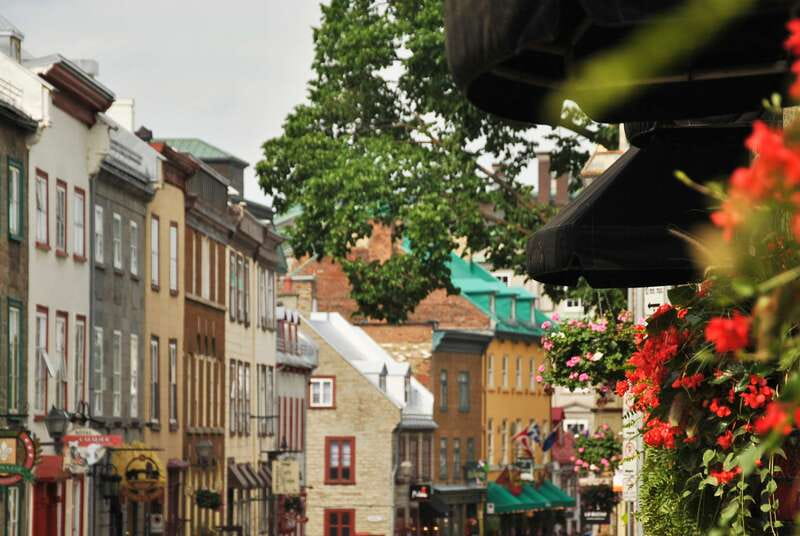
The experience depends heavily on the individual guide. That is normal for any walking tour, but especially true here because the format relies on personality and storytelling.
Pierre has been praised for listening carefully and tying facts to the people in his group. Sylvain was noted for keeping a good pace, while Bernard combined strong historical knowledge with humor. Gary told the story in a way that was easy to follow, and Charles impressed people with detailed explanations and thoughtful answers.
Marie-Anne Barbel was remembered for her range, friendly manner, and command of several languages. Jean-Claude received praise for being animated without becoming hammy. These descriptions point to a useful pattern: the best guides make room for questions while keeping the story moving.
A good guide will not simply recite a speech. The tour can change slightly according to the group’s interests, weather, mobility, and questions. That personal touch is one reason a small group is worth choosing if the price difference is reasonable.
You should also allow for variations in character and presentation. The historical role, costume, route emphasis, and storytelling style may differ from one departure to another. The common thread is the period-costume format and the 400-year overview.
Is $24 a fair price?
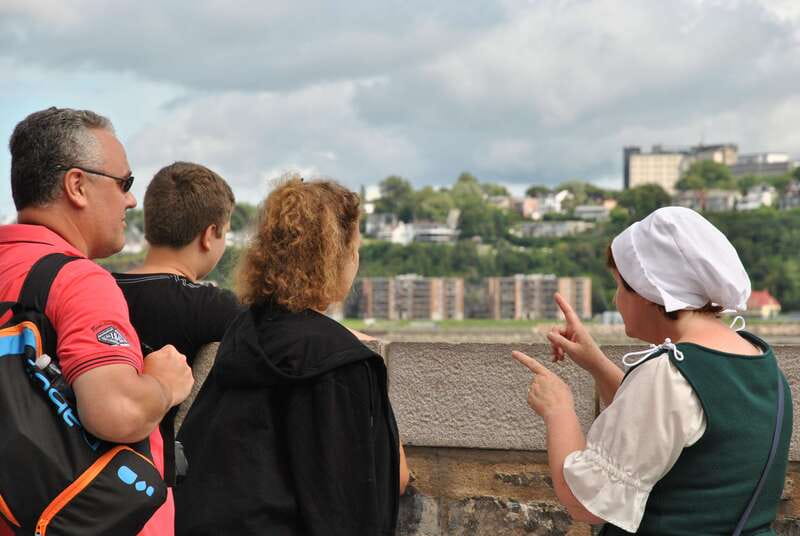
At $24 per person, this is a strong value if you are visiting Quebec City for the first time. You receive two hours with a licensed guide, in English or French, and the route covers several of the city’s most important places.
The price is especially fair if you would otherwise spend the first half-day wandering without context. A self-guided walk costs less, but it also requires research and does not answer questions on the spot. Here, the guide helps you understand what you are seeing and points out places worth revisiting.
The value is less clear if you already know Old Quebec well or prefer to move at your own pace. You will be following a set route and spending time with the group. You may also want more time at the château, terrace, basilica, or Place Royale than the schedule allows.
Gratuity is not included. Bring comfortable shoes, dress for the weather, and arrive at the correct check-in point. The tour offers free cancellation up to 24 hours in advance and a reserve-now, pay-later option, which helps if your plans are still shifting.
Who should book this walk?
I would choose this tour for a first visit, a short stay, or the opening morning of a longer Quebec City trip. It gives you the basic map, the main landmarks, and enough historical background to make later independent walks more rewarding.
It also suits families and mixed-age groups when everyone can manage hills and stairs. The humor and character work can hold attention better than a dry lecture, while the guide’s answers let adults pursue more serious questions.
History-minded visitors will appreciate the political and settlement stories, but you do not need prior knowledge. The explanations are designed to make the city understandable as you walk.
I would think twice if you want a slow architectural study, a full interior visit to the Château Frontenac, or a tour built around long breaks. I would also look for another option if accessibility is a major concern.
Final verdict: a smart first walk in Quebec City
Book the Old Quebec Historical Walking Tour if you want a lively orientation with real historical substance. The cost is modest, the route includes the city’s essential landmarks, and the period-costume format gives the past a memorable human voice.
The main tradeoff is time. Two hours is enough for a strong introduction, not enough for every view, building, and story. Treat it as your foundation, then return to Dufferin Terrace, Place Royale, the basilica, or the Château Frontenac on your own.
For most first-time visitors who can handle Old Quebec’s slopes, this is an easy recommendation. You will leave with a clearer sense of where you are, what you are looking at, and why this compact walled city matters.
FAQ
How long is the Old Quebec Historical Walking Tour?
The tour lasts two hours.
How much does the tour cost?
The listed price is $24 per person.
Which languages are available?
The tour is offered in English and French.
Where do I check in?
Check in at the Cicerone Information Centre at 12 Sainte-Anne Street, G1R 3X2. The meeting point may vary by booking option, so check your booking details.
Which Old Quebec sights are included?
The route includes Place Royale, Château Frontenac, Dufferin Terrace, and the Basilica of Notre-Dame de Québec, along with other streets and historical places in Old Quebec.
Is the tour suitable for wheelchair users?
No. The tour is not suitable for wheelchair users. The route may also include hills, stairs, and uneven streets.
Can I cancel for a refund?
Yes. You can cancel up to 24 hours in advance for a full refund. A reserve-now, pay-later option is also available.
Just added around Canada
- Prince Edward Island: Small Group Charlottetown Walking Tour★ 4.4 · 147 reviews
- Calgary: City Highlights Walking Tour | 3-Hour★ 4.6 · 271 reviews
- Calgary Downtown: 2-Hour Introductory Walking Tour★ 4.6 · 216 reviews
- Banff: Guided Sunset and Stargazing Tour★ 4.9 · 262 reviews
- Old Town Toronto Highlights 3 Hour Walking Tour | Gratuity-Based★ 4.5 · 290 reviews
- Toronto: City Highlights Walking Tour | 3-Hour★ 4.6 · 306 reviews
- Toronto Distillery District Walking Tour★ 5.0 · 327 reviews
- Vancouver: Gastown Historical Walking Food Tour★ 4.8 · 539 reviews
History Walking Tours, compared.


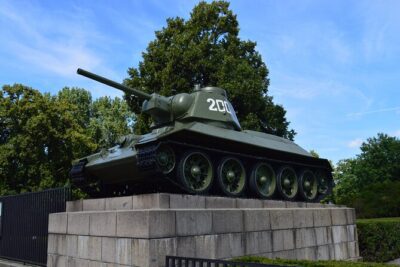
Berlin’s Best: 2 Hour Walking Tour Third Reich and the Cold War
Read our review →
Third Reich Berlin: Hitler and WWII Walking Tour
Read our review →
New Orleans Garden District History Walking Tour
Read our review →
Cartagena: Historic Center and Getsemaní Shared Walking Tour
Read our review →
Imperial Palace and Shogun Historical Walking Tour
Read our review →Browse the lists this tour appears in