
REVIEW · NUREMBERG
Nuremberg: Free Walking Tour
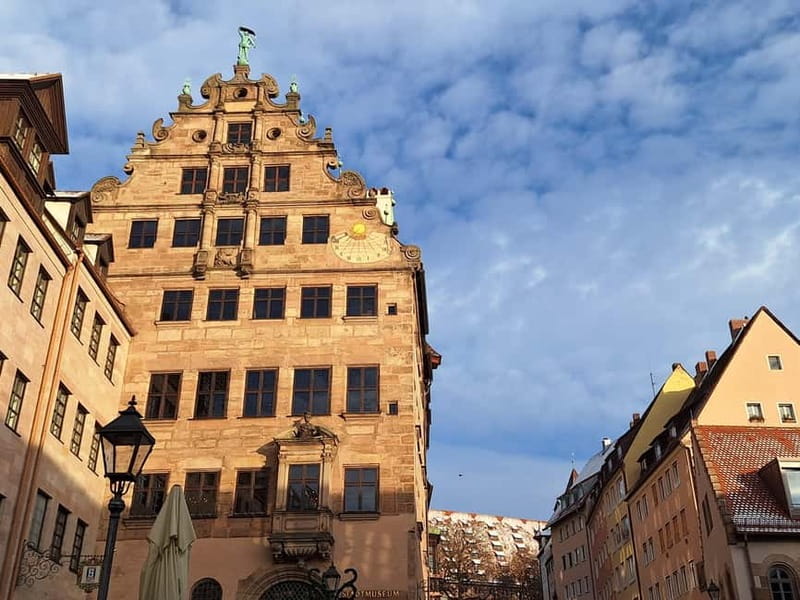
Nuremberg’s old town gives you a lot in a short walk: a medieval market square, grand churches, a hilltop castle, half-timbered houses, and places tied to the city’s Nazi-era past. This tour connects those sights instead of treating them as isolated photo stops. The local viewpoint is especially useful, since guide Andreas was born and raised here and draws on family connections to the city.
I like the way the tour handles two very different subjects: Nuremberg’s medieval golden age and its difficult 20th-century legacy. I also like the practical food advice, including where to find local specialties, bakeries, coffee, beer, and bars. The main consideration is that this is an outdoor walking tour with no entry to the courthouse or former Nazi rally grounds, so you will need separate time for those major sites.
Key points at a glance
- A local connection: Andreas grew up in Nuremberg, and the tour company was inspired by the city walks he took with his grandfather.
- A clear historical arc: The route moves from medieval Nuremberg through WWII destruction and the city’s effort to face its Nazi-era heritage.
- Eight central stops: See the Schöner Brunnen, Hauptmarkt, St. Sebaldus Church, Old City Hall, Imperial Castle, Dürer’s House, Weissgerbergasse, and Hangman’s Bridge.
- Strong guide presentation: Andreas, Alexandra, Tom, and other guides are praised for humor, clear explanations, energy, and a willingness to answer questions.
- Useful local advice: Expect tips about Nuremberg specialties, bakeries, coffee shops, bars, and places to eat.
- Good value with one important detail: The advertised price is $3.54 per person, but a tip for the guide is not included, so carry cash if you plan to tip.
A smart first walk through Nuremberg
I would use this tour early in a Nuremberg visit. Its roughly 2-hour-15-minute route gives you a working map of the center and shows where the city’s major stories happened. You can then return to the places that deserve more time, such as the castle, Dürer’s House, or the Nazi Documentation Center and former rally grounds.
The route stays within the old town and returns to the Schöner Brunnen, making it easy to continue sightseeing afterward. You walk between stops at an unhurried pace, but the total time is still substantial. Comfortable shoes matter, and you should dress for the forecast. One hot-weather outing included a 35-degree day, so even a mostly shaded route can feel demanding in strong sun.
The group may be small, which helps when you want to ask about food, architecture, or family life in Nuremberg. The exact guide can vary. Andreas, Alexandra, Tom, and Andrew are among the guides connected with the experience, and the strongest praise centers on their friendly delivery, humor, clear English, and ability to explain difficult subjects without making the tour feel heavy from start to finish.
A few more walking tours around Germany worth a look
- Discover Berlin Half-Day Walking Tour
★ 5.0 · 9,624 reviews - Berlin City walk Government District and Places of Democracy
★ 4.7 · 8,467 reviews - Berlin: Third Reich & Cold War Guided Walking Tour
★ 4.9 · 8,378 reviews
Schöner Brunnen and Hauptmarkt: the city opens in public
The meeting point is the Schöner Brunnen, the ornate fountain on Hauptmarkt. Look for the white umbrella with a green symbol. This is a practical meeting spot because it is central, visible, and close to several of the first sights.
Hauptmarkt is more than a square for taking pictures. It helps explain how public life worked in the medieval city and how Nuremberg became an important commercial and political center. Your guide begins setting the timeline here, moving from the city’s late-medieval prosperity toward the darker events of the 20th century.
The square also gives you a first taste of local food culture. Nuremberg is known for its small sausages, and the guide can point you toward places to try typical specialties. You will also get recommendations for local bakeries, coffee shops, bars, and restaurants. That advice can be worth as much as another monument if your stay is short.
St. Sebaldus Church and Old City Hall: medieval power and civic life
The walk continues to St. Sebaldus Church, one of the old town’s major architectural sights. Expect the guide to explain what you are seeing rather than simply identify the building. Churches in this part of Nuremberg help show the money, craft, faith, and civic pride that shaped the medieval center.
At Old City Hall, the story shifts toward local government and public authority. This is a useful contrast with the religious setting of St. Sebaldus. The route is at its best when it uses these buildings to explain how the city functioned, rather than presenting a string of dates.
The guides use photos and stories to make parts of the past easier to picture. Anne, one of the guides praised for the tour, used photographs to illustrate aspects of Nuremberg’s history. That sort of aid is helpful when wartime destruction and reconstruction are discussed, because today’s restored streets can otherwise hide how much of the center was lost.
Imperial Castle: the medieval city from above
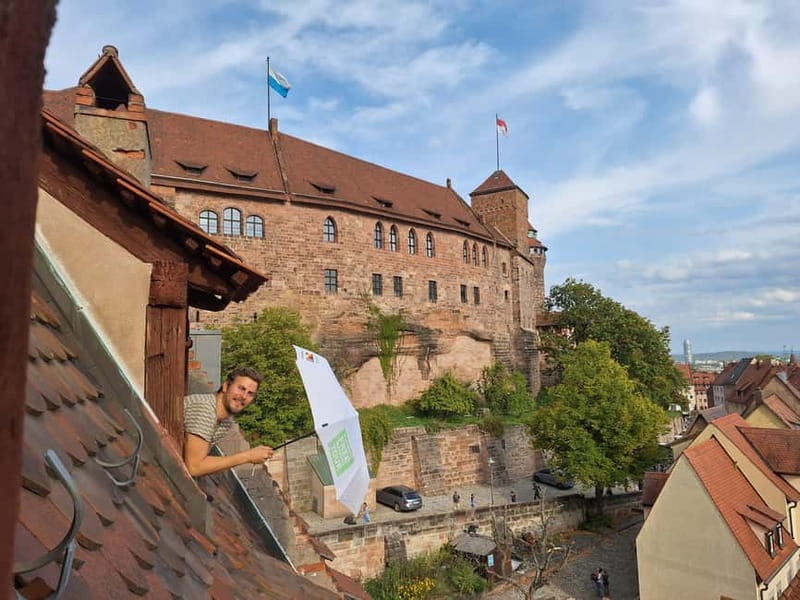
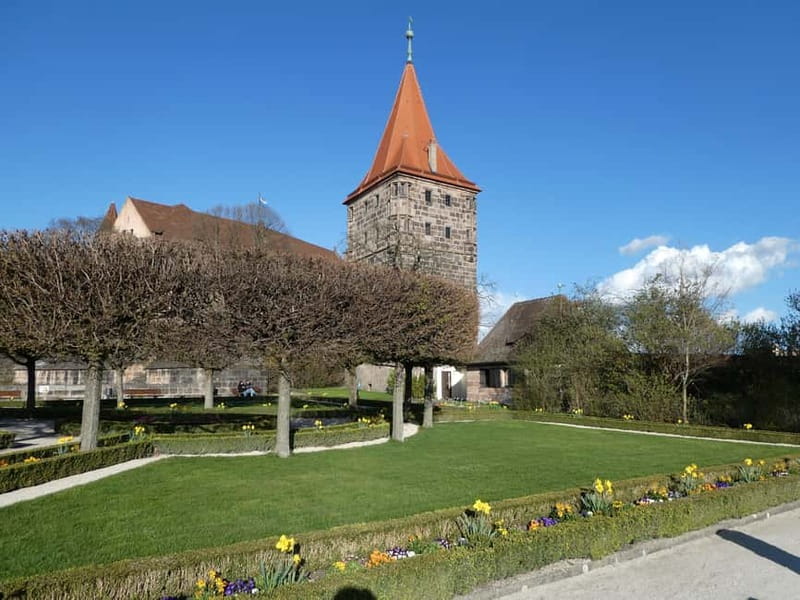
The Imperial Castle is the route’s biggest architectural landmark. Perched above the old town, it gives you a clear sense of Nuremberg’s position and importance. The tour includes a guided stop here, but the supplied details do not include an interior visit, so you should not assume that admission to the castle rooms or tower is part of the experience.
I like the castle stop because it pulls together several threads from the walk. Nuremberg’s medieval importance was not only about pretty streets. The castle points to imperial power, while the market, churches, and town hall show the city’s commercial, religious, and civic sides.
The climb and uneven old-town walking may be tiring for some people, especially in heat. Still, the guide keeps the route moving and pauses for explanations. If you want a detailed visit inside the castle, treat this tour as an introduction and plan a separate visit.
Same streets, a different route:
- Munich: Third Reich & WWII Walking Tour
★ 4.6 · 6,181 reviews - Berlin: Discover Berlin Walking Tour
★ 4.9 · 5,998 reviews - Berlin’s Best: 2 Hour Walking Tour Third Reich and the Cold War
★ 5.0 · 5,486 reviews - Berlin: Hidden Backyards Guided Walking Tour
★ 4.8 · 5,360 reviews
Albrecht Dürer’s House: a personal link to Nuremberg’s art
The route then reaches the house of Albrecht Dürer, one of Germany’s most important artists. You learn about Dürer in the setting where he lived and worked, which gives the artist a stronger connection to the city than a brief museum label can provide.
The stop also broadens the story beyond kings, churches, and war. Nuremberg was a place of art, craft, trade, and ideas. Dürer’s presence helps explain the city’s cultural importance during its late-medieval and early modern high point.
Again, the guided stop does not include entry to the house. If Dürer is a major reason for your visit, set aside extra time to explore inside. For a first orientation, the exterior and the surrounding streets make a useful connection between the city’s architecture and its artistic life.
Weissgerbergasse: half-timbered Nuremberg at its most inviting
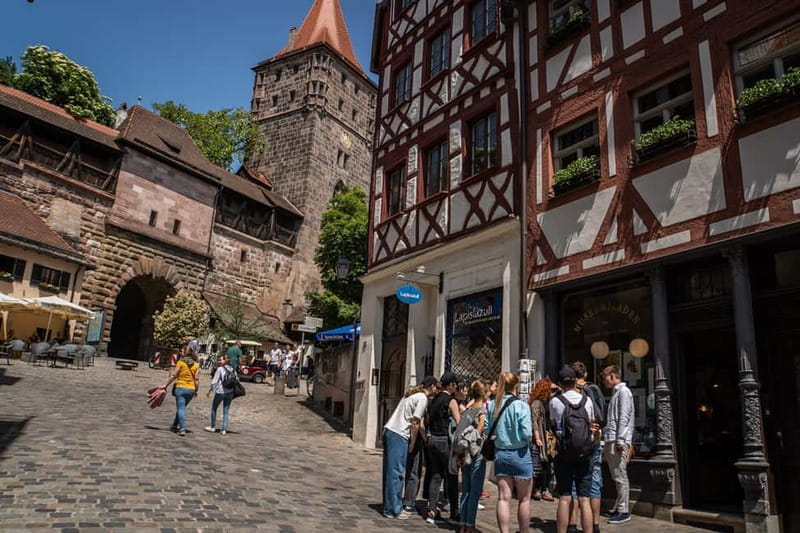
Weissgerbergasse is one of the most attractive parts of the walk. Its half-timbered houses give you the old-town image many people hope to find in Nuremberg, with narrow streets and carefully restored facades.
This is also where the tour shows why a walking guide is useful. You can photograph the houses on your own, but a guide can explain how the street fits into the city’s working past and point out details you might miss. The route does not treat the prettiest street as the whole story. Instead, it places the architecture beside the city’s political, social, and wartime experiences.
Bring a camera, but do not let it take over. The best part of this stop is looking closely while the guide explains what makes the buildings and street pattern significant.
Hangman’s Bridge: one of the tour’s memorable stories
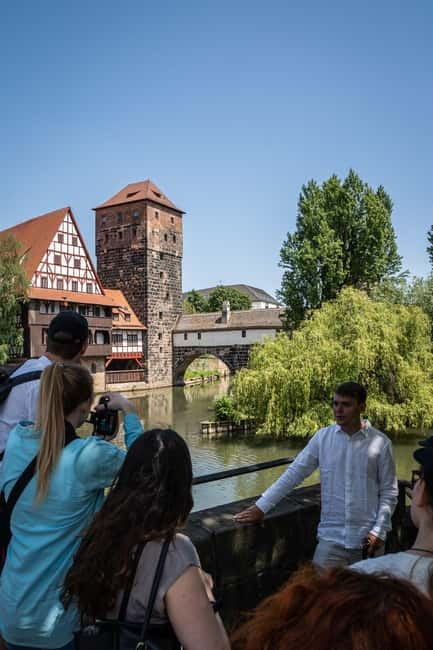
At Hangman’s Bridge, the guide introduces Franz Schmidt, Nuremberg’s historic executioner. The story is a good example of this tour’s approach: start with a familiar-sounding figure, then add the human details that complicate the easy version.
The guide explains why Schmidt was a far more approachable character than you might expect from his job. This kind of story gives you a feel for how medieval and early modern society worked, including the people who lived at its edges and carried out roles that others avoided.
It is also a welcome change of pace after the grander subjects of the castle and churches. The tour mixes architecture with individual stories, food, customs, and local characters. That variety helps keep two hours of historic explanation from becoming a lecture.
Nuremberg after WWII and the Nazi-era legacy
The most serious part of the walk concerns Nuremberg’s role during the Third Reich, the destruction of WWII, and the city’s efforts to deal with that past. This is not a side note. Nuremberg became strongly associated with Nazi rallies and later with the Nuremberg trials, so any useful city tour needs to explain how that legacy fits into the modern city.
The guide discusses the city’s doom during the war and how Nuremberg was rebuilt afterward. This gives you an important visual lesson: many old-town scenes look medieval, but much of what you see is reconstructed. A restored facade can preserve the form of the past while still belonging to a postwar city.
The tour also addresses Nuremberg’s path toward facing the heritage of the Nazi era. The guides are praised for treating difficult subjects with care while keeping their explanations clear and approachable. That balance matters. You get context without having the subject reduced to sensational stories or a list of dates.
The courthouse where the Nuremberg trials took place and the former Nazi rally grounds are not included. Plan separate visits if those subjects are central to your trip. The walking tour gives you a useful framework, but it is not a substitute for the dedicated museums and sites.
What the guides do well
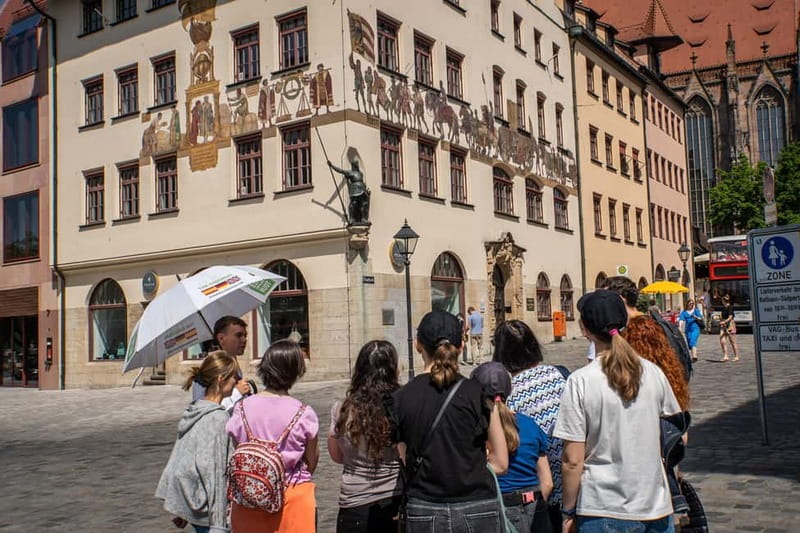
The most consistent strength is presentation. Andreas is described as enthusiastic, personable, and proud of his home city. Alexandra is praised for direct, clear explanations and for making sure people can ask questions. Tom is noted for humor, energy, and the ability to bring the city’s past to life. Andrew is also described as charming and engaging.
The guide can make or break a city walk, especially one covering medieval politics, WWII, food, religion, art, and Nazi-era history in just over two hours. Here, the delivery aims for short explanations, stories, and questions rather than one long speech. Several guides also use humor, which helps keep the pace light when the subject matter turns grim.
English, German, and Spanish are offered. The English is described as clear, including by people who joined on cold days or during short visits. If you have a specific interest, save your question for the stops or the informal question period at the end. The guides are happy to help with plans around Nuremberg.
Price, tipping, and what you actually receive
At $3.54 per person, the advertised price is remarkably low for a guided route lasting about 2 to 2.5 hours. The value comes from the amount of ground covered and the local advice added between the major sights. You get a structured introduction to the old town without paying separate admission fees.
The tour is described as a free walking tour, and a tip for the guide is not included. Carry some cash if you intend to tip. One person specifically wished they had remembered this. The low booking price should not be treated as the final measure of the guide’s work.
You can cancel up to 24 hours in advance for a full refund, and reserve now while paying later. Those terms are useful if your route through Bavaria is still changing. Starting times vary, so check availability for your date.
Who should book this Nuremberg walk?
I would recommend it to first-time visitors, short-stay visitors, and anyone who wants the old town to make sense before exploring alone. It suits people who like architecture but also want food tips, local stories, and an honest explanation of the city’s 20th-century record.
It is particularly useful for visitors who might otherwise see only the pretty medieval center. The tour makes clear that Nuremberg’s story includes prosperity, art, political power, destruction, reconstruction, and the work of facing a painful past.
You may want something else if you prefer long interior visits, museum time, or a tour focused only on the Nazi rally grounds and trials. This experience stays outdoors, covers many subjects, and gives you a broad foundation rather than an exhaustive examination of one period.
Should you book it?
Book this tour if you want a lively first look at Nuremberg with a local voice, strong coverage of the old town, and thoughtful treatment of WWII and the Nazi era. The route is well chosen, the price is low, and the practical food advice helps you use the rest of your visit better.
Wear good shoes, check the weather, bring water, and keep cash available for a tip. If you have time, add separate visits to the courthouse and former rally grounds. For most first visits, this walking tour is a useful and personable way to begin.
FAQ
How long does the Nuremberg Free Walking Tour last?
The tour lasts about 2 to 2.5 hours, with the planned walk taking approximately 2 hours and 15 minutes.
Where does the tour meet?
The meeting point is the Schöner Brunnen in Nuremberg’s Hauptmarkt. Look for the white umbrella with a green symbol.
Where does the tour finish?
The tour returns to the Schöner Brunnen.
Which languages are available?
The tour is offered in English, German, and Spanish.
Which sights are included?
The route includes Hauptmarkt, St. Sebaldus Church, Old City Hall, the Imperial Castle, Albrecht Dürer’s House, Weissgerbergasse, and Hangman’s Bridge.
Are the Nuremberg trials courthouse and former Nazi rally grounds included?
No. The courthouse of the Nuremberg trials and the former Nazi rally grounds are not included in this walking tour.
Is a tip included in the price?
No. A tip for the guide is not included. Carry cash if you plan to tip at the end.
What should I bring?
Wear comfortable walking shoes, dress for the weather, bring water, and carry a camera if you want to photograph the old town.
Just added around Germany
- Private 2-Hour Hamburg Highlights Walking Tour★ 5.0 · 105 reviews
- Sightseeing Tour – Free Tour – Historic Center-Hamburg On Foot★ 5.0 · 112 reviews
- Discover Hamburg Walking Tour★ 5.0 · 77 reviews
- Historic Dresden Small-Group Walking Tour in English★ 5.0 · 160 reviews
- Walking Through Dresden’s Past with Dr. Fraser Macdonald★ 5.0 · 72 reviews
- Guided Brewhouse Walking Tour in Cologne★ 5.0 · 482 reviews
- Walking tour of Cologne: The essential and unmissable★ 5.0 · 121 reviews
- Berlin Walking Tour★ 4.5 · 378 reviews
Walking Tours, compared.

Magical London: Harry Potter Guided Walking Tour
Read our review →
Reykjavik Food Walk – Local Foodie Adventure in Iceland
Read our review →
History and Hauntings of Salem Guided Walking Tour
Read our review →
New Orleans Premier Ghost, Voodoo and Vampire Walking Tour
Read our review →
Amsterdam Anne Frank: Small-Group Walking Tour & Local Guide
Read our review →

Edinburgh Castle: Guided Walking Tour with Entry Ticket
Read our review →
Anne Frank’s Story – Guided Walking Tour through Amsterdam
Read our review →Browse the lists this tour appears in