
REVIEW · ROME
Rome: Fountains and Squares Small-Group Walking Tour
Rome’s Baroque center is best understood on foot, and this tour gives you a tidy route through some of the city’s biggest sights. You begin at the Spanish Steps, pass through Piazza Navona and the Pantheon, then finish at the Trevi Fountain, with churches, ancient monuments, and Bernini fountains along the way. The Pantheon is the clear star: its vast ancient interior still feels startlingly whole.
I like two things here. First, the route links famous sights with smaller details, including the optical illusion inside Sant’Ignazio Church and the carved Column of Marcus Aurelius. Second, the guides bring real personality. Stefano receives especially warm praise for his humor and energy, while Bruno, Matteo, Paolo, and Andrea are also singled out for making the walk friendly and informative. The main drawback is simple: this is a walking tour with no indoor shelter between stops, so rain, cold, crowds, and hard pavement can affect the experience.
Key points at a glance
- A smart first-day route: Walk from the Spanish Steps to Rome’s central fountains, churches, and ancient monuments while getting your bearings.
- The Pantheon is included: You go inside this remarkably intact Roman temple, not just admire its exterior.
- Bernini appears more than once: See the Fountain of the Four Rivers in Piazza Navona and the half-sunken ship at Piazza di Spagna.
- Sant’Ignazio adds a surprise: Its painted dome uses trompe l’oeil to create an impressive illusion where the architecture seems to continue upward.
- Small group, but not private: The maximum is 20 people, though some departures have been much smaller.
- Dress and timing matter: Arrive 10 minutes early, wear comfortable shoes, and cover your shoulders and knees for churches and monuments.
Why this Rome walking route works
At $45.55 per person, this is not a bargain-basement stroll, but it is a reasonable price for a licensed English-speaking guide leading you through several of central Rome’s most important sights. You are paying for the thread that connects them, not simply for access to places you could find on a map.
The route covers a lot in 2.5 hours. That makes it useful early in your stay, when Rome’s historic center can feel like a maze of grand buildings, narrow streets, fountains, and busy squares. You get a basic map in your head: the Spanish Steps in the north, Piazza Navona and the Pantheon in the middle, and the Trevi Fountain to the east.
The format also keeps the history moving. Instead of spending an hour in one museum, you see how ancient Rome, Renaissance planning, Baroque design, Catholic churches, and modern city life sit side by side. If you want a detailed archaeological tour or long interior visits, this is not the right choice. If you want a lively introduction with several major stops, it makes good sense.
More Small-Group Walking Tours in Rome:
- Rome: Guided Small Group Walking Tour of City Highlights
★ 5.0 · 682 reviews - Amsterdam Anne Frank: Small-Group Walking Tour & Local Guide
★ 4.8 · 12,789 reviews - Boston: Freedom Trail History Small Group Walking Tour
★ 5.0 · 6,450 reviews
Starting at the Spanish Steps
Meet your guide at the bottom of the Spanish Steps, by the entrance to the Keats Shelley Museum and in front of the Acqua di Parma store. Look for the guide wearing a GETYOURGUIDE badge or holding a sign with the same logos. Arrive 10 minutes early. One particularly strict piece of practical advice from the tour experience is not to cut it close, since late arrivals may not be able to join.
The Spanish Steps give the tour a theatrical start. You face the sweeping staircase leading up to Trinità dei Monti, the late Renaissance church at the top. The steps are one of Rome’s best-known meeting points, so your guide has plenty to explain about the setting and the way the staircase ties the upper church to the square below.
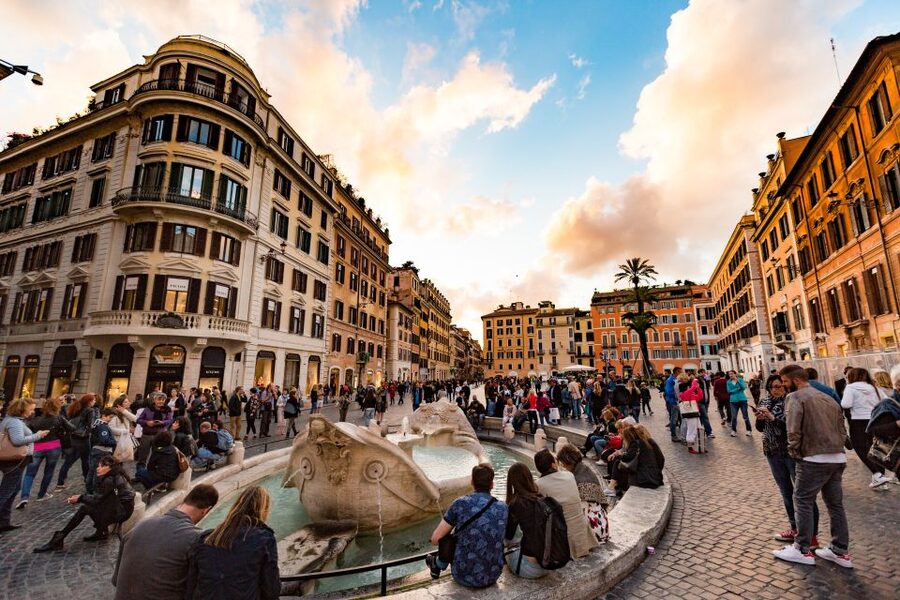
At the foot of the steps, you also see Bernini’s Fountain of the Barcaccia, the half-sunken boat in Piazza di Spagna. It looks playful, but it fits the low water pressure and fountain design of the area. This is one of those places where a guide helps you slow down and notice the sculpture rather than simply take a quick photograph.
The Spanish Steps are often crowded. That matters because the opening explanation may happen with people passing around the group, and you will need to stay close enough to hear. The maximum group size is 20, though several departures have been much smaller, including one reported outing with only two people. A group of around 10 is more comfortable for hearing the guide and gathering around monuments.
Piazza Navona and the Stadium of Domitian
From the Spanish Steps, the walk continues toward Piazza Navona, one of Rome’s grandest public spaces. The square follows the outline of the Stadium of Domitian, built in 85 A.D. for athletic contests. That old footprint explains the long, oval shape you see today.
Piazza Navona is the heart of Baroque Rome. Bernini’s Fountain of the Four Rivers takes center stage, with its sculpted figures and tall obelisk. Francesco Borromini’s architectural work also helps give the square its layered character. You are not just looking at a fountain in a plaza. You are seeing how powerful families, popes, artists, and engineers used public spaces to display wealth and influence.
This stop rewards a guide who can keep the story clear. There are many names and competing artistic personalities here, and it is easy to get lost in a string of dates. The strongest guides on this tour seem to make the material accessible with humor and a steady pace. Stefano is often praised for keeping the group entertained while still giving useful historical detail.
Piazza Navona is also one of the busiest parts of the route. You may have to stand at the edge of the square rather than directly beside the fountain. Keep your expectations practical: this is a moving walking tour, not a private art lesson with unlimited time for photographs.
Inside the Pantheon
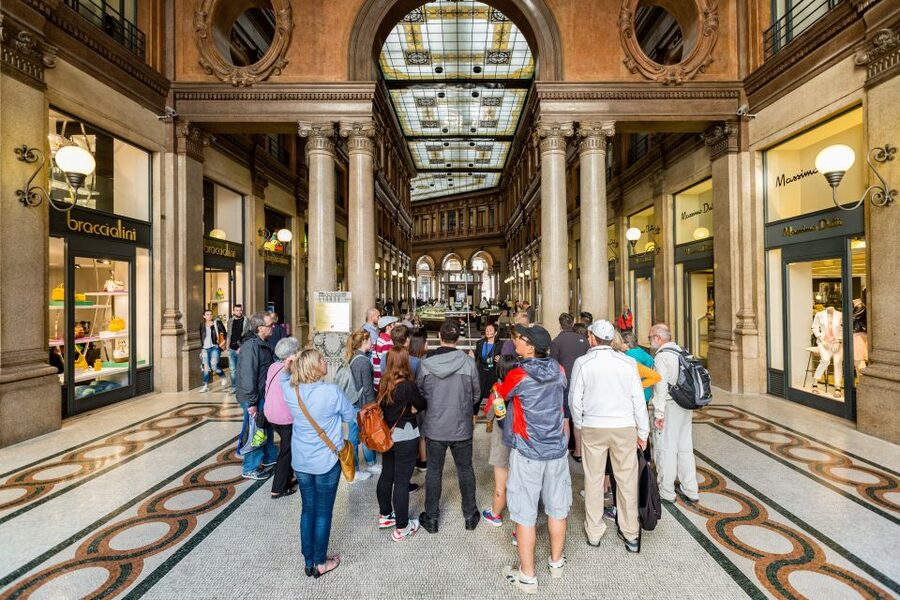
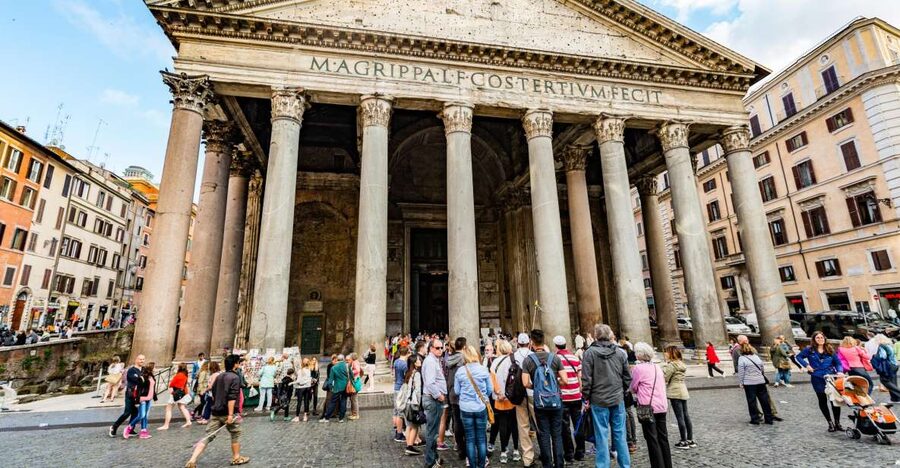
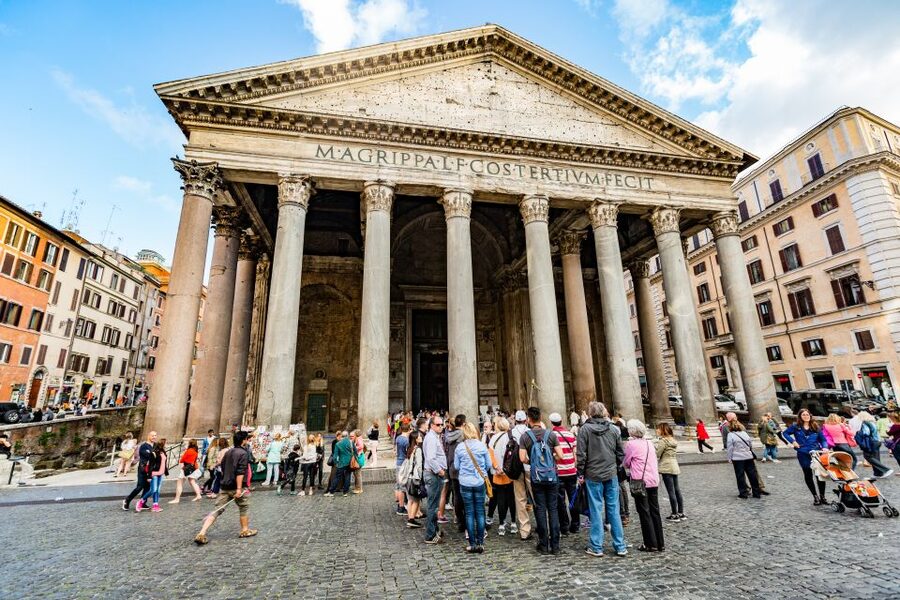
The Pantheon is the tour’s most important interior stop. You go inside the ancient Greek-Roman temple, which remains remarkably intact. From the outside, its classical columns and heavy portico look formal and familiar. Inside, the scale and engineering become much easier to appreciate.
The great circular interior is topped by a dome with an opening at its center. That opening lets in daylight and weather, a simple feature that makes the building feel both monumental and alive. The Pantheon also contains the tomb of Raphael, one of the Renaissance’s best-known painters. This gives the visit a useful bridge between ancient Rome and the later artistic world that grew around it.
The Pantheon can be crowded, and the visit is not designed as a long, quiet study session. Still, entering the building adds real value. Many city walks stop outside and offer a quick explanation. Here, the interior gives you a better sense of why the Pantheon remains one of Rome’s essential sights.
You should dress with churches and sacred monuments in mind. Shoulders and knees need to be covered, so bring something light to wear over a sleeveless top or short clothing. The tour information also says shorts, short skirts, and sleeveless shirts are not allowed, so do not treat the church stops as optional dress-code territory.
A few more walking tours around Rome worth a look
- Rome: Guided Food Walking Tour with Wine in Trastevere
★ 4.9 · 3,105 reviews - Rome: Trastevere & Campo de Fiori Street Food Walking Tour
★ 4.9 · 2,768 reviews - Rome: Paranormal Night Walking Tour & Secret Backstreets
★ 4.9 · 1,921 reviews - Rome: Trastevere Street Food Walking Tour with Local Expert
★ 4.8 · 1,784 reviews
The Column of Marcus Aurelius
The walk then reaches the Column of Marcus Aurelius, an ancient monument carved with scenes from the emperor’s military campaigns. The reliefs wind upward around the column, creating a continuous stone narrative.
This is a quick outdoor stop, but it adds a different kind of Roman history. The Pantheon shows ancient engineering and architecture. The column shows how emperors used public monuments to record victory and authority. The route also points out original scenes associated with the film Gladiator, which gives movie fans an easy way into the ancient setting.
You will not get the same close study of the reliefs that you would from a specialist archaeology visit. The value comes from seeing the column in its urban setting and understanding how ancient monuments remain part of daily Rome rather than isolated behind museum walls.
Sant’Ignazio and Rome’s painted illusion
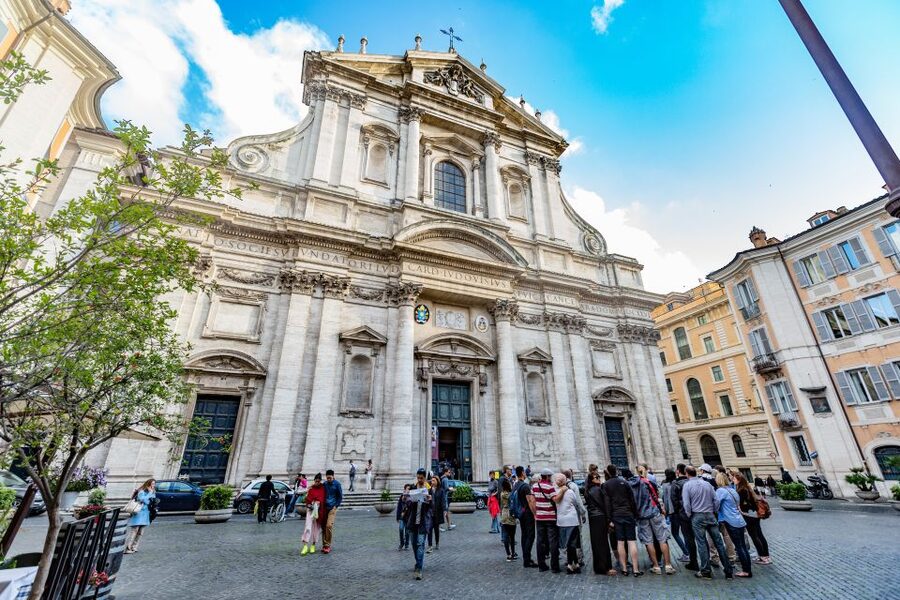
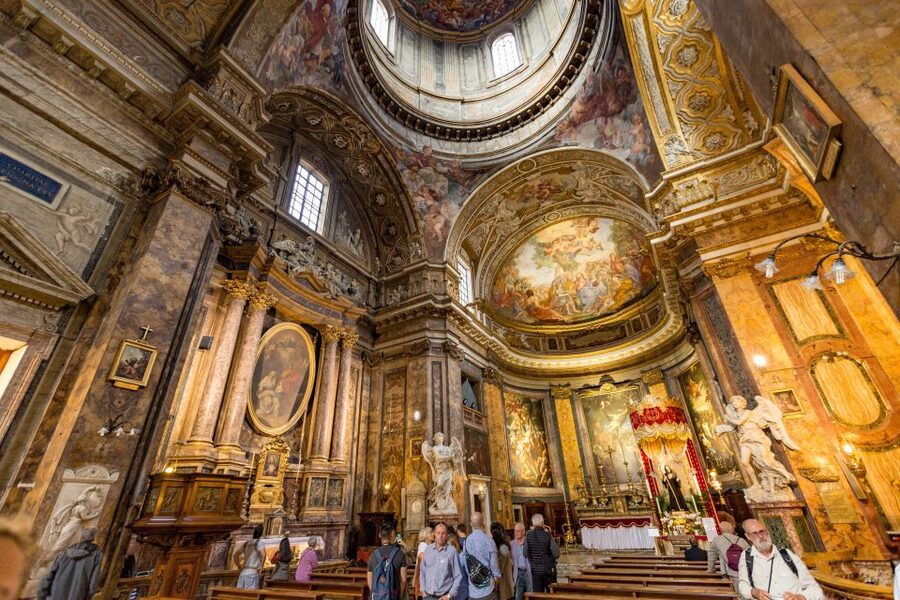
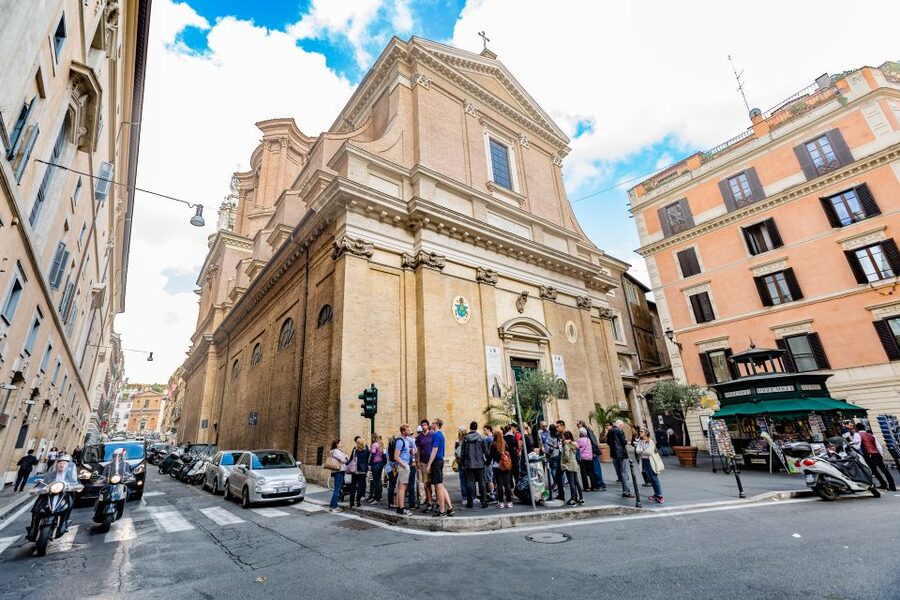
Sant’Ignazio Church is one of the most memorable stops because its famous dome is not what it first appears to be. The church uses trompe l’oeil painting to create the impression of a soaring architectural dome. From the correct point on the floor, the flat surface seems to rise above you.
This is a clever contrast with the Pantheon. At the Pantheon, the dome is a genuine ancient structure with a dramatic opening. At Sant’Ignazio, paint and perspective produce the effect. The two stops together show how Rome’s artists solved very different architectural and visual problems.
The church also offers a break from the exposed streets, though it is still not a long rest stop. You need to remain with the group, listen to the guide, and keep the pace. The illusion works best when you look from the recommended position, so do not rush through the church after taking a quick photograph.
Finishing at the Trevi Fountain
The tour ends at the Trevi Fountain, where the traditional coin toss gives you a playful final moment. Toss a coin over your shoulder and make a wish to return to Rome. It is touristy, yes, but it is also one of those harmless rituals that fits the city’s theatrical spirit.
The fountain is magnificent and often crowded. The final stop can feel rushed if the group has lost time earlier, and one account specifically found the Trevi visit a little hurried. Rain may also shorten the time people want to spend there. If the fountain is important to you, plan to return later on your own for a slower look and better photographs.
The published route says the walk starts at the Spanish Steps and ends at the Trevi Fountain. The meeting information also describes the activity as ending back at the meeting point, so check the exact departure details when you book if your next reservation depends on the finish location. Either way, the tour keeps you in central Rome, close to further sightseeing and restaurants.
What the guides add
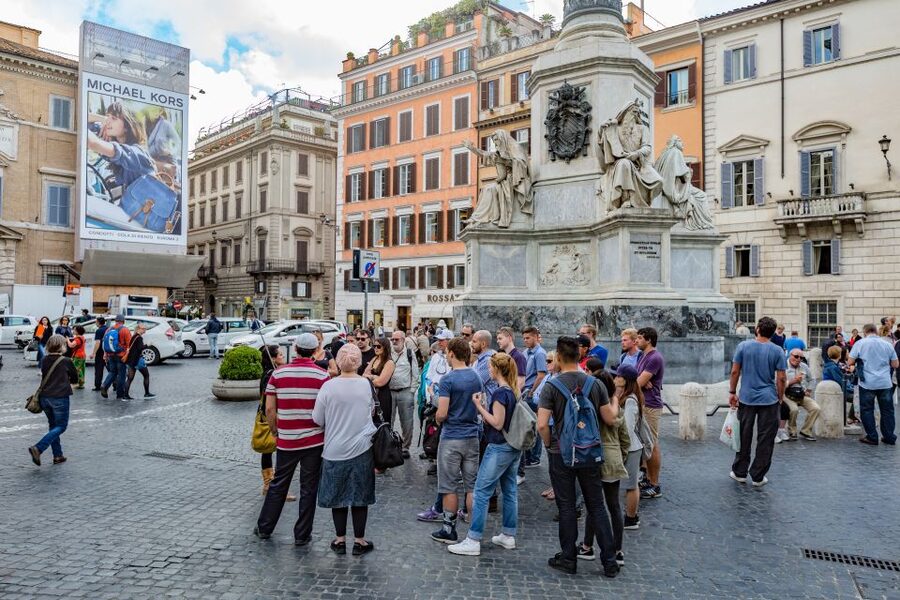
The guide can make or break a city walk, and this experience has a strong record on that front. Stefano is praised for humor, energy, patience, and a gift for bringing information to life. Bruno is described as personable and flexible, with one outing even including a small tiramisu treat. Matteo is noted for enthusiasm and amusement, while Paolo and Andrea also receive strong praise for making the city easy to understand.
A guide may recommend other places to visit or point out where to find good gelato. One guide even ended up having a beer with participants, though you should treat that as an individual moment rather than a promised part of the tour.
Several departures went ahead with only a few participants. That is a useful sign for people who dislike tours being canceled when numbers are low. At the same time, the maximum group size is 20, so you should not assume every departure will feel private.
The tour is conducted in English, and translation during the walk is not allowed. That rule helps the guide keep the group together and maintain the pace, but it means everyone should be comfortable following an English explanation for the full 2.5 hours.
Weather, clothing, and walking comfort
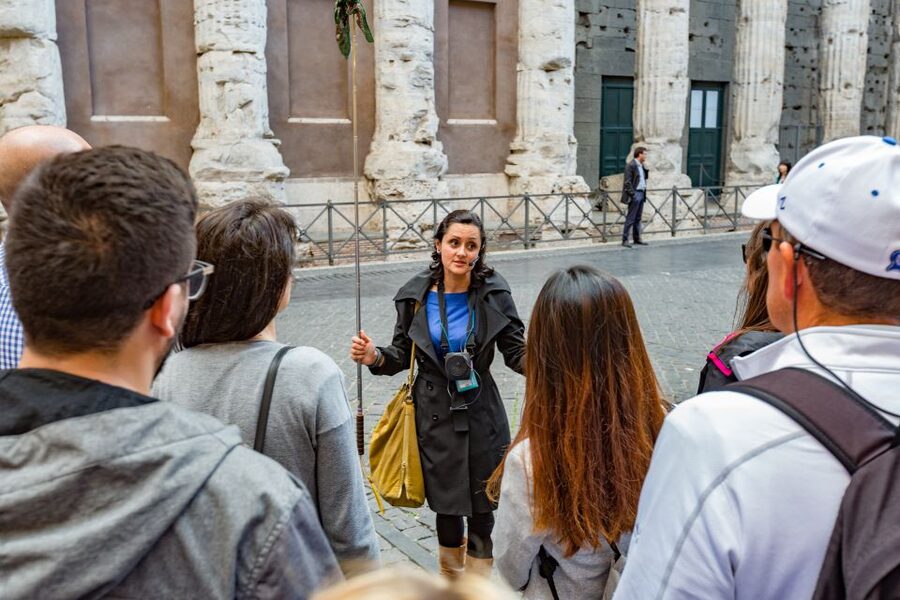
This is an outdoor walking tour in the truest sense. Wear shoes you can manage on hard streets and bring clothing suited to the forecast. One group completed most of the route during a cold, pouring December morning, helped by a guide who kept the pace lively. That is encouraging, but bad weather will still affect your enjoyment.
Do not bring a stroller, wheelchair, oversized luggage, or large bags. The route is not suitable for wheelchair users, and the uneven, crowded historic center makes the restriction important rather than minor. Children under 10 are not considered suitable for this activity.
Food and drinks are not included, and eating or drinking during the tour is not allowed. You can eat before you arrive, then ask the guide for gelato or food suggestions after the walk. Tips are not included, but you may tip the guide if the experience earns it.
Free cancellation is available up to 24 hours before the start, and you can reserve now and pay later. Those terms help if your Rome schedule is still shifting, but check the available start times before building the rest of your day around it.
Who should book this walk?
I would choose this tour for a first or second day in Rome, especially if you want a fast orientation before visiting the Colosseum, Roman Forum, Vatican Museums, or Villa Borghese. It gives you a useful sense of the central streets and lets you return later to the sights that deserve more time.
It suits adults, older children over 10, couples, and solo visitors who prefer company and explanation to exploring alone. It also works well for people who enjoy art and architecture but do not want a heavy academic lecture.
I would skip it if you need step-free access, plan to bring a stroller, dislike walking in all weather, or want a tour focused on one monument in depth. You should also think twice if your Rome visit is packed so tightly that a late finish would cause trouble. The pace is comfortable for many people, but the route still covers several neighborhoods and requires attention to the guide.
Should you book the Fountains and Squares tour?
Book it if you want a well-organized introduction to central Rome with a lively English-speaking guide, a real Pantheon visit, and a route that combines ancient monuments with Baroque showpieces. The strongest reason to choose it is the balance: you get famous sights, smaller artistic surprises, and practical orientation in one walk.
At $45.55, the value depends on how much you use the guide. If you simply want photographs of the Spanish Steps and Trevi Fountain, you can do that free. If you want the stories, the Pantheon context, the Sant’Ignazio illusion, and help finding your way through Rome’s historic center, the price is fair.
Arrive early, dress for church visits, wear good shoes, and leave room in your schedule for the route to run close to its full 2.5 hours. For a first look at Rome’s fountains, squares, and layered past, this is a sensible choice.
FAQ
How long does the tour last?
The stated duration is 2.5 hours. Some descriptions and past experiences refer to roughly two hours, so allow the full 2.5 hours when planning your day.
What language is the tour conducted in?
The tour is conducted in English with a live English-speaking guide.
Where does the tour begin?
Meet by the entrance of the Keats Shelley Museum at the bottom of the Spanish Steps, in front of the Acqua di Parma store.
How early should I arrive?
Arrive 10 minutes before the scheduled starting time. Late arrivals may not be able to join.
What sights are included?
The route includes the Spanish Steps, Trinità dei Monti, Piazza Navona, the Stadium of Domitian, the Pantheon, the Column of Marcus Aurelius, Sant’Ignazio Church, and the Trevi Fountain.
Do you go inside the Pantheon?
Yes. The tour includes entry inside the Pantheon, where you can see the ancient interior and Raphael’s tomb.
Is the tour suitable for children?
It is not suitable for children under 10 years old.
Can I join with a wheelchair or stroller?
No. The tour is not suitable for wheelchair users, and strollers are not allowed on the itinerary.
What should I wear?
Wear comfortable clothes and shoes, with shoulders and knees covered for churches and monuments. Shorts, short skirts, and sleeveless shirts are not allowed.
Can I cancel the booking?
You can cancel up to 24 hours in advance for a full refund. You can also reserve now and pay later.
Just added around Rome
- Rome: Colosseum and Ancient Rome Guided Walking Tour★ 4.5 · 95 reviews
- Rome Walking Tour: Pantheon, Trevi, Navona & Hidden Gems★ 4.8 · 501 reviews
- Rome: Underground Trastevere Guided Walking Tour★ 4.8 · 87 reviews
- Rome: Trastevere and Roman Ghetto Guided Walking Tour★ 4.7 · 79 reviews
- Rome: Guided Walking Tour and Pantheon Priority Entry Ticket★ 4.3 · 317 reviews
- Rome: Trevi Fountain, Spanish Steps & Pantheon Walking Tour★ 4.6 · 336 reviews
- Rome Night Mysteries Guided Walking Tour★ 4.9 · 119 reviews
- Rome: Relics from the Passion of the Christ Walking Tour★ 4.9 · 84 reviews
Small-Group Walking Tours, compared.

Amsterdam Anne Frank: Small-Group Walking Tour & Local Guide
Read our review →
Freedom Trail History Small Group Walking Tour
Read our review →
Barcelona Tapas and Wine Experience Small-Group Walking Tour
Read our review →
Reykjavík Small group Walking Tour – by CityWalk
Read our review →

Hidden Alleyways and Historic Sites Small-Group Walking Tour
Read our review →
Old Montreal Small-Group Walking Tour | Max 10 | by MTL Detours
Read our review →Browse the lists this tour appears in