
REVIEW · KYOTO
Kyoto: Private 2.5 Hour Historical Walking Tour
Kyoto’s best sights can blur together when you visit them alone. This private walk gives the temples and shrines a clear story, moving from Yasaka Shrine through a Zen temple and narrow old streets to Kiyomizu Temple. Guides such as Hisako have used hand-drawn maps, pictures, and notes to explain everything from shrine customs to shoguns and Buddhist figures.
I especially like the visit to Entokuin, where traditional rooms and dry gardens offer a quiet break from Gion’s busy streets. I also like the small-group format: for $80 per group of up to five, you get a personal guide rather than a large crowd. The main drawback is that temple admission, transport, and food are extra, and the route includes hills, stone steps, and busy lanes.
Key points at a glance
- A useful Kyoto introduction: Begin with a map and a short explanation of how Kyoto developed as Japan’s imperial capital.
- A calm Zen stop: Entokuin gives you time with dry gardens, traditional rooms, and painted sliding doors.
- A memorable walking route: Follow Nene-no-michi from Maruyama Park toward the Yasaka pagoda and Kiyomizu Temple.
- Personal teaching style: Guides including Hisako have used their own drawings and visual notes to explain difficult subjects clearly.
- A strong private-tour value: The $80 price covers up to five people, though entrance fees are separate.
- Best for curious visitors: This suits you if you want cultural background, not just a checklist of famous photo spots.
Why this walk helps Kyoto make sense
Kyoto is full of famous places, but fame alone does not explain what you are seeing. A vermilion shrine gate, a Buddhist hall, a pagoda, a wooden stage, and a garden may all look beautiful, yet each belongs to a different religious and historical tradition.
That is where this tour earns its keep. Your guide starts with a map of Kyoto and explains the city’s role in Japanese history before you begin walking. This gives you a framework for the rest of the morning. You are not simply moving from one monument to the next. You are learning how Shinto shrines, Buddhist temples, imperial power, samurai rule, and everyday customs fit together.
The private format matters here. You can ask why people bow at a shrine, how to tell a Shinto site from a Buddhist temple, or why a particular statue appears in a hall. Several guides associated with this experience, especially Hisako, have been praised for answering broad questions about religion, politics, language, philosophy, gender, and modern Japan without rushing the conversation.
That depth is the tour’s strongest feature. If you only want quick photographs at Kiyomizu Temple, you can manage that on your own. If you want the places to mean more by the end of your visit, this walk is a better use of your time.
More History Walking Tours in Japan
- Kyoto Gion: 2-Hour Geisha Culture & History Walking Tour
★ 5.0 · 1,186 reviews - Tokyo: Imperial Palace and Shogun Historical Walking Tour
★ 5.0 · 2,251 reviews - Tokyo: Imperial Palace Japanese History Walking Tour
★ 4.9 · 987 reviews
Starting at Yasaka Shrine’s red west gate
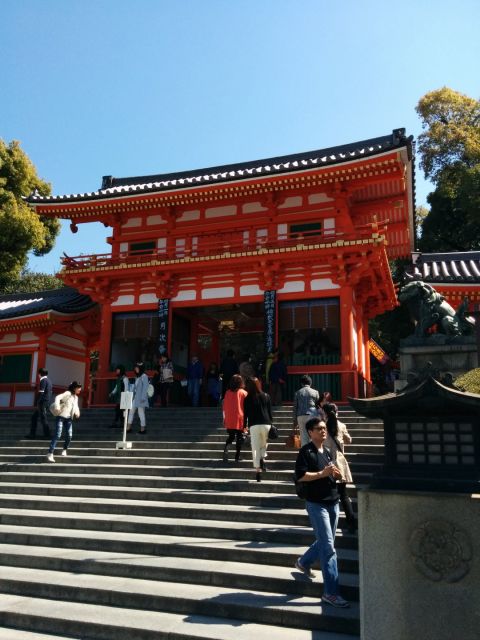
Meet your guide at the west gate of Yasaka Shrine, often described as the red gate. The location is practical, but allow time to reach it. From Gion-Shijo Station on the Keihan Line or Kawaramachi Station on the Hankyu Line, walk east along Shijo Street, then continue up the stone steps toward the gate. From a bus, get off at Gion.
The tour opens with a map-based explanation of Kyoto. This is a smart beginning because the city’s history can otherwise feel like a long list of unfamiliar names. Your guide then introduces Yasaka Shrine and explains how to worship there.
That small lesson is more useful than it might sound. You learn the basic behavior expected at a Shinto shrine, so the customs you see later in Japan become easier to recognize. This is also a good moment to ask questions before the route gets busier.
Yasaka Shrine is connected to Kyoto’s Gion district and gives the walk an immediate sense of place. You are starting in one of the city’s best-known areas, but the aim is not to linger over every corner. The guide uses the shrine as a doorway into Japanese belief and local history, then leads you onward.
Maruyama Park and Nene-no-michi
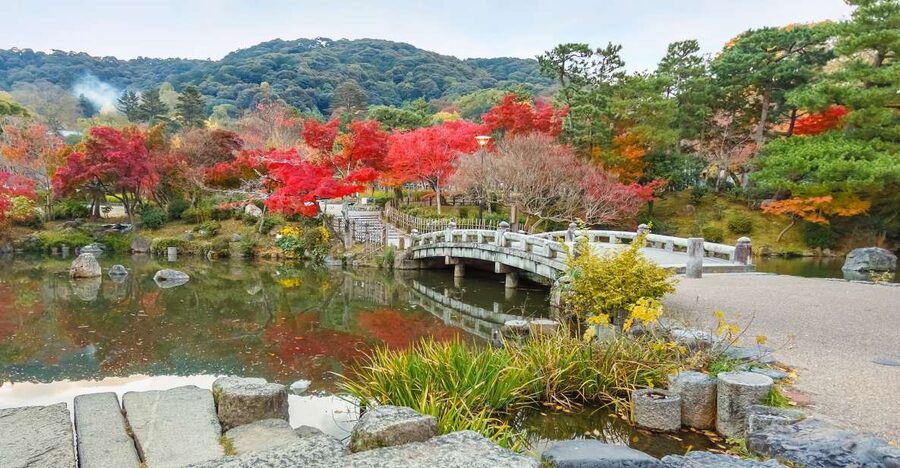
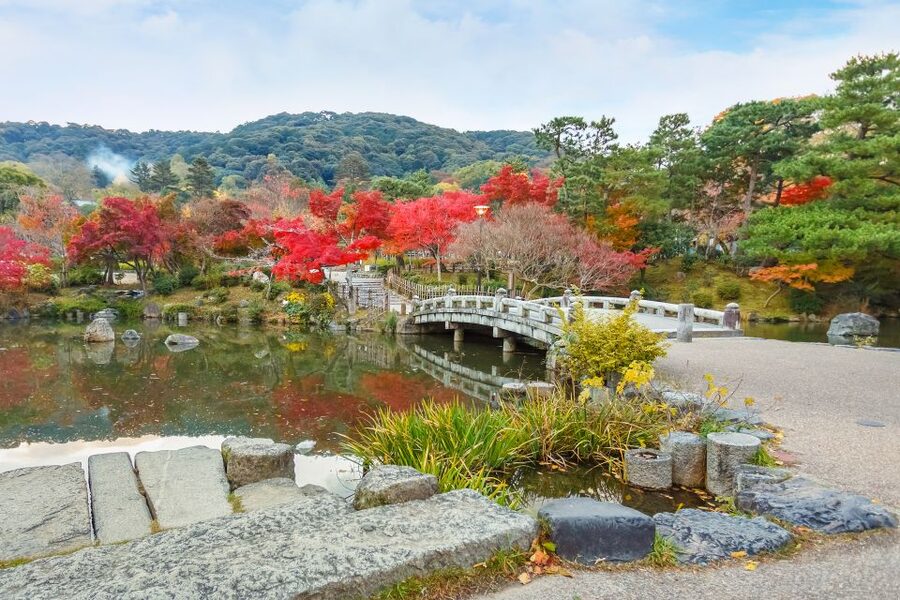
From Yasaka Shrine, you walk through Maruyama Park. The route then reaches Nene-no-michi, a well-known street named for Nene, the wife of Toyotomi Hideyoshi, a major political figure of late 16th-century Japan.
This section is more than a link between attractions. It connects Kyoto’s polished tourist center with the people and power behind the city’s old neighborhoods. Your guide can explain Nene’s connection to Entokuin, making the next stop feel tied to a person and a period rather than appearing as an isolated temple.
The walk takes about ten minutes to Entokuin, followed by another ten-minute stretch toward Yasaka Koshindo. The route is manageable for many visitors, but you should wear proper walking shoes. Kyoto’s historic lanes often use stone paving, and the wider route includes steps and inclines.
Nene-no-michi can be busy, particularly around popular sightseeing hours. A private guide helps you keep your bearings, but this is not a quiet countryside stroll. You will share parts of the route with other people taking photographs and visiting nearby temples.
Entokuin: the quiet heart of the route
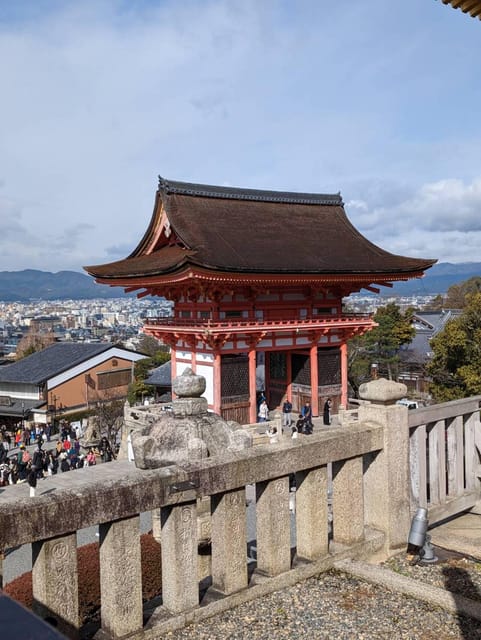
Entokuin is the tour’s most restful stop. You spend about 40 minutes at this Zen temple, looking at dry gardens, traditional Japanese rooms, and painted images on sliding doors.
A dry garden uses carefully arranged stones, gravel, and plants rather than ponds or streams to suggest nature. Your guide can help you look at the design instead of simply labeling it beautiful. The spare setting encourages you to slow down, notice the arrangement, and think about the way Japanese art uses space and suggestion.
The traditional rooms are another valuable part of the visit. They show how architecture, art, and garden views work together. Sliding doors are not just practical partitions. Their painted surfaces help turn the rooms into changing scenes as you move through them.
This is also the point where the tour can feel more personal than a standard sightseeing circuit. Several past guide assignments have included visual materials made by the guide, such as hand-drawn maps, watercolors, colored-pencil illustrations, and folders of notes. Hisako has been particularly associated with this teaching style, while other named guides include Hiroko, Hiroshita, and Takayuki Ishii. The exact guide depends on availability, but the experience is designed around a live English-speaking guide.
One note of caution: the supplied information specifically confirms the temple visit, gardens, rooms, and sliding-door art. A calligraphy activity was enjoyed by one group, but it should not be treated as a guaranteed part of every departure.
More History Walking Tours in Kyoto:
- Berlin: Third Reich & Cold War Guided Walking Tour
★ 4.9 · 8,378 reviews - Munich: Third Reich & WWII Walking Tour
★ 4.6 · 6,181 reviews - Berlin’s Best: 2 Hour Walking Tour Third Reich and the Cold War
★ 5.0 · 5,486 reviews - Third Reich Berlin: Hitler and WWII Walking Tour
★ 5.0 · 3,301 reviews
Yasaka Koshindo and the five-storied pagoda
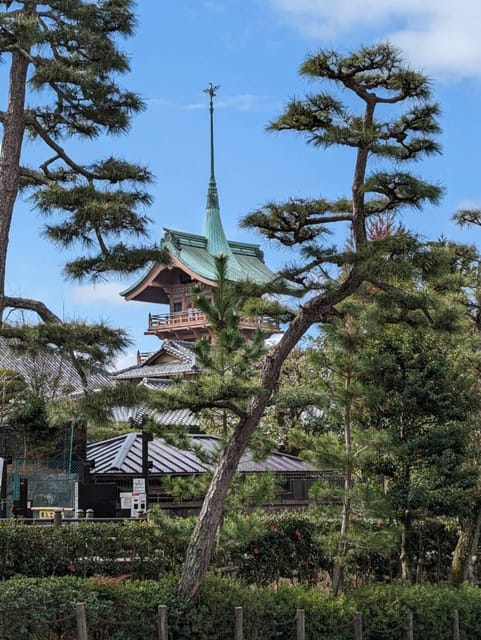
After Entokuin, you walk for about ten minutes to Yasaka Koshindo, where the planned visit lasts roughly 15 minutes. This stop adds a smaller, more local-feeling religious site to the route.
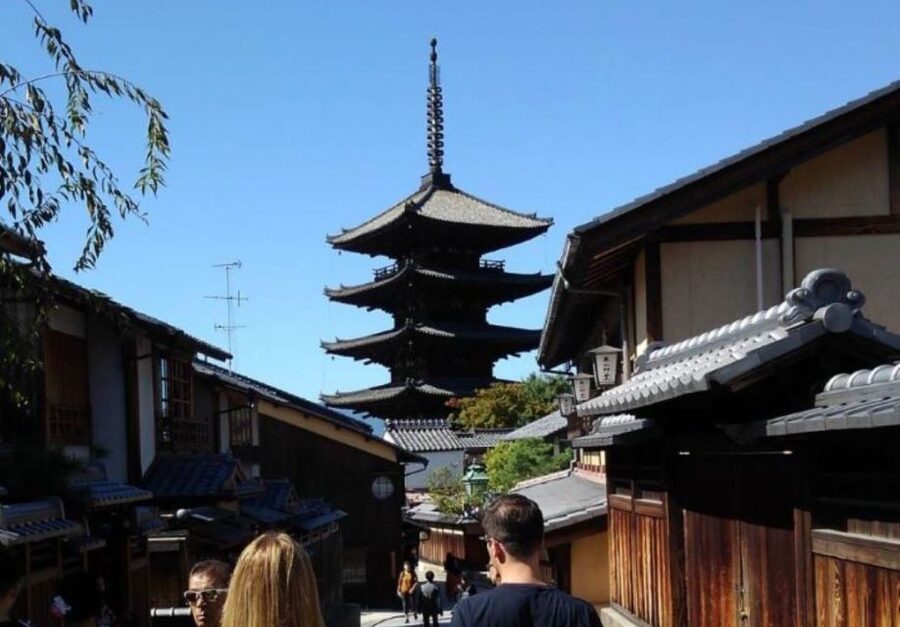
The nearby five-storied pagoda is commonly called Yasaka-no-to. You view it from outside, and the street nearby provides one of the route’s most recognizable photo spots. The pagoda is especially useful as a lesson in Kyoto’s visual layers: an old religious structure rises above the surrounding streets, while ordinary city life continues below.
Do not expect a full pagoda interior visit. The appeal here is the exterior view and the explanation of the surrounding area. Your guide can also help you understand why a pagoda appears at a Buddhist site and how it differs from a shrine structure.
The itinerary includes about ten minutes at a viewpoint before the 15-minute walk to Kiyomizu Temple. That short pause is welcome. A good private guide will give you time to take photographs without turning the entire tour into a photo session.
Kiyomizu Temple and the famous wooden stage
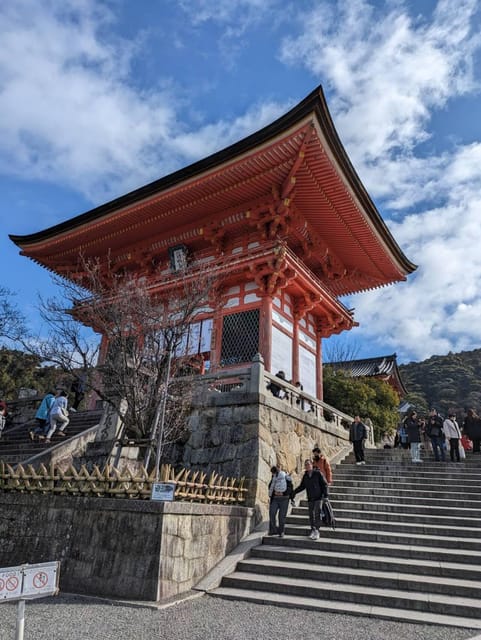
Kiyomizu Temple is the grand finish. It was founded in the eighth century and is one of Kyoto’s most visited temples. You enter through the temple grounds and finish the tour after leaving the main hall area.
The temple’s central object of worship is Kannon Bodhisattva, and your guide explains Buddhist statues and the meaning of the site. This context helps you look beyond the crowded approaches and famous views. The temple is popular for good reason, but popularity also means noise, queues, and heavy foot traffic at times.
The wooden stage attached to the main hall is the visual high point. Its structure was built without nails, and it projects over the hillside. From here, you can see Koyasu Pagoda, the three-storied pagoda associated with prayers for an easy birth.
The view is memorable, but it is the explanation that makes it useful. Your guide can connect the architecture, Buddhist worship, and the long tradition of people visiting Kiyomizu for practical hopes and spiritual comfort.
Kiyomizu means pure water. A stream from the mountain behind the temple has continued to flow, and many people line up to drink from it. The line can take time, and drinking the water is not listed as a guaranteed activity in the tour, so treat it as something you may see rather than a promised feature.
You can also see an iron stick and iron clogs donated to the temple. The iron stick is extremely heavy, and the guide may invite you to try lifting it. This is a welcome hands-on moment after so much history and architecture. It gives you a simple physical connection with the temple’s traditions.
Before the tour ends, your guide explains Jishu Shrine, associated with matchmaking. The final lesson rounds out the visit by showing how popular hopes, religious practice, and local custom overlap in Kyoto.
Time, pace, and physical effort
The experience is described as a private 2.5-hour historical walking tour, while the activity details also list a duration of two hours. The stop-by-stop schedule adds up to about two hours and five minutes of walking and visits, before small delays, questions, photographs, or a slower pace. In practice, allow around two and a half hours and confirm the exact starting time when booking.
The listed walking sections are about ten minutes from Yasaka Shrine to Entokuin, ten minutes to Koshindo, and 15 minutes to Kiyomizu Temple. The visits themselves total about 40 minutes at Entokuin, 15 minutes at Koshindo, ten minutes at a viewpoint, and 35 minutes at Kiyomizu.
The pace is not meant to be a workout, but you need comfortable shoes. Stone steps, slopes, and crowded lanes can make the route tiring in hot or humid weather. One past departure ran much longer because the guide and participant spent extra time discussing Japanese religion, history, politics, and society. That flexibility is a benefit if you enjoy conversation, but it can affect your later plans.
What the $80 private price really buys
At $80 per group of up to five people, this can be excellent value for a family or small group. Split five ways, the guide costs $16 per person before temple fees. Even with two people, you are paying for direct attention and the freedom to ask questions rather than joining a large group.
The price includes the guide only. You pay separately for admission to the temples, transportation to and from Yasaka Shrine, meals, drinks, and insurance. The exact entrance cost is not provided here, so check current temple fees before you set your budget.
The main value is educational. A guide can point out details you would likely pass without noticing, explain worship customs, and give you historical background that stays useful during the rest of your Japan trip. Several people have found that taking the tour early helped them understand other temples and shrines later.
For a solo visitor, the price is less of a bargain because the same group rate applies. For a couple, family, or group of friends, it makes more sense. The private format also suits people who want to adjust the pace for photographs, questions, or short rests.
Who should book this Kyoto walk?
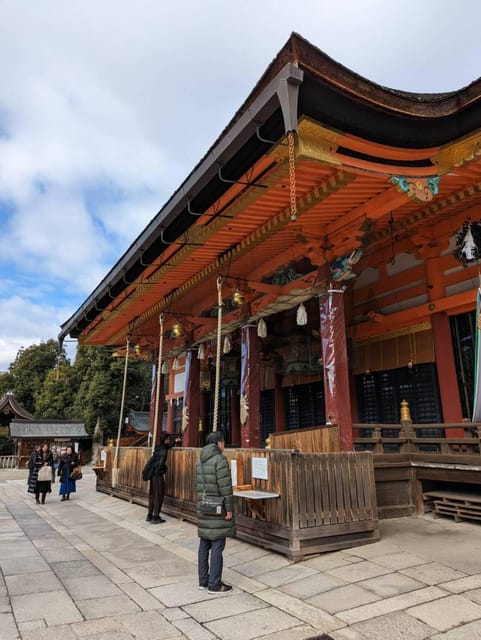
I would choose this tour near the start of a Kyoto stay. It gives you a working vocabulary for shrine and temple visits, along with a basic outline of Japanese history. You can then revisit other sites with more confidence.
It is especially suitable if you:
- Want clear English explanations rather than a fast sightseeing loop.
- Enjoy asking questions about religion, politics, customs, and daily life.
- Are visiting Kyoto with family or friends and can share the $80 group price.
- Prefer a walking route that mixes major sights with a quieter Zen temple.
- Want a guide who may use drawings, maps, or prepared visual notes.
It may not suit you if you want to spend a long time inside each temple, avoid crowds entirely, or see only the most famous photo locations. Kiyomizu Temple can be busy, the pagoda is viewed from outside, and admission fees are not included.
Booking details worth knowing
The meeting point is the west gate of Yasaka Shrine, not Kiyomizu Temple. Plan your route carefully, especially if you are arriving by train. The tour ends at Kiyomizu Temple, so you do not return to Yasaka Shrine.
English is the listed tour language, and the group is private. Free cancellation is available up to 24 hours before the start for a full refund. You can also reserve and pay later, which helps if your Kyoto schedule is still changing.
Bring comfortable shoes. You may also want water, particularly in warm weather, though drinks are not provided. Since the walk passes through popular areas, an earlier start may offer a calmer feel, but the available starting times should be checked before you reserve.
FAQ
How long does the historical walking tour last?
It is described as a 2.5-hour tour, while the activity details also list two hours. The scheduled walking and visits take a little over two hours, so you should allow about two and a half hours for questions, photographs, and normal delays.
Where does the tour begin?
The meeting point is the west gate, or red gate, of Yasaka Shrine. It is reachable on foot from Gion-Shijo Station, Kawaramachi Station, or the Gion bus stop.
Where does the tour finish?
The tour ends at Kiyomizu Temple, after the guide explains the main hall area and Jishu Shrine.
Is the tour private?
Yes. It is a private group experience for up to five people.
Is the tour conducted in English?
Yes. English is the listed language, and the experience includes a live English-speaking guide.
Are temple entrance fees included?
No. Admission fees to the temples are not included. Transportation, meals, drinks, and insurance are also separate.
Can I cancel for a full refund?
Yes. You can cancel up to 24 hours in advance for a full refund. The booking option also allows you to reserve now and pay later.
Should you book it?
Book this walk if you want Kyoto’s shrines, temples, gardens, and pagodas to connect into a larger story. The strongest part is the guide-led explanation, especially when the guide uses maps, drawings, and examples to make Japanese history easier to follow.
The $80 group price is most attractive for two to five people, and the route offers a good first look at Gion, Entokuin, Yasaka-no-to, and Kiyomizu Temple. Skip it if you prefer complete independence or want to avoid admission costs and busy tourist areas. For a first or second day in Kyoto, though, this is a thoughtful way to get your bearings and see the city with more understanding.
Just added around Kyoto
- Kyoto : Private Custom Walking Tour With A Local Guide★ 4.6 · 144 reviews
- Kyoto: Private Walking Tour with a Local★ 4.6 · 118 reviews
- Kyoto: Gion Sunset Walking Tour with Local Guide★ 4.7 · 351 reviews
- Kyoto: Imperial Palace & Nijo Castle Guided Walking Tour★ 4.7 · 453 reviews
- Kyoto Gion Cultural Walk & Geisha Show with Dining Options★ 5.0 · 518 reviews
- Kyoto: Gion Walking Tour★ 5.0 · 195 reviews
- Kyoto: Gion Hidden Gems & Geisha Culture Tour★ 4.9 · 126 reviews
- Kyoto: Geisha Dinner & Gion Cultural Walk★ 5.0 · 73 reviews
History Walking Tours, compared.


Berlin’s Best: 2 Hour Walking Tour Third Reich and the Cold War
Read our review →
Third Reich Berlin: Hitler and WWII Walking Tour
Read our review →
New Orleans Garden District History Walking Tour
Read our review →
Cartagena: Historic Center and Getsemaní Shared Walking Tour
Read our review →
Imperial Palace and Shogun Historical Walking Tour
Read our review →Browse the lists this tour appears in