
REVIEW · SOUTH AFRICA
Johannesburg: City Centre Walking Tour
Johannesburg makes the most sense at street level. This three-hour walk follows the city’s gold-rush beginnings, apartheid-era politics, working-class past, and present-day struggles from Gandhi Square to Nelson Mandela Bridge. You get a city that is complicated, creative, and far more interesting than its reputation suggests.
I like the way the tour joins history to real streets, rather than treating Johannesburg as a collection of disconnected sights. I also like the guides, especially Refiloe, Thabo, Mathapelo, Mulalo, and Clement, who explain both the past and the daily life of the CBD in clear, personal terms.
The main drawback is that some stops can change. The Workers Museum has been closed on certain days, and the Carlton Centre’s famous 360-degree viewing experience is no longer reliably available. The walk also covers a lot of ground, so comfortable shoes are essential.
Key points at a glance

- Gold-rush Johannesburg: Trace the city’s beginnings around Gandhi Square, Main Street, Marshalltown, and Ferreirasdorp.
- Mandela and Tambo’s law office: See Chancellor House, where Nelson Mandela and Oliver Tambo opened their first black-owned law firm.
- Working-class history: The Workers Museum explains migrant labour and the harsh conditions that helped build Johannesburg.
- Newtown’s cultural side: Visit Mary Fitzgerald Square and pass the Market Theatre, with street art and creative spaces along the way.
- A guide-led view of today’s CBD: Discuss safety, politics, vacant buildings, informal housing, and the city’s efforts to recover.
- A strong finish: Walk across or beside Nelson Mandela Bridge and end near Braamfontein, with food available at Sha’p Braai.
Why this Johannesburg walking tour matters
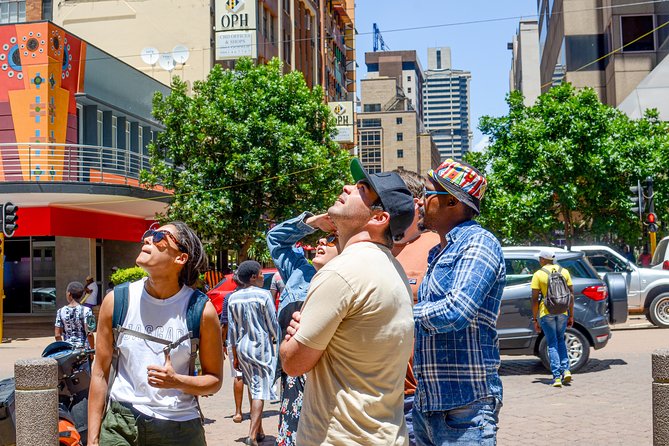
Johannesburg is often reduced to two easy ideas: a dangerous downtown to avoid, or a business city best seen from a tour bus. This walk gives you a third option. You move through the centre with a local guide who knows where to go, what to point out, and how to explain the tension between Johannesburg’s grand past and its current problems.
That matters because the city’s story is written into its streets. Gold brought people and money here. Segregated labour shaped neighbourhoods and families. Apartheid affected where people could live, work, and move. After apartheid, parts of the CBD lost investment while other districts became centres for art, food, and youth culture.
I like that the tour does not stop at old buildings and famous names. Guides such as Refiloe and Mathapelo also discuss the city as it is now. You may hear about safety, politics, vacant properties, informal occupation, and the effort to make central Johannesburg more welcoming. That makes the walk more useful than a simple list of dates.
The tour costs $40 per person for three hours. That is not the cheapest way to see a city centre, but it is a fair price if you want context, a planned route, bottled water, and a guide who helps you move through areas you might not feel ready to explore alone. Entrance fees are included.
More City Highlights Walks in South Africa:
- Cape Town Walking Tour: Bo-Kaap & City Highlights
★ 4.8 · 161 reviews - Berlin City walk Government District and Places of Democracy
★ 4.7 · 8,467 reviews - Historic Charleston Guided Sightseeing Walking Tour
★ 5.0 · 6,216 reviews
Starting at Gandhi Square and the Carlton Centre
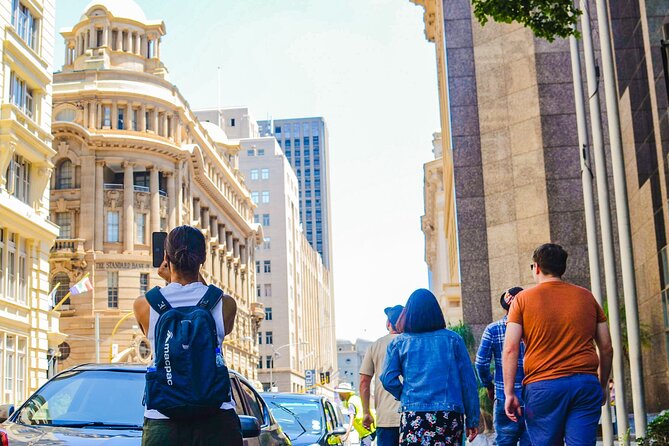
Meet your guide outside Nando’s at Gandhi Square, near the Metropolitan Building. This is a practical starting point because you are immediately in the middle of central Johannesburg, surrounded by public buildings, traffic, pedestrians, and reminders of the city’s earlier financial power.
The first major stop is the Carlton Centre. The building is closely tied to Johannesburg’s reputation as a major commercial centre, and it helps you understand the scale of the downtown core. The scheduled stop lasts about 20 minutes, giving your guide time to explain the building and the district around it.
One important caution: the tour has previously included access to a high-level city view, but the Carlton Centre has stopped taking visitors for its 360-degree lookout. Do not book this walk solely for a tower panorama. The guide may offer another viewpoint, but access can change.
From here, the city’s contrasts begin quickly. You may see polished office blocks close to older, worn facades and busy pavements. That mix is part of the point. Johannesburg is not a preserved museum district. It is a working centre with layers of history still being used, altered, or left to weather.
Courts, post offices, and the architecture of power
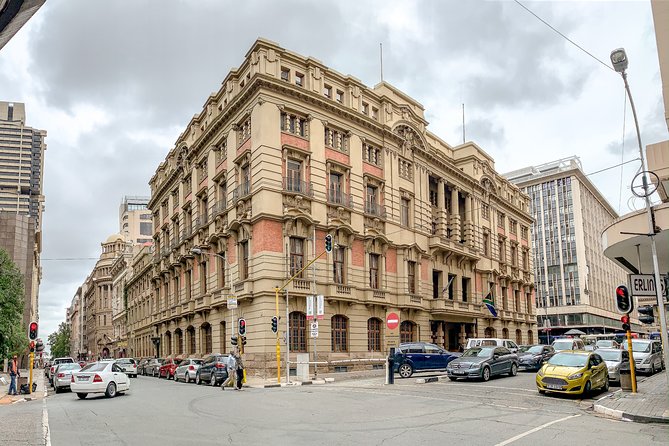
The route continues past the High Court of South Africa, Gauteng Local Division. This is a short stop for photographs and explanation, but it gives the walk a useful political dimension. Public buildings here are not just attractive examples of architecture. They represent law, government, and the changing relationship between citizens and the state.
The Marshalltown Post Office follows, with roughly ten minutes for a visit and discussion. Then you spend more time walking through Marshalltown itself. This half-hour section is useful because it shifts your attention from isolated buildings to the shape of the neighbourhood.
Your guide may point out how the central business district was planned, how office and court buildings relate to one another, and how the area has changed over time. Look up as you walk. Johannesburg’s older architecture is one of the tour’s best rewards, and the details are easy to miss from a car.
At Beyers Naude Square, you get another pause for photographs, sightseeing, and local explanation. The walk then passes the Anglo American corporate offices and the Johannesburg Central Magistrate’s Court. These stops are brief, but together they show the financial and legal structures that helped make the centre important.
This part may feel less dramatic than Mandela-related sites or Newtown’s art spaces. I still find it valuable because it gives you the city’s framework. Johannesburg’s story is not only about leaders and artists. It is also about mining companies, courts, post offices, offices, and the people who keep a large city moving.
Ferreirasdorp and the first gold diggings
The route reaches Ferreirasdorp, often called the cradle of Johannesburg. This is where the first gold diggings began and where early prospectors settled. Your guide uses the area to explain how a mining settlement became a major city.
This is one of the places where a local guide adds real value. On your own, you might see an ordinary street or a few old structures. With an explanation, the ground beneath the city becomes part of the story. Johannesburg was not founded as an old colonial town that slowly grew over centuries. Its rapid rise was tied to gold, migration, capital, and the hunger for labour.
The guide also connects this early period to later patterns of inequality. The gold economy needed workers, but the system controlling those workers was harsh and deeply unequal. That leads naturally to the next major stop, Chancellor House.
A few more walking tours around South Africa worth a look
- Soweto: Walking Tour with a Local Guide and Lunch
★ 4.9 · 648 reviews - Plettenberg Bay: Bungee Jumping with Zipline and Sky Walk
★ 5.0 · 506 reviews - Cape Town: Nathi Langa Township Walking Tour
★ 4.9 · 493 reviews - Cape Town: Art, Culture & History Walking Tour
★ 4.9 · 392 reviews
Chancellor House and the Mandela connection
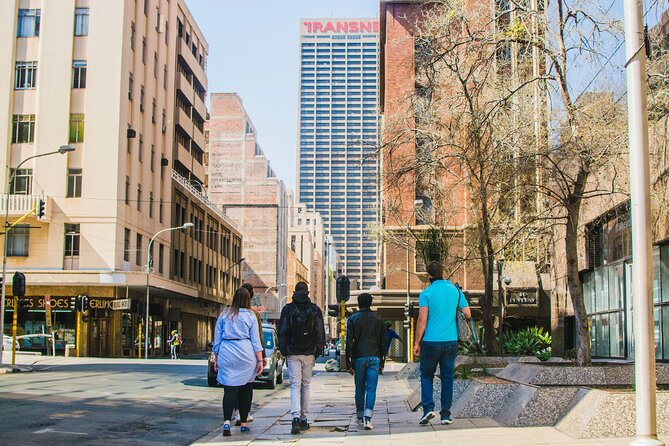
Chancellor House is one of the most meaningful stops on the walk. Nelson Mandela and Oliver Tambo established their first black-owned law firm here. It was an important place for people seeking legal help during apartheid, when the law often reinforced racial separation and discrimination.
The stop works best when you take time to imagine the building as a workplace, not simply as a memorial. Mandela and Tambo were practising lawyers, dealing with real cases and real clients while the political pressure around them grew.
Your guide can place this part of Mandela’s life within the wider story of Johannesburg. The city was a centre of protest, business, legal conflict, and political organisation. That makes Chancellor House more useful than a quick photo stop at a famous name.
You will also hear about Gandhi’s connection to Johannesburg during the early part of the walk. The tour does not treat the city’s political past as a single-person story. Instead, it links several figures, communities, and institutions to the same streets.
The Workers Museum and migrant labour
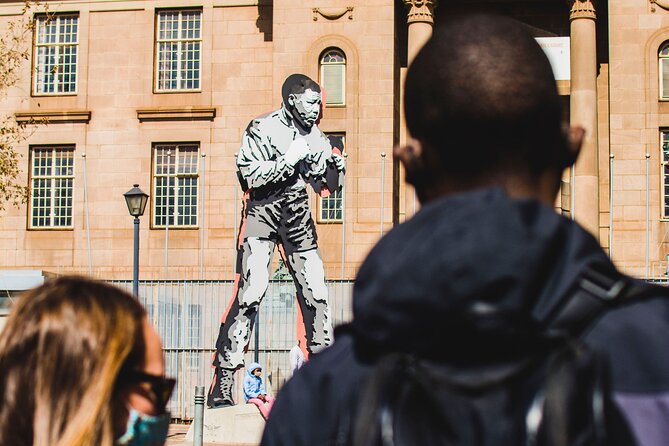
The Workers Museum is the most direct stop for understanding the labour system behind Johannesburg’s growth. It focuses on migrant labour and the conditions faced by workers who came to the city from elsewhere.
If the museum is open, allow the guide’s explanation to do more than identify exhibits. The important question is how a mining economy affected families, homes, movement, and daily life. Workers helped build the city, yet the system often kept them separated from their families and communities for long periods.
The museum is not always open. Monday closures have affected past visits, and opening conditions can change. If this stop is especially important to you, confirm access before booking or ask the operator about the day of your tour.
Even if you cannot enter, the subject remains part of the walk. Guides have explained the workers’ living conditions in detail when the doors were closed. Still, you should treat the museum as a possible inclusion, not a guarantee.
Newtown, Mary Fitzgerald Square, and the Market Theatre
Newtown brings a change of mood. This is one of Johannesburg’s creative districts, with cultural spaces, street art, galleries, food, and public squares. The route reaches Mary Fitzgerald Square, where you have time to look around and hear how the neighbourhood developed.
The Market Theatre is passed on the route, with a short stop for photographs and explanation. Its importance comes from its role in South African theatre and public culture. It is a place where performance and politics meet, and it helps show why Newtown matters beyond its visual appeal.
Do not expect a long theatre visit. The Market Theatre is listed as a brief stop and pass-by, not a full performance or backstage tour. If you want to see a show, that would need to be planned separately.
I like this section because it keeps the tour from becoming a march through court buildings and political landmarks. Newtown shows a more social side of the city. It also gives you a chance to notice public art and changing streets rather than only listening to a timeline.
Nelson Mandela Bridge and the walk toward Braamfontein
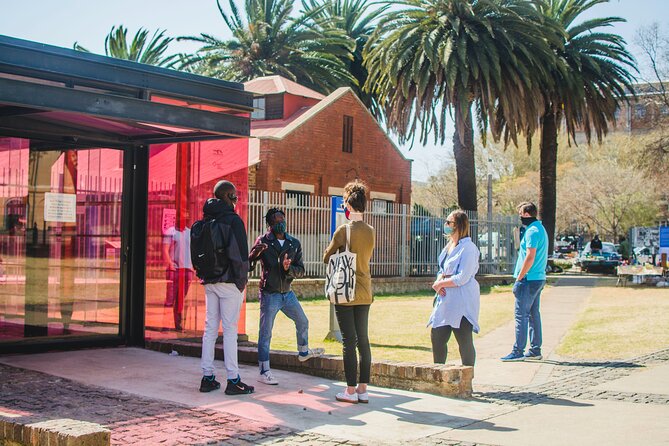
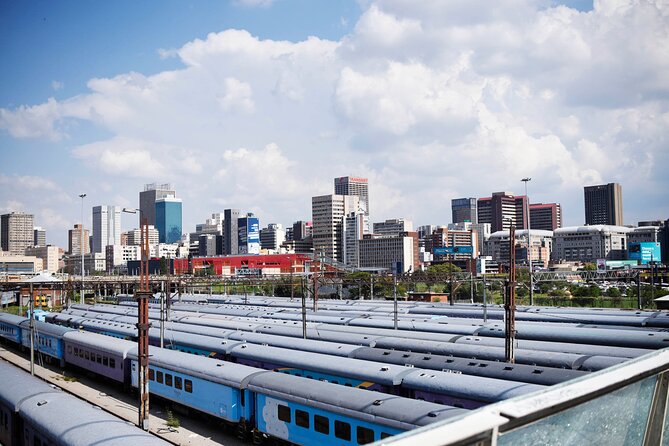
Nelson Mandela Bridge provides the tour’s clearest photo opportunity. The bridge connects different parts of the city and offers views along the route. It is also a fitting symbol for a walk that links old mining districts, working-class neighbourhoods, cultural spaces, and younger creative areas.
The bridge is not a long attraction in itself. The listed visit lasts about ten minutes, so think of it as a strong visual ending rather than a major sightseeing stop. You will want your camera ready before reaching it.
The walk then finishes around Braamfontein, a youthful arts and culture district. The area gives the tour an upbeat final note, showing a part of Johannesburg shaped by students, artists, designers, food, music, and younger residents.
The official finish is at Sha’p Braai, a shisanyama restaurant. Lunch is not included, but this is a useful place to continue the experience with South African food after the walk. One past visitor specifically praised the food, though you should budget separately for it.
The guides make the difference
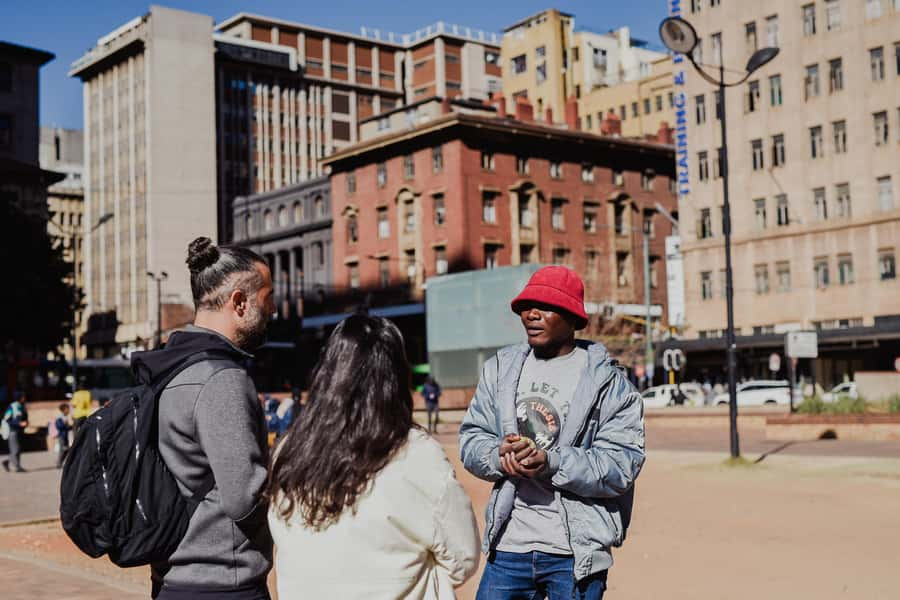
The strongest part of this experience is the guide. Refiloe is frequently associated with the walk and is described as warm, funny, careful, and exceptionally well informed about Johannesburg. Thabo, Mathapelo, Mulalo, Clement, Tebogo, and other guides have also led the route.
The exact guide depends on the date and group. Some departures have effectively become private tours when only one booking was made. That can be a real advantage, since you may have more time for questions and a route adjusted to your interests. It can also mean the walk runs longer than the advertised three hours. One private departure lasted about four hours because the guide continued showing the city.
I would use the opportunity to ask questions. Ask how a building has changed, what happened to a district after apartheid, or how residents view the CBD today. The guides are at their best when connecting a landmark to ordinary life.
The safety guidance is also part of the service. Several guides have helped visitors feel comfortable in areas they would not have explored alone. That does not mean you should become careless. Keep normal city awareness, stay with the guide, and follow directions about where to walk and when to take photographs.
Who should book this walk?
I would recommend it to first-time visitors who want the city’s story rather than only its shopping centres and hotels. It is especially useful if you are curious about mining, apartheid, Mandela and Tambo, migrant labour, architecture, and present-day Johannesburg.
It also suits repeat visitors who have already seen the better-known attractions. One guide-led walk through the CBD can show you a side of Johannesburg that a standard sightseeing bus does not provide.
The tour is less suitable if you want a relaxed outing with lots of time indoors. You will walk between many stops, and some visits are short. Pregnant people are advised not to take it, according to the activity information.
There is also a contradiction about mobility access. The tour is described as wheelchair accessible in one section, but wheelchair users are listed as not suitable in another. The route includes extended city walking and may involve uneven or difficult streets, so contact the operator before booking if you use a wheelchair. Do not assume access is guaranteed.
The tour is conducted in English, and bottled water and entrance fees are included. Hotel pickup, drop-off, and lunch are not included. You meet at Gandhi Square and make your own way back from Sha’p Braai.
Practical verdict: should you book it?
Book this walking tour if you want context, local guidance, and a clear introduction to central Johannesburg. Its best features are the route through Ferreirasdorp, Chancellor House, the Workers Museum, Newtown, and Mandela Bridge, plus guides who can discuss both history and current city life.
The $40 price is worthwhile for visitors who would feel uncertain exploring the CBD alone or who want more than a quick bus view. Go with comfortable shoes, an open mind, and realistic expectations about changing museum and tower access.
Skip it if you dislike walking, need a fully predictable sightseeing schedule, or mainly want a high-rise panorama. For everyone else, this is a thoughtful way to meet Johannesburg where its story is still unfolding, on the pavement rather than behind a coach window.
FAQ
How long is the Johannesburg City Centre Walking Tour?
The tour lasts three hours. Some private departures may run longer if the guide has time to show additional parts of the city.
Where does the tour begin?
Meet your guide outside Nando’s Restaurant at Gandhi Square, near the Metropolitan Building area.
Where does the tour finish?
The tour finishes at Sha’p Braai, a shisanyama restaurant in the Braamfontein area.
What language is the tour conducted in?
The live guided tour is conducted in English.
Is lunch included?
No. Lunch is not included, although the tour finishes at Sha’p Braai, where you can arrange food separately.
Is the Workers Museum always open?
No. The museum has been closed on some tour days, including Mondays in past visits. Confirm access if entering the museum is important to you.
Does the tour include the Carlton Centre observation deck?
The itinerary includes a stop at the Carlton Centre, but the 360-degree viewing area has stopped taking visitors. Do not assume that tower access is available.
Is the tour suitable for wheelchair users?
The activity information gives conflicting details, describing the tour as wheelchair accessible while also listing wheelchair users among those for whom it is not suitable. Contact the operator before booking to confirm whether the route works for your needs.
Just added around South Africa
- Whale Watching Walking Tours (Land-Based) – from JUNE 2025★ 5.0 · 88 reviews
- Culture Walking Tour of Durban★ 5.0 · 110 reviews
- The 10 Tastings of Cape Town With Locals: Private Food Walking Tour★ 4.5 · 169 reviews
- Bo-Kaap: Walk with a local★ 5.0 · 131 reviews
- Cape Town Woodstock Street Art Walking Tour★ 4.5 · 77 reviews
- Constantia Wine Walk Storytelling Vineyard Tour with Lunch★ 5.0 · 77 reviews
- Stellenbosch: Guided Historical Walking Tour★ 4.7 · 283 reviews
- Cape Town: Street Art Walking Tour in Woodstock★ 4.8 · 293 reviews
City Highlights Walking Tours, compared.
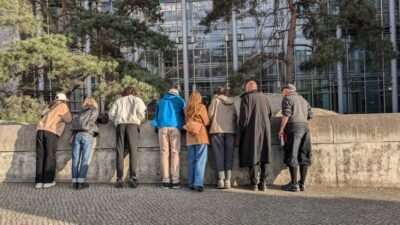
Berlin City walk Government District and Places of Democracy
Read our review →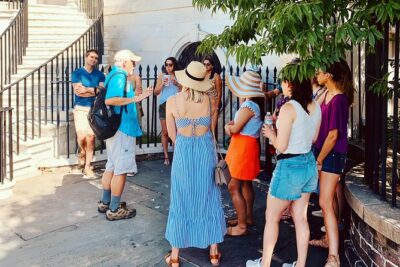
Historic Charleston Guided Sightseeing Walking Tour
Read our review →
Oxford: University and City Walking Tour with Alumni Guide
Read our review →
City Highlights Temple and Market Walking Tour
Read our review →
A History of Terror – Belfast City Centre Walking Tour
Read our review →Browse the lists this tour appears in