
REVIEW · ITALY
Alberobello: History Walking Tour
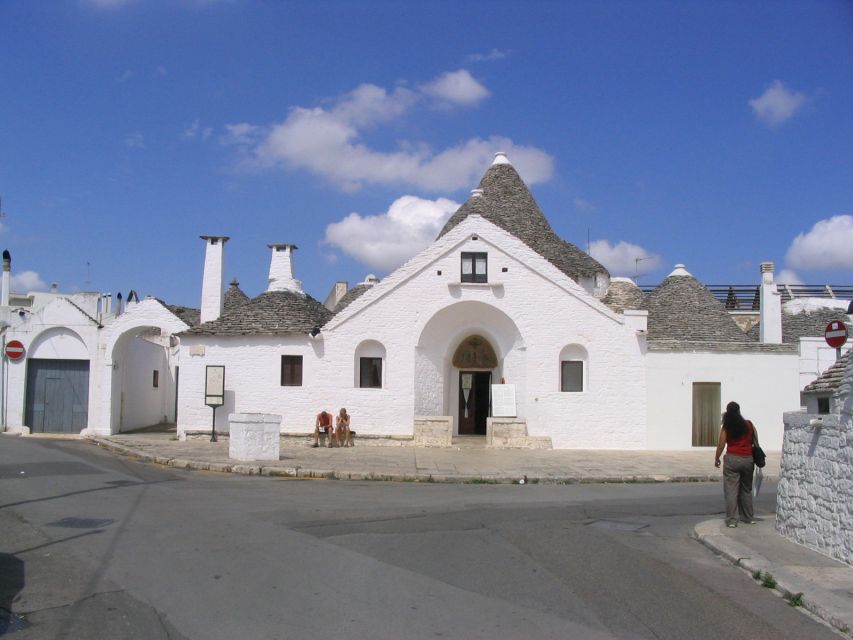
Alberobello makes its impression quickly: rows of whitewashed trulli rise beneath gray stone cones, their roofs giving the town a look unlike anywhere else in Italy. This walking tour helps you read those unusual buildings instead of simply photographing them, starting at the Belvedere terrace and moving through both of the town’s best-known districts.
I like the visit to a local trullo home, where the architecture becomes easier to understand from the inside. I also like the balance between Aia Piccola, with its more residential feel, and Rione Monti, where the lanes are livelier and more commercial. The main consideration is that this is a short walking tour, so you will get a strong introduction rather than an exhaustive study of Alberobello.
Key points to know before booking
- The Belvedere terrace gives you the essential first view: You see Alberobello’s mass of conical roofs before walking among them.
- Both historic districts are included: Aia Piccola and Rione Monti offer different impressions of the town.
- You enter a traditional trullo: This makes the stone construction and compact layout easier to grasp.
- The guide is central to the experience: Guides named Francesco, Mario, Roberta, Sylvia, Floriana, Alessandro, and Dominicio have led highly praised versions.
- The walk lasts 1.5 to 2 hours: It fits neatly into a day in Alberobello, but it does not leave much time for a museum-heavy visit.
- The price is $40 per person: That is fair if you want context, local access, and a guided route rather than a self-guided photo stop.
Why Alberobello makes a good walking tour
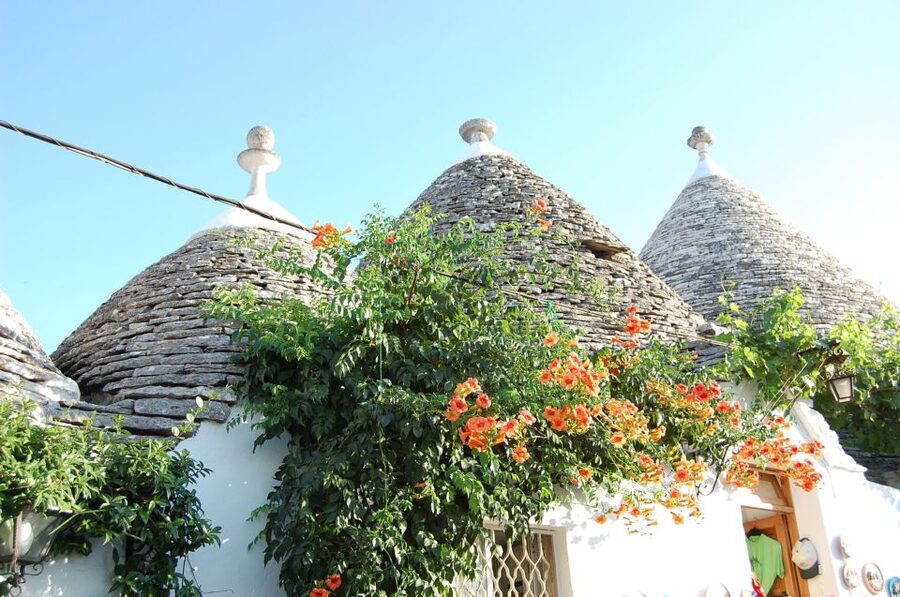
Alberobello is famous for its trulli, but the first few minutes can feel like a visual puzzle. You see conical roofs, small doorways, narrow lanes, and bright white walls, yet the reason for the design is not immediately clear.
That is where a local guide earns the fee. Instead of simply pointing out attractive buildings, the guide explains how the trulli were built and why people in the area used stone construction without cement. The details help you notice the roof shapes, wall thickness, and compact interiors with more purpose.
The town is a UNESCO World Heritage Site, and the tour opens with a view from the Belvedere terrace. This is a sensible starting point because you can first see the overall shape of Alberobello before entering its lanes. I prefer this kind of introduction to beginning in a crowded street with no sense of direction.
The tour is also short enough to be manageable. At 1.5 to 2 hours, it gives you the main story without taking over an entire day. You can follow it with your own wandering, lunch, shopping, or a longer look at the buildings that caught your eye.
More History Walking Tours in Italy:
- Rome: Colosseum Arena, Roman Forum & Palatine Hill Tour
★ 4.5 · 1,874 reviews - Florence: Renaissance and Medici Tales Guided Walking Tour
★ 4.8 · 1,549 reviews - Palermo: Street Food and History Walking Tour
★ 4.9 · 1,486 reviews
The Belvedere terrace puts the roofs in context
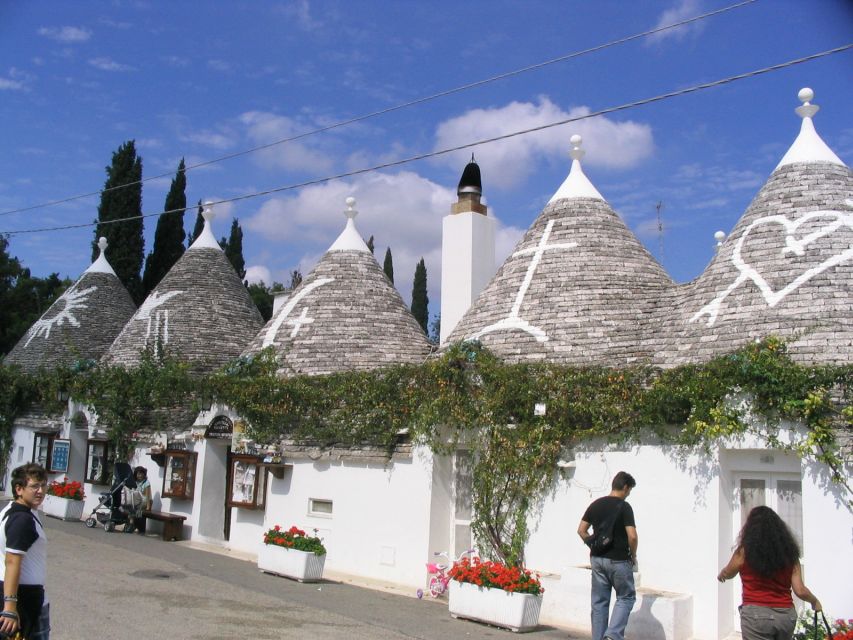
The terrace is more than a quick photo stop. From above, you can see how many trulli are gathered together and how strongly the roofs shape the town’s identity.
Your guide uses this opening view to explain Alberobello’s past and the construction of the houses. That context matters because the trulli can otherwise look like a collection of charming holiday cottages. Their architecture has a practical story, and the tour gives you a way to see the town as a place shaped by local building methods and daily life.
I would pay close attention here, even if you are eager to get into the lanes. The terrace helps you understand the difference between looking at one trullo and seeing Alberobello as a whole district of them.
It is also a good place to get your bearings. The tour later moves into two different areas, and the opening view gives you a mental map before the streets become narrow and winding.
Aia Piccola offers a quieter side of the town
Aia Piccola is one of the two main districts covered on the walk. Its trulli and small alleys give you a more residential impression of Alberobello.
This part of the route is useful because it shows that the town is not only a display of unusual buildings. The trulli form streets and neighborhoods, and the guide can point out how the structures fit together. You begin to notice the relationship between the roofs, white walls, entrances, and tight lanes.
Aia Piccola is especially valuable for anyone who wants more than postcard views. The area helps connect the architecture with ordinary life. It also gives the tour a calmer rhythm before the route reaches the more active Rione Monti district.
The exact pace will depend on the group and guide. A private group is available, which can be useful if you want to ask many questions or keep the walk focused on architecture. A shared tour may feel less tailored, but the short format keeps the experience fairly efficient.
Rione Monti brings the classic Alberobello scene
Rione Monti is the other major district on the itinerary. Here, you walk among a large concentration of trulli and narrow lanes that have made Alberobello so recognizable.
This is the part of the visit where you will likely take the most photographs. The repeated cones and white walls create a strong visual rhythm, but the guide keeps the area from becoming a simple succession of pretty buildings. You can ask about the shapes, construction, and way the houses were used.
Rione Monti also gives you a different feel from Aia Piccola. Seeing both districts matters because it prevents you from thinking that every part of Alberobello functions in the same way. One area can feel more residential, while the other has a more public and visitor-focused character.
The tradeoff is that Rione Monti can feel more commercial. The tour does not promise a completely quiet or untouched village experience. If you want to shop or look at local products, the district may suit you. If you want uninterrupted silence, Aia Piccola may be the more appealing part of the walk.
A few more walking tours around Italy worth a look
- Venice: Doge’s Palace and St Mark’s Basilica Walking Tour
★ 4.4 · 6,291 reviews - Milan: Guided Walking Tour & Last Supper Visit with Ticket
★ 4.7 · 5,409 reviews - Naples: Street Food Walking Tour with Local Guide
★ 4.9 · 4,976 reviews - Florence: Highlights Walking Tour with Expert Guide
★ 4.6 · 4,662 reviews
Entering a trullo explains what photographs cannot
The visit to a traditional trullo home is the most useful feature for many people. Exterior views show the famous cones, but the inside explains how the structure works as a home.
You get the chance to see how a trullo is composed and to examine its compact arrangement. The experience turns an abstract architecture lesson into something you can understand with your own eyes. A guide can explain details that are easy to miss from the street, including how the stone construction affects the shape and feel of the interior.
Some versions of the tour have also included contact with local residents and a taste of local products. That is not listed as a guaranteed part of every booking, so I would treat it as a welcome possibility rather than a promise. The dependable feature is the chance to enter a trullo and learn about its structure.
This stop also makes the $40 price easier to judge. You are not only paying for a guide to lead you along public streets. You are receiving access to an interior that you would not necessarily understand from a self-guided walk.
San Antonio Church adds a distinctive landmark
The route continues through the trulli and small alleys to the trullo-shaped Church of San Antonio. Its form fits the town so closely that it feels like a natural extension of the architecture lesson.
This stop gives the walk a clear landmark and a change of pace. You have been looking at houses, then enter a part of Alberobello where the same cone-shaped idea is used for a church. The guide can connect the building to the wider architectural character of the town.
The church is not presented as a long religious or art-history visit. It is one stop within a compact walking route, so you should expect an introduction rather than a detailed examination of every interior feature.
Still, it helps round out the tour. Alberobello’s trulli are not limited to private homes, and San Antonio shows how the distinctive form became part of the town’s public identity.
The guide can make or break the experience
The tour is built around local explanation, so the guide matters more here than on a basic sightseeing route. Several guides have led especially strong versions, including Francesco, Mario, Roberta, Sylvia, Floriana, Alessandro, and Dominicio.
Francesco has been particularly effective at explaining small details inside historic houses and bringing the experience close to local life. Mario is known for mixing clear explanations with humor, which can help keep the history moving. Roberta has explained why local builders used rock without cement and has used museum exhibits to make the construction easier to understand.
Sylvia and Floriana have been praised for warm, clear presentations. Alessandro has been described as accommodating and generous with information, while Dominicio has brought a strong storytelling approach to the history of Alberobello.
You may not be assigned one of these guides, and the experience can vary with the person leading your group. The useful point is that this tour has a format that rewards a guide who can explain architecture in plain language and connect the buildings with local life.
If you have questions, ask them early. The walk is not long, and a good guide can shape the tour around your interests when the group size allows it.
What $40 buys you
At $40 per person, this is not the cheapest way to walk around Alberobello. You can see the exterior of the trulli without paying for a tour. The value comes from the licensed guide, the organized route through both districts, and the visit inside a traditional home.
I think the price is reasonable for a first visit if you want the town to make sense quickly. You get a focused introduction in less than two hours, with no transfer time and no need to plan the route yourself.
The value is stronger for visitors who care about architecture, local history, or the practical story behind a famous place. It is less compelling if you only want to take photographs and prefer to read information at your own pace.
Children under 18 are free, which makes the cost easier for families to manage. A minimum of two participants is required for the tour to run. Private groups are available for people who want a more personal pace, but the supplied information does not give a separate private-group price.
The activity includes the walking tour and licensed guide. Transfers are not included, so you need to reach the meeting point yourself. The exact starting point can vary by the option booked, so check that detail before setting out.
Languages, timing, and practical planning
The tour is offered in English, French, Spanish, and Italian. That range is useful in a town where a guide’s explanation adds much of the value.
Plan on walking for 1.5 to 2 hours. Wear comfortable shoes because the route goes through small alleys and historic districts rather than following a single broad street. The information provided does not specify accessibility details, so anyone with mobility concerns should confirm the route before booking.
Starting times vary. Check availability for the day you want, especially if you are fitting the walk between a train, lunch, or another Puglia stop.
The end of the activity is back at the meeting point. That makes it simple to continue your day, but it also means you should not expect transport to another town or attraction.
Cancellation is flexible up to 24 hours in advance for a full refund, and you can reserve now and pay later. Those terms are useful if your Puglia schedule is still changing.
Who will get the most from this tour
I would recommend this walk to a first-time visitor who wants a clear introduction to Alberobello. It is also a good fit if you have limited time and would rather learn the basic story before exploring independently.
Architecture fans will appreciate the explanation of the trulli’s construction. Families may like the short duration and free admission for children under 18. A private group could be worth considering if you want to ask detailed questions or keep the pace closely matched to your group.
The tour is less suitable if you want a long, slow museum visit or a full-day historical study. It is also not a substitute for simply wandering alone. The best plan may be to use the guided walk first, then return to the lanes and buildings that interested you most.
Food-focused visitors should ask the guide for local lunch suggestions. Some versions of the experience have included local-product tasting, but that is not a stated inclusion, so do not book solely on the expectation of food.
Should you book the Alberobello History Walking Tour?
Book it if you want Alberobello’s trulli to become more than unusual roofs in your photographs. The combination of the Belvedere view, Aia Piccola, Rione Monti, San Antonio Church, and a traditional trullo interior gives you the main pieces of the town in a well-sized walk.
I especially like it for a first visit because the guide helps you understand what you are seeing without taking up a full day. At $40, the tour earns its price through local explanation and interior access, not through transport or elaborate extras.
Skip it if you prefer to wander alone, do not need historical context, or plan to spend only a few minutes in town. For everyone else, especially families and visitors with limited time, this is a practical way to get oriented before exploring Alberobello on your own.
FAQ
How long does the Alberobello history walking tour last?
The tour lasts between 1.5 and 2 hours. Starting times vary, so check availability for your preferred date.
How much does the tour cost?
The listed price is $40 per person.
Are children allowed to join for free?
Yes. Children under 18 are free.
What areas of Alberobello does the tour visit?
The route includes the Aia Piccola and Rione Monti districts. It also reaches the trullo-shaped Church of San Antonio.
Can I enter a traditional trullo?
Yes. The tour includes a visit to a local home so you can see how a trullo is composed.
What languages are available?
The live guide can lead the tour in English, French, Spanish, or Italian.
Is transportation included?
No. Transfers are not included. You must make your own way to the meeting point.
Can I cancel the booking?
Yes. You can cancel up to 24 hours in advance for a full refund. You can also reserve now and pay later.
Just added around Italy
- Genoa Walking Tour: Explore Top Sights & Hidden Gems★ 4.0 · 138 reviews
- Genoa Food, Wine Tasting & History Walking Tour★ 5.0 · 212 reviews
- Genoa Walking Tour: Discover Hidden Treasures and Street Food★ 5.0 · 80 reviews
- Taste Genoa: A Full Meal Walking Food Tour by Do Eat Better★ 5.0 · 509 reviews
- Tasty Florence Street Food with Guided Walking of the City★ 5.0 · 174 reviews
- Medici Legends & Renaissance Wonders: Florence Small Group Tour★ 5.0 · 205 reviews
- Florence Food Tour of 10+ Authentic Tastings with Cheeses & Wines★ 5.0 · 155 reviews
- Florence Private Walking tour with Skip-the-line to Accademia★ 4.5 · 236 reviews
History Walking Tours, compared.



Berlin’s Best: 2 Hour Walking Tour Third Reich and the Cold War
Read our review →
Third Reich Berlin: Hitler and WWII Walking Tour
Read our review →
New Orleans Garden District History Walking Tour
Read our review →
Cartagena: Historic Center and Getsemaní Shared Walking Tour
Read our review →
Imperial Palace and Shogun Historical Walking Tour
Read our review →Browse the lists this tour appears in