
REVIEW · FLORENCE
Florence: Renaissance and Medici Tales Guided Walking Tour
Florence’s greatest story is not locked inside one museum. It unfolds in the streets, where the Medici family shaped politics, art, banking, and the skyline. This walking tour follows that story from San Lorenzo to the Uffizi, linking the Duomo, Palazzo Vecchio, Ponte Vecchio, and Medici buildings along the way.
I like two things right away: the guides turn names such as Brunelleschi, Dante, and Michelangelo into people rather than schoolbook facts, and the route gives you a useful first look at central Florence. Guides including Chiara, Michele, Glenda, and Angela are often praised for clear storytelling, humor, and practical advice about food and sights.
The main consideration is that this is an exterior walking tour, not a ticketed visit inside the major monuments. You will hear about Brunelleschi’s Dome and see the buildings closely, but you should book separate entry tickets if you want to go inside the Duomo complex, Palazzo Vecchio, or the Uffizi.
Key points to know before you book
- Follow the Medici story through the city: See how several generations of one family left their mark on palaces, churches, streets, and public spaces.
- Start at San Lorenzo: Meet under the green umbrella by the stairs to the church entrance, an easy landmark near the historic center.
- Expect strong storytelling: Chiara, Michele, Glenda, Angela, and other guides bring Florence’s political and artistic past together with humor and memorable tales.
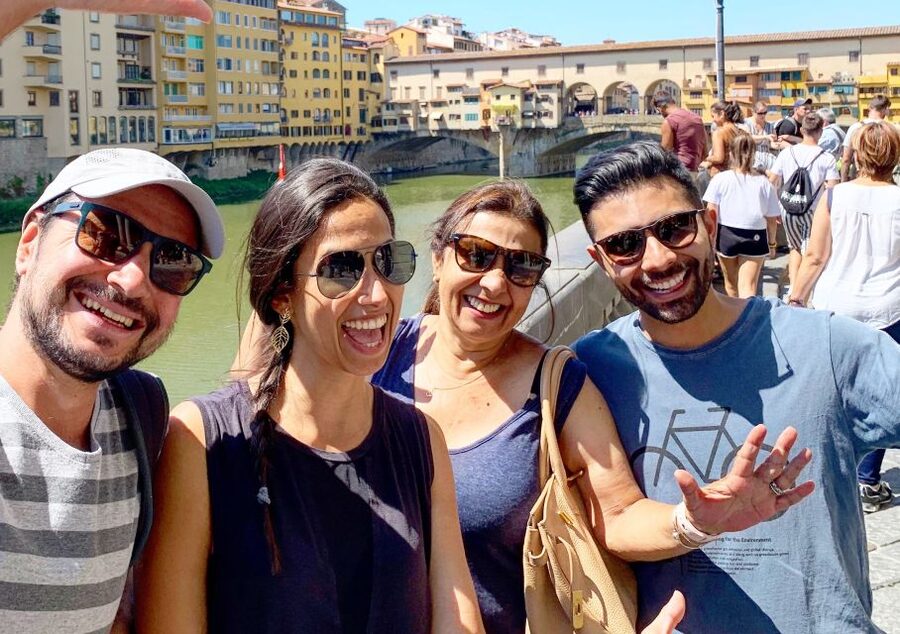
- See the main sights from outside: The route covers the Duomo complex, Giotto’s Bell Tower, Palazzo Vecchio, Piazza della Signoria, Ponte Vecchio, and the Uffizi area.
- Use it as a first-day orientation: You get a practical sense of the center, plus suggestions for places to eat, drink, shop, and continue sightseeing.
- Plan for all weather: Wear comfortable shoes, carry water and a camera, and bring clothing suited to the forecast because the walk runs rain or shine.
Florence’s power story begins at San Lorenzo
The meeting point is in Piazza di San Lorenzo, in front of the stairs leading to the main entrance of the Basilica of San Lorenzo. Look for the green umbrella belonging to Florence Free Tour-Tale. The square is a fitting place to begin because the church combines Romanesque and Renaissance elements, and the Medici connection is close at hand.
Your guide uses this first stop to set the scene. Florence did not become the cradle of the Renaissance by accident. Money from banking and trade, fierce competition among wealthy families, ambitious artists, and civic pride all pushed the city forward.
The Medici family sits at the center of that story. They were not kings in the formal sense, but their money and alliances gave them enormous influence. You will hear how different generations supported artists, commissioned buildings, managed political rivals, and helped make Florence a cultural force far beyond Tuscany.
This opening works well because it gives the rest of the walk a clear thread. Instead of looking at a church, palace, or statue as an isolated attraction, you begin to see how finance, family power, religion, and art were tied together.
More History Walking Tours in Florence:
- Berlin: Third Reich & Cold War Guided Walking Tour
★ 4.9 · 8,378 reviews - Munich: Third Reich & WWII Walking Tour
★ 4.6 · 6,181 reviews - Berlin’s Best: 2 Hour Walking Tour Third Reich and the Cold War
★ 5.0 · 5,486 reviews
Palazzo Medici Riccardi and the family behind the myth
From San Lorenzo, the route continues to Palazzo Medici Riccardi. This is one of the most useful stops for understanding how the Medici built authority without always wearing a crown.
The guide explains the family’s rise and the way their influence spread through Florence. You will hear stories of ambition, rivalry, alliances, and the careful use of art and architecture to project status. The best part of this stop is the connection between public image and private power. A palace was not simply a home. It announced who mattered.
Several guides are praised for handling this material with energy rather than presenting a list of dates. Michele, in particular, is repeatedly described as a strong storyteller who makes the Medici story easy to follow. Chiara is also praised for explaining Florence through engaging tales and for answering questions patiently.
The route does not turn into a long palace visit. You are learning from the street and viewing the building from outside. That keeps the tour moving, but it also means you will need another visit if you want the interior rooms and collections.
The Duomo complex and Brunelleschi’s daring dome
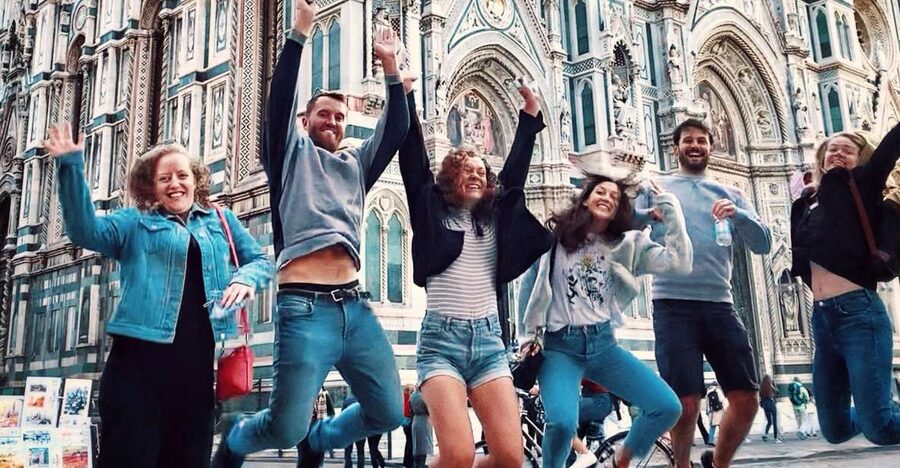
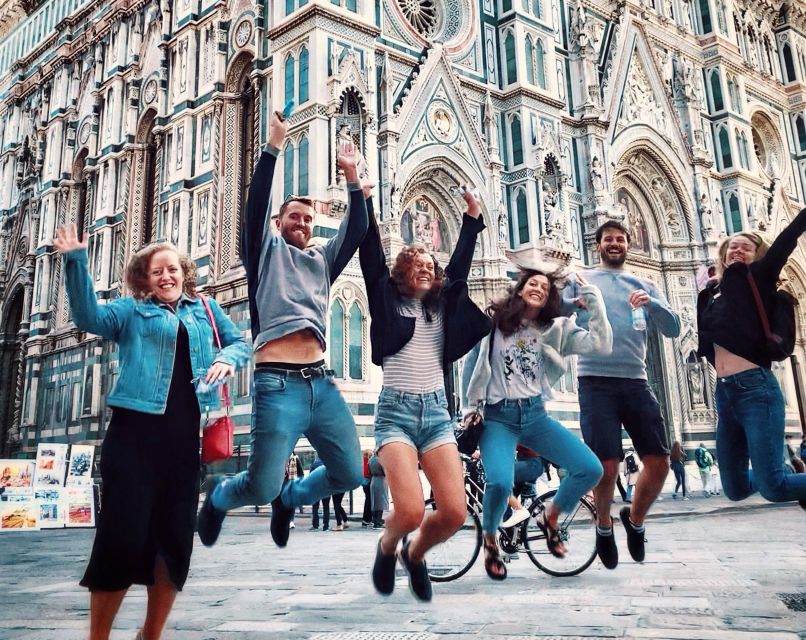
The Florence Duomo complex is the visual centerpiece of the walk. The cathedral’s marble exterior, Giotto’s Bell Tower, and Brunelleschi’s Dome form one of Europe’s most recognizable city views.
Your guide explains the history behind the cathedral and the challenge of creating its enormous dome. The useful part is not only hearing that Brunelleschi was a brilliant architect. You also learn why the dome mattered to Florence, how it reflected civic ambition, and why the building became a symbol of the city’s wealth and confidence.
The tour also asks you to notice symbols along the route. These may relate to religious belief, family identity, political claims, or artistic messages. That habit of looking for meaning is one of the tour’s better features. Florence can become a blur of famous facades when you move too quickly. A guide who points out what a symbol means gives you a way to read the city after the tour ends.
The Duomo area can be crowded and noisy, especially at popular times. A guide using a microphone and earpieces can help, and one account specifically notes that this made it easier to follow Chiara through narrow streets. Still, you should expect a public square rather than a quiet lesson.
Do not confuse this stop with a dome climb or cathedral entry. The walking tour explains and presents the complex from the outside. If climbing Brunelleschi’s Dome is on your list, you need a separate reservation.
Dante, symbols, and the city’s literary side
The walk includes the House of Dante, or Casa di Dante, connecting Florence’s political story with its literary one. Dante is an important figure for understanding the city’s medieval identity and the tensions that shaped Florentine life.
This part helps break up the focus on the Medici. Florence was not created by one family alone. The city’s story reaches back through religious conflicts, civic rivalries, writers, artists, merchants, and competing ideas about power.
The guide’s role matters here. A short stop can either become a dry list of facts or a memorable explanation of how Dante fits into Florence. The strongest guides on this tour are praised for making different periods understandable, moving from the medieval city to the Renaissance without losing the thread.
If you have teenagers or family members who do not usually enjoy art history, this section can help. The stories give the buildings and famous names a human angle. Several guides are described as engaging for different ages, and one family found the tour especially successful with teenagers.
More Guided Tours in Florence:
- Florence: Highlights Walking Tour with Expert Guide
★ 4.6 · 4,662 reviews - Florence: Duomo Complex with Tickets & City Walk Guided Tour
★ 4.7 · 2,057 reviews - David & Accademia Guided Tour with Time Entry Ticket
★ 4.5 · 1,705 reviews - Florence: Guided Walking Tour
★ 4.6 · 1,602 reviews
Palazzo Vecchio and Piazza della Signoria
At Palazzo Vecchio and Piazza della Signoria, the tour returns to the subject of public power. This is where Florence’s government, civic identity, and artistic display meet in one concentrated space.
Your guide explains the role of Palazzo Vecchio and points out the monuments around the piazza. The square is more than a handsome stop for photographs. It shows how art was used in public spaces to send messages about strength, victory, loyalty, and political authority.
The nearby Loggia dei Lanzi adds another layer. Its open arcade displays sculpture in a setting that is free to view from the street. You can pause here to take in the works and listen without needing a museum ticket.
This is also one of the tour’s busiest sections. The square attracts people heading toward the Uffizi, restaurants, and other central sights. A good guide keeps the group together and chooses a place where everyone can hear. The route’s value here comes from interpretation. You can walk through the piazza on your own, but the guide helps explain why these particular buildings and sculptures were placed together.
Ponte Vecchio and Florence’s changing center
The route continues toward Ponte Vecchio, the old bridge over the Arno. It is one of Florence’s most recognizable sights, but the tour treats it as part of the city’s wider story rather than as a quick photo stop.
Your guide connects the bridge to the changing life of central Florence and the movement between important parts of the city. You get another look at how commerce, status, and the Medici presence shaped the urban center.
Ponte Vecchio can be crowded, and the bridge is not a place for a long, quiet talk. Keep your belongings close in busy areas and expect to pause around other pedestrians. The reward is seeing the bridge in the context of the route, after learning how Florence’s ruling families used buildings and public spaces to shape the city.
Finishing near the Uffizi with useful local advice
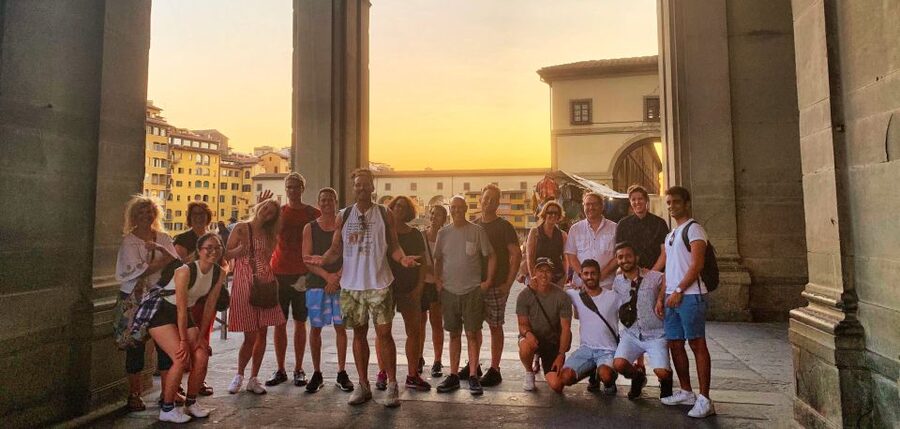
The tour ends outside the Uffizi Gallery. This is a practical finish because you are left near one of Florence’s key museums and within easy reach of central streets and the river.
The guide also gives advice about eating, drinking, shopping, and choosing what to see next. This is more useful than it may sound. Florence’s center is full of places aimed at short visits, and a local guide can help you think beyond the most obvious choices.
Michele is praised for offering food and shopping recommendations, while other guides are described as sharing local resources and helpful suggestions for continuing around the city. Treat these tips as starting points rather than a fixed dining plan. The advice will be most useful if you tell your guide what you like and what you want to avoid.
Ending here also makes the tour easy to place at the start of your stay. You can continue to the Uffizi, walk back toward the Duomo, or use the orientation to plan the rest of your day.
The pace, timing, and walking conditions
The activity is advertised as a two-hour walk, while the detailed route describes about two hours and 15 minutes. Allow roughly two to two and a quarter hours so you are not rushing to another booking.
The pace is intended to be steady rather than athletic. You will move through central streets and stop at several major sights. Comfortable shoes matter because the value comes from covering a good stretch of Florence on foot, not from standing in one square.
The tour takes place rain or shine. Bring water, a camera, and weather-appropriate clothing. Florence’s stone streets can be tiring in poor footwear, and rain may make the walking less pleasant even if the guide keeps the program going.
The activity is wheelchair accessible, though the exact ease of each stop can depend on crowds and street conditions. If accessibility is important to you, confirm the current arrangements when booking.
Guides speak English or Spanish. Named guides in the feedback include Chiara, Michele, Glenda, Glinda, Angela, Antonio, Autumn, Fabio, Gabriella, Manuel, and Ricardo. The guide assigned to your departure can vary, but the repeated strengths are clear: good storytelling, strong command of Florence’s past, patience with questions, and practical local suggestions.
What the low price really means
The listed price is $2.36 per person, and the experience follows a free-tour model. That price is remarkably low for a guided introduction to central Florence, but you should understand the tipping culture before you reserve.
The booking price is not the whole social expectation. One person specifically noted paying €4.90 and then tipping according to satisfaction, while another advised bringing cash because a significant tip is expected. In practice, you should budget for a tip that reflects the guide’s work and your group’s satisfaction.
Even with that added cost, the tour can be good value if you want a city orientation and historical context without paying for museum admission. It is less useful if you already know Florence well or want a detailed visit inside the monuments.
The tour includes the walking guide but not entry tickets. You should budget separately for the Duomo complex, Brunelleschi’s Dome, Palazzo Vecchio, the Uffizi, or any other paid attraction you want to enter.
Free cancellation is available up to 24 hours before the start time for a full refund, and you can reserve now and pay later. Those terms help if your Florence plans are still shifting.
Who will get the most from this Florence walk
I would choose this tour early in a Florence visit. The route covers enough of the center to help you understand where the main sights are, and the history gives you a better reason to return to the places that interest you.
It suits you especially well if:
- You want a clear introduction to the Medici and Renaissance Florence.
- You prefer stories and explanations to silent sightseeing.
- You are visiting with teenagers or family members who need an engaging pace.
- You want recommendations for food, drinks, shopping, and further sightseeing.
- You plan to visit museums and monuments separately after getting oriented.
You may want something else if your priority is interior access, a small private group, or a specialist art-history lecture. This walk gives you a broad, lively foundation. It does not replace a museum guide or a timed visit to the Duomo.
Should you book the Renaissance and Medici Tales walk?
Book it if you want Florence to make sense quickly. The route connects the Medici family, Brunelleschi, Dante, public sculpture, major squares, and the city’s practical modern life in one manageable walk.
I especially like it as a first-day activity, when local food advice and a sense of direction can shape the rest of your stay. The low booking price is appealing, but remember to carry cash for the expected tip and to budget separately for monument entries.
Skip it if you only want to go inside the sights or if you have already taken a detailed Florence history tour. For most first-time visitors, though, this is a friendly and useful way to meet the city before tackling its museums one by one.
FAQ
Where does the tour meet?
Meet at Florence Free Tour-Tale, under the green umbrella in front of the stairs leading to the main entrance of San Lorenzo Church.
Where does the tour finish?
The walk ends outside the Uffizi Gallery.
How long does the tour last?
It is advertised as two hours. The detailed route gives an estimated duration of about two hours and 15 minutes, so allow a little extra time.
What languages are available?
The live tour is offered in English and Spanish.
Is the tour wheelchair accessible?
Yes, the activity is listed as wheelchair accessible.
Does the tour enter the Duomo or Brunelleschi’s Dome?
The tour provides a guided look at the Duomo complex, Giotto’s Bell Tower, and Brunelleschi’s Dome. Entry tickets and interior visits are not included.
Does the tour include Uffizi Gallery admission?
No. The tour finishes outside the Uffizi Gallery, and gallery admission is not included.
What should I bring?
Bring comfortable shoes, water, a camera, and clothing suited to the weather.
Does the tour operate in bad weather?
Yes. The walk takes place rain or shine, so dress for the forecast.
Can I cancel for a full refund?
Yes. You can cancel up to 24 hours in advance for a full refund. You can also reserve now and pay later.
Just added around Florence
- Florence: Private Walking Tour of Florence’s Hidden Gems★ 4.6 · 297 reviews
- Private Flavors of Florence Walking Tour (Food and Wine Included)★ 5.0 · 373 reviews
- Florence: Food Walking Tour with Local Steak and Tuscan Wine★ 4.9 · 529 reviews
- Walking Food Tour of Florence with Tastings and Wine★ 5.0 · 518 reviews
- Florence: Duomo Complex with Tickets & City Walk Guided Tour★ 4.5 · 183 reviews
- Florence Walking Tour★ 5.0 · 621 reviews
- Florence: Street Food Walking Tour with Wine★ 4.9 · 719 reviews
- Florence: Mysteries of the Medici Guided Walking Tour★ 4.4 · 940 reviews
History Walking Tours, compared.



Berlin’s Best: 2 Hour Walking Tour Third Reich and the Cold War
Read our review →
Third Reich Berlin: Hitler and WWII Walking Tour
Read our review →
New Orleans Garden District History Walking Tour
Read our review →
Cartagena: Historic Center and Getsemaní Shared Walking Tour
Read our review →
Imperial Palace and Shogun Historical Walking Tour
Read our review →Browse the lists this tour appears in