
REVIEW · BARCELONA
The Spanish Civil War & Franco Barcelona Walking Tour
Barcelona’s Civil War story is not displayed behind glass. It is woven into ordinary streets, church walls, old hospitals, and busy squares. This 2.5-hour English walking tour helps you spot those traces while explaining the political groups, working-class movements, and Franco-era repression that shaped the city.
I like the tour’s use of historic photographs and posters, which give context to places that otherwise look like normal city corners. I also like its focus on Barcelona rather than a broad lecture about Spain. The drawback is that the subject is complicated, the walk can feel intensive, and one report describes a guide whose explanations became hard to follow.
Key points at a glance
- Barcelona’s Civil War sites: Follow the story from Plaça de Catalunya and La Rambla into the Old Town.
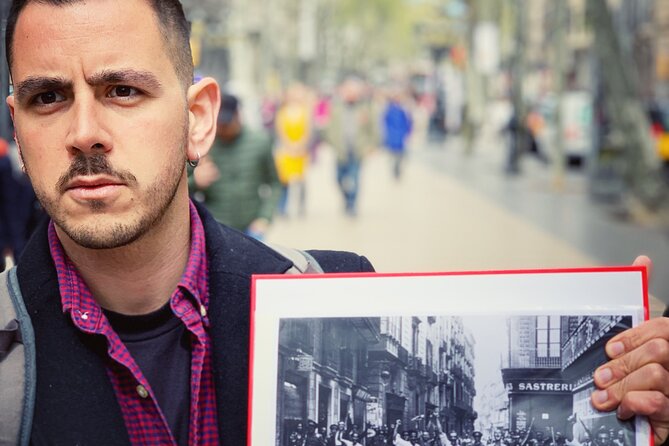
- Historic images on the street: Photographs and posters help connect present-day buildings with wartime events.
- More than battlefield history: Learn about anarcho-syndicalism, working-class Barcelona, Republican factions, and Franco’s dictatorship.
- Guides with different strengths: Henrieta, Chrysa, Evan, Filipa, Yannis, Evangelos, and others are praised for clear, passionate teaching.
- A small extra cost: A guide radio headset costs €1 per person and is paid at the meeting point.
- Best for history-minded walkers: You need comfortable shoes, curiosity, and patience with a difficult subject.
Why this Barcelona history walk feels different
Most first-time Barcelona walks focus on Gaudí, medieval lanes, markets, or food. This one takes a harder route. It asks you to look at the city through the political violence of the 1930s and the long shadow of Franco’s rule.
That matters because the Civil War was not a distant event fought somewhere outside Barcelona. It affected the city’s streets, institutions, churches, workers, political parties, and families. The tour helps you understand how several Republican factions could be allied against Franco while also fighting among themselves.
You also get a local city orientation along the way. Plaça de Catalunya, La Rambla, and the Old Town are familiar to almost anyone visiting Barcelona, but the guide gives you a reason to pause in places you might otherwise cross quickly. The central question is not simply who won the war. It is how the conflict changed daily life and how its memory still affects Spanish and Catalan identity.
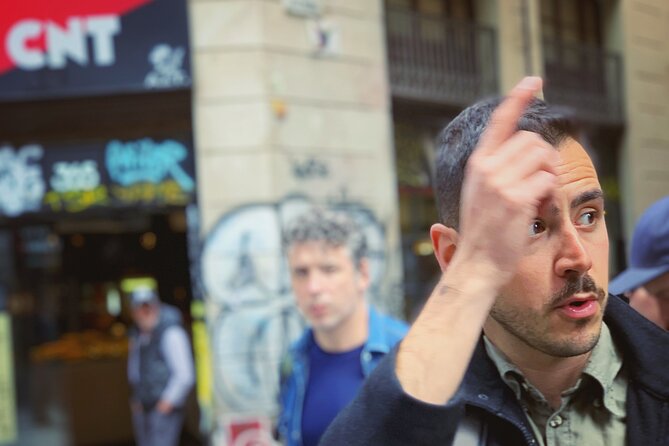
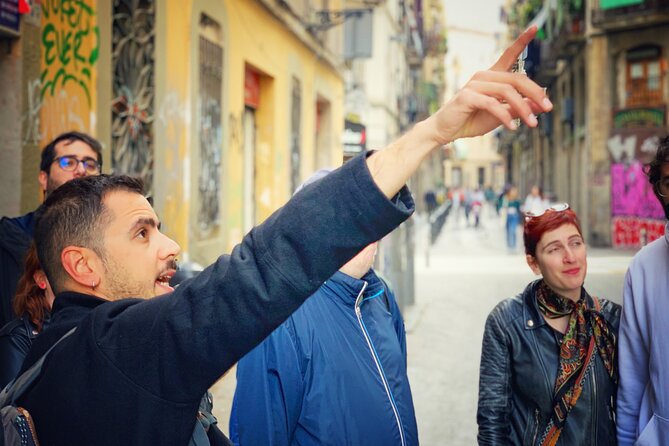
The guides are the heart of the experience. Henrieta is praised for explaining events from 1936 through late 1938 in detail. Chrysa brings an archaeology background and handles questions carefully. Evan is noted for making difficult political relationships clear, while Yannis is praised for linking history to everyday life. Filipa, Onno, Evangelos, and other guides are also described as warm, articulate, and willing to answer questions.
That range of guide names is useful to keep in mind. The tour’s quality depends heavily on the person leading it. The strongest reports describe passionate teachers who adjust the pace and welcome questions. One less favorable account describes a disorganized presentation in which people and groups were introduced without enough explanation. That is a fair warning for a subject with many unfamiliar names and abbreviations.
A few more walking tours around Barcelona worth a look
- Barcelona Tapas and Wine Experience Small-Group Walking Tour
★ 5.0 · 5,804 reviews - Barcelona: Tapas Walking Tour with Food, Wine, and History
★ 4.8 · 4,261 reviews - Barcelona: Food Walking Tour with Tapas and Wine
★ 4.9 · 2,180 reviews
Plaça de Catalunya: starting with power and protest
The walk begins outside Foot Locker at Plaça de Catalunya, at number 20. This is a practical meeting point near public transport and easy to locate, although the busy square can make it worth arriving a few minutes early.
The square provides a useful opening because it is one of Barcelona’s major public spaces and an important place during the Civil War. Here, the guide begins setting out the political and social forces behind the conflict rather than dropping you straight into a list of dates.
This early explanation is vital. Spain in the 1930s cannot be reduced to a simple contest between two neat teams. You will hear about the Republican side, Franco’s forces, anarchists, socialists, communists, and other political groups. Barcelona’s particular mix of working-class activism and anarcho-syndicalism receives special attention.
Expect a talk rather than a quick photo stop. The stated visit is about 10 minutes, but the guide may spend longer explaining the background that makes later locations easier to understand. If you know little about the Spanish Civil War, listen closely here. A clear beginning makes the rest of the walk far less confusing.
La Rambla: the famous avenue with a darker past
From Plaça de Catalunya, the group continues along La Rambla. This famous avenue is usually associated with flower stalls, cafés, street performers, and crowds. On this walk, it becomes a way to consider how public spaces function during political crisis.
The stop lasts about 10 minutes and covers several Civil War-related sites. The value is not a single grand monument. It is the contrast between the ordinary modern street and the events that took place around it.
This is one place where historic images help. The guide shows photographs and other visual material to bring the period into view. That can make a major difference because many Civil War locations in Barcelona do not have large plaques or preserved ruins explaining what happened. You may need to compare a current façade with an old image to understand the change.
One practical issue is sound. La Rambla can be noisy, and the group may be close to traffic and other pedestrians. The €1 radio headset, paid to an outside provider at the meeting point, is a sensible expense if you want to follow every word. One participant specifically advised using headphones to concentrate.
Antic Hospital de la Santa Creu: old walls, modern questions
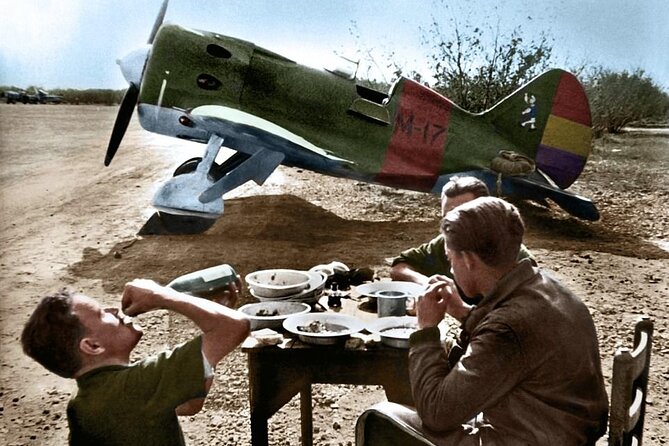
The Antic Hospital de la Santa Creu brings the walk into a historic complex with roots reaching back to the 15th century. The stop is brief, about five minutes, but it adds a different layer to the tour.
Here, the Civil War story meets an older Barcelona institution. The point is not that every old building is a war memorial. Rather, the guide shows how the city’s existing civic and religious spaces became part of life during conflict.
The short stop also helps vary the rhythm. The route is not one long lecture in a single square. You move between streets and buildings, with each place offering a different angle on Barcelona’s past. Still, do not expect a large museum visit or an indoor exhibition at this stop. The experience is built around explanation on location.
Same streets, a different route:
- Barcelona Tapas Walking Tour: Food, Wine & History
★ 4.5 · 1,928 reviews - Barcelona Helicopter, Sailboat & Old Town Private Walking Tour
★ 5.0 · 1,395 reviews - Barcelona: Old Town and Gothic Quarter Walking Tour
★ 4.8 · 1,393 reviews - Barcelona: City Walking Tour with a Local Guide
★ 4.9 · 1,384 reviews
Basilica de Santa Maria del Pi: a church with a wartime connection
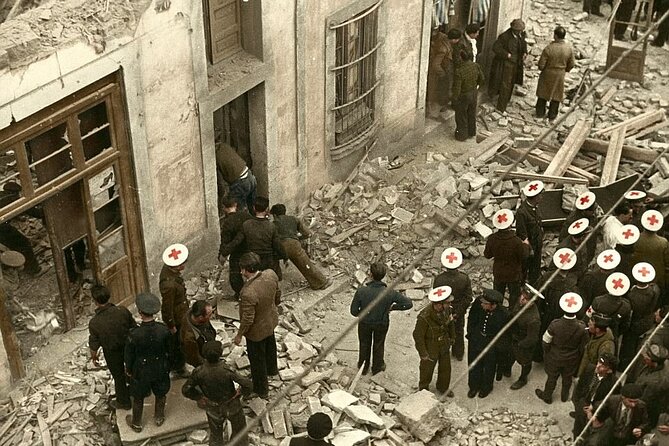
The Basilica de Santa Maria del Pi is another short stop, listed at about five minutes. Its Civil War connection is described as less obvious, which is precisely why it works well on this route.
You are not simply checking off famous churches. The guide points out a less familiar link between the basilica and the conflict, showing how religious buildings fit into the political and social tensions of the period.
Admission to the basilica is not included. The tour stop may be viewed from outside unless you choose to enter separately, so allow for that distinction when planning your day. The key value here comes from the guide’s explanation, not from a long interior visit.
This is also where the tour’s wider subject becomes clear. The war was not only about troop movements. It involved religion, class, ideology, local identity, and competing visions of Spain. A small church stop can help bring those disputes down to a human scale.
Plaça Sant Felip Neri: beauty beside visible violence
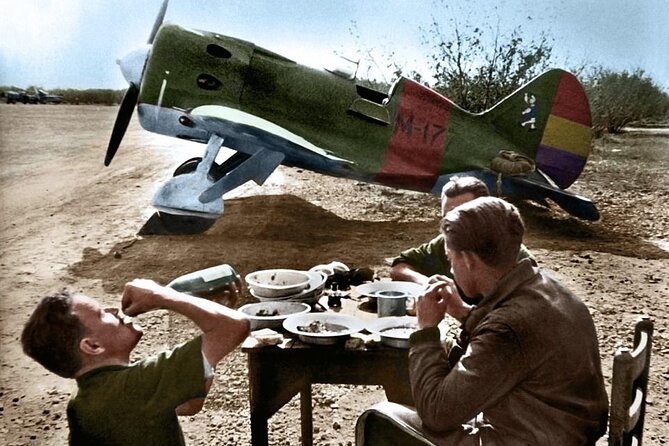
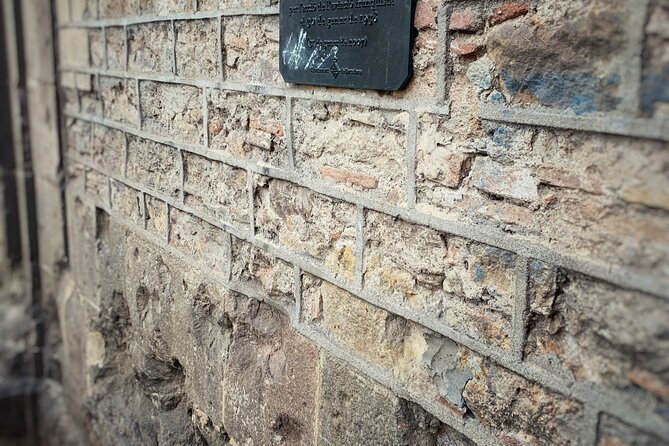
Plaça Sant Felip Neri is likely to be the most emotionally powerful stop. It is a quiet, unusually atmospheric square, yet its walls carry visible reminders of Civil War destruction.
The stop is listed at about five minutes, but the setting may encourage a longer pause. The square’s beauty and the marks of violence sit close together, creating a sharp contrast. This is one of the few places on the route where the physical scars are especially direct.
You may find this stop more affecting than a long political explanation. It makes the war tangible. The guide’s role is to provide the facts without turning the site into a theatrical performance. Several guides are praised for handling the subject with passion and care, which matters here.
The activity ends at a different location from its starting point. The supplied details do not specify the final street, so avoid scheduling a tight appointment immediately afterward.
The politics are the point, not a side note
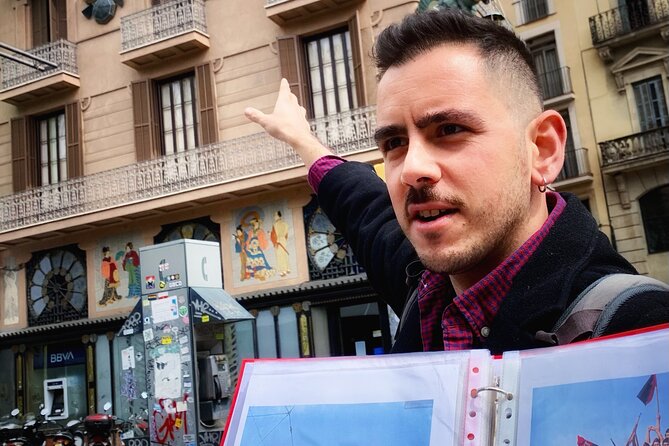
The strongest reason to book this walk is the political explanation. The Spanish Civil War can become a blur of parties, leaders, dates, and shifting alliances. A good guide turns that material into a story you can follow.
The tour covers the forces behind the conflict, the different Republican factions, Barcelona’s anarcho-syndicalist period, the working class, and the Franco dictatorship. It also looks at the years leading up to the war, not only the fighting itself.
This broader frame is useful because the war did not appear from nowhere. Social tension, political division, and competing ideas about Spain and Catalonia all mattered. The guide also explains how Franco’s rule shaped public memory and national identity after the fighting ended.
Expect questions from the group, and ask your own. The guides most often praised are described as approachable and patient, with Evan and Yannis in particular noted for making difficult material understandable. One guide even changed the route to address questions, which is a good sign if you want a discussion rather than a fixed script.
The subject can be sensitive. You will hear about destruction, political repression, and the lingering decision in Spain to avoid openly confronting parts of this past. The tone is educational rather than light entertainment.
Timing, walking, and group size
The advertised duration is about 2 hours and 30 minutes. The listed stops add up to only around 35 minutes of formal stop time, so much of the experience consists of walking, explanations between locations, questions, and the movement through the Old Town.
That format suits you if you like learning while walking. It may feel slow if you want rapid sightseeing or long periods inside monuments. One account calls it walking-intensive and recommends comfortable shoes. Another says the walking was minimal, so the experience may vary with the exact route, guide, and pace.
The group can include up to 25 people. That is large enough to create energy but small enough for questions to be possible. The headset is worth considering, especially in noisy streets or if you are at the back of the group.
The tour is offered in English. Most people can participate, and service animals are allowed. It runs near public transport, which makes the central meeting point convenient.
Is $47.16 a fair price?
At $47.16 per person, this is not the cheapest way to spend two and a half hours in Barcelona. You are paying for a specialist subject, a local guide, on-site explanation, historic images, and a structured route through several central locations.
The value depends on your interests. If you already want to understand the Civil War, Franco, Catalan identity, or Barcelona’s working-class politics, the price is reasonable for a focused lesson that takes place in the city itself. You also avoid spending hours trying to piece together the story from scattered museum labels and guidebooks.
If you are mainly looking for grand architecture, food stops, or a relaxed introduction to Barcelona, the cost may feel high. The tour does not include a meal, attraction admission, or a long interior visit. You should see it as a history class on foot, not as a general sightseeing sampler.
There is also the extra €1 per person for the radio headset. It is a small amount, but it should not come as a surprise.
Who should book this walk?
I would choose this tour early in a Barcelona stay if the subject interests you. It can change the way you read the city afterward, especially when you pass old churches, public squares, or streets connected to the war.
It suits:
- First-time visitors who want more than Gaudí and Gothic architecture.
- People with some background in modern European history.
- Anyone curious about Catalan and Spanish identity.
- Students, teachers, and readers who want place-based context.
- Visitors willing to ask questions and follow a complicated explanation.
It may not suit you if you dislike political history, have limited walking stamina, or want a purely cheerful holiday activity. The guide’s skill matters greatly, so prepare for a serious topic and give yourself room to ask for clarification if names and factions begin to run together.
Booking and cancellation details
The tour is free to cancel up to 24 hours before its local start time for a full refund. Changes made within 24 hours are not accepted, and late cancellations are not refunded.
The experience depends on good weather and a minimum group size. If poor weather or low enrollment cancels it, you are offered another date or experience, or a full refund. Confirmation is provided when you book.
Should you book The Spanish Civil War & Franco Barcelona Walking Tour?
Book it if you want Barcelona to make more sense beyond its buildings and food. The best guides, including Henrieta, Chrysa, Evan, Filipa, and Yannis, are described as clear, warm, and deeply engaged with the subject. Their explanations, combined with historic images and real city locations, can turn a difficult chapter into something you can follow.
Go in with comfortable shoes, pay the small headset fee, and expect a serious lesson rather than a breezy stroll. Because the guide can make or break a complicated history tour, arrive ready to ask questions and request clarification. For an honest look at Barcelona’s political past, this is a worthwhile choice.
FAQ
How long is The Spanish Civil War & Franco Barcelona Walking Tour?
The tour lasts approximately 2 hours and 30 minutes.
Where does the tour begin?
It begins at Foot Locker, Plaça de Catalunya, 20, in Barcelona’s Ciutat Vella district.
Where does the tour end?
The activity ends at a different location from the meeting point. The supplied details do not specify the final location.
Is the radio headset included?
No. A guide radio headset costs €1 per person and is paid at the meeting point to an external provider.
How many people can join the tour?
The maximum group size is 25 participants.
What happens if the tour is canceled because of weather or group size?
You are offered a different date or experience, or a full refund. You can also cancel for a full refund if you do so at least 24 hours before the start time.
Just added around Barcelona
- Private Barcelona Old Town and Gothic Quarter Walking Tour★ 5.0 · 134 reviews
- Barcelona Gothic Quarter Walking Tour with Tapas★ 5.0 · 248 reviews
- Barcelona Private Food Tour: Tapas, Paella & 8+ Food Tastings★ 5.0 · 164 reviews
- Picasso Museum and Walking Tour Plus Optional Wine & Food Tasting★ 5.0 · 596 reviews
- Barcelona Architecture Walking Tour With Casa Batlló Upgrade★ 5.0 · 137 reviews
- Montjuïc Walking Tour With Optional Flamenco Show★ 5.0 · 196 reviews
- Semi-Private Montserrat Monastery, Funicular & Scenic Nature Walk★ 5.0 · 172 reviews
- Private Tour Spanish Civil War & Franco’s Dictatorship★ 5.0 · 116 reviews
Walking Tours, compared.

Magical London: Harry Potter Guided Walking Tour
Read our review →
Reykjavik Food Walk – Local Foodie Adventure in Iceland
Read our review →
History and Hauntings of Salem Guided Walking Tour
Read our review →
New Orleans Premier Ghost, Voodoo and Vampire Walking Tour
Read our review →
Amsterdam Anne Frank: Small-Group Walking Tour & Local Guide
Read our review →

Edinburgh Castle: Guided Walking Tour with Entry Ticket
Read our review →
Anne Frank’s Story – Guided Walking Tour through Amsterdam
Read our review →Browse the lists this tour appears in