
REVIEW · CHINA
Shanghai Highlights Walking Tour With A Real Local
Shanghai reveals itself best on foot, and this tour connects its grandest sights with everyday city life. You walk from the Bund’s colonial-era waterfront to old lanes, food stalls, Yuyuan Bazaar, and People’s Park while a local Shanghainese guide explains how the city changed around them. Bill’s personal stories are the main attraction.
I like the sensible route and the mix of famous sights with ordinary corners. I also like the practical advice on local food, shopping, tea, and restaurants, especially the chance to try Shanghai fried dumplings along the way. The main drawback is the pace: 2.5 hours covers plenty of ground, but it leaves little time for entering major buildings or lingering at each stop.
Key points at a glance
- Local perspective: Bill has lived in Shanghai all his life and adds family memories to the city’s story.
- Strong first-day route: The walk links the Bund, Old Town, Yuyuan Bazaar, Nanjing Road, and People’s Park.
- Useful food advice: You may stop near a traditional food street and can try Shanghai fried dumplings at your own cost.
- Clear English: The guide explains Chinese and Shanghai history in a way that works well for first-time visitors.
- Good value at $34: You get 2.5 hours of guiding across several central districts without paying for transport between sights.
- Practical finish: The tour ends at People’s Square, a handy place to continue exploring or catch the metro.
Why this Shanghai walk works so well
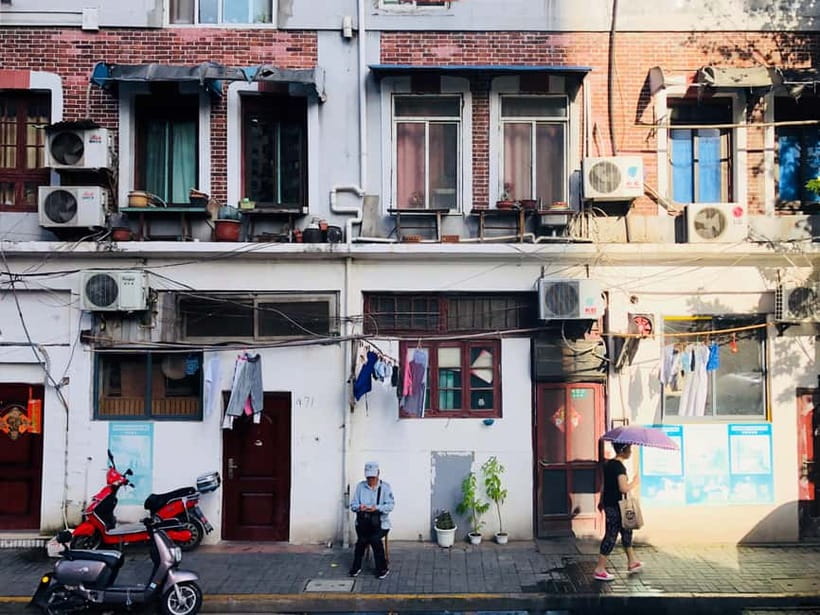
Shanghai can feel like several cities placed side by side. One minute you are facing grand banks and hotels from the foreign-concession era. A few streets later, you are among old homes, snack shops, ornate gateways, and local residents going about their day.
This tour makes that contrast the point. Rather than treating Shanghai as a list of separate attractions, it shows how the city’s commercial waterfront, traditional Old Town, shopping streets, and public parks fit together.
The guide is central to the experience. Bill is the main guide named in the available information, and he has lived in Shanghai all his life. His explanations include formal history, but also personal memories of how the city and its neighborhoods changed over the past two decades. Other departures may be led by guides such as Miranda or Will, so check the booking details if having a particular guide matters to you.
You should expect a walking tour rather than a museum visit. The value comes from the commentary, street-level context, directions, and questions you can ask. You will see important buildings from outside, but admission to attractions, meals, and drinks are not included.
More City Highlights Walks in the world:
- Berlin City walk Government District and Places of Democracy
★ 4.7 · 8,467 reviews - Historic Charleston Guided Sightseeing Walking Tour
★ 5.0 · 6,216 reviews - Quebec City Walking Tour
★ 5.0 · 4,716 reviews
Meeting East Nanjing Road beside the Swatch store
The meeting point is Exit 1 of East Nanjing Road Metro Station, served by Lines 2 and 10. Look near the Tissot store, opposite the Swatch store. The activity information also identifies the Swatch Megastore as the starting location, so use the nearby store signs and the exact booking instructions to avoid confusion.
This is a busy part of central Shanghai. Give yourself enough time to find the correct station exit, especially if you are arriving with luggage or unfamiliar with the metro. Luggage storage is available close to the meeting point, which is useful if you are between hotels, arriving early, or leaving the city later that day.
Wear comfortable shoes. The route lasts 2.5 hours and includes several walking sections on city streets. Bring water, sunscreen, and a camera. Summer heat can be strong, although the route includes shaded stretches and the guide has been praised for stopping in shade when needed.
The start near East Nanjing Road is practical. You begin in one of Shanghai’s busiest central districts, close to major shopping streets, then move toward the waterfront and older parts of the city.
Nanjing Road and the story of modern Shanghai
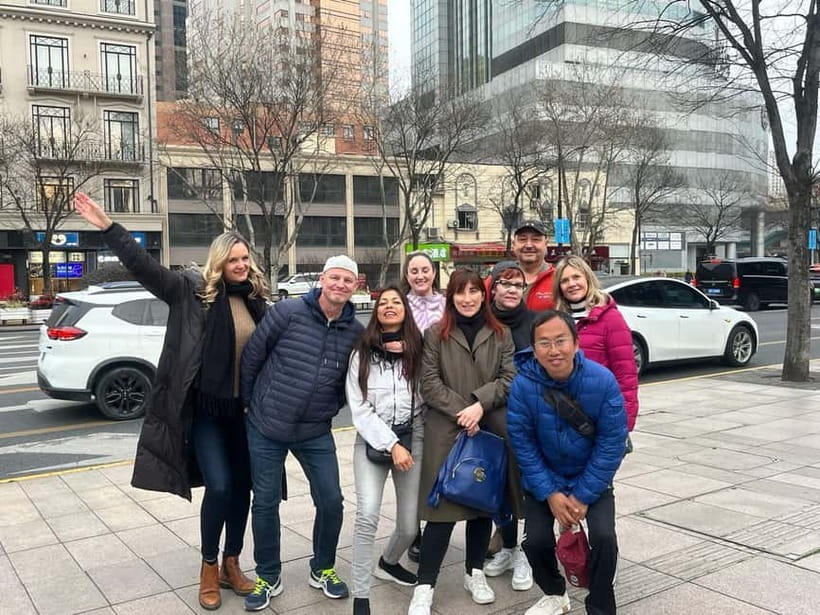
Nanjing Road helps set the scene. Today it is a major pedestrian shopping street, but its importance comes from Shanghai’s long role as a trading and commercial center.
Along the way, you may see the Peace Hotel and Shanghai lane houses. These sights help show two different sides of the city. The Peace Hotel recalls the grand international world that grew around the Bund, while lane houses point to the more intimate residential life behind Shanghai’s main avenues.
This is where a local guide adds value. A quick photograph of a historic facade tells you little by itself. Bill’s explanations connect the buildings to Shanghai’s growth, foreign influence, changing neighborhoods, and present-day life. He is also known for answering questions about both the city and China more broadly, so this is a good part of the walk to ask about anything that has puzzled you since arriving.
Do not expect a long stop at every building. The tour is designed to keep moving, and its strength is the overall picture rather than detailed architectural study. If you want to examine every plaque or enter each historic building, you will need extra time after the tour.
The Bund and Shanghai’s Wall Street years
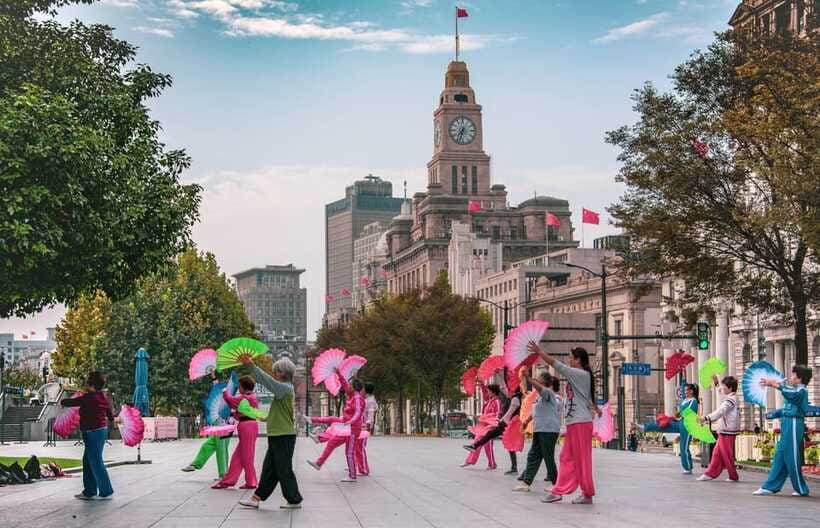
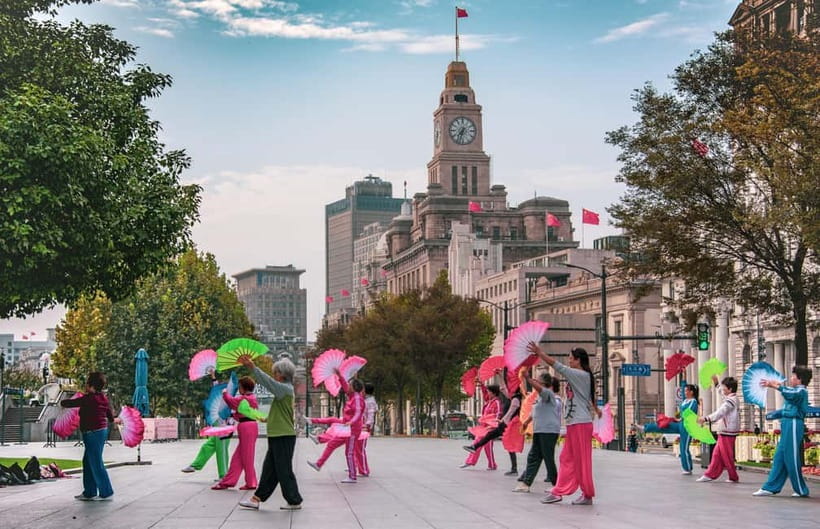
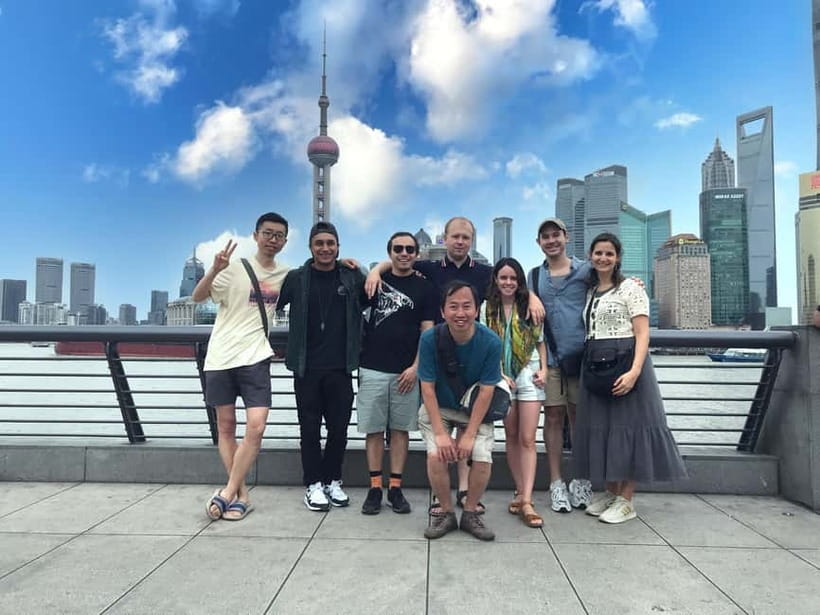
The Bund is the visual centerpiece of the walk. From the waterfront promenade, you face the Huangpu River and the modern skyline beyond it. Behind you are rows of monumental historic buildings, including the former HSBC building and the Customs House with its clock tower, often called Shanghai’s Big Ben.
The guide explains why the Bund became known as the Wall Street of Asia during the 1930s. This is not just a line about old banks. It points to Shanghai’s role as a major financial and commercial center, and to the way the waterfront became a symbol of international business.
I like that this stop is not treated as a simple photo break. You get the skyline, but you also hear about the people and institutions connected to the buildings. Small anecdotes can make the scene easier to understand, especially if you are seeing the Bund before visiting museums or historic interiors.
The Bund is also where timing and weather matter most. The promenade can be crowded, and summer heat can make the open waterfront tiring. The guide generally keeps the walking pace manageable and builds in places to pause, but you should still bring water and sun protection. The tour does not promise a private viewing area or a long period for photography.
Allow yourself another visit if you want night views. The walking tour gives you the historical setting and daytime orientation. A separate evening stop lets you focus on the illuminated skyline without trying to fit it into the group schedule.
A few more walking tours around the world worth a look
- Magical London: Harry Potter Guided Walking Tour
★ 4.7 · 22,044 reviews - Reykjavik Food Walk – Local Foodie Adventure in Iceland
★ 5.0 · 18,952 reviews - History and Hauntings of Salem Guided Walking Tour
★ 5.0 · 14,564 reviews - New Orleans Premier Ghost, Voodoo and Vampire Walking Tour
★ 4.5 · 12,856 reviews
Old Town, lane houses, and Yuyuan Bazaar
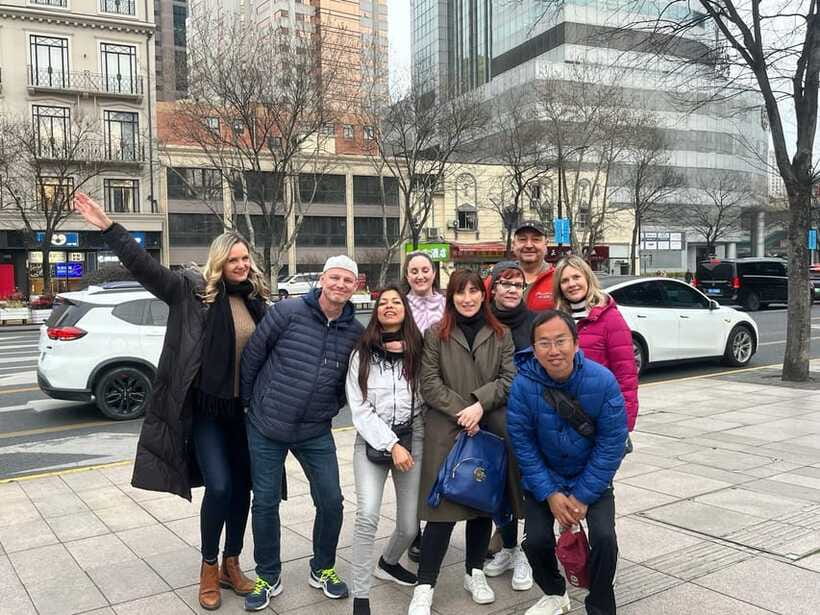
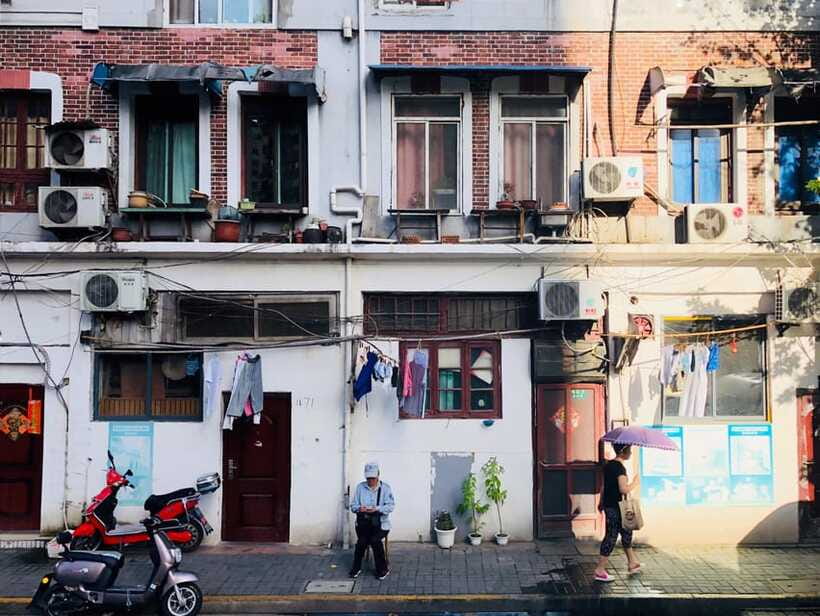
From the monumental Bund, the walk shifts into Shanghai’s older city. The Old Town has a different feel, with traditional architecture, narrow streets, local shops, and the approach to Yuyuan Garden and Yuyuan Bazaar.
Yuyuan Garden dates back about 400 years. The tour focuses on the area around the garden, including Chinese pavilions and older buildings. Admission to the garden itself is not included in the stated price, so do not assume you will have a full interior visit. The surrounding bazaar still gives you a useful sense of the district and its traditional design.
This section is valuable because it shows what the city looked like before the grand waterfront banks and modern towers took over the picture. You may find the area crowded, especially around popular shops and food streets, but that is part of the setting. Keep your belongings secure and stay aware of the guide in busy sections.
The old lanes also provide a chance to ask about ordinary Shanghai life. The guide’s personal connection is especially useful here. Instead of hearing only dates and architectural labels, you can ask how the city’s housing, streets, and daily routines have changed.
The trade-off is that Old Town is not a quiet historic village. It is an active urban district with commercial activity and plenty of people. If you want polished restoration and calm garden views, the crowds may test your patience. If you want to see how historic spaces function inside a working city, this is one of the strongest parts of the route.
A food street and Shanghai fried dumplings
The walk passes a popular local food street, and you may have the chance to buy Shanghai fried dumplings. Food is not included, so carry some Chinese currency or confirm which payment methods are accepted before ordering.
This small food stop adds something a bus tour cannot. You can look at the food stalls, ask what to try, and get advice on places to eat later in your stay. The guide also offers suggestions for memorable restaurants, tea, and shopping, with an emphasis on places that have something distinctive about them.
Shanghai fried dumplings are a natural choice. They are hot, filling, and best approached with care because the center can hold very hot broth. The tour does not promise a formal tasting session, so think of this as an optional snack stop rather than a meal.
I would plan to eat something light before starting. You may want to try a dumpling, but the timing and selection depend on the day. If food is a major reason for booking, ask the guide for follow-up recommendations and use the tour as an introduction to Shanghai eating rather than your only food experience.
People’s Square and People’s Park
The walk ends at People’s Park, near People’s Square Metro Station. This makes the finish convenient for continuing your day in central Shanghai.
People’s Park is more than green space. On weekends, it is associated with Shanghai’s well-known marriage market, where families share information about unmarried relatives in search of potential matches. It is an unusual social custom to encounter, and it gives the tour another example of modern city life beyond monuments and shopping.
The guide also covers the city hall area and the surrounding central district. By this point, you have moved from the Bund’s international history to the Old Town’s traditional streets and then into a public space used by residents today.
The ending works well because it leaves you with options. You can take the metro, continue toward the Former French Concession, eat nearby, or return to a sight that caught your attention earlier. There is no hotel drop-off, so plan your next move before the walk ends.
What the guide adds to the two-and-a-half-hour route
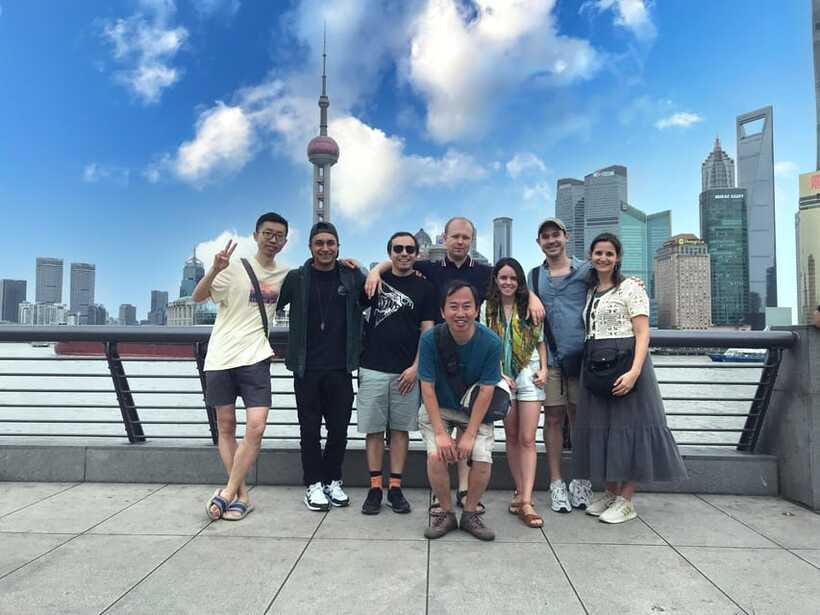
The most praised feature of this experience is the guide’s delivery. Bill is described as friendly, funny, easy to talk to, and clear in English. He explains complicated parts of Shanghai’s past without turning the walk into a lecture.
His personal stories are useful because Shanghai has changed quickly. Accounts of family life and the city’s development over the past 20 years give you a sense of change that dates alone cannot provide. You also have room to ask about daily life, food, shopping, and places to visit after the tour.
The pace appears to be one of the better-balanced parts of the experience. It is not presented as a rushed march between landmarks. The guide adjusts for the group, including slowing down when children are present, and stops for photographs and shade in hot weather.
Still, a group walk has limits. The guide must serve everyone, so your questions may need to be brief if the group is large or the route is busy. The tour also has a lot to cover. You will gain a broad orientation, not a specialist study of the Bund, Yuyuan Garden, or Shanghai architecture.
Is $34 a fair price?
At $34 per person, this is good value if you want a guided introduction to central Shanghai. The route covers several districts and major sights, and the local commentary gives you more than you would get from walking the same streets alone.
The price does not include food, drinks, entrance tickets, transportation, hotel pickup, or a tip. That matters most around Yuyuan Garden and the food street. You should budget separately if you want dumplings, other snacks, or paid entry elsewhere after the tour.
The strongest value comes when you take the tour early in your visit. You get a clear map of central Shanghai, practical restaurant advice, and a better idea of where to return for photographs or a longer visit. If you already know the Bund and Old Town well, the personal stories may still appeal, but the sightseeing coverage will feel less essential.
Free cancellation is available up to 24 hours before the start, and you can reserve while paying later. Last-minute booking is also available until the tour begins, subject to space. Those policies are useful if your Shanghai plans depend on weather, train timing, or a changing itinerary.
Who should book this walk?
I would choose this tour for a first visit, a short stay, or a first full day in Shanghai. It suits you if you want the big sights but also care about street life, food advice, and the reasons the city looks the way it does.
It is also a good fit for families and mixed-age groups. The guide has adjusted the pace for children, and the route includes visual highlights, food, parks, and stories rather than one long block of formal history.
You should think twice if you dislike walking in heat, crowds, or busy city streets. The activity information says the tour is wheelchair accessible, but it also says it is not suitable for wheelchair users or people with mobility impairments. That is a clear inconsistency. Contact the provider before booking if accessibility is important to you, and do not assume every part of the route will be easy for a wheelchair or mobility aid.
Should you book the Shanghai Highlights Walking Tour?
Book it if you want a friendly local guide, a useful first look at Shanghai, and plenty of context in a short time. Bill’s English, personal memories, humor, and practical food advice give the walk more character than a basic sightseeing circuit.
Skip it if you want long visits inside attractions, a formal food tour, or a slow architectural study. At $34, the tour earns its price through the route and the guide’s insight, not through included admissions or meals.
For most first-time visitors, I would take it near the start of a Shanghai stay. Bring comfortable shoes, water, sunscreen, and an appetite for a fried dumpling. Then use the final stop at People’s Square to decide where you want to return on your own.
FAQ
Where does the Shanghai walking tour start?
It starts at Exit 1 of East Nanjing Road Metro Station, served by Lines 2 and 10, near the Tissot store opposite the Swatch store. The starting location is also identified as the Swatch Megastore.
Where does the tour finish?
The tour ends at People’s Square, near People’s Park and People’s Square Metro Station.
How long does the walking tour last?
The tour lasts 2.5 hours.
What language is the tour conducted in?
The live tour guide speaks English.
Which major sights are included?
The route includes Nanjing Road Pedestrian Street, Shanghai lane houses, the Peace Hotel, Customs House, the Bund Promenade, the former HSBC building, Shanghai Old Town, Yuyuan Bazaar, People’s Park, and People’s Square.
Is food included?
No. Meals and drinks are not included. You may have the opportunity to buy Shanghai fried dumplings or other food during the walk.
Is hotel pickup included?
No. You meet the guide at East Nanjing Road Metro Station, and hotel pickup and drop-off are not included.
Can I cancel the booking?
You can cancel up to 24 hours before the tour for a full refund. The activity also offers reserve now and pay later, and last-minute booking is available until the tour begins.
Just added around the world
- Vatnajökull Glacier Walk from Hali★ 5.0 · 479 reviews
- Old Hobart Pub Walking Tour★ 4.5 · 91 reviews
- Ice Cave and Glacier Walk into Blue Glacier Canyon★ 5.0 · 224 reviews
- Southwest Tasmania Wilderness Experience: Fly Cruise and Walk Including Lunch★ 5.0 · 233 reviews
- Saigon’s Hidden Flavors – Private Street Food Walk with Local Students★ 5.0 · 301 reviews
- Hobart History, People & Places – 2 hour city walk★ 5.0 · 224 reviews
- Vegan Walk Not Just Vegan Food★ 5.0 · 266 reviews
- Ho Chi Minh City: Highlights & Hidden Gems – Free Walking Tour★ 5.0 · 194 reviews
City Highlights Walking Tours, compared.
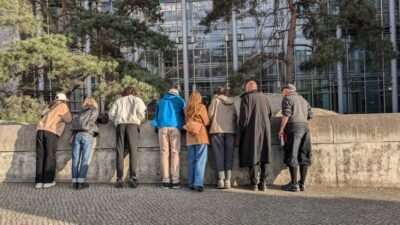
Berlin City walk Government District and Places of Democracy
Read our review →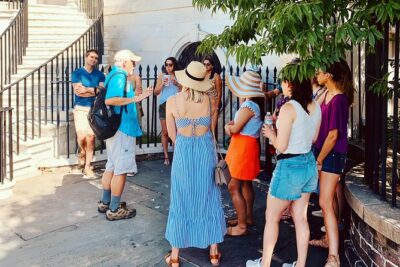
Historic Charleston Guided Sightseeing Walking Tour
Read our review →
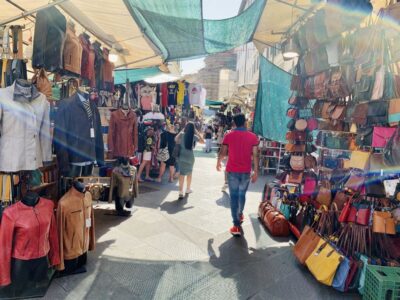
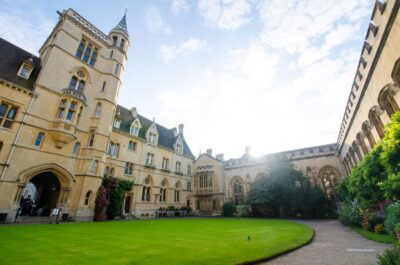
Oxford: University and City Walking Tour with Alumni Guide
Read our review →
City Highlights Temple and Market Walking Tour
Read our review →
A History of Terror – Belfast City Centre Walking Tour
Read our review →Browse the lists this tour appears in