
REVIEW · REYKJAVIK
Reykjavik: City Walking tour in Small Group with Local Guide
Reykjavík makes sense on foot, and this tour gives you the city in a tidy downhill sweep. You begin beside the statue of Leifur Eiríksson at Hallgrímskirkja, then work through colorful streets, the waterfront, Harpa, and the old civic center. Guides such as Ási, Ryan, Erik, Tom, and Martin have been praised for clear stories, humor, and a relaxed pace.
I like the small groups, which have sometimes been as few as four to eight people and make it easier to ask questions. I also like the practical route: you see major sights while learning how Icelandic history, independence, daily life, and modern Reykjavík fit together.
The main drawback is the weather. The tour runs in rain, wind, snow, and cold, so the experience depends on your clothing and tolerance for outdoor walking. Harpa and other indoor stops provide shelter, but this remains a walking tour in Iceland.
Key points to know before you book
- Start at Reykjavík’s highest point: Meet by Hallgrímskirkja and begin with broad views before walking downhill.
- Harpa is seen from inside: Its striking design also gives you a useful warm-up stop in bad weather.
- The route mixes major sights and ordinary streets: You pass Laugavegur, Tjörnin, Parliament, Austurvöllur, Arnarhóll, and local neighborhoods.
- Guides bring different strengths: Ási is known for humor, Ryan for history and academic insight, and Erik and Tom for clear, friendly storytelling.
- The pace is gentle: The walk covers about 100 meters of descent and is described as easy and wheelchair accessible.
- You get useful first-day orientation: Guides often add restaurant, pastry, and city suggestions that help you plan the rest of your stay.
Starting above Reykjavík at Hallgrímskirkja
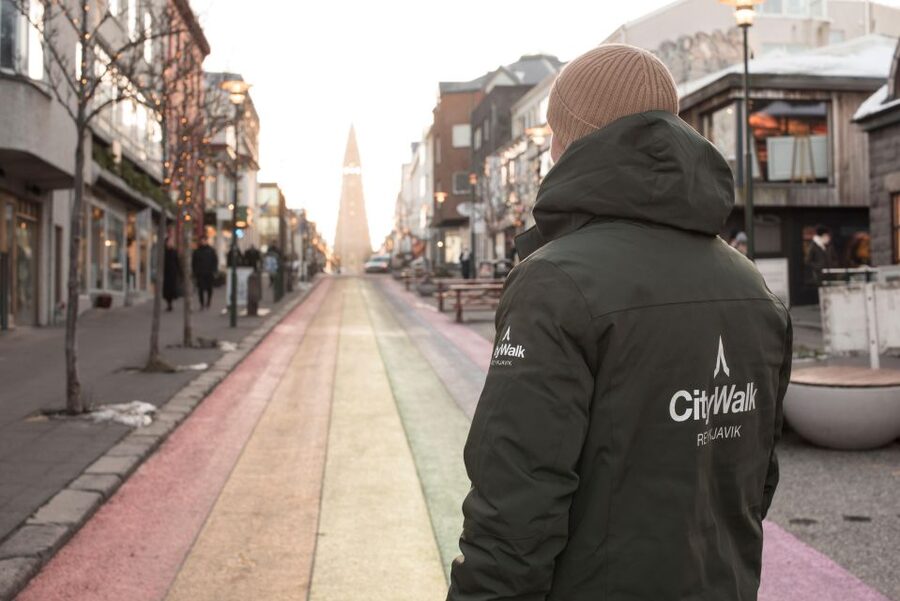
The meeting point is easy to recognize: find the CityWalk guide in marked clothing in front of Hallgrímskirkja, beside the statue of Leifur Eiríksson. Give yourself time to get there, since the church sits on a hill and the tour starts at the highest ground in central Reykjavík.
That high starting point is a smart choice. Before you walk, you can look out over the city and understand its basic shape. You are not being dropped into a maze of streets. You begin above the center, then gradually work your way toward the older civic core and the sea.
Hallgrímskirkja gets a short stop for photos, sightseeing, and orientation. The church is one of Reykjavík’s defining landmarks, so it works well as both a meeting point and a first lesson in how the city presents itself. The tour does not function as a long interior church visit, so if you want a detailed look at the church itself, plan extra time before or after the walk.
This is also the point to check your clothing. The walk is downhill, but wind can make Reykjavík feel colder than the temperature suggests. Wear shoes you can comfortably use for two and a half hours, and bring warm, weather-ready layers.
More City Highlights Walks in the world:
- Berlin City walk Government District and Places of Democracy
★ 4.7 · 8,467 reviews - Historic Charleston Guided Sightseeing Walking Tour
★ 5.0 · 6,216 reviews - Quebec City Walking Tour
★ 5.0 · 4,716 reviews
Down Skólavörðustígur and into Laugavegur
From Hallgrímskirkja, the route heads downhill through Reykjavík’s central streets. Skólavörðustígur and Laugavegur are among the most useful parts of the walk because they show you the city as a place where daily life, shops, cafés, restaurants, and old houses sit close together.
Laugavegur receives a dedicated sightseeing stop, with time for photos and a guide’s explanation of what you are seeing. This is not a shopping tour, but the street is worth understanding early in your visit. You can return later with a better sense of where you are and what deserves a slower look.
I especially like this part for first-time visitors. A map can show you streets, but a guide can point out how the center connects, which direction leads toward the waterfront, and where the older parts of town begin. Several guides also offer food suggestions at the end, including restaurant and pastry recommendations.
The route is easy in terms of elevation, but do not mistake downhill for effortless. You remain outside for much of the tour, and winter conditions can affect your footing. The sidewalks are mostly geothermal heated or salted, which helps with ice and snow, yet sensible shoes are still important.
Colorful houses, Tjörnin, and everyday Reykjavík
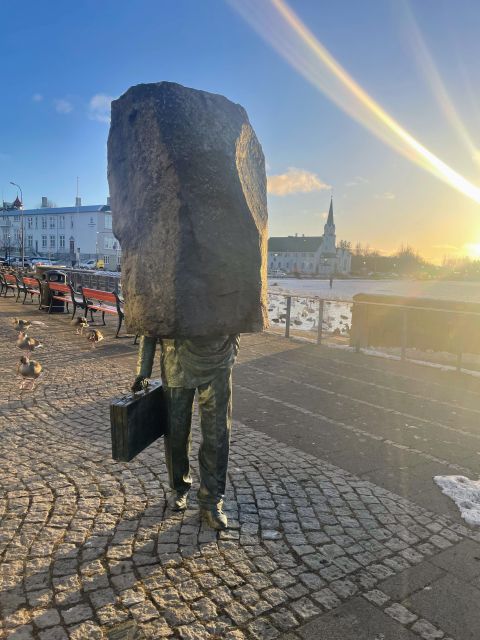
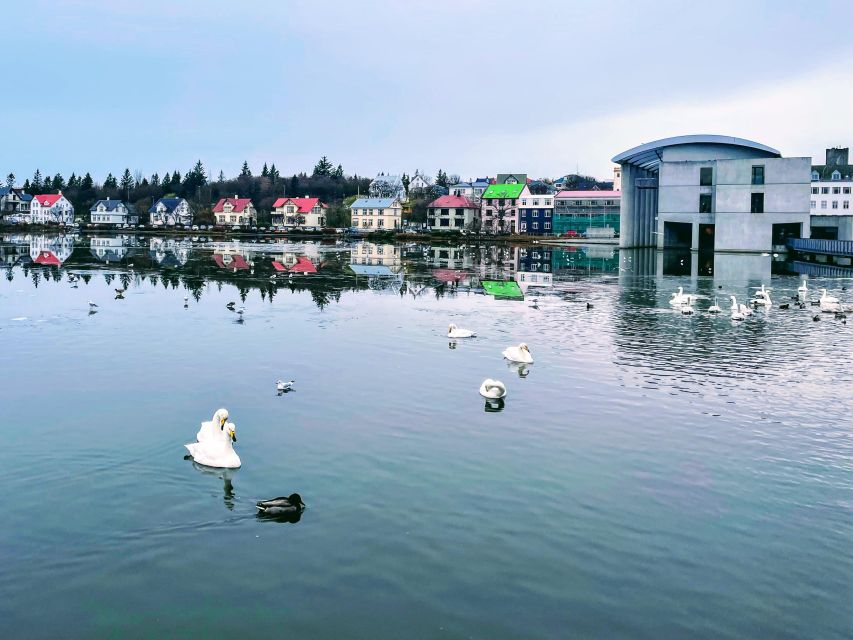
The walk includes Reykjavík’s colorful houses and the area around Lake Tjörnin. This is a welcome change from the main shopping streets. Around the lake, you can see water, city buildings, homes, and birdlife in one compact view.
The Tjörnin section gives the tour some breathing room. You are not only moving from one famous building to the next. You get a sense of Reykjavík as a small capital where civic buildings, residential streets, open water, and public spaces sit within an easy walk of each other.
There is also a useful cultural point here. A local guide can explain the city through ordinary details rather than only dates and monuments. The best guides connect old events with modern Icelandic life, and that approach has been a repeated strength of this experience.
Keep your camera ready, but listen closely too. The tour schedule includes photo stops, yet the value comes from the explanation around them. You can take your own pictures later. You cannot easily recreate the guide’s running account of why a street, building, or neighborhood matters.
Alþingi and Austurvöllur, where the city’s story turns political
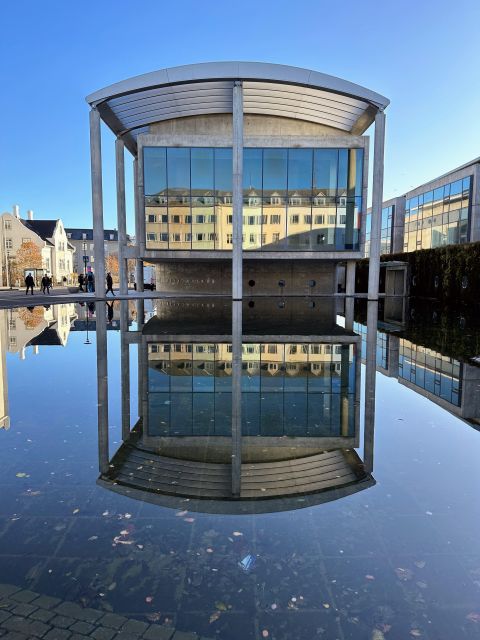
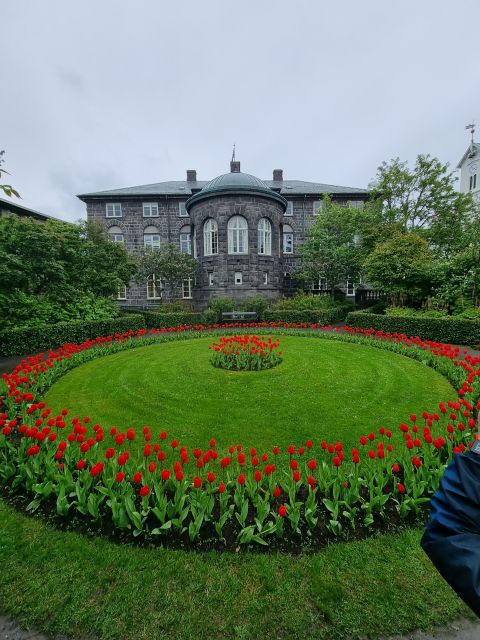
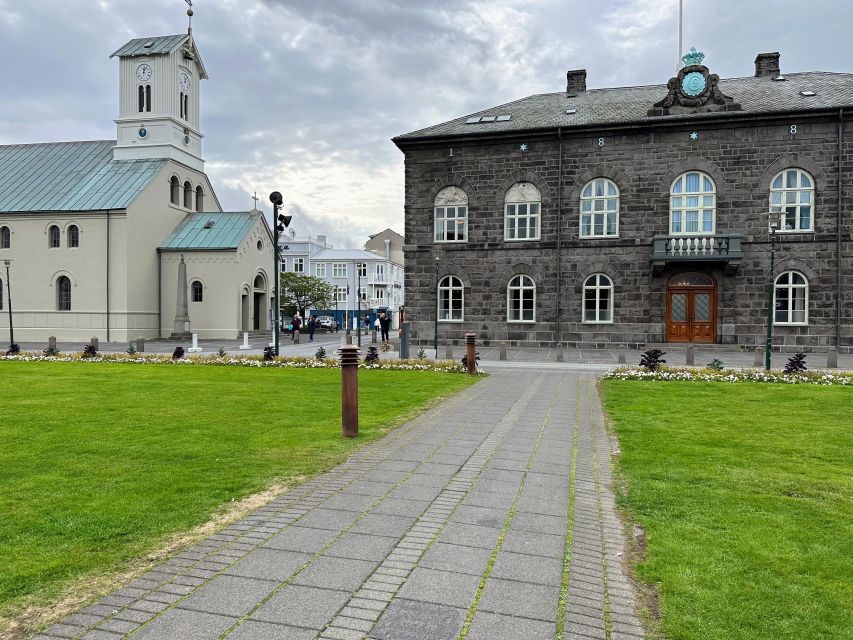
The route continues toward Alþingi, Iceland’s Parliament, and Austurvöllur, the square nearby. The Parliament building dates from 1881 and makes a good photo stop. This is where the walk shifts from architecture and streets to the story of Iceland as a self-governing nation.
The Parliament building is not presented as a lengthy interior visit. Expect to see it from outside and hear about its place in Icelandic public life. Austurvöllur adds the setting: an open central square beside the oldest part of the city, with the country’s political center close at hand.
This portion is valuable because it gives context to what can otherwise look like a modest collection of buildings. Iceland’s capital is compact, and the country’s institutions are close to the places where people shop, eat, work, and meet. A guide helps you read that arrangement.
Guides differ in style, but the strongest ones use stories rather than a string of dates. Ryan, who has lived in Iceland for many years and has worked as a university lecturer, has been especially noted for connecting early settlement with modern culture. Tom and Martin have also been praised for clear explanations and well-timed humor.
More Guided Tours in the world:
- Magical London: Harry Potter Guided Walking Tour
★ 4.7 · 22,044 reviews - History and Hauntings of Salem Guided Walking Tour
★ 5.0 · 14,564 reviews - Amsterdam Anne Frank: Small-Group Walking Tour & Local Guide
★ 4.8 · 12,789 reviews - Edinburgh: Harry Potter Magical Guided Walking Tour
★ 4.8 · 11,944 reviews
Inside Harpa, Reykjavík’s best weather break
Harpa Concert Hall is one of the tour’s most useful stops. You go inside to see the building’s striking design, which is made for close viewing. Its glass surfaces and geometric forms change as the light moves, giving you something much better than a quick exterior photo.
Harpa also solves a practical problem. Icelandic weather can turn wet, cold, or windy without warning, and an indoor stop gives the group a chance to warm up. That makes this tour more workable outside the summer months.
The schedule allows about ten minutes at Harpa, so keep your expectations sensible. You will see the interior and hear an explanation, but this is not a full concert hall architecture tour. One point to keep in mind is that the amount of detail about Harpa may depend on your guide. If Harpa’s design is a major reason for booking, you may want to spend extra time there afterward.
The walk continues along the oceanfront after Harpa. You get a different view of Reykjavík here, with the water opening the scene and the city center behind you. Wind is often more noticeable near the shore, so this is where a warm outer layer matters most.
Arnarhóll and the finish near Parliament
Arnarhóll is another short guided stop. It helps tie together the waterfront, central streets, and civic district before the tour finishes near the Parliament building in the main square.
Because the route ends in the center, you are well placed to continue exploring on your own. You can return to Laugavegur, visit a café, look more closely at Austurvöllur, or follow up on a restaurant suggestion. The guide’s final orientation can be as useful as the first introduction.
The listed itinerary includes both Hallgrímskirkja entries early in the walk, along with Laugavegur, Alþingi, Austurvöllur, Harpa, and Arnarhóll. In practice, think of it as a connected city walk rather than a series of formal admissions. The tour shows you the sights, explains their place in Reykjavík, and leaves you near the center with time to explore further.
What the two and a half hours feel like
The tour lasts 2.5 hours and is described as easy, with roughly 100 meters, or 300 feet, of total descent. That makes it a good choice if you want a proper introduction without committing to a strenuous outing.
The route is not a race. Guides such as Ási, Erik, David, and Marie have been praised for answering questions, waiting when needed, and allowing time for photographs. Several accounts also point to a well-managed pace, even in poor weather.
Group size is important here. Small group does not mean private, and the exact number can change. Still, groups of four, seven, eight, and twelve have been reported, which is much easier to manage than a large crowd. You can hear the guide, ask about Icelandic life, and keep track of the group at crossings and stops.
The tour is offered in English. It is wheelchair accessible, and the provider says the route can be adjusted in bad weather, with shelter in buildings and exhibitions. The path is mostly on geothermal heated or salted sidewalks, though you should still dress for rain, wind, and cold because the activity runs in all weather.
How the guides shape the experience

The company’s strongest feature is the range of local personalities. Ási has been singled out for combining humor with strong knowledge of Reykjavík. Ryan brings a more academic approach and connects the city’s past to present-day Iceland. Erik, Tom, Martin, Nori, and others have been praised for being friendly, clear, and willing to answer questions.
That matters because a city walk can easily become a list of buildings. Here, the best guides make the city feel understandable. They explain how Reykjavík grew, how Iceland developed its independence, and how life in the capital differs from the postcard version of the country.
You should also use the question time. Ask about restaurants, pastries, public spaces, weather, or what to see after the tour. One particularly useful approach is to take notes on places you want to revisit, then return later without the group.
The guide quality can vary from person to person, as it does on any scheduled walking tour. The consistently high score of 4.8 from 380 ratings points to a strong overall experience, but the exact tone will depend on who leads your departure.
Is $51 a fair price?
At $51 per person, this is not the cheapest way to walk around Reykjavík. You can explore the center on your own for free, especially if you are happy to read signs and follow a map.
The price makes more sense if you value interpretation and orientation. You are paying for 2.5 hours with a live English-speaking guide, a planned route, local context, and the chance to ask questions as you go. You also cover a lot of ground without spending time figuring out where the main sights are.
I see the best value on your first day in Reykjavík. The walk gives you a working map of the center, then lets you return to the places that interested you. It is also useful if your stay is short and you want to make the most of a single afternoon.
It is less useful if you already know central Reykjavík well, dislike walking in poor weather, or want long interior visits at each landmark. The tour is an introduction, not a series of museum admissions or a deep architectural study.
Free cancellation up to 24 hours before the start and the reserve-now, pay-later option add flexibility. Those terms are useful when Icelandic weather or changing plans make a fixed schedule hard to trust.
Who should book this Reykjavík walk?
I would choose this tour for a first visit, especially if you have just arrived and want to get your bearings fast. It suits couples, families with comfortable walkers, solo visitors who enjoy asking questions, and anyone who wants history mixed with practical city advice.
It also works well at the start or end of a longer Iceland trip. If you have spent a week driving the Ring Road, the walk gives you a focused look at the capital. If Reykjavík is your only base, it helps you understand the center before you spend money on meals, museums, and day trips.
You should think twice if you want a slow photography walk, a food-focused tour, or a detailed visit inside Hallgrímskirkja. The experience touches food, architecture, and culture, but its main purpose is a broad city introduction.
Should you book it?
Book it if you want a friendly, small-group introduction to Reykjavík with a route that includes the city’s key sights and leaves room for questions. The downhill layout, indoor stop at Harpa, and helpful local advice make it especially practical in changeable weather.
Skip it if you prefer to wander alone and already understand the city center. For most first-time visitors, though, $51 buys more than a list of photo stops. It gives you a clear sense of place, a useful route for later, and a local voice to explain why Reykjavík looks and feels the way it does.
FAQ
Where does the Reykjavík walking tour begin?
The tour begins in front of Hallgrímskirkja Church, beside the statue of Leifur Eiríksson. Look for the CityWalk Reykjavík guide wearing marked clothing.
Where does the tour finish?
The walk finishes near the Alþingi Parliament building in the main square, close to Reykjavík’s oldest central area.
How long is the tour?
The tour lasts 2.5 hours.
What language is the tour in?
The live tour guide speaks English.
Is the route difficult?
The walk is described as very easy and goes downhill from Hallgrímskirkja. The total elevation change is about 100 meters, or 300 feet.
Does the tour operate in bad weather?
Yes. The tour runs rain or shine and is not canceled because of poor weather. Indoor stops and exhibitions may be added when conditions are cold or wet.
Is the walking tour wheelchair accessible?
Yes. The tour is wheelchair accessible, and the small group size allows the route to be adjusted in bad weather.
What should you wear and bring?
Bring comfortable shoes, warm clothing, comfortable clothes, and layers suited to the weather. Sidewalks are mostly geothermal heated or salted, but rain, wind, snow, and cold are still possible.
Just added around the world
- Vatnajökull Glacier Walk from Hali★ 5.0 · 479 reviews
- Old Hobart Pub Walking Tour★ 4.5 · 91 reviews
- Ice Cave and Glacier Walk into Blue Glacier Canyon★ 5.0 · 224 reviews
- Southwest Tasmania Wilderness Experience: Fly Cruise and Walk Including Lunch★ 5.0 · 233 reviews
- Saigon’s Hidden Flavors – Private Street Food Walk with Local Students★ 5.0 · 301 reviews
- Hobart History, People & Places – 2 hour city walk★ 5.0 · 224 reviews
- Vegan Walk Not Just Vegan Food★ 5.0 · 266 reviews
- Ho Chi Minh City: Highlights & Hidden Gems – Free Walking Tour★ 5.0 · 194 reviews
City Highlights Walking Tours, compared.
Berlin City walk Government District and Places of Democracy
Read our review →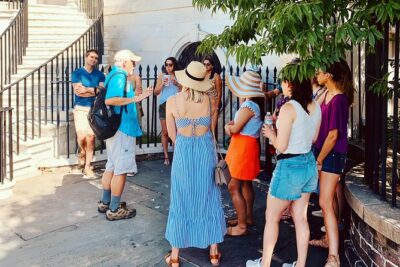
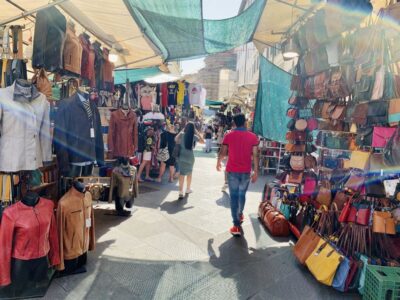
Historic Charleston Guided Sightseeing Walking Tour
Read our review →
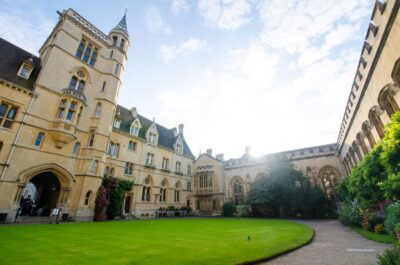
Oxford: University and City Walking Tour with Alumni Guide
Read our review →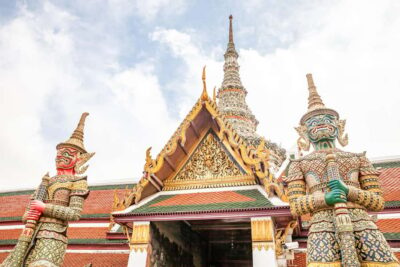
City Highlights Temple and Market Walking Tour
Read our review →
A History of Terror – Belfast City Centre Walking Tour
Read our review →Browse the lists this tour appears in