
REVIEW · LONDON
London: Self-Guided Notting Hill Walking Tour with an APP
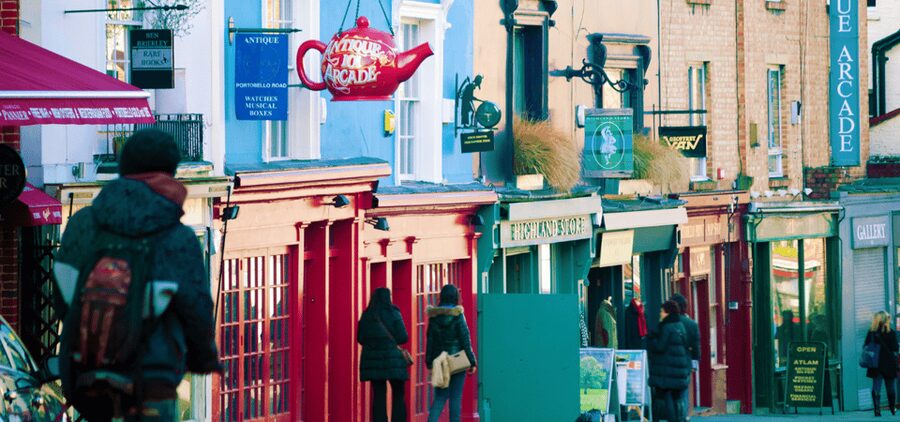
Notting Hill is more than a blue door and a famous movie poster. This self-guided walk leads you through grand terraces, quiet mews, film locations, and Portobello Road, letting you pause whenever a street catches your eye. The route also points out places linked with famous residents and scenes from Notting Hill and Love Actually.
I like the freedom to set your own pace, especially in a neighborhood where you may want extra time for photos. I also like the clear route between Notting Hill Gate and Westbourne Park Station, which gives the walk a useful beginning and end rather than leaving you to wander without a plan.
The main drawback is the lack of a person to answer questions or adjust the route. You also need to install a separate app, download the tour over Wi-Fi, and bring a charged phone and headphones before you begin.
Key points to know before you go
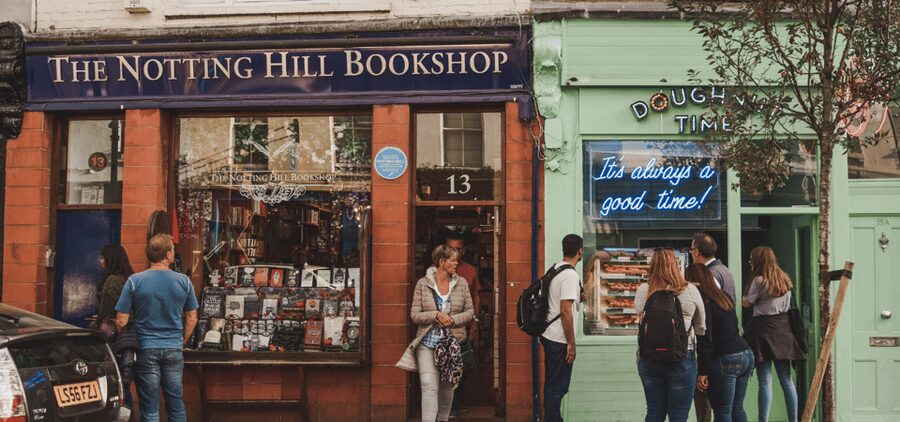
- Film locations lead the way: Look for the famous blue door, the bookshop location, St Luke’s Mews, and places associated with Love Actually.
- The route takes about two hours: It begins at Notting Hill Gate and finishes near Westbourne Park Station.
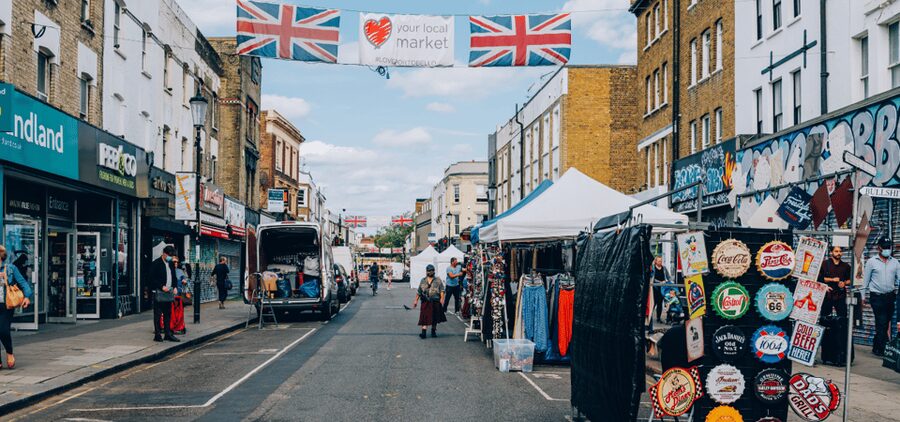
- Portobello Road adds local color: The market street brings shops, stalls, and a busier change of pace to the quieter residential lanes.
- The app covers over 20 stops: Stories play as you reach each point, and you can pause, replay, or rewind them.
- Six languages are available: Choose English, Spanish, German, French, Italian, or Chinese.
- The price is modest: At $14 per person, you are paying for a planned route and audio rather than a live guide or entry tickets.
Why this Notting Hill walk works well
Notting Hill can be confusing in a pleasant way. It has wide streets with handsome stucco houses, narrow lanes lined with painted cottages, a famous market road, and quiet corners that are easy to miss if you only follow the movie trail.
This two-hour route gives your visit some shape. You start at Notting Hill Gate, then move through Pembridge Crescent, Simon Close, Denbigh Terrace, Elgin Crescent, Lansdowne Crescent, Ormrod Court, St Luke’s Mews, and Powis Mews before finishing at Westbourne Park Station.
I see the route as a practical middle ground. You get more direction than you would by walking alone with a map, but more freedom than you would with a group tour. The audio begins as you reach each location, and you can stop for photos, browse shops, or replay a story without holding up anyone else.
The $14 price is fair if you want a ready-made route and commentary in your own language. It is less attractive if you want a personal guide, detailed answers about local life, or admission to an attraction. No entry fees are included, though the route itself centers on streets and public places rather than paid sights.
More Self-Guided Walks in London:
- Dortmund: BVB Self-Guided Stadium Walk
★ 4.5 · 3,195 reviews - Self guided Hike Trail to Nature Walk & Waterfall
★ 4.5 · 283 reviews - Self Guided Classic Freedom Trail Location Aware (GPS) Walking Audio Tour
★ 4.5 · 258 reviews
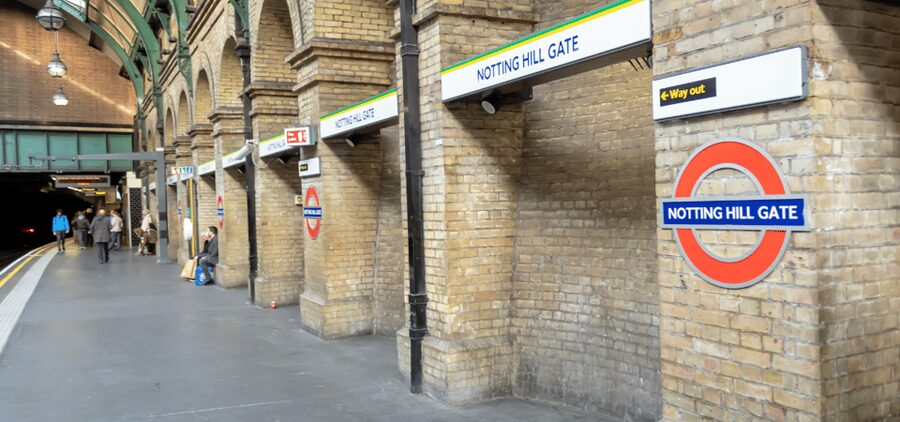
Starting at Notting Hill Gate
The tour begins at Notting Hill Gate, a convenient place to get your bearings before the residential streets begin. You start the route in the app when you arrive, so download everything before leaving your hotel or another Wi-Fi connection.
I would not wait until you are standing on the pavement to sort out the app. Your booking instructions and access details arrive by email, and the tour uses the Trippy Tour Guide app rather than the GetYourGuide app. Install it, enter the required credentials, and download the route in advance.
Once the walk starts, the phone guides you from one point to the next. The audio plays automatically as you move along the route. You can stop, replay, or rewind the narration, which is useful if traffic, conversation, or a missed turn distracts you.
Bring headphones, water, and a fully charged phone. A portable charger is not listed as a requirement, but I would consider one sensible for any two-hour walk that depends on audio and directions.
Pembridge Crescent and Simon Close
Pembridge Crescent introduces the older, more polished side of Notting Hill. The street is known for its attractive homes and old-world feel, giving you an early look at the district’s architectural character.
This part of the walk is less about ticking off a single famous sight and more about noticing the setting. Look at how the houses, terraces, and street layout create a calm residential area only a short distance from the busy market streets.
Simon Close then brings you to a quieter and prettier corner. The contrast matters. Notting Hill is often pictured as colorful and crowded, but streets such as this show a softer side of the district.
I like having these quieter stops early in the route because they keep the walk from becoming a simple movie-location checklist. You get time to notice the neighborhood itself before the more recognizable film references take over.
Denbigh Terrace and Elgin Crescent
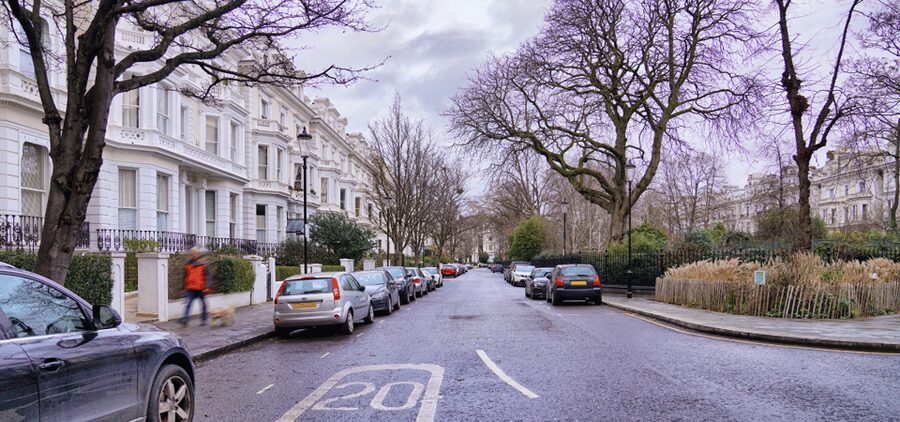
Denbigh Terrace continues the architectural theme with large, handsome houses. The audio points out what to look for, which is helpful when several attractive streets begin to blend together.
Elgin Crescent changes the mood. It is more colorful and busy, with the kind of street scene that many visitors expect from Notting Hill. The route gives you a chance to compare the grand terraces with smaller, more expressive details such as painted fronts and lively shop areas.
This is also a good section for travelers who want photographs without spending the whole walk at one famous address. You can take in the broader look of the district rather than stopping only for the iconic blue door.
The app’s directions are most useful here because they keep the route moving through several connected streets. Without a plan, you might spend too much time on one road and miss the quieter places that make the area feel more complete.
More Guided Tours in London:
- Magical London: Harry Potter Guided Walking Tour
★ 4.7 · 22,044 reviews - London Jack The Ripper Guided Walking Tour
★ 5.0 · 3,131 reviews - Changing of the Guard Guided Walking Tour in London
★ 5.0 · 1,793 reviews - London: Street Art and Graffiti Guided Walking Tour
★ 4.9 · 1,354 reviews
Lansdowne Crescent and Ormrod Court
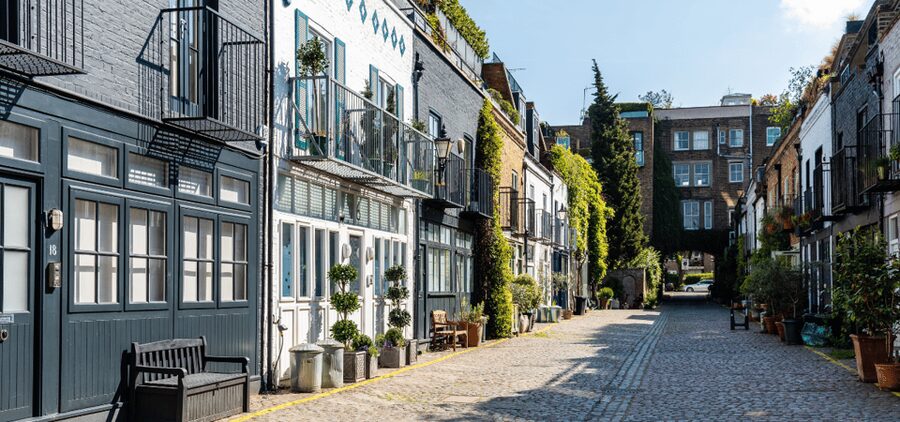
Lansdowne Crescent is known for its large arches, which give the street a strong visual feature. The route helps you notice details that can be easy to pass without context.
After the broad scale of Lansdowne Crescent, Ormrod Court offers a smaller and more tucked-away stop. The change in scale is part of the appeal. You move from wide residential architecture into a place that feels more private and contained.
These stops are a reminder that the tour is not built only around movie scenes. The neighborhood has enough variety to hold your attention even when you are not chasing a famous address.
You should still remember that these are residential streets. Take photographs respectfully, keep the volume in your headphones at a sensible level, and avoid treating private homes like museum exhibits. The app can show you where a location matters, but it cannot replace basic courtesy.
St Luke’s Mews and the movie trail

St Luke’s Mews is likely to be one of the most anticipated parts of the route. Its colorful houses have appeared in films, and it is connected with the romantic image of Notting Hill that draws many people to the area.
The famous blue door and bookshop location are key photo stops associated with the Hugh Grant movie. The route also includes locations linked with Love Actually, so film fans get more than one set of references along the way.
I like this section because it explains why the streets look familiar without forcing you to stay inside a single movie story. You can enjoy the cinema connection, then look at the homes, colors, and street design around it.
The practical point is that film locations are often ordinary streets first and attractions second. You may find the setting more appealing than the exact building you came to photograph. Keep expectations in check, take your picture, and give yourself time to see how the whole lane fits together.
Powis Mews and the final stretch

Powis Mews brings the route back to the area’s older character. The narration connects the location with local history and helps turn a short lane into a meaningful stop rather than just another name on the map.
By this point, the route has covered grand crescents, quiet courts, colorful streets, movie locations, and market areas. That range is the main strength of the itinerary. You get a more rounded sense of Notting Hill than you would from visiting Portobello Road alone.
The walk finishes at Westbourne Park Station. I appreciate an endpoint linked to public transport because it makes the tour easier to fit into a full day in London. You can continue elsewhere rather than retracing your steps to the start.
The supplied route information does not give exact walking distances or a precise timetable for every stop. Two hours is the stated duration, so allow extra time if you plan to stop often for photos or spend time along Portobello Road.
Portobello Road and the changing pace
Portobello Road is the busiest part of the walk. It is a market hub with a very different feel from the mews and terraces. The route gives you a chance to see how Notting Hill shifts from quiet residential streets to a more commercial and social center.
The word market can mean different things on different days, and the activity level may vary. The tour information does not promise particular stalls, opening hours, or market days, so I would not book this walk solely for one exact shopping experience.
Instead, treat Portobello Road as part of the district’s wider character. You can look at the shopfronts, browse what is open, and enjoy the contrast with the peaceful streets earlier in the route.
The audio also points toward Electric, a long-running cinema associated with classic moviegoing. The stop adds another film connection, but you should not assume that a cinema admission is included. Entry fees are not part of the tour.
How the Trippy Tour Guide app performs
The app is the guide here, so your preparation matters. You receive instructions and credentials by email, then download the tour using Wi-Fi. You need a reliable internet connection for that setup, but the essential preparation is completed before you arrive.
Stories play automatically as you reach locations. This is convenient because you do not have to keep checking a list, though automatic playback can be less useful if you are moving quickly or the street is noisy.
The ability to pause, replay, and rewind is a real advantage. I would use it freely. If you are taking photographs at the blue door or reading a shop sign on Portobello Road, stop the audio and continue when you are ready.
There is no in-person guide. That means you can start, stop, and move at your own speed, but you miss the small adjustments a good local guide can make. If you have a question about a building, want a restaurant suggestion, or prefer a lively conversation, this format may feel limited.
The audio is available in six languages: English, Spanish, German, French, Italian, and Chinese. One important caution applies to the French option. The French narration uses an AI-generated voice, and some English words were pronounced in English within French sentences. If natural voice work matters to you, choose with that limitation in mind.
What $14 buys you
At $14 per person, the tour costs less than many live guided walks. You are paying for planning, route design, location commentary, and app access. That can be good value if you want a simple way to cover a lot of Notting Hill without researching every street yourself.
The price does not include an in-person guide, attraction tickets, food, drinks, or other purchases along the route. You should see it as a neighborhood orientation rather than a package of admissions.
I think the value is strongest for independent visitors who enjoy walking and want a little structure. It is also useful for couples or friends who do not want to keep pace with a group.
The value is weaker for someone who already knows Notting Hill well, dislikes listening through a phone, or wants detailed personal commentary. In that case, the route may feel like an expensive map with narration attached.
Free cancellation up to 24 hours before the start and reserve-now, pay-later booking make it easier to fit into an uncertain London schedule. Still, check the availability and start times before booking, since the walk lasts about two hours and you will want to place it sensibly within your day.
Who should choose this walk
I would recommend it most to first-time Notting Hill visitors, movie fans, independent walkers, and anyone who likes to stop often. The route gives you recognizable sights while also showing streets you might miss if you only search for the famous film addresses.
It suits couples and small groups who want privacy. Families may also appreciate the ability to pause the narration, though the tour is still a walking experience and does not promise special child-focused content.
Language choice is another reason to consider it. Six audio options make the tour accessible to a wider range of visitors, but the French narration issue is worth noting if polished voice delivery is important to you.
I would be less keen on it for visitors with limited time who want a fast photo stop, since the route takes about two hours. I would also look elsewhere if you want a live guide, personal recommendations, or entry inside attractions.
My verdict on the Notting Hill route
Book this walk if you want a low-cost, flexible way to connect the district’s movie fame with its architecture, market streets, and quieter residential corners. The blue door and bookshop are useful hooks, but the best part is the variety between Notting Hill Gate and Westbourne Park Station.
Skip it if you want a social group outing, a live local voice, or guaranteed access to the cinema. For everyone else, the $14 fee buys a sensible route, over 20 narration points, and the freedom to explore at your own speed. Just prepare the app on Wi-Fi, charge your phone, and bring headphones.
FAQ
Where does the Notting Hill walking tour start and finish?
The tour starts at Notting Hill Gate and finishes at Westbourne Park Station.
How long does the self-guided tour take?
The stated duration is two hours. Extra time may be useful if you stop for photos or spend longer along Portobello Road.
Is there an in-person guide?
No. This is a self-guided audio tour using the Trippy Tour Guide app.
What languages are available?
The audio guide is available in English, Spanish, German, French, Italian, and Chinese.
What do I need to bring?
Bring headphones, a charged smartphone, the downloaded app, and water. You need to download the tour using Wi-Fi before starting.
Can I pause or replay the audio?
Yes. Stories play automatically as you follow the route, and you can start, stop, replay, or rewind them whenever you like.
Just added around London
- German London : The Ultimate Walking tour★ 4.8 · 400 reviews
- London: Medieval History Walking Tour from The Tower★ 4.9 · 318 reviews
- The Beatles London Walking Tour★ 4.2 · 147 reviews
- Secret Old London Walking Tour★ 4.8 · 154 reviews
- Secrets of London Walking Tour★ 4.7 · 562 reviews
- London: Notting Hill Walking Tour★ 4.5 · 254 reviews
- London: Old City Walking Tour★ 4.8 · 135 reviews
- London: Witches and History Bankside Walking Tour★ 4.8 · 223 reviews
Self-Guided Walking Tours, compared.


Self guided Hike Trail to Nature Walk & Waterfall
Read our review →
Self Guided Classic Freedom Trail Location Aware (GPS) Walking Audio Tour
Read our review →
Valletta: Self-Guided Historical Walking Tour (Audio Guide)
Read our review →
Abel Tasman National Park: Sailing and Self-Guided Walk
Read our review →
Cape Cod & Provincetown Self-Guided Driving & Walking Audio Tour
Read our review →
Mont-Tremblant: Treetop Observatory and Self-Guided Walk
Read our review →
Milford Sound: Self-Guided Milford Track Day Walk
Read our review →Browse the lists this tour appears in