REVIEW · LONDON
London: Old City Walking Tour
London’s oldest core is not a museum district. It is a working financial center built over nearly 2,000 years of streets, churches, river landings, markets, and ruins. This walk takes you from Tower Hill through the City of London, past Tower Bridge, the Tower of London, St. Paul’s Cathedral, and the Thames, before finishing in Covent Garden.
I like the way the tour connects famous sights with small lanes and church courtyards that are easy to miss on your own. I also like the mix of ancient stories and modern London, from the Great Fire and the plague to the Blitz and the wobbling Millennium Bridge. The main drawback is the pace: the walk can last closer to three hours, and there are few chances to sit down.
Key points to know before booking

- The route covers London’s original square mile, beginning at Tower Hill and ending in Covent Garden.
- Tower Bridge and St. Paul’s are outside viewing stops, not interior visits with admission included.
- The guide makes or breaks the experience, and guides such as Daniel Corrigan, James, Jamie, Ben, and Ivo have been praised for humor, warmth, and clear storytelling.
- The advertised duration is 2.5 hours, but the walk often runs about three hours, depending on the group and guide.
- The route mixes major sights with lesser-known corners, including church courtyards, river paths, the Temple Church, and lanes around the City.
- The $35 price is fair for a guided overview, especially if this is your first time in London and you want historical context before exploring alone.
Why London’s City is worth walking
Many first-time visitors think of London as Buckingham Palace, Westminster Abbey, and the West End. Those areas matter, but the City of London tells a different story. This is the small central district that grew beside the River Thames from the Roman period onward. It is also the heart of modern British finance, so office towers rise beside medieval churches and old stone walls.
That contrast gives the walk its character. You may be looking at a glass skyscraper one moment and a church designed after the Great Fire of 1666 the next. The streets can feel quiet on weekends, then suddenly open onto the river or a busy junction.
A good guide helps you read these changes. Daniel Corrigan, James, Ivo, Peter, Jamie, Andy, and Ben are among the guides who have led this experience at different times. Their styles differ, but the strongest feedback centers on the same qualities: clear explanations, humor, patience, and a willingness to answer questions.
The tour is conducted in English. It is designed as a broad introduction rather than a specialist architectural walk or a full visit to each attraction. You will see the outside of major buildings and hear the stories that give them meaning.
More City Highlights Walking Tours in the UK
- London Sightseeing Walking Tour with 30+ sights
★ 5.0 · 705 reviews - London: London Sightseeing Walking Tour with 30+ Sights
★ 4.9 · 156 reviews - Oxford: University and City Walking Tour with Alumni Guide
★ 4.7 · 4,429 reviews
Starting at Tower Hill
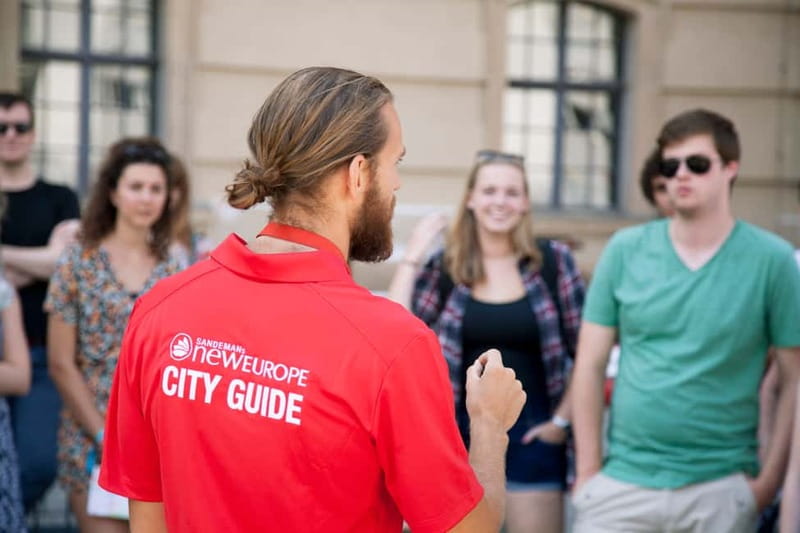
Meet by the entrance to the CitizenM Hotel next to Tower Hill Station. Look for the guide wearing a SANDEMANs red name badge. This meeting point is practical because Tower Hill is served by the Underground, and the Tower of London area gives you an immediate sense of the old City.
The first section leads toward Tower Bridge. The route is on foot, with a stated walking time of about 25 minutes before the first main stop. You are not simply walking between attractions. The guide uses the streets to explain how London developed beside the Thames and why this part of the river has mattered for trade, defense, transport, and public life.
Wear comfortable shoes. London pavements can be uneven, and the walk includes streets, river paths, and smaller passages. The tour is wheelchair accessible, though any visitor who finds three hours of walking difficult should plan carefully. One useful question to ask at the start is how many pauses the group expects to make.
Tower Bridge and the Tower of London
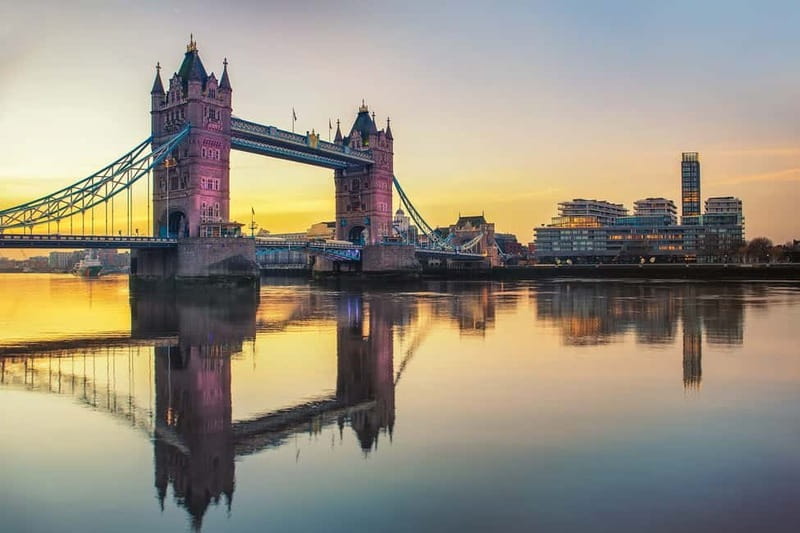
Tower Bridge is one of London’s easiest sights to recognize, but it is more than a handsome photo backdrop. The bridge links the historic Tower area with the south bank and gives you a strong view along the Thames. The tour does not include entry inside the bridge, so think of this as an outdoor introduction and photography stop.
From here, you continue toward the Tower of London. The Tower has served as fortress, palace, prison, and a place of public spectacle. You will hear about its role in London’s story and have time for photographs, but admission to the Tower is not included.
This is an important distinction. If you want to see the Crown Jewels, enter the medieval rooms, or spend time with the Tower’s larger collection of stories, you need a separate visit. The walking tour can help you decide if that longer stop belongs in your plans.
The Tower area also gives the guide room to explain how London survived repeated shocks. Fire, disease, political conflict, and war all left marks on the city. The best part of this section is not a list of dates. It is seeing how the river, walls, roads, and buildings fit together.
Along the Thames toward London Bridge
The walk continues toward London Bridge, with another stretch of about 25 minutes. This section follows the river and brings London’s commercial past into focus. The Thames was the city’s main working highway for centuries, carrying people, goods, and news.
You may see HMS Belfast from the river area. The warship is not part of the tour, but its presence adds a useful link to the military history of the Thames and the Second World War. The guide also tells stories of London during the Blitz, when the city faced sustained bombing and widespread destruction.
The river walk is one of the most enjoyable parts of the route because it breaks up the tighter streets of the City. You get wider views, more room for photographs, and a better sense of why London grew where it did. On a rainy or windy day, however, the exposed river path can feel less comfortable. Bring a waterproof layer, even when the forecast looks mild.
London Bridge itself is often confused with Tower Bridge. This stop helps clear that up. London Bridge is plainer in appearance, but its location has been crucial for movement across the Thames. The guide uses the area to explain how crossings shaped London’s growth.
More Old Town Walking Tours in the UK
- Underground Vaults Walking Tour in Edinburgh Old Town
★ 4.5 · 8,506 reviews - Edinburgh: Old Town History and Tales Walking Tour
★ 4.8 · 2,361 reviews - Old Town Walking Tour History and Tales in Edinburgh
★ 5.0 · 2,168 reviews - Edinburgh: Dark Secrets of the Old Town Ghost Walking Tour
★ 4.6 · 1,671 reviews
Bank of England and the City’s working streets
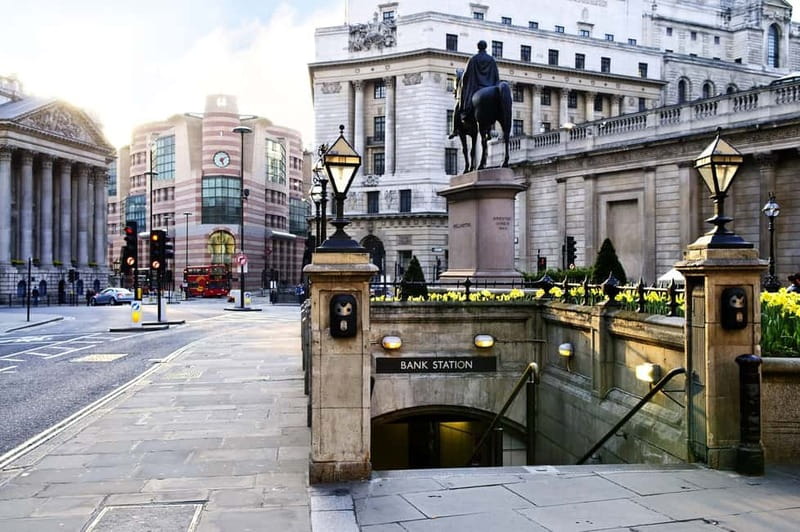
The route then moves inland toward the Bank of England Museum area. This is a useful change of mood. You leave the river and enter the financial center, where broad streets, office buildings, grand banks, and narrow historic lanes sit close together.
The stop is listed as an exterior or photo stop, not a museum visit. You should not expect time inside the Bank of England Museum as part of the standard walk. Still, the building helps explain why the City remains an important center of money and commerce.
This part of the tour is especially useful if you work in finance or have already spent time in the City. A guide can point out how little you notice when moving through the district without context. Sally, a former City worker, found after two and a half hours that the area she had known professionally held far more history than she realized.
That is the point of the walk. You do not need to memorize every building. You need to start seeing layers: Roman London under the pavement, medieval institutions behind later facades, and a modern business district built around old boundaries.
St. Paul’s Cathedral and Christopher Wren’s London
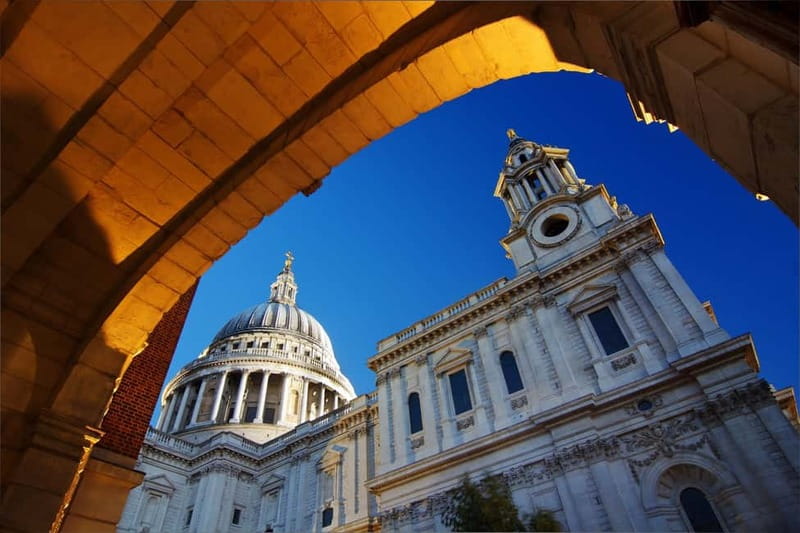
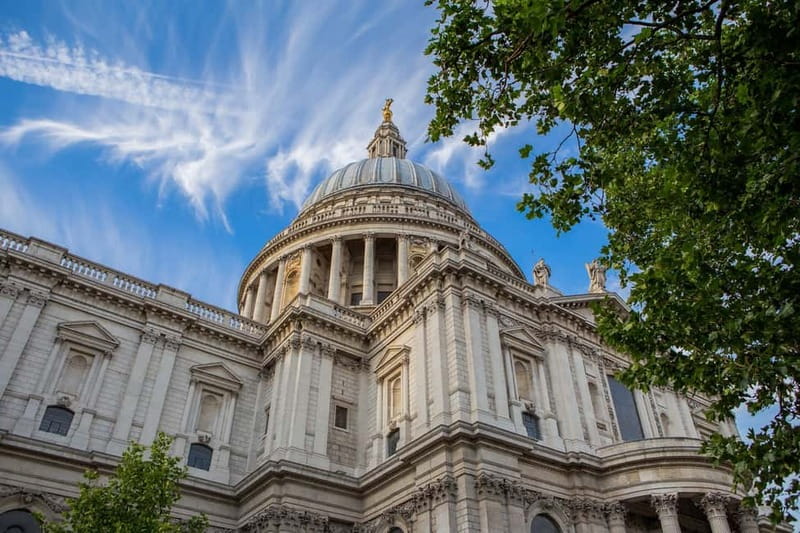
St. Paul’s Cathedral is the visual high point of the route. Designed by Sir Christopher Wren after the Great Fire, its dome remains one of London’s defining sights. You see the cathedral from outside and learn how the rebuilding of London changed its churches, streets, and skyline.
The tour does not include entry to St. Paul’s. If you want the interior, the crypt, the galleries, or the dome climb, set aside another part of your London schedule. The outside stop is still valuable because the cathedral is tied to several themes running through the walk: fire, rebuilding, religion, civic pride, and the work of Wren.
The guide may also connect St. Paul’s to the surrounding church network. Wren rebuilt many parish churches after the fire, and their towers and interiors helped shape the City. Some are tucked into courtyards or hidden behind modern streets, which is why walking works better here than a sightseeing bus.
This is also where the story can become dense. The guide may cover centuries of material in a short time. Ask questions if you want more detail on Wren, the Great Fire, the plague, or wartime London, but do not expect a long interior visit at every church.
Millennium Bridge, Shakespeare’s Globe, and the south bank view
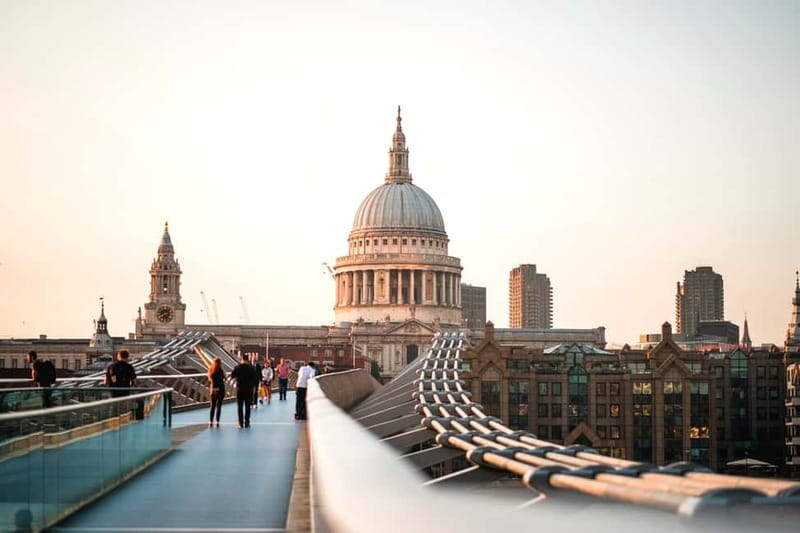
The pedestrian Millennium Bridge links St. Paul’s with Tate Modern, housed in a former power station on the opposite bank. It is also known as the Wobbly Bridge because it moved more than expected when it first opened. The bridge was later adjusted, and today it provides one of the clearest pedestrian views between St. Paul’s and the Tate.
Crossing it gives the tour a modern counterpoint. You have just heard about old churches and medieval streets, then you are looking at a contemporary bridge, a converted industrial building, and a familiar cathedral dome aligned across the river.
The route also brings Shakespeare’s Globe into the story. The present Globe is a reconstruction, but the site connects the riverfront with London’s theater world and the public life of Shakespeare’s time. The tour is not a full theater visit, so you should book separately if you want a performance or an extended look inside.
These sights may appear in the route depending on the guide and the group’s timing. The experience is flexible rather than a tightly timed admission tour. That flexibility can be helpful when a guide sees an interesting street or wants to answer questions, but it also means the exact order and amount of time at each location can change.
The Temple Church and London’s smaller corners
One of the more unusual stops is the Temple Church, known to many visitors from The Da Vinci Code. Its connection with the Knights Templar gives the guide a natural opening to discuss medieval religious and military history, but the church is also valuable simply because it sits in a quieter pocket of central London.
This is the kind of place you might skip if you were following a basic list of major sights. The tour leads you through smaller streets, courtyards, and passages where the City’s age is easier to feel. You get less of the polished postcard London and more of the city’s odd edges and surviving fragments.
The church is not presented as a replacement for major attractions. It works best as a pause in the larger story. After the Tower, the river, the Bank of England, and St. Paul’s, a smaller site helps you notice how London’s past survives in pieces.
The exact visit can change. The tour description notes that guides may adjust the route based on what suits the group. If a particular church or passage matters to you, ask the guide early in the walk.
Finishing toward Covent Garden

The published finish is Covent Garden, after stops around St. Clement Danes Church and the central streets leading west. St. Clement Danes is another photo stop rather than a full interior visit. Its location helps bridge the old City with the West End, where theaters, shops, and restaurants take over from banks and river trade.
Ending in Covent Garden is convenient. You can continue sightseeing, find a meal, or reach another part of central London without arranging transport back to Tower Hill. The route is not a loop, so remember that your starting point and finish are in different areas.
One older booking record describes the finish differently, which is a reminder that the route can shift. The current meeting information places the start at Tower Hill, while the stated finish is Covent Garden. Ask your guide at the beginning if you need to meet someone afterward or catch a timed booking.
How much history fits into three hours
The tour covers a large amount of ground and a very large span of time. You may hear about Roman London, medieval religious orders, the plague, the Great Fire, Wren’s rebuilding, Shakespeare, the Blitz, and present-day finance in one morning or afternoon.
That range is the tour’s strength and its limit. I like it as a first look because it gives you a map in your head. Afterward, you can return to the Tower, St. Paul’s, the Globe, or the Bank of England Museum with a better sense of where each place fits.
If you prefer long visits inside museums, this is not the right format. You will spend most of the time outside, walking and listening. A few people may find that there is too much talking and not enough walking, while others appreciate the detail and the chance to ask questions.
The strongest guides bring the material to life with humor and useful side facts. Daniel has been praised for answering questions with pictures and videos and for taking photographs for the group. James, Peter, Jamie, Andy, Ben, and Ivo have also been singled out for being engaging, warm, or passionate about London. The guide assigned to your departure will vary, so treat these names as examples of the level of presentation this tour can offer, not a guarantee.
Price, length, and practical value
At $35 per person, the tour is reasonably priced for a live, English-speaking guide and a route that covers much of central London. You are paying for interpretation, not admission tickets. That matters because Tower Bridge, the Tower of London, St. Paul’s, the Globe, and the Bank of England Museum are not bundled as interior visits.
I see the best value for a first or second day in London. You get orientation, a list of places worth returning to, and historical connections that are hard to pick up from a map alone. If you already know the City well, the value depends on the guide and your interest in local stories.
The stated duration is 2.5 hours, but the walk often lasts about three hours. Keep the rest of your schedule loose. Do not book a timed attraction immediately afterward unless you have plenty of margin.
Children under 13 go free. The tour is wheelchair accessible, and reservations can be canceled up to 24 hours in advance for a full refund. You can also reserve now and pay later, which is useful when your London plans are still shifting.
Who should book this walk
I would choose this tour if you want to understand London rather than simply collect photographs. It suits first-time visitors, history fans, curious locals, and anyone who wants to see how the City connects the river, churches, finance, war, and rebuilding.
It is also a good choice for visitors who enjoy guides with personality. The experience depends heavily on clear storytelling, and the strongest departures have included plenty of humor, questions, and small facts that do not appear in a standard guidebook.
You may want another plan if you dislike long walks, need frequent seating, or want extended time inside major attractions. The walk is wheelchair accessible, but accessibility does not remove the physical demand of covering the route for several hours.
Should you book the London Old City Walking Tour?
Book it if you want a lively overview of the City of London, with major landmarks tied to the stories of fire, plague, war, religion, theater, and trade. At $35, it is a solid introduction, especially when you use it to choose which sights deserve a separate paid visit.
Skip it if your main goal is entering the Tower of London or St. Paul’s Cathedral, since those admissions are not included. Also leave room in your schedule for the walk to run close to three hours. For most visitors, the reward is a clearer picture of London’s oldest core and a better sense of what lies behind the famous views.
FAQ
Where does the London Old City Walking Tour begin?
It begins by the entrance to the CitizenM Hotel next to Tower Hill Station. Look for the guide wearing a SANDEMANs red name badge.
Where does the tour finish?
The stated finish is Covent Garden.
How long does the walking tour last?
The advertised duration is 2.5 hours, but it usually lasts about three hours and may change depending on the guide and group.
Is the tour conducted in English?
Yes. The live guide conducts the tour in English.
Are attraction admission tickets included?
No. The experience includes the walking tour and local guide. Stops such as the Tower of London, St. Paul’s Cathedral, and the Bank of England Museum are described as outside or photo stops.
Is the tour wheelchair accessible?
Yes, the tour is listed as wheelchair accessible.
Do children under 13 need a ticket?
Children under 13 years old go free of charge.
More City Highlights Walks in London
- Berlin City walk Government District and Places of Democracy
★ 4.7 · 8,467 reviews - Historic Charleston Guided Sightseeing Walking Tour
★ 5.0 · 6,216 reviews - Quebec City Walking Tour
★ 5.0 · 4,716 reviews - Florence: Highlights Walking Tour with Expert Guide
★ 4.6 · 4,662 reviews
More Old Town Walking Tours in London
- Prague: 3-Hour Walking Tour of Old Town & Prague Castle
★ 4.7 · 5,696 reviews - Dubrovnik: Old Town Walking Tour
★ 4.8 · 5,174 reviews - Split: Old Town and Diocletian Palace Walking Tour
★ 4.9 · 4,727 reviews - Dubrovnik Discovery Old Town Walking Tour
★ 5.0 · 4,458 reviews
Just added around London
- German London : The Ultimate Walking tour★ 4.8 · 400 reviews
- London: Medieval History Walking Tour from The Tower★ 4.9 · 318 reviews
- The Beatles London Walking Tour★ 4.2 · 147 reviews
- Secret Old London Walking Tour★ 4.8 · 154 reviews
- Secrets of London Walking Tour★ 4.7 · 562 reviews
- London: Notting Hill Walking Tour★ 4.5 · 254 reviews
- London: Witches and History Bankside Walking Tour★ 4.8 · 223 reviews
- London: Palaces and Parliament Walking Tour★ 4.8 · 365 reviews
Old Town Walking Tours, compared.

Underground Vaults Walking Tour in Edinburgh Old Town
Read our review →
3-Hour Walking Tour of Old Town & Prague Castle
Read our review →



Old Town and Jewish Quarter Guided Walking Tour
Read our review →