
REVIEW · VALLETTA
Valletta: Self-Guided Historical Walking Tour (Audio Guide)
Valletta is a city made for walking, and this offline audio tour gives you a low-cost way to connect its forts, gardens, churches, and grand palaces. The suggested route takes about three to four hours, but you can spread it over as many as seven days.
I like the clear route through the main sights, from the Upper Barrakka Gardens to St. John’s Co-Cathedral and Fort Saint Elmo. I also like the practical star points for restaurants, shops, museums, and churches. The main catch is that the app has caused trouble for some people, and the navigation feature has not always worked.
Key points to know
- Follow Valletta’s major sights in 3 to 4 hours, including the Grand Master’s Palace, St. John’s Co-Cathedral, and both Barrakka Gardens.
- Download the maps and audio before walking, since the tour works offline only after the content is stored on your phone.
- Use your own smartphone and headphones, with no live guide or admissions included.
- Choose from five languages: English, French, German, Italian, or Polish.
- Receive a free Mdina audio tour, giving you another historic Maltese city to explore.
- Allow extra time for stops, since the route passes many places where you may want to enter, pause, or take in the view.
Valletta is a five-century city in one compact walk

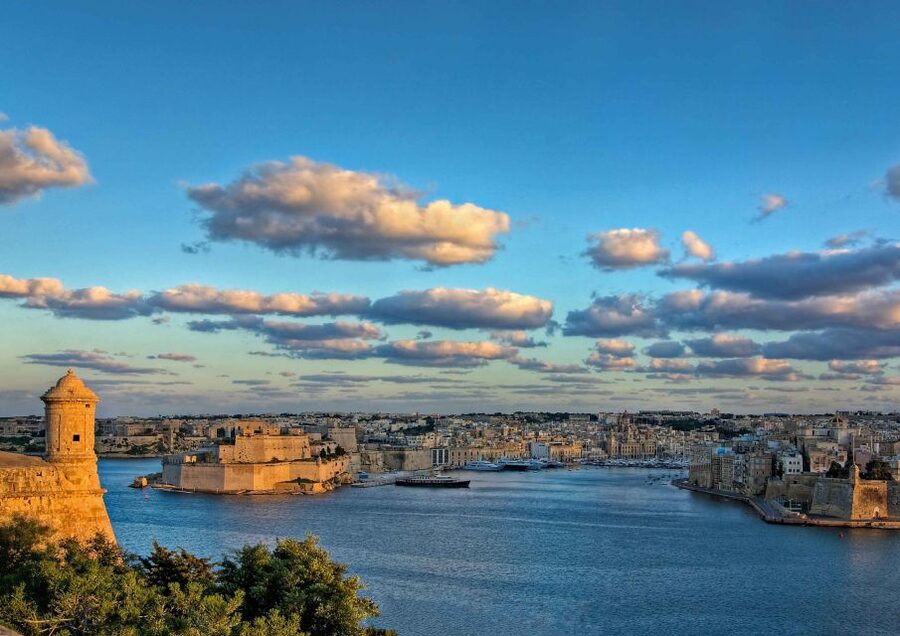
Valletta was built as a fortified city and is now recognized in its entirety as a UNESCO World Heritage Site. Its streets pack together massive bastions, Baroque churches, palace facades, public gardens, and harborside views.
This tour works best as a walking companion rather than a scheduled activity. You start and stop the commentary when you like, linger at a church, skip a museum, or break for lunch. You are not tied to a group or a guide’s pace.
The route is planned to take roughly three to four hours. That estimate is for walking and listening to the main commentary, not for visiting every interior or stopping at every suggested shop and restaurant. If you enter St. John’s Co-Cathedral, visit a museum, or pause often at the gardens, plan on a longer outing.
The price is about $8 per person. That is modest for a self-guided city tour, especially since the purchase includes Mdina as well. The value depends on your phone behaving properly and on your comfort with independent navigation. You are paying for prepared commentary and route content, not personal help on the street.
More History Walking Tours in the world:
- Berlin: Third Reich & Cold War Guided Walking Tour
★ 4.9 · 8,378 reviews - Munich: Third Reich & WWII Walking Tour
★ 4.6 · 6,181 reviews - Berlin’s Best: 2 Hour Walking Tour Third Reich and the Cold War
★ 5.0 · 5,486 reviews
Start at Tritons’ Fountain and the Valletta Waterfront

The programmed route begins at Tritons’ Fountain, a practical place to get oriented before entering the city. From here, it continues toward the Valletta Waterfront, where the city’s defensive and maritime character comes into view.
This opening gives you useful context before the denser central streets. Valletta is not simply a collection of churches and palaces. Its position beside the water explains much of its military importance and its long connection with ships, trade, and defense.
You will want your phone fully charged at the start. Download the PopGuide app, then download the map and tour content while you have a reliable internet connection. Once that is complete, the audio and map can be used without Wi-Fi or mobile data.
Upper Barrakka Gardens and the city’s civic center
The Upper Barrakka Gardens are one of the route’s important early stops. The gardens offer a break from stone streets and a chance to look across the harbor area. Audio commentary here helps place Valletta’s fortifications and public spaces within the city’s larger story.
The next cluster includes the Auberge de Castille, St. James Cavalier, and the Malta Stock Exchange. This section shows how Valletta’s older military and administrative buildings continue to serve modern public purposes.
The Auberge de Castille is especially important for understanding the city’s connection with the Knights of St. John. St. James Cavalier adds another layer, linking the old defensive city with a later cultural role. The Malta Stock Exchange brings the route into the present day.
This is a good point to pause if you want to absorb the city slowly. The audio points are not a substitute for entering every building, and admission fees are not included, so check each site before you decide to go inside.
Fort Saint Elmo tells the military story
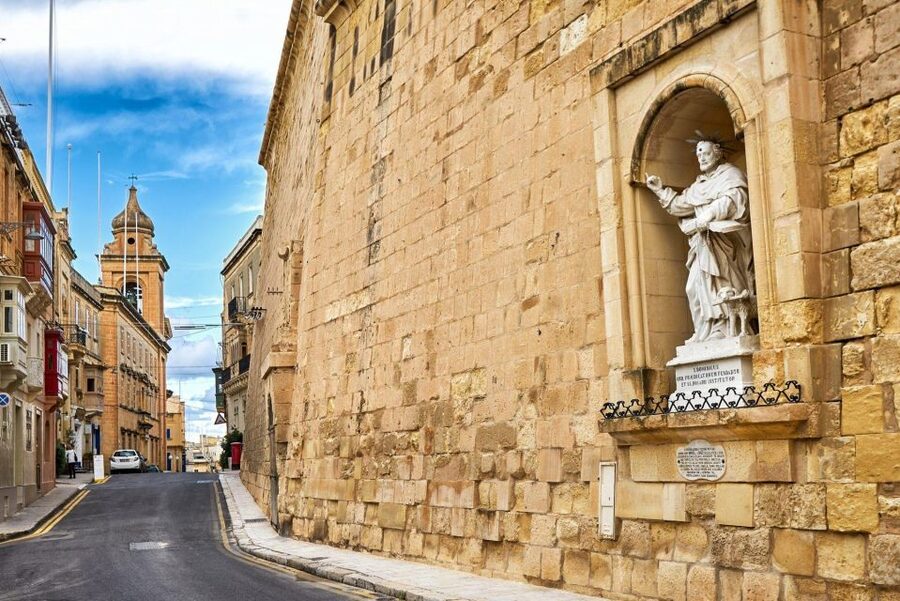
The route then reaches Fort Saint Elmo, one of Valletta’s key defensive landmarks. The fort occupies a strategic position at the tip of the peninsula, where the surrounding water helped shape the city’s defenses.
This stop is valuable because it gives the rest of the walk a military framework. Valletta’s walls and bastions can look like dramatic stone scenery unless you understand why they were built and how the peninsula was protected.
The tour’s format is useful here because you can listen while looking at the structure rather than trying to read a long guidebook entry. Still, the experience remains self-guided. If the app’s map does not locate you properly, you may need to use your phone’s regular map service to move between points.
More Self-Guided Walks in the world:
- Dortmund: BVB Self-Guided Stadium Walk
★ 4.5 · 3,195 reviews - Self guided Hike Trail to Nature Walk & Waterfall
★ 4.5 · 283 reviews - Self Guided Classic Freedom Trail Location Aware (GPS) Walking Audio Tour
★ 4.5 · 258 reviews - Abel Tasman National Park: Sailing and Self-Guided Walk
★ 4.8 · 238 reviews
Hastings Gardens and the lower harbor views
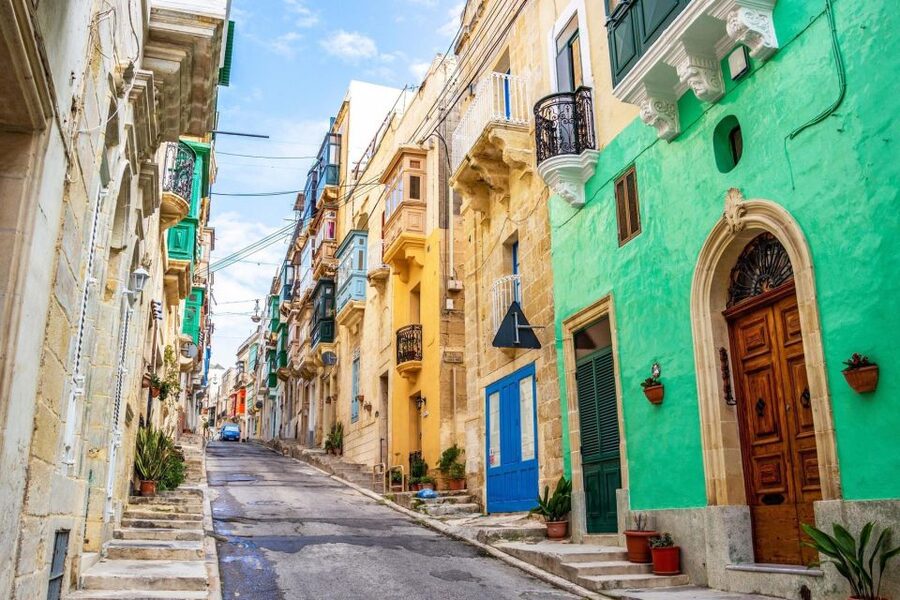
Hastings Gardens and St. Michael’s Bastion provide a change of mood after Fort Saint Elmo. The route continues through open spaces and defensive structures, showing how the city’s walls frame daily life.
Next come the Lower Barrakka Gardens and the Siege Bell War Memorial. These stops connect Valletta’s scenic public spaces with the memory of wartime loss. You can expect the commentary to be most useful when you want historical meaning rather than just a list of dates and building names.
The two Barrakka Gardens are easy to confuse if you are moving quickly. The route includes both, and each gives you a different point of view within the fortified city. Give yourself time to stop, look around, and check the next audio point before walking on.
Manoel Theatre and the harbor connection
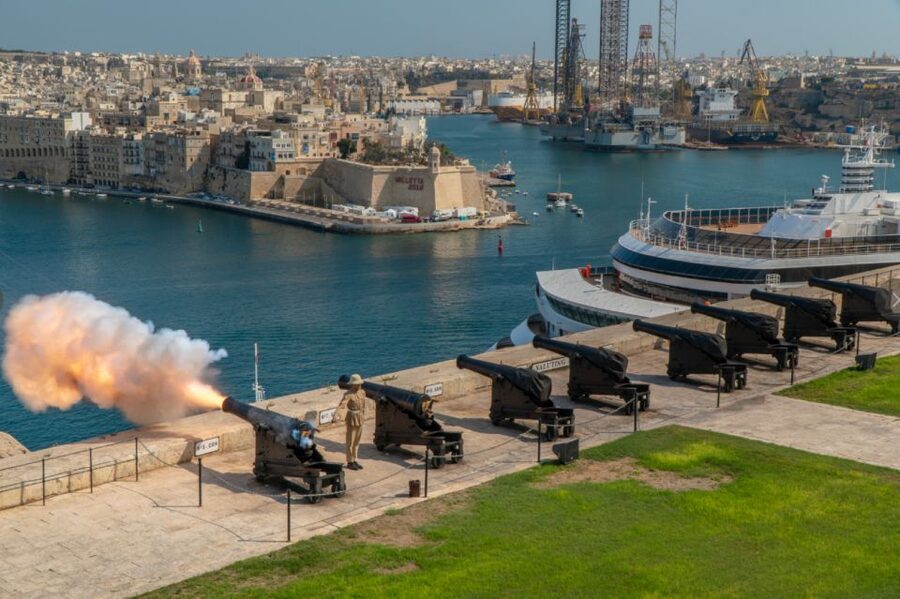
The route continues to Manoel Theatre, one of Valletta’s best-known cultural landmarks. It then points you toward Marsamxett Harbour, the ferry service, and the Old Marine Police Station.
This part of the tour reminds you that Valletta is still a working city, not only a preserved monument. The ferry information is useful if you plan to connect with another part of Malta, but the ferry ride itself is not included in the tour.
The Old Marine Police Station adds another small piece to the waterfront story. These less famous stops can be worthwhile because they show how the city functioned beyond its grand churches and official palaces.
Merchants Street leads into the grandest buildings

The route returns to the heart of Valletta through Merchants Street. This is one of the best sections for combining sightseeing with a meal, coffee, shopping, or a short rest.
The audio points also identify restaurants and shops. Treat these as suggestions rather than a fixed plan. The practical advantage is that you can make decisions as you walk instead of spending half your morning searching for basic options.
Republic Square brings together the National Library of Malta, the New Parliament Building, the Royal Opera House, and Palazzo Ferreria. This compact area shows the city’s changing public face. Older Baroque buildings sit close to newer civic architecture, and the route helps explain the contrast.
The Royal Opera House is especially interesting because its presence links Valletta with music, public performance, and the city’s changing cultural life. The New Parliament Building gives you a modern counterpoint to the older stone streets.
St. George’s Square and the Grand Master’s Palace
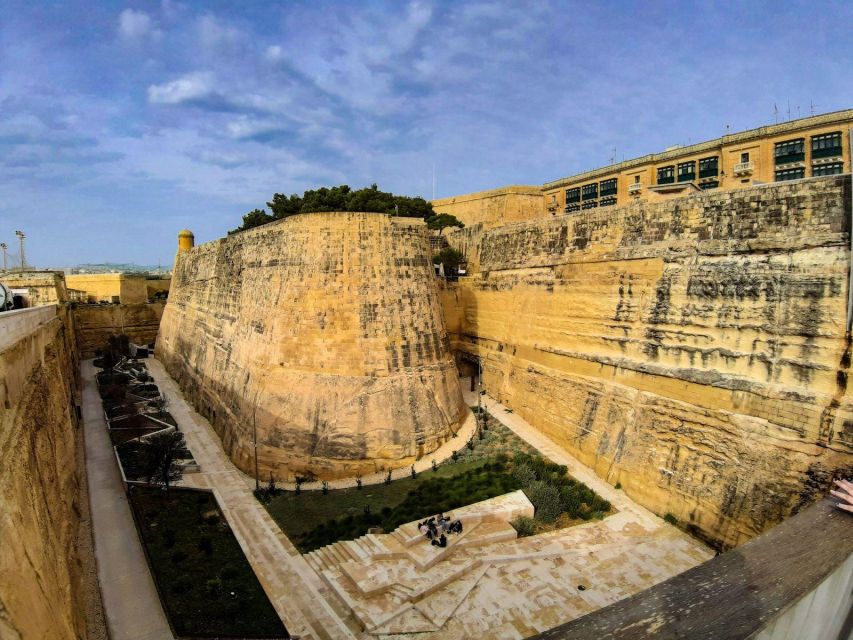
St. George’s Square leads you to the Grand Master’s Palace, one of the route’s central highlights. This is the point where the political history of Valletta becomes especially visible.
The palace represents the authority once held by the Grand Masters of the Order of St. John. Even if you do not enter, the building helps explain why Valletta was designed with such monumental public spaces and formal streets.
Admission is separate, so decide in advance how much time and money you want to spend inside. The audio tour gives you a framework for the exterior and surrounding square, but it does not replace a full interior visit.
St. John’s Co-Cathedral and Caravaggio
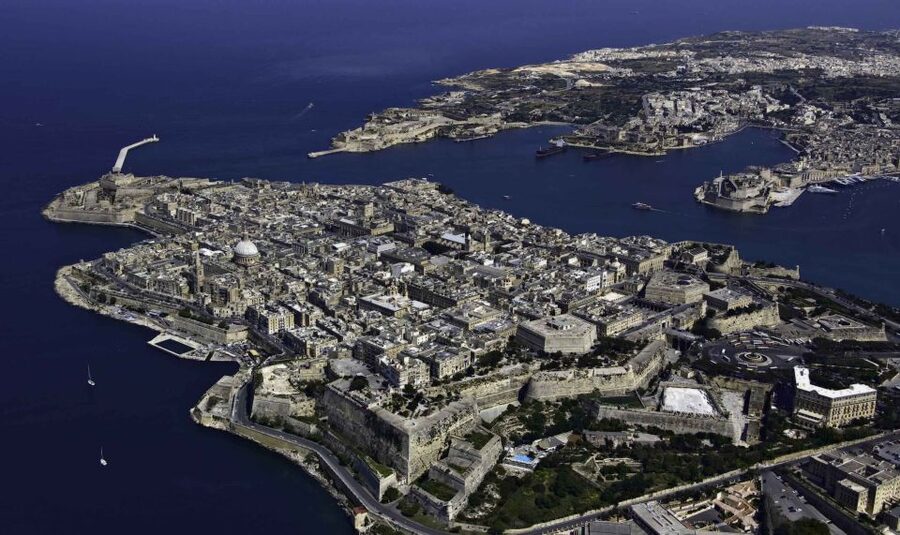
St. John’s Co-Cathedral is likely the most important interior stop on the route. Its ornate decoration reflects the wealth and power of the Order of St. John, while the Oratory contains paintings by Caravaggio.
This is one place where you should avoid rushing. The audio commentary can prepare you for the building, but the actual visit may require an admission ticket and extra time. The Caravaggio paintings are a major reason to enter, not a detail to glance at while following the route.
The tour also includes written explanations. That is useful inside a busy church, where you may prefer to read quietly rather than hold your phone up and listen. It also lets you revisit a point later if the audio moves too quickly.
The Anglican church, Strait Street, and Mount Carmel

After St. John’s Co-Cathedral, the route shifts to St. Paul’s Pro-Cathedral, the Anglican church in Valletta. This creates a helpful religious contrast with the Catholic landmarks that dominate much of the city.
Strait Street follows. The street is one of Valletta’s more distinctive urban spaces, and the commentary gives it a place in the city’s social and architectural story. It is also a good area for noticing how narrow lanes connect the main grid.
The Basilica of Our Lady of Mount Carmel brings you back to one of Valletta’s major church interiors and skyline markers. As with the other religious buildings, opening hours and admission arrangements are not included, so check before building your day around an interior visit.
Victoria Gate and the Bridge Bar finish the walk
The final programmed stops include Victoria Gate and the Bridge Bar. Victoria Gate brings you back to the city’s defensive edge and offers a natural sense of completion after the churches, palaces, and gardens.
The Bridge Bar is a more informal final point. It gives you a possible place to stop after the walk, though food and drinks are your own expense. Ending here also fits the tour’s practical approach, since the star points are meant to help you decide where to pause along the way.
You do not have to complete the route in one stretch. The booking is valid for one to seven days, so you can divide it into sections if that suits your schedule. That flexibility is useful in hot weather, during a long port visit, or when you want to spend more time inside the major sites.
What the app does well, and where it can frustrate you
The strongest part of the experience is the prepared information. The audio and written explanations cover the main sights, and the language choice is unusually broad for a low-cost self-guided tour. English, French, German, Italian, and Polish are available.
The offline feature is another real advantage. Malta mobile data can be expensive depending on your plan, and you do not want to depend on a signal while walking among thick stone walls. Download the app and maps before leaving your hotel or apartment.
The weak point is setup. You need to install PopGuide, receive your activation details, and download the content before beginning. Advance bookings receive the username and password link one day before the booked date. Same-day bookings receive it after booking.
Some people have had difficulty completing the download, with one group spending a long time trying to get the app working. Another user found the app’s bring me here function had failed and had to use standard Maps for directions. You should treat the audio content and the navigation as two separate tools, and keep your ordinary map app available.
The route information has also been praised for being good and interesting, but it may not always give enough step-by-step directions between points. That matters in Valletta, where several streets and bastions can look similar. Look at the route before you start and download a normal map as a backup.
Who will get the most from this $8 tour
This is a good match for you if you want independence, basic historical context, and a cheap way to see Valletta’s main sights. It also suits couples or small groups who dislike being hurried by a fixed walking tour.
It is less suitable if you expect a live guide to answer questions, solve navigation problems, or adjust the route around your interests. It is also not suitable for people with mobility impairments, and Valletta’s fortified streets may be tiring even for confident walkers.
Bring headphones and a charged smartphone. Since you use your own device, you also need enough storage and battery for the app, map, audio, and regular navigation. A portable charger would be sensible, though it is not listed as a required item.
The overall score is 3.7 from 251 ratings. That fits the experience: the content can be useful and the price is low, but technical setup and directions can make or break your day.
The free Mdina tour adds real value
The extra Mdina audio tour is the best reason to consider this package instead of paying for Valletta alone. Mdina offers a different setting and mood from Valletta, and you can use the second tour on a separate day.
The same basic rules apply: download the app and content while online, then use the audio without an internet connection. The supplied details do not provide a full Mdina route, so you should think of it as a useful bonus rather than assume it covers particular buildings or admission tickets.
At $8, even a modest use of the Mdina tour improves the value. If you only listen to a few stops in Valletta and never use the extra tour, the price still remains low, but the package is clearly designed for visitors who want more than one self-guided walk.
Should you book it?
Book this tour if you want an inexpensive, flexible introduction to Valletta and are comfortable managing your own phone. Download everything early, keep Google Maps or another map app ready, and allow extra time for St. John’s Co-Cathedral, the Grand Master’s Palace, Fort Saint Elmo, and any other interior you plan to enter.
Skip it if you want a live human guide, reliable turn-by-turn directions, or help with app problems. For independent walkers who value good explanations and the added Mdina tour, the $8 price is fair. Just consider the app setup part of the preparation, not an afterthought.
FAQ
How long does the Valletta audio tour take?
The suggested route takes around three to four hours, depending on your walking pace and how long you spend at each stop.
How long is the booking valid?
The activity is valid for one to seven days. You can check availability for the available starting times.
Does the tour include a live guide?
No. This is a self-guided audio tour accessed through the PopGuide app on your own smartphone.
Is internet required during the walk?
You need internet to download the app, map, and tour content. After the content is fully downloaded, you can use the audio guide offline.
Which languages are available?
The audio and written content are available in English, French, German, Italian, and Polish.
Do I need to bring my own phone?
Yes. A mobile phone is not included. You need to use your own charged smartphone.
Are headphones included?
No. You need to bring your own headphones or earphones.
Are admission tickets included?
No. Entry tickets to attractions and sites are not included in the price.
Is the Mdina tour included?
Yes. Every purchase includes a complimentary audio-guided tour of Mdina.
Can people with mobility impairments take this tour?
The activity is listed as not suitable for people with mobility impairments.
Just added around the world
- Fira: Guided Foodie Walking Tour with Tastings★ 4.9 · 474 reviews
- Fez: Guided Walking Tour of the Historic Medina★ 5.0 · 359 reviews
- Fez: Walking Tour in the Ancient City of Fez★ 4.8 · 73 reviews
- Faro: Old Town Guided Walking Food Tour★ 4.9 · 94 reviews
- Feel like a local – Walking Tour in Mykonos Town 2hours★ 4.4 · 77 reviews
- Fes: A Guided Walking Tour Through the Historic Medina★ 4.4 · 97 reviews
- Fez: Half-Day City Private Walking Tour with a Guide★ 4.6 · 114 reviews
- Fanal / Assobiadores – Levada Walk★ 4.6 · 93 reviews
History Walking Tours, compared.



Berlin’s Best: 2 Hour Walking Tour Third Reich and the Cold War
Read our review →
Third Reich Berlin: Hitler and WWII Walking Tour
Read our review →
New Orleans Garden District History Walking Tour
Read our review →
Cartagena: Historic Center and Getsemaní Shared Walking Tour
Read our review →

Imperial Palace and Shogun Historical Walking Tour
Read our review →Browse the lists this tour appears in