
REVIEW · VIETNAM
Hue Imperial City Walking Tour: Citadel & Forbidden City
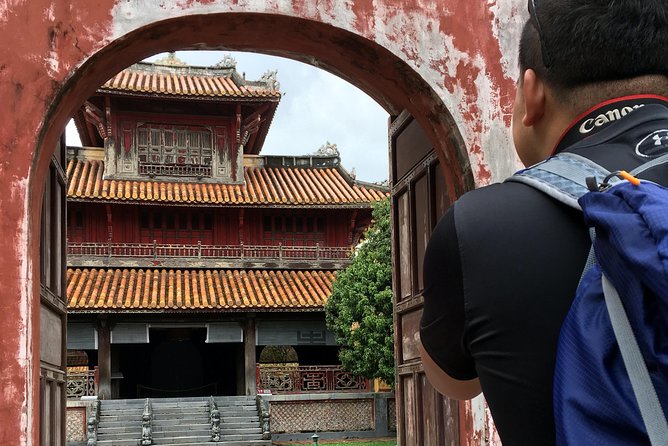
Hue’s Imperial City is not a quick photo stop. Behind the walls lies a large ceremonial and residential complex, and the difference between seeing a palace and understanding its purpose is the difference a guide makes. This walking tour follows the Nguyen emperors from Ngo Mon Gate through Thai Hoa Palace, The Mieu, the Forbidden City, and the royal gardens.
I like the tour’s strong historical focus and its slow, question-friendly pace. I also like that the route includes less obvious corners such as Kien Trung Palace, Thai Binh Pavilion, Thiệu Phương Garden, and the Royal Theater, not only the grand entrance buildings. The main drawback is practical: entry tickets, drinks, and food cost extra, and the long walk is not suitable for wheelchair users.
Key points at a glance
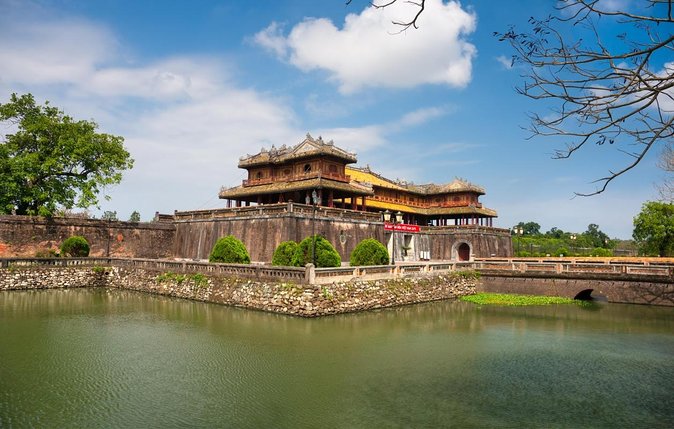
- Enter through Ngo Mon Gate: Begin at Hue’s grand ceremonial entrance and learn how the Imperial City was organized.
- Spend about three hours on site: The route covers major palaces, temples, gardens, and theater spaces without treating the citadel as a quick stop.
- See Kien Trung Palace and royal gardens: These quieter sections add detail beyond the best-known courtyards.
- Ask questions as you walk: Guides including Ngoc, Ha, Huong, Hoa, Sue, and Nhien are praised for clear English and personal explanations.
- Meet at the four cannons: The meeting point is the four cannons by Cửa Ngăn, not the other five cannons near Quảng Đức Gate.
- Pay about $11 for the guiding: The price is good value if you want context, but your Imperial City admission ticket is separate.
Why a guide helps inside Hue’s Imperial City
Hue’s Imperial City can look orderly and beautiful even when you know nothing about it. Gates line up with courtyards, rooflines repeat in bright colors, and trees soften the stone walls. Yet the site can feel like a series of disconnected buildings if nobody explains who used them and why they mattered.
A good guide gives you that structure. You learn how the Nguyen dynasty used the complex for ceremonies, worship, administration, and royal family life. You also hear why some emperors were not worshiped in The Mieu, an important detail that turns a temple visit into a lesson about royal succession and political judgment.
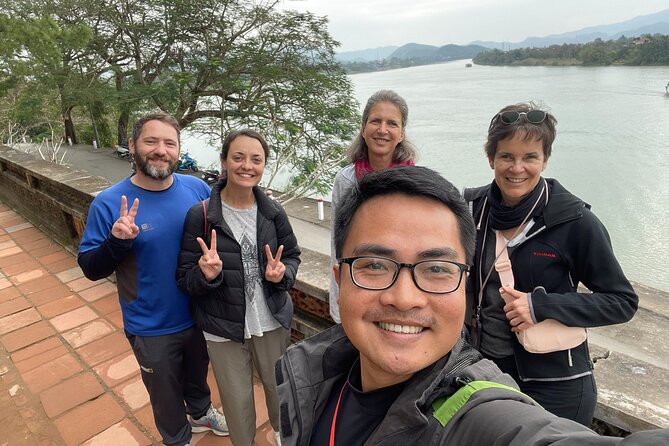
The strongest part of this experience is the human explanation. Guides such as Ngoc, Nhien, Ha, Huong, Hoa, Sue, Xi, and Danny have been praised for clear English, patient answers, and an ability to adjust the walking speed. Several guides also add small cultural details, Vietnamese words, family stories, or practical suggestions for eating in Hue.
That personal exchange matters here. You can read dates on a sign, but you may miss how the dynasty worked, how the royal family lived, or how war and restoration changed the site. A guide also gives you a chance to stop and ask about a detail that catches your eye.
More Castle and Palace Walks in Vietnam:
- Hue Customizable Tour with Imperial Citadel & Forbidden City
★ 4.9 · 937 reviews - Edinburgh Castle: Guided Walking Tour with Entry Ticket
★ 4.7 · 11,699 reviews - Venice: Doge’s Palace and St Mark’s Basilica Walking Tour
★ 4.4 · 6,291 reviews
Starting at the four cannons near Cửa Ngăn
The meeting point requires care. Google Maps may label the general area Nine Holy Cannons, but the cannons are split between two sites. Four are at Cửa Ngăn, and five are near Quảng Đức Gate. This tour meets at the four-cannon location.
I would save the map pin and carry the tour contact details before leaving your hotel. The guide waits at the meeting point, and you can provide a WhatsApp number so the guide can send a map location. Pickup is optional in some booking choices, with a driver and guide coming to your hotel if you provide the hotel name and WhatsApp contact.
The route is on foot, so wear shoes you can comfortably use for several hours. Hue can be hot, rainy, or gray, and much of the route is outdoors. Bring water, since drinks are not included, and allow time for the walking surface, photo stops, and pauses for explanations.
Ngo Mon Gate gives you the grand opening
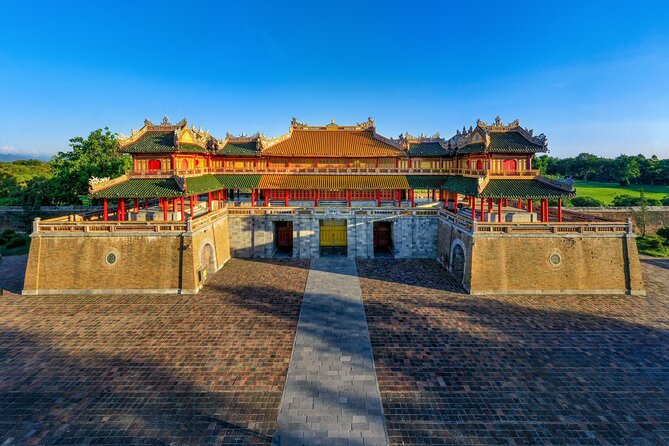
The tour enters the Imperial City through Ngo Mon Gate, the ceremonial gateway most closely associated with Hue’s royal image. The first stop includes roughly 20 minutes for walking, photographs, and explanation.
This is a useful opening because the gate helps you grasp the scale and order of the complex. Your guide can set out the role of the Nguyen dynasty and explain how the main axis leads toward the royal buildings. Instead of rushing straight inside, you get a short lesson in how architecture expressed rank and authority.
Ngo Mon Gate is also one of the busiest photographic spots on the route. You will want pictures, but do not spend all your attention behind the camera. The first explanation gives you a framework for everything that follows.
Thai Hoa Palace and the ceremonial heart
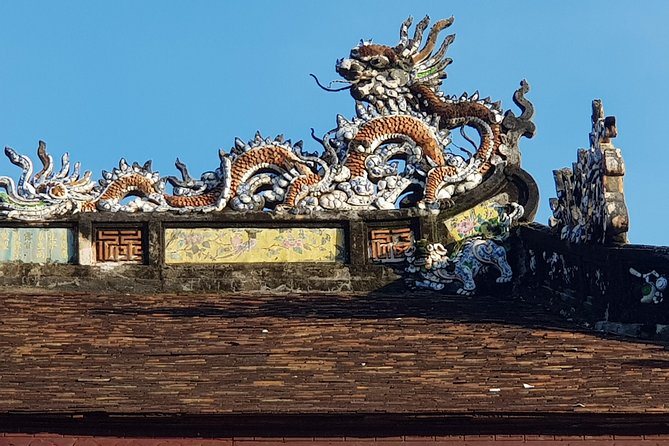
Thai Hoa Palace, also called the Palace of Harmony, receives about 30 minutes. It is one of the tour’s most important stops because it shows the formal side of imperial life.
Here, focus on how the building differs from the more private parts of the complex. The guide explains the palace’s ceremonial purpose and points out architectural details that are easy to pass without context. The stop is long enough for a proper visit rather than a quick glance at the roof and columns.
The palace also helps you separate the Imperial City from the Forbidden City. These names are often used loosely, but the tour presents them as connected spaces with different functions. That distinction makes the rest of the walk easier to follow.
More City Highlights Walks in Vietnam:
- Hue: Imperial City Walk, Motorbike Tour & Private Car Options
★ 5.0 · 732 reviews - Hue Imperial Ancient City Walking Tour
★ 4.8 · 308 reviews - Ho Chi Minh: City Highlights Guided Walking Tour
★ 4.9 · 188 reviews - Berlin City walk Government District and Places of Democracy
★ 4.7 · 8,467 reviews
Hien Lam Pavilion and The Mieu temple
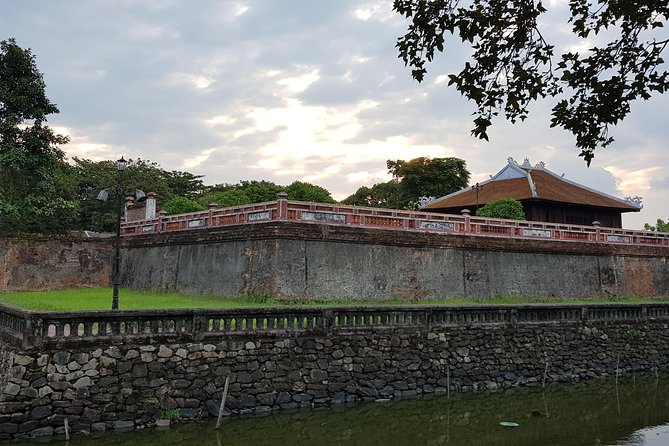
The route continues to Hien Lam Pavilion, with about 10 minutes for a visit and photographs. It is paired with The Mieu temple area, where the focus shifts from royal ceremony to ancestor worship.
The Mieu was used to honor the emperors. Your guide explains why some kings were not permitted to receive worship inside the temple, a detail that opens a window onto royal politics and the values of the dynasty. This is one of the places where a guide adds real value. Without an explanation, you might see a temple and move on. With one, you understand that the arrangement of names and shrines carries meaning.
The pavilion and temple also show how the complex moved between open courtyards, symbolic structures, and enclosed sacred areas. Take time to look at the relationship between the buildings rather than treating each one as an isolated monument.
Gates, courtyards, and the ten-minute pause
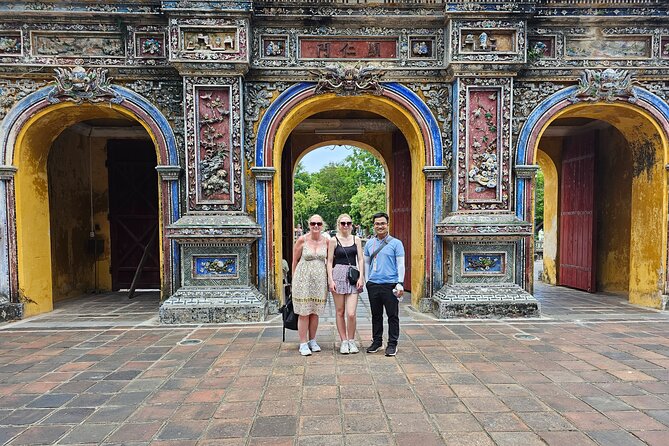
The itinerary includes a stop at Cửa Chương Đức, with about 10 minutes for photographs and explanation. There is also a short break of roughly 10 minutes later in the walk.
These shorter stops are useful because the Imperial City is large. A tour that only delivers nonstop facts can become tiring, especially in warm weather. The pause gives you time to drink, catch your breath, and absorb what you have seen.
The route includes another 20-minute photo and guided visit stop whose name is not specified in the supplied details. I would treat this as a flexible part of the walk, where the guide may spend time on a building or courtyard that suits the group’s pace and questions.
Kien Trung Palace and the Forbidden City
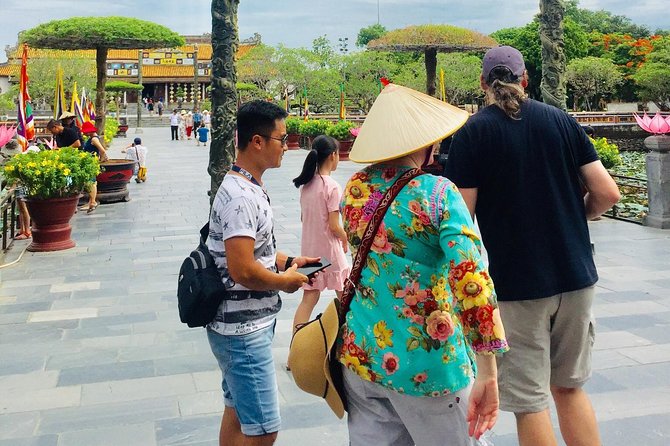
Kien Trung Palace is one of the highlights, with about 20 minutes for walking, photographs, and explanation. It was used as a residence for the king’s family, so it brings the tour into the more private side of royal life.
This section gives the Forbidden City a human scale. Earlier stops focus on ceremony, worship, and public authority. Here, you begin to picture the royal family’s residential world and the boundaries between public duty and private life.
Kien Trung Palace has also undergone restoration work, and the site includes buildings in different conditions. You might see recently restored areas alongside worn or incomplete structures. That contrast is not a flaw to hide. It helps you see that Hue is an active preservation project, not a perfectly untouched palace complex.
The best guides use the surviving buildings to explain change over time. Ngoc, for example, has been praised for answering detailed questions about the monuments and the wider history of Vietnam. A guide who can connect architecture with politics, war, and restoration makes this part far more useful than a simple walk past rebuilt walls.
Thai Binh Pavilion and Thiệu Phương Garden
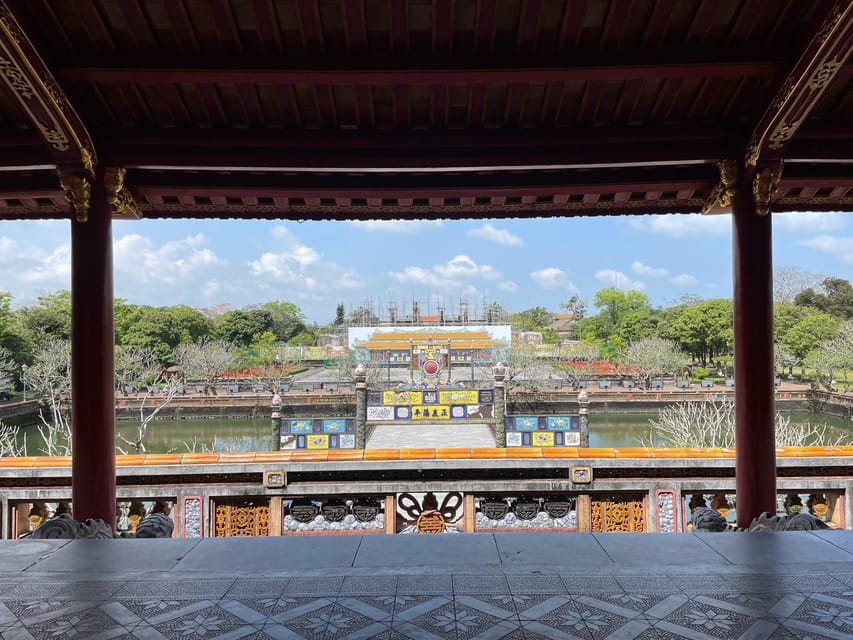
Thai Binh Pavilion receives about 10 minutes, followed by about 20 minutes in Thiệu Phương Garden. These stops slow the visual rhythm after the larger ceremonial buildings.
The garden is a good place to notice the royal taste for ordered outdoor spaces. Your guide can help you read the layout and explain how gardens fitted into life inside the Forbidden City. You get another view of the complex here: not only throne rooms and temples, but also spaces intended for quiet, movement, and leisure.
The garden stop is also practical. The Imperial City covers a lot of ground, and the route does not try to fill every minute with grand architecture. Shorter pauses in calmer sections keep the visit from becoming a march between major monuments.
Duyệt Thị Đường Royal Theater
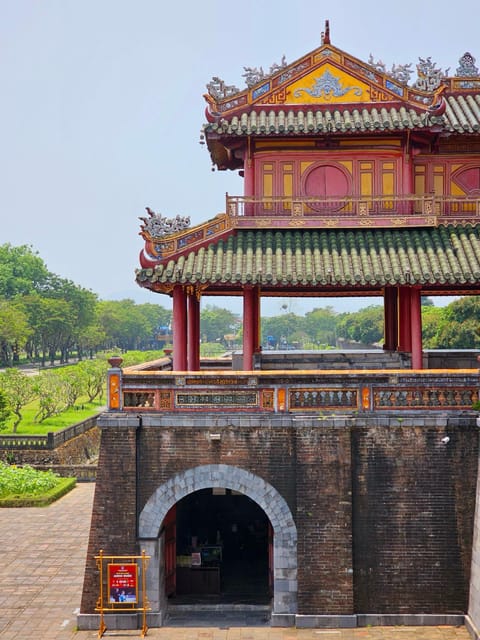
The Duyệt Thị Đường Royal Theater receives about 10 minutes. It adds performance and court culture to the story of the Nguyen dynasty.
I like this stop because it widens the tour beyond kings and battles. A royal complex also depended on music, theater, ceremony, and trained performers. The theater helps you imagine the cultural life that supported the court.
The visit is brief, so you should expect an introduction rather than a performance. Still, it rounds out the route and gives the tour a more complete view of life inside the palace grounds.
Royal Library, Royal Garden, and the walk out
The tour ends near the Royal Library and Royal Garden before you leave the Imperial City. These final spaces provide a quieter finish after the formal gates and central palaces.
The Royal Library points to the intellectual side of court life, while the garden gives you one last chance to enjoy the setting without rushing. The supplied route details do not give a fixed time for every final stop, so the exact finish can vary with questions, photographs, weather, and group size.
The listed duration ranges from 150 to 330 minutes. That is a wide window, but it makes sense for a private or small-group walk. A quick version may take around two and a half hours, while a slower visit with more questions can last close to five and a half hours. If you have a train, flight, or another fixed booking, allow a generous buffer.
The usual end points are Hue or Cửa Hiển Nhơn. Hotel pickup is optional rather than automatic, and the walking tour itself does not include transport after the visit.
The guides and the pace
The most highly praised part of this experience is the guiding. The guide names appearing in the supplied feedback include Ngoc, Ha, Huong, Hoa, Sue, Nhien, Xi, Danny, Au, Hung, Dang, Ruby, and Nok.
The praise is specific. Ngoc is described as especially strong on detail, English, and answers to difficult questions. Huong is noted for patience, humor, and judging the pace well. Sue has helped guests by explaining slowly enough for one person to interpret for a parent. Hoa and Ha are repeatedly associated with friendly, clear explanations. Danny is praised for allowing a gentle stroll rather than rushing from stop to stop.
You should not assume a particular guide will be assigned, but the pattern is useful. This is a tour built around conversation, not a recorded script. If you enjoy asking questions, want a slower walk, or prefer history explained through stories, you are likely to get the most from it.
Private and small-group options are available. A private tour can be especially useful for families, photographers, or anyone who needs a slower pace. Several bookings have ended up as one-on-one tours, but that depends on the option and the day, so do not book on the assumption that you will have the guide alone.
Is $11 good value?
At about $11 per person, the price is low for several hours of guided attention. The value comes from the context: the guide helps you understand why buildings matter, how the royal spaces fit together, and what details to notice.
The entry ticket is not included, so your actual cost will be higher. Food and drinks are also separate. Still, if you already plan to enter the Imperial City, the guiding fee is a modest addition, especially compared with walking through a large complex and missing its story.
The price is less compelling if you only want a fast photo visit. In that case, the long route and explanations may feel like more than you need. I would choose this tour for understanding, not simply for access.
The activity allows cancellation up to 24 hours before the start for a full refund, and reserve-now-pay-later booking is available. English and French are offered. Wheelchair users should choose another way to see Hue because the tour is not suitable for wheelchairs.
Who should book this Hue walking tour?
I would book it for a first visit to Hue, especially if you want the Imperial City to make sense rather than simply look impressive. It also suits solo visitors and couples who enjoy asking questions, families who benefit from a flexible pace, and photographers who want time to stop for angles and details.
It is a good choice for anyone curious about the Nguyen dynasty, royal worship, court life, architecture, and restoration. The guides can also add wider cultural context, so you do not need a specialist background in Vietnamese history.
I would think twice if you dislike long walks, have limited mobility, or want a tightly timed visit. The route is outdoors, the duration can stretch, and admission is extra. Also check your meeting map carefully: go to the four cannons at Cửa Ngăn, not the five-cannon site by Quảng Đức Gate.
Should you book it?
Book this tour if you want the Imperial City explained by a person who can adjust the route, answer questions, and connect the buildings to the Nguyen dynasty. At $11 before admission, it is strong value for a walk that can last three hours or more.
Skip it only if you prefer exploring silently, have already studied Hue’s royal complex, or need a wheelchair-accessible experience. For most first-time visitors, the palaces, temple, gardens, and Forbidden City are much easier to appreciate with a guide who knows when to slow down.
FAQ
Where does the Hue Imperial City walking tour meet?
The meeting point is at the four cannons near Cửa Ngăn. Google Maps may show Nine Holy Cannons, but five cannons are located at another site near Quảng Đức Gate.
Can the guide send the meeting location?
Yes. You should provide a WhatsApp number so the guide can send a Google Maps location if needed.
Is hotel pickup available?
Pickup is optional for selected choices. A driver and guide can come to your hotel, but you need to provide your hotel name and WhatsApp number.
How long does the tour last?
The stated duration ranges from 150 to 330 minutes, or about two and a half to five and a half hours. The exact length depends on the selected option, pace, questions, and stops.
Which languages are available?
Live guiding is available in English and French.
Is the Imperial City admission ticket included?
No. Entry tickets are not included in the tour price.
Are food and drinks included?
No. Food and drinks are not included.
Is this a private tour?
Private and small-group options are available. The exact group type depends on the selected booking choice.
Is the tour suitable for wheelchair users?
No. The activity is not suitable for wheelchair users.
What places does the tour visit?
The route includes Ngo Mon Gate, Thai Hoa Palace, Hien Lam Pavilion, The Mieu temple, Cửa Chương Đức, Kien Trung Palace, Thai Binh Pavilion, Thiệu Phương Garden, Duyệt Thị Đường Royal Theater, the Royal Library, and the Royal Garden.
Just added around Vietnam
- Saigon’s Hidden Flavors – Private Street Food Walk with Local Students★ 5.0 · 301 reviews
- Saigon Street Food & Hidden Alleys by Scooter – 7/9/12 Tastings★ 5.0 · 235 reviews
- Vegan Walk Not Just Vegan Food★ 5.0 · 266 reviews
- Ho Chi Minh City: Highlights & Hidden Gems – Free Walking Tour★ 5.0 · 194 reviews
- Saigon Evening Walking Street Food Tour★ 5.0 · 272 reviews
- Ho Chi Minh City: Street Food Walking Tour with 12 Tastings★ 5.0 · 128 reviews
- Saigon Authentic Walking Street Food Tour 12+ Tastings Included★ 5.0 · 88 reviews
- Ho Chi Minh City private walking tours with young local volunteers★ 5.0 · 326 reviews
Castle and Palace Walking Tours, compared.

Edinburgh Castle: Guided Walking Tour with Entry Ticket
Read our review →
Doge’s Palace and St Mark’s Basilica Walking Tour
Read our review →
3-Hour Walking Tour of Old Town & Prague Castle
Read our review →Edinburgh Castle: Guided Walking Tour with Entry Ticket
Read our review →
Edinburgh Castle Guided Walking Tour in English
Read our review →


Walking Tour of Split and Diocletian’s Palace
Read our review →Browse the lists this tour appears in