
REVIEW · VIETNAM
Hue Customizable Tour with Imperial Citadel & Forbidden City
Hue’s Imperial Citadel makes far more sense with someone to explain it. Behind the thick walls, you’ll find ceremonial gates, royal temples, bronze urns, restored palaces, and the remains of a once-private court where emperors, queens, concubines, and eunuchs lived. A good guide turns a long walk through scattered buildings into a story about power, ritual, family, and war.
I like the choice between a focused 2.5-hour walking tour and a private car day that can include the Imperial City, Thien Mu Pagoda, and three royal tombs. I also like the guides’ approach. Misa, Nhi, Ha, Duy, Nhien, Linh, and others are praised for clear English, patient answers, good pacing, and an ability to explain symbols without making the visit feel like a lecture.
The main catch is simple: the $12 starting price does not include entrance tickets. The walking tour also begins at the four bronze cannons by Ngan Gate, not at your hotel, while the car option includes city-center pickup but uses a driver rather than a licensed tour guide.
Key points to know before booking
- The walking route lasts about 2.5 hours, covering the Nine Holy Cannons, Noon Gate, Thai Hoa Palace, royal temples, dynastic urns, and Forbidden Purple City.
- Misa, Nhi, Ha, Duy, Nhien, and Linh are among the English-speaking guides praised for clear explanations, warmth, and a relaxed pace.
- The $12 price excludes admission, with the Imperial City ticket listed at 200,000 Vietnamese dong per adult.
- The private car option is highly flexible, allowing you to combine the citadel with Thien Mu Pagoda, Minh Mang Tomb, Tu Duc Tomb, Khai Dinh Tomb, or Thuy Tien Water Park.
- Pickup is included only with the private car option, generally from central hotels, Hue Railway Station, or Phu Bai Airport.
- You need to confirm the exact option carefully, since the duration, transport, guide service, pickup, and included sights change with the booking choice.
Why Hue’s Citadel is worth seeing with a guide
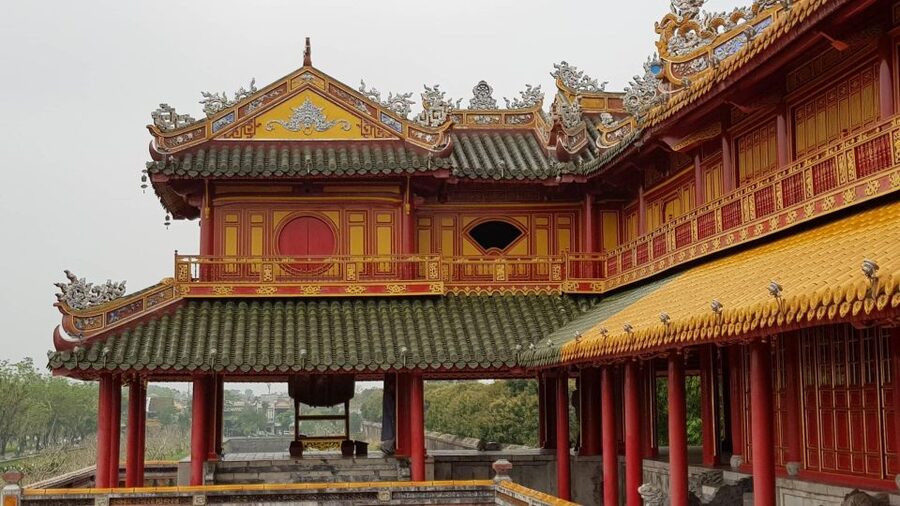
Hue was the capital of the Nguyen Dynasty, Vietnam’s last imperial dynasty. The Citadel is not one single palace. It is a layered royal complex with defensive walls, formal courtyards, temples for dead emperors, administrative buildings, gardens, theaters, and the Forbidden Purple City at its center.
That layout can be confusing when you walk through it alone. A guide helps you understand why one building faced south, why certain numbers and animals appear in the decoration, and why the royal temples matter as much as the palaces. Misa has been particularly good at explaining links between Confucian ideas, feng shui, Buddhism, architecture, and court ritual.
I also like that this is not only a photo stop. The route gives you a look at the people behind the grand architecture: emperors, wives, minor wives, concubines, eunuchs, officials, and servants. The Forbidden Purple City was the private heart of royal life, though war and weather have left parts of it damaged or rebuilt.
Several guides are singled out for making the subject easy to follow. Ha is praised for accessible explanations and useful food and coffee suggestions after the walk. Nhi brings energy and humor to stories about the Nguyen emperors. Duy is described as friendly and engaging, while Nhien and Linh are noted for answering questions and adapting the pace.
More Castle and Palace Walks in Vietnam:
- Edinburgh Castle: Guided Walking Tour with Entry Ticket
★ 4.7 · 11,699 reviews - Venice: Doge’s Palace and St Mark’s Basilica Walking Tour
★ 4.4 · 6,291 reviews - Prague: 3-Hour Walking Tour of Old Town & Prague Castle
★ 4.7 · 5,696 reviews
Starting at the Nine Holy Cannons
For the walking option, meet your guide at the area of the four bronze cannons near Ngan Gate, also called Cua Ngan. The guide will hold an A4 sheet with your name. Pay attention to the location because five cannons sit on the opposite side.
The nine cannons were cast by Hue artisans in 1803, during the second year of Emperor Gia Long. They are more than old weapons. They are major bronze works from the early Nguyen period and once marked the entrance area near Ngo Mon Gate. During Emperor Khai Dinh’s reign, they were moved to their present position.
This is a useful opening because it places the dynasty in time before you enter the royal compound. You’ll also get a quick sense of scale. The Citadel is large, and the cannons, walls, gates, and Flag Tower show that Hue was both a political center and a fortified city.
The Flag Tower and Noon Gate
The Flag Tower rises from the middle of the southern side of the Citadel. It sits within the Nam Chanh fortress and remains one of Hue’s most recognizable sights. The royal flag was flown here, making the tower a practical symbol of authority as well as a strong photo stop.
From here, the route continues toward Noon Gate, or Ngo Mon. Built in 1833 under Emperor Minh Mang, this was the ceremonial southern entrance to the Imperial City. It was used for royal ceremonies and troop movements, so its purpose was public and political, not simply decorative.
Your guide will likely explain how the gate controlled movement into the most important part of the capital. Take a moment to look at the multiple levels and formal symmetry. The design reflects the strict order of the court, where access depended on rank and occasion.
The route includes roughly 15 minutes at several major points, but the exact pace can change. Guides such as Misa and Linh have been praised for leaving enough time for photos and independent looking instead of rushing from one structure to the next.
Thai Hoa Palace and the meaning of ceremony
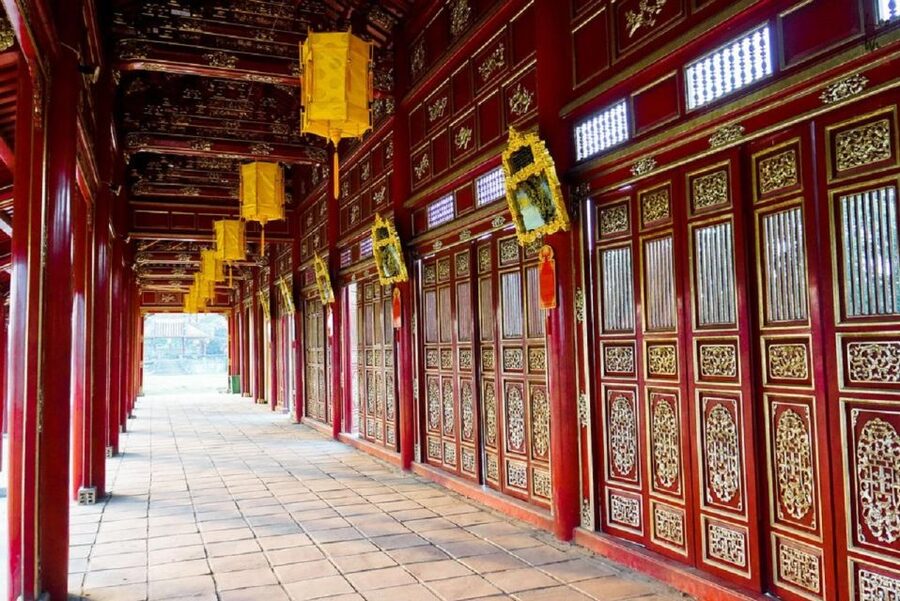
Thai Hoa Palace, also called the Palace of Supreme Harmony, is one of the central stops. Thirteen Nguyen emperors, from Gia Long through Bao Dai, were crowned here. In a monarchy built around ritual, this was not just an attractive hall. It was a symbolic center of the country.
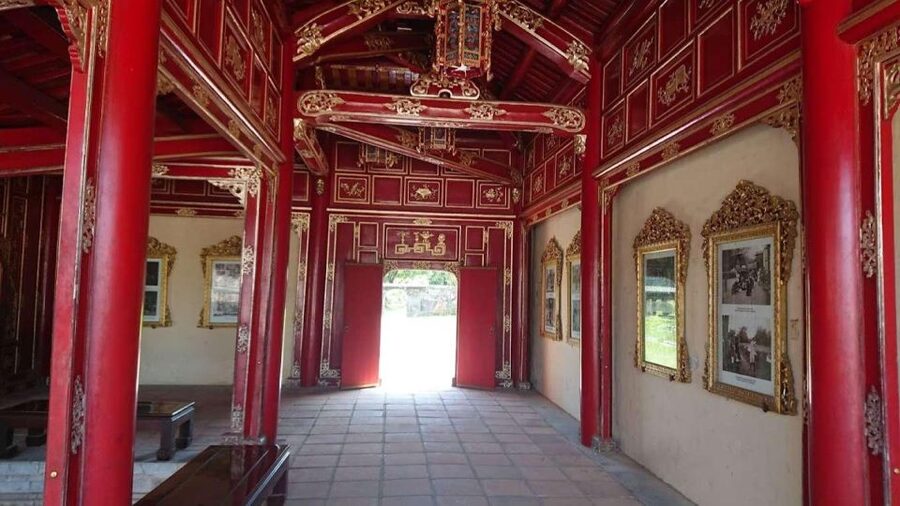
The palace helps explain why the Citadel can feel formal even when many buildings are partly restored. Every approach, doorway, courtyard, and decorative detail had a place in the royal order. A guide can point out these connections instead of leaving you to see only painted wood and rooflines.
This is one of the points where the tour earns its modest cost. You can walk through the palace on your own, but the building becomes more meaningful once you understand its role in coronations and state ceremony.
Same streets, a different route:
- Ho Chi Minh City Street Food Tour & Sightseeing By Motorbike
★ 5.0 · 9,413 reviews - Private Street Food Evening Walking Tour in Ho Chi Minh City
★ 5.0 · 3,175 reviews - [HOT] Hanoi Old Quarter Walking Street Food – Small Group Tour
★ 5.0 · 2,163 reviews - Super Niche Walking Street Food Tour in Ho Chi Minh City
★ 5.0 · 1,636 reviews
Dynastic urns, royal temples, and family politics
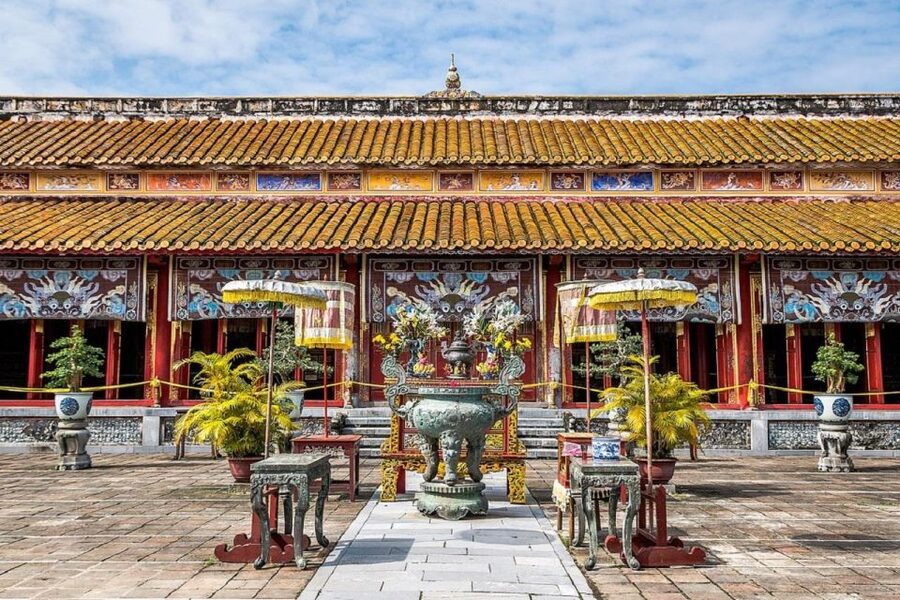
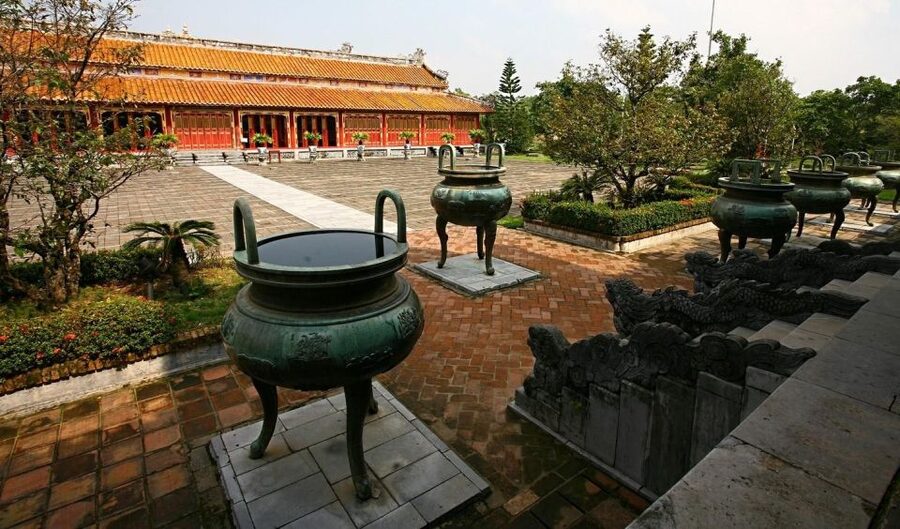
The Nine Dynastic Urns stand in front of The Mieu Temple. Emperor Minh Mang commissioned them in 1835, and they were completed in 1837. Each urn represents an emperor and carries the weight of the dynasty in bronze form.
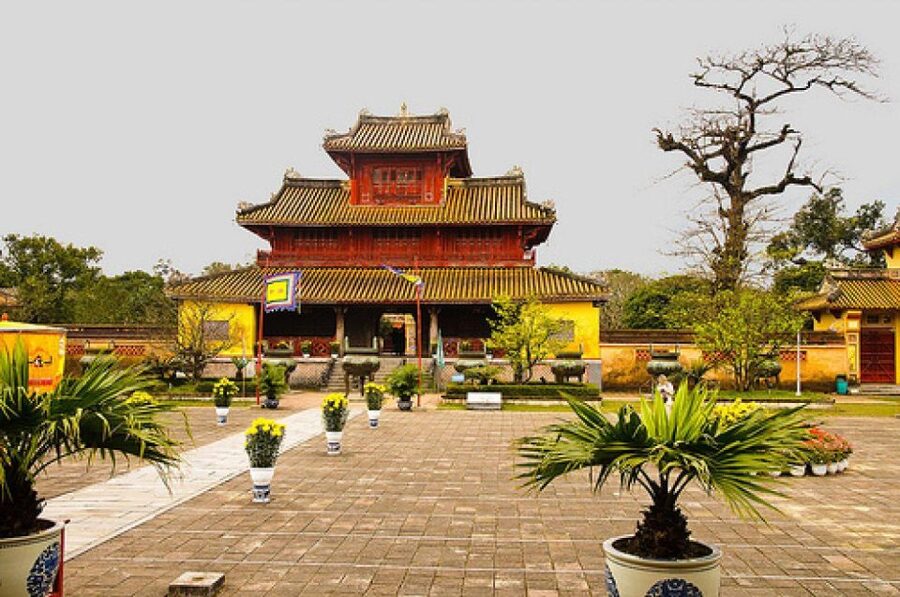
Nearby, The Mieu was built in 1821 as a temple for Nguyen rulers. The route also includes Hien Lam Pavilion, Hung To Mieu, Hung Mieu, and Trieu To Mieu. These names can blur together if you are walking alone, but they represent different parts of royal ancestor worship and dynastic memory.
I find this section especially useful for understanding how the Nguyen family presented its own past. The temples were not private family chapels in the ordinary sense. They helped define which rulers deserved honor and how the dynasty wanted its authority remembered.
The guides also explain people and customs that are easy to miss. You’ll hear about emperors’ wives, concubines, eunuchs, and the strict social world around the throne. That human detail keeps the tour from becoming a list of dates and construction years.
Entering the Forbidden Purple City
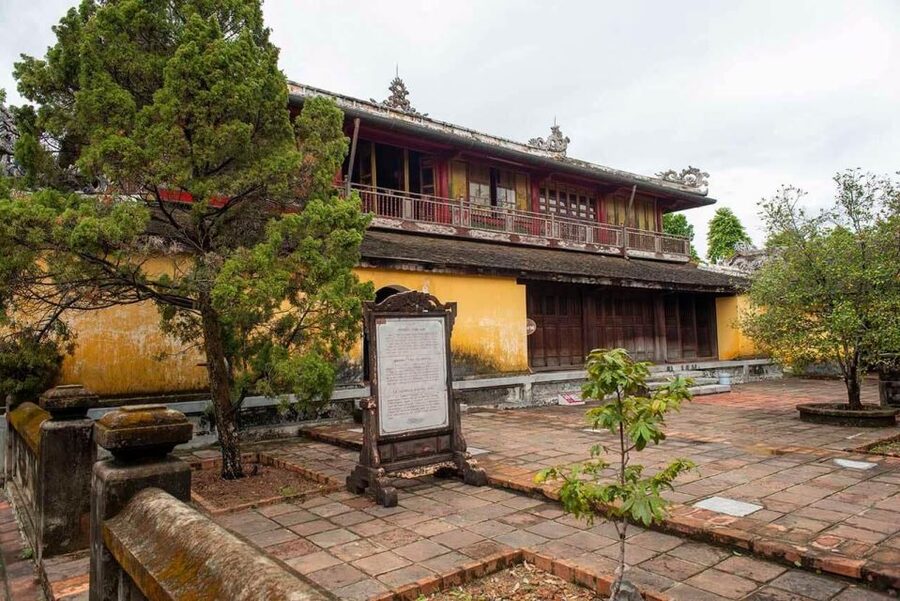
The Forbidden Purple City, or Tu Cam Thanh, was built behind Thai Hoa Palace. Gia Long began it in 1804, and Minh Mang changed its name in 1822. This was the center of daily life for the emperor, queens, minor wives, and concubines.
The name can make the place sound intact and mysterious, but you should expect a mixture of restored structures, open spaces, gardens, damaged remains, and ongoing historical interpretation. Much of Hue’s historic architecture suffered during wartime, and several buildings have been rebuilt or repaired.
That does not make the visit less worthwhile. In some ways, the incomplete areas help you see the scale of what once existed. Guides use the surviving walls, foundations, pavilions, and reconstructions to explain how the private court functioned.
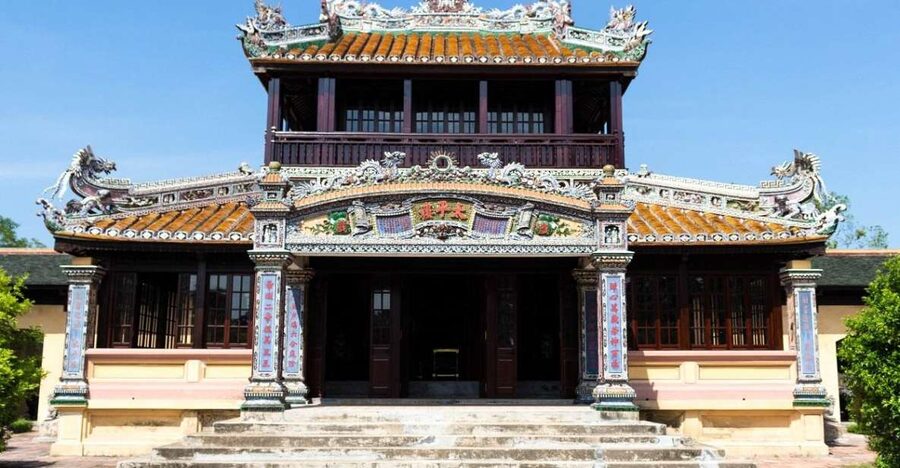
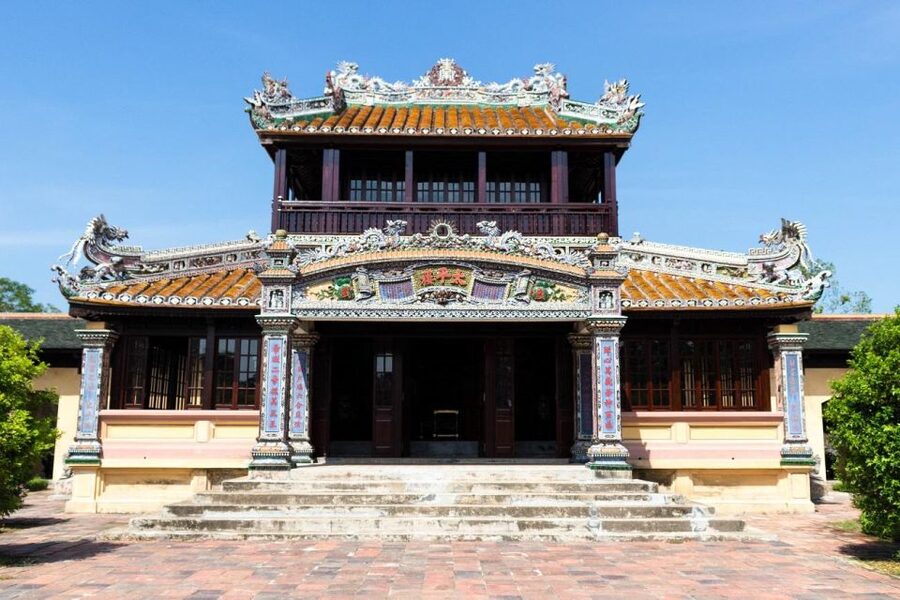
The route can include Kien Trung Palace, Thai Binh Pavilion, Thieu Phuong Garden, Duyet Thi Duong Royal Theater, and additional gates and temples. Some stops are brief photo or orientation points, while the wider Imperial City visit takes about two hours.
If you want a quiet look at every corner, the guided walk may feel structured. If you want context and a sensible route through a large site, that structure is a benefit. The best guides leave room for questions and allow you to pause in the shade, something that matters during Hue’s hot months.
Choosing the private car route
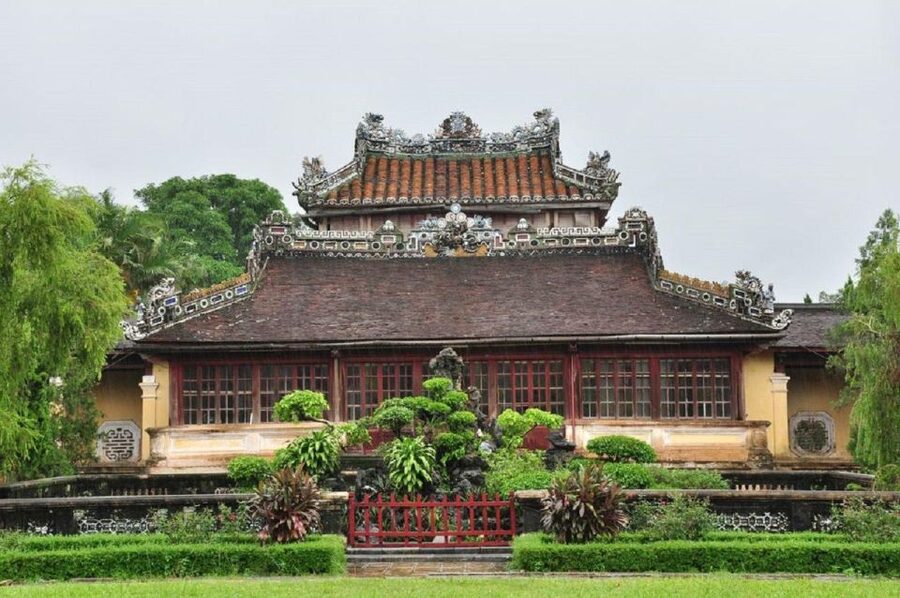
The private car option works differently. An English-speaking driver can pick you up from a city-center hotel, Hue Railway Station, or Phu Bai Airport, then take you between selected sights. The driver is there for communication and transport, but is not presented as a professional licensed guide.
You can build a day around the Imperial City and add some of Hue’s major outlying sites:
- Thien Mu Pagoda, an important riverside religious site included among the available choices.
- Minh Mang Tomb, one of the imperial tomb options.
- Tu Duc Tomb, another major Nguyen-era tomb.
- Khai Dinh Tomb, known for its place among Hue’s royal burial sites.
- Thuy Tien Abandoned Water Park, a very different stop from the historical sites.
This option is best if you want to cover more ground than you can manage on foot. Hue’s royal tombs sit outside the Citadel, so a car saves time and gives you control over how many locations to visit.
The tradeoff is interpretation. You’ll have an English-speaking driver, not the walking tour’s local guide. If the story of the architecture matters most to you, you may prefer the guided Citadel route or arrange a separate guide for the car day. If transport and flexibility matter more, the private car is the practical choice.
The available duration ranges from 150 minutes to eight hours. That wide range tells you to check the exact selection before paying. A short Citadel visit and a full day of tombs are very different experiences, even though they appear under the same customizable tour.
Price, tickets, and what the $12 really buys
At $12 per person, the walking option is good value if you want a local guide to make sense of the Imperial City. The price covers the guide and the Imperial City walking tour when that option is selected, but it does not cover admission.
The Imperial City ticket is listed at 200,000 Vietnamese dong per adult. You can also consider combination tickets: 420,000 dong for the Imperial City plus two tombs, or 530,000 dong for the Imperial City plus three tombs. The combo tickets are valid for two days, which can work well if your visit is spread across more than one day.
The private car price should be assessed against what you choose to include, since the time and route vary. Transport from a central hotel or station is useful, especially if you want to visit tombs outside the city center. Food, drinks, entrance tickets, and a tour guide for the private car option are not included.
There is also an important distinction between pickup and meeting point. The walking group meets at the cannons. The private car option can include pickup and drop-off from central locations, with an extra charge for places farther away. Confirm your address before departure.
Heat, rain, walking, and group size
This is an outdoor historical visit with plenty of walking. Hue can be hot, and several people have appreciated guides who stop in shaded areas, allow cooling breaks, and adjust the pace. An early start, such as 8:30 in the morning, is a smart choice when available.
Rain does not necessarily cancel the experience. Linh has led the walk in wet weather, but you should still plan for changing conditions. Comfortable shoes, water, sun protection, and a light rain layer will make the 2.5-hour route easier.
Private or small-group formats are available. Small groups make it easier to ask about symbols, family relationships, and buildings that catch your eye. Solo visitors can also benefit from the flexible approach. Nhien has tailored the route and conversation for a solo participant, while other guides have made time for detailed questions when groups were especially small.
Families can manage the walking tour if children can handle the distance and the heat. The clear explanations of animals, numbers, and royal symbolism can hold younger visitors’ attention, but this is still a history walk rather than an activity designed specifically for children.
Who should book this Hue experience?
I would choose the walking tour if you have never visited the Citadel and want the royal complex explained in plain English. It is also a good second visit if you previously walked through alone and felt you missed the meaning behind the buildings.
Solo visitors, couples, families with older children, and small groups who enjoy history should get the most from it. The guides’ strongest qualities are their friendliness, clear speech, humor, and willingness to answer questions. That personal contact matters in a site where many structures can look similar at first.
I would choose the private car if you have only one day in Hue and want to combine the Citadel with tombs and Thien Mu Pagoda. It is also the better match if hotel pickup, railway station pickup, or airport transfer is important.
I would not book the private car expecting a full historical tour from the driver. The service is designed around transport and flexibility. If expert explanation is your priority, select the walking guide option for the Citadel and make sure you understand what, if anything, is included at the other stops.
Should you book the Imperial Citadel tour?
Yes, if you want Hue’s royal center to feel like more than a collection of gates and old buildings. The 2.5-hour walk gives you the essential route, useful historical context, and enough time for photos without turning the visit into an all-day commitment.
The $12 starting price is attractive, but budget separately for admission and check your exact option. Choose the walking tour for storytelling and context. Choose the private car for range, pickup, and a day built around several sights.
For the best fit, request or select a morning start during hot weather, confirm the meeting point or pickup address, and check if you want a guide or only an English-speaking driver. With those details clear, this is a practical, well-priced way to understand Hue’s emperors, court life, temples, and surviving royal architecture.
FAQ
How long is the Hue walking tour?
The walking tour lasts about 2.5 hours, or 150 minutes. It visits the Imperial Citadel and Forbidden Purple City, with stops at major gates, palaces, temples, urns, gardens, and other royal buildings.
Where does the walking tour meet?
Your guide meets you at the four bronze cannons near Ngan Gate, also called Cua Ngan, at the Citadel. The guide will hold an A4 sheet with your name. There are five cannons on the opposite side, so check that you are at the correct group.
Is the Imperial City entrance ticket included?
No. The entrance ticket is not included. The listed adult price for the Imperial City is 200,000 Vietnamese dong. Combination tickets covering the Imperial City and two or three tombs are also available separately.
Does the private car option include a tour guide?
No. The private car option includes a private car and an English-speaking driver for communication and transport. It does not include a professional tour guide.
Can I be picked up from my hotel?
Pickup and drop-off are included for the private car option at city-center hotels in Hue or Hoi An, as well as Hue Railway Station and Phu Bai Airport. An additional charge may apply for locations outside the city center. The walking option does not include hotel pickup.
Which attractions can I add to a private car trip?
The available choices include the Imperial City, Thien Mu Pagoda, Minh Mang Tomb, Tu Duc Tomb, Khai Dinh Tomb, and Thuy Tien Abandoned Water Park. The exact route and duration depend on the option you select.
Just added around Vietnam
- Cham Island: Underwater Walking & Snorkeling Tour★ 4.4 · 112 reviews
- Ho Chi Minh City: Walking Food Tour with 13 Tastings★ 5.0 · 469 reviews
- Evening Walking Food Tour, folk game and lantern boat★ 5.0 · 665 reviews
- Hue: Imperial City Walk, Motorbike Tour & Private Car Options★ 5.0 · 732 reviews
- Hoi An: Ancient Town Guided Walking Tour★ 4.9 · 766 reviews
- Tasting 8 Different Street Foods + Local Drink at Evening Time by Walking★ 5.0 · 830 reviews
- Ha Noi Walking Food Tour, Non Vegetarian,Vegan, vegetarian Option★ 5.0 · 846 reviews
- Hanoi Walking Street Food Tour with Train-Street Visit★ 5.0 · 857 reviews
Castle and Palace Walking Tours, compared.

Edinburgh Castle: Guided Walking Tour with Entry Ticket
Read our review →
Doge’s Palace and St Mark’s Basilica Walking Tour
Read our review →
3-Hour Walking Tour of Old Town & Prague Castle
Read our review →Edinburgh Castle: Guided Walking Tour with Entry Ticket
Read our review →
Edinburgh Castle Guided Walking Tour in English
Read our review →


Walking Tour of Split and Diocletian’s Palace
Read our review →Browse the lists this tour appears in