
REVIEW · VIETNAM
Hue Imperial Ancient City Walking Tour
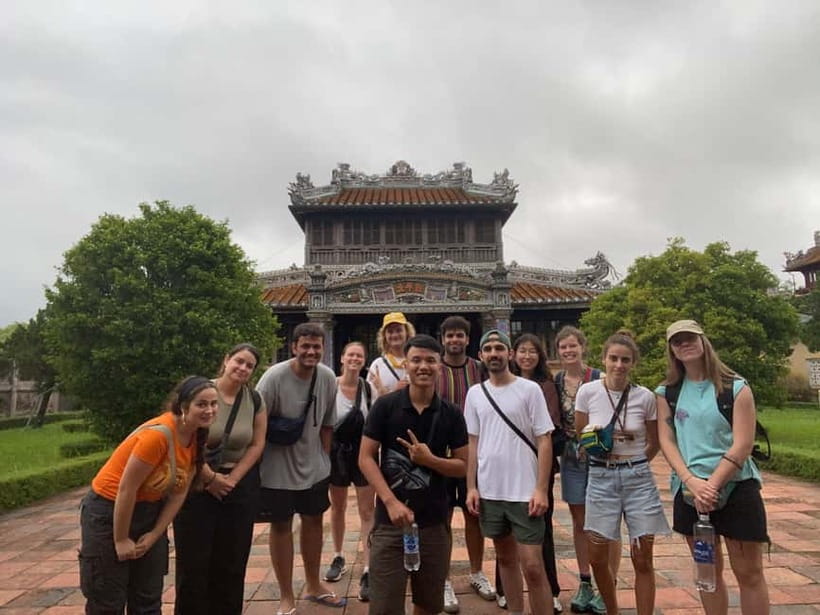
Hue Imperial City makes far more sense with someone to explain what you are seeing. Behind the massive walls are ceremonial halls, royal residences, gardens, and the Forbidden City, but the surviving buildings do not always explain their own purpose. This small-group walk connects the architecture to the Nguyen emperors, French colonial rule, war damage, and everyday life in Hue.
I especially like the very small group size, capped at 10, and the chance to hear local observations from guides such as Linh Nguyen. I also like the unusually low $2 booking price, which makes a guided visit possible even on a tight budget. The main thing to check is the timing: the activity is advertised as 150 minutes, while the itinerary also mentions a 3.25-hour guided visit. Confirm the schedule, and bring cash for the expected tip and any site admission not covered by your booking.
Key points to know before you go
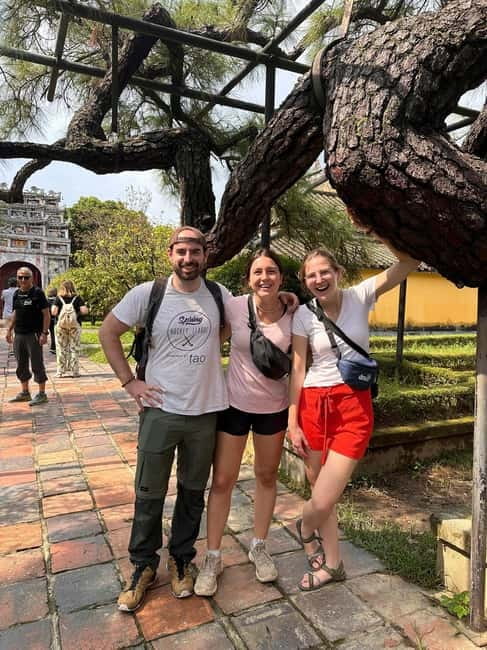
- Linh’s storytelling is the main attraction: He uses historical photos, humor, and personal observations to connect the palace to modern Vietnam.
- The route covers Hue’s essential royal sights: Expect Meridian Gate, Thai Hoa Palace, Dien Tho Palace, the Forbidden City, and other citadel buildings.
- This is a walking tour, not a ride-through visit: Wear shoes you can use comfortably for about two and a half hours.
- The $2 price is excellent value: The tour is tip-based in practice, so plan on carrying cash for the guide.
- The group stays small: No more than 10 people are accepted, and bookings for groups larger than six are not taken.
- You get history plus local context: The explanations include royal customs, family life, French Indochina, the wars, and Hue food suggestions.
Why Hue Imperial City is worth a guided walk
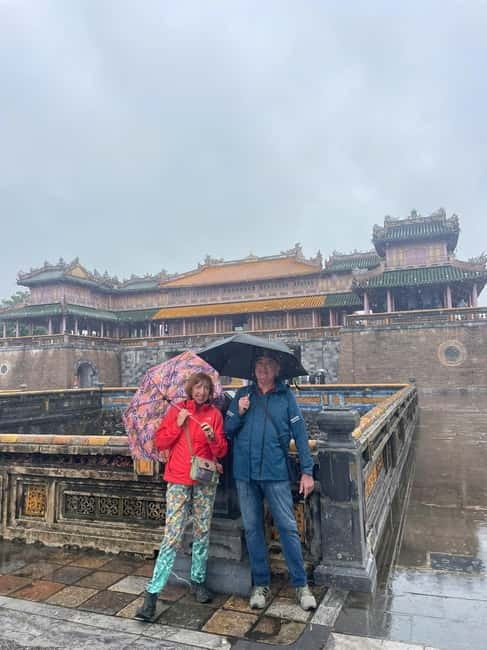
Hue was the seat of the Nguyen Dynasty from 1802, and the Imperial City was built to serve as the political and ceremonial heart of the country. You can walk through the complex on your own, but the scale and layout can make it hard to tell which building served the emperor, which was used for ceremony, and which belonged to the royal household.
That is where this experience earns its keep. Instead of simply pointing out ornate roofs and gates, the guide explains how the citadel worked. You learn how visitors approached the royal compound, where formal court business took place, and how the emperor’s private world was separated from public duties.
I also value the wider setting. Hue’s story does not stop with the Nguyen rulers. The tour connects the dynasty with French colonial rule, the struggle for independence, and damage caused during the wars. The result is a more honest visit than one focused only on palace decoration.
The best guides appear to make the past feel personal without turning the tour into a lecture. Linh is known for asking questions, using humor, and sharing his perspective as a Vietnamese man. He has also spoken about changes in Vietnam during the last 15 years, family expectations, and the way history still shapes life today.
More History Walking Tours in Vietnam:
- Hanoi: Cho Gioi Vietnam War History Walking Tour
★ 5.0 · 102 reviews - Explore Hanoi Old Quarter ’s Rich History and Culture By Walking
★ 4.5 · 72 reviews - Berlin: Third Reich & Cold War Guided Walking Tour
★ 4.9 · 8,378 reviews
Meeting at the ticket office
The meeting point is in front of the Hue Imperial City ticket booth. The scheduled start times are 9:00 AM and 3:00 PM, although you should confirm the exact time by WhatsApp or phone before setting out.
The meeting arrangement is simple, but the entrance area can be busy. Give yourself enough time to find the ticket office and identify the guide. The operator asks for a valid WhatsApp or Vietnamese phone number so the guide can confirm the details and reduce missed appointments.
The tour is conducted in English. Guide quality can vary by person, but the most frequently praised guides are Linh, Thanh, and Thang. Linh Nguyen is the named provider, and many visitors describe his English as clear, his presentation as lively, and his answers as detailed. Thanh has also been praised for explaining imperial history and suggesting where to try authentic bun bo Hue.
Bring water, sunscreen, and comfortable walking shoes. Hue can be hot, and much of the experience takes place outdoors between buildings. The site is listed as wheelchair accessible, but the amount of walking and the exact route are worth confirming if you have limited mobility.
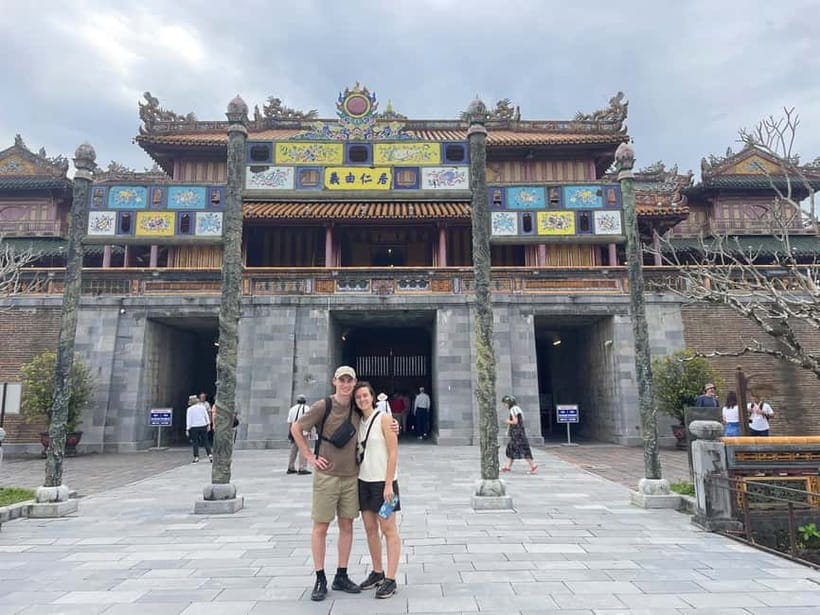
Meridian Gate gives you the royal perspective
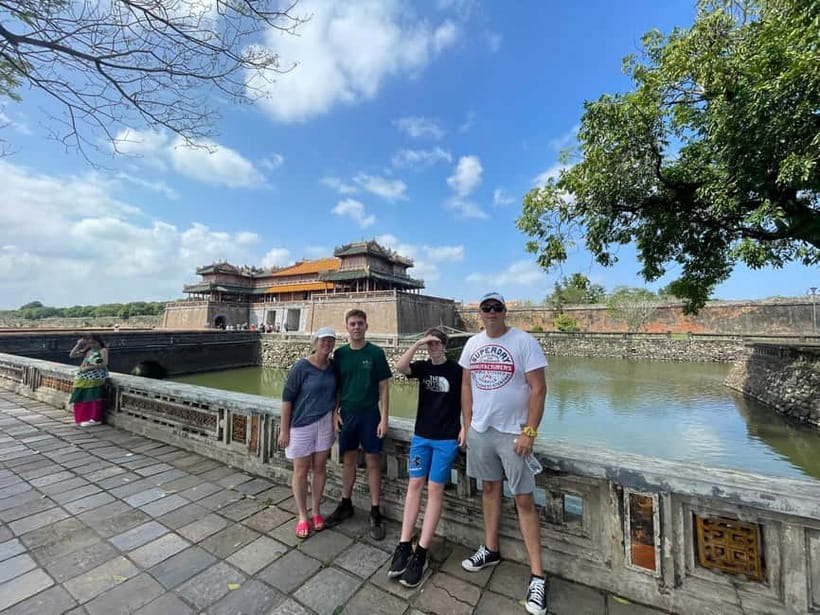
Meridian Gate, or Ngo Mon Gate, is the main entrance into the Imperial City and one of the most important visual symbols of Hue. It is not simply an attractive gateway. It introduces the order and ceremony of the royal compound.
Your guide can help you read the gate as part of a larger system. The citadel was arranged with formal movement in mind, and the entrance marked the boundary between ordinary city life and the emperor’s domain. Details that might seem decorative begin to have a purpose when you understand who was allowed through and how court ceremonies were staged.
This is also a good point to get your bearings. The Imperial City covers a large area, and a guide helps you understand how the main sections relate to one another. Without that basic map in your head, it is easy to wander from one building to the next without grasping the larger plan.
Allow time for photographs, but listen before rushing onward. The first explanations often provide the framework for everything that follows.
Thai Hoa Palace explains court ceremony
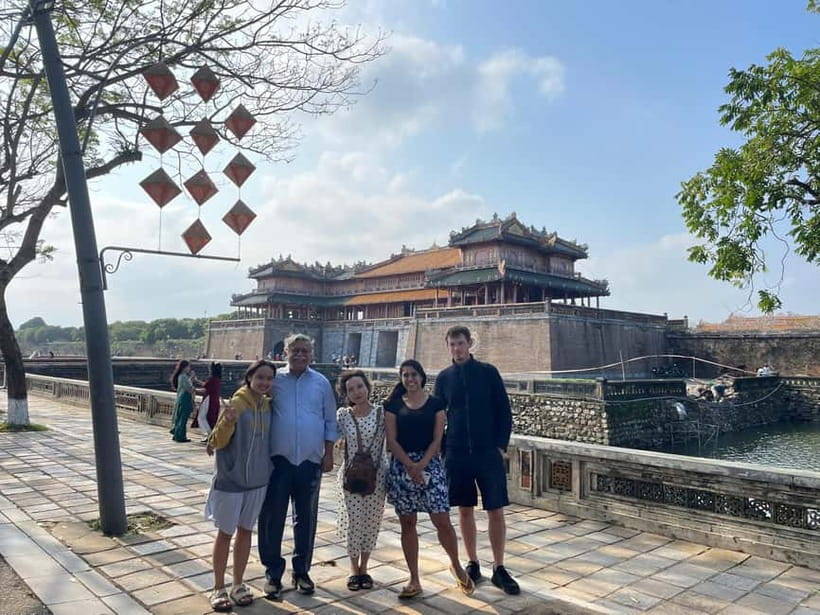
Thai Hoa Palace, the Hall of Supreme Harmony, was the main ceremonial building. This is where the formal image of the Nguyen court comes into focus.
The palace is associated with royal ceremonies and official occasions rather than ordinary domestic life. Your guide explains why the hall mattered, how the emperor’s position was presented, and what the building tells you about hierarchy in the Nguyen court.
The architecture is easier to appreciate when you know what to look for. Rooflines, painted decoration, columns, and the arrangement of space were not random embellishments. They helped communicate status and authority.
Some parts of the palace complex have been damaged or altered over time, so you should not expect every building to appear untouched. That is part of the story. A good explanation helps you picture the former court without pretending that the entire royal world survived intact.
The stop is especially useful if you are interested in Vietnamese history but do not know much about the Nguyen Dynasty. Guides commonly cover the emperors from 1802 onward, including the final emperor and the political changes that ended the monarchy.
More City Highlights Walks in Vietnam:
- Hue: Imperial City Walk, Motorbike Tour & Private Car Options
★ 5.0 · 732 reviews - Hue Imperial City Walking Tour: Citadel & Forbidden City
★ 4.8 · 245 reviews - Ho Chi Minh: City Highlights Guided Walking Tour
★ 4.9 · 188 reviews - Berlin City walk Government District and Places of Democracy
★ 4.7 · 8,467 reviews
Dien Tho Palace adds the family story
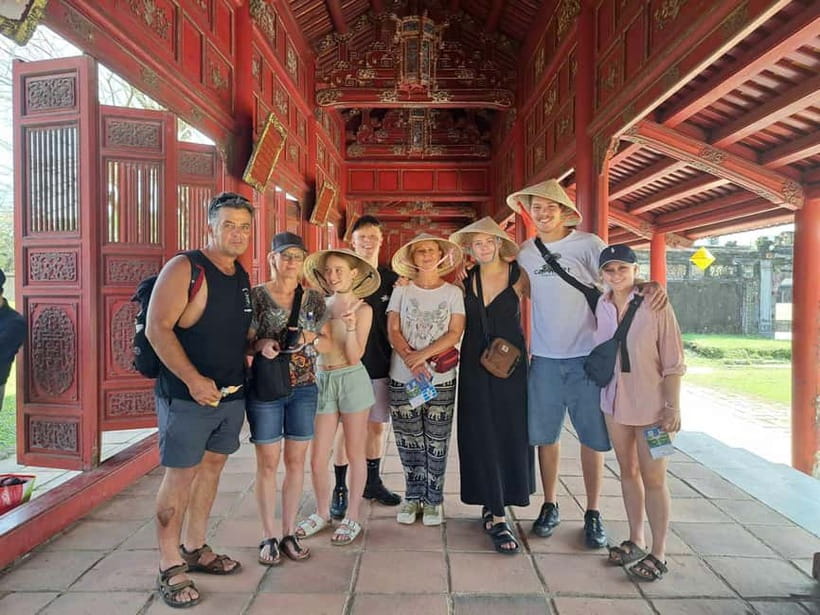
Dien Tho Palace was the residence of the queen mother. It shifts the focus away from official ceremonies and toward the women and family structure of the royal household.
This is one of the more valuable stops because it broadens the story. An emperor’s reign can be reduced to dates, wars, and political decisions, but the palace complex was also a home for family members, attendants, and people working within a strict court system.
The guide discusses royal customs and household life, giving you a better sense of how the dynasty functioned behind the formal public image. Details about family pressure and Vietnamese traditions can make this part feel more connected to modern life.
The palace is also a calmer place to pause. Depending on the group and the route, you may have short breaks to look around or take photographs. One useful improvement would be clearer instructions about which sections you can explore freely during these pauses and which areas will be covered later. Keep track of the guide so you do not miss the next meeting point.
The Forbidden City reveals the private court
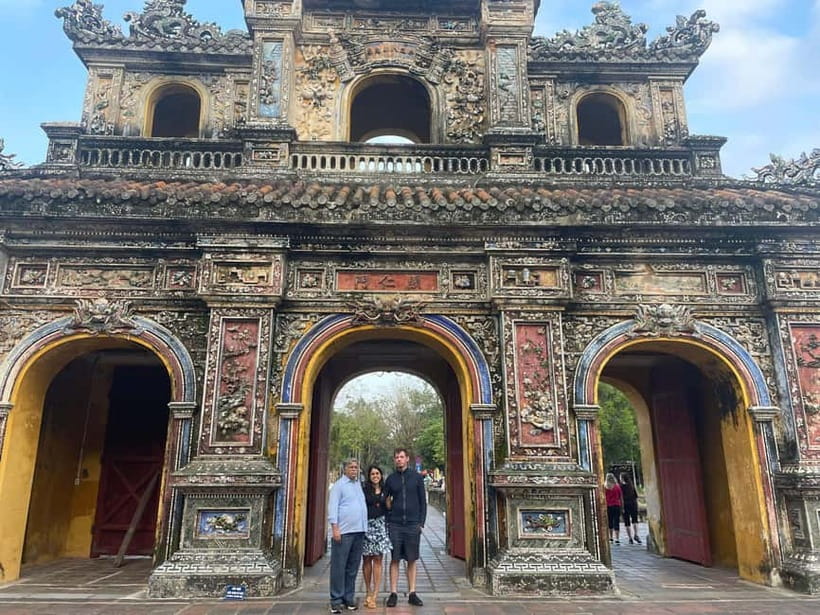
The Forbidden City was the emperor’s private area, located within the larger Imperial City. It was the most restricted part of the royal compound and the place where the separation between public ceremony and private life became most pronounced.
This section can be difficult to understand from ruins and restored structures alone. The guide’s job here is to explain what once occupied the space, who could enter, and how the emperor’s private world related to the wider court.
This is also where the impact of war and time may be most apparent. You may see a mixture of restored buildings, damaged sections, open spaces, and foundations. That contrast can be disappointing if you expect a fully intact palace, but it gives the visit a more truthful character.
Linh has used old photographs to show how parts of the Imperial City looked during different periods. That simple tool is valuable. It helps you compare the surviving buildings with the larger royal complex that once filled these grounds.
Leave room for your own wandering here. The guided explanations give you context, then a short period of free time lets you take photographs and notice details at your own pace.
History beyond the Nguyen emperors
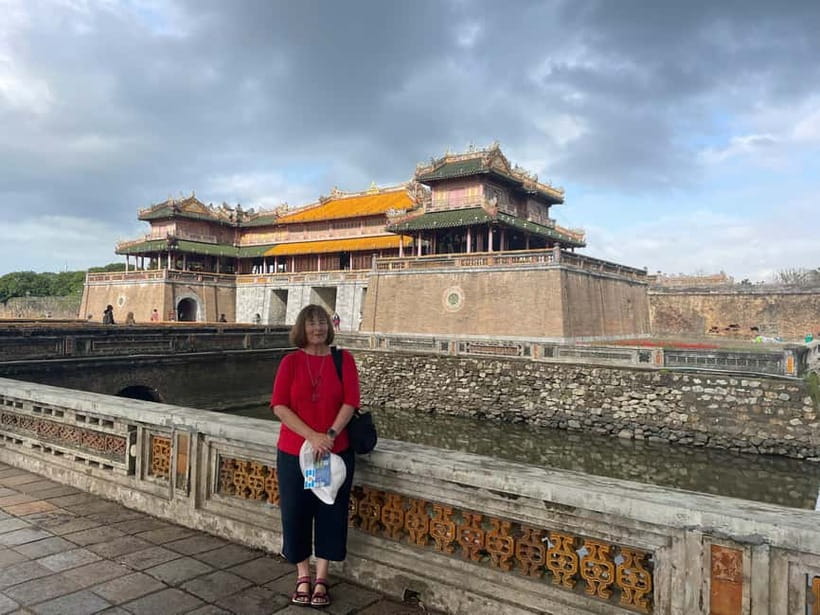
A strong feature of this tour is its refusal to treat Hue as a sealed-off royal museum. The story moves from the Nguyen Dynasty into French colonial rule and the fight for independence. It also addresses the American war and its effect on the citadel.
That wider timeline matters because Hue’s buildings cannot be separated from Vietnam’s modern past. Damage, reconstruction, and changing political power all shaped what you see today.
The guide may also explain how the city and its people changed over time. Linh has been praised for linking national events to personal observations, including changes in Vietnam over the past 15 years. This gives the tour a local voice rather than a collection of memorized dates.
I would still ask questions. If you want more detail about a specific emperor, restoration work, or wartime damage, use the walking time to speak with the guide. The small group format makes that easier than a large coach tour.
How the $2 price really works
At $2 per person, this is one of the least expensive guided cultural experiences you can book in Hue. The price is low enough that the value comes from the explanation rather than from included extras. You are paying for a local guide and a structured walk, not transportation, meals, or a private tour.
The experience is tip-based, and a tip at the end is expected in practice even though it remains at your discretion. Bring cash. Several people have found the tour worth far more than the booking price, but you should treat the $2 as the starting cost rather than the complete social cost of the experience.
The supplied details do not clearly state that Imperial City admission is included. One practical note from the tour information is to carry enough cash for any entrance ticket required at the site. Confirm this before arrival so the low headline price does not catch you off guard.
For the price, the small group is the real bargain. A cap of 10 means you can usually hear the guide and ask questions. Groups larger than six are not accepted, even if separate bookings are made, so large families or organized groups should contact the operator about a custom arrangement.
Timing, weather, and walking comfort
The advertised duration is 150 minutes, or two and a half hours. The itinerary also refers to a 3.25-hour guided visit, so there is a clear timing discrepancy. Ask for the current duration when you receive the WhatsApp confirmation.
In practice, this is enough time to cover the major sights without racing through every corner. The citadel is large, and you could spend much longer there on your own after the guided portion.
The morning start is likely the more comfortable choice in hot weather, while the afternoon option may offer softer light for photographs. The provided schedule does not promise a particular weather advantage, so choose based on your plans and tolerance for heat.
Wear practical shoes. You will walk between gates, halls, courtyards, gardens, and palace areas. Bring water and sunscreen, and avoid alcohol or drugs, which are not allowed on the activity.
What the guide adds to the visit
The strongest part of the experience is the guide’s ability to turn buildings into stories. Linh has been praised for clear English, humor, visual aids, and a willingness to answer questions. He may show old photographs, explain architectural features, and add food suggestions at the end of the tour.
That personal touch can be especially useful in Hue. The city’s imperial sites are impressive, but signs alone cannot explain the rules of court life or the connection between the monarchy, colonialism, war, and modern Vietnam.
The tour is also social without being too large. You may be grouped with people from several countries, and the guide makes an effort to include different members of the group. If you prefer complete privacy or a slow photographic study of every building, a private guide would suit you better.
There have been a few organizational complaints, mainly about unclear free time and which area would be visited next. This is a minor issue, but you can solve much of it by asking the guide to outline the route at the start.
Who should book this Hue walking tour
I would recommend it to first-time visitors who want a clear introduction to the Imperial City. It is also a good fit if you enjoy history but prefer stories, questions, and conversation over a formal lecture.
Families can benefit from the short breaks and informal style, though children need to be comfortable walking for a couple of hours. Solo visitors and couples will appreciate the small group and the chance to meet people without committing to a full-day excursion.
This may not be the right choice if you need a fully private experience, want transportation between sites, or expect every structure to be restored. It is also not designed as a complete Hue itinerary. The focus is the Imperial City, not the royal tombs, river, or other attractions outside the citadel.
After the tour, you can continue exploring on your own. Some people have stayed until sunset, using the guided walk as an introduction before revisiting favorite areas. The guide may also suggest royal tombs and local dishes, including bun bo Hue.
Should you book it?
Yes, if you want affordable context for Hue’s most important historic site. The combination of a small group, English explanations, visual material, and local stories gives you much more than a quick walk through palace courtyards.
Book with realistic expectations. Bring cash for the tip and possible entry fee, wear shoes suited to heat and uneven walking, and confirm the duration because the published times differ. If Linh is leading, you can expect a lively guide who mixes Nguyen Dynasty history with modern Vietnamese perspective.
At $2, the risk is tiny. If you want the Imperial City to feel like a functioning royal center rather than a collection of old buildings, this is a sensible choice.
FAQ
Where does the Hue Imperial City walking tour meet?
The meeting point is in front of the Hue Imperial City ticket booth.
What time does the tour begin?
The listed start times are 9:00 AM and 3:00 PM. The exact time should be confirmed with you before the tour.
How long does the tour last?
The activity is listed as 150 minutes. Another part of the information describes a 3.25-hour guided visit, so confirm the current duration before booking.
What language is the tour conducted in?
The live tour guide speaks English.
What places are included in the walk?
The route focuses on Hue Imperial City and includes Meridian Gate, Thai Hoa Palace, Dien Tho Palace, the Forbidden City, and other important areas of the historic citadel.
Is this a private tour?
No. It is a small-group walking tour with a maximum of 10 participants.
Can a group of more than six people book separately?
No. Groups larger than six people, including children, are not accepted through separate reservations. Larger groups can contact the operator about a custom arrangement.
Is the Imperial City entrance ticket included?
The provided activity details list the walking tour and local guide as included, but do not clearly confirm that the site entrance ticket is included. Bring cash and confirm this before arrival.
What should I bring?
Bring comfortable walking shoes, sunscreen, and water. Cash is also useful for the tip and any admission cost that may apply.
Is the tour wheelchair accessible?
Yes, the activity is listed as wheelchair accessible. You should still confirm the exact route if you need specific mobility arrangements.
Can I cancel the booking?
You can cancel up to 24 hours in advance for a full refund.
Do I need to pay when I book?
The reserve-now, pay-later option allows you to book without paying immediately.
Is tipping required?
Tips are at your discretion, but the tour operates on a tip-based model in practice. Carry cash if you plan to thank the guide at the end.
Just added around Vietnam
- Saigon’s Hidden Flavors – Private Street Food Walk with Local Students★ 5.0 · 301 reviews
- Saigon Street Food & Hidden Alleys by Scooter – 7/9/12 Tastings★ 5.0 · 235 reviews
- Vegan Walk Not Just Vegan Food★ 5.0 · 266 reviews
- Ho Chi Minh City: Highlights & Hidden Gems – Free Walking Tour★ 5.0 · 194 reviews
- Saigon Evening Walking Street Food Tour★ 5.0 · 272 reviews
- Ho Chi Minh City: Street Food Walking Tour with 12 Tastings★ 5.0 · 128 reviews
- Saigon Authentic Walking Street Food Tour 12+ Tastings Included★ 5.0 · 88 reviews
- Ho Chi Minh City private walking tours with young local volunteers★ 5.0 · 326 reviews
History Walking Tours, compared.



Berlin’s Best: 2 Hour Walking Tour Third Reich and the Cold War
Read our review →
Third Reich Berlin: Hitler and WWII Walking Tour
Read our review →
New Orleans Garden District History Walking Tour
Read our review →
Cartagena: Historic Center and Getsemaní Shared Walking Tour
Read our review →
Imperial Palace and Shogun Historical Walking Tour
Read our review →Browse the lists this tour appears in