
REVIEW · IRELAND
Cork: Guided Historical Walking Tour
Cork’s streets hold a surprise beneath your feet: the city’s curved main street follows a river channel now covered by pavement. This 75-minute walk makes that odd bit of urban history easy to see, then links it to Cork’s maritime trade, old waterways, monuments, and local characters.
I like the practical route and the guides’ personal touch. Noel, Mary, Gerard, Jared, Catherine, and Aiden are among the guides praised for clear storytelling, humor, and strong local knowledge. I also like that the tour finishes by the English Market, a handy place to continue exploring. The drawback is the brisk format: you see many places, but most are outside stops rather than long visits.
Key points at a glance
- Buried waterways beneath Cork: Follow the line of the river under the city’s curved main street and learn how Cork grew around water.
- Local guides with different strengths: Guides including Noel, Mary, Gerard, Jared, Catherine, and Aiden bring personal stories, humor, and clear explanations.
- A useful first-day orientation: The route helps you find the Opera House, Shandon, Grand Parade, St Fin Barre’s Cathedral, Elizabeth Fort, and the English Market.
- Maritime Cork in plain view: Look for former boathouse entrances and hear how the city worked as a European and transatlantic trading hub.
- A compact city-centre route: The walk lasts 75 minutes, with no hotel transport, food, or drinks included.
- Good access planning: The activity is listed as wheelchair accessible, runs in rain or shine, and requires weather-appropriate clothing.
Why Cork’s covered river is the perfect starting point
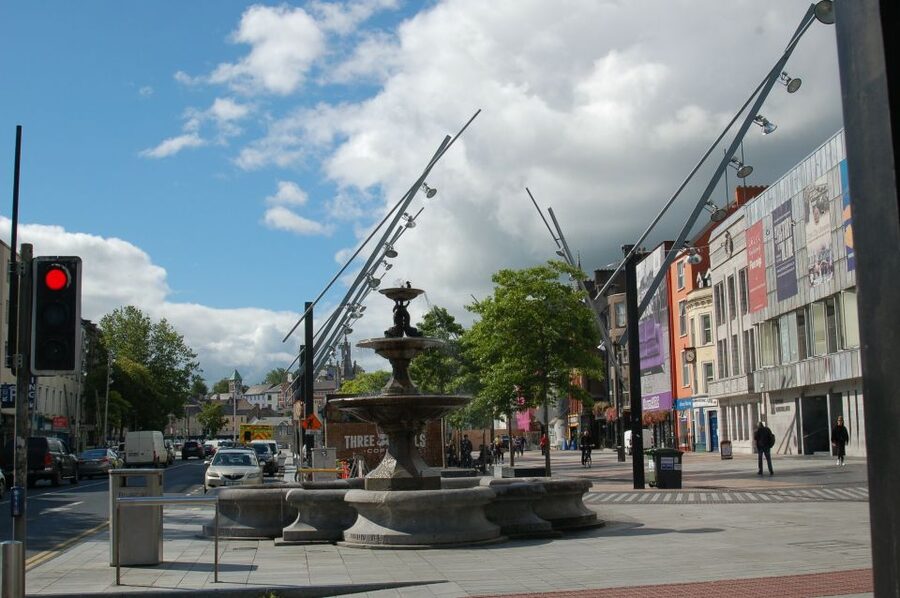
Cork makes more sense once you understand its water. The city developed around channels and waterways, and parts of the modern street plan follow routes that once carried the river. On this walk, you follow the curved main street while the guide explains the watercourse beneath it.
That detail gives you a useful way to read Cork. Instead of seeing a street as just a place to shop or cross town, you begin to notice how the city was shaped by trade, bridges, boats, and changing ground levels. It is the kind of story that is easy to miss if you explore only with a map.
The tour also introduces Cork as a trading centre with links to Europe and the wider Atlantic world. That context helps explain the city’s architecture and the unusual mix of religious, commercial, and civic buildings along the route.
The walk is delivered in English. Several guides have been praised for projecting their voices well, and one group of about 20 people used a headset microphone, which helped with city noise. Group size can vary, but you should expect a shared walking tour rather than a private visit.
More History Walking Tours in Ireland:
- 2-Hour Historical Walking Tour from Dublin
★ 5.0 · 875 reviews - Dublin’s Haunted History Walking Tour
★ 4.3 · 345 reviews - Dublin: Macabre History Walking Tour
★ 4.9 · 95 reviews
Cork Opera House and the shape of Shandon
The route brings you past Cork Opera House, one of the city’s main cultural landmarks. The building gives the tour a modern reference point, but the surrounding streets quickly take you back into Cork’s older story.
Across the river, you can see the shape of Shandon church and its distinctive red-and-white brick bell tower with clock faces. The tower is one of Cork’s most recognizable sights. The walk focuses on its appearance and place in the city rather than giving you a full interior visit as part of the tour.
You may hear about visiting Shandon Bells and St Anne’s Church separately. One participant used the tour to find the tower and later paid €6 to climb it and pull the bell ropes. That extra visit is not part of the walking tour, but the route can help you decide if you want to return.
This is a useful example of what the experience does well. It gives you a map in your head. You see a landmark, hear why it matters, and can then choose to come back when you have more time.
Careys Lane and the Hugenot Cemetery
From the main streets, the walk turns down Careys Lane toward the Hugenot Cemetery. This change of pace is welcome. The narrow lane and cemetery offer a quieter look at the people who helped shape Cork beyond the better-known civic monuments.
The tour places this stop within Cork’s wider story of migration, trade, and religious communities. You are not just ticking off a cemetery. You are hearing how people from outside Ireland became part of the city’s working and social life.
The stop is relatively brief, so you should not expect a long cemetery visit or time to study every marker. Still, it adds a human scale to the tour. Cork’s past is not presented only through grand buildings. It also appears in the lives of communities who arrived, settled, worked, and left their mark.
Coal Quay, Cornmarket Street, and Grand Parade
The route continues toward the Coal Quay and Cornmarket Street. These names point to the commercial life that once animated the city, and they help connect the streets you see today with Cork’s working past.
Grand Parade then opens the view. It is described as the widest street in Cork and brings several notable features together, including Bishop Lucy Park, the Berwick fountain, and the National Memorial.
This section works well for orientation. You are moving through a large public space after narrower lanes, and the guide can show how different parts of Cork connect. You also get several landmarks in a short period, which is useful if your time in the city is limited.
The trade-off is time. A 75-minute tour has to keep moving, so you will not linger at each monument. I suggest noting the places that interest you and returning later. The tour is best used as a first look and a guide to where you want to spend more time.
More Guided Tours in Ireland:
- Dublin Highlights and Hidden Gems Guided Walking Tour
★ 5.0 · 6,020 reviews - Historical 2-Hour Guided Walking Tour of Dublin
★ 4.7 · 865 reviews - Dublin: Traditional Pubs Walking Tour with Local Guide
★ 4.9 · 112 reviews - Magical London: Harry Potter Guided Walking Tour
★ 4.7 · 22,044 reviews
Nano Nagle and Cork’s social history
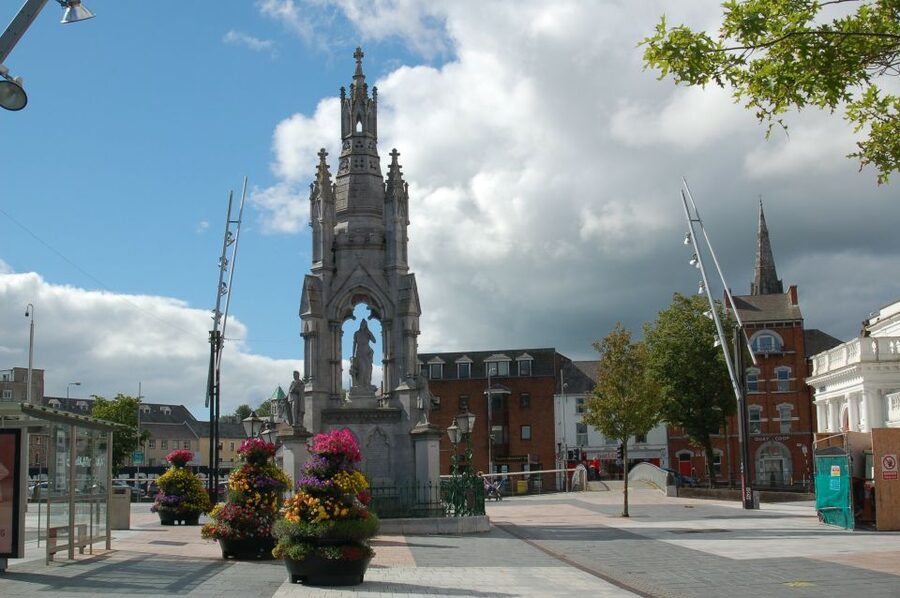
One of the more thoughtful stops comes at a footbridge named for Nano Nagle. The guide explains her humanitarian work and her efforts to bring education to people who had been left out of formal schooling.
This story gives the walk a welcome social dimension. Cork is presented not only through commerce, buildings, and famous streets, but also through people who worked to improve everyday life. The stop may be especially meaningful if you enjoy learning how local figures affected education and community welfare.
The bridge is also a practical pause along the route. You get a different view of the city’s waterways and can connect the earlier discussion of buried channels with the river you can see. It is a small stop, but it links Cork’s physical layout with its civic story.
St Fin Barre’s Cathedral, South Gate Bridge, and Elizabeth Fort
The route then takes you toward St Fin Barre’s Cathedral, South Gate Bridge, and Elizabeth Fort. Together, these sites show several layers of Cork’s development.
St Fin Barre’s Cathedral brings a grand religious building into the walk. South Gate Bridge returns your attention to crossings and waterways. Elizabeth Fort adds a defensive and military element, showing that Cork’s strategic position mattered as much as its commercial role.
You should think of these as exterior orientation points rather than full guided visits inside every site. The value lies in seeing where they sit in relation to one another and hearing how they fit Cork’s story.
Elizabeth Fort is also useful for planning. If you want a more detailed visit, you can mark it for later rather than trying to squeeze in a long stop during the walk. The guide gives you the setting and basic context, while your own later visit can provide more time for the site.
Former boathouse entrances on South Mall
South Mall offers one of the tour’s most unusual details. It is now a leading business quarter, but the guide points out remnants of former boathouse entrances.
These features are easy to pass without explanation. A doorway or opening can look like an ordinary part of an old building until you learn that boats once used the waterway below or alongside the street. This is exactly the kind of small clue that makes a guided walk worthwhile.
The boathouse entrances also bring the maritime theme back into focus. Cork’s trading past is not only found in museums or grand waterfront stories. It remains visible in the built environment, if you know where to look.
If you enjoy architecture, this may be one of your favorite parts. You are not simply being shown a famous building. You are being taught how to spot evidence of an older city beneath the present one.
Finishing at the English Market
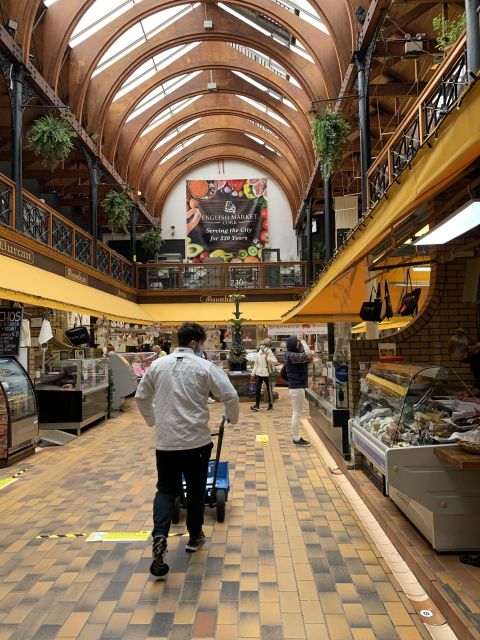
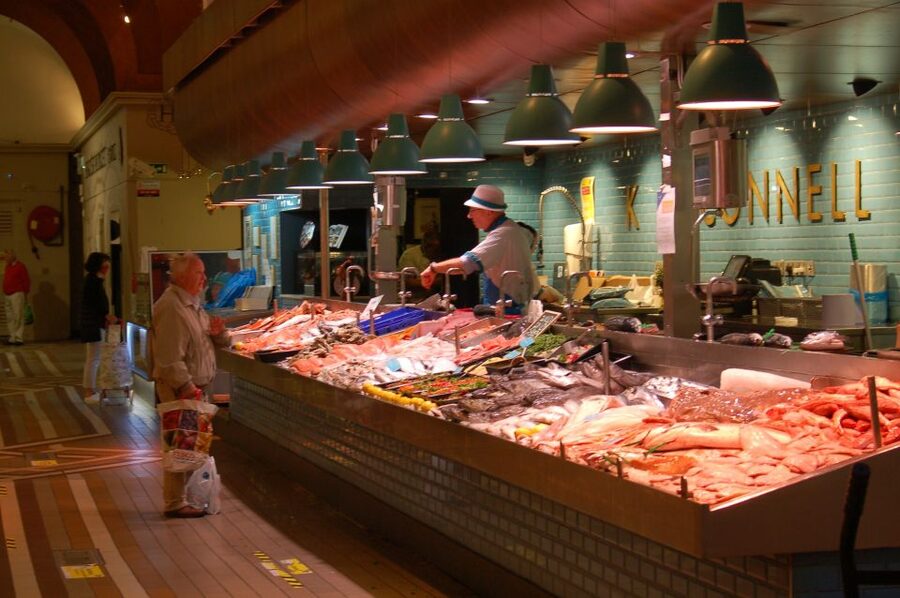
The walk ends on Princes Street at the main entrance to the English Market. This is a smart finish because it leaves you in one of Cork’s most useful central spots.
The market is not included as a food stop, and food and drinks are not part of the tour price. Still, the location gives you an easy next move. You can enter the market, continue your own city walk, or use the surrounding streets for lunch and further exploring.
Ending here also makes the route feel practical rather than purely historical. You finish with a clear sense of where you are, what you have already seen, and which nearby places deserve a closer look.
If you are booking this tour early in your stay, keep the English Market and any landmarks that caught your eye on your afternoon plan. The walk is especially useful as a city introduction.
How the guides shape the experience
The strongest part of this tour is the guide-led storytelling. Noel is repeatedly singled out for his personal experience and ability to tell a good story. Mary is praised for local knowledge, a friendly manner, and a clear voice. Gerard and Jared are described as funny, engaging, and well informed about Cork.
Catherine and Aiden also receive strong praise for passion, energy, and storytelling. The guide you get will shape the tone, but the common thread is a local perspective rather than a dry list of dates.
That personal angle matters in Cork. You hear about characters, refugees, ex-slave heroes, music, recent events, and the city’s older past. The mix can make the route feel more like a conversation than a formal lecture.
City-centre noise can be a factor. Some guides use a headset microphone, and you should stay close enough to hear clearly, especially near traffic or busy streets. The walk is not difficult to follow for most people, but you will be on your feet and moving through public streets.
Price, timing, and who gets good value
At $26 per person, this is a fair price for a 75-minute guided introduction to central Cork. You are paying for a local guide, a planned route, and stories that help you understand details you might otherwise walk past.
The value is best if this is your first visit or if you have only a short time in Cork. You see a broad set of landmarks and learn how the river, trade, religion, defense, education, and commerce connect.
The price is less compelling if you want long interior visits, a food tasting, or a slow photography walk. None of those are part of the experience. You also need to arrange your own way to the Cork Tourist Information Centre, where you should arrive 10 minutes before the start.
The tour ends back at the meeting point, which keeps the logistics simple. Starting times vary, so check availability when booking.
The activity is listed as wheelchair accessible, but Cork’s streets and public spaces can still bring practical limits. If you use a wheelchair, confirm the current route details before booking, especially if street conditions or group movement are a concern.
Weather, cancellation, and practical preparation
This walk operates rain or shine. Bring weather-appropriate clothing, and do not treat an Irish forecast as a firm promise of dry pavement.
Wear shoes suitable for a city walk and keep your hands free for listening, taking notes, or checking a map. The experience does not include hotel pickup, hotel drop-off, food, or drinks, so plan those separately.
The booking information gives two cancellation messages: one says you can cancel up to 24 hours ahead for a full refund, while another describes the tour as non-refundable. Because those terms conflict, check the conditions shown for your selected date before you pay.
The reserve-now-and-pay-later option can help if your schedule is still changing. It lets you hold a place without paying immediately, subject to the booking terms shown at the time.
Should you book the Cork historical walking tour?
I would book this if you want a short, story-led introduction to Cork rather than a long museum visit. The buried waterways, former boathouse entrances, Hugenot Cemetery, Nano Nagle connection, and maritime trade theme give the route more character than a simple monument checklist.
It is also a good choice for families, first-time visitors, and anyone who likes to understand a city before exploring it alone. Guides such as Noel, Mary, Gerard, Jared, Catherine, and Aiden bring warmth and local detail to the route.
Skip it if you need a private tour, extensive time inside each attraction, or a food experience. For most people with 75 minutes to spare, though, $26 buys a useful map of Cork’s past and a strong list of places to revisit.
FAQ
How long does the Cork historical walking tour last?
The tour lasts 75 minutes. Check availability for the starting times offered on your chosen date.
Where does the tour start?
Meet at the Cork Tourist Information Centre and arrive 10 minutes before the activity begins.
Where does the tour finish?
The walk finishes back at the meeting point, after reaching Princes Street and the main entrance to the English Market during the route.
Is the tour offered in English?
Yes. The live tour guide speaks English.
Is the walking tour wheelchair accessible?
The activity is listed as wheelchair accessible.
Does the tour run in bad weather?
Yes. The tour takes place rain or shine, so bring clothing suited to the weather.
Just added around Ireland
- Dublin: Traditional Pubs Walking Tour with Local Guide★ 4.9 · 112 reviews
- Dublin: Macabre History Walking Tour★ 4.9 · 95 reviews
- Dublin: Traditional Pub Walking Tour★ 4.6 · 295 reviews
- Dublin’s Haunted History Walking Tour★ 4.3 · 345 reviews
- Dublin: Irish Music Walking Tour with Live Performance★ 4.8 · 137 reviews
- Dublin: Highlights and Hidden Corners Walking Tour★ 4.8 · 79 reviews
- Dublin: Delicious Walking Food Tour★ 4.9 · 137 reviews
- Dublin Highlights: 2.45-Hour Walking Tour in Italian★ 4.7 · 460 reviews
History Walking Tours, compared.



Berlin’s Best: 2 Hour Walking Tour Third Reich and the Cold War
Read our review →
Third Reich Berlin: Hitler and WWII Walking Tour
Read our review →
New Orleans Garden District History Walking Tour
Read our review →
Cartagena: Historic Center and Getsemaní Shared Walking Tour
Read our review →
Imperial Palace and Shogun Historical Walking Tour
Read our review →Browse the lists this tour appears in