
REVIEW · CHICAGO
Chicago’s Secret Interiors Architectural Walking Tour
Chicago’s best architectural surprises are often indoors. This walking tour takes you from Union Station into the Loop, where a plain doorway can lead to a frescoed ceiling, a glowing mosaic, or a grand lobby most people pass without a glance. You see the city’s famous towers from street level, then step inside to meet the craftsmanship behind them.
I like the mix of major landmarks and overlooked interiors, especially the Rookery, Marquette Building, Palmer House, and Marshall Field and Company Building. I also like the price: $35 for about two hours is fair when you consider that the guide provides the context that turns a quick look into a meaningful visit.
The main consideration is the walking pace and changing access. This is an outdoor city walk with repeated stops indoors, not a seated museum visit. The Rookery is closed on Sundays, and the route may substitute the Monadnock Building for the Chicago Cultural Center.
Key points to know before you go
- The Rookery is the star for many people, with a light court and Frank Lloyd Wright’s redesign of its lobby.
- The route links Union Station to Macy’s, crossing the Loop’s financial and retail districts.
- Interior access gives the tour its value, with mosaics, domes, frescoes, and ornate lobbies.
- Guides make or break the experience, and Ethan, Grant, Ty, Avery, Matt, and Matthew have all led engaging departures.
- Plan for about two hours, though some outings have lasted closer to an hour and a half.
- Sunday has a route change, since the Rookery does not open that day.
Why Chicago’s interiors tell the real story
Chicago’s skyline gets the postcards, but its interiors explain how the city wanted to present itself. Outside, you see steel, stone, and height. Inside, you find polished floors, decorative ironwork, colored glass, and symbols of money, travel, trade, and civic pride.
This tour works because it connects those two views. At the Board of Trade and Willis Tower, you hear about finance, engineering, and the drive to build upward. At the Palmer House and Marshall Field building, you see how hotels and department stores used lavish design to impress wealthy clients and shoppers.
I find this more satisfying than a walk that simply points at facades. The guide explains why a building looks the way it does, who paid for it, and what problem the architects had to solve. Even if you already know Chicago’s famous names, the interiors give you fresh material.
The route also shows how close these buildings are to one another. Chicago’s Loop can feel like a canyon of stone and glass, but several of its best spaces sit only minutes apart. That makes the tour efficient. You cover a lot without spending half the day on public transport.
A few more walking tours around Chicago worth a look
- Chicago: Gangsters and Ghosts Walking Tour
★ 5.0 · 7,155 reviews - Chicago Favorites Ultimate Food and Walking Tour
★ 5.0 · 1,962 reviews - Chicago: Gangsters and Ghosts Guided Walking Tour
★ 4.7 · 1,697 reviews
Starting at Union Station, where travel met ceremony
The meeting point is outside Chicago Union Station at 225 South Canal Street. The station is more than a practical place to catch a train. Its Beaux-Arts design reflects the grand hopes of early 20th-century rail travel.
Inside, the Great Hall gives you the first major architectural pause. A large skylight brings light into the expansive room, while the scale reminds you that stations once served as civic gateways as much as transport hubs. Daniel Burnham helped design the station, which was completed in 1925.
Your guide uses Union Station to set up the wider story. Chicago grew through commerce, rail, industry, and migration, and this building gathered those forces under one roof. It is a strong starting point because you begin with movement and arrival before walking into the financial core.
The stop is listed at about ten minutes, but the transition from station to Loop is part of the experience. Wear shoes that can handle pavement, and keep your phone ready for interior photographs if photography is allowed in the building you are visiting.
La Salle Street and Chicago’s Financial Canyon
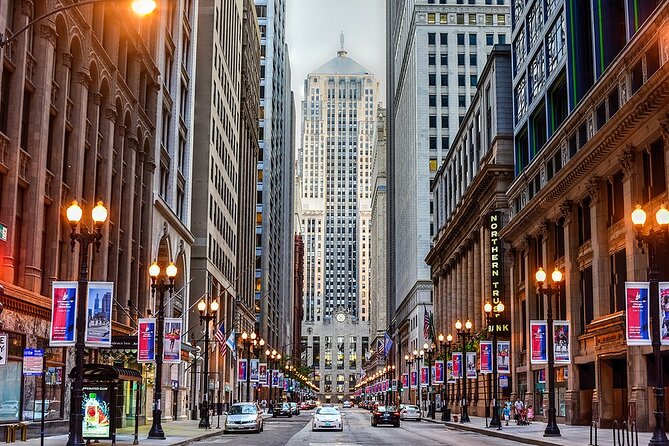
The La Salle Street portion gives you the city at its most vertical. Tall buildings press close to the street, creating the canyon effect that makes the Loop feel unlike a normal downtown grid.
Here, the focus is on finance and the architects who shaped Chicago’s commercial center. The Chicago Board of Trade brings Art Deco drama to the story, while Willis Tower represents a later push toward greater height and new structural ideas.
This section is useful even if you do not care much about financial history. You learn how business needs influenced building form, and how Chicago’s leaders used architecture to project confidence. The guide also points out details you might miss while rushing between appointments.
The drawback is that street-level viewing can be difficult when traffic, crowds, or weather get in the way. Your guide’s ability to keep the group together and find clear stopping points matters here. Several guides, including Grant, Ethan, Matt, Matthew, and Ty, have been praised for pacing and clear explanations.
The Rookery’s light court and Wright’s elegant intervention
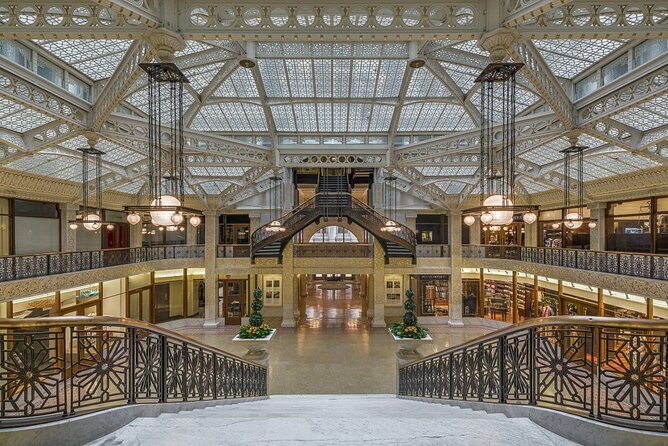
The Rookery is the architectural high point of the route for many people. Burnham and Root designed the building in 1888, combining Romanesque and Moorish influences with a bold internal light court.
The light court solved a practical problem: how to bring daylight into a large downtown office building. It also became a showpiece, surrounded by ironwork and detailed surfaces. The oriel staircase adds another fine moment, especially when your guide explains how the building balanced decoration with new construction methods.
Frank Lloyd Wright later redesigned the lobby, giving the space a cleaner and more controlled appearance while respecting the original structure. That blend of late 19th-century design and Wright’s later work makes the Rookery especially rewarding. You are not looking at one frozen style. You are seeing a building adapted over time.
The visit is brief, so do not expect a long architectural lecture inside each room. Still, ten focused minutes can be enough when the guide knows exactly where to direct your eyes.
The Rookery is closed on Sundays. If you book a Sunday, confirm the substitute route and adjust your expectations. You will still see important buildings, but this particular interior will not be part of the outing.
Same streets, a different route:
- Chicago Loop District Food Tour with Deep Dish & Beef Sandwich
★ 5.0 · 870 reviews - Chicago’s Chinatown Food and Walking Tour
★ 5.0 · 600 reviews - Chicago: Secret Interiors Architecture Walking Tour
★ 4.9 · 498 reviews - Chicago: Underground Pedway & Downtown Secrets Walking Tour
★ 4.7 · 268 reviews
The Field Building and the polish of Art Deco
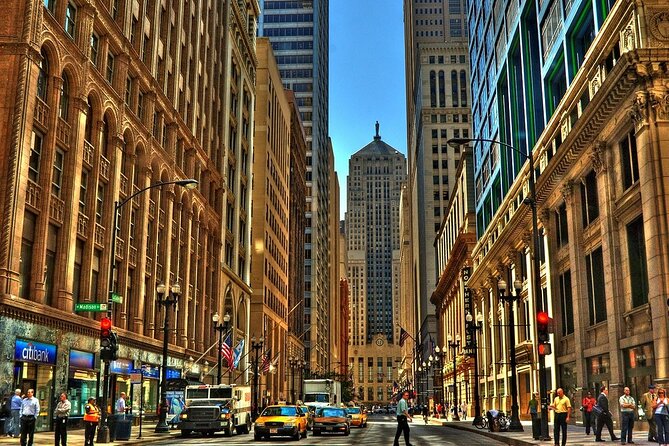
The Field Building brings the tour forward into the Art Deco period. Its design shows how Chicago kept reshaping its visual identity as office towers grew taller and decorative tastes changed.
This stop is less about one famous room than about understanding the details that make Art Deco work. Look for the sense of order, the strong geometry, and the way the building expresses modernity without giving up ornament.
The guide helps connect the Field Building to the skyline around it. Chicago’s architecture was never a straight line from old to new. Styles overlap, businesses change, and buildings gain new uses. A short stop here helps you see that progression.
If you are mainly seeking lavish interiors, the Field Building may feel quieter than the Rookery or Palmer House. Its value comes from the larger timeline.
The Marquette Building’s mosaics and Chicago windows
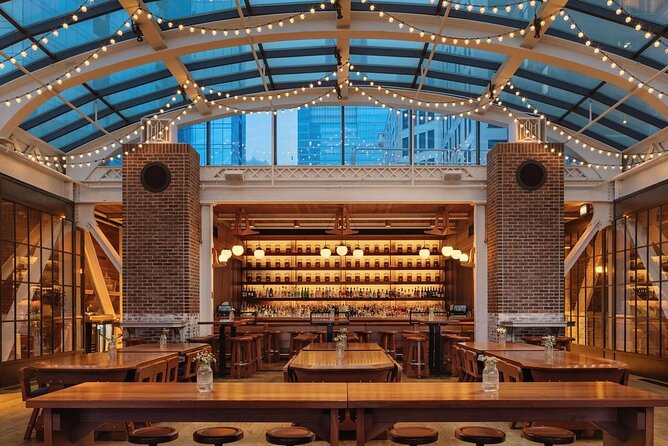
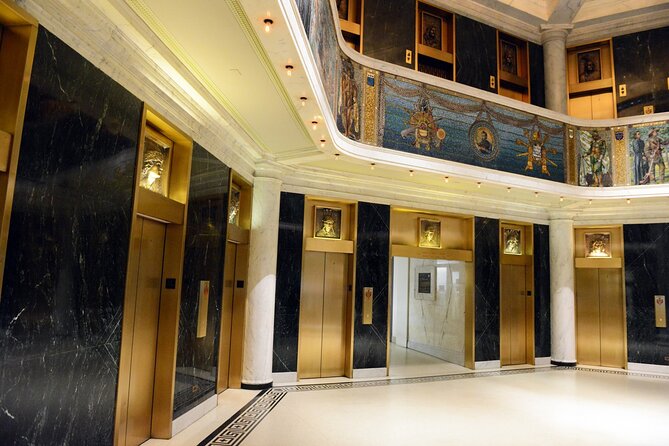
The Marquette Building is one of the tour’s most rewarding interior visits. It is known for its terra cotta exterior and early use of the Chicago window, an arrangement that gives more space to glass and daylight than older wall-heavy designs.
Inside, the lobby’s mosaics tell the story of Jacques Marquette’s exploration of Illinois. This is where architecture, local history, and decoration meet. The artwork is not simply an ornament added after the fact. It helps give the building a public identity.
I like this stop because the details reward close attention. You can look at the overall lobby first, then move in on the mosaic work and the way the materials frame the space. A guide can point out what the building says about technology, commerce, and regional pride.
The Marquette is also a good example of why this walk is better with a guide than alone. You could enter the lobby by chance, but you might not know what you were seeing or why the building mattered.
Palmer House, where hotel luxury became a public display
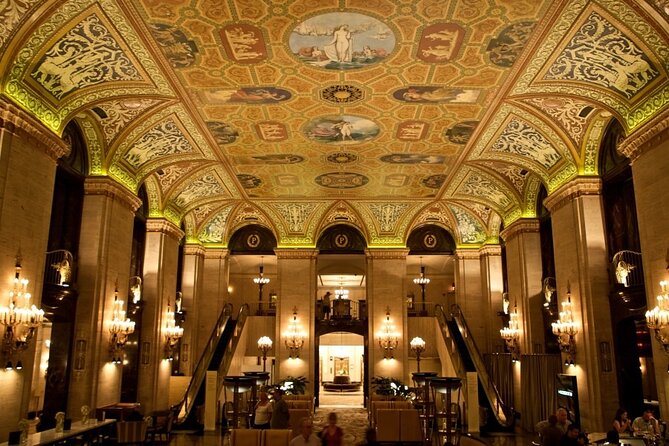
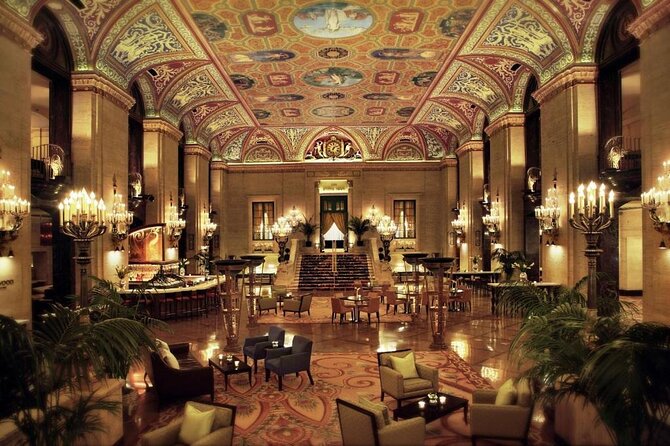
The Palmer House brings a different mood. Rebuilt after the Great Chicago Fire, the hotel became one of Chicago’s grandest addresses and a showcase for Gilded Age luxury.
The lobby includes a frescoed ceiling, mosaic floors, and bronze peacock doors. Those details were designed to impress before a guest ever reached a room. The hotel also connects architecture with celebrity and political life, having hosted prominent figures over the years.
You do not need to be staying at the hotel to appreciate the public spaces. The visit gives you a look at how a major hotel sold an idea of comfort, status, and permanence. It also adds a human layer to the tour. The Loop was not only a place for offices and banks. It was where people came to stay, meet, celebrate, and be seen.
The Palmer House can be busy, and it remains an operating hotel. Be respectful of hotel activity and follow your guide’s instructions about where the group can pause.
Chicago Cultural Center or Monadnock Building
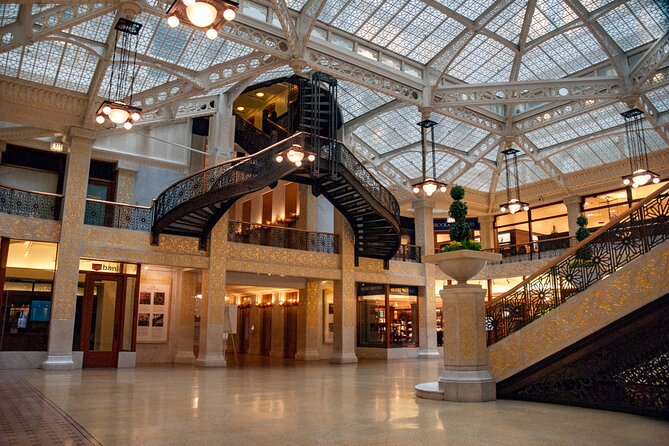
This part of the route can vary. The group may visit the Chicago Cultural Center or the Monadnock Building.
The Chicago Cultural Center offers another dose of civic grandeur and decorative design. It is a useful contrast to the private commercial interiors because the building expresses a public and cultural purpose.
The Monadnock Building shows the commercial style of the late 19th century. Its importance lies in the way it captures a turning point in office construction, when Chicago architects were working out how to build larger and taller structures on a busy urban grid.
The substitution means you should not book with the expectation that every departure follows the exact same interior sequence. That flexibility is practical, but it also means the guide and the day’s access conditions shape the final route.
Marshall Field and Company, ending under a Tiffany dome
The tour ends at the former Marshall Field and Company Building, now home to Macy’s, at 111 North State Street. This is a fitting finish because the building shows how architecture and retail once worked together to create a grand shopping experience.
Inside, the Tiffany glass mosaic dome is the main event. Its color and scale make it easy to understand why department stores invested so heavily in decorative interiors. The building also includes an elegant walnut-paneled Tea Room, another reminder that shopping was once designed as a full social outing rather than a quick transaction.
Ending here gives you time to keep exploring after the tour. You are in the heart of the Loop, surrounded by shops, restaurants, public transport, and more architecture. The route does not return to Union Station, so plan your onward journey from State Street rather than backtracking.
What the guide adds to the walk
The guide is the key variable in any architecture tour. The strongest guides on this route have been Ethan, Grant, Ty, Avery, Matt, and Matthew. Ethan is known for animated storytelling and a strong grasp of both architecture and city history. Grant has been especially good at keeping a group together and adjusting the pace on cold days. Ty brings humor and a clear point of view, while Matthew combines practical organization with an easy manner.
You should expect more than memorized dates. The guide explains how architects and engineers dealt with structural challenges, how wealth shaped the Loop, and why certain interiors were meant to impress.
Group size is listed at a maximum of 15 people, although the experience has also handled larger turnouts. That matters because a small group makes it easier to hear explanations and see details. In a larger group, stay close to the guide and keep an eye on crossings.
Price, timing, and practical value
At $35, this is a good-value introduction to central Chicago architecture. You are paying for the guide, not entrance tickets to a collection of formal attractions. The value comes from access, interpretation, and efficient routing between buildings.
The stated duration is about two hours. Some outings have finished closer to an hour and a half, with a short break around the middle. I would keep a little flexibility in your schedule rather than planning a meal or timed attraction immediately at the expected finish.
The walk works in cold or rainy weather because many stops are indoors, but you still spend time outside. Good walking shoes, a weatherproof coat, and water are sensible. The experience requires decent weather and may be canceled if conditions are poor, with a different date or full refund offered.
Mobile tickets make arrival simple. The meeting point is near public transportation, and most people can participate. Service animals are allowed.
You can cancel for a full refund up to 24 hours before the start time. Cancellations inside that window are not refunded, and changes are not accepted then.
Who should book this Chicago walk?
I would book this if you enjoy architecture, city planning, old hotels, department stores, or the stories behind famous buildings. It is also a strong choice for a first visit because the route gives you a clear sense of how the Loop fits together.
It pairs well with a river architecture cruise because the views are different. A boat shows you facades and the skyline from the water. This walk takes you through lobbies and working buildings, where the small details are easier to see.
I would be more cautious if you dislike walking in poor weather, need a guaranteed fixed route, or want extended time at each building. The ten-minute stops are focused. You will see many places, but you will not study each one at museum length.
Should you book the Secret Interiors tour?
Yes, if you want Chicago architecture explained at street level and inside the buildings themselves. The Rookery, Marquette Building, Palmer House, and Marshall Field interiors justify the $35 price, while the guide adds the stories you would miss on your own.
Book on a non-Sunday if the Rookery matters most. Choose a weather-friendly day, allow two hours, and arrive ready to walk. If you do that, this is one of the most efficient ways to see why Chicago’s architecture is not only a skyline spectacle, but also an indoor art form.
FAQ
How much does the Chicago Secret Interiors Architectural Walking Tour cost?
The tour costs $35 per person.
How long does the tour last?
The advertised duration is about two hours. Some departures have lasted closer to an hour and a half.
Where does the tour begin?
The meeting point is Chicago Union Station at 225 South Canal Street, Chicago, Illinois 60606.
Where does the tour end?
The tour ends at the Marshall Field and Company Building, 111 North State Street, Chicago, Illinois 60602.
Is the Rookery included every day?
No. The Rookery is closed on Sundays and is not included on the Sunday route.
What may replace the Chicago Cultural Center?
The group may visit the Monadnock Building instead of the Chicago Cultural Center.
Is the tour suitable for most people?
The tour information says most people can participate. It is a walking experience with time spent outdoors and indoors.
What happens if bad weather cancels the tour?
If poor weather causes a cancellation, you will be offered a different date or a full refund.
Just added around Chicago
- Chicago: Prohibition Speakeasies Bus Tour or Walking Tour★ 4.8 · 168 reviews
- Chicago: Underground Pedway & Downtown Secrets Walking Tour★ 4.7 · 268 reviews
- Chicago: Secret Interiors Architecture Walking Tour★ 4.9 · 498 reviews
- Chicago: The Ultimate Foodie Walking Tour with Tasty Stops★ 4.6 · 92 reviews
- Chicago: Must See Chicago 90 minute Walking Tour★ 4.7 · 73 reviews
- Chicago: Gangsters and Food Tasting Walking Tour★ 4.6 · 228 reviews
- Chicago: Taste of Chinatown Food and Cultural Walking Tour★ 4.9 · 97 reviews
- Chicago: Classic Food & Walking Tour with Free Bike or Kayak★ 4.9 · 145 reviews
Walking Tours, compared.

Magical London: Harry Potter Guided Walking Tour
Read our review →
Reykjavik Food Walk – Local Foodie Adventure in Iceland
Read our review →
History and Hauntings of Salem Guided Walking Tour
Read our review →
New Orleans Premier Ghost, Voodoo and Vampire Walking Tour
Read our review →
Amsterdam Anne Frank: Small-Group Walking Tour & Local Guide
Read our review →
Edinburgh Castle: Guided Walking Tour with Entry Ticket
Read our review →
Anne Frank’s Story – Guided Walking Tour through Amsterdam
Read our review →Browse the lists this tour appears in