
REVIEW · CHICAGO
Chicago Walking Tour: Must-See Chicago
Chicago reveals itself through its buildings, and this 90-minute walking tour gives you a fast, useful introduction. From the white terra cotta face of the Wrigley Building to the rippling balconies of Aqua Tower, you move through several eras of design without spending a full day on your feet.
I like two things right away: the group is limited to 15 people, and admission to the Chicago Architecture Center galleries is included. Guides such as Claudia Winkler, Rich, and Maurice have been praised for lively facts and clear storytelling. The main drawback is pace. Six stops in an hour and a half means you see many places from the outside, with little time for a long look or an interior visit.
Key points at a glance
- A 90-minute downtown route covers major buildings, the Chicago Riverwalk, the Art Institute, and Millennium Park.
- The Chicago Architecture Center galleries are included, giving you a useful indoor follow-up after the walk.
- Small groups of up to 15 people make it easier to hear the guide and ask questions.
- Guides add local context, with Claudia Winkler, Rich, and Maurice singled out for strong presentations.
- The tour ends where it begins, at 111 E Wacker Drive, which makes it easy to continue exploring.
- The $35 price is fair for an orientation tour, but less compelling if you want extensive interior access.
Why this short Chicago walk works
Chicago can feel like several cities stacked together: grand early skyscrapers, bold modern experiments, formal civic spaces, and busy streets along the river. A first visit can easily become a march from one famous address to another without much sense of how the pieces fit.
This tour gives you that basic framework. Your guide explains the architecture, history, and culture as you walk, so you are not simply collecting photographs. You get a sense of which buildings deserve a return visit and which areas you can combine on your own later.
The route is especially useful at the start of a Chicago stay. After 90 minutes, you will know where the Wrigley Building, Tribune Tower, Art Institute, Millennium Park, and 875 North Michigan Avenue sit in relation to one another. That saves time later.
The pace is brisk but manageable for most people. You should expect regular city walking, street crossings, and outdoor exposure. Since the schedule allows only a few minutes at most stops, this is an overview rather than a detailed architectural study.
More City Highlights Walking Tours in the USA
- Historic Charleston Guided Sightseeing Walking Tour
★ 5.0 · 6,216 reviews - Downtown Nashville Guided Sightseeing Walking Tour
★ 5.0 · 1,304 reviews - Must-See Spots Vegas Strip Walking Tour
★ 5.0 · 384 reviews
Starting at the Chicago Architecture Center
The meeting point is the Chicago Architecture Center at 111 E Wacker Drive. This is a practical place to begin because the center itself adds value to the experience. Your admission to its galleries is included, so you can spend time there before or after the walk.
The center gives you a better way to understand what you have just seen. The walking portion shows buildings in their downtown setting, while the galleries can help explain Chicago’s architectural development in a more focused way. You do not have to pay a second admission for that part.
The tour includes a professional certified guide, and the small group cap matters. With no more than 15 people, you should have a better chance of hearing the commentary at busy streets and stopping to ask a question. The exact guide varies. Claudia Winkler has been praised for her passion and for sending follow-up links, while Rich and Maurice have also received strong marks for their facts and friendly presentation.
One warning: allow extra time to reach the center. Finding downtown parking can be difficult, especially if you are driving in from outside the city. Public transportation is nearby, and the tour information says the meeting point is close to transit.
Wrigley Building and the Chicago Riverwalk
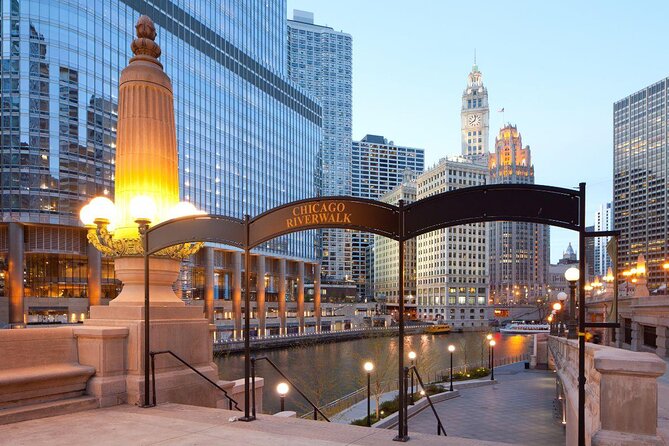
The first listed stop is the Wrigley Building, with about 10 minutes devoted to it. Its Spanish Colonial Revival design and bright white terra cotta exterior make it one of the easiest Chicago buildings to recognize.
The building is a good opening subject because it immediately shows how much personality Chicago architecture can have. Instead of a plain tower of steel and glass, you get decorative surfaces and a carefully finished exterior. Your guide can use it to explain how the city treated commercial buildings as public-facing symbols, not just office containers.
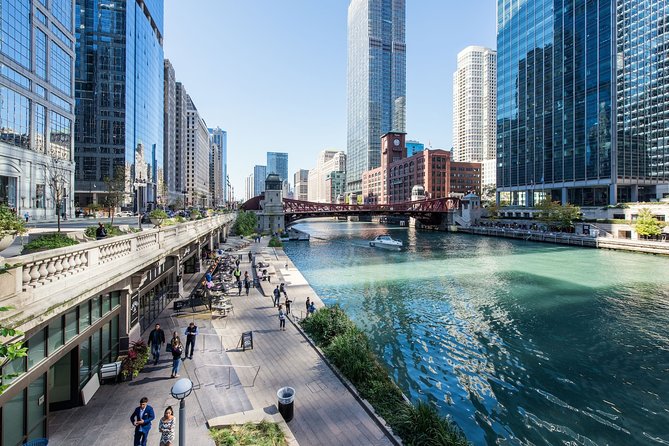
The tour also gives you a view of the Chicago Riverwalk. This section helps connect the buildings to the city’s geography. Chicago’s river is not just background scenery, it is one of the key corridors through the downtown core.
You should not expect a long Riverwalk stroll during this experience. The route is designed to keep moving, and the river view is one part of a larger circuit. If the riverfront catches your interest, this is a good place to make a note for a later, slower walk.
Aqua Tower and Chicago’s newer design
Aqua Tower receives about five minutes, but it packs a lot into that short stop. Designed by Jeanne Gang and completed in 2009, Aqua is known for its irregular, wavelike balconies. The building helped put Gang on Chicago’s architectural map and brought fresh attention to the Lakeshore East area.
This stop gives the tour a useful time range. You are not looking only at older landmark buildings. Aqua shows how Chicago continues to test new forms and how a newer project can help define a neighborhood.
The brief timing is the main limitation. Aqua deserves more than a quick glance if modern architecture is your main interest. Still, seeing it alongside the Wrigley Building and Tribune Tower helps you compare different ideas about height, decoration, structure, and the role of a city building.
I like this contrast because it keeps the tour from becoming a parade of historic facades. You get a glimpse of Chicago’s present as well as its past.
More City Highlights Walks in Chicago:
- Berlin City walk Government District and Places of Democracy
★ 4.7 · 8,467 reviews - Quebec City Walking Tour
★ 5.0 · 4,716 reviews - Florence: Highlights Walking Tour with Expert Guide
★ 4.6 · 4,662 reviews - Oxford: University and City Walking Tour with Alumni Guide
★ 4.7 · 4,429 reviews
Tribune Tower and the contest for beauty
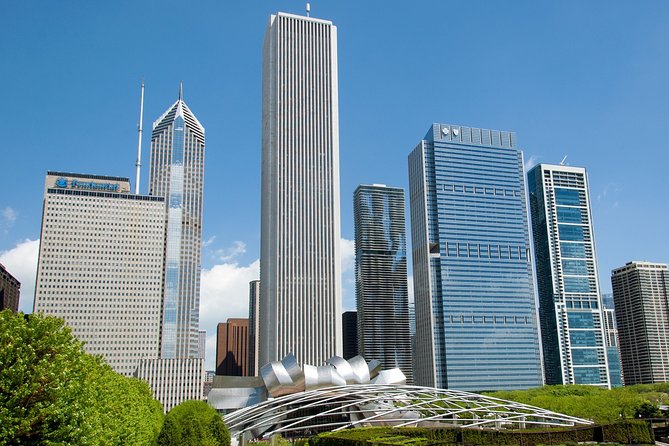
The Tribune Tower is another short stop, with roughly five minutes set aside. Its design came from Howells and Hood, following an international competition to create the most beautiful building in the world.
That competition gives the building a story you can remember. It also shows the ambition behind Chicago’s landmark architecture. The tower was not treated as a routine office project. It was meant to announce the importance of the newspaper and the city itself.
At this point, your guide can help you notice details that might otherwise blur together during a downtown walk. You will be looking at a group of famous structures in a compact area, and the explanations give each one a separate identity.
Again, the stop is mainly exterior viewing. If you want to study the tower’s details at leisure, plan to return after the tour. The benefit here is orientation and context, not extended inspection.
The Art Institute and its Modern Wing
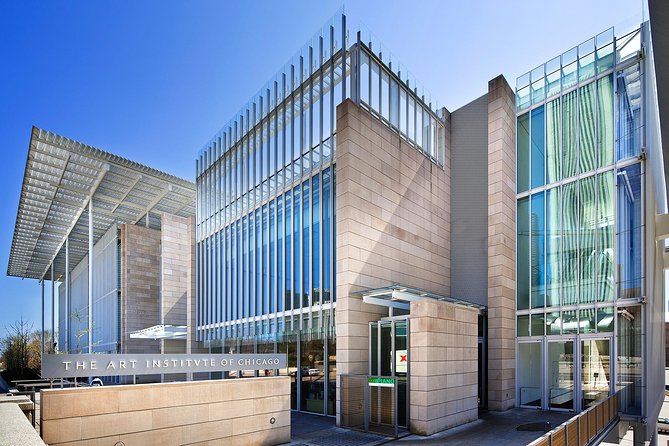
The route continues to the Art Institute of Chicago, where you view the exterior of the Modern Wing for about 10 minutes. The museum is a major Chicago institution, but this tour does not include museum admission.
That distinction matters. The stop helps you understand the building and its place in the city, but you cannot use the tour as a substitute for a museum visit. If you want the galleries, you will need to arrange that separately.
The Modern Wing gives the guide another chance to discuss contemporary design. It also changes the rhythm of the walk. After several tall downtown buildings, the museum offers a different kind of civic presence, tied to art, public space, and Michigan Avenue.
Ten minutes is enough for an explanation and a few photographs. It is not enough for a museum visit, so plan your schedule carefully if the Art Institute is high on your list. The tour can serve as a useful preview before you return on your own.
John Hancock Center, now 875 North Michigan
The tour includes an exterior view of the former John Hancock Center, now known as 875 North Michigan Avenue. The stop lasts about five minutes.
The name change is worth noting because many people still know the building by its older name. Your guide can help connect the familiar label with the current one, which is useful when reading signs or planning a later visit.
This is another example of the tour’s broad reach. You are not spending half an hour on one tower. Instead, you are building a mental map of Chicago’s major architectural points, from the river area toward Michigan Avenue.
The short stop may leave you wanting more, especially if tall buildings and city views are your main interest. That is not a flaw so much as a reminder of the tour’s purpose. It shows you what to revisit rather than trying to cover every detail in one pass.
Millennium Park and Cloud Gate
The final listed sight is Millennium Park, home to Cloud Gate, the polished sculpture widely known as The Bean. The park stop is listed at about five minutes, and admission is free.
For many first-time visitors, this is the most instantly familiar part of the route. Cloud Gate gives you a memorable ending and a chance to take photographs in a lively public setting. The park also offers a welcome change from looking upward at office towers.
Conditions can change. During one visit, the Bean was closed for construction, so you should treat access to the sculpture as subject to current work and city conditions. The tour can still provide useful context for the park even if a particular area is blocked.
Because the stop is short, you may want to return later if you hope to spend time with the sculpture or explore more of Millennium Park. The tour ends back at the Chicago Architecture Center, so you can decide after the walk whether to continue on your own.
What $35 buys you

At $35 per person, this is priced as an accessible introduction rather than a full-day architecture program. You are paying for a certified guide, a small-group format, the walking route, and admission to the Chicago Architecture Center galleries.
The value depends on what you want. If you are new to Chicago and want someone to connect the buildings, the fee is reasonable. A guide can give you in 90 minutes what would take longer to piece together from signs and guidebooks.
If you already know downtown well, the value is less certain. Most stops are exterior views, and the tour does not include food, drinks, coat check, luggage storage, stroller storage, or admission to the Art Institute. You are paying for interpretation and orientation, not a package of attraction tickets.
I would also factor in the group size. A maximum of 15 is small enough to keep the walk personal without moving into private-tour pricing. For a first morning in town, that combination makes sense.
Pace, comfort, and practical planning
The walk lasts about 1 hour and 30 minutes. Wear comfortable shoes and dress for the weather, since the tour is outdoors for much of its route. Chicago conditions can change quickly, so an indoor layer is sensible even when the morning begins mild.
There are no food or drink arrangements, so handle those before or after the tour. Coat check is not included. The center also does not provide storage for luggage or strollers, which means you should arrive without bags that need to be held.
Most people can participate, and service animals are allowed. Pets are not allowed. The activity is near public transportation, which is helpful because downtown parking can take more time and money than expected.
The route can change without notice. The timing at each sight is also approximate, so do not schedule a tight appointment immediately afterward. Allow a little breathing room, especially if you want to ask questions or spend time in the Architecture Center galleries.
Free cancellation is available if you cancel at least 24 hours before the start time. A late cancellation or a change made within that final 24-hour period is not refunded.
Who should book this Chicago tour?
I would choose this walk for a first visit, a short stay, or the first day of a longer trip. It gives you a compact downtown orientation and helps you decide which buildings and neighborhoods deserve more of your time.
It also suits anyone who enjoys architecture but does not want a long, technical lecture. The route mixes famous landmarks with newer work, and the guide keeps the focus on recognizable places.
Families may like the length and the Millennium Park finish, though small children still need to manage city walking and street crossings. The limited group size is useful for questions, and the tour does not require a full day of attention.
I would look elsewhere if your main goal is to enter several buildings, spend long periods at each stop, or focus only on one architectural era. This is a sampler. Its strength is range, not depth.
My booking advice
Book this tour if you want a clear first look at central Chicago and value a guide who can connect architecture with city stories. The included Architecture Center admission improves the deal, and the $35 price is reasonable for a well-paced introduction.
Skip it if you already know these sights or want an interior-heavy experience. Otherwise, schedule it early in your stay, take notes on the buildings you want to revisit, and use the rest of the day to follow your own interests. That is where this tour earns its keep: it turns a dense downtown into a place you can navigate with purpose.
FAQ
How long does the Chicago Walking Tour: Must-See Chicago last?
The tour lasts approximately 1 hour and 30 minutes.
How much does the tour cost?
The listed price is $35 per person.
Where does the tour start?
It starts at the Chicago Architecture Center, 111 E Wacker Drive, Chicago, Illinois 60601.
Where does the tour end?
The activity ends back at the Chicago Architecture Center meeting point.
What buildings and sights are included?
The route includes the Wrigley Building, a view of the Chicago Riverwalk, Aqua Tower, Tribune Tower, the exterior of the Art Institute of Chicago’s Modern Wing, 875 North Michigan Avenue, and Millennium Park.
Is admission to the Chicago Architecture Center included?
Yes. Admission to the galleries of the Chicago Architecture Center is included.
Is admission to the Art Institute of Chicago included?
No. The tour includes an exterior view of the Art Institute’s Modern Wing, but museum admission is not included.
How large is the tour group?
The activity has a maximum of 15 people.
Are food, drinks, coat check, and luggage storage included?
No. Food and drinks, coat check, and storage for luggage and strollers are not included.
Can I cancel for a full refund?
Yes. You can cancel at least 24 hours before the experience start time for a full refund. Cancellations or changes made less than 24 hours before the start time are not refunded.
Just added around Chicago
- Chicago Gangster and Food Walking Tour★ 5.0 · 471 reviews
- Haunted Chicago Booze and Boos Ghost Walking Tour★ 5.0 · 266 reviews
- River North Food Walking Tour★ 4.5 · 88 reviews
- Embers of the Windy City: Chilling Chicago Ghost Tours★ 4.5 · 121 reviews
- Chicago Walking Tour: Historic Treasures of Chicago★ 5.0 · 362 reviews
- Downtown Chicago Walking Pizza Tour★ 5.0 · 106 reviews
- Chicago Mobs and Haunts Walking Tour★ 4.5 · 383 reviews
- Chicago Walking Tour: Art Deco Skyscrapers Loop★ 5.0 · 138 reviews
City Highlights Walking Tours, compared.

Berlin City walk Government District and Places of Democracy
Read our review →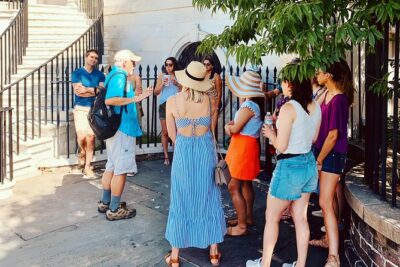
Historic Charleston Guided Sightseeing Walking Tour
Read our review →

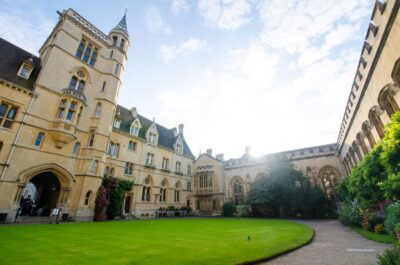
Oxford: University and City Walking Tour with Alumni Guide
Read our review →
City Highlights Temple and Market Walking Tour
Read our review →
A History of Terror – Belfast City Centre Walking Tour
Read our review →Browse the lists this tour appears in