

REVIEW · CHICAGO
Chicago Walking Tour: A Walk Through Time
Chicago’s architectural story becomes much easier to follow when the buildings arrive in time order. This 90-minute small-group walk starts at the Chicago Architecture Center, moves through cast iron, Art Deco, and postmodern design, then returns to the Center.
I like the clear route and the guide’s in-depth commentary. I also like that your $35 fee includes admission to the Center’s galleries, giving you more context than a quick sidewalk stroll. The main consideration is pace: this is an express tour, and the itinerary can change.
Key points to know before you book

- Chronological route: You follow Chicago’s architectural development from the late 1800s into modern design.
- Small group: The tour is limited to 15 people, so questions should be manageable.
- Strong guide component: A professional, certified docent leads the walk and explains the buildings in detail.
- Useful first-day activity: The route helps you get your bearings in the central Chicago area.
- Good value at $35: Admission to the Chicago Architecture Center galleries is included.
- Short but active: You walk for about 1 hour and 30 minutes, with stops for photos and discussion.
Chicago’s story, told one building at a time
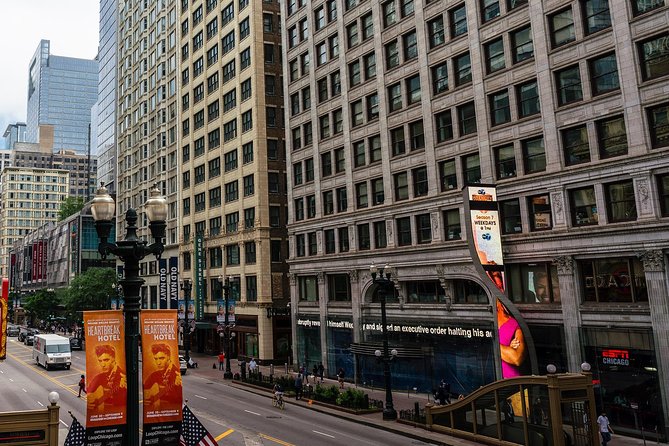
Chicago is a good city for a walking tour because its architectural changes sit close together. You do not need to cross town to move from nineteenth-century commercial design to twentieth-century Art Deco and then to newer residential towers.
That makes this route especially useful if you have only a day or two in Chicago. You get an introduction to several famous buildings without spending time on maps, transit connections, or a long lecture in one place.
The guide leads from the front, while you walk and listen. The tone is more focused than a casual sightseeing stroll. You are there to understand why the buildings look the way they do, not just to collect photographs.
The group limit of 15 matters. A small group gives the certified guide a better chance to answer questions, and you should be able to hear without standing in a large crowd. The tour’s strong 4.9 rating from 181 ratings and 98 percent recommendation suggest that the guide-led format is doing its job, particularly for visitors who want facts rather than a quick list of addresses.
A few more walking tours around Chicago worth a look
- Chicago: Gangsters and Ghosts Walking Tour
★ 5.0 · 7,155 reviews - Chicago Favorites Ultimate Food and Walking Tour
★ 5.0 · 1,962 reviews - Chicago: Gangsters and Ghosts Guided Walking Tour
★ 4.7 · 1,697 reviews
Starting at the Chicago Architecture Center
The tour begins and ends at the Chicago Architecture Center at 111 E. Wacker Drive. This is a practical meeting point in the central part of the city, near public transportation.
Admission to the Center’s galleries is included in the $35 price. That is an important part of the value. You are not paying only for 90 minutes outdoors. You also receive access to an indoor place where Chicago’s buildings and city planning can be considered in a broader setting.
The listed opening stop is brief, but do not treat the Center as a throwaway meeting point. It gives you a useful frame for the walk, and returning there at the end means you do not need to figure out a separate finish point. If the weather turns poor, the indoor galleries are also a welcome addition to the day, though the walking portion remains the main event.
The tour ends back at the same meeting point. That is helpful if you are carrying a day bag or planning your next activity nearby. There is no hotel pickup or drop-off, so you need to reach the Center on your own.
177 North State Street and Chicago’s cast-iron past
The first building stop is 177 North State Street, a late nineteenth-century structure with a distinctive cast-iron front. This is where the chronological format begins to pay off.
Cast iron allowed builders to create repeated decorative elements while supporting commercial building design. At street level, the material could make a façade look more elaborate than plain masonry. The guide’s job here is to point out what you might otherwise walk past without noticing.
You get about five minutes at this stop. That is enough for a short explanation and photographs, but not enough for a long interior visit. The building is best understood as a piece of Chicago’s development rather than as a destination where you linger.
This early stop also sets up the rest of the walk. Instead of viewing unrelated buildings, you begin with an older design language and then watch the city’s taste change as the route progresses.
Virgin Hotels Chicago and the value of comparison
The next stop brings you to Virgin Hotels Chicago. The itinerary lists this as a viewing stop, with no admission included.
That distinction is useful. You are seeing the building from the outside rather than touring hotel spaces. The guide can place it within the route’s larger architectural story, while you take in the contrast between an older commercial building and a newer hospitality property.
A quick exterior stop works well for visitors who want a broad city introduction. You see more than one style without committing the whole afternoon to a single structure. The tradeoff is that anyone hoping to explore the hotel interior should not assume that access is part of the tour.
As throughout the walk, keep your camera ready. Each stop allows time for photographs, but the tour keeps moving, so this is not a slow architectural sketching session.
Same streets, a different route:
- Chicago Loop District Food Tour with Deep Dish & Beef Sandwich
★ 5.0 · 870 reviews - Chicago’s Secret Interiors Architectural Walking Tour
★ 5.0 · 635 reviews - Chicago’s Chinatown Food and Walking Tour
★ 5.0 · 600 reviews - Chicago: Secret Interiors Architecture Walking Tour
★ 4.9 · 498 reviews
The Chicago Motor Club and a closer look at renovation
The route then reaches the renovated Chicago Motor Club, now associated with the Hampton Inn Chicago Downtown/N Loop/Michigan Ave. This stop is more than a glance at a hotel sign. It gives the guide a chance to explain how a historic building can be adapted for current use.
The building’s earlier identity as the Chicago Motor Club is part of the appeal. Renovation creates a useful question for you: how much of a building’s character can survive when its function changes?
A particularly nice feature is the chance to view the foyer of the Automobile Association building, when access permits. That detail adds a little interior interest to a route that otherwise relies mainly on exterior viewing. Still, access is not presented as guaranteed, so you should think of it as a possible bonus rather than a promised stop inside.
The five-minute timing keeps the tour brisk. You get the key points, time for a photo, and then continue. If you prefer long interior visits, the short stop may feel limited. If you want to cover several major buildings in one morning or afternoon, it is a sensible compromise.
Aqua Tower and the Lakeshore East development
The itinerary also includes a view of Aqua Tower and the entire Lakeshore East development. This section shifts the focus from one historic façade to a larger planned urban area.
Aqua Tower is useful in the tour because it shows how contemporary Chicago design can work at a much larger scale. Instead of looking only at a doorway or exterior ornament, you consider the relationship between a tall building and the development around it.
The view of Lakeshore East adds a planning element to the walk. You are not just collecting famous towers. You are seeing how buildings occupy space together, and how a newer district can be read as a complete project.
The supplied timing does not give a separate duration for this stop, so expect the guide to fit it into the moving route rather than treat it as a long standalone visit. That is another reason to wear comfortable shoes and stay attentive while walking between stops.
NBC Tower and the return of Art Deco ideas
At NBC Tower, the guide introduces a postmodern interpretation of the Art Deco style. The building houses NBC’s Chicago offices, and its design makes a useful bridge between historic references and later construction.
This is one of the clearest examples of why the chronological approach works. You can compare the original ideas of Art Deco with a later building that reworks those ideas for a different era. The guide’s commentary is especially valuable here because the connection may not be obvious from a quick look.
You do not need admission to view the building from the tour route. The stop lasts about five minutes, which gives you time to look up, take photographs, and listen to the explanation.
For many visitors, this will be one of the easier buildings to remember after the tour because the guide links its appearance to a familiar design style. The walk is strongest when it makes those links clear rather than simply naming the architect or date.
Carbide and Carbon Building as the final architectural flourish
The Carbide and Carbon Building is the final named stop. The tour views its exterior, and admission is free.
Its position near the end gives the walk a satisfying final comparison with the earlier buildings. You have already seen cast iron, renovated historic architecture, newer development, and a postmodern take on Art Deco. The Carbide and Carbon Building helps close that sequence with another highly recognizable exterior.
Again, the stop is short. This is not an interior tour, and you should not expect a long visit inside. The value comes from the guide’s explanation and from seeing how the building fits into the larger sequence of Chicago design.
After this part, you return to the Chicago Architecture Center. The circular route is convenient, especially if you have another activity planned nearby.
Why the guide matters more than the route map
You could walk past many of these buildings on your own. The difference is the explanation.
A map can tell you where 177 North State Street, NBC Tower, and the Carbide and Carbon Building are located. It cannot easily explain how to compare their materials, periods, and design ideas while you are standing in front of them.
The guide is a professional certified docent from the Chicago Architecture Center. The most useful guide qualities here are clarity, approachability, and the ability to handle questions without losing the group’s pace. The experience is designed for interaction, not just a recorded script. Visitors have been able to ask numerous questions, take notes, and still keep the tour moving.
You may also hear quirky facts about the buildings. Those small details help the architecture stick in your memory, especially if formal architectural terms are not your usual reading.
The tour is not meant to replace a longer architecture lecture or a boat tour devoted to Chicago’s buildings. It is a compact introduction. I would choose it when you want a human guide, a clear route, and enough background to make later sightseeing more rewarding.
Is $35 a fair price?
At $35 per person, the tour is reasonably priced for a 90-minute guided walk, especially since Chicago Architecture Center gallery admission is included.
The value depends on what you want. If you only need directions to famous buildings, you can walk through the area for free. If you want a certified guide to connect the buildings in chronological order and answer questions, the fee is easier to justify.
The small-group limit also improves the value. You are not paying for a large crowd with limited access to the guide. With a maximum of 15 people, the setting should feel more personal than a mass-market city walk.
There are limits. Hotel transportation is not included, and neither are luggage storage, stroller storage, or coat check. You also do not receive broad interior access to every building. The fee makes the most sense for you if the commentary and the Architecture Center galleries matter, not if you want a series of long building tours.
Timing, clothing, and practical planning
The tour lasts about 1 hour and 30 minutes, so it is easy to fit into a busy Chicago schedule. I would place it early in your visit if you want a quick introduction to the central area and its architecture.
Wear shoes suited to city walking. The distance is not given, but the tour moves between several stops and includes outdoor viewing. Chicago weather can change, so a coat or rain layer may matter more than the short duration suggests.
You should arrive at the Chicago Architecture Center rather than expect a hotel pickup. The meeting point is near public transportation, which makes the tour practical for visitors staying outside the immediate downtown area.
Service animals are allowed. Pets are not. Most people can participate, but the information does not promise a fully accessible route or provide details about seating, step-free access, or restroom availability. If you need those specifics, confirm them with the provider before booking.
The itinerary can change without notice. That is normal for a city walking tour, where building access, street conditions, or local operations may affect the route. Keep your expectations focused on the guide’s architectural story rather than on a rigid list of stops.
Who should book this Chicago walking tour?
I would recommend it most strongly to first-time visitors, architecture fans, and anyone with only a short stay. It gives you a useful overview without taking half a day, and the chronological order makes the information easier to organize.
It also suits people who enjoy asking questions. The group size and guide format create room for discussion, and the commentary goes beyond naming buildings.
You may want something else if your main goal is indoor access, extensive time at each structure, or a slow photographic walk. This is an express tour. Its strength is range and explanation, not long visits.
Should you book A Walk Through Time?
Book it if you want a brisk, well-organized introduction to Chicago architecture led by a certified guide. The combination of a 15-person limit, a clear chronological route, and Chicago Architecture Center admission gives the $35 price solid value.
I especially like it for a first or second day in Chicago. You will leave with a better sense of how the city’s buildings relate to one another, and you can return to the places that caught your eye.
Skip it if you dislike walking, want guaranteed interior access, or prefer to explore at your own pace. For everyone else, this is a smart short tour with enough substance to make the city’s famous buildings more than photo stops.
FAQ
How long does the Chicago walking tour last?
The tour lasts approximately 1 hour and 30 minutes.
Where does the tour begin?
It begins at the Chicago Architecture Center, 111 E. Wacker Drive, Chicago, Illinois 60601.
Where does the tour end?
The activity ends back at the Chicago Architecture Center.
What is included in the tour price?
The price includes the Chicago architecture walking tour, narration by a professional certified guide, and admission to the Chicago Architecture Center galleries.
How much does the tour cost?
The listed price is $35 per person.
How many people can join the tour?
The tour has a maximum group size of 15 people.
Which buildings and areas does the tour visit?
The route includes 177 North State Street, Virgin Hotels Chicago, the renovated Chicago Motor Club, Aqua Tower and Lakeshore East, NBC Tower, and the exterior of the Carbide and Carbon Building.
Is hotel pickup included?
No. Hotel pickup and drop-off are not included.
Are pets allowed?
Pets are not allowed, but service animals are allowed.
Can I cancel for a full refund?
Yes. You can receive a full refund if you cancel at least 24 hours before the experience start time. Cancellations or changes made within 24 hours are not accepted for a refund.
Just added around Chicago
- Chicago Gangster and Food Walking Tour★ 5.0 · 471 reviews
- Haunted Chicago Booze and Boos Ghost Walking Tour★ 5.0 · 266 reviews
- River North Food Walking Tour★ 4.5 · 88 reviews
- Chicago Walking Tour: Must-See Chicago★ 5.0 · 91 reviews
- Embers of the Windy City: Chilling Chicago Ghost Tours★ 4.5 · 121 reviews
- Downtown Chicago Walking Pizza Tour★ 5.0 · 106 reviews
- Chicago Walking Tour: Historic Treasures of Chicago★ 5.0 · 362 reviews
- Chicago Mobs and Haunts Walking Tour★ 4.5 · 383 reviews
Walking Tours, compared.

Magical London: Harry Potter Guided Walking Tour
Read our review →
Reykjavik Food Walk – Local Foodie Adventure in Iceland
Read our review →
History and Hauntings of Salem Guided Walking Tour
Read our review →
New Orleans Premier Ghost, Voodoo and Vampire Walking Tour
Read our review →
Amsterdam Anne Frank: Small-Group Walking Tour & Local Guide
Read our review →

Edinburgh Castle: Guided Walking Tour with Entry Ticket
Read our review →
Anne Frank’s Story – Guided Walking Tour through Amsterdam
Read our review →Browse the lists this tour appears in