
REVIEW · CHICAGO
Chicago Walking Tour: Historic Treasures of Chicago
Chicago’s best architecture is not only seen from a riverboat. On this two-hour walk, you go inside some of the city’s most memorable spaces, including the Palmer House lobby and the Chicago Cultural Center. Along the way, the guide connects grand facades with Chicago’s rise as a skyscraper city.
I like the small group, capped at 15 people, and the included admission to the Chicago Architecture Center galleries. I also like the way the tour keeps moving, with just enough time at each stop to look closely without turning the outing into a long lecture.
The main drawback is that access to building interiors can change on weekends, holidays, or during unexpected closures. You should also be ready to walk outdoors for two hours, and entry to the Palmer House requires proof of COVID-19 vaccination.
Key points to know
- Six important downtown stops: The route links the Chicago Architecture Center, Wrigley Building, Palmer House, Carbide and Carbon Building, Reliance Building, and Chicago Cultural Center.
- A genuinely small group: The tour accepts no more than 15 people, which makes questions and conversation easier.
- The interiors make the difference: Palmer House and the Chicago Cultural Center give you a look beyond street-level facades.
- Guides bring different strengths: Bob, Jim, John, Maureen, Laurel, Margaret, Paul, Jean, and others have led tours praised for clear explanations, humor, and flexibility.
- A useful central route: The walk begins near the Chicago River and ends at the Cultural Center, close to State Street and Millennium Park.
- Good value at $35: You get two hours of guided architecture, professional narration, and entry to the Chicago Architecture Center galleries.
Why this walk works for first-time visitors
Chicago can feel like an open-air architecture museum, but the scale of downtown makes it easy to miss the details. A guide helps you look up, notice materials and ornament, and understand why one building belongs to a certain era while another points toward the modern skyscraper.
This route focuses on Michigan Avenue, State Street, and the Loop. That gives you a useful cross-section of central Chicago rather than a single street or one famous building. You see grand hotels, early skyscrapers, commercial landmarks, and one of the city’s most impressive public interiors.
I especially like the balance between exterior viewing and indoor visits. The Wrigley Building and Carbide and Carbon Building are mainly viewed from outside, while the Palmer House and Chicago Cultural Center give you time indoors. That mix matters on a cold, wet, or very hot day, though it does not remove the need for weather-ready clothing.
The guide is the heart of the experience. Past guides have included Bob, Russell, Jim, John, Maureen, Laurel, Margaret, Paul, Jean, and Beth. The strongest feedback centers on guides who explain clearly, welcome questions, and adjust the route when city events interfere. One guide handled a Memorial Day parade without losing the thread of the tour, a useful sign that the walk is not delivered on autopilot.
A few more walking tours around Chicago worth a look
- Chicago: Gangsters and Ghosts Walking Tour
★ 5.0 · 7,155 reviews - Chicago Favorites Ultimate Food and Walking Tour
★ 5.0 · 1,962 reviews - Chicago: Gangsters and Ghosts Guided Walking Tour
★ 4.7 · 1,697 reviews
Starting at the Chicago Architecture Center
The tour begins at the Chicago Architecture Center, at 111 East Wacker Drive. The opening introduction lasts about five minutes and includes admission to the center’s galleries.
That short introduction is useful because it gives you a frame for the walk. You are not simply collecting building names. You are preparing to see how Chicago’s downtown developed through changing ideas about commerce, hotels, retail, public space, and vertical construction.
The galleries are an added benefit, especially at this price. You should not expect a long museum visit during the tour itself, but the included admission gives you a reason to return to the center or spend extra time there if your schedule allows.
The starting point is near public transportation, making it practical for a morning or afternoon in the Loop. Hotel pickup and drop-off are not included, so you make your own way to the center. Allow a little extra time to find the entrance and settle in before the group leaves.
Wrigley Building: a strong first look at Chicago’s skyline
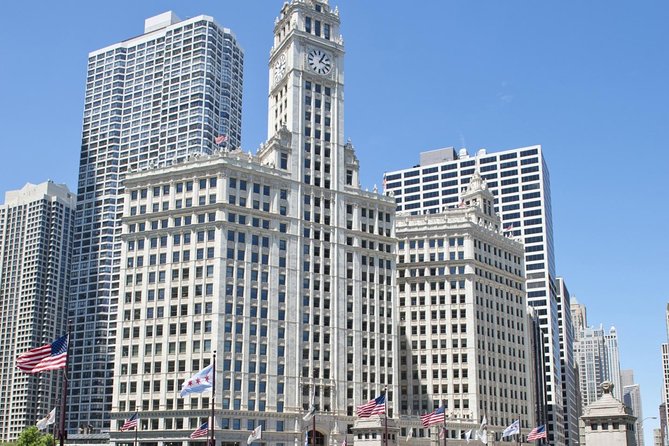
The Wrigley Building is the first major exterior landmark. You spend about five minutes viewing it, so this is a quick stop rather than an extended architectural study.
That short pause works well early in the walk. The building gives you an immediate sense of Chicago’s love of ornament, symmetry, and carefully designed commercial architecture. Your guide can point out details that are easy to ignore when you are simply crossing the street or heading toward the river.
The limitation is simple: you do not enter the Wrigley Building as part of this tour. If you want a long look at the facade or time for detailed photographs, you may need to return on your own.
Still, the stop helps establish the tour’s method. You look at the building, hear the story behind its design and place in downtown Chicago, then continue on foot. The pace is brisk but not rushed, according to the repeated comments about the two-hour timing.
Palmer House: the indoor highlight
The Palmer House Hilton receives about ten minutes, including a look at the exterior and historic lobby. For many people, this is the most rewarding stop because you get to see a grand hotel interior rather than only its street face.
The lobby offers the kind of visual detail that can disappear when you are focused on getting somewhere. The tour gives you permission to stop, look upward, and consider how public hotel spaces once announced wealth and status.
The Palmer House is also tied to Chicago’s retail and social past. The guide may use it to explain the city’s famous department stores, hotels, and the era when downtown buildings were designed to impress from the sidewalk and from within.
This stop is especially valuable for anyone who enjoys interiors, decorative design, or the social side of architecture. It also provides shelter during part of the walk. Do remember that proof of COVID-19 vaccination is required to enter this location under the stated tour conditions.
Access can change if the hotel has restrictions or scheduling issues. That is one reason not to treat any single interior as guaranteed. The guide may need to adjust the order or explain the building from outside if entry is unavailable.
Same streets, a different route:
- Chicago Loop District Food Tour with Deep Dish & Beef Sandwich
★ 5.0 · 870 reviews - Chicago’s Secret Interiors Architectural Walking Tour
★ 5.0 · 635 reviews - Chicago’s Chinatown Food and Walking Tour
★ 5.0 · 600 reviews - Chicago: Secret Interiors Architecture Walking Tour
★ 4.9 · 498 reviews
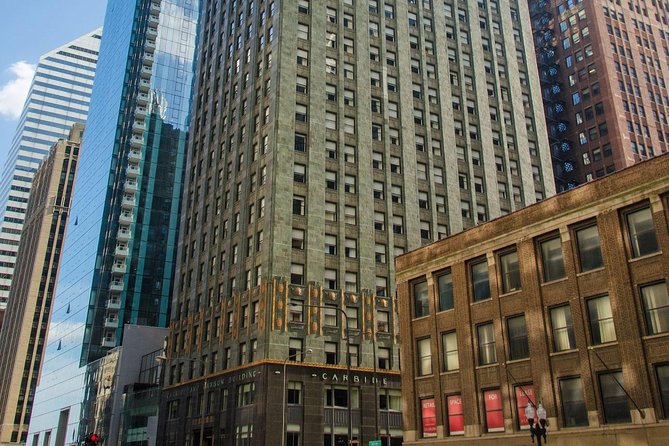
Carbide and Carbon Building: a quick exterior lesson
The Carbide and Carbon Building is another five-minute exterior stop. Its appearance is very different from the Palmer House, and the contrast helps you see how Chicago architecture moved between styles.
This is a good place to listen for the guide’s explanation of materials, decoration, and commercial ambition. The building is not simply a photo opportunity. It shows how architects used a downtown office tower to make a strong visual statement.
Because the stop is brief and admission is not included, your experience depends on where the guide positions the group and how much detail is covered. You will not get an extended interior visit here. The value comes from seeing the building in context with the others around it.
I would keep your camera ready, but do not let photography distract you from the explanation. The details your guide points out may be difficult to appreciate later from a photograph alone.
Reliance Building: early skyscraper ideas
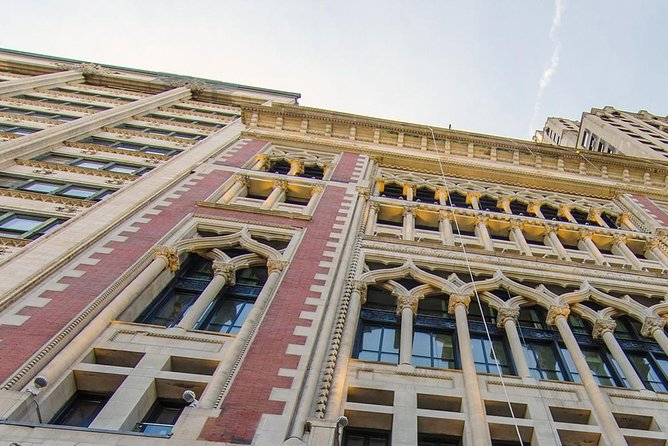
The Reliance Building receives another five-minute stop. Its importance is tied to Chicago’s early skyscraper development and the changing relationship between structure, windows, and usable office space.
This is one of the places where a guide adds real value. Without context, you might see only an attractive old building. With a clear explanation, you can begin to understand why buildings of this period mattered and how architects worked within the limits of their time.
The stop is exterior-focused, with no stated interior admission. That makes it less of a destination on its own, but it fits the larger story well. The tour is strongest when you treat the buildings as chapters in one city story rather than isolated attractions.
The five-minute timing also keeps the walk moving toward the Chicago Cultural Center. If you prefer very detailed architectural analysis at each building, you may find the schedule too compact. For a first introduction, the pace is more practical.
Chicago Cultural Center: finish beneath the glass
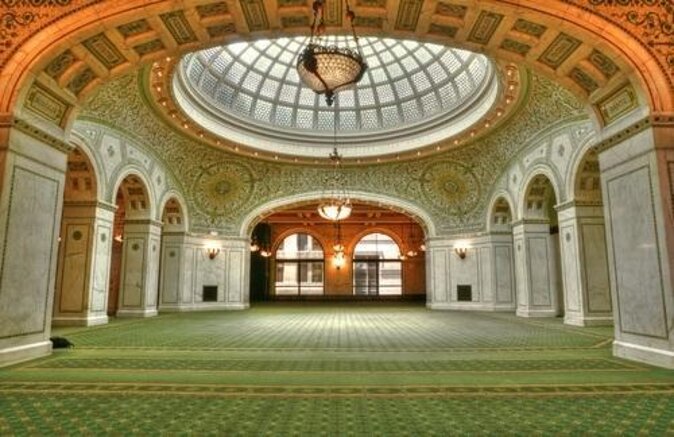
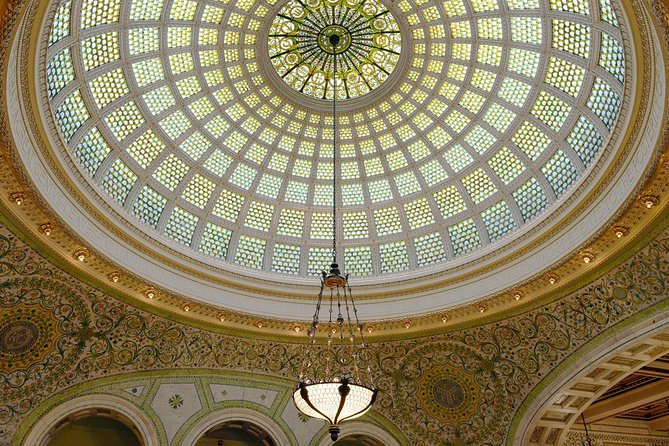
The tour ends at the Chicago Cultural Center, at 78 East Washington Street. You spend about ten minutes viewing both the exterior and interior, making this the longest stop on the route.
The Cultural Center is a fitting end because it offers another memorable public interior. The building rewards looking beyond the entrance and noticing the decorative elements overhead and around the rooms. One especially strong part of the experience is seeing the former public library interior, which gives the final stop a civic and cultural dimension.
This is also where the walk’s themes come together. You have seen private commerce, hotels, offices, and public architecture. The Cultural Center shows how a major downtown building can serve the wider city rather than a single company or hotel brand.
The official ending is here, but the docent returns to the Chicago Architecture Center. You may accompany the docent back if you need to retrieve something or want the extra walk. Since the route ends near central attractions, you can also continue exploring the Loop on your own.
How the guide shapes the experience
The tour is built around a professional, certified guide, and the guide’s approach matters more than the basic route. The best fit for you is someone who enjoys asking questions and listening to stories about the people, businesses, and city changes connected to each building.
Bob and Jim are praised for friendly, clear explanations. John is noted for taking time with questions and making the buildings feel connected to real Chicago life. Maureen is described as inviting questions and adding background about how people lived and worked in the city.
Paul’s tours are associated with a well-paced presentation, while Laurel is described as both informed and fun. Margaret’s smaller group allowed for questions about individual buildings and the wider story of Chicago. Jean focused on early architecture and the former public library interior.
These details point to a tour that works best as a conversation, not a performance. Group size is limited to 15, but some departures may be much smaller. A small group can make it easier to hear, ask for clarification, and get a direct answer when something catches your eye.
The guides are also volunteers connected with the Chicago Architecture Center, according to the tour information and guide descriptions. That can mean a personal, subject-focused presentation rather than a polished entertainment routine. If you prefer a light overview, the two-hour length keeps things manageable. If you want technical detail at every stop, you may wish for more time.
Price, pace, and practical value
At $35 per person, this is a good-value introduction to central Chicago architecture. You receive two hours of guided walking, professional narration, and admission to the Chicago Architecture Center galleries. The route also takes you into the Palmer House and Chicago Cultural Center without a separate attraction fee.
The price is especially fair if you are new to Chicago and want a clear orientation before exploring alone. A guide can help you notice buildings you might otherwise pass without a glance. The tour also saves you from piecing together several downtown sites on your own.
The value is lower if you have already spent several days studying Chicago architecture or have taken multiple architecture tours. Even then, the focus on historic interiors and the Loop may offer something different from a river cruise or a broader skyline presentation.
Two hours is a sensible length. You get a substantial introduction without giving up an entire day. The walking pace is described as comfortable, and most people can participate, but you should still wear shoes suited to city sidewalks and bring weather protection.
There is no luggage or stroller storage, and no coat check. Service animals are allowed, but pets are not. The tour is near public transportation, and the start and end points are central, though you are responsible for reaching the meeting point yourself.
When this tour is the right choice
I would choose this walk if you want Chicago’s architecture explained in plain language, with enough indoor access to keep the experience from becoming a long sidewalk lecture. It suits first-time visitors, repeat visitors who want more context, and locals who have walked past these buildings for years without looking closely.
It is also a strong pick for history fans and architecture enthusiasts who enjoy asking questions. The guides’ willingness to explain, improvise, and connect building design with city life is one of the tour’s main strengths.
Families and older participants should consider the two-hour walking format and the lack of storage. Most people can take part, but the route still involves outdoor city walking and standing at several stops.
You should be cautious about booking if your main goal is guaranteed interior access at every building. Only selected interiors are included, and access may change because of weekend schedules, holidays, or unexpected closures. The Palmer House also has the stated vaccination requirement.
Free cancellation is available up to 24 hours before the start time. Changes or cancellations made less than 24 hours ahead are not accepted, with cut-off times based on local Chicago time.
Should you book the Historic Treasures of Chicago walk?
Book it if you want a focused, well-paced introduction to Chicago’s downtown buildings for $35. The small group, central route, included Architecture Center admission, and access to the Palmer House and Cultural Center make it a practical choice.
I would be less quick to book if you want a long technical study of each building or a tour centered mainly on skyline views. This walk gives you short stops, broad context, and selected interiors rather than exhaustive detail.
For most visitors, it is a smart first architecture tour. You leave with a better sense of how Chicago grew upward, why downtown buildings look so different from one another, and where to return for a closer look.
FAQ
How long does the Chicago Historic Treasures tour last?
The walking tour lasts approximately two hours.
Where does the tour begin?
It begins at the Chicago Architecture Center, 111 East Wacker Drive, Chicago.
Where does the tour end?
The tour ends at the Chicago Cultural Center, 78 East Washington Street. The docent returns to the Chicago Architecture Center, and you may accompany the docent back.
What buildings are visited?
The route includes the Chicago Architecture Center, Wrigley Building, Palmer House, Carbide and Carbon Building, Reliance Building, and Chicago Cultural Center.
Is admission to the Chicago Architecture Center included?
Yes. Admission to the Chicago Architecture Center galleries is included.
Can I enter every building on the route?
No. Interior access is listed for the Palmer House and Chicago Cultural Center. The Wrigley Building, Carbide and Carbon Building, and Reliance Building are listed as exterior viewing stops. Interior access can change because of schedules or closures.
Is proof of vaccination required?
Proof of COVID-19 vaccination is required to enter the Palmer House location under the stated tour conditions.
How many people can join the tour?
The tour has a maximum of 15 participants.
Can I cancel for a refund?
Yes. You can cancel at least 24 hours before the start time for a full refund. Cancellations or changes made less than 24 hours before the start time are not accepted.
Just added around Chicago
- Chicago Gangster and Food Walking Tour★ 5.0 · 471 reviews
- Haunted Chicago Booze and Boos Ghost Walking Tour★ 5.0 · 266 reviews
- River North Food Walking Tour★ 4.5 · 88 reviews
- Chicago Walking Tour: Must-See Chicago★ 5.0 · 91 reviews
- Embers of the Windy City: Chilling Chicago Ghost Tours★ 4.5 · 121 reviews
- Downtown Chicago Walking Pizza Tour★ 5.0 · 106 reviews
- Chicago Walking Tour: A Walk Through Time★ 5.0 · 181 reviews
- Chicago Mobs and Haunts Walking Tour★ 4.5 · 383 reviews
Walking Tours, compared.

Magical London: Harry Potter Guided Walking Tour
Read our review →
Reykjavik Food Walk – Local Foodie Adventure in Iceland
Read our review →
History and Hauntings of Salem Guided Walking Tour
Read our review →
New Orleans Premier Ghost, Voodoo and Vampire Walking Tour
Read our review →
Amsterdam Anne Frank: Small-Group Walking Tour & Local Guide
Read our review →

Edinburgh Castle: Guided Walking Tour with Entry Ticket
Read our review →
Anne Frank’s Story – Guided Walking Tour through Amsterdam
Read our review →Browse the lists this tour appears in