
REVIEW · BUDAPEST
Budapest: Inner City Walking Tour in German
The most useful thing about this two-hour German walking tour is its clear route through central Pest. You move from Elizabeth Park and the Budapest Eye to St Stephen’s Basilica, Liberty Square, and Parliament, with Budapest’s architecture and difficult 20th-century story tied together along the way. I like the sensible route and the focus on places you can keep exploring after the guide leaves.
I also like the human touch. Guides such as Zsóka and Uschi have been praised for warm, personal explanations, practical food tips, and answers to questions. The main consideration is time: two hours gives you a strong first look, but not a full tour of Budapest, Buda, or the inside of Parliament.
Key points at a glance
- A focused Pest itinerary: See Elizabeth Park, the Budapest Eye, St Stephen’s Basilica, Liberty Square, Kossuth Square, and the Danube riverfront.
- German-speaking guidance: The tour is conducted in German by a professional local guide.
- History with a darker edge: Liberty Square and Parliament provide a setting for stories about Nazi occupation, Communist rule, dictatorship, and the 1956 revolution.
- Small-scale feel: This is offered as a private group tour, useful if you want to ask questions or set the pace within the planned route.
- A thoughtful final stop: The tour can end at the Shoes on the Danube Bank memorial or with a walk beside the river.
- Good value for a first orientation: At $23 per person, the tour gives you a compact introduction before you explore more on your own.
Why this Pest walking route works
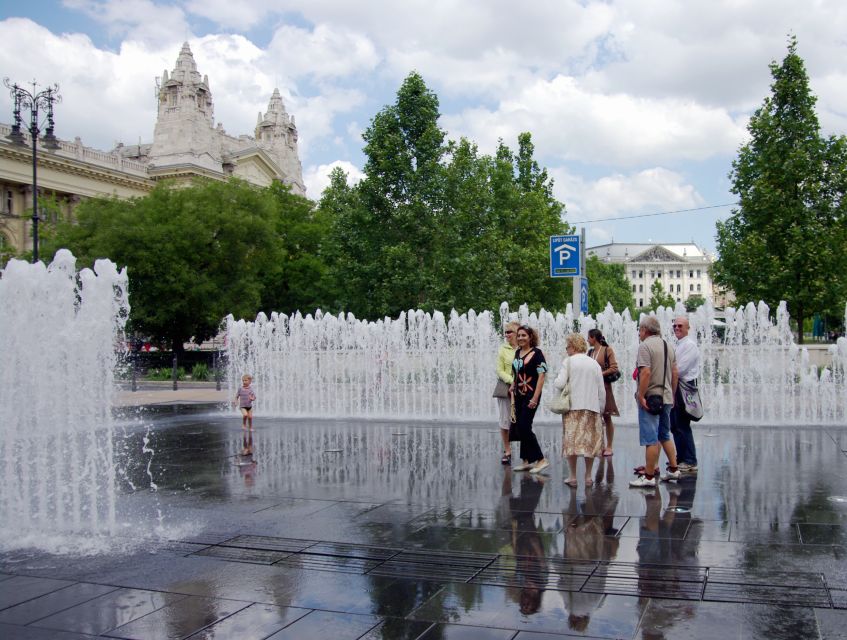
Budapest can feel scattered at first. The city has Buda on one side of the Danube and Pest on the other, with major sights spread across broad streets, squares, and riverfront paths. This tour keeps things manageable by concentrating on the inner city of Pest.
I like that the route is not just a parade of pretty buildings. It begins with Budapest’s grand public spaces, moves through pedestrian streets, and then turns toward the political center around Parliament. You get architecture, city life, food suggestions, and a serious look at Hungary’s recent past in one compact outing.
The route is also easy to understand geographically. Instead of taking you back and forth across town, it gradually moves toward the Danube and Parliament. That matters on a two-hour tour. You spend more time seeing places and less time getting from one district to another.
The tour is offered at $23 per person. For that price, I see it as a good orientation rather than a full historical course. You are paying for a guide who can connect the sights, explain what you are seeing, and help you decide what deserves more of your time later.
More City Highlights Walks in Budapest:
- Budapest: City Center Walking Tour
★ 4.5 · 626 reviews - Berlin City walk Government District and Places of Democracy
★ 4.7 · 8,467 reviews - Historic Charleston Guided Sightseeing Walking Tour
★ 5.0 · 6,216 reviews
Elizabeth Park and the Budapest Eye
The walk begins in Elizabeth Park, a central green space near the Budapest Eye. The Ferris wheel is described as the largest in Europe, and it gives this opening stop an easy visual marker. You do not need to ride it for the tour to work. Its value here is as a way to start with Budapest’s modern city center before moving into older monumental architecture.
Elizabeth Park also helps set the mood. You are in a busy central area, but the park offers a more relaxed beginning than a major traffic junction. The tour then continues on foot through the surrounding streets.
This first section should be especially useful if you have just arrived in Budapest. You can begin placing the inner city on a mental map, with the park, pedestrian streets, basilica, and riverfront forming a simple sequence. I would use the opening minutes to ask your guide about places to eat or sights you plan to visit later. Food advice is one of the practical extras that has been highlighted by people who took the tour.
St Stephen’s Basilica and the city’s grand scale
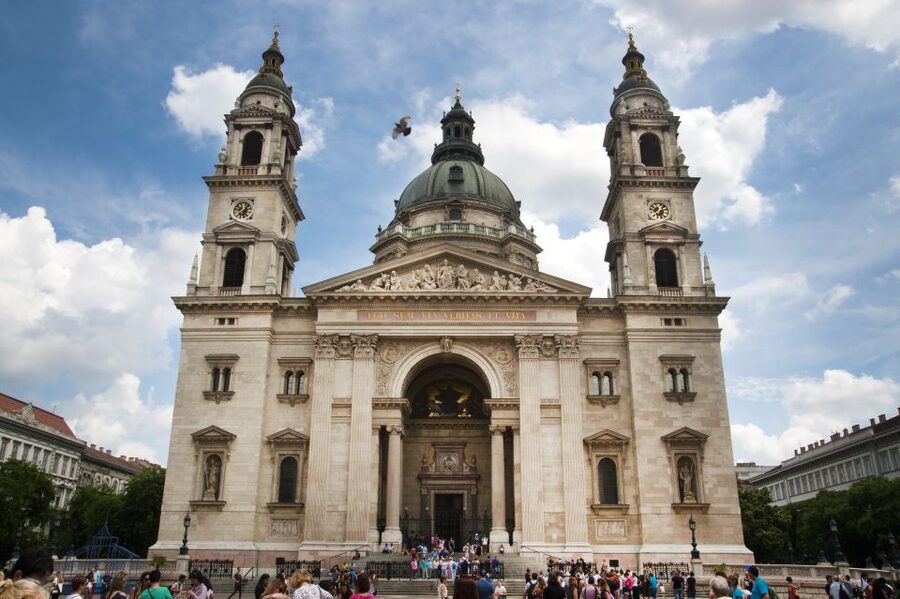
St Stephen’s Basilica is one of the major visual moments. The tour focuses on its monumental dome and colonnade, details that show how much 19th-century Budapest was shaped by large civic and religious buildings.
You will see the basilica from the outside as part of the walking route. That keeps the schedule moving, but it also means you should not book this tour expecting an interior visit or a climb. The attraction here is the guide’s explanation and the chance to appreciate the building in its surrounding square.
I like this stop because it gives you a strong example of Budapest’s formal style early in the walk. The basilica is not treated as an isolated church. It becomes part of a wider story about the city’s growth, public life, and grand building projects.
This is also a good place to pay attention to scale. The dome and colonnade are designed to be seen from the open space around them. A guide can point out features you might otherwise pass without noticing, especially if you are more interested in stories than architectural details.
Pedestrian streets and the cheerful Mr. Safe statue
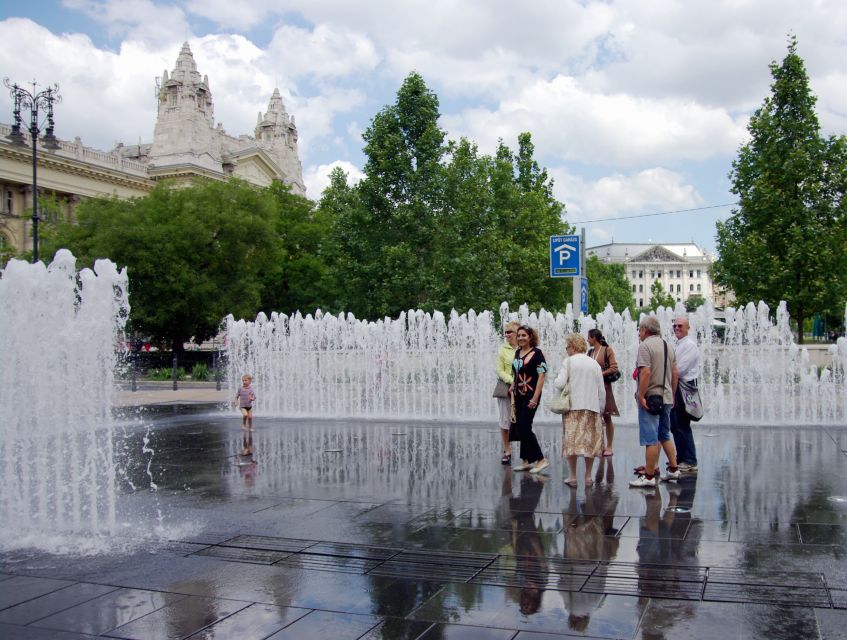
After the basilica, you continue along traditional pedestrian streets in the city center. This portion gives the tour a welcome change of pace. Instead of only looking up at monuments, you get a sense of how central Pest feels at street level.
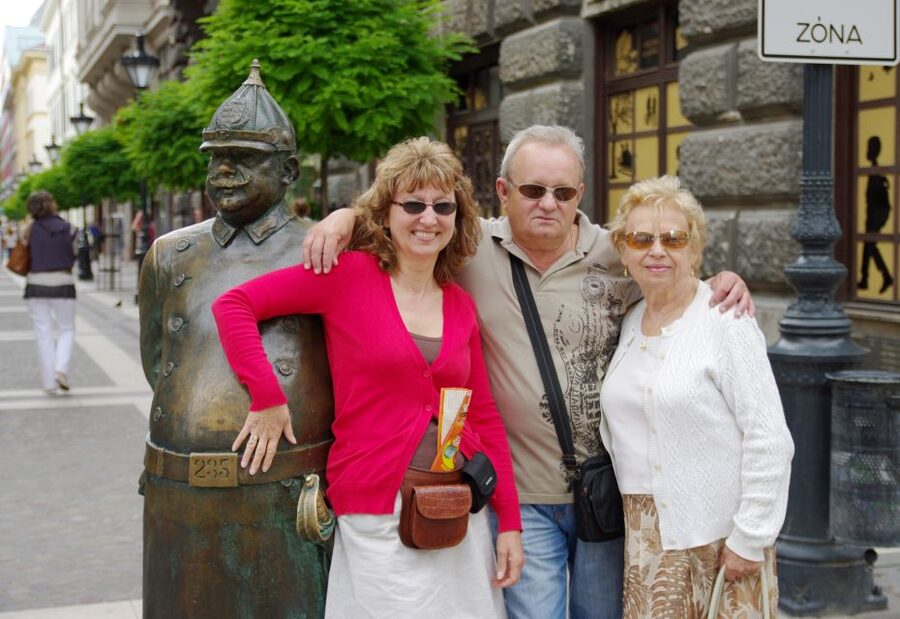
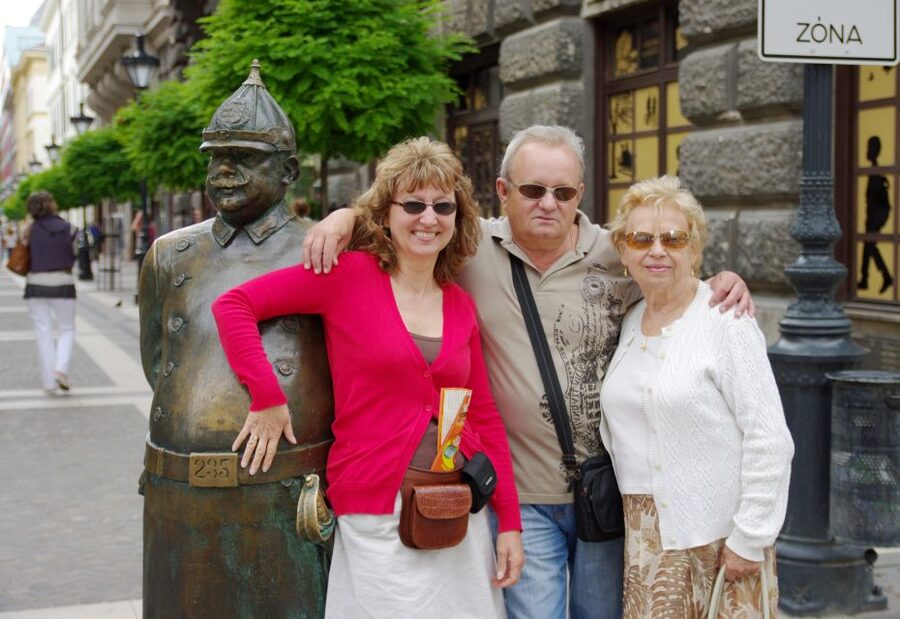
The route includes the statue of Mr. Safe, a playful detail that adds humor to the walk. It is the kind of small public artwork that can make a city tour feel less formal. You will likely smile, take a photo, and then keep moving.
I appreciate this contrast. Budapest is often presented through its grand buildings and heavy historical themes, but a useful introduction should also leave room for ordinary city character. The pedestrian streets and Mr. Safe stop do that without taking too much time from the major sights.
This is one reason the tour suits first-time visitors. You get enough landmark history to understand the city, but the walk does not treat Budapest like an outdoor textbook. There is room for small surprises.
A few more walking tours around Budapest worth a look
- Budapest: Buda Castle Walk with Saint Stephen’s Hall
★ 4.5 · 3,012 reviews - Big Bus Budapest Hop-On Hop-Off Bus and Walking Tour
★ 3.5 · 2,206 reviews - Budapest: Buda Castle District Walking Tour
★ 4.6 · 2,108 reviews - Budapest City Landmarks Walking Tour in 2 Hours
★ 5.0 · 2,048 reviews
Liberty Square and Hungary’s painful 20th-century story
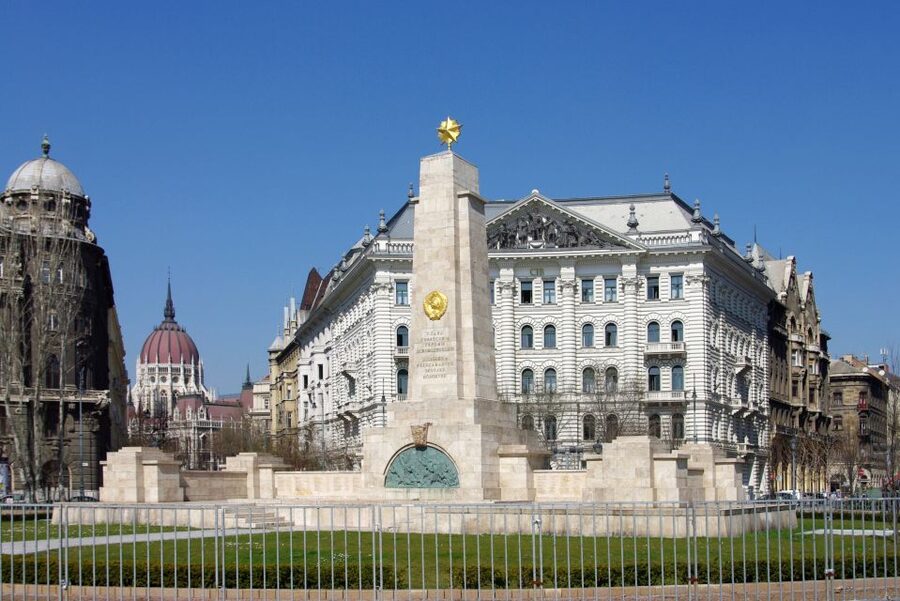
Liberty Square is where the tour takes a more serious turn. Here, the guide discusses Budapest’s experience under Nazi occupation and Communist oppression. You also hear about dictatorship and the 1956 revolution later near Parliament.
This part is important because Budapest’s elegant streets can hide how sharply the city’s recent past changed. A building or monument may look calm today, but the surrounding square can carry memories of violence, occupation, political control, and resistance. A guide helps you connect those events to the places in front of you.
You should expect the tone to shift here. This is not only a sightseeing stop. It is a chance to understand why public spaces and monuments matter in Hungary, and why the city’s political history remains visible in its central streets.
The value of a live guide is strongest at Liberty Square. Dates and names are easy to read later, but a spoken explanation can show how the different periods fit together. The German-language format is particularly useful if you want to discuss the subject naturally and ask follow-up questions in your own language.
Kossuth Square and the Hungarian Parliament
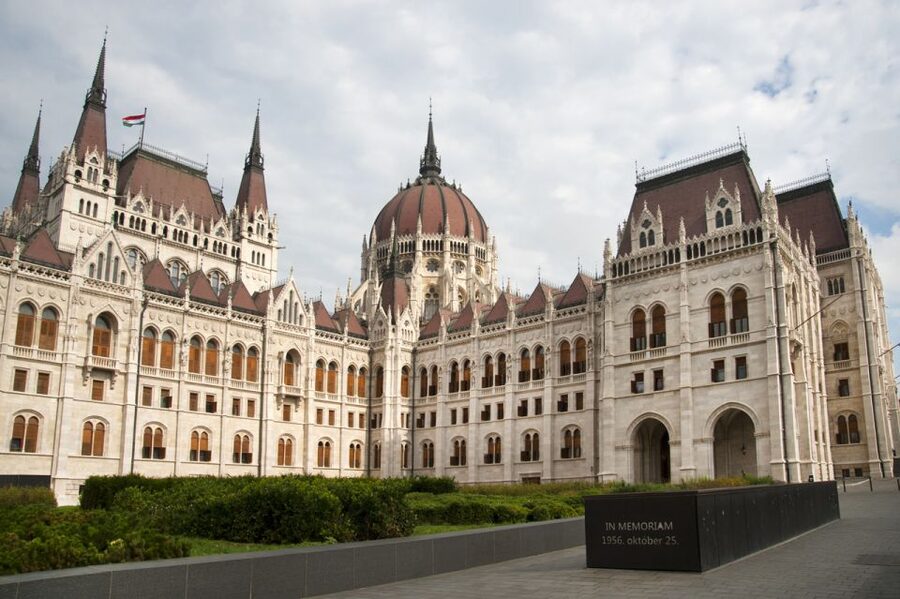
The final major stop is Kossuth Square, beside the Hungarian Parliament building. The square gives you a broad view of one of Budapest’s most recognizable monuments and places the tour at the center of Hungary’s political life.
The Parliament building is the visual climax of the route. Its scale and setting make it a fitting endpoint after the smaller streets and squares earlier in the walk. Here, the guide continues the story of dictatorship and the 1956 revolution, giving the building and square more meaning than a simple photo stop would provide.
I like the way the route saves Parliament for last. You approach it after hearing about the city’s development and troubled modern history, so the building feels connected to the story rather than dropped into the itinerary as a famous postcard image.
The tour does not promise an interior visit to Parliament. If you want to see inside, you will need to arrange that separately. This experience is about the exterior setting, the square, and the historical explanation around them.
Shoes on the Danube Bank or a river walk
After Kossuth Square, you can visit the Shoes on the Danube Bank memorial or take a walk along the river. The memorial is a particularly moving final option. Its simple shoe sculptures recall Jewish people who were killed at the riverbank during the Second World War.
The supplied details describe the memorial as poignant, and that is exactly the right expectation. It is not a light photo stop or a decorative monument. Give it your attention, and expect the atmosphere to become quiet and reflective.
If you prefer to continue walking, the riverbank offers a more relaxed finish. This choice gives the private group some flexibility at the end, though the available time will still depend on the route and the guide’s schedule.
I would choose the memorial if you want the tour to end with a serious historical reminder. Choose the river walk if you have already visited the memorial or would rather finish with views and fresh air. Either way, the ending keeps you close to the Danube, where you can continue exploring central Budapest.
The guides and the German-language experience
The tour includes a professional local guide who speaks German. Names associated with the experience include Zsóka and Uschi. Their approach, as reflected in the supplied feedback, combines clear facts with personal local insight.
That balance matters. A guide who only recites dates can make a walking tour feel tiring. A guide who only tells anecdotes may leave you without a useful understanding of the city. Here, the strongest pattern is a mix of important facts, local life, food suggestions, and answers to questions.
One guide was described as covering the key sights in a way that was easy to absorb in a short time. That is a real skill. Two hours is not long, so the best guide will know what to leave out as well as what to explain.
The private group format is another advantage. You can ask about a particular monument, request clarification, or spend a little more time on a subject that interests you, within the limits of the route. This may suit families, couples, or friends who prefer not to join a large public group.
Who should book this tour?
I would recommend it most strongly to German-speaking first-time visitors who want a structured introduction to central Budapest. The route covers several essential sights without requiring public transport, and the historical sections give the walk more substance than a simple architecture tour.
It also suits visitors with only a short stay. If you have a free morning or afternoon, this can help you understand where the main central sights are before choosing what to revisit. The guide’s food and sightseeing tips may also help shape the rest of your visit.
The tour may work well for families and mixed-age groups because it combines monumental buildings with lighter details such as the Budapest Eye and Mr. Safe. The private format can make it easier to manage questions and different interests.
It is wheelchair accessible, which is useful for anyone checking mobility needs in advance. Still, this is a walking experience, so you should consider your own comfort with two hours on city streets and squares. The exact pace and time spent at each stop can vary.
What the $23 price really buys you
At $23 per person, the tour is priced as an affordable city orientation. You are not paying for admission to Parliament, a basilica interior visit, transportation, or a meal. The included service is the German-speaking guide and the route through central Pest.
That can be good value if you would otherwise wander between these sights without knowing what connects them. The guide adds context to Liberty Square, Kossuth Square, and the Shoes on the Danube Bank memorial, where a short explanation can change how you see the place.
The value is less clear if you want a specialist architecture tour, extensive interior access, or a full-day exploration of both Buda and Pest. In that case, this should be your starting point, not your only Budapest tour.
The booking terms also reduce the risk of committing too early. You can reserve now and pay later, and cancellation is free up to 24 hours before the tour for a full refund. Check the available starting times when booking, since the activity lasts two hours.
Should you book the Budapest German walking tour?
Book it if you want a short, private, German-language introduction to Pest with a good mix of famous sights, local details, and difficult history. The route is efficient, the price is reasonable, and the finish near Parliament and the Danube puts you in an excellent place to continue sightseeing.
Skip it if you are looking for a full Budapest tour, an interior visit to Parliament, or a long architectural lecture. You will see the main sights from outside and gain useful context, but the experience is deliberately compact.
For most German-speaking visitors arriving in Budapest, I see this as a smart first walk. It gives you the city’s grand face, its street-level humor, and some of the painful events that shaped modern Hungary, all without asking you to spend half a day on your feet.
FAQ
How long is the Budapest Inner City Walking Tour?
The tour lasts two hours.
What language is the tour conducted in?
The tour is conducted in German by a professional German-speaking guide.
Where does the tour meet?
Meet the guide in front of Molnar’s Kürtöskalacs cafe and pastry shop.
Is this a private group tour?
Yes. The activity is offered for a private group.
Is the tour wheelchair accessible?
Yes, the tour is listed as wheelchair accessible.
Does the tour visit St Stephen’s Basilica?
Yes. The route stops at St Stephen’s Basilica and covers its monumental dome and colonnade.
Does the tour visit the Hungarian Parliament building?
The tour finishes at Kossuth Square, where you can admire the sights surrounding the Hungarian Parliament building. An interior visit is not included in the stated tour details.
Does the tour include the Shoes on the Danube Bank memorial?
After the main route, you can visit the Shoes on the Danube Bank memorial or enjoy a walk along the Danube.
How much does the tour cost?
The listed price is $23 per person. You can reserve now and pay later, and cancellation is free up to 24 hours in advance for a full refund.
Just added around Budapest
- Budapest 3-Hour Walking Tour in Italian★ 4.6 · 217 reviews
- Budapest: Castle District Walking Tour★ 4.8 · 223 reviews
- Budapest: Jewish History Guided Walking Tour with Historian★ 4.8 · 205 reviews
- Budapest Guided Food Walking Tour with Drinks Included★ 4.8 · 472 reviews
- Budapest: Walking Tour to the Shoes Memorial and Parliament★ 4.7 · 151 reviews
- Budapest: Walking Tour in the Buda Castle District★ 4.9 · 113 reviews
- Budapest: Walking Tour and Photoshoot with Digital Photos★ 4.7 · 82 reviews
- Budapest: 3-Hour Walking Tour of Pest with a Historian★ 4.9 · 81 reviews
City Highlights Walking Tours, compared.
Berlin City walk Government District and Places of Democracy
Read our review →
Historic Charleston Guided Sightseeing Walking Tour
Read our review →
Oxford: University and City Walking Tour with Alumni Guide
Read our review →
City Highlights Temple and Market Walking Tour
Read our review →
A History of Terror – Belfast City Centre Walking Tour
Read our review →Browse the lists this tour appears in