
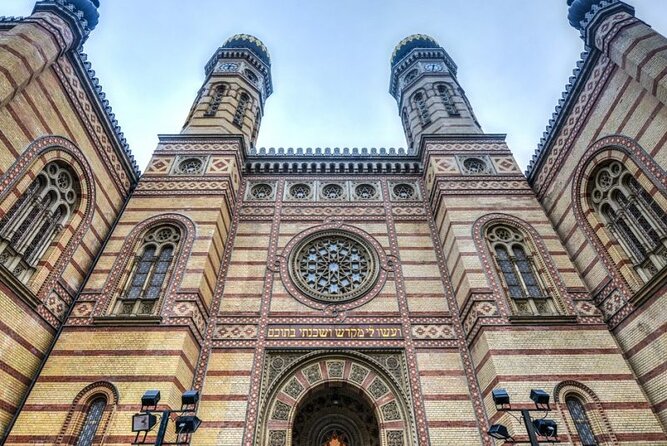
REVIEW · BUDAPEST
Budapest City Walk in Jewish Quarter
Budapest’s Jewish Quarter packs an extraordinary amount into a small part of Pest. In four hours, you can move from the grand Dohány Street Synagogue to a tiny prayer house, then on to memorial gardens, the last surviving piece of the WWII ghetto wall, and an everyday café or courtyard. Timea Tarjani, a history teacher and descendant of Holocaust survivors, is the guide most often named for this walk.
I like the tour’s private, flexible format. You can spend longer at a synagogue or memorial instead of being hurried along with a large group. I also like the way it connects Jewish history with present-day Budapest, including local eateries, small shops, galleries, courtyards, cafés, and ruin bars. The main consideration is cost: $356.90 is per group, but synagogue entry can add up to €46 per person, so the value works best for a small group of several people.
Key points at a glance
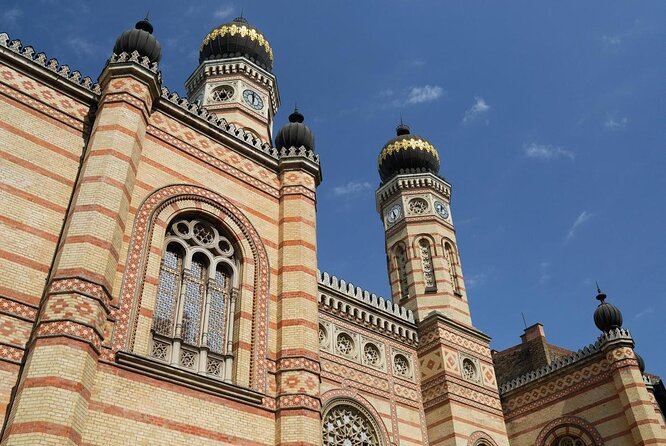
- Three very different synagogues: The Dohány, Rumbach, and Kazinczy synagogues form Budapest’s synagogue triangle, each offering a different sense of scale, style, and community life.
- Personal guiding by Timea: Her background in Hungarian and Jewish history, along with family ties to Holocaust survivors, gives the walk a human focus.
- WWII sites that are easy to miss: The route can include the former ghetto wall, stumbling stones, the Carl Lutz Memorial, the Raoul Wallenberg Memorial Garden, and the Shoes Monument.
- A flexible four-hour walk: You can ask for more time at a particular site or skip something that does not fit your interests.
- A look at Jewish Budapest today: Courtyards, kosher options, the Kazinczy Street mikveh, cafés, shops, galleries, and Szimpla help connect the past to daily life.
- Hotel pickup and local help: Pickup and drop-off are offered, and the guide can help arrange a restaurant, kosher meal, or snacks.
Why this compact Pest neighborhood matters
The Jewish Quarter is in Budapest’s seventh district, where major landmarks sit close to ordinary residential streets. That makes walking the right way to see it. You are not spending half the tour on transport, and you can notice the details between the headline sights: worn façades, inner courtyards, plaques, small businesses, and streets where the area’s past still feels close.
This is not only a synagogue tour. The guide places the neighborhood within the wider story of Budapest, including Jewish life before World War II, the devastation of the Holocaust, the years of Communist rule, and the Jewish community that remains active today. That wider frame matters because the district can look like a nightlife zone at first glance. Its ruin bars and cafés are real parts of modern Budapest, but they share space with memorials and buildings tied to painful events.
The tone is serious when it needs to be, but the walk is not presented as a list of dates. The stated aim is to tell stories rather than pile up facts. That approach suits anyone who wants to understand how people lived, suffered, adapted, and continue to build community here.
More Jewish Heritage Walks in Budapest:
- Budapest Jewish Heritage Memorial Walking Tour & Synagogue Entry
★ 5.0 · 568 reviews - Jewish Quarter of Budapest Walking Tour
★ 4.7 · 369 reviews - Budapest: Jewish History Guided Walking Tour with Historian
★ 4.8 · 205 reviews
Starting at your hotel and setting the pace
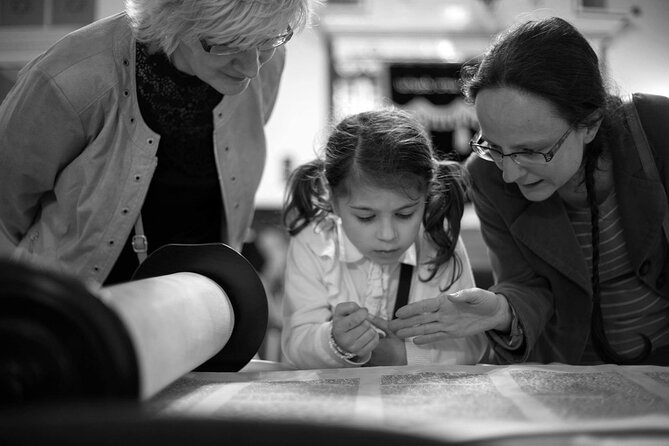
Pickup is offered in your hotel lobby or in front of your rented flat. The tour lasts about four hours and includes a moderate amount of walking. You can request a break, which is useful if you are managing knee trouble, traveling with older family members, or simply want time to absorb what you have seen.
The private format is designed for up to six people at the advertised price of $356.90 per group. The additional information also lists a maximum of 10 participants, so confirm the final group size and pricing setup when booking if your party is larger than six. For six people, the base cost works out to roughly $59.50 per person before entrance fees. For two people, it is a much bigger spend, but you are paying for a dedicated guide, hotel pickup, and a route adjusted to your interests.
English is offered, and confirmation is provided at booking. The tour is listed as operating daily, while the supplied schedule shows Monday from 9 a.m. to 2 p.m. Because synagogue access and opening times can change, I would confirm your preferred start time and which interiors are available before you set your day around the walk.
The synagogue triangle: Dohány, Rumbach, and Kazinczy
The synagogue portion gives the tour its strongest architectural sequence. Dohány Street Synagogue is the grandest of the three and is described as the second-largest non-Orthodox synagogue in the world. Its scale helps explain the importance of Budapest’s Jewish community before the war, but it can also make the visit feel formal and monumental.
Rumbach Street Synagogue offers a different experience. It is one of the key stops in the triangle, and its distinct character makes it worth seeing alongside Dohány rather than treating one synagogue as enough. Kazinczy Street brings another angle, with the mikveh and Orthodox Jewish context adding practical detail about religious life.
You can choose to visit one synagogue, and entry is not included. The maximum additional entrance cost is listed as €46 per person, with reduced prices available for categories such as families and seniors. That can make a substantial difference to the final bill. If you are watching costs, ask the guide to help you select the one interior that best matches your interests.
If you do visit all three, allow for the fact that the value comes from comparison. Seeing the buildings one after another makes their differences clearer. The drawback is that synagogue visits can take a large part of a four-hour walk, leaving less time for courtyards, memorials, and everyday neighborhood life.
Dress respectfully. Synagogues provide coverings, but you can bring your own hat or cap and scarf if you prefer not to use those supplied at the sites.
Memorials that put names and places together
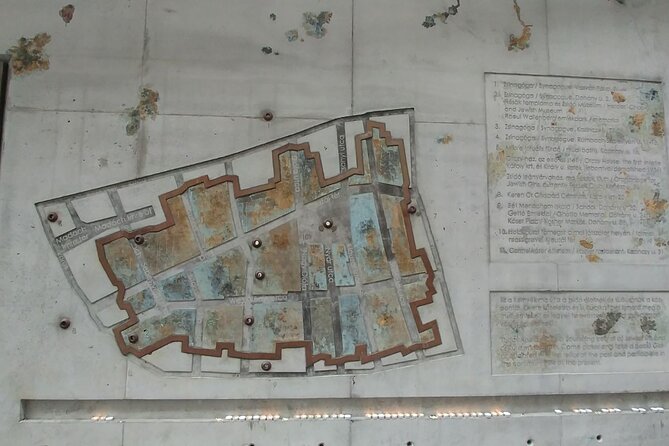
The Raoul Wallenberg Memorial Garden and its Emmanuel tree are among the most moving stops on the route. The memorial’s form invites quiet attention rather than a quick photo. The Carl Lutz Memorial adds another perspective on rescue efforts during the Holocaust.
Look down as you walk, too. Stumbling stones set into the pavement mark individual people who were persecuted and killed. They are easy to pass without a guide, which is one reason this walk is more useful than simply following a map through the district. The guide can explain what these small markers mean and connect them to the buildings and streets around you.
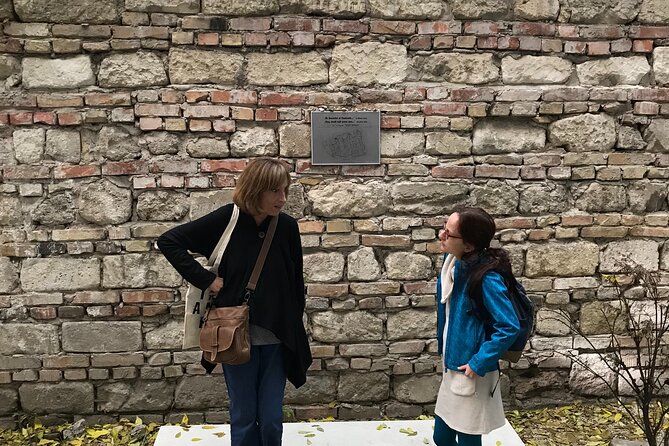
The last remaining section of the WWII ghetto wall is another stop that benefits from interpretation. It is not a grand monument, and you could easily miss it. Its very modesty is the point: a fragment of barrier survives in a neighborhood where daily life has continued for decades.
The route may also include the Shoes Monument along the Danube. It is outside the compact core of the quarter, so the exact order depends on the day’s plan and your interests. This riverside memorial is especially powerful because of its simple design and direct reference to the people murdered there during the war.
These places can be emotionally heavy. The four-hour length gives you room to pause, but the subject matter may not suit every child or every member of a family. If you are traveling with teenagers, Timea’s conversational style may help keep them involved. One family specifically found that she held the attention of two teenage boys by mixing the historical material with personal stories and broader Budapest context.
More City Highlights Walks in Budapest:
- Budapest: City Center Walking Tour
★ 4.5 · 626 reviews - Budapest: Inner City Walking Tour in German
★ 5.0 · 76 reviews - Berlin City walk Government District and Places of Democracy
★ 4.7 · 8,467 reviews - Historic Charleston Guided Sightseeing Walking Tour
★ 5.0 · 6,216 reviews
Courtyards, shops, cafés, and the quarter today
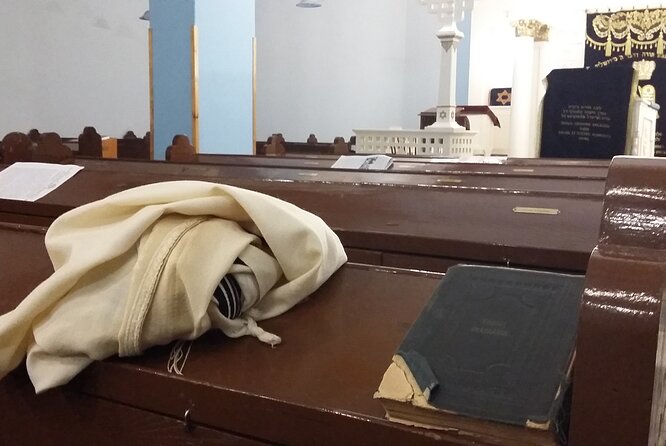
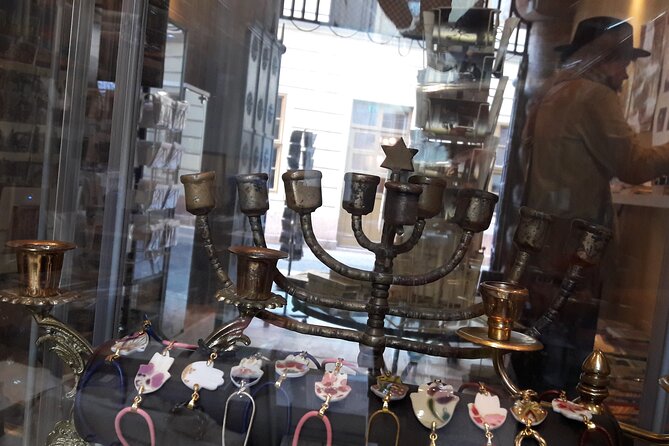
The walk does not stay in the past. You may pass through Gozsdu Courtyard, a busy passage of shops and places to eat, and see the neighborhood as it functions now. Small stores, confectioneries, cafés, art galleries, and festival spaces show you a district used by local residents as well as by people out for an evening.
Szimpla, Budapest’s iconic ruin bar, can be part of the route. Its presence raises a useful question: how does a neighborhood carry painful memory while also becoming one of the city’s main entertainment areas? A guide can help you read that contrast instead of treating the ruin-bar scene as a separate attraction.
The Kazinczy Street mikveh adds another layer. It is a more specific religious site than the major synagogues, and it helps you understand how Jewish practice operated beyond the most famous buildings. Access to smaller or private spaces may depend on arrangements and availability, so treat them as possible highlights rather than guaranteed stops.
The guide can also recommend restaurants and help book a table for the day of your walk or another evening. That is handy in a quarter with many choices but plenty of busy dining spots. Food and drinks are not included, and kosher meals or snacks can be arranged if you request them.
The guide makes the difference
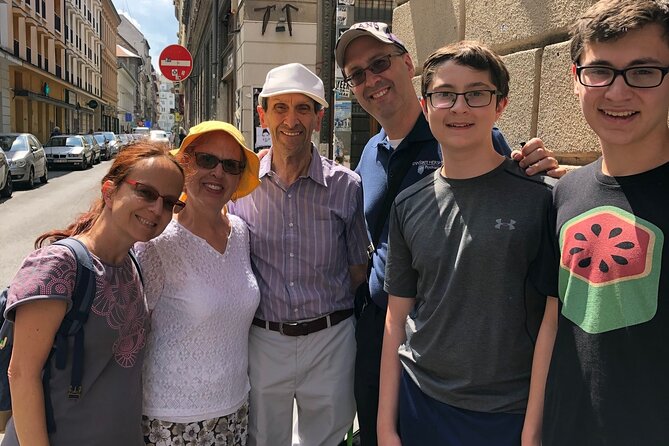
Timea Tarjani is the guide most frequently identified with this experience. She is described as a history teacher, a longtime Budapest resident, a practicing member of the city’s Jewish community, and a granddaughter of Holocaust survivors. Those details do not replace historical evidence, but they can give the walk a personal connection that a standard group outing may lack.
The strongest part of her approach is the conversation. You can ask about Jewish and Hungarian history, the Holocaust, Communist-era Budapest, or Jewish life today. She has also helped with practical problems, including locating COVID testing and assisting when a participant felt faint from dehydration. That kind of care is not a formal feature of the tour, but it tells you to expect a guide who pays attention to the people in front of her.
Some outings have run longer than the planned four hours when the group wanted to continue. Do not count on extra time, but if you have a firm afternoon appointment, mention it at the start. The private setup lets you set the pace, yet a conversation-heavy tour can naturally expand when the group has many questions.
The experience provider is Budapest Jewish Walk. Other licensed local guides may lead the tour, so ask for the guide’s name when booking if having Timea is important to you.
What the price really buys
At $356.90 per group, this is not a budget walk for one or two people. It becomes more reasonable for a family or group of four to six, especially if you use the pickup service and restaurant help. You are paying for a licensed local guide, private attention, hotel pickup and drop-off, and an itinerary that can change around your interests.
The admission charge is the key extra cost. Up to €46 per person is listed, although you may choose to visit only one synagogue and qualify for reduced rates. Ask for the current fee before entering. A group that wants all three synagogues should budget carefully, since the admissions can approach or exceed the cost of the guide for a couple.
I see the best value here for people who care about context, not just landmarks. If you only want quick photographs of the main synagogues, a cheaper general city walk may be enough. If you want to ask questions, see smaller sites, understand the WWII story, and get restaurant or kosher food help, the private format earns its price.
Who should book this four-hour walk?
I would choose this tour if Jewish Budapest is a main reason for your visit, if you are tracing family roots, or if you want a thoughtful introduction before exploring the quarter on your own. It also suits families and small groups who prefer a flexible day rather than a fixed group schedule.
It is particularly useful for anyone who wants Jewish life today included in the picture. The tour does not stop at wartime suffering. It also points you toward present-day community life, religious spaces, shops, food, and ordinary streets.
You should think twice if you dislike walking, want a light sightseeing outing, or have little patience for memorials and difficult history. Four hours can feel long if you are interested only in architecture. Also remember that food, drinks, and entry fees are extra.
Cancellation is free up to 24 hours before the start time. Changes or cancellations made later are not refunded, and the cut-off follows Budapest local time.
FAQ
How long does the Budapest Jewish Quarter walk last?
The experience lasts approximately four hours.
Where does pickup take place?
Pickup is offered in the lobby of your hotel or in front of your rented flat or other accommodation.
Is hotel drop-off included?
Yes. Hotel drop-off is included, and restaurant drop-off for lunch or dinner is also offered.
Are synagogue entrance fees included?
No. Entrance fees are extra. The maximum listed additional cost is €46 per person, and you can choose to visit one synagogue. Discounted prices may apply to families, seniors, and other eligible categories.
How much walking is involved?
A moderate amount of walking is involved. You can ask for a break during the tour.
Can the itinerary be changed?
Yes. The itinerary is described as highly flexible, so you can request more time at a particular place or skip another stop.
Is food included?
No. Food and drinks are not included. Kosher meals or snacks can be arranged if required, and the guide can recommend or book a local restaurant.
Should you book it?
Book this walk if you want Budapest’s Jewish Quarter explained through people, places, and present-day life, not just famous buildings. The mix of the synagogue triangle, the former ghetto wall, stumbling stones, memorials, courtyards, cafés, and ruin bars gives you a fuller sense of the district.
For the best value, come with at least four people, decide in advance how many synagogues you want to enter, and tell the guide what matters most to you. If you want a quiet, personal, sometimes emotional look at Budapest’s Jewish past and present, this is a strong choice.
Just added around Budapest
- Small-Group Culinary Walking Tour in Budapest★ 5.0 · 148 reviews
- Walking Tour Budapest incl. the Shoes on the Danube Bank★ 5.0 · 387 reviews
- Walking tour in the Buda Castle incl. Fisherman’s Bastion★ 5.0 · 467 reviews
- Virtual Reality Walking Tour★ 5.0 · 434 reviews
- Budapest Ruin Bars Evening Walking Tour with Drinks & Street Food★ 5.0 · 104 reviews
- Budapest walking tour: Parliament and Shoes Memorial★ 5.0 · 387 reviews
- Essential Walking Tour★ 5.0 · 101 reviews
- Budapest Private Full Day City Sightseeing Tour Walking or by Car★ 5.0 · 299 reviews
Jewish Heritage Walking Tours, compared.

Amsterdam Anne Frank: Small-Group Walking Tour & Local Guide
Read our review →
Anne Frank’s Story – Guided Walking Tour through Amsterdam
Read our review →
Jewish Quarter Walking Tour with Admission Tickets
Read our review →
Anne Frank Guided Walking Tour in DE/EN/IT/ES
Read our review →
Old Town and Jewish Quarter Guided Walking Tour
Read our review →
Anne Frank Walking Tour Amsterdam Including Jewish Cultural Quarter
Read our review →
Anne Frank’s Last Walk & See Anne Frank House in Virtual Reality
Read our review →Browse the lists this tour appears in