
REVIEW · BRUGES
Bruges: Nightly Tales and Untold History Walking Tour
Bruges has a quieter face after sunset. This tour leads you away from the usual postcard stops and toward stories about the city’s first stock exchange, old canals, unusual buildings, witches, ghosts, beer, chocolate, and the people who shaped Bruges.
I like the small-group storytelling format, which gives the guide room to explain odd details instead of rushing through a list of dates. I also like the mix of solid history and folklore, so the evening feels playful without turning into a simple ghost walk.
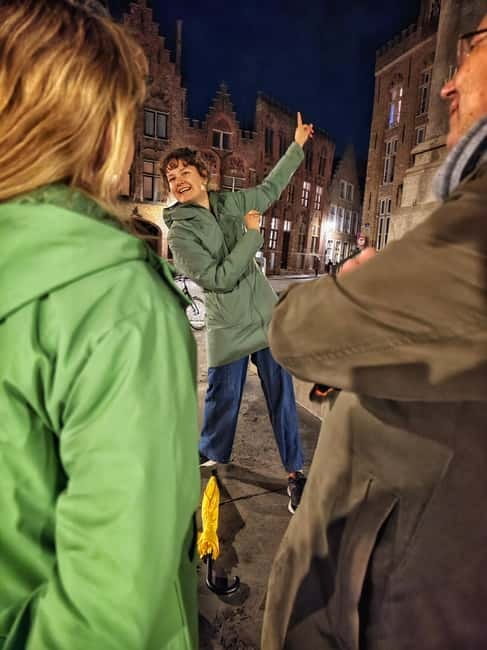
The main drawback is the outdoor setting. Cold, rain, traffic, and crowds around the main squares can make a guide harder to hear, especially if the group spreads out. Wear warm, weatherproof clothing and stay close to the yellow umbrella.
Key points to know before you book
- The route reveals a quieter Bruges: You leave the busiest tourist paths and explore canals, squares, bridges, and streets many first-time visitors miss.
- The storytelling is the main attraction: Guides such as Pascal, Arthur, Andy, and Alastair use humor, local tales, and historical detail to keep the walk moving.
- It is not only a ghost tour: Expect folklore and a ghost or two, but also architecture, trade, religion, city life, beer, chocolate, and modern Bruges.
- The walk lasts two hours: The pace is manageable, though you remain outdoors for the entire experience.
- The meeting point is easy to find: Look for the yellow Ambassadors Tours umbrella in front of the Belfry on Markt Square.
- It suits a wide mix of people: Solo visitors, couples, families, and friends can all take part, and the tour is listed as wheelchair accessible.
Why Bruges works so well after sunset
Bruges is famous for its medieval-looking center, but the daytime crowds can flatten the experience. By evening, the city becomes calmer, and the narrow streets and canals take on a different mood. You notice reflections in the water, the shape of old facades, and the odd corner that is easy to miss when everyone is heading toward the next photo stop.
This tour uses that change in mood well. It does not promise a frightening night of haunted houses. Instead, it connects the city’s appearance with the stories behind it. A guide might point out a small architectural feature, then explain the custom, trade, belief, or local tale attached to it.
That approach suits Bruges. The city can look almost too perfect, so stories about merchants, religious life, strange punishments, old drinking places, witches, and ghosts give the streets some human character.
More History Walking Tours in Belgium
- Historical Walking Tour: Legends of Bruges
★ 5.0 · 2,541 reviews - Historical Walking Tour: Legends of Antwerp
★ 5.0 · 1,837 reviews - Historical Walking Tour: Legends of Gent
★ 5.0 · 1,761 reviews
Meeting at the Belfry on Markt Square
You meet in front of the Belfry Tower on Markt Square. The yellow Ambassadors Tours umbrella is the key marker, which matters in the evening when several groups may gather in the same area.
Markt is one of Bruges’s most recognizable spaces, but it is also one of the noisiest parts of the route. Traffic, passing visitors, and the open square can make hearing difficult at the start. Stay near the guide, especially if you want every detail.
The opening section gives you your bearings. The guide introduces Bruges through its central square and sets up the evening’s style: part city walk, part local storytelling session. You get history, but you also get the small facts that make the place easier to read later.
Markt and the Bruges Beer Experience
The walk begins around Markt, with the Bruges Beer Experience as one of the early sights. The focus is not simply on stopping for a drink. The guide uses the area to connect Bruges with its brewing culture and the role beer has played in everyday life.
This is useful early in a stay because it gives you context for Belgian beer menus and local customs. You will not need to know much about beer to enjoy this part. The stories are aimed at general visitors, not specialists.
The square itself can feel crowded, so this is one of the spots where the guide’s voice may compete with street noise. The trade-off is that the opening setting gives the tour a strong visual start and places Bruges’s public life right in front of you.
Burg Square and the city’s public face
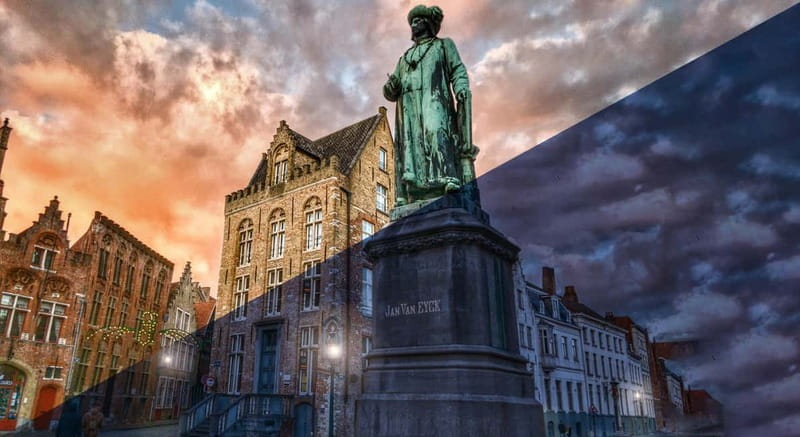
From Markt, the group continues to Burg Square. This is one of the most important historic spaces in Bruges, with grand civic and religious buildings around it.
Here, the guide shifts from the broad image of Bruges to the details that are easy to overlook. Architecture becomes part of the story. You may hear about how buildings were used, what their decoration suggests, and how power and religion shaped the center of town.
The square is another busy place, but it also helps explain how Bruges functioned as a city. I like this part because it prevents the tour from becoming a string of spooky anecdotes. The supernatural material works better when it is tied to real places and real patterns of life.
Same streets, a different route:
- Bruges: Small Group Boat Cruise and Guided Walking Tour
★ 4.8 · 4,102 reviews - Brussels: Guided Walking Tour
★ 4.6 · 3,560 reviews - Bruges: Walking Tour, Canal Boat Trip w/Beer Tasting Option
★ 4.4 · 2,759 reviews - Brussels: Historical Walking Tour with Chocolate & Waffle Tasting
★ 5.0 · 1,165 reviews
Sint-Jansplein, Choco-Story, and the taste of Bruges
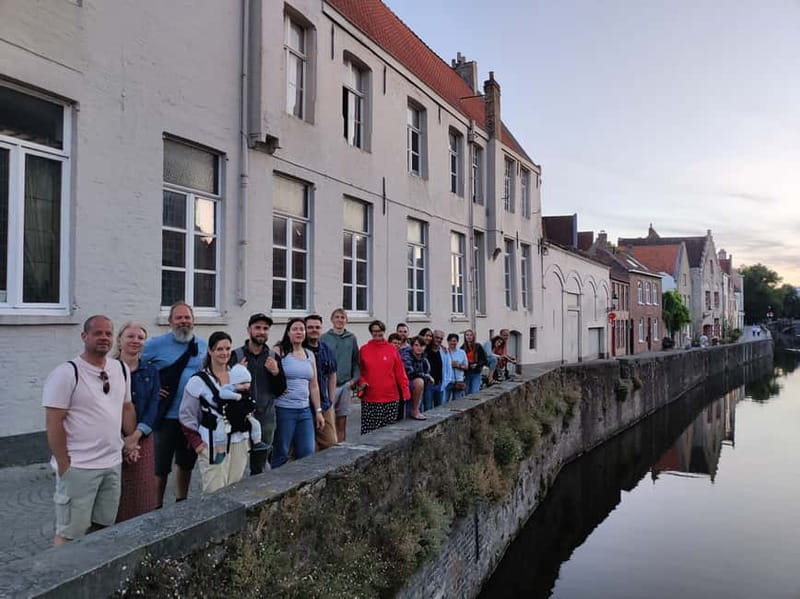
The route continues toward Sint-Jansplein and the area near Choco-Story. Chocolate is one of Bruges’s most visible modern pleasures, and the stop gives the guide a chance to connect the city’s food culture with its identity as a destination.
You should not expect a chocolate-making class or a tasting to be included. Choco-Story is a sightseeing point along the route, not a separate entry or workshop listed as part of the tour. Still, the location helps place Bruges’s chocolate trade within the wider walk.
This section is a good reminder that the tour is not locked in the past. It covers the way Bruges presents itself today as well as the older stories attached to its streets.
Kraanplein, the Frietmuseum, and everyday local culture
At Kraanplein, the tour moves through another small urban space before reaching the area of the Frietmuseum. Belgian fries are not a minor detail in local culture, and the museum gives the guide another familiar subject to use when explaining Bruges.
The value here is the variety. One moment you are hearing about medieval trade or old architecture. The next, the subject turns to food and daily life. That change keeps the two hours from feeling like a formal lecture.
Again, you should treat the museum as a landmark on the walk rather than an included museum visit. The tour does not list entry tickets, food, or drinks among its inclusions.
Huis Ter Beurze and the story of trade
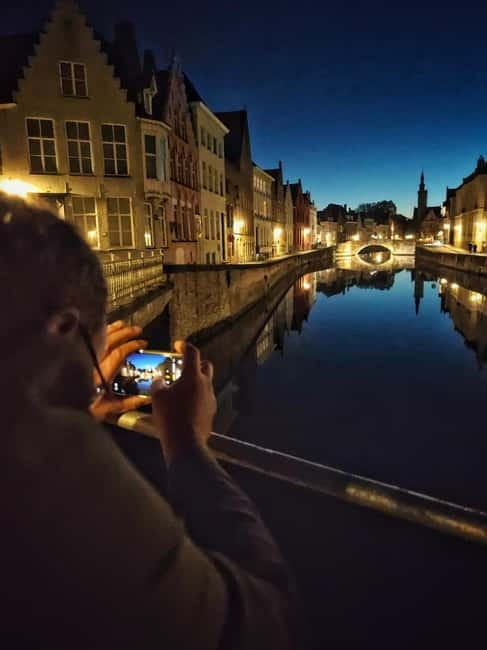
One of the most interesting historical points is Huis Ter Beurze. The tour highlights the fact that the world’s first stock exchange is only minutes from Markt Square.
That detail gives Bruges a useful correction to its fairytale image. This was not only a pretty canal town. It was also tied to commerce, finance, merchants, and international exchange.
A guide-led explanation is especially helpful here because the building and its surroundings may not announce their importance clearly. You could walk past without realizing why the site matters. This is exactly the sort of stop that gives the tour its purpose: a place becomes more memorable once you know the story attached to it.
Vlamingstraat and the move away from the crowds
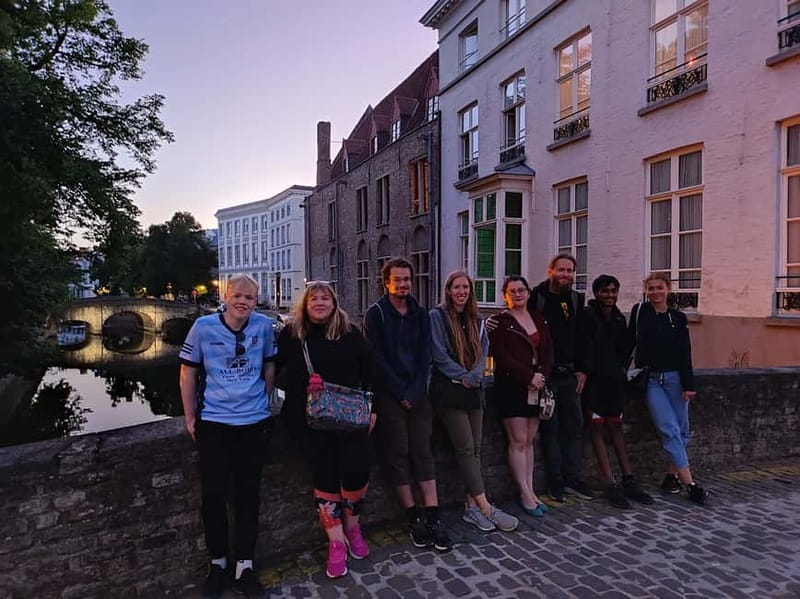
The group then follows Vlamingstraat, leaving some of the most obvious central sights behind. This is where the promise of a quieter side of Bruges begins to feel more practical.
The route does not take you far from the historic center, but it changes the pace. Instead of stopping only at famous squares, you spend more time reading the street pattern and looking at buildings along the way.
The walk remains accessible for many visitors, but it is still a two-hour walking tour. Comfortable shoes will help, and you should be ready to stand while the guide tells longer stories.
Potterierei, Augustijnenrei, and the canals
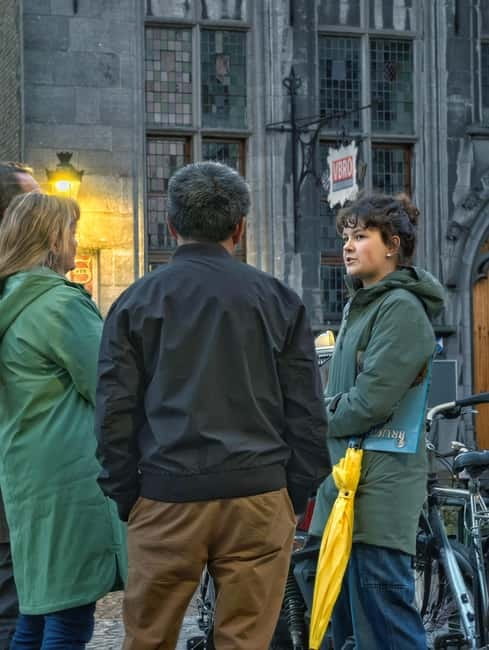
Potterierei and Augustijnenrei bring the canals into the center of the experience. Bruges is often photographed from its prettiest bridges, but a guide can explain how the waterways shaped movement, trade, and the city’s appearance.
The canal sections are among the most atmospheric parts of the evening. They also provide a break from the busiest squares. In wet weather, paving and canal-side paths may feel less comfortable, so good shoes and a waterproof layer are worth packing.
The guide’s storytelling matters here. A canal view by itself is beautiful, but a story about the buildings, the water, or the people connected to the area gives you something to remember beyond the photograph.
Augustine Bridge and Gouden-Handrei
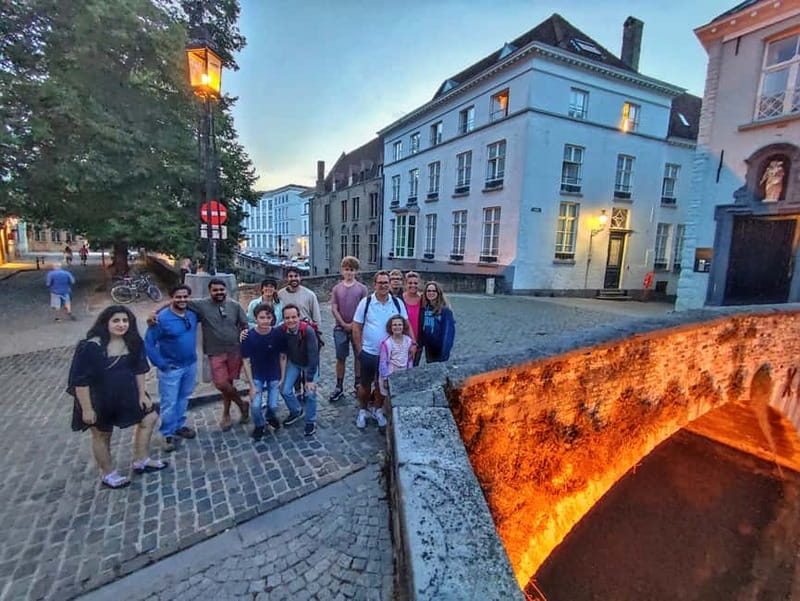
At Augustine Bridge, the group pauses for another look at Bruges’s waterways and architecture. Bridges are not just photo stops on this walk. They help the guide explain how the city links its different quarters and how its visual character developed.
The route continues along Gouden-Handrei, another canal-side stretch with a quieter feel than Markt. This part suits visitors who want to see more than the central postcard circuit but do not have time for a full day of exploring.
You may find the stories here more personal and local in tone. The tour’s appeal comes from the blend of documented events and tales passed through generations. The guide generally makes clear when a story belongs to folklore rather than established fact, which keeps the mood entertaining without treating every legend as history.
Cafe Vlissinghe and Spiegelrei
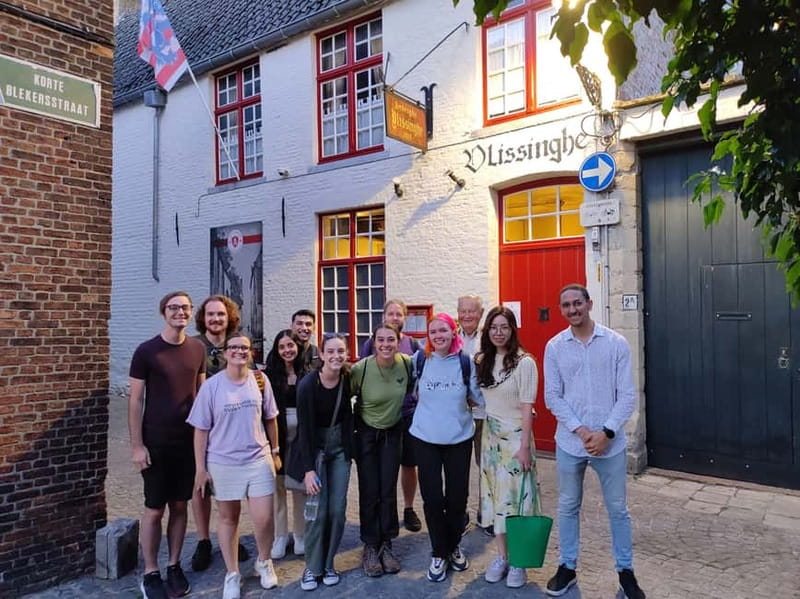
Cafe Vlissinghe is included as a sightseeing point, and it gives the route a link to Bruges’s long tradition of local drinking places. The tour does not include a drink, but the stop can help you decide where to return later.
This is one of the places where the guide’s practical advice can be useful. Several guides give suggestions for food, chocolate, beer, and other things to do after the tour. If you are using the walk as your first evening activity, keep a note of recommendations that suit your schedule.
The route then follows Spiegelrei. By this stage, the central crowds should feel farther away, and the canal setting gives the final part of the walk a calm rhythm.
Jan Van Eyck Square and the final stories
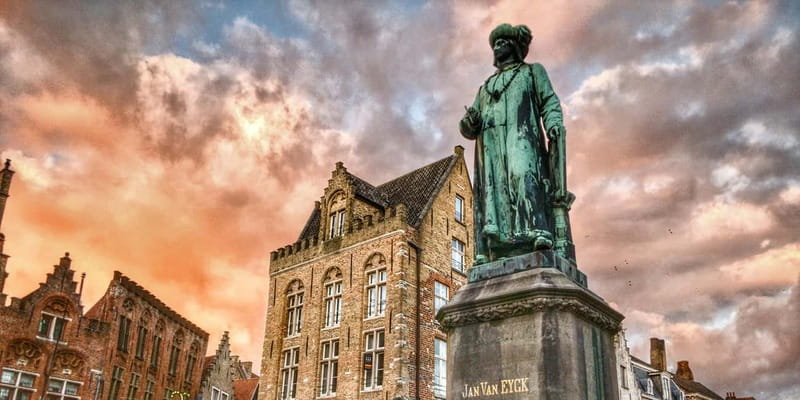
Jan Van Eyck Square is one of the strongest finishing points. It brings together water, historic buildings, public space, and the commercial story of Bruges.
The guide can use the square to tie together themes from the evening: trade, architecture, folklore, and the way Bruges balances its past with modern tourism. The final guided section is listed as lasting about five minutes, so expect a short closing explanation rather than a long formal ending.
This is also a useful place to ask questions. The walk is designed around storytelling, but the guides are open to interaction. If you want advice for the next day, ask before the group breaks up.
What the guides do best
The strongest feature is the delivery. Pascal is described as especially funny, clear, and good at building stories around Bruges. Arthur is noted for combining history with humor and subjects ranging from religion to witches and modern city life.
Andy brings local details and practical information into the walk. His explanations have included the care given to carriage horses and the city’s swans, along with advice about things to do and avoid. Alastair is also praised for a warm, humorous style and a clear affection for Bruges.
Guide assignments can change, so you should not book expecting one specific person unless the operator confirms it. The important point is the format: a local English-speaking storyteller leads the walk, rather than an audio guide or a self-guided route.
Some visitors found certain guides hard to hear in crowded squares or beside traffic. That is a real consideration. Stand close, avoid lingering behind for photographs, and tell the guide if you cannot hear.
Ghost stories without the haunted-tour routine
There are ghosts in the program, but this is not built as a scare attraction. The supernatural tales sit beside architecture, city history, food, trade, and local customs.
That balance will suit you if you enjoy folklore but do not want two hours of staged fright. If you are booking mainly for ghost stories, keep your expectations in check. One person specifically wished for more ghost tales, which tells you that the history and local anecdotes take up more time.
The best effect comes from hearing a legend at the actual street, bridge, or square connected with it. Bruges’s old center provides the right setting, but the tone remains light and often funny.
Is $51 a fair price?
At $51 per person, this is not the cheapest way to walk around Bruges. You can explore the streets and canals on your own without paying anything. The question is what the guide adds.
For the price, you receive two hours with an English-speaking storyteller, a structured route through lesser-known areas, and explanations that connect otherwise separate sights. You also get a chance to ask questions and collect practical suggestions for the rest of your stay.
I would consider it good value if you enjoy guided storytelling and want more than a photo walk. It is less compelling if you prefer to move independently, spend most of the evening inside bars or museums, or already know Bruges well.
The tour includes the guide, not museum entry, food, drinks, or transport. That keeps the cost clear, but plan separately if you want to visit the Bruges Beer Experience, Choco-Story, or the Frietmuseum inside.
Who should book this evening walk?
I would recommend it for first-time visitors who want a strong introduction without a long, formal lecture. It works especially well at the start of a Bruges stay because the route gives you ideas for later meals, museums, neighborhoods, and photo stops.
Families can take part because the guides use humor, folklore, and stories suited to adults and children. Solo visitors and couples also benefit from the small-group setting, which gives the evening some structure without making it feel stiff.
The walk is wheelchair accessible according to the activity details. Still, the group uses public streets, squares, bridges, and canal-side areas, so anyone with specific mobility needs should confirm the route conditions before booking.
The tour operates in English only. If you are comfortable following spoken English outdoors, that should be fine. If you need frequent translation or prefer quiet visual sightseeing, another format may suit you better.
Practical details that affect the evening
The tour lasts two hours, and the exact starting time depends on availability. Evening light and weather change through the year, so bring layers and a rain jacket. Several tours have continued in cold, rain, or even snow, but poor weather can affect comfort and hearing.
The meeting point is in front of the Belfry on Markt Square. Look for the yellow umbrella, and arrive with enough time to identify the correct group.
Free cancellation is available up to 24 hours before the start, and you can reserve now and pay later. The activity is led in English and is listed as wheelchair accessible.
Should you book the Nightly Tales and Untold History walk?
Book it if you want Bruges explained through stories rather than simply pointed out. The best reasons are the quieter canal route, the mix of fact and folklore, and guides such as Pascal, Arthur, Andy, and Alastair who bring humor and personality to the walk.
Skip it if you want a dedicated ghost tour, extensive museum access, or a completely private experience. You will spend the full two hours outdoors, and hearing can be difficult in the busiest squares.
For most first-time visitors, I would book this early in the stay. It gives you the city’s main outline, shows you places you might otherwise pass, and leaves you with enough practical advice to make the next day in Bruges more rewarding.
FAQ
How long does the Bruges Nightly Tales and Untold History tour last?
The walking tour lasts two hours.
Where does the tour meet?
Meet in front of the Belfry Tower on Markt Square in Bruges. The guide carries a yellow Ambassadors Tours umbrella.
What language is the tour conducted in?
The tour is conducted in English by a live local storyteller.
Is this only a ghost tour?
No. The tour includes a ghost story or two, but it also covers architecture, trade, religion, food, beer, chocolate, local customs, folklore, and Bruges’s past and present.
Is museum admission included?
No museum admission, food, or drinks are listed as included. The route passes sights such as the Bruges Beer Experience, Choco-Story, and the Frietmuseum.
Can I cancel the booking?
You can cancel up to 24 hours in advance for a full refund. The activity also offers a reserve now and pay later option.
Just added around Belgium
- Brussels: Guided Walking Tour with Optional Beer Tasting★ 4.2 · 89 reviews
- Brussels: Private Walking Tour with a Local★ 4.4 · 102 reviews
- Brussels Highlights: Walking & Bus Tour with Waffle Tasting★ 4.2 · 233 reviews
- Brussels: Chocolate Appreciation and Tasting Walking Tour★ 4.8 · 178 reviews
- Brussels: Chocolate Workshop and Guided Walking Tour★ 4.6 · 263 reviews
- Brussels: Walking Food Tour with Chocolate, Beer, & Waffles★ 4.7 · 318 reviews
- Brussels: City Highlights Walking and Tasting Tour★ 4.9 · 505 reviews
- Bruges: Private Historical Highlights Walking Tour★ 4.7 · 191 reviews
History Walking Tours, compared.


Berlin’s Best: 2 Hour Walking Tour Third Reich and the Cold War
Read our review →
Third Reich Berlin: Hitler and WWII Walking Tour
Read our review →
New Orleans Garden District History Walking Tour
Read our review →
Cartagena: Historic Center and Getsemaní Shared Walking Tour
Read our review →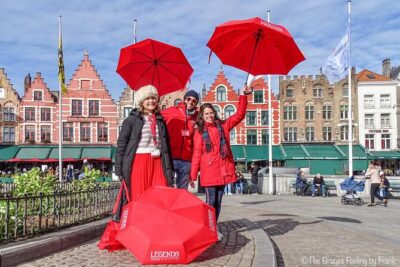
Imperial Palace and Shogun Historical Walking Tour
Read our review →Browse the lists this tour appears in