
REVIEW · BRUGES
2-Hour Historical Walking Tour in Bruges with Praline Included
Bruges gives you its best sights on foot, and this tour links them with the stories that make the city more than a pretty collection of canals. You move from Burg Square to the Markt, past the Belfry, medieval guild quarters, famous paintings, old breweries, and the photo-perfect Rosary Quay. The guide also explains why Belgian beer changed from gruut to hops and how medieval medicine helped inspire the praline.
I like the small maximum group of six, although some departures may be larger, and I like the way guides such as Peter and Joost mix solid history with jokes and useful food advice. The two-hour route is also a smart first look at Bruges, especially if you want to choose later which museum, church, or brewery deserves more of your time.
The main thing to know is the price: at $3.63, this is effectively a tip-based walk. You may pay very little up front, but you should expect to give the guide a fair tip at the end. Also, Bruges weather can change quickly, so bring rain protection.
Key points to know before you book
- A full old-town circuit in two hours: You see Burg Square twice, along with the Markt, Belfry, canals, churches, museums, brewery quarter, and medieval streets.
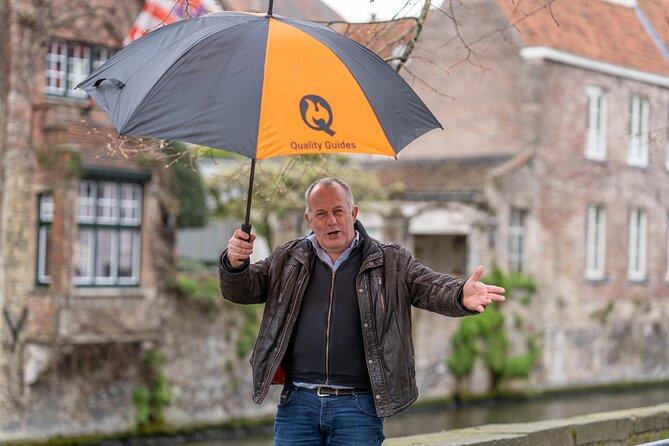
- Local guides with personality: Peter grew up in Bruges, while Joost is praised for clear explanations, humor, and strong local recommendations.
- The praline has a story: The chocolate stop connects medieval medicine with one of Belgium’s best-known treats.
- Excellent photo locations: Sint-Janskaai, Boniface Bridge, and Rosary Quay provide some of the city’s most memorable views.
- History beyond architecture: Expect stories about cloth merchants, wartime Bruges, tanners, the old red-light district, beer, plague, and the city’s swans.
- Very low entry price, tip expected: The advertised cost is $3.63 per person, but the guide’s income depends on tips.
Why this Bruges walk works as a first look
Bruges can feel almost too polished at first. Its canals, stepped roofs, and stone bridges are so photogenic that it is easy to see the city as a backdrop rather than a living place shaped by trade, war, religion, craft, and commerce.
This walk adds the missing links. You learn why Bruges became wealthy, how its cloth industry shaped the center, why the canals mattered, and how ordinary jobs such as tanning leather affected daily life. The guide also points out details you might walk past alone, including old entrances, narrow lanes, Gothic facades, and places connected with local customs.
The route covers many stops, but the pace is designed for a relaxed two hours. You pause for water, public toilets, photographs, and short explanations rather than marching from sight to sight. One guide kept the pace comfortable for older walkers, and another was happy to accommodate a family with a young child who needed to move around between stops.
You should still expect a fair amount of walking on city streets and cobbles. The tour requires a moderate level of fitness, though no museum admission is part of the route.
More History Walking Tours in Belgium
- Historical Walking Tour: Legends of Bruges
★ 5.0 · 2,541 reviews - Historical Walking Tour: The Story of Bruges – by Legends
★ 4.7 · 483 reviews - Bruges: Nightly Tales and Untold History Walking Tour
★ 4.9 · 154 reviews
From Burg Square to the Markt
The walk begins at Markt 4, beside Bruges’ central Markt. The route then introduces Burg Square, the place where the story of Bruges begins.
Burg is a useful opening because several styles and eras sit close together. The town hall, Blood Chapel, courthouse, and surrounding buildings help explain how civic and religious power worked in the city. The final return to Burg gives the tour a neat full circle, with the guide bringing together some of the stronger stories heard along the way.
From there, you see the Markt and its medieval buildings, including the old cloth halls and the Belfry. The square is one of Bruges’ main gathering places, but the guide helps you read it as an economic center rather than just a scenic plaza.
At the Belfry, the focus turns to the tower’s origins, its modern problems, and the wealth connected with cloth trading. You do not go inside as part of the walk, so anyone wanting the tower climb or interior visit will need to return independently. That is not a fault in a two-hour orientation tour, but it is worth remembering if the Belfry is a top priority.
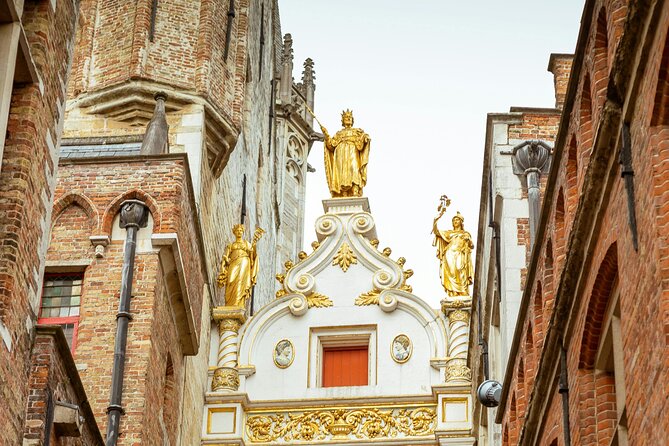
A stop at the Pro Patria arch shifts the story into more recent times. You hear about Belgian independence and Bruges during the First and Second World Wars. This keeps the tour from becoming a parade of medieval buildings only.
Gothic Bruges, Gruuthuse, and the beer story
The next section moves toward Gruuthuse. You see the Gothic gate and hear about the companies that run canal tours. The canal boats are not included, but the stop helps you decide if a separate ride would fit your plans.
At the Gruuthuse Museum, the guide uses the courtyard of the Gothic building to explain the wealth of its former resident. The subject is gruut, a medieval beer seasoning, and the later move from gruut to hops. It is a good example of the tour’s method: a grand building becomes a doorway into trade, brewing, regulation, and changing taste.
You then pass the Church of Our Lady and its museum. The church is associated with the Pietà and other valuable artworks. The route gives you context and a chance to note what you may want to see inside later, but admission is not included.
The church stop leads naturally to Saint John’s Hospital. Here the guide explains medieval medicine and connects it to the praline. A chocolate sample from the Guild of Bruges Chocolatiers is included when the relevant shop is open. That condition matters. Treat the praline as a pleasant extra, not a guarantee at every departure.
The chocolate is especially effective because it is tied to a story rather than handed over as a random snack. You get a taste of Belgian food culture while learning why a medical tradition helped lead to a famous sweet.
Canal views, De Halve Maan, and Bruges after dark
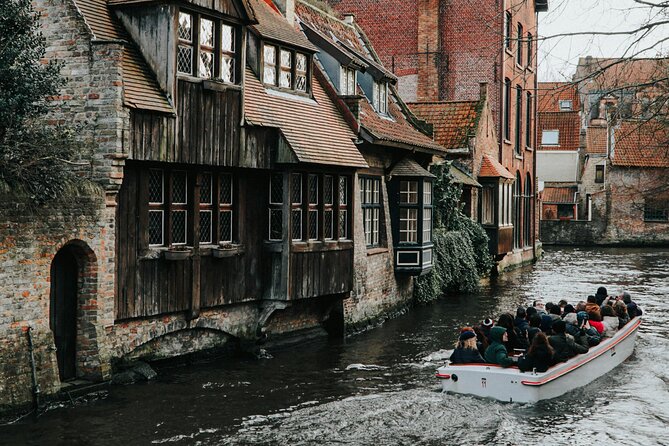
At Sint-Janskaai, you stop by the water for a photograph with the medieval buildings behind you. It is one of several moments when the route slows down and lets you enjoy the city rather than simply hear about it.
The walk continues to Walplein and Huisbrouwerij De Halve Maan. The brewery is famous for its pipeline beneath the city, a modern solution to the problem of moving beer through the historic center. You will not take a brewery tour as part of this experience, but the guide gives you enough background to make a later visit more meaningful.
Stoofstraat shows a less polished side of Bruges. The narrow lane is linked with the medieval red-light district and local customs. The guide also reveals the darker side of the city’s swans, which is a welcome change from the usual romantic canal talk.
At Katelijnestraat, you get the practical food section: chocolate, waffles, and fries. You also hear about plague and difficult periods in Bruges’ past. This is a useful place to ask for eating advice. Guides Peter and Joost are both praised for recommending places to eat and drink, and the route gives you a chance to ask before you wander off on your own.
Do not expect a formal food tour. You are not stopping for a full meal, and the included treat is limited to the praline when available. The value is in learning where local food fits into the city and getting suggestions for later.
More History Walking Tours in Bruges:
- Berlin: Third Reich & Cold War Guided Walking Tour
★ 4.9 · 8,378 reviews - Munich: Third Reich & WWII Walking Tour
★ 4.6 · 6,181 reviews - Berlin’s Best: 2 Hour Walking Tour Third Reich and the Cold War
★ 5.0 · 5,486 reviews - Third Reich Berlin: Hitler and WWII Walking Tour
★ 5.0 · 3,301 reviews
Boniface Bridge and the Flemish Primitives
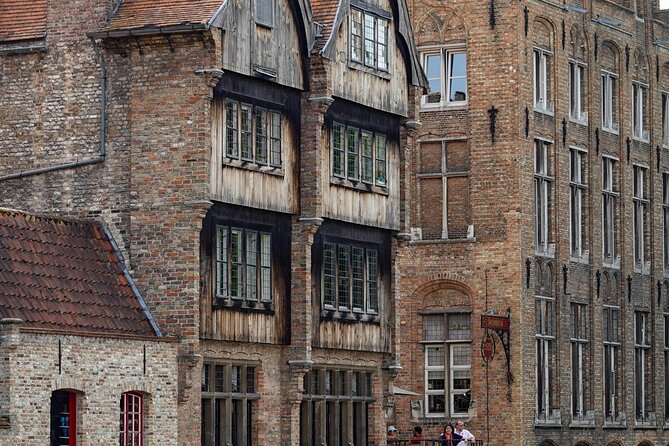
Boniface Bridge is one of the most picturesque points on the route. It is often presented as Bruges’ bridge of love, but the guide also adds some less sentimental details. That mix is typical of the tour: you get the pretty photograph, then the story that keeps it from becoming a postcard cliché.
The bridge sits among medieval gardens and old buildings, making it one of the best places to pause. If you want photographs, keep your camera ready. The route includes several short stops, but the bridge and Rosary Quay are the places where you may want a little extra time before moving on.
The Groeningemuseum introduces the Flemish Primitives, including Jan van Eyck, Hans Memling, Hugo van der Goes, and Gerard David. The guide explains why these fifteenth-century paintings matter and gives you enough background to recognize the names when you visit the museum later.
Again, the museum entrance is not part of the walk. That is useful if you have limited time, since you can make a quick decision: return for the paintings, or use your remaining hours elsewhere.
The route also passes the Dijver, described as Bruges’ oldest port. The stop connects the city to Viking trade and offers a view of a well-known terrace. It is a reminder that Bruges’ canals were working routes before they became a scenic feature.
The classic Bruges photograph at Rosary Quay
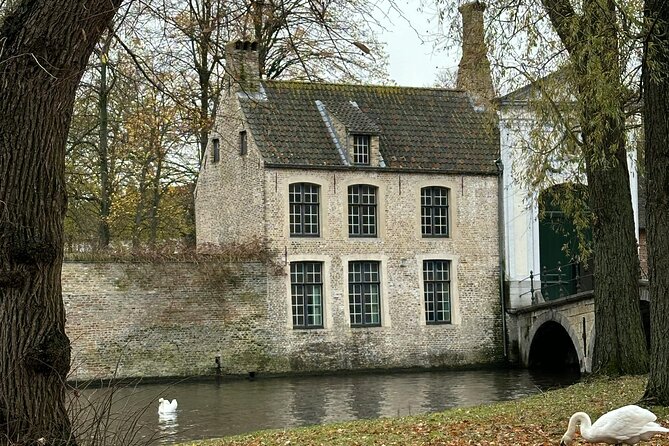
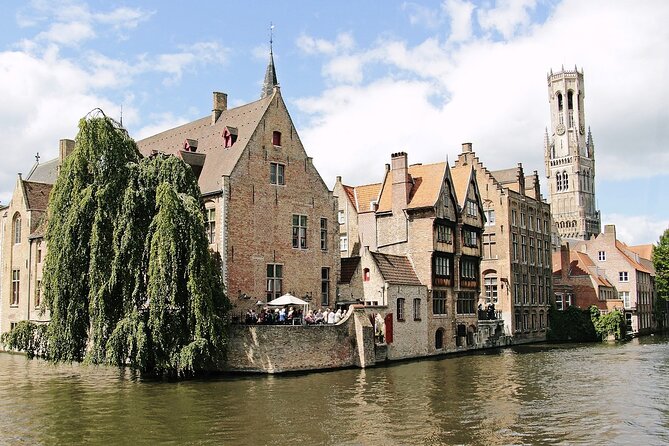
Rosary Quay is likely to be the visual high point. From here, you can frame the Belfry and Church of Our Lady together, with the water and old buildings completing the scene.
The location is also linked with the film In Bruges. The guide points out the hotel from which Colin Farrell’s character jumped in the movie. Even if you have not seen the film, the setting is memorable. If you have, this stop adds a small piece of film history to the architectural view.
This is a good reason to take the tour early in your stay. You can mark the places where you want to return at a quieter time, perhaps for photographs or a drink by the canal. The walk gives you the city’s geography quickly, which is helpful because the center can seem confusing when every street looks old and attractive.
Tanners, fish markets, and the return to Burg
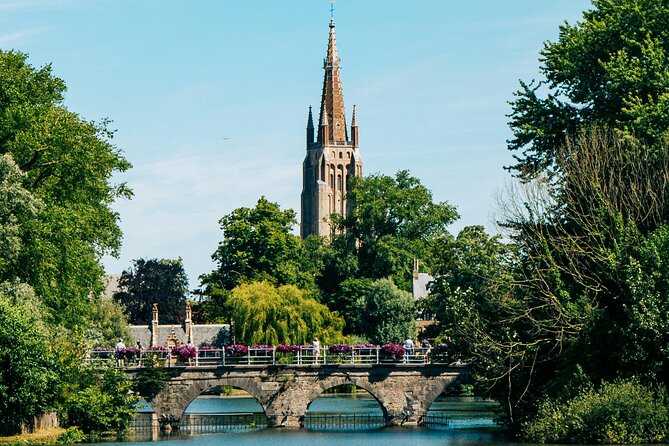
At Huidenvettersplein, the subject turns to medieval tanners. Leather work was essential, but it was dirty and foul-smelling. The square, once one of the least hygienic areas in Bruges, now serves as a place to eat and drink.
This contrast is one of the strongest parts of the route. Bruges is not presented as a spotless medieval fantasy. You hear about the smells, waste, working trades, and practical problems that sat behind the attractive facades.
Vismarkt adds another layer. The two fish markets were once associated with different types of customers, reflecting old ideas about social class. The square also leads toward the central part of Bruges, where Gothic, Renaissance, and Classical styles meet.
The tour then returns to Burg Square. The town hall, Blood Chapel, and courthouse provide a final chance to compare the city’s religious, civic, and legal buildings. Because the tour began here, the ending feels organized rather than abrupt.
Price, group size, and the tip question

At $3.63 per person, the upfront cost is unusually low for a two-hour city walk. That makes the tour a strong value if you want orientation, local stories, and a list of places to revisit without committing to an expensive private guide.
But you should not read $3.63 as the complete cost of the experience. The tour operates on a tip-based model, so plan to tip the guide at the end. One booking note specifically points out that the guide cannot sustain the walk on the small booking fee alone. If you prefer to pay a fixed price in advance, this arrangement may feel less comfortable.
The maximum listed group size is six, which would allow easy questions and good contact with the guide. Some departures can be larger, but the guide’s ability to keep people together and audible has been praised even with a bigger group.
The tour is offered in English and uses a mobile ticket. It begins and ends at the same meeting point, with public transportation nearby. You receive confirmation at booking, and free cancellation is available up to 24 hours before the start time. Changes or cancellations inside that window are not refundable.
Who will get the most from this walk
I would choose this tour if you are visiting Bruges for the first time, staying only a day or two, or arriving from a cruise and need a fast sense of direction. It also suits solo visitors, couples, families, and older walkers who prefer a gentle pace with regular pauses.
You will get the most from it if you enjoy stories as much as monuments. The guide may move from beer ingredients to wartime Bruges, from medieval medicine to chocolate, and from tanners to swans. The humor keeps the information moving, while the route gives you a practical map of the center.
It is less suitable if you want long visits inside museums, a Belfry climb, a brewery tasting, or a food-focused tour. Those are separate activities. This walk gives you the outside view, the context, and the advice to plan them well.
Should you book it?
Yes, if you want a lively overview of Bruges at a very low upfront price and you are comfortable with a tip-based format. Peter and Joost bring local connection, clear English, humor, and useful restaurant advice, while the route covers nearly every major old-town sight in two hours.
Book it early in your stay so you can return to the places that catch your attention. Leave room in your budget for a fair tip, wear comfortable shoes, and carry rain protection. If the praline shop is open, enjoy the chocolate, but book this walk for the stories and city orientation first.
FAQ
Where does the Bruges walking tour begin?
The tour begins at Markt 4, 8000 Brugge, Belgium.
Where does the tour end?
The activity ends back at the meeting point.
How long does the tour last?
The walk lasts approximately two hours.
Is the tour offered in English?
Yes. The experience is offered in English.
Is a praline included?
A praline made by the Guild of Bruges Chocolatiers is included when the relevant shop is open. If the shop is closed, the praline is not available.
Does the tour enter the museums or climb the Belfry?
The route stops at places including the Belfry, Gruuthuse Museum, Church of Our Lady, Saint John’s Hospital, and Groeningemuseum, but admission tickets are not included.
Can I cancel for a refund?
Yes. You can cancel at least 24 hours before the local start time for a full refund. Cancellations or changes made less than 24 hours before the start time are not accepted for a refund.
More Two-Hour Tours in Bruges
- Bruges Private 2-Hour Walking Tour
★ 4.7 · 296 reviews - Budapest City Landmarks Walking Tour in 2 Hours
★ 5.0 · 2,048 reviews - Leipzig: 2-Hour Guided Walking Tour in German
★ 4.8 · 1,612 reviews - Lucca: 2-Hour City Center Walking Tour
★ 4.7 · 1,314 reviews
Just added around Bruges
- Walking tour of Bruges with boat option and/or beer tasting★ 4.0 · 416 reviews
- Bruges at Night: Murder, Mystery & Dark Stories Small Group Walk★ 5.0 · 137 reviews
- Bruges by a Local: Exciting Stories, Mysteries, People and Choco★ 4.5 · 82 reviews
- Bruges Private 2-Hour Walking Tour★ 4.7 · 296 reviews
- Historical Walking Tour: The Story of Bruges – by Legends★ 4.7 · 483 reviews
- Bruges: Private Historical Highlights Walking Tour★ 4.7 · 191 reviews
- Bruges: Nightly Tales and Untold History Walking Tour★ 4.9 · 154 reviews
- Bruges: Guided Walking Tour★ 4.5 · 682 reviews
History Walking Tours, compared.

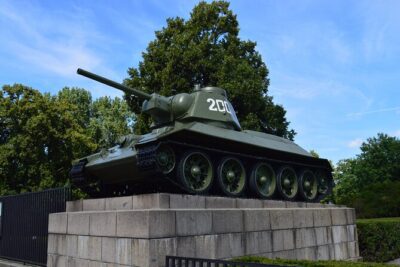
Berlin’s Best: 2 Hour Walking Tour Third Reich and the Cold War
Read our review →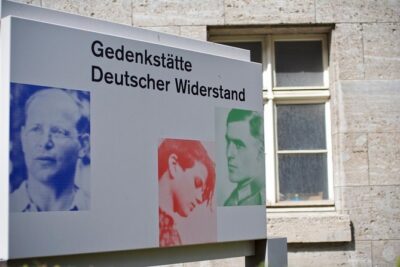
Third Reich Berlin: Hitler and WWII Walking Tour
Read our review →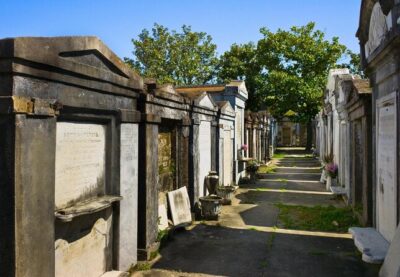
New Orleans Garden District History Walking Tour
Read our review →
Cartagena: Historic Center and Getsemaní Shared Walking Tour
Read our review →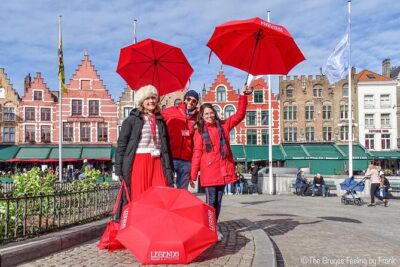
Imperial Palace and Shogun Historical Walking Tour
Read our review →Browse the lists this tour appears in