
REVIEW · BARCELONA
Barcelona: Gothic Quarter Walking Tour
Barcelona’s oldest streets hold more surprises than a grand avenue ever could. This German-language walk takes you from Plaça de Catalunya through the Gothic Quarter and into the Ribera, tracing Roman water systems, medieval power struggles, Jewish heritage, the Inquisition, the Spanish Civil War, and the legends of Santa Maria del Mar.
I like the small-group format, priced at $212 for up to four people, because it gives you room to ask questions and set the pace. I also like the practical side: guides such as Johannes have supplied restaurant, shopping, and local-food advice that you can use during the rest of your stay. The main consideration is that this is primarily an outdoor history walk, not an interior tour, and three and a half hours on old streets can feel tiring.
Key points to know before booking
- Roman to modern Barcelona: The story runs from Roman luxury and medieval rule to the Spanish Civil War and today’s port city.
- German-language guiding: The tour is conducted in German, with guides able to add photos and practical city tips.
- A relaxed old-city route: You walk through narrow lanes and squares, with time for pictures and bathroom stops.
- Exterior sightseeing first: Most churches, palaces, and monuments are viewed from outside, with only a few exceptions.
- A thoughtful route between districts: The walk begins at Plaça de Catalunya and finishes near Passeig del Born, close to the Ribera Quarter.
- Weather is part of the deal: The tour runs in sun, rain, and wind, so shoes, water, and suitable clothing matter.
Starting at Plaça de Catalunya
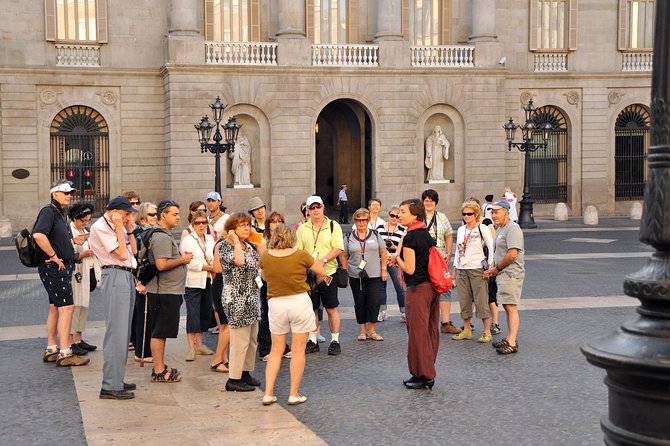
Meet in front of the Hotel Olivia Plaza at Plaça de Catalunya, 19. This is a useful starting point because the square sits between modern Barcelona and the old city, making it easy to see the change in street pattern as you head toward the Gothic Quarter.
The opening portion sets up Barcelona as more than a collection of old stones. You get the Roman beginning, the medieval city, and the modern port in one long story. That wider frame matters. The Gothic Quarter can otherwise feel like a maze of attractive lanes with no clear connection between them.
The guide’s job here is to help you read the city. A fountain, wall fragment, square, or church facade may look ordinary at first. With the right explanation, it becomes evidence of how Barcelona grew, fought, traded, worshiped, and rebuilt itself.
The meeting point is easy to identify, but arrive ready to walk. The route is not a fast march, yet the time adds up. Wear comfortable shoes and bring water, especially in summer.
A few more walking tours around Barcelona worth a look
- Barcelona Tapas and Wine Experience Small-Group Walking Tour
★ 5.0 · 5,804 reviews - Barcelona: Tapas Walking Tour with Food, Wine, and History
★ 4.8 · 4,261 reviews - Barcelona: Food Walking Tour with Tapas and Wine
★ 4.9 · 2,180 reviews
Roman water and early Barcelona
The Roman section includes the story of flowing water serving a convalescent colony. That detail gives the ancient city a human scale. Instead of treating Roman Barcelona as a list of dates and ruins, the tour looks at how people lived and what made the settlement worth building.
You may find that this is one of the most useful parts of the walk for understanding the streets ahead. Roman planning helped shape the old center, even though later buildings and renovations have changed the view. The guide connects surviving traces with the city that came after them.
The tour also asks how a holy city gained competition and how Barcelona began to develop its own political identity. These are not isolated tales. They lead into the rise of Catalonia, the Crown of Aragon, and Barcelona’s growth from a small city into a maritime force.
I appreciate this approach because it avoids presenting the Middle Ages as a costume show. The city’s power came from trade, government, religion, and conflict. Those forces still show up in the buildings and public spaces you pass.
Narrow lanes and medieval squares
Once you enter the Gothic Quarter, expect winding alleyways, compact squares, and frequent changes in mood. One moment you may be in a quiet corner with old stone walls. A few steps later, the city feels much more active, with shops, restaurants, and people moving through the same streets.
The guide discusses medieval institutions and the Crown of Aragon, including the shift from a small city to a major maritime power. You also hear about the Council of the Hundred and the general public being addressed directly, a reminder that local government was not just a matter for kings and nobles.
King Martin’s death becomes another turning point. The story helps explain how Barcelona’s tradition of shared political power began to weaken. This sort of detail is especially useful if you want more than pretty architecture. The old city becomes a place where decisions had consequences, and where power changed hands in ways that were sometimes violent.
The route includes plenty of pauses. You can stop for photographs, listen without rushing, and take a bathroom break when needed. That relaxed pace is welcome in the Gothic Quarter, where rushing means missing the small details that make the walk worthwhile.
The Jewish Quarter and a lost community
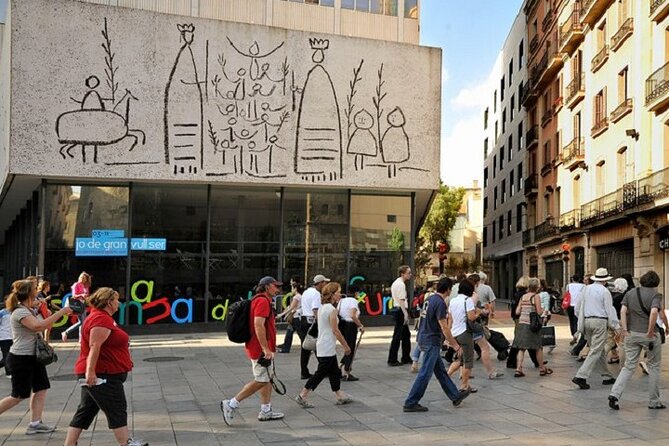
The Jewish Quarter gives the route a more serious tone. Here, the focus shifts to the remains of a community that once formed an important part of Barcelona’s urban life.
The emphasis is not only on what remains, but also on what disappeared. Narrow streets and fragments of the old district suggest a world that was later damaged, displaced, and largely erased. You are encouraged to look carefully because the evidence may not announce itself with a large monument.
The tour also covers the Inquisition and the dangers of careless praise. This section is a reminder that religious authority and political power could reach into ordinary life. It also adds balance to the romance of old stone lanes. Barcelona’s past includes beauty, invention, and trade, but it includes fear and exclusion as well.
For me, this is one of the strongest reasons to choose a guided walk rather than wander alone. A map can show you where the Jewish Quarter is. It cannot easily explain the human cost of its disappearance.
Same streets, a different route:
- Barcelona Tapas Walking Tour: Food, Wine & History
★ 4.5 · 1,928 reviews - Barcelona Helicopter, Sailboat & Old Town Private Walking Tour
★ 5.0 · 1,395 reviews - Barcelona: Old Town and Gothic Quarter Walking Tour
★ 4.8 · 1,393 reviews - Barcelona: City Walking Tour with a Local Guide
★ 4.9 · 1,384 reviews
Dragons, legends, and darker stories
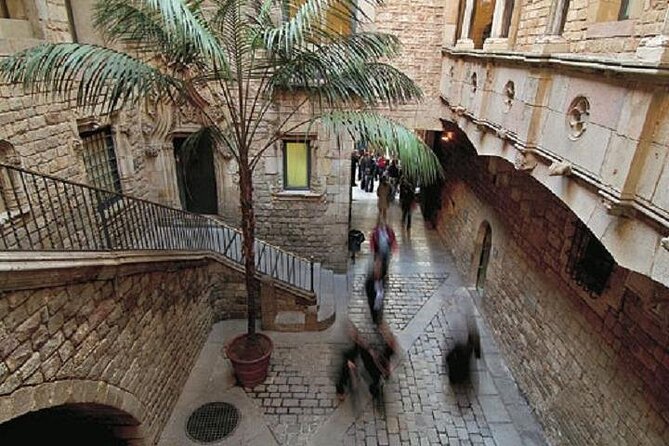
Barcelona’s dragon traditions appear during the walk, along with stories such as the young girl in the pines and the French soldier’s bayonet. These episodes add the local legends and strange details that keep a long history walk from becoming a lecture.
There is also a slightly spooky brotherhood to hear about. The subject matter can turn from political history to folklore, then back to hard facts. That variety suits Barcelona, where religious traditions, street legends, and public memory often overlap.
You will need to decide how much weight you give each tale. Some parts of the route deal with documented political events. Other parts belong more to the city’s storytelling tradition. A good guide makes the difference by showing where a legend fits into the larger story instead of presenting every old tale as plain fact.
The experience is designed to appeal to all five senses. That means paying attention to the sound of the lanes, the smell of food from nearby businesses, the feel of old stone, and the changing light in the squares. It remains a history tour, but it does not treat the city like a sealed museum.
Gothic buildings that moved stone by stone
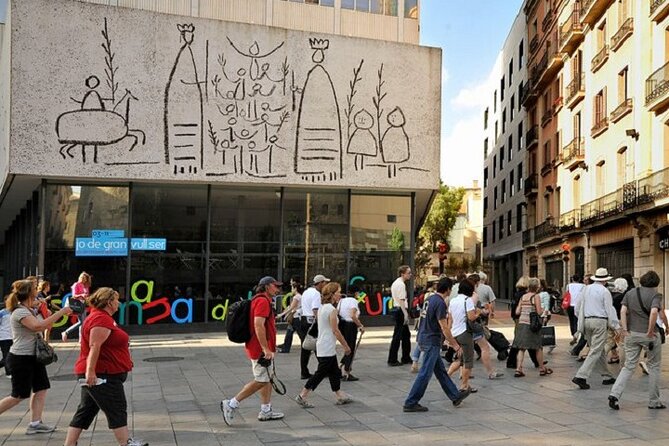
One of the more unusual subjects is the idea of a Gothic theme park, where houses could be moved stone by stone. This helps explain why parts of Barcelona can look older and more unified than their actual building history suggests.
The point is not to spoil the atmosphere. It is to make you look more closely. Old-looking architecture can have a complicated past, and the Gothic Quarter has been shaped by restoration, reconstruction, and changing ideas about what medieval Barcelona should look like.
That is a useful lesson for anyone taking photographs. The old center is atmospheric, but it is not a perfectly preserved medieval town. The tour gives you a way to enjoy the scenery without accepting every visual impression at face value.
You will also hear about the egg dance, a local tradition that adds a lighter moment to the route. Small customs like this give the city a living quality. They show that Barcelona’s old spaces are not only backdrops for history. They still host rituals and public life.
Royal power and the Columbus story
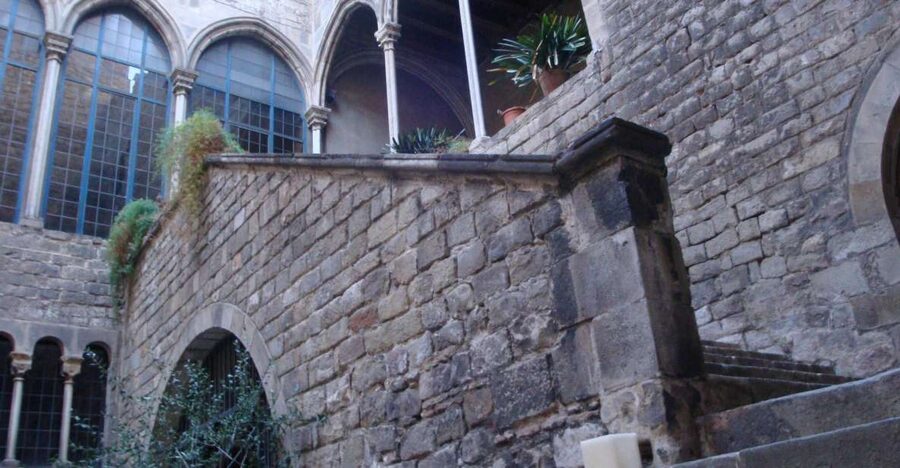
The royal palace section brings the discussion back to the ruling elite. King Fernando’s fears and his failure to receive Columbus at home provide an entertaining way into questions about monarchy, ceremony, and political tension.
You view the palace from the outside rather than entering as part of the standard route. That is important to understand before booking. The guide can explain what happened there and show you the setting, but you should not expect a museum visit or a long look inside the royal rooms.
This outdoor format keeps the group moving through more of the district, but it also means the experience depends heavily on the guide’s storytelling. If you want detailed interior architecture, plan a separate palace visit.
The tour’s value comes from linking buildings to events. A facade becomes more memorable when you know which king, fear, argument, or public ceremony is attached to it.
Santa Maria del Mar and the Ribera Quarter
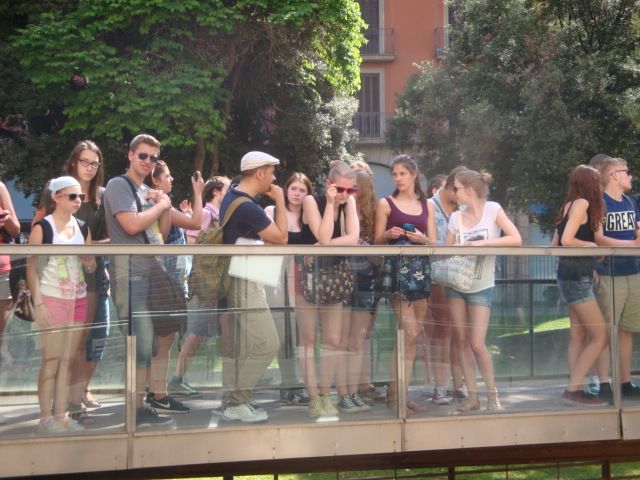
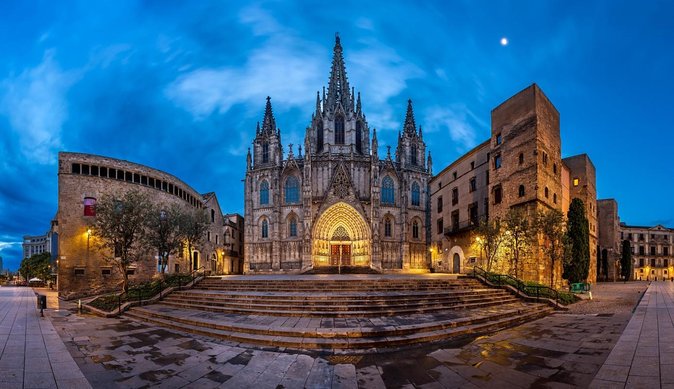
The route continues toward Santa Maria del Mar, one of the key landmarks in the Ribera Quarter. The church is presented as a collaborative project, with legends and local heroes tied to its construction and place in the city.
This is an excellent match for the walking format. Santa Maria del Mar makes sense when you see it in relation to the working district around it, rather than treating it as a single isolated monument. The story connects the church to cooperation, labor, faith, and the people who helped build Barcelona’s commercial strength.
Again, the standard experience focuses on the exterior. If you want to see the interior, check the church’s own visiting arrangements and allow separate time. The walking tour gives you context, but it does not replace an independent interior visit.
The end of the route brings in the mulberry grave, the vengeance of the Bourbon kings, and the fate of a general’s head. These are difficult and memorable stories about repression after political change. They add a sharp final note to the route and show how public memory can survive through names, sites, and local storytelling.
The finish is at Passeig del Born, 22. That location is practical because you end in the Ribera area rather than being returned to the original starting point. You can continue exploring, stop for food, or use the area as a base for another Barcelona sight.
The Civil War, romance, and a modern port
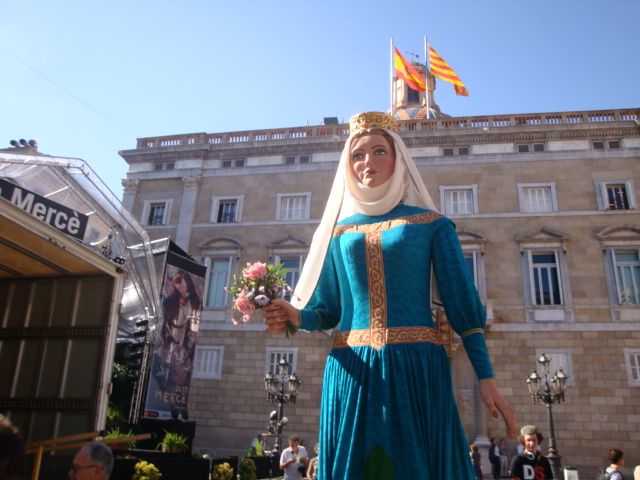
The tour also includes a romantic place marked by the scars of the Spanish Civil War. This pairing is very Barcelona: beauty and damage often sit close together.
You do not get only a polished version of the city. The route recognizes that old buildings and pleasant squares can carry memories of violence, loss, and political conflict. That makes the experience more useful than a simple photo walk.
At the same time, the guide brings the story back to Barcelona today. The city is described as a changing Mediterranean port, not a musty museum. Old streets still carry daily life, and new businesses operate beside walls that have seen centuries of upheaval.
I like that balance. You get the romance of lantern-lit lanes and small squares, but you also learn to notice the working city around them.
What the $212 group price really buys
The listed price is $212 for a group of up to four people. That works out to $53 per person if you fill all four places, before considering any separate admission costs.
For a private group, the price can make sense if you value a German-speaking guide who can adjust the pace, answer personal questions, and offer advice for the rest of your stay. The ability to pause for photos, ask about restaurants, or revisit a subject is more useful in a small group than in a large crowd.
The value is lower if you mainly want to enter churches, museums, and palaces. Interior visits and entry fees are not included, so you would need to budget for those separately and plan additional visits.
The strong rating of 4.9 from 383 bookings points to a consistently well-received experience, and the written feedback highlights the same strengths I would look for: clear structure, extra visual material, personal attention, and practical advice. One note is worth taking seriously: three and a half hours can feel strenuous, even at a relaxed pace.
German guiding and practical city advice
This experience is conducted in German. That makes it a clear choice for German-speaking visitors who want history explained naturally rather than translated in their heads.
Guide Johannes has been praised for adapting to personal needs, keeping the route interesting, and offering useful suggestions for the days that follow. Another strong feature is the use of additional photos, which can help you understand how places looked in earlier periods or how events relate to the buildings in front of you.
The food and shopping advice is a welcome extra. It is not a separate tasting tour, and you should not expect included meals. Instead, the guide can point you toward local specialties, restaurants, and useful places to shop.
That practical information can improve the rest of your Barcelona visit, especially if this is your first day in the city. You get historical orientation, then a list of ideas to test on your own.
Weather, clothing, and accessibility
The tour runs in sun, rain, and wind, including strong showers. In summer, bring a hat, sunglasses, sunscreen, and a small bottle of water. In winter, a jacket or thin coat should be enough according to the supplied guidance, but the weather can still change.
The route uses streets and squares rather than relying on indoor shelter. Comfortable shoes are essential, and you should plan for a long period on your feet. The pace is relaxed, but the duration is still substantial.
The activity is listed as wheelchair accessible. If you need specific route assistance, it is sensible to confirm details when booking because old-city lanes and historic public spaces can vary in surface and width.
For a cloister visit, wear clothing that reaches at least the knees and covers the shoulders. This is a small detail, but it can prevent an awkward interruption.
Who should book this walk?
I would choose this tour if you want a serious introduction to Barcelona’s old center, prefer German guiding, and like history connected to real streets rather than presented only in a museum.
It suits couples, families, and small groups of friends who want a private experience and can make full use of the four-person price. It also works well early in a Barcelona stay because the route ends in the Ribera Quarter and the guide can offer useful ideas for restaurants, shopping, and local specialties.
You should think twice if your main goal is indoor art, church interiors, or a short sightseeing loop. This is a long outdoor walk with many historical subjects, and the amount of information may feel heavy if you want only a quick orientation.
Should you book the Barcelona Gothic Quarter Walking Tour?
Book it if you want the Gothic Quarter explained through Roman remains, medieval politics, Jewish heritage, royal power, local legends, Santa Maria del Mar, and the wounds of the Spanish Civil War. The German-language format, small-group setting, practical tips, and relaxed pace add real value.
Skip it if you need extensive interior access or do not want to spend three and a half hours walking. For the right audience, though, this is a thoughtful way to see Barcelona’s oldest neighborhoods as living streets, not just attractive scenery.
FAQ
Where does the Barcelona Gothic Quarter Walking Tour begin?
It begins in front of the Hotel Olivia Plaza at Plaça de Catalunya, 19, 08002 Barcelona.
Where does the tour finish?
The tour finishes at Passeig del Born, 22, 08003 Barcelona.
How long does the walking tour last?
The activity lasts 3.5 hours. The guided old-city tour is described as lasting about three hours, with the full walking and sightseeing schedule taking roughly 3.25 to 3.5 hours.
What language is the tour conducted in?
The live tour guide speaks German.
Is this a private tour?
The activity is listed as a private group experience and is priced at $212 for a group of up to four people.
Are interior visits and entry fees included?
No. Interior visits and entry fees are not included. Monuments are generally viewed from the outside, with a couple of exceptions.
Does the tour operate in bad weather?
Yes. The tour runs in sun, rain, and wind, including strong showers. You should bring suitable clothing, sun protection in summer, and water.
Is the tour wheelchair accessible?
Yes. The activity is listed as wheelchair accessible.
Just added around Barcelona
- Barcelona Walk Like a Local: El Born & Gothic 15+ Sights★ 4.9 · 88 reviews
- Barcelona: Gothic Quarter Walking Tour w/ Montjuïc Cable Car★ 4.4 · 90 reviews
- Barcelona: Ramblas, Old Town & Gaudí Houses Walking Tour★ 4.9 · 239 reviews
- Barcelona: Old Town Private Walking Tour of Past and Present★ 5.0 · 160 reviews
- Barcelona: Private Walking Tour with a Local★ 4.5 · 202 reviews
- Barcelona: Jewish Quarter 2-Hour Walking Tour★ 4.8 · 333 reviews
- Barcelona: Picasso Walking Tour with Picasso Museum Tickets★ 3.5 · 93 reviews
- Barcelona: Gothic Quarter Walking Tour with 10+ Attractions★ 5.0 · 369 reviews
Walking Tours, compared.

Magical London: Harry Potter Guided Walking Tour
Read our review →
Reykjavik Food Walk – Local Foodie Adventure in Iceland
Read our review →
History and Hauntings of Salem Guided Walking Tour
Read our review →
New Orleans Premier Ghost, Voodoo and Vampire Walking Tour
Read our review →
Amsterdam Anne Frank: Small-Group Walking Tour & Local Guide
Read our review →

Edinburgh Castle: Guided Walking Tour with Entry Ticket
Read our review →
Anne Frank’s Story – Guided Walking Tour through Amsterdam
Read our review →Browse the lists this tour appears in