
REVIEW · ATHENS
Athens: History of Rebellion Walking Tour
Athens has plenty of tours about temples and philosophers. This one asks a different question: how did ordinary people resist Ottoman rule, fascism, police violence, oppression, and social injustice? In 2.5 hours, you walk from Monastiraki to Exarchia, linking famous squares with the less familiar political story of modern Greece.
I like two things especially. First, guide Maelle puts events in a clear order, so the last 200 years of Greek history do not feel like a pile of disconnected dates. Second, the tour treats Exarchia as a living neighborhood rather than a photo stop, discussing anarchists, refugees, artists, LGBT+ people, police repression, and gentrification with care.
The main consideration is the subject matter. This is a walking tour about politics, conflict, and social justice, not a light sightseeing stroll. You will also spend two to three hours walking and standing, and the route is not suitable for people with mobility impairments.
Key points at a glance
- Start in Monastiraki: Meet in front of Pantanassa Church in Monastiraki Square, where your guide holds an Athens City of Rebellion sign.
- Modern Greece takes center stage: The route connects Ottoman rule, the Greek Revolution, fascism, popular protest, and current social movements.
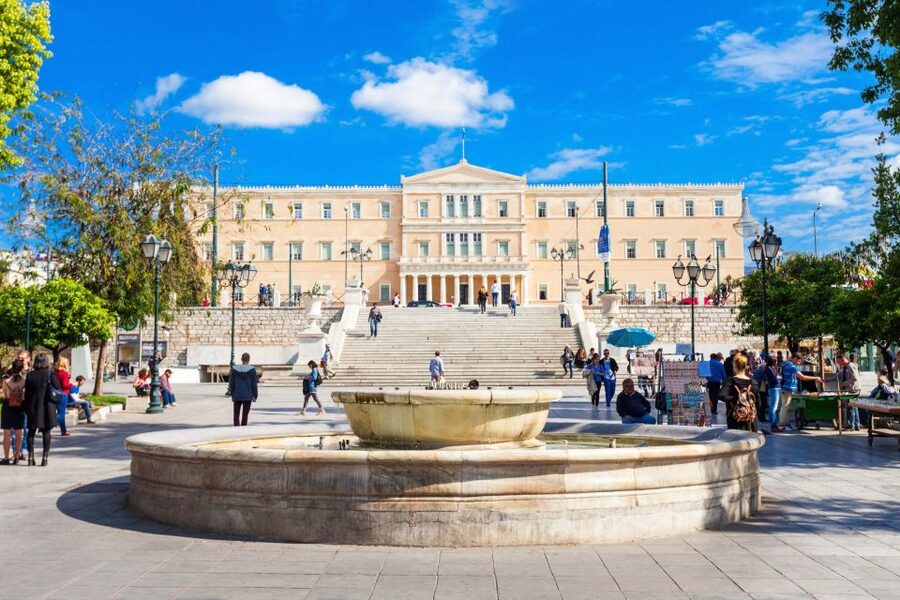
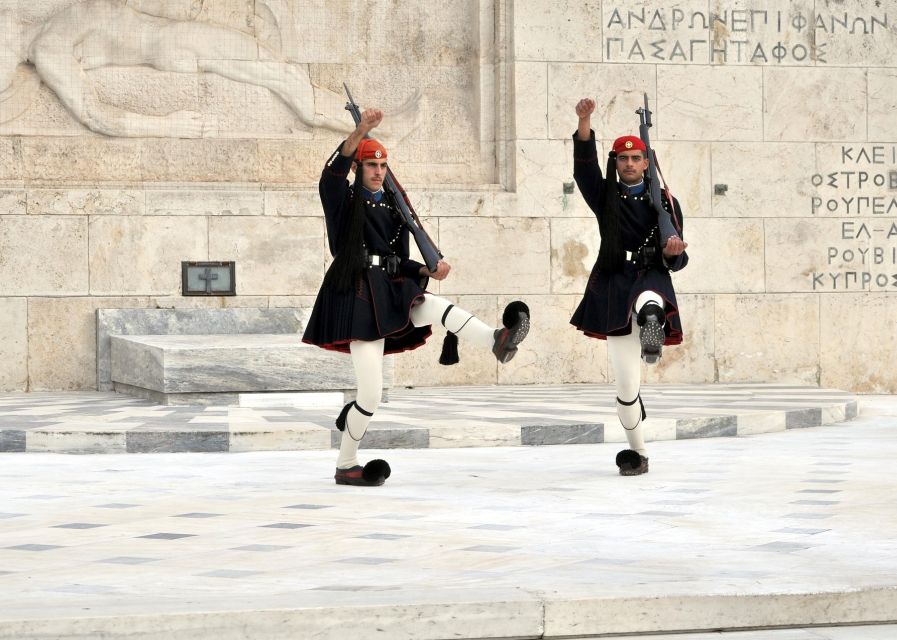
- Syntagma gets a political reading: The Parliament, the Tomb of the Unknown Soldier, and the square become more than standard sightseeing stops.
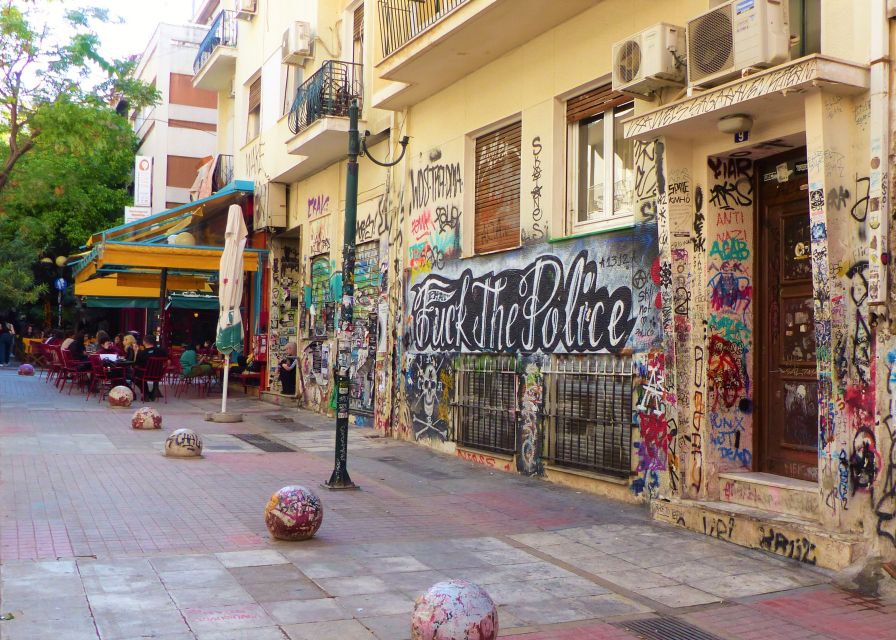
- Exarchia is the main event: Learn why this neighborhood became associated with activism, collective action, street art, and resistance.
- Maelle leads the experience: Her approach combines historical explanation, humor, personal insight, and discussion.
- Useful local advice comes free: Maelle also gives tips on food, shopping, sights, and places to visit in Athens and the Greek islands.
Why this tour shows a different Athens
The ancient city is impossible to ignore, and you should not try. But if you spend all your time with the Acropolis and classical monuments, you can miss the Athens shaped by occupation, military rule, protest, migration, and neighborhood politics.
This tour fills that gap. It begins with the period when Athens was under Ottoman control and follows the resistance that helped lead to the Greek Revolution about 200 years ago. From there, the story moves through the modern Greek state and into the streets where people still argue over freedom, authority, housing, policing, and public space.
I appreciate that the tour does not treat rebellion as a museum topic. You are asked to think about who gets remembered, whose stories are left out, and how political ideals affect daily life. That makes the walk useful even if you know little about Greek politics. If you already follow political movements or social justice issues, you will have plenty to discuss.
The approach is clearly sympathetic to resistance movements, both past and present. That is part of the point, but it also means the tour is not designed as a detached survey of every political position. You should book it because you want to understand this side of Athens, not because you want a neutral list of monuments and dates.
A few more walking tours around Athens worth a look
- Athens: Acropolis and Parthenon Guided Walking Tour
★ 4.6 · 5,882 reviews - Acropolis and Parthenon Guided Walking Tour
★ 5.0 · 4,755 reviews - Greek Food Walking Tour in Athens
★ 5.0 · 4,740 reviews
Monastiraki and the first stories of resistance
Meet in Monastiraki Square, in front of Pantanassa Church. Look for a guide holding an Athens City of Rebellion sign. Monastiraki is an easy starting point in central Athens, but the tour quickly asks you to look beyond the market stalls and busy streets.
The opening section places Athens under Ottoman rule and explains the resistance that helped fuel the Greek Revolution. This gives the tour an important foundation. Modern protests can seem sudden if you do not know how ideas of freedom, national identity, and opposition to authority developed over time.
You spend only about five minutes on the formal Monastiraki stop, so do not expect a long architectural study of the square. The value is the historical frame. You are setting out from one of Athens’ most familiar public spaces and learning to read it through power and resistance.
The Metropolitan Church of Athens is passed rather than visited inside. That keeps the group moving, though visitors wanting a detailed account of the church will not get one here. The focus stays on the wider story, not on religious architecture.
From the old city to Syntagma Square
As the route heads toward Syntagma, Maelle introduces people who became symbols of resistance and explains how large popular movements confronted fascism, violence, and oppression. The tour is strongest when it connects individuals with crowds. You hear about the heroic acts that become legends, but also about the less tidy work of mass action.
A tucked-away stop along the way adds variety. The itinerary includes several brief pauses of five to ten minutes, so the walk is not built around long lectures at one monument. Instead, you move through the city while the story develops around you.
That rhythm suits Athens. A political story can feel abstract in a room, but it becomes easier to grasp when you are standing in the public spaces where people gather, march, confront officials, and demand change. You are not simply looking at a square. You are considering what a square allows people to do.
Syntagma Square is the heart of modern protest in this tour. The stop lasts about ten minutes, enough for Maelle to explain its role and connect past struggles with more recent events. The square can be crowded and noisy, so you should expect an urban setting rather than a quiet teaching space.
Parliament and the Tomb of the Unknown Soldier
The Hellenic Parliament receives a separate stop, followed by the Tomb of the Unknown Soldier. These are familiar sights on many Athens itineraries, but the political lens changes their meaning.
The Parliament is not treated only as a grand neoclassical building. It represents the state and the institutions that protest movements challenge, defend, or try to change. The Tomb of the Unknown Soldier adds another layer, linking public memory, national identity, and the people whose sacrifices are used to tell a national story.
The scheduled time at the Tomb is short, about five minutes. That is enough for context and observation, but not for a long military or architectural presentation. If you want to see the changing of the guards in detail, this tour does not promise that as a central feature.
The route then passes through Kolonaki. This shift in neighborhood character helps you see Athens as a city of contrasts. Within a short walk, the tour moves from state power and public ceremony toward institutions, education, art, and activist neighborhoods.
Same streets, a different route:
- Acropolis: Acropolis and Parthenon Guided Walking Tour
★ 4.7 · 3,442 reviews - Athens: Guided Greek Food Walking Tour with Tastings
★ 4.9 · 2,859 reviews - Acropolis monuments & Parthenon Walking Tour with Optional Acropolis Museum
★ 5.0 · 2,678 reviews - Athens Acropolis and Parthenon Walking Tour
★ 4.5 · 1,355 reviews
The Academy of Athens and the ideas behind the city
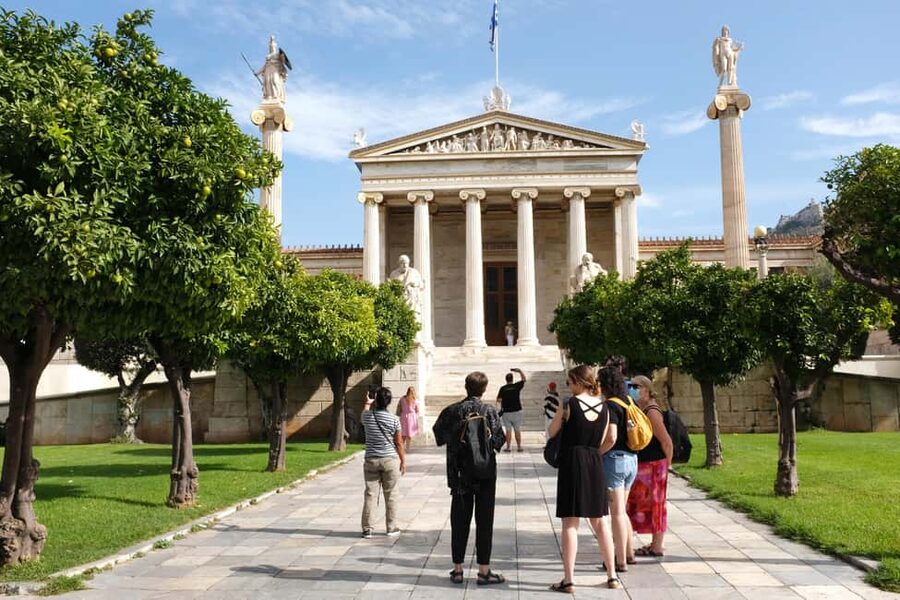
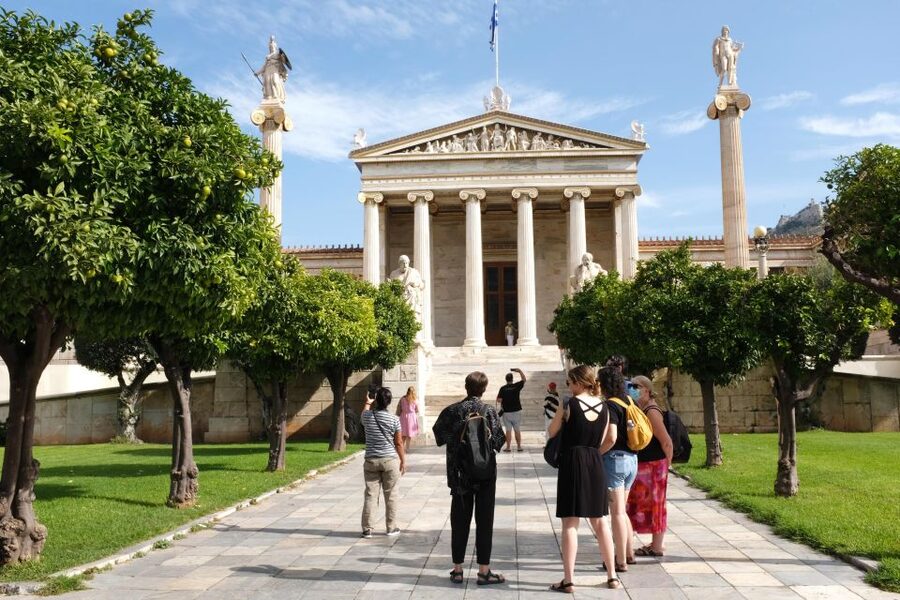
The Academy of Athens is another major stop, with about ten minutes for sightseeing and explanation. Here, the tour can connect national ideals, education, culture, and the way Greece presents itself to the world.
I like this part because it prevents the route from becoming only a story of confrontation. Rebellion does not happen in a vacuum. It grows from arguments about citizenship, knowledge, identity, and the kind of society people want to build.
The Academy is also a useful reminder that Athens contains several versions of itself at once. There is the classical image presented to visitors, the official image represented by state institutions, and the everyday city shaped by residents and social movements. This tour keeps shifting between those versions.
The stops are brief, so you will not receive a full architectural tour of the Academy. Think of it as a significant setting in the larger story rather than a stand-alone monument visit.
Entering Exarchia, Athens’ center of activism

The final section takes you into Exarchia, the part of the walk most closely tied to the tour’s theme. The neighborhood is presented as a home for anarchists, refugees, LGBT+ people, artists, and people organizing around social justice.
Exarchia is not reduced to a label. Maelle explains how its political identity developed and why the area matters to people who want a different kind of community. The discussion includes police repression and the pressure of gentrification, as well as the collective and creative life that continues in the neighborhood.
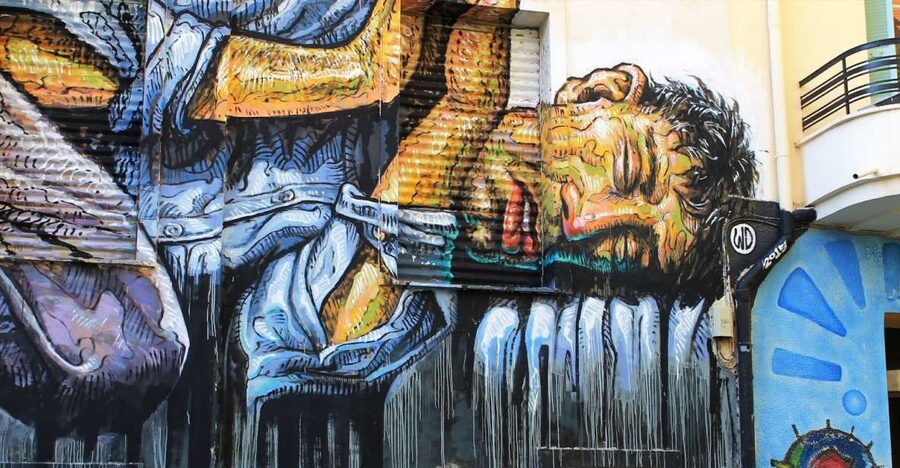
You will see street art and receive context for the images and messages around you. One particularly useful feature is the invitation to think critically about public art rather than treating every painted wall as decoration. The tour connects visual culture with politics, memory, and neighborhood identity.
This part requires some sensitivity. Exarchia is a real residential neighborhood, not a stage set. The guide’s role is to help you understand its struggles without turning people’s lives into an exhibit. That respectful approach is important, especially when discussing refugees, marginalized communities, and political conflict.
The route includes a secret stop, another tucked-away location, and Exarchion Square. These shorter stops give the final section a sense of discovery, but the precise details are not provided in advance. That is useful if you want a route that goes beyond the standard Athens checklist.
What Maelle adds to the walk
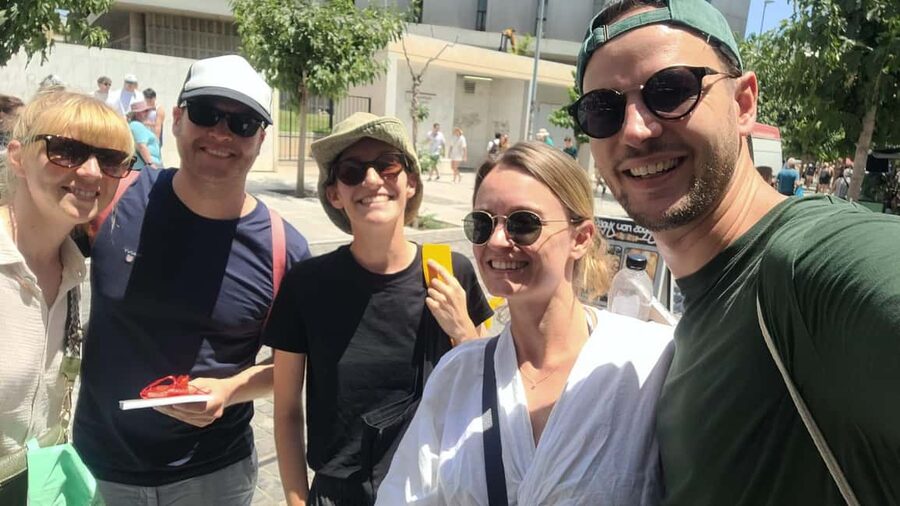
The tour depends heavily on the guide, and Maelle receives especially strong praise for her warmth, humor, clarity, and personal commitment to the subject. She is described as able to place modern Greek events in order while keeping the discussion open and human.
I would expect a conversation as much as a lecture. The group can ask questions, discuss ideas, and connect the sites to daily life in Greece. That makes small groups or private departures especially appealing. You have more room to ask about politics, culture, street art, restaurants, and other parts of Athens.
Maelle also offers suggestions for food, shopping, sights, and later stops in Greece. That can be genuinely useful early in a trip. One participant wished they had taken the tour on their first day because it would have helped them understand the city for the rest of their stay. I agree with that timing advice. Take it near the start if you can.
The tour is available in English or French. Private and small-group options are available, though the exact group size depends on the departure you choose.
Price, timing, and physical demands
The listed price is $44.04 per person for 2.5 hours. That is not the cheapest way to walk around central Athens, but the value is good if you want interpretation rather than a basic orientation tour.
You are paying for a focused subject, a live guide, and access to a part of Athens that many standard tours barely discuss. The cost makes less sense if you mainly want ancient monuments, interior visits, or a broad introduction to every major sight.
The route involves regular walking and standing. Wear comfortable shoes, and bring water, a sun hat, and sunscreen. Athens can be hot, and much of the experience takes place outdoors. The tour is not suitable for people with mobility impairments.
Allow for the full 2.5 hours, though the route itself includes many short stops. The supplied route ends at Plateia Exarcheion, while the meeting information says the activity ends back at the meeting point. Confirm the end point when you book, especially if you have a dinner reservation or need to return to your hotel.
You can cancel up to 24 hours in advance for a full refund, and the reserve-now, pay-later option helps if your plans are still shifting.
Who should book this Athens walk?
I would choose this tour if you want modern Greek history, political context, and a closer look at how Athenians have challenged power. It is also a good match for anyone curious about Exarchia and unsure how to approach the neighborhood respectfully.
It suits adults and older teenagers who enjoy discussion. The tour can also work well for people who have already seen the Acropolis and want a second view of Athens. Instead of another pass through ancient history, you get a story about the modern city and the people who shaped it.
I would not make it your first choice if you dislike political discussion, want a purely neutral presentation, or have difficulty walking and standing for several hours. It is also not the right tour if your main goal is detailed architecture or archaeological explanation.
Should you book the History of Rebellion tour?
Book it if you want Athens to make more sense beyond its ancient monuments. The strongest parts are Maelle’s clear storytelling, the connection between historical resistance and present-day activism, and the time spent in Exarchia.
Take it early in your visit so the wider context can shape the rest of your stay. Bring water, expect serious subjects, and leave room for conversation. At $44.04, it is a fair buy for a small-group experience that gives you a more personal understanding of modern Athens.
FAQ
Where does the Athens History of Rebellion tour start?
It starts in Monastiraki Square, in front of Pantanassa Church. The guide holds a sign that says Athens City of Rebellion.
Where does the tour finish?
The route information lists Plateia Exarcheion as the finish. The meeting information also says the activity ends back at the meeting point, so confirm the final location when booking.
How long does the walking tour last?
The tour lasts 2.5 hours. Starting times vary, so you need to check availability for the date you want.
What languages are available?
The live guide is available in English and French.
Is this a private tour?
Private and small-group options are available. The exact format depends on the option selected when booking.
What should I bring?
Bring comfortable shoes, water, a sun hat, and sunscreen. You will be walking and standing outdoors.
Is the tour suitable for people with mobility impairments?
No. The activity is listed as not suitable for people with mobility impairments.
Can I cancel for a refund?
Yes. You can cancel up to 24 hours in advance for a full refund. A reserve-now, pay-later option is also available.
Just added around Athens
- Athens Street Art Walk★ 5.0 · 309 reviews
- The Acropolis, Athens Walking City Tour and Acropolis Museum★ 5.0 · 442 reviews
- Athens Highlights: Myths & Philosophers Walking Tour★ 5.0 · 125 reviews
- Athens Street Food Walk★ 5.0 · 385 reviews
- Athens at Night Small-Group Walking Tour with Dinner★ 5.0 · 230 reviews
- Acropolis monuments, Parthenon and Plaka, Monastiraki walking tour★ 5.0 · 182 reviews
- Athens Shore Excursion: Acropolis Walking Tour★ 4.5 · 131 reviews
- Athens Gourmet Food Small Group Walking Tour★ 5.0 · 213 reviews
Walking Tours, compared.

Magical London: Harry Potter Guided Walking Tour
Read our review →
Reykjavik Food Walk – Local Foodie Adventure in Iceland
Read our review →
History and Hauntings of Salem Guided Walking Tour
Read our review →
New Orleans Premier Ghost, Voodoo and Vampire Walking Tour
Read our review →
Amsterdam Anne Frank: Small-Group Walking Tour & Local Guide
Read our review →

Edinburgh Castle: Guided Walking Tour with Entry Ticket
Read our review →
Anne Frank’s Story – Guided Walking Tour through Amsterdam
Read our review →Browse the lists this tour appears in