
REVIEW · ATHENS
Acropolis monuments, Parthenon and Plaka, Monastiraki walking tour
The best thing about this Athens walk is its shape: you begin above the city at the Acropolis, then follow the streets downhill into Plaka and Monastiraki. I like the skip-the-line Acropolis entry and the way the tour adds smaller sights, such as the Tower of the Winds, instead of stopping with the Parthenon. The Greek pastry break, with semolina custard cream and spanakopita, is another welcome touch.
I also like the range of guides assigned to this experience. Anna, Demos, Eleni, Sofia, Artemis, Sapfo, and others have been singled out for clear explanations, humor, patience, and good pacing. The main drawback is the uphill Acropolis walk and the hard stone underfoot, so this is not a good fit if you want a gentle, seated introduction to Athens.
Key points
- Start at 9 a.m. near the Acropolis: Meet at Porinou 5, a central location close to the first major sight.
- See the Parthenon with entry included: The Acropolis ticket is included, helping you avoid the regular ticket line.
- Look beyond the famous temple: The route includes the Temple of Athena Nike, Roman Agora, and Tower of the Winds.
- Walk through two very different Athens neighborhoods: Plaka brings old lanes and tavernas, while Monastiraki gives you a livelier city finish.
- Try two Greek pastries: Semolina custard cream and spanakopita provide a small taste of local food during the walk.
- Plan for hills and uneven ground: Comfortable shoes, water, and moderate fitness matter more here than fancy sightseeing gear.
Starting above Athens at the Acropolis
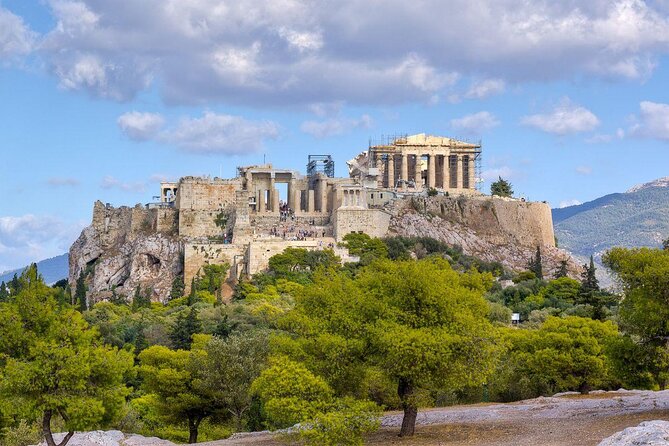
At $105.26 per person, this is priced as a guided half-day experience rather than a simple entrance ticket. You are paying for the Acropolis admission, a licensed guide, a planned route through central Athens, and a small food stop.
The meeting point is Porinou 5, Athina 117 42, at 9 a.m. Starting early is useful. The Acropolis is exposed, the stone can become hot, and the site draws large numbers of people. A morning start does not promise an empty hill, but it gives you a better chance of moving through the monuments before the day becomes more crowded.
The first section requires an uphill walk. You will be on stone paths and open ground, with some uneven surfaces and little shelter at the most famous points. Bring water, wear shoes with a firm grip, and carry sun protection. The tour asks for a moderate level of physical fitness, and that is a fair description.
Your guide sets the pace and pauses at points of interest. Anna was praised for stopping often enough to make the climb manageable, while Eleni was noted for balancing information with rest breaks. That matters here because the Acropolis is not a place where you can comfortably rush from one monument to the next.
A few more walking tours around Athens worth a look
- Athens: Acropolis and Parthenon Guided Walking Tour
★ 4.6 · 5,882 reviews - Acropolis and Parthenon Guided Walking Tour
★ 5.0 · 4,755 reviews - Greek Food Walking Tour in Athens
★ 5.0 · 4,740 reviews
The Parthenon, with room for the lesser sights
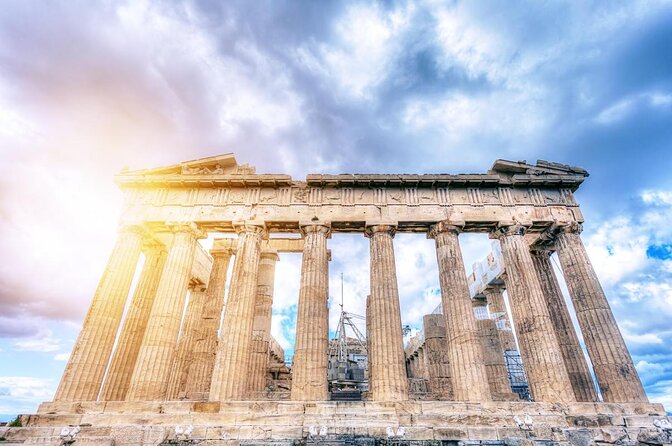
The Parthenon gets about 30 minutes of focused attention. That is enough time to study the temple, hear why it was built, and take photographs without turning the whole morning into a single long stop.
Construction began in 447 BC, when Athens was at the height of its power through the Delian League. The temple was dedicated to Athena, the city’s patron goddess. Your guide can help you read the building as more than a famous photograph: look at its scale, its position on the rock, and the ongoing work needed to preserve the surviving structure.
The route also includes the Temple of Athena Nike. It is a smaller monument, but easy to overlook when the Parthenon takes up all your attention. Built around 420 BC, it is the earliest fully Ionic temple on the Acropolis and was dedicated to Athena Nike, linking the goddess with victory.
This is where a guide earns the fee. From the ground, ancient stones can look like a jumble of columns and foundations. Guides such as Demos have a gift for connecting the facts to ordinary life, using humor and plain explanations instead of turning the visit into a lecture. Sofia and Artemis have also been praised for making the Acropolis easier to follow and navigate.
One practical detail is worth handling before you book. If someone in your group has mobility problems, permission to use the Acropolis elevator must be arranged in advance. Last-minute access may not be possible. The tour is for children aged 10 and older, and the walking demands make that age limit sensible.
The Roman Agora and the Tower of the Winds
After the Acropolis, the tour moves into the old city. The Tower of the Winds is one of the most interesting stops because it is easy to miss when you are focused on the Parthenon.
The octagonal marble tower was built around the first century BC, though some accounts place its construction earlier. It functioned as a timepiece, combining sundials, a water clock, and a wind vane. It is often described as the world’s first meteorological station. That makes the stop more than a quick photograph. It shows how ancient Athens measured time and watched the weather with practical tools.
You spend about 10 minutes here. Admission to the Tower of the Winds and Roman Agora is not included, so check the entrance arrangement if you want to go inside any paid area. The route can still explain and show the monuments from the surrounding streets, but you should not assume that every site ticket is covered by the Acropolis admission.
The Roman Agora was built east of the older Agora between 27 BC and 17 BC, with money associated with Augustus and an earlier promise by Julius Caesar. It once held an open space surrounded by a colonnade, shops, a fountain, public toilets, and entrances on different sides. The Ottoman-era Fethiye Mosque adds another period to the site’s story.
The stop lasts about 30 minutes. I like this part because it widens the picture of Athens. You are no longer looking only at the classical fifth century BC. You are seeing how the city changed under Roman and Ottoman rule, with later buildings sharing the same tight urban space.
Plaka brings the Acropolis down to street level
Plaka spreads across the slopes below the Acropolis. The neighborhood has narrow cobbled lanes, neoclassical houses, Byzantine churches, small shops, sidewalk cafés, tavernas, and local ceramics. Some lanes are heavily devoted to souvenirs, while others feel more residential and quiet.
The guide’s route gives you a useful transition from monumental Athens to everyday Athens. You can ask about restaurants, shopping areas, and the layout of the old center. Several guides, including Anna and Marissa, have been praised for offering practical suggestions along the way.
The walk through Plaka takes about 30 minutes, though the total time can depend on the group’s pace and stops. You may pass Anafiotika, a small area with whitewashed homes and a Greek island feel. The neighborhood is close to the Acropolis, but its scale is completely different. Here, the experience comes from the lanes, doorways, cafés, and small details rather than one grand monument.
Plaka is also the part most likely to divide opinion. If you dislike shopping streets, some sections may feel too commercial. If you want a first look at central Athens, though, the neighborhood helps you understand how the ancient hill fits into the modern city.
Same streets, a different route:
- Acropolis: Acropolis and Parthenon Guided Walking Tour
★ 4.7 · 3,442 reviews - Athens: Guided Greek Food Walking Tour with Tastings
★ 4.9 · 2,859 reviews - Acropolis monuments & Parthenon Walking Tour with Optional Acropolis Museum
★ 5.0 · 2,678 reviews - Athens Acropolis and Parthenon Walking Tour
★ 4.5 · 1,355 reviews
A pastry stop adds a welcome pause
The included snack stop features two traditional Greek bites: semolina custard cream and spanakopita. The first is sweet and soft, while spanakopita is a savory spinach pie made with crisp pastry.
This is not a full meal, and you should not plan to skip lunch because of it. Think of it as a short tasting and a reason to pause after the Acropolis climb. The food also helps break up the historical material. Three and a half hours of monuments and dates can be a lot to absorb, especially in the morning heat.
The pastry stop is particularly useful for first-time visitors who want an introduction to Greek food without committing to a long restaurant meal. If you have dietary restrictions, the available information does not specify substitutions, so ask the provider before booking.
Finishing in Monastiraki
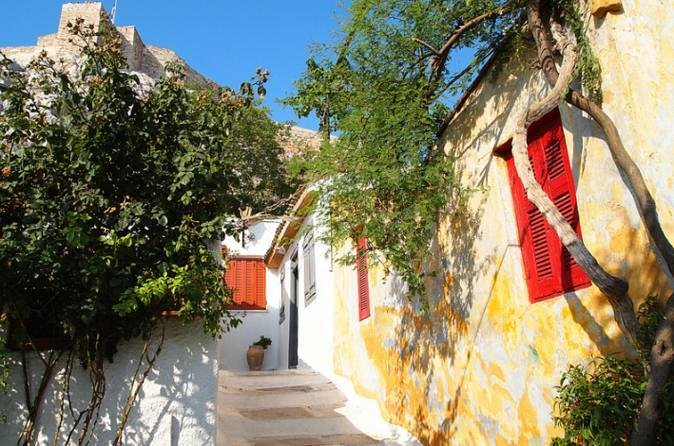
The tour ends in Monastiraki, one of the most useful places to finish because you are left in the middle of central Athens rather than returned to the starting point. The square is a meeting place for several parts of the city, with access to shops, food, and public transportation.
You spend about 10 minutes at Monastiraki as a formal stop, but the location makes a good base for continuing your day. From here, you can choose a meal, browse the market area, or make your own way elsewhere in Athens. The end point also gives you a different feel from the Acropolis. You begin among temples and open ruins, then finish amid ordinary city movement.
Some guides have made Monastiraki a particular highlight, while others have focused more on the Plaka lanes. That variation is normal in a guide-led walk. The core route remains the same, but the exact emphasis can shift according to the guide, the group, and the day.
How the guiding affects the experience
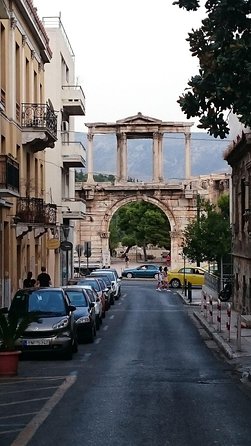
The strongest feature of this tour is not simply that a guide is present. It is the quality of explanation and pacing reported across different departures.
Demos has been praised for making ancient history relatable and using humor without losing the facts. Anna has been described as patient, upbeat, and willing to explain each section carefully. Eleni was noted for clear delivery and a pace that included rest stops. Sofia made the Acropolis easier to navigate, while Artemis was praised for background information at each stage.
You may be given an audio headset. Eleni’s group found that the system made it possible to hear even in a larger group while taking photographs at its own pace. The maximum group size is 20, so this is not a private tour. A headset can make a real difference when people spread out around a monument.
The guide makes the biggest difference on the Acropolis. A good explanation can turn a crowded ancient site into a readable sequence of buildings, religious practices, political power, and later changes. Without that context, you may see the Parthenon and take the standard photographs, but miss why the surrounding structures matter.
Is $105.26 a fair price?
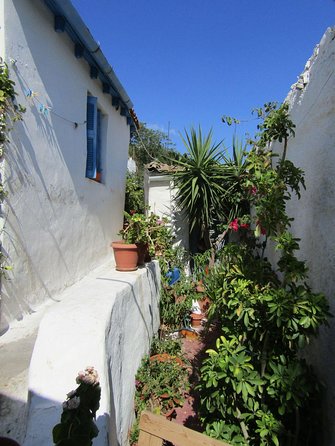
For a three-and-a-half-hour walking tour, $105.26 is not cheap. The value depends on how much structure and explanation you want.
The price includes the licensed guide, skip-the-line Acropolis tickets, and the Greek pastry stop. It does not include hotel pickup, drop-off, gratuities, or admission to the Tower of the Winds and Roman Agora. You are also paying for the time saved by avoiding the standard Acropolis ticket line and for a route that combines major monuments with the city streets below.
I think the price is easiest to justify if you are visiting Athens for the first time, have limited time, or want historical context without researching every site yourself. It is less attractive if you already know the Acropolis well, prefer exploring alone, or plan to spend many hours at each monument.
The tour also works well near the start of an Athens stay. It gives you a basic map of the center, points out Plaka and Monastiraki, and can help you decide where to return for food or shopping. One guide-led morning can save you from spending the rest of the day trying to understand the city’s layout.
Practical details before you book
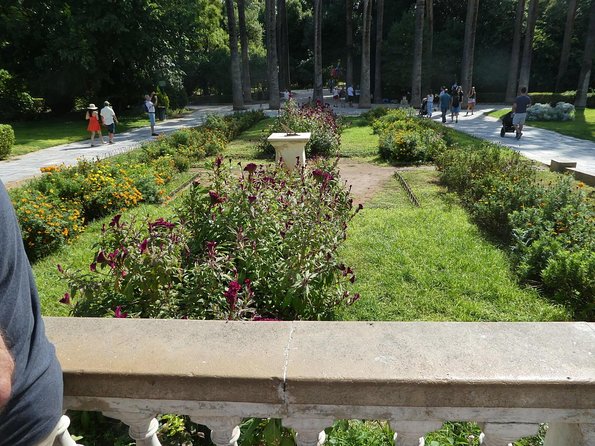
The activity is offered in English and uses a mobile ticket, though a paper voucher is also accepted. Service animals are allowed, and the meeting point is near public transportation.
Give yourself time to reach Porinou 5 for the 9 a.m. start. The tour ends in Monastiraki, not at the original meeting point, so plan your next stop from there. Hotel pickup and drop-off are not provided.
Wear comfortable walking shoes. The Acropolis includes a climb, exposed paths, and uneven stone. An umbrella and water can be useful in strong sun, and shade is not available at every point.
You can cancel for a full refund up to 24 hours before the start time. Changes made within 24 hours are not accepted, and poor weather or failure to reach the minimum group size can lead to a different date or a full refund.
Who should choose this Athens walk?
I would choose this tour for a first visit, especially if you want to see the Acropolis but do not want to work out the order, tickets, and background on your own. It suits couples, families with children aged 10 and up, and anyone who likes a clear route with plenty of historical explanation.
It also suits you if food stops and city neighborhoods matter as much as ruins. The pastry tasting, Plaka walk, and Monastiraki finish keep the morning from becoming only a temple visit.
I would look elsewhere if you need a slow, fully accessible route, dislike hills, or want long independent time inside each monument. The tour gives you a well-planned introduction, not an unhurried archaeological study.
Should you book it?
Book it if you want the classic Acropolis sights, a few less obvious monuments, and a guided walk into the old city in one morning. The combination of the Parthenon, Temple of Athena Nike, Tower of the Winds, Plaka, Monastiraki, and Greek pastries gives you a useful first picture of Athens.
Skip it if you prefer to set your own pace or already have strong plans for the Acropolis and Roman Agora. For most first-time visitors, the early start, included Acropolis ticket, well-received guides, and central finish make this a practical way to get your bearings fast.
FAQ
How long does the tour last?
The walking tour lasts approximately 3 hours and 30 minutes.
What time and where does the tour start?
It starts at 9 a.m. at Porinou 5, Athina 117 42, Greece.
Where does the tour end?
The tour ends in Monastiraki, Athens.
Is Acropolis admission included?
Yes. Skip-the-line Acropolis entrance tickets are included. Admission to the Tower of the Winds and Roman Agora is not included.
What food is included?
The tour includes a snack stop with semolina custard cream and traditional spanakopita.
Is the tour suitable for people with mobility issues?
The tour requires a moderate level of physical fitness and includes uphill walking and uneven surfaces. The Acropolis elevator may be available with advance permission, but you must request access when booking because last-minute access may not be possible.
Just added around Athens
- Athens Street Art Walk★ 5.0 · 309 reviews
- The Acropolis, Athens Walking City Tour and Acropolis Museum★ 5.0 · 442 reviews
- Athens Street Food Walk★ 5.0 · 385 reviews
- Athens Highlights: Myths & Philosophers Walking Tour★ 5.0 · 125 reviews
- Athens at Night Small-Group Walking Tour with Dinner★ 5.0 · 230 reviews
- Athens Shore Excursion: Acropolis Walking Tour★ 4.5 · 131 reviews
- Athens Gourmet Food Small Group Walking Tour★ 5.0 · 213 reviews
- Athens: Acropolis, Parthenon Guided Walking Tour★ 5.0 · 319 reviews
Walking Tours, compared.

Magical London: Harry Potter Guided Walking Tour
Read our review →
Reykjavik Food Walk – Local Foodie Adventure in Iceland
Read our review →
History and Hauntings of Salem Guided Walking Tour
Read our review →
New Orleans Premier Ghost, Voodoo and Vampire Walking Tour
Read our review →
Amsterdam Anne Frank: Small-Group Walking Tour & Local Guide
Read our review →

Edinburgh Castle: Guided Walking Tour with Entry Ticket
Read our review →
Anne Frank’s Story – Guided Walking Tour through Amsterdam
Read our review →Browse the lists this tour appears in