
REVIEW · CHICAGO
Chicago: Secret Interiors Architecture Walking Tour
Chicago’s best architectural surprises are often indoors. This two-hour walk takes you past famous Loop buildings and into grand lobbies, where domes, mosaics, elaborate doors, and carefully planned lighting tell stories that street-level views miss.
I especially like the way the tour connects engineering problems with beautiful design, and the way it brings you into buildings you might otherwise pass without entering. Guides such as Grant, Talia, Annie, Angel, and Matthew are praised for clear storytelling, humor, and useful local tips. The main drawback is practical: much of the tour takes place outdoors, and the pace can feel brisk in cold weather or for anyone who has trouble with stairs.
Key points to know before you book
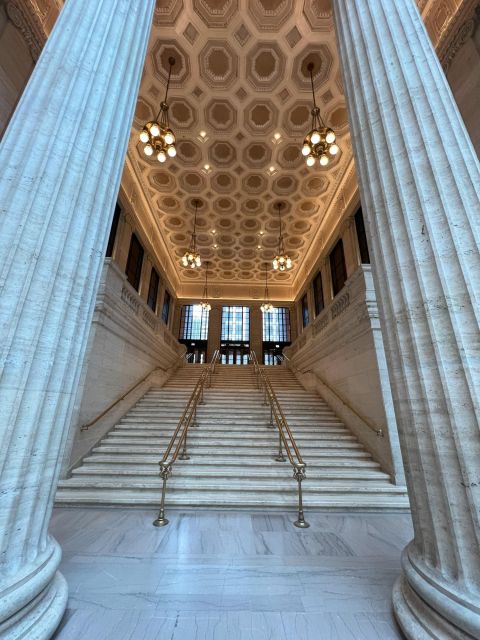
- The interiors are the main event: Expect grand domes, mosaics, decorative details, and lobbies that are easy to miss on your own.
- The route covers major Loop landmarks: Stops include the Rookery, Field Building, Marquette Building, Palmer House, Chicago Cultural Center, and Marshall Field and Company Building.
- You learn how buildings work: The guide explains solutions for daylight, structural strength, and the demands of early skyscraper design.
- The tour starts at Union Station: Meet inside the Great Hall, beneath the Clinton Street sign.
- Winter requires planning: Around 90 percent of the experience may be outside, so bring warm layers and comfortable shoes.
- Sunday has one change: The Rookery is closed on Sundays, so the guide substitutes another stop.
Why Chicago’s interiors deserve two hours
Chicago is famous for its skyline, but a street-level view gives you only half the story. The city’s older commercial buildings often put their finest work inside: patterned floors, carved entrances, painted surfaces, mosaics, glass ceilings, and grand public spaces designed to impress workers, clients, shoppers, and hotel guests.
That is what makes this tour useful. You are not simply looking at façades and hearing dates. You are being shown the design choices that shaped Chicago’s rise as an architectural center. The guide points out how architects and engineers handled light, weight, height, and the challenge of making large buildings feel welcoming rather than merely practical.
The route also adds a human side. These corridors were used by industrial magnates, notorious figures, business leaders, and famous personalities during the Gilded Age and the Roaring Twenties. You get architecture, but you also get ambition, competition, status, and a sense of how Chicago wanted the world to see it.
At $35 per person, the tour is fairly priced for a two-hour experience with a live guide and access to several interiors. You are paying for interpretation as much as for walking distance. A person who already knows the Loop may still find value here because the route focuses on details and rooms that are easy to overlook.
A few more walking tours around Chicago worth a look
- Chicago: Gangsters and Ghosts Walking Tour
★ 5.0 · 7,155 reviews - Chicago Favorites Ultimate Food and Walking Tour
★ 5.0 · 1,962 reviews - Chicago: Gangsters and Ghosts Guided Walking Tour
★ 4.7 · 1,697 reviews
Starting beneath the Clinton Street sign at Union Station
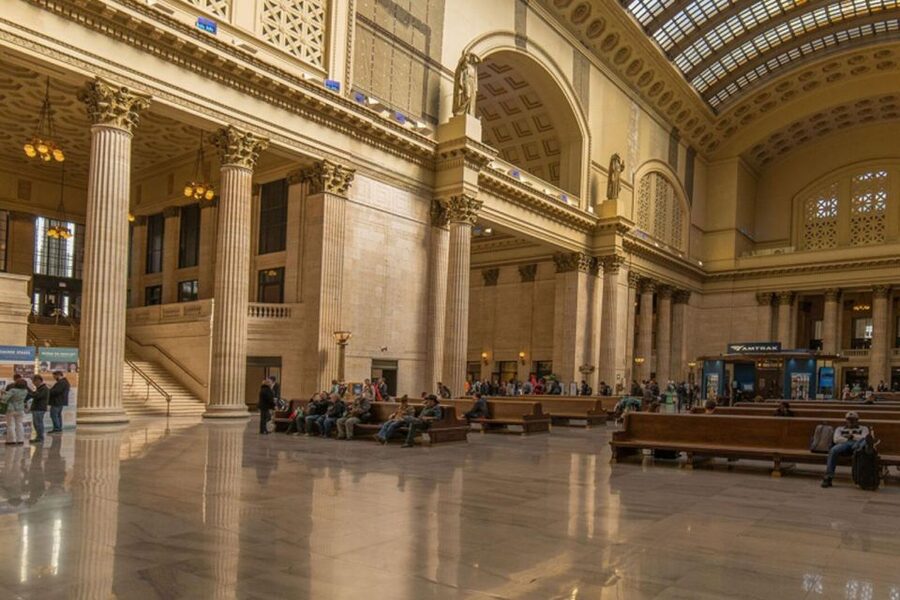
The meeting point is inside Union Station’s Great Hall, beneath the Clinton Street sign. This is a practical starting place because the station itself gives you an immediate sense of Chicago’s taste for grand public architecture.
Arrive ready to walk rather than expecting a series of long indoor visits. The activity moves through the Loop, with outdoor stretches between buildings and stops for photographs, explanations, and sightseeing.
A small group can make a big difference on a tour like this. Several guide reports describe groups of only two to four people, though the size can vary. A smaller group gives you more time to ask about a doorway, decoration, or unusual feature. Grant, Talia, Annie, Angel, and Matthew are all praised for being friendly, clear, and willing to answer questions.
The guide also matters because the buildings do not explain themselves. You may notice a beautiful ceiling, but the guide gives you the reason it was made, the problem it addressed, or the social message it conveyed.
Chicago Loop and South LaSalle Street
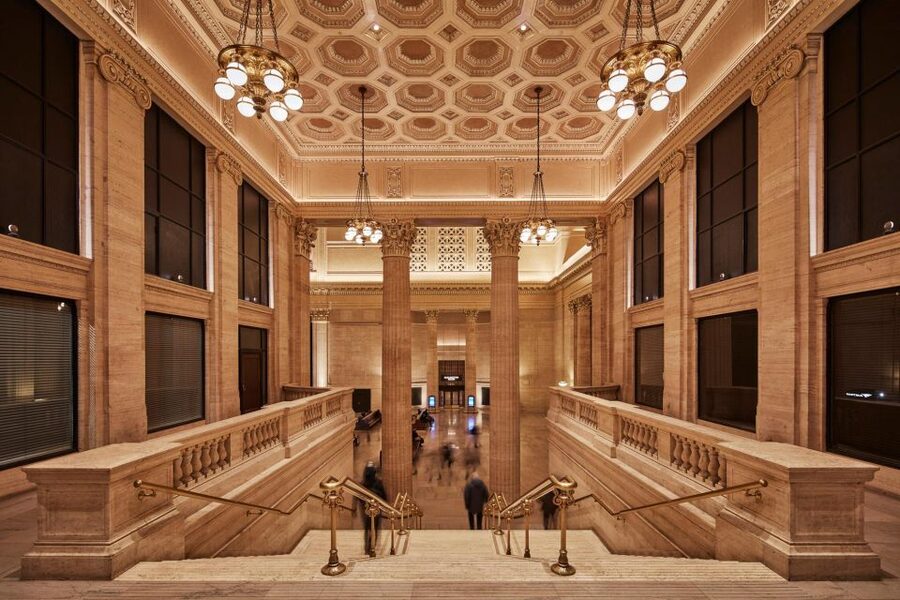
The first part of the walk places the buildings in context. The Loop is not just a collection of isolated landmarks. It is a concentrated record of changing architectural ideas, from early tall buildings to later modernist work.
South LaSalle Street provides a particularly useful setting for this discussion. The street lets you compare façades, entrances, setbacks, and materials before stepping inside selected buildings. You begin to see how architects used the outside of a building to signal power and purpose, then used the interior to reinforce that impression.
This is also one of the places where the outdoor nature of the tour becomes clear. In good weather, the walk gives you time to look up and take photographs. In January or February, you will want a proper coat, gloves, and a hat. One guide report estimated that about 90 percent of the tour was spent outside, so do not dress as if you are visiting a museum for two hours.
The Rookery Building and the problem of light
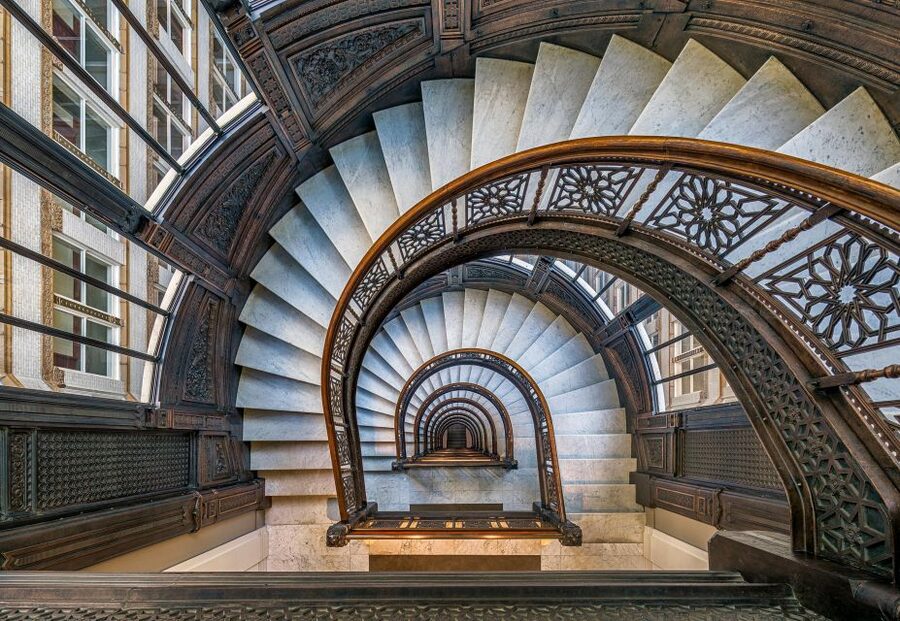
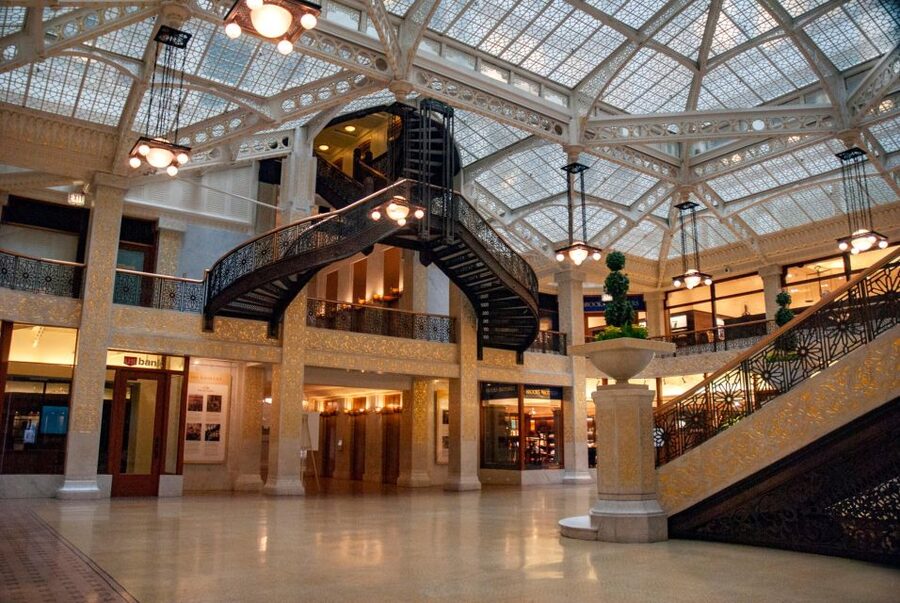
The Rookery is one of the most important stops because it shows how early architects worked with the limits of urban construction. Large buildings needed useful interior spaces, but neighboring structures could block daylight. The tour explains the ways designers addressed illumination while also handling the weight and pressure created by a tall building.
Inside, look for the combination of practical planning and decoration. Domes, polished surfaces, mosaics, and crafted details were not random ornament. They helped create a grand public setting and showed visitors that the building’s owners valued modern technology and visual appeal.
The Rookery is closed on Sundays. If you book for that day, the guide includes another stop instead. That substitution means the exact experience can vary by date, so anyone with a particular interest in the Rookery should choose a non-Sunday departure.
The building also illustrates why an interior tour is different from a skyline tour. From outside, you can appreciate its shape and age. Inside, you get a better sense of how people moved through it and how the architects tried to make a complex commercial building feel memorable.
Same streets, a different route:
- Chicago Loop District Food Tour with Deep Dish & Beef Sandwich
★ 5.0 · 870 reviews - Chicago’s Secret Interiors Architectural Walking Tour
★ 5.0 · 635 reviews - Chicago’s Chinatown Food and Walking Tour
★ 5.0 · 600 reviews - Chicago: Underground Pedway & Downtown Secrets Walking Tour
★ 4.7 · 268 reviews
The Field Building and early skyscraper confidence
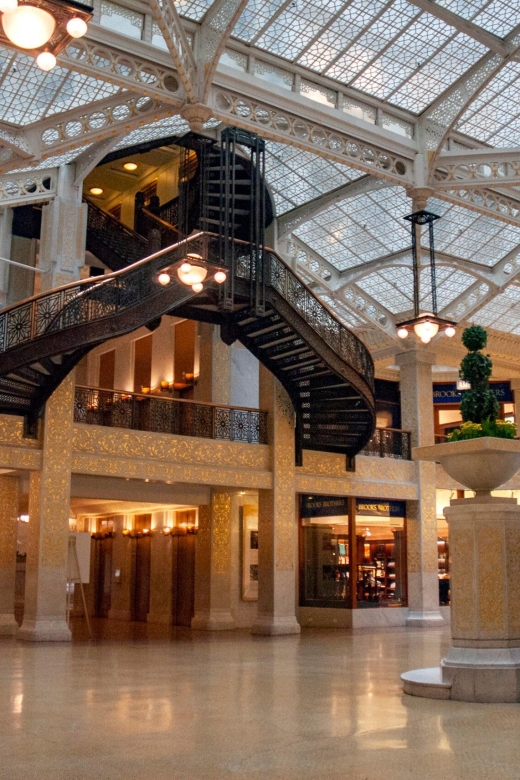
The Field Building adds another view of Chicago’s commercial architecture. Here, the focus remains on the relationship between structure, decoration, and business. The building is not treated as a pretty shell. The guide explains the choices that helped it function as a serious workplace while still projecting authority.
You will hear more about the early skyscrapers that changed the city’s appearance and influenced building design far beyond Chicago. The important point is not simply that buildings became taller. Their height forced architects and engineers to rethink circulation, materials, interior lighting, and the experience of entering a large urban structure.
This stop is helpful for visitors who want a plain explanation of how Chicago helped define a new era of city building. You do not need a background in architecture. The guide connects technical ideas to things you can see, such as the scale of the entrance, the arrangement of the lobby, or the way light reaches interior areas.
The Marquette Building’s crafted public spaces
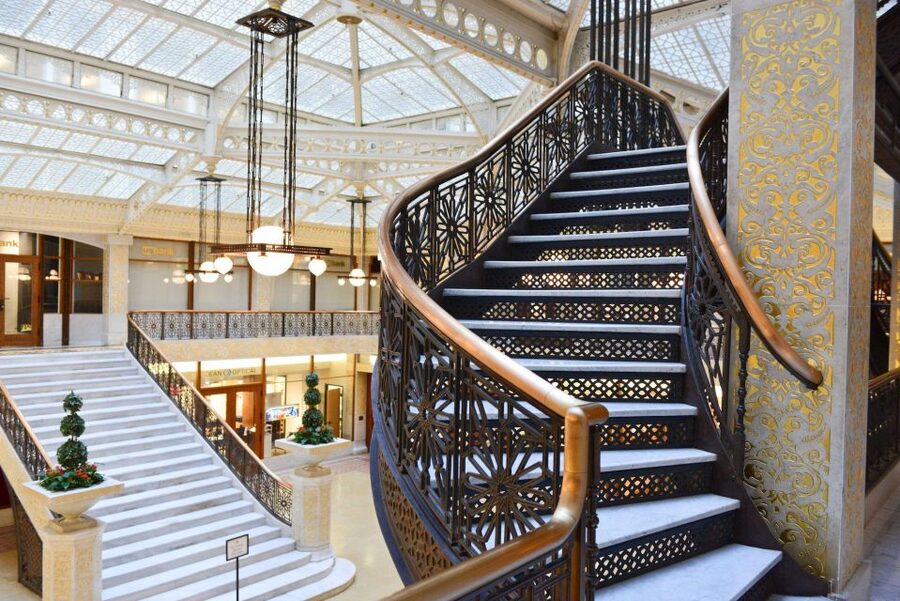
The Marquette Building gives the tour another chance to slow down and look closely. Its interior details reward attention. Rather than rushing through for a quick photograph, ask the guide about the decoration around doors, ceilings, walls, and other transition points.
One useful lesson from this stop is that architectural design works at several distances. From across the street, you notice the building’s mass and style. Inside, you notice the workmanship at eye level. At close range, small patterns and materials reveal how much effort went into spaces that many people simply used as passageways.
This is also where a curious visitor can get more from the tour by asking questions. One guide report noted that the guide was happy to discuss details when prompted, including decorations and doorways along the route. If you see something that catches your eye, ask about it. The guides are not limited to a memorized script.
Palmer House and the architecture of welcome
The Palmer House brings a different mood to the walk. A hotel interior has a special job: it must make arrival feel important. Here, the tour considers how decorative spaces shape the experience of guests and how a hotel can become part of the city’s social life.
Look for the details that make a public interior feel ceremonial rather than ordinary. The point is not only luxury. It is the way design creates a sense of occasion through scale, pattern, light, and craftsmanship.
This stop also adds variety. The tour is not focused only on office buildings or only on one architectural period. You move through spaces designed for commerce, travel, public life, and display. That range helps explain why the Loop feels like a condensed lesson in Chicago architecture.
Chicago Cultural Center and the reward of looking upward
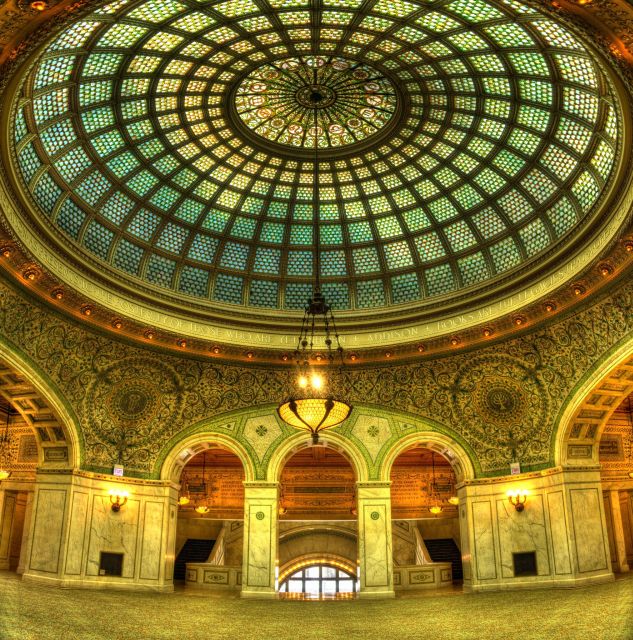
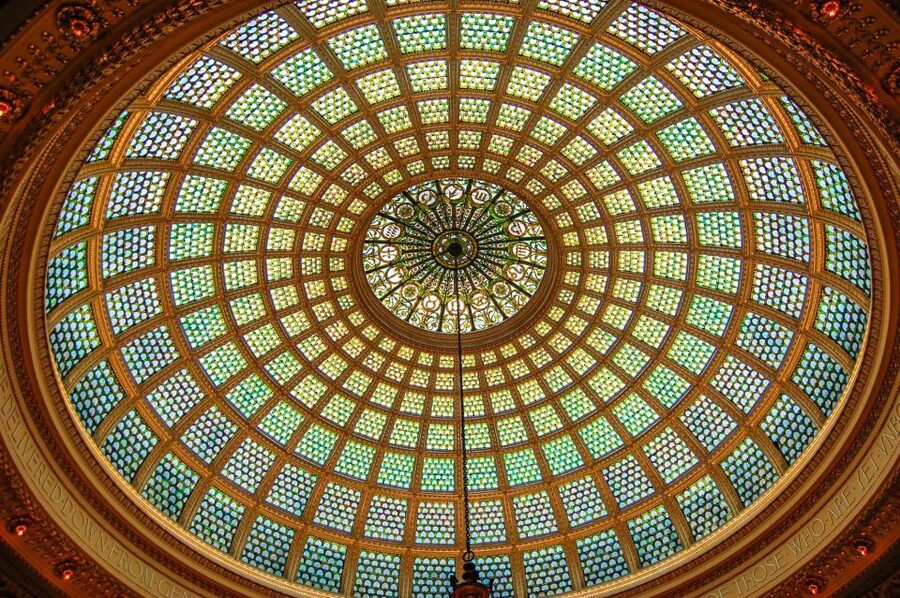
The Chicago Cultural Center is one of the strongest stops for anyone drawn to domes, mosaics, and elaborate interior work. It gives you a chance to see how a civic building uses decoration to express public pride.
Take time to look up. The large overhead features are easy to miss if you focus only on the path in front of you. The guide explains how such spaces were designed, what their decorative elements mean, and how architects balanced structural demands with the wish to create something memorable.
The Cultural Center also works well for families because the visual details are immediate. You do not have to understand every architectural term to appreciate color, light, pattern, and scale. Children and adults can look for different things, while the guide supplies the wider story.
Marshall Field and Company Building, the final stop
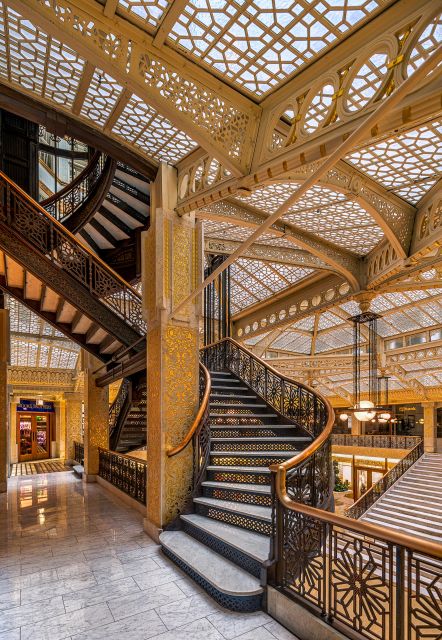
The tour finishes at the Marshall Field and Company Building, giving the walk a fitting retail and civic finish. This stop brings together several themes from the afternoon: public interiors, craftsmanship, commercial ambition, and the use of architecture to shape how people feel in a building.
The building’s importance is not limited to shopping. It represents the way major commercial spaces became part of city life. Architecture helped turn a purchase into an event and a store into a destination.
Ending here is convenient if you want to continue exploring downtown afterward. You can also use the guide’s suggestions for nearby food and drink. Grant has been praised for sending dining recommendations after a tour, while Annie has also been noted for offering practical suggestions around Chicago.
What the guides do especially well
The guide is the heart of this experience. The buildings are impressive, but a tour can easily become a list of dates and names. The strongest guides make the city feel connected and understandable.
Grant is repeatedly praised for his depth of historical knowledge, conversational style, clear voice, and passion for Chicago. His background as a high school history teacher helps him turn architecture into a story rather than a lecture.
Talia is praised for being warm, funny, patient, and attentive to group comfort. She has also been noted for contacting participants before the tour, which can make the meeting point feel less uncertain.
Annie is described as friendly, engaging, and especially good at explaining the history behind art and decorative features. Angel is praised for bringing energy and personal discoveries into the walk. Matthew is described as informative, charismatic, and easy to follow.
Guide assignments can change, so you should not book on the assumption that you will receive one particular person. The useful pattern is that the guides bring both architectural knowledge and enthusiasm, and they are generally open to questions.
Pace, stairs, weather, and access
The walk is described as manageable rather than exhausting, but it is not completely effortless. You cover a large part of the Loop at a steady pace, with some visitors finding the speed brisk. There can also be stairs in and out of buildings.
Wear comfortable shoes. This is essential even though the total distance is not presented as extreme. You will be standing, walking outdoors, pausing on sidewalks, and moving through several interiors.
The activity is listed as wheelchair accessible, but building access can still vary during a particular visit. If stairs or mobility are a serious concern, contact the provider before booking and ask about the current route and building access.
Weather deserves serious attention. Winter can be beautiful, but it can also make an outdoor architectural walk uncomfortable. Bring warm layers and prepare for wind. In warmer months, the outdoor sections should be easier, though you will still want comfortable footwear.
Who will get the most from this tour
I would choose this tour if you want to understand Chicago through its buildings rather than simply photograph the skyline. It suits first-time visitors who want a strong introduction to the Loop, and it also suits locals who have passed these buildings for years without entering them.
It is especially good for:
- Architecture and Art Deco fans
- History-minded visitors
- Families who prefer active sightseeing
- People arriving through Union Station
- Repeat visitors seeking a different side of downtown
- Anyone pairing it with a Chicago river architecture cruise
A river cruise gives you a broader view of the skyline and the city’s buildings from the water. This walking tour gives you closer access to entrances, lobbies, decoration, and interior details. I would not treat them as substitutes. They answer different questions, and taking both creates a fuller picture.
You may enjoy it less if you want a slow museum-style visit with lots of time inside each building. This is a moving tour with several stops, outdoor stretches, and a set two-hour schedule.
Is $35 a fair price?
At $35, the tour offers good value if you make use of the guide. The cost covers a live English-speaking guide, a two-hour walking route, and commentary on architectural styles, engineering choices, and Chicago history.
You could walk parts of this route for free, but you would lose the explanation that links the buildings together. You might also pass through some interiors without realizing why they matter. The fee makes sense for someone who wants the city interpreted rather than simply visited.
The best value comes from asking questions. Ask about a door, a ceiling, a mosaic, a change in materials, or the way daylight reaches an interior. The more closely you look, the more useful the tour becomes.
Should you book the Secret Interiors Architecture Walking Tour?
Yes, if you want a compact and well-guided introduction to Chicago’s Loop interiors. The strongest reasons to book are the access to buildings you might not enter alone, the focus on design and engineering, and the consistently praised guides, especially Grant, Talia, Annie, Angel, and Matthew.
Book with realistic expectations. You will spend much of the time outdoors, the walk can move at a steady pace, and the Rookery is replaced on Sundays. Dress for the weather, wear good shoes, and arrive at Union Station ready to look up and ask questions.
For $35, this is a sensible choice for architecture fans, curious first-time visitors, and longtime Chicago residents who want to see familiar streets with fresh eyes.
FAQ
How long is the Chicago Secret Interiors Architecture Walking Tour?
The tour lasts two hours.
Where does the tour begin?
Meet your guide inside Union Station’s Great Hall, beneath the Clinton Street sign.
Where does the tour finish?
The tour finishes at the Marshall Field and Company Building.
Which buildings are included?
The route includes South LaSalle Street, the Rookery Building, the Field Building, the Marquette Building, Palmer House, the Chicago Cultural Center, and the Marshall Field and Company Building.
Is the Rookery Building open every day?
No. The Rookery is closed on Sundays, so the tour includes an alternative stop on that day.
Is the tour mostly indoors?
No. A large portion of the walk is outdoors. One tour description estimates that about 90 percent of the experience may be outside.
What should I bring?
Bring comfortable shoes. In cold weather, bring warm layers because much of the tour takes place outdoors.
Is the tour wheelchair accessible?
The activity is listed as wheelchair accessible.
What language is the tour offered in?
The tour is conducted in English with a live guide.
Just added around Chicago
- Chicago: Prohibition Speakeasies Bus Tour or Walking Tour★ 4.8 · 168 reviews
- Chicago: Underground Pedway & Downtown Secrets Walking Tour★ 4.7 · 268 reviews
- Chicago: The Ultimate Foodie Walking Tour with Tasty Stops★ 4.6 · 92 reviews
- Chicago: Must See Chicago 90 minute Walking Tour★ 4.7 · 73 reviews
- Chicago: Gangsters and Food Tasting Walking Tour★ 4.6 · 228 reviews
- Chicago: Taste of Chinatown Food and Cultural Walking Tour★ 4.9 · 97 reviews
- Chicago: Classic Food & Walking Tour with Free Bike or Kayak★ 4.9 · 145 reviews
- Chicago’s Chinatown Food and Walking Tour★ 5.0 · 600 reviews
Walking Tours, compared.

Magical London: Harry Potter Guided Walking Tour
Read our review →
Reykjavik Food Walk – Local Foodie Adventure in Iceland
Read our review →
History and Hauntings of Salem Guided Walking Tour
Read our review →
New Orleans Premier Ghost, Voodoo and Vampire Walking Tour
Read our review →
Amsterdam Anne Frank: Small-Group Walking Tour & Local Guide
Read our review →

Edinburgh Castle: Guided Walking Tour with Entry Ticket
Read our review →
Anne Frank’s Story – Guided Walking Tour through Amsterdam
Read our review →Browse the lists this tour appears in