
REVIEW · CHICAGO
Chicago: Must See Chicago 90 minute Walking Tour
Chicago’s best introduction to architecture may be a walk where the city itself is the exhibit. This 90-minute tour links the Loop, Chicago River, and Millennium Park while explaining how buildings such as the Wrigley Building, Willis Tower, and Carbide & Carbon Building changed the city.
I like the Chicago Architecture Center-trained guides, who combine building facts with stories about construction, materials, and city change. I also like the included CAC admission, especially the huge model of Chicago with more than 4,250 miniature buildings. The main limitation is clear: this is an outdoor architecture tour, and you do not go inside the landmark buildings.
- Three central Chicago districts in 90 minutes: The route connects the Loop, the Chicago River, and Millennium Park.
- A wide mix of styles: You see Beaux Arts, classical revival, Art Deco, Modernist, and Post-Modernist buildings.
- Strong guide training: Guides such as Paige, Claudia, Anna, Howard, and Lori have received especially warm praise for clear explanations and flexibility.
- A useful museum add-on: Your ticket includes CAC exhibits within seven days, including the Chicago model and a film about the city.
- Rain-or-shine planning: Wear comfortable shoes and prepare for changing weather.
- A tour for architecture first: It gives less attention to food, neighborhoods, or general sightseeing beyond the buildings and city story.
Chicago’s skyline becomes a lesson in city building
The clever part of this tour is the way it turns a short downtown walk into a quick course in Chicago architecture. You are not simply pointed toward famous towers and told their names. Your guide explains why certain materials were used, how different styles came into fashion, and how Chicago’s buildings reflect changing ideas about business, design, and urban life.
That approach matters because downtown Chicago can feel like a wall of glass, stone, and steel when you first arrive. After 90 minutes, you have a way to read it. A classical facade, an Art Deco crown, and a modern glass tower begin to look like separate chapters rather than one giant city block.
The guide is the heart of the experience. The Chicago Architecture Center trains its guides to work as storytellers and teachers, and the strongest comments about the tour focus on that balance. Paige was singled out for a perfect score, while Claudia was praised for adapting to the group without rushing. Anna’s tour mixed architecture, art, and Chicago history in a way that made the time pass quickly. Howard was praised for explaining how the city continues to change.
You should still book this as an architecture tour, not as a general city tour. One useful warning is that the experience is almost entirely about buildings, design, and the story of Chicago’s growth. If you want a food stop, inside access to several attractions, or a broad survey of local neighborhoods, this is not the right format.
Starting at the Chicago Architecture Center
You meet at the Chicago Architecture Center and should arrive 15 minutes before departure. Present your ticket at the box office, then get ready to walk outdoors with the group.
The center gives the tour a helpful sense of place. Before you head out, you are already near one of the city’s best resources for understanding architecture. Admission to the exhibits is included with the tour and can be used within seven days, so you do not need to squeeze everything into the same 90 minutes.
That flexibility improves the value. You can take the walking tour first, then return to the center when you have more time. Or you can visit the exhibits soon after the walk, while the names and styles are still fresh in your mind.
The CAC includes displays about Chicago neighborhoods, housing types, major architects, and future projects. Its centerpiece is a large-scale model with more than 4,250 miniature buildings. A cinematic backdrop brings important moments in the city’s growth to life, giving you a useful visual explanation of how the downtown core fits into the wider city.
The center is not a substitute for the walk. The model and exhibits help you see the city from above and understand its patterns, while the tour puts you at street level, looking up at the actual buildings. I like the pairing because each part answers a different question.
A few more walking tours around Chicago worth a look
- Chicago: Gangsters and Ghosts Walking Tour
★ 5.0 · 7,155 reviews - Chicago Favorites Ultimate Food and Walking Tour
★ 5.0 · 1,962 reviews - Chicago: Gangsters and Ghosts Guided Walking Tour
★ 4.7 · 1,697 reviews
The Loop: Chicago’s historic center
The first major area is the Chicago Loop, the historic heart of downtown. Here, the tour brings together some of the city’s clearest examples of classical design, early skyscraper ambition, and later commercial architecture.
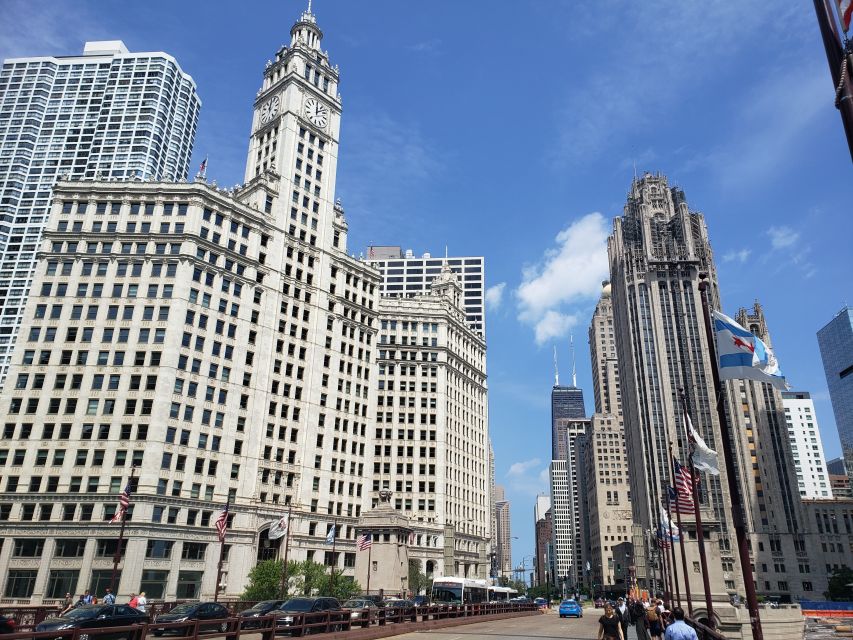
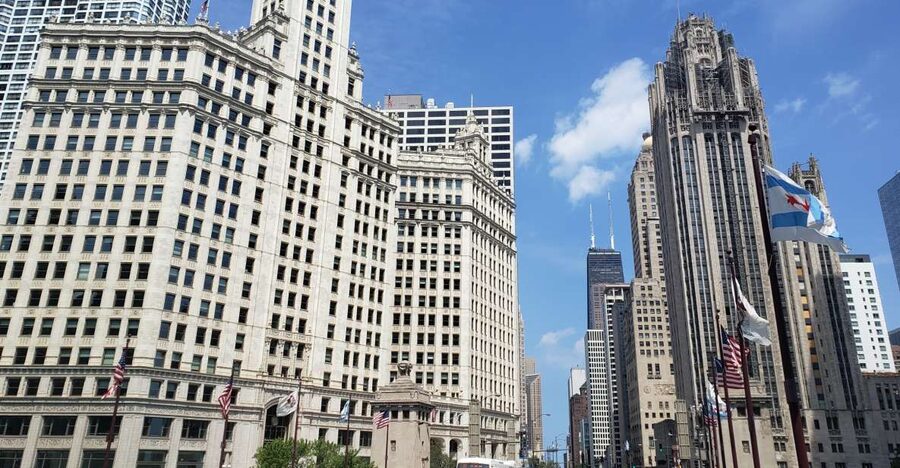
The Wrigley Building is one of the most recognizable stops. Its bright exterior and classical details make it easy to appreciate even if you know little about architectural history. Your guide can use it to explain how older design traditions were adapted for a modern commercial city.
Nearby, the Tribune Building offers another look at architecture that pays homage to classical styles. The point is not just that the building is attractive. It shows how civic and corporate structures used familiar forms to project permanence and authority.
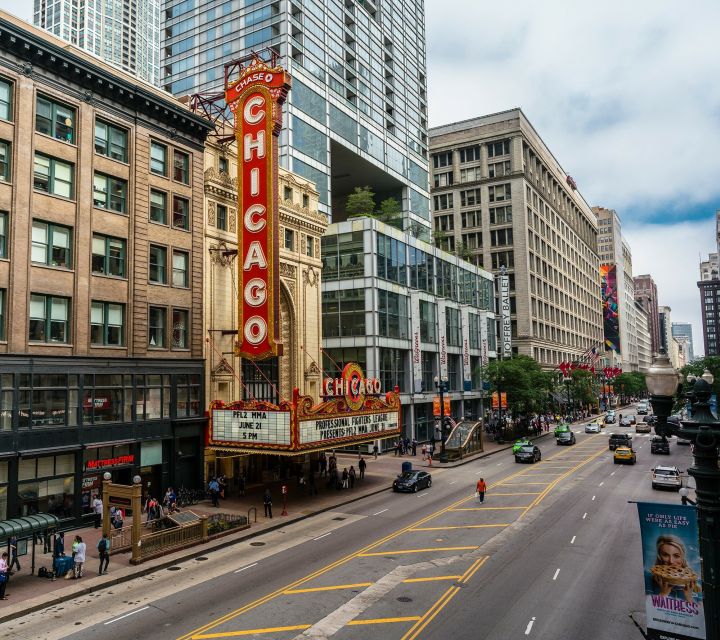
The Chicago Theatre adds a different kind of urban character. It is included among the important classical-style buildings on the route, and its presence helps connect architecture with entertainment and public life. You get a sense of how downtown was designed not only for offices, but also for performance, shopping, and civic activity.
The Art Institute of Chicago is another major landmark covered from the outside. It gives the tour a chance to discuss an important cultural building alongside the commercial towers. This is one reason the walk feels broader than a simple skyscraper count. You see architecture serving art, business, entertainment, and public space.
The Chicago River and the city’s working core

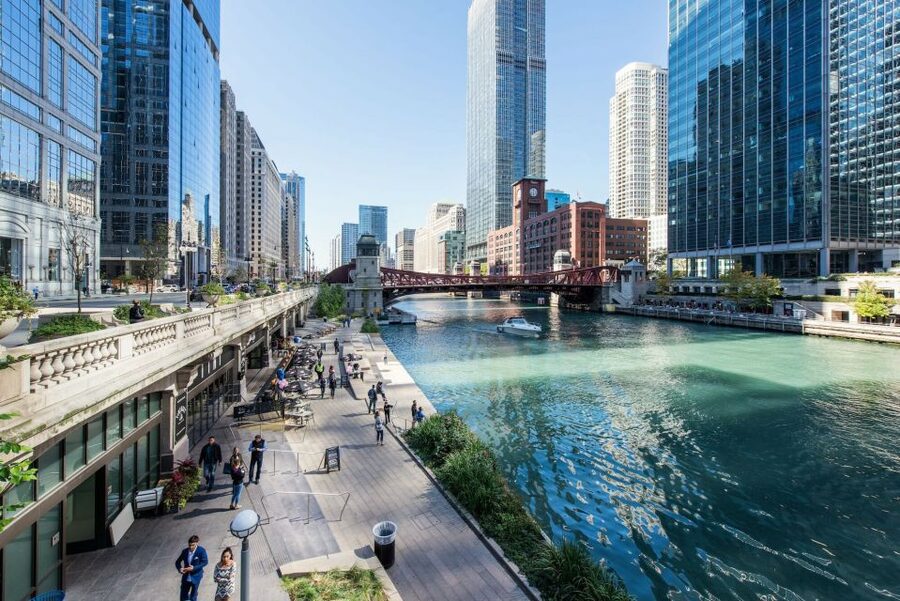
The route also reaches the Chicago River, described as the lifeblood of the city. From here, the relationship between water, transportation, commerce, and high-rise construction becomes easier to understand.
The river is more than a scenic photo stop. It helps explain why this part of Chicago developed as it did. Your guide can connect the riverfront to the city’s growth and point out how buildings present themselves from the water as well as from the street.
This section should be especially good for photographs. You will have chances to frame the river with towers, bridges, and historic facades. Bring a camera or keep your phone ready, but do not let picture-taking replace listening. The useful part of the stop is the explanation of how the city functions around the river.
The route does not include a boat ride, and you do not go inside buildings. That is important if you are comparing this walk with a Chicago architecture river cruise. The walking tour gives you closer street-level views and more direct contact with individual facades, while a cruise offers a different view and usually covers more of the river corridor.
Art Deco details at Carbide & Carbon and the Board of Trade
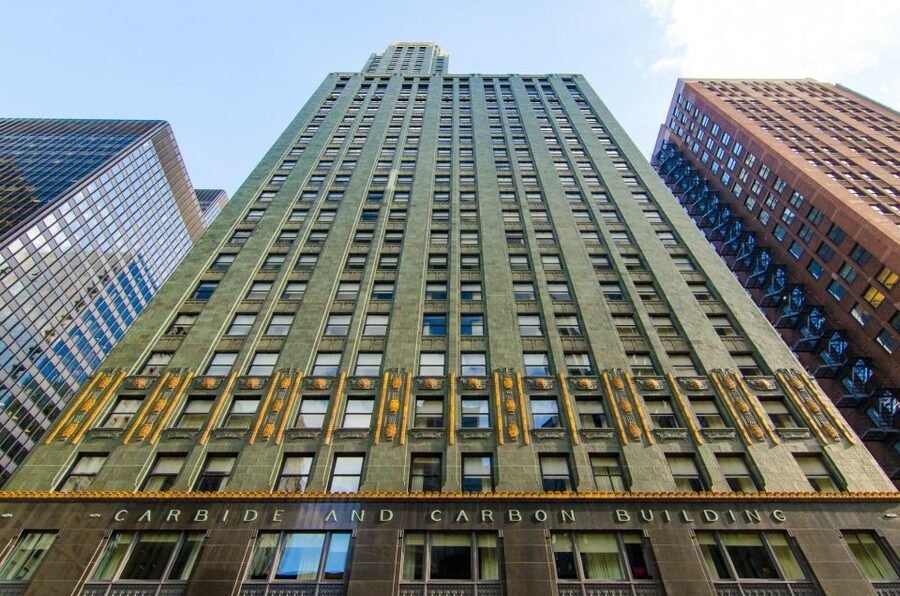
The Carbide & Carbon Building is one of the clearest style changes on the tour. Its Art Deco design gives you a chance to look for the geometric shapes, decorative treatment, and strong vertical emphasis associated with that period.
This is where a trained guide adds real value. You can admire the building on your own, but it is harder to recognize why the details matter without someone pointing them out. The tour helps you compare Art Deco with the classical buildings seen earlier.
The Chicago Board of Trade Building adds another important Art Deco example. Its scale and formal design reflect the power of commerce in the city. Together, these stops show how architectural style was used to express speed, confidence, order, and wealth.
I like this part for readers who think architectural tours might be too technical. You do not need to know the difference between every design movement before you arrive. The buildings are introduced in a way that lets you notice the visual clues for yourself.
Same streets, a different route:
- Chicago Loop District Food Tour with Deep Dish & Beef Sandwich
★ 5.0 · 870 reviews - Chicago’s Secret Interiors Architectural Walking Tour
★ 5.0 · 635 reviews - Chicago’s Chinatown Food and Walking Tour
★ 5.0 · 600 reviews - Chicago: Secret Interiors Architecture Walking Tour
★ 4.9 · 498 reviews
Modernist towers: Willis, John Hancock, and AON
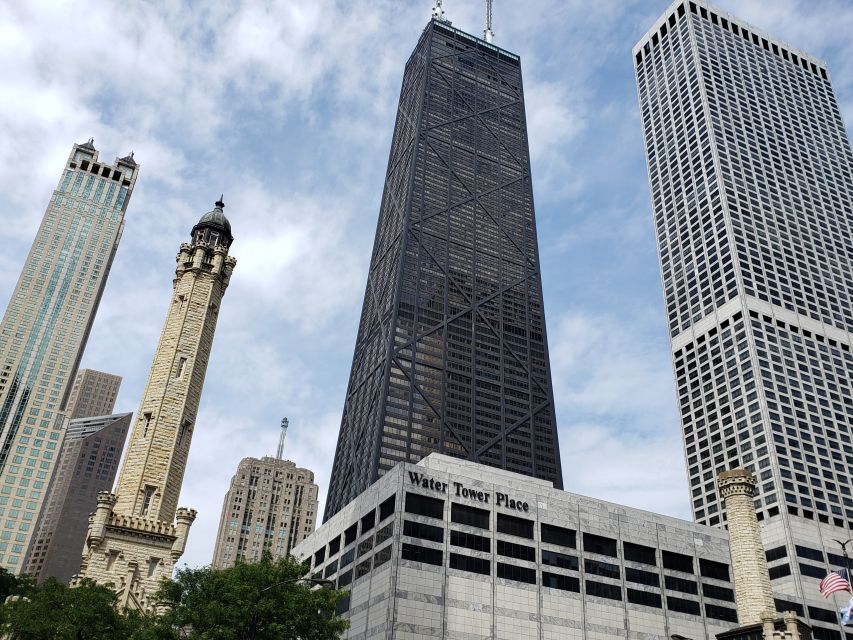
The tour also covers major Modernist skyscrapers, including Willis Tower, the former John Hancock Center, and the AON Building. These towers show how Chicago moved from decorative stone and elaborate ornament toward cleaner forms, taller structures, and new construction methods.
Willis Tower is a natural focus because of its size and familiar profile. The tour does not include admission to the observation deck, so this is a street-level architectural stop. That keeps the experience focused on the building’s design and place in the city rather than on a paid view from above.
The John Hancock Center gives you another chance to compare high-rise forms. Its strong structural expression looks different from both the older buildings and the smoother glass towers that came later.
The AON Building rounds out the Modernist group. Seen together, these buildings make the history of skyscraper design easier to follow. You are not just looking at isolated landmarks. You are seeing a sequence of choices about structure, height, materials, and purpose.
The guide may also point out details beyond the formal stop list. One participant received bonus features during the walk, which suggests that the exact commentary can change with the guide and the group. That is a benefit if you enjoy a tour that responds to what catches people’s attention, though it means the presentation may not be identical every time.
Millennium Park and the face of new Chicago

The route continues to Millennium Park, home of the famous Bean sculpture. The park gives the tour a change of pace after the dense blocks of the Loop and provides another strong photo opportunity.
The Bean is the obvious attraction, but the larger point is the way Millennium Park fits into modern Chicago. The area shows how public art, open space, and new construction can reshape the experience of a downtown district.
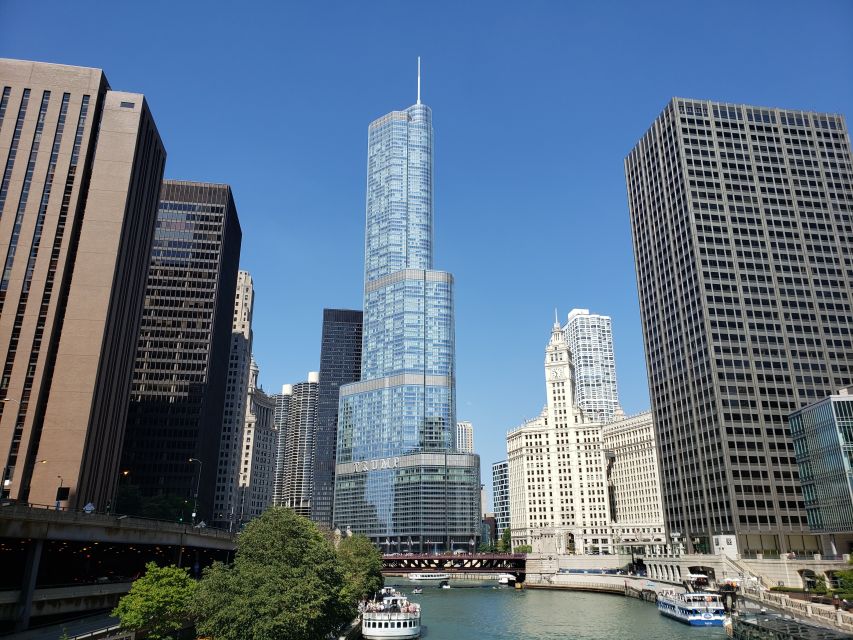
The tour also covers newer towers such as Aqua and Trump Tower. These buildings let your guide explain more recent approaches to skyscraper design and construction. Aqua is especially useful for seeing how a contemporary tower can use an unusual exterior form rather than a simple glass box.
Trump Tower provides another modern example along the riverfront. Together, these newer buildings help prevent the tour from becoming only a look backward. You see how Chicago continues to add to its skyline and how newer projects respond to the older city around them.
Millennium Park can be busy, and the route is outdoors, so keep your group together and expect some city noise. The tour’s value here is not a long visit to every park feature. It is the connection between public space, sculpture, and architecture.
What $35 is really buying you
The listed price is $35 for a group of up to one, so confirm the exact booking details before paying. The package includes the 90-minute walk, a certified CAC guide, and CAC exhibit admission normally valued at $15.
The value depends on what you want from a city tour. If you only want a list of landmarks and quick photographs, you could see many of these buildings independently. But the guide supplies the context that is harder to assemble on your own, especially when comparing styles and construction methods across several city blocks.
The CAC admission makes the price easier to justify. The model alone can help you understand Chicago’s scale, while the neighborhood and housing displays add information beyond the downtown route. Since you can use the admission within seven days, you can plan it around the rest of your schedule.
Your ticket also supports the Chicago Architecture Center’s nonprofit education work, including programs for girls, teens, and young designers, along with community projects. That does not replace practical value, but it is a useful benefit if you prefer spending part of your sightseeing budget with a local cultural organization.
Who will enjoy this walk most
I would recommend this tour to a first-time Chicago visitor who wants a clear introduction to the downtown core. It also suits repeat visitors. One person visiting Chicago for a third time still learned new things, which says a lot about how much context the guides add.
It works well for:
- Architecture fans who want examples from several major styles
- Visitors who want to understand the Loop before exploring it alone
- Photographers looking for landmark facades and river views
- Families or couples who prefer a guided walk to a formal museum visit
- People with limited time who want a strong overview in 90 minutes
- Repeat visitors who have seen the buildings but never learned their stories
You need comfortable shoes. The tour departs rain or shine, so check the forecast and dress for exposure to the weather. Large bags, luggage, and strollers are not allowed, and there is no secure storage for them. Assistance dogs are allowed, but other pets are not.
The tour is offered in English with a live guide. Face coverings are listed among the things to bring. Since the walk cannot go inside the buildings, anyone seeking interior access should choose a different activity or plan separate visits.
Should you book the Chicago Must See walking tour?
Book it if you want a well-organized introduction to Chicago’s architecture with a guide who can explain what you are seeing. The strongest feature is the teaching: the walk connects famous names with styles, materials, construction, and city growth instead of leaving you with a stack of disconnected facts.
The included CAC admission makes the package more useful than a short walk alone. Schedule time for the exhibits within seven days, and use the city model to put the downtown buildings into a wider context.
Skip it if you want indoor sightseeing, a river cruise, food stops, or a broad tour of Chicago life beyond architecture. For everyone else, this is a focused and good-value way to get your bearings in the Loop, see several of the city’s signature buildings, and learn why Chicago’s skyline looks the way it does.
FAQ
How long is the Chicago Must See Chicago walking tour?
The walking tour lasts 90 minutes.
Where does the tour begin?
It begins at the Chicago Architecture Center. You should arrive 15 minutes before departure and present your ticket at the box office.
Is admission to the Chicago Architecture Center included?
Yes. Your ticket includes admission to the CAC exhibits, normally valued at $15. You can use this admission within seven days of the tour.
What buildings and areas does the tour cover?
The route covers the Chicago Loop, Chicago River, and Millennium Park. Buildings discussed include Willis Tower, the John Hancock Center, AON Building, Wrigley Building, Tribune Building, Chicago Theatre, Art Institute of Chicago, Carbide & Carbon Building, Chicago Board of Trade Building, Aqua, and Trump Tower.
Does the tour go inside the buildings?
No. The tour cannot go inside the buildings, so the architecture is viewed from outside.
What language is the tour offered in?
The tour is offered in English with a live guide.
What should I bring, and can I bring luggage?
Bring comfortable shoes and a face mask or protective covering. Luggage and large bags are not allowed, and the tour does not provide secure storage for luggage or strollers.
Just added around Chicago
- Chicago: Prohibition Speakeasies Bus Tour or Walking Tour★ 4.8 · 168 reviews
- Chicago: Underground Pedway & Downtown Secrets Walking Tour★ 4.7 · 268 reviews
- Chicago: Secret Interiors Architecture Walking Tour★ 4.9 · 498 reviews
- Chicago: The Ultimate Foodie Walking Tour with Tasty Stops★ 4.6 · 92 reviews
- Chicago: Gangsters and Food Tasting Walking Tour★ 4.6 · 228 reviews
- Chicago: Classic Food & Walking Tour with Free Bike or Kayak★ 4.9 · 145 reviews
- Chicago: Taste of Chinatown Food and Cultural Walking Tour★ 4.9 · 97 reviews
- Chicago’s Chinatown Food and Walking Tour★ 5.0 · 600 reviews
Walking Tours, compared.

Magical London: Harry Potter Guided Walking Tour
Read our review →
Reykjavik Food Walk – Local Foodie Adventure in Iceland
Read our review →
History and Hauntings of Salem Guided Walking Tour
Read our review →
New Orleans Premier Ghost, Voodoo and Vampire Walking Tour
Read our review →
Amsterdam Anne Frank: Small-Group Walking Tour & Local Guide
Read our review →

Edinburgh Castle: Guided Walking Tour with Entry Ticket
Read our review →
Anne Frank’s Story – Guided Walking Tour through Amsterdam
Read our review →Browse the lists this tour appears in