

REVIEW · CHARLESTON
Charleston walking tour with a Citadel history professor
Charleston’s past feels most immediate when you leave the main streets. On this three-hour walk, Citadel history professor Eric Lager leads you through old alleys, graveyards, churches, and civic landmarks, connecting grand events to the people who lived them. I especially like the small group limit of 12 and the way the tour links architecture, religion, politics, and war instead of treating each as a separate subject.
I also like that this is built around a real historian, not a script read from a card. Eric’s background covers the Colonial Era, American Revolution, Antebellum Era, and Civil War, and he welcomes questions. The main consideration is simple: three hours on foot can feel long in heat or rain, and the tour is not suitable for wheelchair users.
Key points at a glance

- A Citadel professor as your guide: Eric Lager holds advanced degrees in South Carolina history and has nearly 20 years of college teaching and public history experience.
- A small, personal walk: Groups are capped at 12, with some departures reported as smaller, making it easier to hear and ask questions.
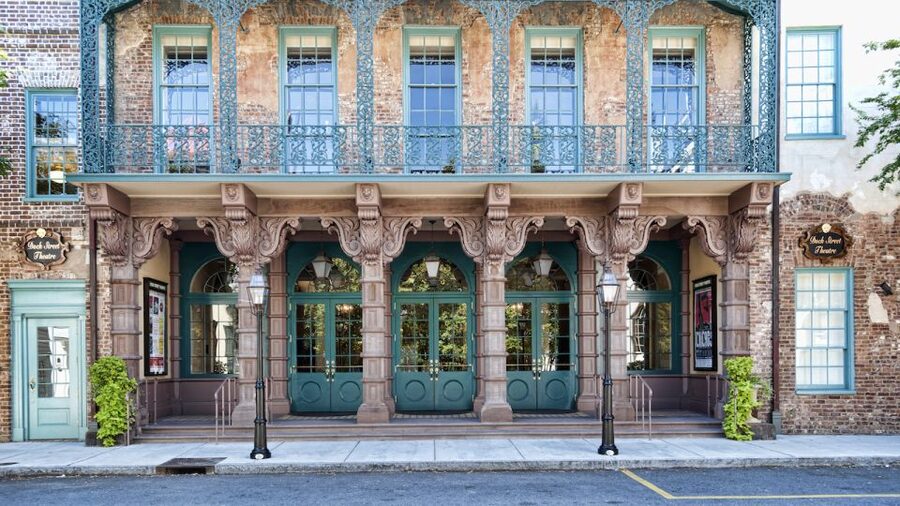
- Charleston beyond the postcard streets: The route includes old alleys, graveyards, the Dock Street Theater, the French Huguenot Church, Washington Park, and the Four Corners of Law.
- History tied to what you see: Eric explains why buildings look the way they do and how religious, cultural, military, and political forces shaped the city.
- A full three hours for $40: This is a strong value if you want context and storytelling rather than a quick overview.
- Plan for outdoor walking: Wear comfortable shoes, bring water, and expect the tour to run in rain unless conditions become unsafe.
A professor-led look at Charleston’s past

Many Charleston walks give you pretty streets, a few dates, and a parade of famous names. This one aims for something more useful: it shows you how to read the city. A doorway, church, alley, or public square becomes evidence of how Charleston grew and who held power.
Eric Lager is a history professor at The Citadel and specializes in South Carolina from the colonial period through the Civil War. His academic background matters here because the tour is not limited to one chapter of the city’s past. You move from Charleston’s founding in 1670 to later political, religious, cultural, and architectural changes.
I would choose this tour early in a Charleston visit. The information can change how you see the city for the rest of your stay. After learning why houses were designed in particular ways or how different groups influenced Charleston, ordinary walks through the historic district become more rewarding.
Eric’s teaching experience also shapes the pace. He is used to explaining difficult material clearly, and the tour leaves room for questions. That matters in a city where a single building can connect several centuries of history.
More Castle and Palace Walks in Charleston:
- Charleston historical walking tour with a Professor of History at The Citadel
★ 5.0 · 1,284 reviews - Edinburgh Castle: Guided Walking Tour with Entry Ticket
★ 4.7 · 11,699 reviews - Venice: Doge’s Palace and St Mark’s Basilica Walking Tour
★ 4.4 · 6,291 reviews
Why the small group changes the experience
The advertised maximum is 12 people, smaller than the groups used by many large tour companies. Some past departures have been even smaller, with around 10 people. I would not book this expecting a private tour, but the limit should make it easier to hear Eric and speak with him directly.
A small group is especially useful on a history walk. You are not simply following a flag through the city. You can stop to ask why a building was constructed in a certain form, how a religious group shaped Charleston, or what happened to a particular historical figure. Eric makes a point of speaking with people individually, which gives the walk a more relaxed classroom feel.
There is also less waiting. In a large group, every crossing, photo stop, and question can slow the whole outing. A group of 12 or fewer can stay together more easily and gather around a site without turning the experience into crowd control.
The tradeoff is that small departures can fill quickly. If this is important to your schedule, reserve ahead, especially during a busy Charleston weekend.
Starting at 108 Meeting Street
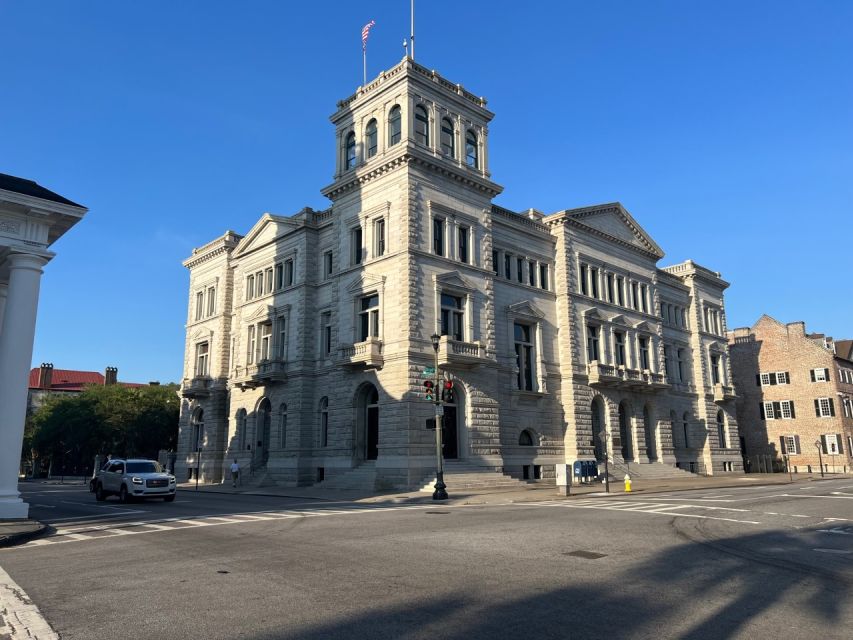
The meeting point is at 108 Meeting Street, beside a brick wall on the sidewalk. Look for the building with four small white Ionic Greek columns. It now serves as a graphic design center for the city and is not open to the public, so do not expect to go inside.
The building is directly across from Hibernian Hall and the pink Mills House Hotel. That hotel is the practical place to use the restroom before you begin, since there are no public restrooms at the meeting point itself.
This is useful information to take seriously. A three-hour walking tour is much easier when you arrive with water, comfortable shoes, and a restroom stop already handled. There is no hotel pickup or drop-off, so you need to make your own way to Meeting Street.
Old alleys and graveyards: Charleston away from the main route

The tour makes time for the less obvious corners of the historic district. Old alleys can reveal how Charleston was organized behind its formal streets, while graveyards offer clues about religion, social status, disease, family life, and the city’s changing population.
These stops are valuable because they slow you down. You are not just checking off famous facades. You are looking at the spaces between them and hearing the human stories attached to those spaces.
Graveyards also add a different tone to the walk. They are not simply scenic stops. Eric uses them to explain people and communities that shaped Charleston, including the famous and the infamous. Expect stories, but also context about the society that produced them.
The route’s attention to side streets is one reason this tour suits repeat visitors as well as first-time visitors. If you already know the Market area or the broad outline of Charleston’s past, the alleys and quieter corners may give you a fresh way to understand the city.
A few more walking tours around Charleston worth a look
- Historic Charleston Guided Sightseeing Walking Tour
★ 5.0 · 6,216 reviews - Ghosts of Charleston Night-Time Walking Tour with Unitarian Church Graveyard
★ 4.5 · 2,835 reviews - Hidden Alleyways and Historic Sites Small-Group Walking Tour
★ 5.0 · 2,335 reviews - Highlights of Charleston Guided Walking Tour
★ 5.0 · 2,206 reviews
The Dock Street Theater and French Huguenot Church
The Dock Street Theater is one of the tour’s notable cultural landmarks. Its presence gives Eric a way to discuss Charleston’s performing arts, public life, and the role of grand buildings in a growing colonial city.
The French Huguenot Church adds a religious and cultural layer. Charleston’s story was shaped by groups with different traditions, origins, and beliefs, and this church helps make that point visible. The tour does not treat religion as a side note. It connects religious communities to the city’s architecture and social development.
You should not confuse seeing these sites from the walking route with entering them. Entry into house museums is not included, and the tour details do not promise interior access to the churches or theater. If you want to go inside a particular building, plan that separately.
I like this approach because it keeps the walk focused. You see important places, learn why they matter, and can later decide which ones deserve a longer visit.
Washington Park and the Four Corners of Law
Washington Park and the Four Corners of Law give the tour a civic center. The Four Corners of Law refers to the historic meeting point of religious, local, state, and federal authority in Charleston. It is an efficient place to see how public power was arranged within the city.
Washington Park provides another chance to connect Charleston’s physical layout with its public history. Parks and civic spaces often tell you what a city chose to honor, remember, or place at the center of public life.
These stops are especially helpful if you prefer history with a clear structure. Instead of hearing disconnected stories, you can see how institutions worked together, competed, and changed over time. Eric’s focus on political and military history adds weight to this part of the walk, while his humor keeps it from becoming a lecture.
Architecture that explains how people lived

One of the strongest features of this tour is its attention to buildings as practical objects. Eric explains that Charleston architecture was shaped by function, climate, culture, and the needs of the people who lived there.
That can change the way you look at the city. Instead of admiring a house only for its color or age, you begin asking why it faces a certain direction, why its rooms and entrances were arranged as they were, and what its design says about daily life.
The tour also places architecture in a wider setting. Religious traditions, cultural influences, politics, trade, and war all left marks on Charleston’s buildings. This broad approach is more useful than memorizing isolated architectural labels.
The level of detail may be more than you want if you prefer a short, light stroll. But if you enjoy asking how a city works, this is likely to be one of the most rewarding parts of the experience.
Famous and infamous people in Charleston’s story

Eric’s storytelling includes well-known figures as well as less admirable characters. That balance matters. A city’s past is not only a collection of heroes and beautiful buildings. It also includes conflict, ambition, inequality, violence, prejudice, and the choices made by ordinary people.
The tour covers colonial Charleston, the Revolution, the antebellum period, and the Civil War. Those subjects can be difficult, but a guide with a serious academic background can give them needed context instead of reducing them to dramatic anecdotes.
Eric’s sense of humor is part of the appeal, but it does not replace substance. The best moments are likely to come when a story explains a building, a street, or a social custom you are looking at right now.
You should expect a lot of information. Bring a phone or small notebook if you like to remember names and dates. At least one past participant wished they had taken notes, which is a fair warning for a tour that packs several centuries into one morning or afternoon.
What $40 gets you
At $40 per person, the tour sits in a reasonable range for a three-hour guided walk, particularly given the small group and the guide’s teaching background. You are paying for more than transportation between sights. You are paying for interpretation, questions, and a structured way to understand Charleston.
The value is strongest if you want depth. A person who only wants a quick orientation may find three hours and this amount of historical detail excessive. If you are interested in architecture, American history, religion, politics, or the Civil War, the price is easier to justify.
There are no food or drinks included, and the tour does not include entry to house museums. That keeps the cost clear, but you should budget separately for any interior visits and refreshments.
I also appreciate the flexible booking terms. You can reserve now and pay later, and cancellation is free up to 24 hours before the tour for a full refund. Those terms help if your Charleston plans are still shifting.
Walking conditions and who should book
This is an outdoor walking tour in the historic district. Wear comfortable shoes and bring water. The tour runs rain or shine unless conditions make it unsafe, so check the forecast and carry rain protection when needed.
The walk is not suitable for wheelchair users. The old streets, alleys, graveyards, and general route may present access limits, and the activity does not offer a wheelchair-friendly format.
I would recommend this for:
- First-time visitors who want a strong historical foundation
- Repeat visitors who want less familiar streets and more detail
- History, architecture, and cemetery enthusiasts
- People who prefer questions and conversation over a recorded audio guide
- Visitors who enjoy a steady three-hour walk
I would be more cautious if you dislike long walks, hot or wet weather, or detailed lectures. This is not a quick photo stop tour. It asks you to listen, walk, and think.
Should you book Charleston History Walk?
Yes, if you want Charleston explained by someone who teaches history for a living. Eric Lager’s strongest qualities are his command of the subject, his clear delivery, his humor, and his willingness to answer questions. The small group limit makes those strengths easier to enjoy.
Book it near the beginning of your stay if you can. The tour’s lessons about architecture, religion, public institutions, and local characters will give later sightseeing more meaning.
Skip it if you want a short, purely scenic walk or if a three-hour outdoor route is too demanding. For everyone else, $40 buys a careful, personal introduction to Charleston, with enough detail to keep history from becoming background scenery.
FAQ
How long is the Charleston History Walk?
The tour lasts three hours.
How much does the tour cost?
The price is $40 per person.
Who leads the tour?
Eric Lager leads the walk. He is a Citadel history professor with nearly 20 years of combined college teaching and public history experience.
What historical periods does Eric specialize in?
His areas include the Colonial Era, American Revolution, Antebellum Era, and Civil War.
How large is the tour group?
The group is guaranteed to have no more than 12 people. Some past departures have been smaller.
Where does the tour meet?
It meets at 108 Meeting Street, along the brick wall on the sidewalk in front of the building with four small white Ionic Greek columns.
Are restrooms available at the meeting point?
There are no restrooms at 108 Meeting Street. Restrooms are available at the Mills House Hotel across the street.
Does the tour include entry to house museums?
No. Entry into house museums is not included.
What should I bring?
Bring comfortable shoes and water.
Does the tour operate in bad weather?
The tour takes place rain or shine unless conditions are unsafe. It is not suitable for wheelchair users, and assistance dogs are allowed although other pets are not.
Just added around Charleston
- Charleston: 90-Minute Ghost & Graveyard Walking Tour★ 4.5 · 75 reviews
- Charleston: History and Architecture Guided Walking Tour★ 4.8 · 349 reviews
- Charleston: 90-Minute Ghost and Dungeon Walking Tour★ 4.2 · 266 reviews
- Historic Charleston Walking Tour: Rainbow Row, Churches, and More★ 5.0 · 691 reviews
- Charleston: Old Walled City Historical Walking Tour★ 4.7 · 705 reviews
- Savor the Flavors of Charleston Walking Food Tour★ 4.5 · 881 reviews
- Charleston Ghost & Graveyard Night-Time Guided Walking Tour★ 4.5 · 1,100 reviews
- Charleston historical walking tour with a Professor of History at The Citadel★ 5.0 · 1,284 reviews
Castle and Palace Walking Tours, compared.

Edinburgh Castle: Guided Walking Tour with Entry Ticket
Read our review →
Doge’s Palace and St Mark’s Basilica Walking Tour
Read our review →
3-Hour Walking Tour of Old Town & Prague Castle
Read our review →Edinburgh Castle: Guided Walking Tour with Entry Ticket
Read our review →
Edinburgh Castle Guided Walking Tour in English
Read our review →


Walking Tour of Split and Diocletian’s Palace
Read our review →Browse the lists this tour appears in