
REVIEW · CHARLESTON
Highlights of Charleston Guided Walking Tour
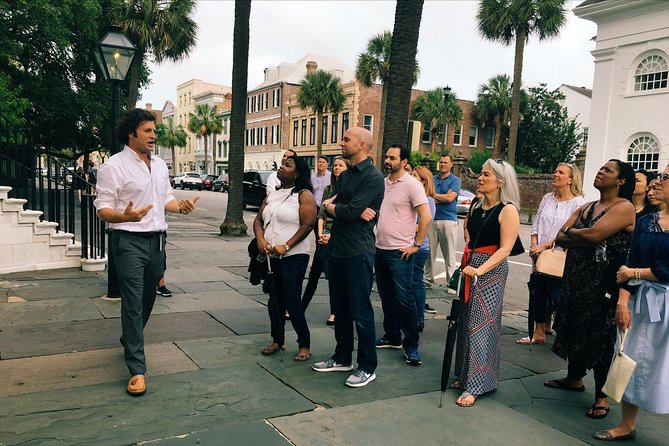
Charleston’s past comes alive best when the buildings become part of a larger story. This two-hour walking tour links the French Quarter and South of Broad with the people, politics, faith, trade, and slavery that shaped the city. Guides such as Bill Harris bring plenty of personality, humor, and historical detail to the route.
I like the way the tour covers major sights without treating them as a checklist. I also like that the guide can adjust the level of detail, from a quick orientation for first-time visitors to a serious look at Charleston’s colonial and antebellum past. The main drawback is that the tour may involve long stops for discussion, so you might walk less than expected and see fewer sights from the inside.
Key points to know
- Bill Harris is a major reason to book: He is praised for his humor, passion, and broad knowledge of Charleston, American history, religion, and politics.
- The route links two historic districts: You walk through the French Quarter and South of Broad, ending near Meeting and Broad Streets.
- The Old Slave Mart is an important stop: Admission is not included, and the tour presents Charleston’s history in direct, unsentimental terms.
- Expect an outdoor experience: Bring water, sun protection, comfortable shoes, and rain gear if needed.
- The small-group format helps: The maximum group size is 20, and guides may shape the conversation around your interests.
- It is best for history-minded visitors: You get context and storytelling, not just a quick roll call of pretty buildings.
Why this Charleston walk is more than a sightseeing loop
A good city walk gives you a map in your head. This one also gives you a way to understand Charleston. The route moves through a compact part of the historic center, but the subject matter reaches well beyond the streets beneath your feet.
You will hear about the city’s religious communities, commercial power, colonial beginnings, political ambitions, and the central role of enslavement in Charleston’s growth. The stops are useful because each one adds a different piece to the story.
The guides are the heart of the experience. Bill Harris receives especially strong praise for his humor, energy, and ability to connect local events with wider American and world history. Some sessions are light and entertaining. Others go much further into dates, political forces, social structures, and the difficult parts of Charleston’s past.
That variation matters. If you want a fast introduction before exploring on your own, the tour can provide it. If you prefer a serious history lesson, tell your guide at the start. The format allows room for both, although a group that wants lots of walking may find the longer talks slow the pace.
More Guided Tours in Charleston:
- Historic Charleston Guided Sightseeing Walking Tour
★ 5.0 · 6,216 reviews - Charleston Ghost & Graveyard Night-Time Guided Walking Tour
★ 4.5 · 1,100 reviews - Charleston: History and Architecture Guided Walking Tour
★ 4.8 · 349 reviews
St. Philip’s Church and the city’s religious foundations
The first stop is St. Philip’s Church, where you view the historic congregation that has met longer than any other in Charleston. The church offers an immediate reminder that Charleston was not built by one community or one tradition.
You will not receive an admission ticket for this stop. The value comes from the explanation outside, where your guide can connect the church to the city’s growth and religious life.
This is also a useful opening stop because it sets the tone for the tour. Charleston’s old buildings are attractive, but they are not simply decorative. They reflect power, belief, money, conflict, and changing ideas about who belonged in the city.
Expect about 10 minutes here. That sounds brief, but the guide may use the time to establish a larger story that returns at later stops.
French Huguenot Church and Charleston’s religious mix
The French Huguenot Church is described as the only church of its denomination in North America. Even if you are not especially interested in church architecture, the stop helps explain the mix of European groups that shaped early Charleston.
The French Huguenots were Protestant refugees, and their presence points to the city’s ties to migration, religious pressure, and the wider Atlantic world. Your guide’s interpretation is important here because the building alone cannot explain why this congregation matters.
This stop is viewed from the route rather than presented as a full interior visit. Like St. Philip’s, it is best treated as a short lesson in context. You get another piece of Charleston’s social structure before the walk turns toward homes, commerce, and slavery.
Pink House Gallery and Charleston’s oldest private residence
The Pink House Gallery offers a change of scale. Instead of a large church or civic building, you pause at what is described as the oldest private residence in Charleston.
The house is a good reminder that Charleston’s story is also told through small domestic buildings. Its appearance makes it easy to focus on color and charm, but the guide’s job is to place the structure within the city’s long development.
You should expect to view the house rather than enter it as part of the tour. The 10-minute stop is enough to appreciate the exterior and hear why it matters. If you are hoping to tour several house interiors, this walk will not meet that goal. It is an outdoor overview, not an architectural house tour.
A few more walking tours around Charleston worth a look
- Ghosts of Charleston Night-Time Walking Tour with Unitarian Church Graveyard
★ 4.5 · 2,835 reviews - Hidden Alleyways and Historic Sites Small-Group Walking Tour
★ 5.0 · 2,335 reviews - Charleston Haunted Booze and Boos Ghost Walking Tour
★ 5.0 · 1,569 reviews - Charleston’s Pleasing Terrors Night-Time Walking Ghost Tour
★ 5.0 · 1,345 reviews
The Old Slave Mart and an honest account of Charleston

The Old Slave Mart Museum is the most important stop for many people on the route. It is identified as the only museum in Charleston dedicated to the history of enslaved people in the city.
Admission is not included, so you should decide in advance if you want to pay for entry and spend additional time inside. The walking tour itself gives you the setting and historical frame, but a museum visit requires extra time beyond the scheduled stop.
This part of the tour matters because Charleston’s wealth and political influence cannot be understood without confronting slavery. A polished walk through old streets can easily leave out the people whose labor made the city prosperous. Here, the story becomes more direct and less comfortable, as it should.
Several sessions with Bill Harris are praised for presenting difficult subjects plainly rather than softening them. That approach will suit you if you want more than attractive façades and familiar anecdotes. It may feel heavier than a standard sightseeing walk, but that is also one of its strengths.
The listed stop lasts about 10 minutes, which is not enough for a full museum visit. Think of it as an introduction and a chance to decide if you want to return later.
The Old Exchange and Provost Dungeon
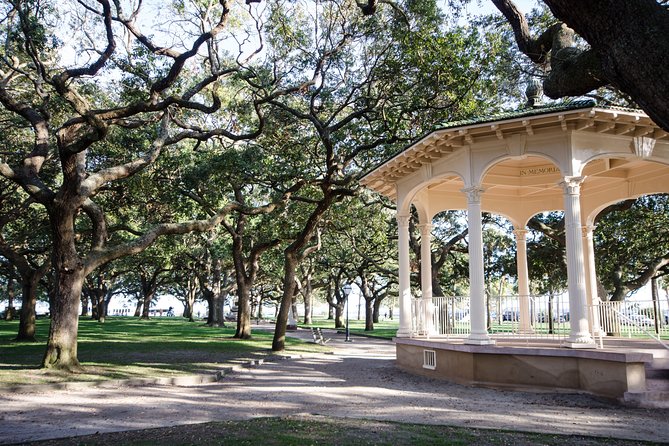
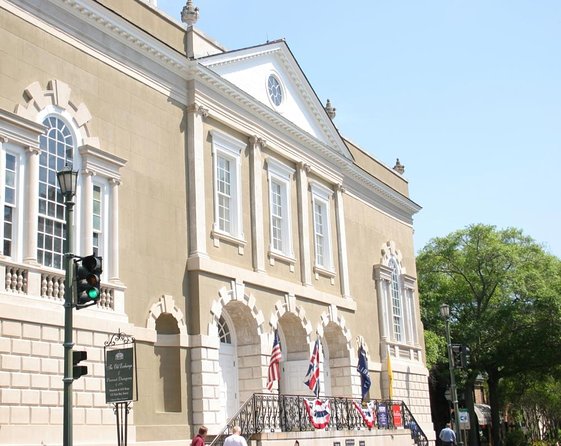
The Old Exchange and Provost Dungeon represents Charleston’s commercial and political center before the American Revolution. It was the pre-Revolutionary heart of economic Charleston, making it a natural place to discuss trade, authority, public life, and the city’s place in the British colonies.
The word dungeon can draw attention, but the larger value of this stop is the building’s connection to Charleston’s public power. It helps explain how commerce, government, and social rank worked together.
Admission is not included. You will view the site during the walking route, while a separate paid visit may offer more of the building. If your schedule allows, note the location for a later return. The tour gives you the context to make that visit more meaningful.
This is also one of the stops where a strong guide can make a real difference. The building is only part of the lesson. The more useful questions involve who controlled trade, who had political rights, and who was excluded from both.
Rainbow Row, Charleston’s famous final image
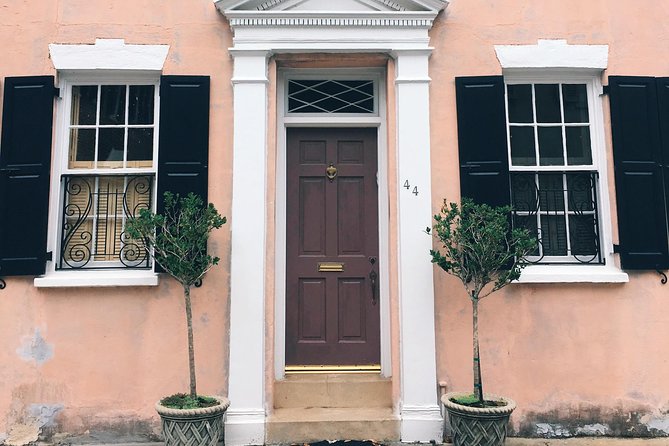
Rainbow Row is probably the easiest stop to recognize. Its colorful façades make it Charleston’s most photographed sight, and the row gives the walk a lighter visual finish after the more difficult subjects earlier in the route.
You will have time to view and photograph the buildings, but keep your expectations realistic. This is a public street, not a private attraction, so the experience depends on the guide’s explanation and the conditions around you.
Rainbow Row works well near the end because it connects Charleston’s present-day appeal with the older story you have been following. The city’s beauty is real, but the tour encourages you to see past the paint and architecture to the systems and people behind it.
The walk generally ends near the intersection of Meeting Street and Broad Street, close to Rainbow Row and the South of Broad area. The exact endpoint can change with walking speed and the guide, so do not plan a tight appointment immediately afterward.
What the guides bring to the two-hour route
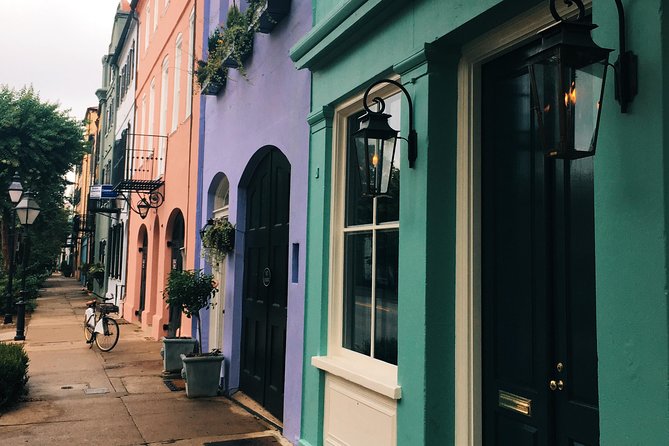
The strongest part of this experience is the guide’s ability to turn separate landmarks into one understandable story. Bill Harris is repeatedly praised for his humor, enthusiasm, and command of local history. He is also described as personable and willing to discuss subjects ranging from religion to national politics.
That style is not for everyone. Bill may speak at length, and one session was criticized because the group spent too much time standing in one place and did not walk far enough. If you expect constant movement, frequent photo stops, and short comments, say so early.
Other guides, including Vanna, are described as funny, friendly, and well prepared. The exact personality depends on the guide assigned to your departure. You cannot assume Bill will lead every tour, though you can request him if the booking arrangement allows it.
The best way to get value from the experience is to tell the guide what you want. Mention if you have already taken a trolley tour, if you are new to Charleston, or if you want more political and social history. The guide can then spend less time on facts you already know and more time on subjects that interest you.
Timing, group size, and the physical side of the walk
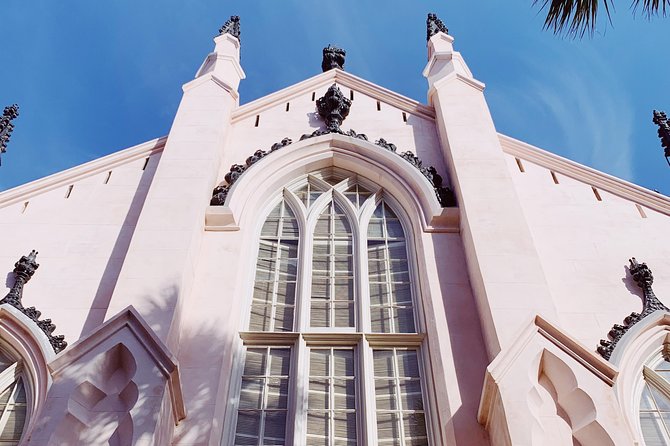
The tour lasts about two hours and has a maximum of 20 people. That is small enough for questions and conversation, while still large enough that you should arrive early and stay near the guide.
Check in 5 to 10 minutes before the start. Late arrivals cannot be held for, so allow extra time if you are walking from a garage or public transit stop.
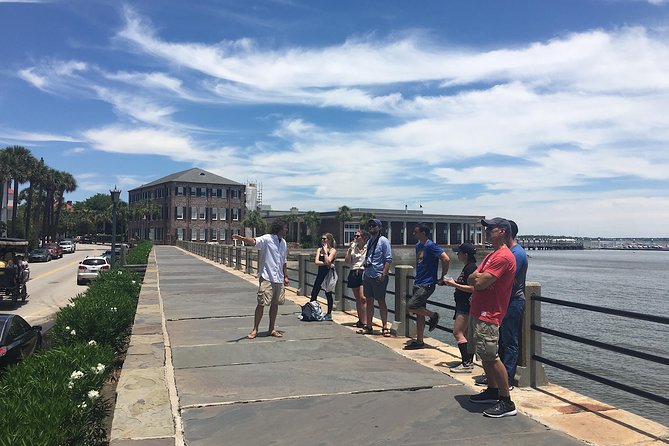
The route is almost entirely outdoors. Charleston’s heat and sun can make a two-hour walk feel longer, so bring bottled water, sunscreen, a hat, sunglasses, or a parasol. Water may not be easy to buy along the route.
Wear comfortable walking shoes. Use the restroom before the tour because facilities are not always available during the walk. The activity calls for a moderate fitness level, but the bigger issue may be standing in the sun while the guide speaks.
Tours usually operate in rain, but dangerous conditions such as lightning, flooding, or high winds can lead to cancellation. Bring your own rain gear rather than assuming equipment will be provided.
Children can join, but they must be accompanied by an adult. The tour is designed with adults in mind, though children and young adults have taken and enjoyed the route. If you plan to bring a stroller, notify the operator in advance.
Service animals are allowed. Other pets are not permitted.
Getting there and judging the value
The starting point is 200 East Bay Street. If you drive, the recommended garages are at 1 Cumberland Street and 89 Cumberland Street, each about a five-minute walk from the meeting point. Parking fees are separate from the tour.
The endpoint is generally near 71 Broad Street, around Meeting and Broad Streets. That makes it easy to continue exploring the historic center afterward, but remember that the exact ending point can vary.
The ticket includes the guide only. Entry to the Old Slave Mart Museum and the Old Exchange is not included, and parking is extra. The tour is still a good value if you want a human explanation of Charleston rather than a self-guided walk with a phone in your hand.
Its value rises for first-time visitors who need orientation. You see major landmarks, learn where they sit in relation to one another, and leave with a list of places to revisit. It is less suitable if you want a series of paid interior visits included in one price.
The listed rating is 4.9 from more than 2,200 ratings, with 98 percent recommending the experience. Those figures suggest a strong overall fit, but they should not hide the one important tradeoff: the quality and pace depend heavily on the guide assigned to your group.
Cancellation is free up to 24 hours before the start time. Within 24 hours, the payment is not refunded. If dangerous weather cancels the tour, you can receive a full refund or choose another date.
Who should book this Charleston walking tour?
I would choose this tour if you want Charleston explained rather than simply photographed. It is especially good for first-time visitors, history fans, families with older children, and anyone who wants a frank account of slavery, religion, commerce, and colonial politics.
You should also book it if you enjoy an opinionated guide who can connect local events to larger national and world affairs. Ask for Bill Harris if possible, particularly if you want a lively, lecture-style experience with plenty of detail.
I would choose another format if your priority is seeing many interiors, covering a large area, or keeping constantly on the move. The guide may spend long stretches talking, and the official route includes only brief visits at each stop.
Book it early in your Charleston stay if you can. The walk gives you useful bearings, and you can return to the Old Slave Mart Museum, the Old Exchange, churches, galleries, or nearby streets afterward. Bring water, arrive early, and tell the guide how much history you want.
FAQ
How long is the Highlights of Charleston Guided Walking Tour?
The tour lasts approximately two hours.
Where does the tour begin?
The meeting point is 200 East Bay Street in Charleston, South Carolina.
Where does the tour end?
The tour generally ends near the intersection of Meeting Street and Broad Street, though the exact endpoint can change depending on walking speed and the guide.
Are museum admission fees included?
No. Admission to the Old Slave Mart Museum and the Old Exchange is not included in the tour ticket.
What should I bring?
Bring comfortable walking shoes, bottled water, sunscreen, a hat, sunglasses, and rain gear if needed. Restrooms may not be available along the route.
What happens if the weather is dangerous?
The tour usually operates in rain, but it may be canceled for lightning, flooding, high winds, or other dangerous conditions. If that happens, you can reschedule or receive a full refund.
Just added around Charleston
- Charleston walking tour with a Citadel history professor★ 5.0 · 105 reviews
- Charleston: 90-Minute Ghost & Graveyard Walking Tour★ 4.5 · 75 reviews
- Charleston: 90-Minute Ghost and Dungeon Walking Tour★ 4.2 · 266 reviews
- Charleston: History and Architecture Guided Walking Tour★ 4.8 · 349 reviews
- Historic Charleston Walking Tour: Rainbow Row, Churches, and More★ 5.0 · 691 reviews
- Charleston: Old Walled City Historical Walking Tour★ 4.7 · 705 reviews
- Savor the Flavors of Charleston Walking Food Tour★ 4.5 · 881 reviews
- Charleston Ghost & Graveyard Night-Time Guided Walking Tour★ 4.5 · 1,100 reviews
Walking Tours, compared.

Magical London: Harry Potter Guided Walking Tour
Read our review →
Reykjavik Food Walk – Local Foodie Adventure in Iceland
Read our review →
History and Hauntings of Salem Guided Walking Tour
Read our review →
New Orleans Premier Ghost, Voodoo and Vampire Walking Tour
Read our review →
Amsterdam Anne Frank: Small-Group Walking Tour & Local Guide
Read our review →

Edinburgh Castle: Guided Walking Tour with Entry Ticket
Read our review →
Anne Frank’s Story – Guided Walking Tour through Amsterdam
Read our review →Browse the lists this tour appears in